Late Night at the Pelican Cafe is an experimental web site where I post historic recordings of various bands from the San Francisco Bay Area. You can just go to the post and music will play. Listen to the sound of a bar or club filled with people, listening and dancing to a live band. Many of these recording are live recordings from a quality analog cassette tape recorder ( SONY TCS-580-V) positioned on the floor in front of the trombone player. For around fifteen years I was a freelance trombonist and arranger in San Francisco.
CANDELA LIVE AT EL RIO – 1992
In the 1990’s I had the fortune to play many Sundays at El Rio. At one point it felt like I was the house trombone player. On this particular Sunday the band was a phenomenal line-up of San Francisco based musicians – many players, including myself, were filling in for regulars. You can hear solos by Wayne Wallace, Rebeca Mauleón, Ramon Lasso, Paul Lyons, Michael Spiro, Jorge Polmar and others. Rebeca Mauleón’s piano Solo on Bailando Asi is outstanding.
CANDELA – 1992
Edgardo Cambin – Congas and Lead Vocal (Solo on Yembeke)
Jorge Polmar – Bass
Rebeca Mauleón – Piano (Solo on Bailando Asi)
Sandy Cressman – Coros
Ramon Lasso – Piano (Solo on Yembeke)
Wayne Wallace – Trombone (Solo on Yembeke)
Eric Rangel – Timbales
Michael Spiro – Bongo (Solo on El Cuarto)
Paul Lyons – Trombone
INTRODUCTION
In 1992 I played in a band lead by Marcus Lopez called Cubanacan. In this band, on this night, I was taping the band so as to learn the tunes. The tune is Richard Kermode’s Catalina. and you can hear the solos of Peter Cornell, Paul Lyons and the late great Richard Kermode – a great musician with a huge spirit who earlier had worked and recorded with Santana and Janis Joplin. Richard could play a wicked montuno.
Fito Reinoso – Voice
Marcus Lopez – Bass
Louis Romero – Timbales
Geraldo from Cuba – Congas
Richard Kermode – Piano
Peter Cornell – Sax
Paul Lyons – Trombone
Katalina by Richard Kermode
ACT 1 : AN ELECTRIFYING EXPERIENCE
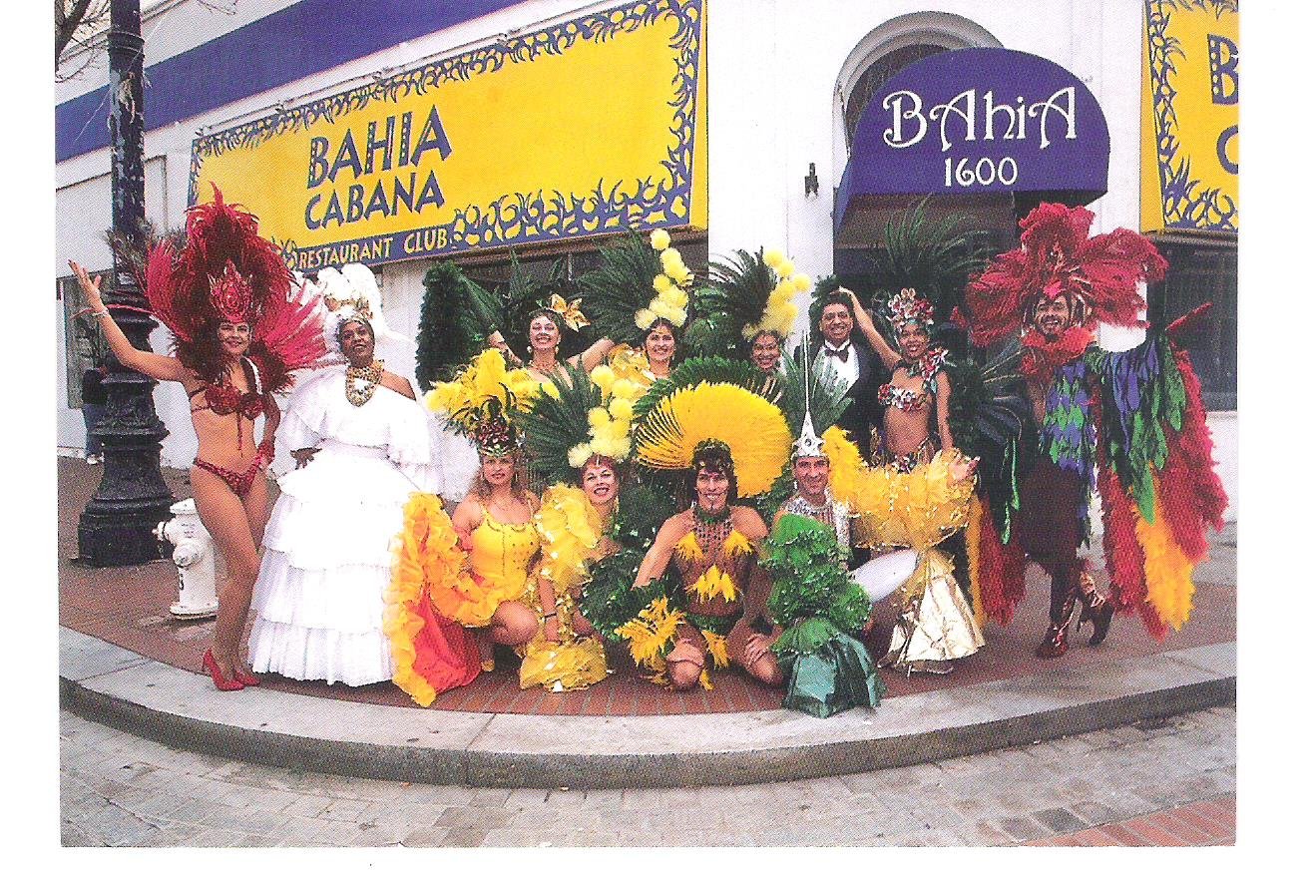
Besides unemployment, anxiety and pondering your mortality, the Covid-19 pandemic is a time for cleaning out closets. Going through some old stuff I ran into a postcard from a bygone era. In the 1980’s and 90’s Bahia Cabana in San Francisco was a hopping club on Market Street in San Francisco with a tropical vibe and live music many nights of the week. The bands were mostly Latin bands playing samba or salsa and it catered to a dance crowd. The place must have been crazy during San Francisco’s Carnaval.
Postcard from Bahia Cabana – 1992
Long before the pandemic and before the rise of the internet, there were many clubs and bars like Bahia Cabana employing musicians. It is hard to imagine but in the late 1990’s, five nights a week there were at least five clubs up and down Mission Street that had bands with full horn sections and multiple singers. Most of these bands were cover bands that played the hits of the day and also the many regional Latin tunes – merengue, rancheras and cumbias. San Francisco is home to a lot of people from Central America where cumbias seem to always be popular.
But that is a bygone era. For years, live music in clubs has been in decline and Latin clubs are few. When you do hear a live salsa band it was often just a quartet with various people sitting in and the entire band playing for a tip jar.
But back to Bahia Cabana – a place were I could have been electrocuted to death. Bahia Cabana had this third world vibe down to the electrical system. I remember playing there in the 1990’s with Julio Bravo and looking at the wiring backstage for the sound system and wondering if everything was legal – wires going every which way like spaghetti. Next thing I know after attempting to plug in an amp, I got an electrical shock unlike anything I have ever received. I stepped back and wondered for a second if I should go to the emergency room only to be reassured by the trumpet player that if may hair was not on fire and there were no visible burns that everything was fine. It was a strange feeling.
Bahia Cabana – an electrifying and shockingly happening hot spot long gone.
A few years later Bahia Cabana opened another club in the basement – music by a DJ, lots of flashing lights, drum and bass, loud pounding sounds and surely a smoke machine. I wondered how they got that by the San Francisco fire department and being in the basement was a bit concerned for safety reasons. Sure enough, sometime around 2000 the entire building caught fire and Bahia Cabana closed down for good. Another victim of using unlicensed, non-union electrical contractors who do not ground service panels. But Bahia Cabana would have closed soon after with the invasion of the tech industry, increased rents and the changing economics of the San Francisco.
The Hardly Strictly Bluegrass Festival that takes place in Golden Gate Park every first-weekend in October is still happening this year, however it is going to be all online or what they now call “virtual.” Not my cup of tea folks. I like the real thing and will not be attending. That said, this year’s SF Journal Hardly Strictly Bluegrass Festival Awards will take a break.
As it turns out, live music festivals, with thousands of people bumping into each other, spilling beer on you and sharing local herbs is probably the best way to boost your immune system. As an added bonus there is the perilous activity of attempting to hygienically go to the bathroom in a port-a-potty. Wash your hands? Yeah right. Let’s all share germs!
For the past eight years I have written up reviews of HSBG festivals and given out awards. If you are curious or simply getting nostalgic, they are listed below. Until next year hopefully, when the light of health, peace and sanity returns.
Before the internet, there were armies of salesman that would go door-to-door selling encyclopedias. It was thought that without the latest Encyclopedia Britannica it would be impossible for your kids to write their history papers. Today, Wikipedia has assumed the role of the encyclopedia but in the realm of video, it is the documentaries of Ken Burns . Home-bound due to the COVID-19 pandemic, I decided to bite the bullet and buy the nine-episode Country Music | A Film by Ken Burns documentary on Amazon. Under $50 it comes out to about five bucks an episode. Country Music | A Film by Ken Burns is a fun romp through the twentieth century and a great way to discover new artists and bands, but in the end it was not so much about the music but a postcard parade of the people and musicians.
Introduction
Ken Burns approaches his documentaries as though he is writing an encyclopedia; he always goes wide but rarely very deep. This gives the viewer the impression that what they are seeing is the unvarnished truth. Every documentary is stylistically exactly the same in his pedantic, dry, documentary style. If you watch Ken Burns’ The Civil War, Jazz or Baseball they are all identical and Country Music maintains this consistency. The serious voice of Peter Coyote narrates though out and the titling and production are all the same. It is the Ken Burns encyclopedia and while it is great to get an overview of these subjects, the more you know about the subjects, the more disturbing and slightly irritating it becomes. Things are left out. Stereotypes are reinforced. A strange middle ground seems to always be the goal. If a topic seems a bit risky, the next scene brings it back to something more conventional. Controversy is avoided. For instance, even though you can count notable black country musicians on one hand, nevertheless there is Wynton Marsalis as usual adding comments and insights from the wings.
“I was talking with a friend of mine about this the other day; that country life, as I knew it might really be a thing of the past and when music people today, performers and fans alike, talk about being “country,” they don’t mean they know or even care about the land and the life it sustains and regulates. They’re talking more about choices – a way to look, a group to belong to, a kind of music to call their own.” Johnny Cash – The Autobiography of Johnny Cash
What really is “Country” music?
The notion of the genre of country music and what artists are “country,” like the word “jazz,” is forever perplexing and something more to do with the business of selling the music than the actual music.
“Three Chords and the Truth” – coined by Harlan Howard in the 1950s which he used to describe Country music
What really is “country” music? From a musical standpoint, “Three Chords and the Truth” does seem to get at a good definition but some of the best country songs use secondary dominant chords extensively (e.g., Salty Dog) and the dominant II chord is usually the climax of the song . But do forgive me. I am writing about the music, not the people. I sort of like Cash’s geographical take on country – it ain’t “city.” Ironically, the history of bluegrass was actually aided by country folk moving to the city and longing for simpler times in the country.
One of the most redeeming qualities of country music are the lyrics. What ties all country musicians together is the singer/songwriter, cowboy or as it is often called troubadour. This may be true, but what I find in many of the successful country musicians is a rebellious streak. They seem, from a sociological standpoint, more like punk-rockers than anything else. Jimmie Rodgers, Johnny Cash, Willie Nelson and even Hank Williams were pushing the boundaries and going against the norms. In the film, it seemed a bit odd, but confirms my take, is that Marty Stewart named Woody Guthrie as being “about as country as it gets.” Which begs the question, then why did not Pete Seeger get even mentioned in the documentary? He was as country as Woody Guthrie and sparked the revival of the banjo with his banjo method book. Surely many country banjo players used his book to learn the instrument. Where folk ends and country begins, blues music ends and country begins, are all blurred lines. Who Ken Burns allows into the country club surely has something to do more with politics than the actual music. Perhaps to be country, is to have played at the Grand Old Opry or recorded in Nashville.
One thing that Burns avoids is how most of the country musicians tended to be far more politically progressive than their reactionary, predominantly conservative, Republican audiences. This is particularly true starting in the late 1960’s after the South went Republican. One of those important factors not really delved very deeply on, perhaps to avoid controversy and not alienate the core country audience, who would prefer to see the rebellious nature as a sort of cowboy libertarian streak, and be done with it. That the documentary ends in 1996 is surely convenient as it makes it possible to avoid bands like the Dixie Chicks that called George Bush out on his criminal and ill-conceived Iraq war.
Race and the almost Mythical Older Black Musician
One of the reoccurring themes in the movie is race, which is dealt with in an often incomplete fashion. From the documentary we learn that many of the early country stars at one point in their youth had a profound experience with an older black musician. Jimmie Rodgers, the father of country, learned how to play from an older black musician down by the railroad tracks. There were two other big musicians that come to mind but who’s names I forget that had similar experiences with older black musical mentors.
Country music is a predominantly white people’s music with a few invited guests – Charlie Pride, DeFord Bailey as noted examples. Perhaps the most amazing country album is Ray Charles’ country album that is pure countrypolitan and a smash hit. But issues like how the heck did Charlie Pride play in the segregated Jim Crow South are never brought up. Why, unlike in jazz, there are hardly any mixed-race bands? And, why, in every episode,as interludes, there are black and white photos of rural impoverished African-American families, gathered outside their shack of a house, with no explanation of why this photo is chosen?
Feminism and the Taboo Word
The the 1960’s. Loretta Lynn, Dolly Parton, Emily Lou Harris, Patsy Cline and others became huge country music stars. It is truly phenomenal how many powerhouse women came on the scene. Interestingly, Burns never uses the term “feminism” and instead describes this as – “at the time they called this woman’s liberation or women’s lib.” He goes on to described the woman as “feisty” or “strong-willed.” Just an observation of how language can influence perception and define history. In the late 1960’s there was a massive feminist movement culminating in the E.R.A. that never passed. One wonders if Burn’s never using the word “feminism” was intentional.
Country Music | A Film by Ken Burns. Well worth the price of admission, and a great way to get a broad-brush view of the topic of country music but a film that makes you question everything.
INTERESTING ALBUMS OF NOTE FOR PEOPLE WHO NEVER HAVE OWNED A COUNTY ALBUM IN THEIR LIVES AND DO NOT LIKE COUNTRY
I did not grow up with country music. Folk music, pop, rock and roll, jazz, classical. Not country. My parents were from the north and primarily urban, well-read and educated. Below are albums for people who do not like country music.
Jimmie Rodgers with Louis Armstrong
It is a true fact, not out of some E.L Doctorow novel, that the father of country music, Jimmie Rodgers cut a record with Louis Armstrong. This is simply as strange as realizing that Aretha Franklin’s funkiest rhythm section was all white boys. Blue Yodel 9 is evidently a country song. This was before the music industry was putting labels on absolutely everything.
Johnny Cash many years later got together with Louis Armstrong and played Blue Yodel 9.
Ray Charles
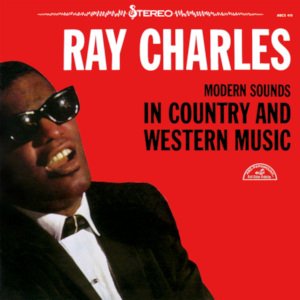
One the the best-selling country albums of all times is Ray Charles’ Modern Sounds in Country and Western Music . Ray Charles would probably sound great reading the phone book, but here you have some heavy New York and L.A. style production and Ray, growing up country, just sings these country songs like he is in the shower.
Willie Nelson
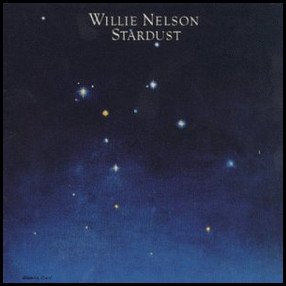
Read Willie Nelson’s autobiography Its a Long Story. I once heard that Willie always wanted to make a bebop album, so Stardust is as close as he got. His early love for Bob Wills and country swing opened him up to all kinds of music and he sings these mostly jazz standards with great phrasing, relaxation and outstanding pitch. Some of the standards sound a bit like music I would hear in a bowling alley in some sleepy Midwest town, but if they call this country, I’ll take it.
An amazing character, Willie is featured a lot in Country Music | A Film by Ken Burns. To get the full story of what happened when Willie’s house outside of Nashville burned to the ground, you have to read Its a Long Story. Willie is sitting in a bar in Nashville and a friend rushes in to inform him his house is burning down. Willie races off in his pickup and when he gets to the house the fire trucks are already there and the whole place is surrounded by yellow “do not cross” tape. At that point, Willie asks if anyone is inside. When he learns that everyone is safe, he makes a dash inside the house. He returns safe with just two things. His trusty, beat up guitar and a guitar case full of marijuana. That is a true story ready for the movies that does not even need a screen writer.
Johnny Cash
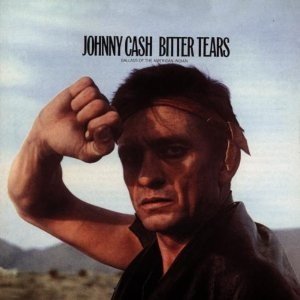
An epic career and a unique person and musician. He did a bunch of albums on the themes of Native Americans which would be interesting to check out. Growing up in federally subsidized housing and picking cotton from a young age, Johnny Cash to me is really a punk-rock, soul artist who happens to be white.
BREAKING NEWS: The Pelican Cafe has reopened after being closed for a few months because of no apparent reason. We still do not serve any food, coffee or beverages. Newly remodeled, the virtual cafe has been open since April and is now primarily experiential.
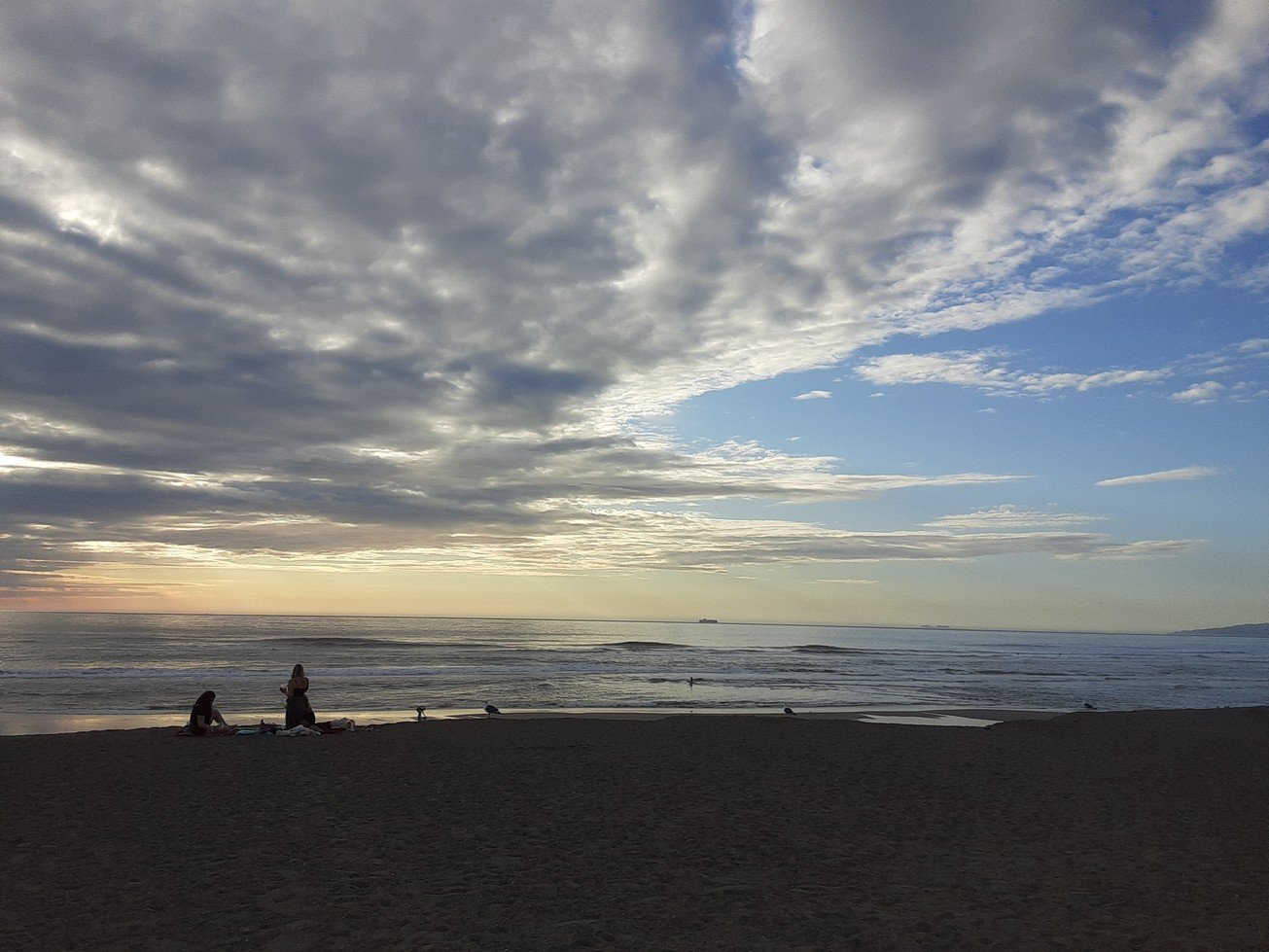
At the Pelican Cafe you can experience the Pacific Ocean in a visceral way – at least as visceral as possible in an internet browser. The videos posted are all from Ocean Beach in San Francisco and correlate to the time of day that you visit the web site. Addition videos will be added soon.
“A scale is a very ugly thing and it’s a bad discipline to expose your ear to bad music in the name of technique. If you decide what to play and what aesthetics to use in your choices then the “how” will follow. There is a basic advantage in not being able to play well, in that if your music is very simple then you are less likely to play bad notes. The more notes you play the more likely you are to play a lot of bad ones. By limiting your choices you improve the result of your music. I went through a period in my life when rather than trying to make my music sound better I started eliminating things that didn’t sound good and everyone said that I had made a great improvement, but what I had done was just housekeeping.” Paul Bley – from Time Will Tell – Conversations with Paul Bley (2003) – Norman Meehan
Such an odd perspective, but it makes sense that Paul Bley would say that scales are “ugly.” I think what he is saying is that scales, when played like “scales,” are ugly. When played like music are just music. The notion that you get rid of bad notes in your playing by simply playing less notes is pretty funny!
if your music is very simple then you are less likely to play bad notes
This is perhaps the definition of a bluegrass solo, or what the cowboys call a “break.” Good jazz musicians never have a hard time with “wrong” notes as that is sometimes the fodder with which they create their motifs.
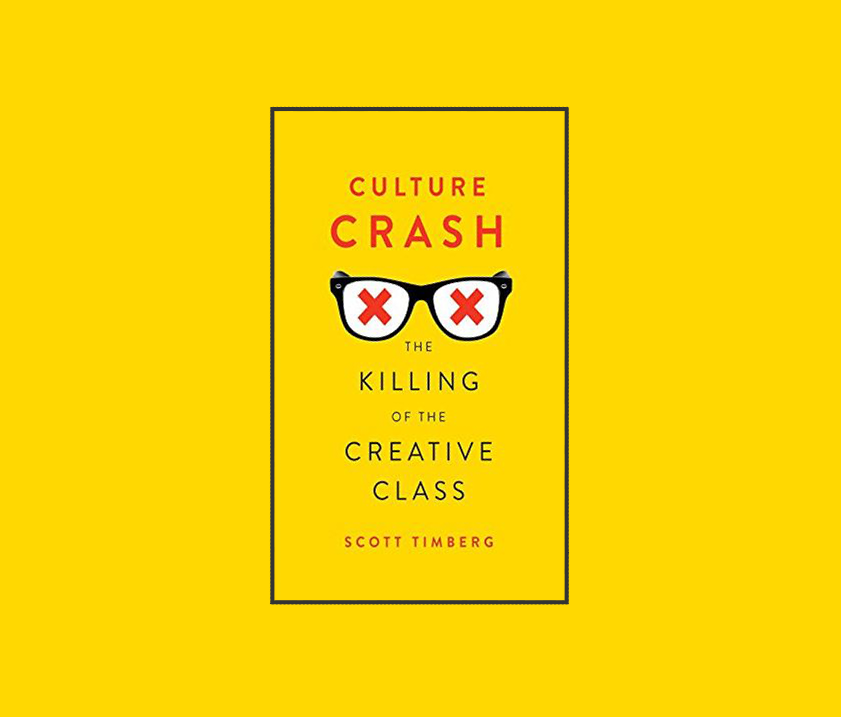
in 2014 when I read that Scott Timberg was writing a book about the modern perils of people in the arts I got a bit excited. The topic of how the internet and digital economies had laid waste to many traditional arts forms, trades and professions, has been a story that is not told very often and rarely very well. While everything in Culture Crash: The Killing of the Creative Class is pretty much depressingly true, it fails to address the most important question. Why and how is the creative class being killed?
A few of the professions that have been lost or are under stress are book, record and video store clerks, writers and in particular journalists, of course all performing artists such as musicians and dancers, architects – the list is long and pretty much everyone I know is well aware of the lower pay for creative work – people being paid ridiculously low wages to write, musician playing bars and restaurants for just tips.. Timberg seems to have had a soft place in his heart for the book and record store clerk as being a sort of cultural ambassador for the towns and neighborhoods where they live. Think of one of those cool small record stores you rarely see these days. Every employee has a strong personality, unique wardrobe and an expertise in a certain genre. Often such places would have favorite playlists of the week written on a chalkboard behind the register and it would range from thrasher metal to perhaps a new Brahms recording. Cool places no doubt. Hard to find these days save for a few stores in larger metropolitan areas.
The money being spent on music is not ending up in the hands of musicians, or even labels, or members of the creative class, from the record store clerk to a label president. It’s going to Apple – which thanks to iTunes, could buy every surviving label with pocket change – and other gargantuan technology companies. – Culture Crash: The Killing of the Creative Class by Scott Timberg
The first few chapters “When Culture Works” and “Disappearing Clerks and the Lost Sense of Space” muse nostalgically about this bygone era. “Back in the day” reminisces. Local mid-level working bands with a full calendar of gigs, paying not much but a living wage. Entry level journalists doing beat writing. Those were the days.
San Francisco and New York are becoming cities without middle classes: writers and musician lacking trust funds are being replaced by investment bankers and software jockeys, as well as a large servant class that commutes into town from poor precincts to clean their lavish kitchens and watch the children. – Culture Crash: The Killing of the Creative Class by Scott Timberg
I have never heard the term “software jockeys.” Software programmer, UI designer, web programmer but not “jockey.” Indeed, the world changes and one thing that Timberg seems unaware of is that people graduate from art school and then get a job at Apple or a large construction firm designing marketing materials and email headers. Musicians often have day jobs creating “apps” or programming websites. Being flexible and learning new skills has always been the forte of studying the liberal arts. Writing the great American novel has always been a luxury afforded to only the wealthy or the scrappy staving poor.
There is a chapter where Timberg throws the critic Pauline Kael under the bus for making fun of serious art and preferring popular trash. He also laments the avant-garde that pushed people away from the concert halls and museums. Indeed it seems that Timberg would prefer a well-attended Mozart festival to an auditorium a quarter-full of people trying to get their heads around some experimental modern piece.
The chapter near the end of the book entitled “Lost in the Supermarket – Winner Take All” is interesting as the book was published over five years ago, at a time when the monopolies of Amazon, Google and Facebook were solidifying and further buying out their competition. All books written that mention technology seem like dinosaurs by the time they are printed as the landscape does change. The tech monopolies in 2020 are even more entrench than ever.
By the end of the book, the hope is that somehow we need to regain the middle again where instead of a anti-intellectualism so prevalent in society, ordinary people go to art museums and local jazz shows. People read serious novels and discuss poetry. The gist of the book is a plea for the “middle-brow” world where culture is consumed by all. “Good luck” is all I can say. It’s a brave new world we live in with people mesmerized by social media, stupid YouTube videos and their cellphones.
Which gets me to my conclusion. What Culture Crash: The Killing of the Creative Class leaves out is the”how” and the “why. ” Why is the creative class being killed? There is one mention of Telecommunications Act of 1996 which was like a wrecking ball for many artistic environments. Shrouded in the guise of fair competition, Clear Channel went into every market and bought out smaller players. This ruined local radio, local music scenes, weekly papers and eventual laid waste to print journalism.
But the law that has done the most damage, and that was surprisingly never mentioned in Culture Crash: The Killing of the Creative Class is the The Digital Millennium Copyright Act (DMCA) of 1998. Just two years after the Telecommunications Act of 1996, the DMCA was signed by President Bill Clinton, with every member of congress voting “yes” and cheering the law on like a high school pep-rally. Neo-liberalism ( a truly misleading term) was all in vogue with the silly notion that free competition, while never really free as the big players have teams of lobbyists in Washington, will solve every problem. As pointed out many times on this website, the 1998 DMCA was a massive gift from the creative class to the tech class. It is a major reason “why” the creative class has been “killed.” It is odd that no one saw it coming. The internet has the potential to be a fair platform for publishing. The rules of “safe-harbor” have been so stretched and bent that for years technology companies’ revenue strategies are often a slimy exercise in cultural thievery – all perfectly legal. In 2020, it has gone a step further, as money is made off of peoples’ personal data, well-named as “surveillance capitalism.” But I digress. The DMCA is a failed law that needs revision every five years. I have pointed this out since 2015.
Unfortunately, far too young, in December of 2019, Scott Timberg passed away. A very good writer, a brilliant thinker, an idealist and surely a great guy. We need more people like Scott.
Culture Crash: The Killing of the Creative Class by Scott Timberg
Hardcover: 320 pages
Publisher: Yale University Press (January 13, 2015)
Language: English
ISBN-10: 9780300195880
ISBN-13: 978-0300195880
A good friend recommended Harry Belafonte’s My Song: A Memoir of Art, Race, and Defiance. Knowing little about Belafonte beyond songs like Jamaica’s Farewell and Day-0., I bought it online for around five bucks with free shipping – basically I got the book for free. It is a hard cover version on that luxurious linen paper with wide margins – a library discard from the Southwood Library in Calgary Canada. That a book from 2012 is so soon discarded seems odd. That it is a memoir of Harry Belafonte, one of the most successful entertainers of the 20th century with an incredible life of civil rights work and activism, adds to the mystery. Everyone, including the dear Canadians – slow down. Indeed, value has been turned upside down. In the end, it was my gain and Calgary’s loss.
It is possible to learn a great deal about the civil rights era simply through the lens of My Song: A Memoir of Art, Race, and Defiance. It is safe to say that Harry Belafonte not only was in the middle of the civil rights movement, he was a key historical figure and instrumental in the struggle for justice and equality. The book begins in 1964 like a screenplay. Harry Belafonte is attempting to convince his long time friend Sidney Poitier to help him on an unusual mission. He has $70,000 in cash in a leather doctor’s bag that he has raised and needs to deliver the money in person to the SNCC (Student Non-Violent Coordinating Committee) who at the time where doing lunch counter sit-ins and other non-violent acts of civil disobedience. The money was to help the SNCC in many ways but most often for legal support and bail. It was not the first time that Harry Belafonte had financially supported people and organizations in the “movement” during the civil rights era. It would not be his last.
The beginning of the book is meant to draw you in to a defining moment in Harry’s life. This dramatic start of the book helps pull the reader in and is effective, but many other moments and amazing happenstances fill the pages. When people live to be over ninety, often their lives take on an unreal, mythical, Forrest Gump-type of narrative. Their lives become like historical fiction, similar to an E.L. Doctorow novel, where meetings and scenarios seem made up and impossible. These unbelievable scenes fill the pages. Not to spoil the book, let me recount a few in the remarkable life of Harry Belafonte.
Late 1940’s – Early 1950’s
After returning from his deployment in World War II, Harry studied acting in New York City on the GI Bill. In his class were Marlon Brando, Walter Matthau and Tony Curtis to name a few. Pretty fine acting company. He then would go on to be friends with this group for his entire life.
At the same time, when he was but twenty years old, Harry would hang out at the Royal Roost in Harlem with the likes of Lester Young and other be-bop legends who encouraged his talents. Harry Belafonte was crazy about Lester Young. According to the memoir, the first time that Harry sang on stage, which happened to be an intermission gig at the Royal Roost, the entire Charlie Parker band, Tommy Potter, Al Haig and Max Roach got up on stage and backed him up. You cannot make this stuff up. The musicians did it just to help the new kid out.
Early 1960’s
In little time his singing career took off and Harry was a leading voice in the folk revival of the early sixties. It was a dynamic time when folk music had made its way into all parts of society. In Vegas you could get the whole room to join you in Pete Seeger songs like If I Had a Hammer. The next week Harry would be speaking at a demonstration, on the street perhaps leading a song. The idealism must have been intoxicating.
Soon you learn that Harry’s hero is Paul Robeson, the great singer and political activist. He learns a lot from Robeson and is moved to activism by his spirit. Major figures of the 1960’s are his close friends. Harry becomes the conduit between his good friend Martin Luther King and John F. Kennedy, oddly bridging the racial and cultural divide between a Southern Baptist preacher and a blue-blooded northern Irish Catholic. He also talked regularly with Bobby Kennedy, then the Attorney General.
Another, interesting week is when he was asked to host the Tonight Show in the early 1970’s for and entire week Harry was allowed to have control of the guests. He had Martin Luther King, Bobby Kennedy, Paul Newman and many others on. A week of interviews that would be interesting to revisit.
Beyond
There are many other interesting turns during this memoir, including all the work Harry did in Africa, his visits to Cuba and his relationship with Fidel Castro. The last fifty pages become less compelling reading, but you do learn that Harry Belafonte regards George W. Bush as a terrorist for invading Iraq – as always a pretty accurate assessment of the facts. Harry Belafonte – committed, intelligent and honest to the very end.
The memoir is a modern vehicle for story telling. With every memoir there is a natural tendency to tell the story from the most forgiving and perhaps self-serving perspective. Surely, history is part what actually happened but also the lens through which it is retold. His voice, now gone after decades of work as an entertainer, actor and singer, Harry Belafonte as of this writing is still alive, fighting the good fight. A remarkable life and a book well worth the read. It is almost 500 pages long, and when the book finishes you do not want it to end. Excellent story telling from the source.
FIVE STARS!
MY SONG : A Memoir
By Harry Belafonte with Michael Shnayerson
2012 – Knopf. 469 pp
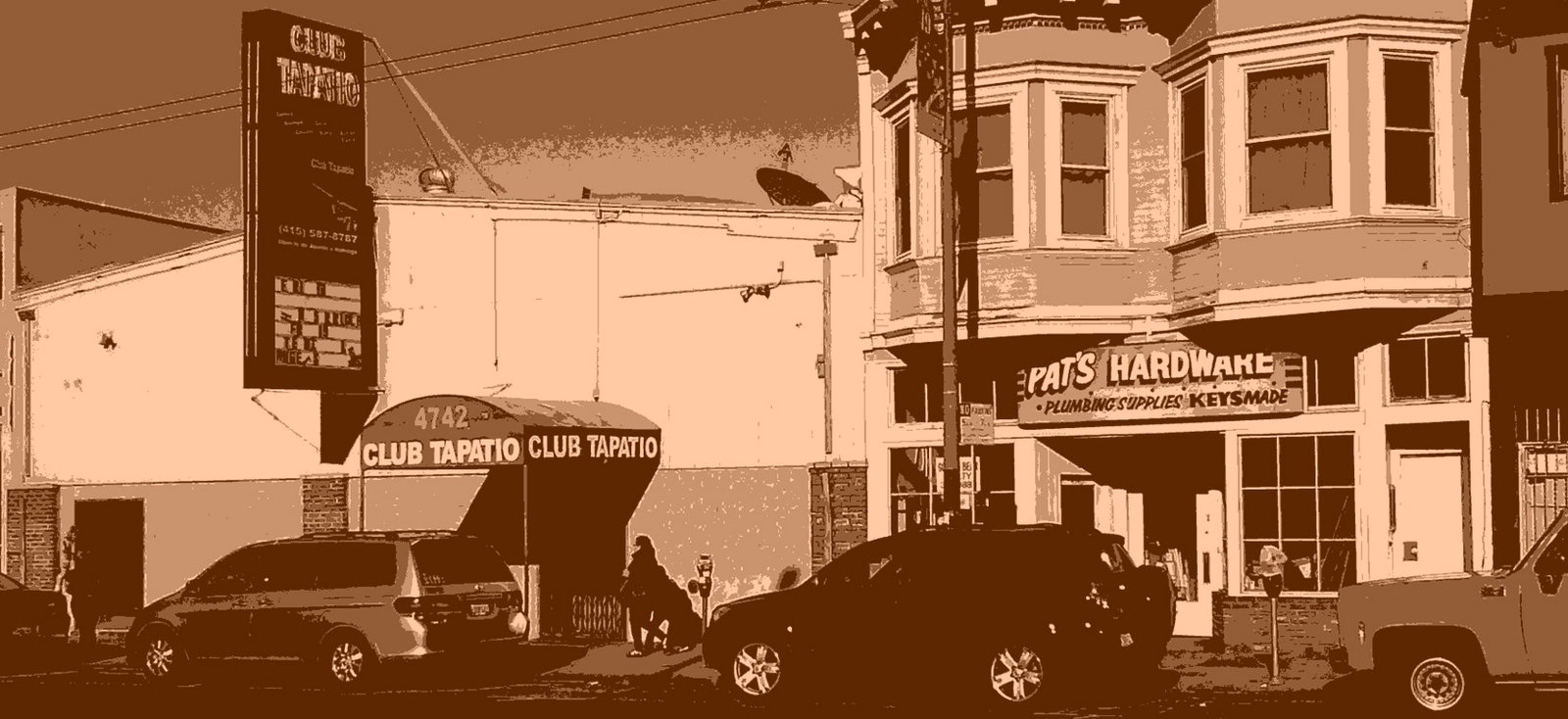
Cities change. Over time buildings are torn down. Businesses close. People move or get pushed out. New structures rise out of the ground. People move in. In San Francisco buildings and warehouses are being torn down and replaced at an alarming pace with large condos (most of them market or luxury rate). All that is left are the memories, echos and photos of bygone eras. One such place is a large working-class dance hall in the outer Mission, a few blocks past Ocean Avenue but before Daly City called El Tapatio
At one point El Tapatio was a rock & roll spot.
“In 1967 it was called The Rock Garden. The Grateful Dead performed in this building 4 times in 1967. Jerry Garcia’s Mom was in the audience.” – slip n.- Laytonville, CA – Yelp Comment
SCENE II: Five Sets a Night
In its last incarnation it was mostly frequented by folks from Central America and Mexico out on the town, all dressed up to go dancing, trying to forget the drudgery of life. There was a large wooden dance floor but outside of that the carpet floor of El Tapatio was a mosaic of discard chewing gum, so plentiful it looked like a pointillist painting. After visiting the club, the next day you would often have to scrape gum off the sole of your shoes. In the 1980’s and 90’s you could dance to a ten piece salsa band four nights a week. How do I know this? I played in a band that did five sets a night, Thursday through Sunday. The gig started a 9 pm sharp and ended at bar-time around 2 am.
Two lead singers
Piano
Bass
Timbales
Congas
Four Horns – Alto and Tenor Sax, Trumpet and Trombone
In that band were some solid players. Bill Theurer played lead trumpet. Mario Vega on tenor, Donaldo on timbales. Carlos Ramirez, rest his soul, now deceased, held down the bass. Playing twenty hours a week the band got pretty good. We played the hits of the day. Bamboleo, Devorame Otra Vez, Lluvia probably. Some salsa classics no doubt. Oscar De Leon. El Gran Combo, Hector LaVoe. Being in the Outer Mission we would also play a lot of cumbias and even Mexican rancheras. A lot of songs about food – Sopa de Caracoles, Patacon Pisao. I remember Perez Prado mambos and other odd classics from the 1940’s and 50’s. Nelson, one of the lead singers had this huge voice and could sing bel canto. He would belt out, very dramatically, beautiful Mexican ballads. The gig paid $55 a night. It covered my rent and helped put my wife through grad school. Friday and Saturday nights were packed and the owner at one point surely enjoyed the ride.
SCENE III: All Night Long
San Francisco during the 1980’s and 90’s was buzzing with salsa and cumbia bands. After working the El Tapatio we would sometimes head down to Ceasar’s Latin Palace, now Rocapolco, and hang out and hear such great players as Orestes Vilato, Anthony Carillo and Raul Rico. At Ceasar’s you could still get a drink after hours but the liquor often seemed like something they found in the cleaning supply closet – dangerous concoctions that tasted like lighter fluid and could easily wear a hole in your stomach.
SCENE IV: The Ghost of Perez Prado in the Halls
A friend of mine in the trades said that they are tearing down El Tapatio and building the tallest building on Mission Street, meaning at least six stories tall. It will be a large housing complex of some kind. I doubt that the first floor will feature a large dance hall, but probably the ubiquitous cold glassy retail space with the “for lease” signs in the window for perhaps years. Time will tell, but one thing is for certain – the ghost of Perez Prado will be wandering the halls late into the night shouting out mambos.
Still alive down the block is Taqueria Guadalajara, that has been there for at least thirty years. People “in the know” travel miles for Guadalajara. I walked by last week and a line stretched out the door. Some things do stay the same. A carnitas burrito “super” hopeful never goes out of business.
Taqueria Guadalajara
4798 Mission St, San Francisco, CA
Closes at 1 AM
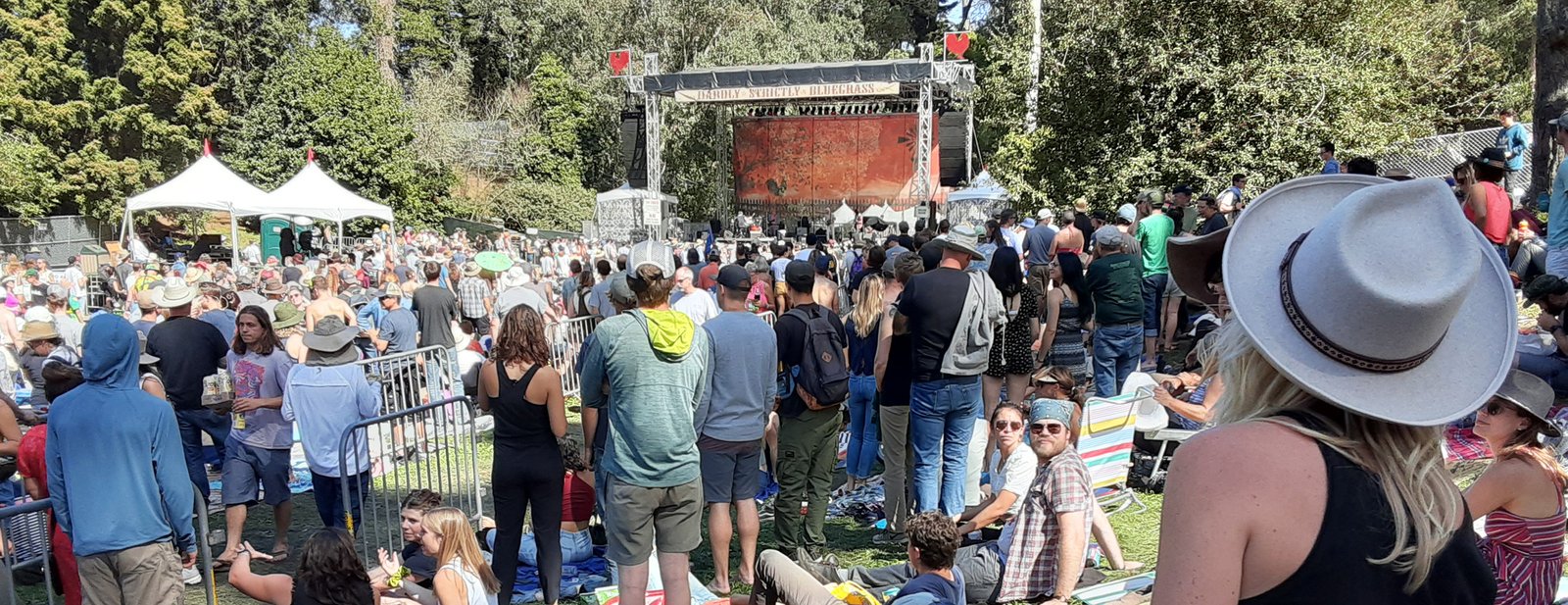
The 2019 Hardly Strictly Bluegrass Festival in Golden Gate Park took place under clear skies, gentle 3 foot surf and mostly light winds and warm temperatures. For the last few years, the festival no longer has the Arrow Stage but replaced it with a much smaller Bandwagon Stage. Not to worry, all the stages were packed with incredible lineups of working bands. I went for three days and saw a total of 17 shows. Here is the 2019 Hardly Strictly Bluegrass Festival SF Journal Awards.
In the past, these awards where the “Pelican Cafe Hardly Strictly Bluegrass Festival Awards,” but the Pelican Cafe got bought out by the San Francisco Journal, so the awards will take up this new moniker.
BEST SOLOIST – Adam MacDougall- Lebo and Friends
Adam MacDougall was playing the keys with Lebo and Friends Sunday on the Gold Stage. Behind what seemed to be about eight keyboards, Adam had command of each one. He would go back and forth between a Fender Rhodes and a Hammond B3 and then something else. In a day when music is streamed endlessly and often becomes like wallpaper to people’s lives, Adam played solos from another era when really being able to play and having a distinct voice were the main objectives. Great solos with soul and chops.
SONG OF THE FESTIVAL – We Shall Overcome
Friday is probably the best day to go to the festival. Crowds are lighter and less rambunctious. The programming is less rock and roll and often a bit highbrow but always top-notch. During Bill Fisell’s set they did We Shall Overcome and sort of got the audience to sing along. I then left and headed to the Banjo Stage where the Kronos Quartet did a tribute to Pete Seeger – Seeger at 100. Soon the Kronos Quartet did We Shall Overcome and this time the audience joined in with a bit more punch and participation. I forgot that Pete Seeger wrote so many great songs. One that was sung was Where Have All the Flowers Gone. It is an anti-war anthem that is timeless.
Where Have All The Flowers Gone
Pete Seeger
Where have all the flowers gone?
Long time passing
Where have all the flowers gone?
Long time ago
Where have all the flowers gone?
Girls have picked them every one
When will they ever learn?
When will they ever learn?
Where have all the young girls gone?
Long time passing
Where have all the young girls gone?
Long time ago
Where have all the young girls gone?
Taken husbands every one
When will they ever learn?
When will they ever learn?
Where have all the young men gone?
Long time passing
Where have all the young men gone?
Long time ago
Where have all the young men gone?
Gone for soldiers every one
When will they ever learn?
When will they ever learn?
Where have all the soldiers gone?
Long time passing
Where have all the soldiers gone?
Long time ago
Where have all the soldiers gone?
Gone to graveyards every one
When will they ever learn?
When will they ever learn?
Where have all the graveyards gone?
Long time passing
Where have all the graveyards gone?
Long time ago
Where have all the graveyards gone?
Covered with flowers every one
When will we ever learn?
When will we ever learn?
MOST TREACHEROUSLY CROWDED SHOW – Robert Plant
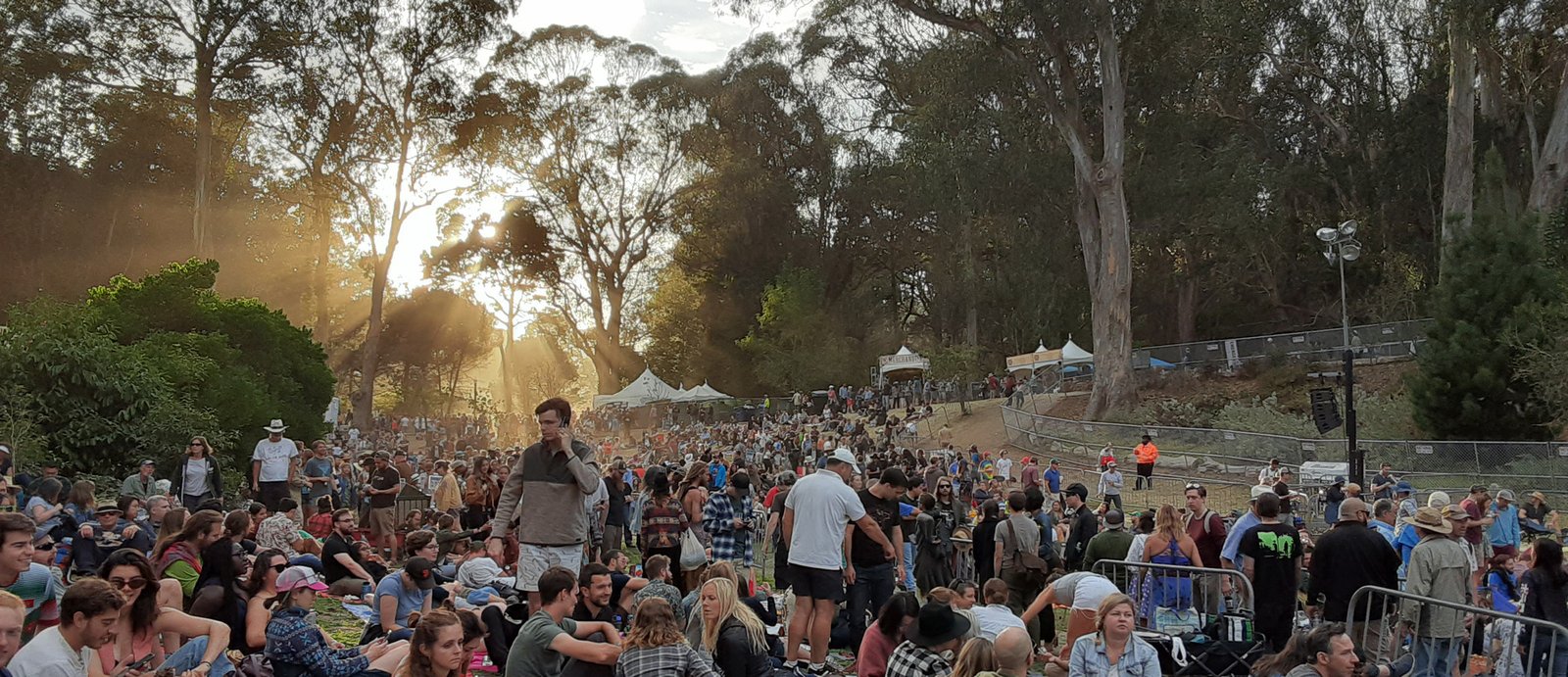
Somehow the word got out that Robert Plant was playing Saturday. The entire field by the Gold Stage was packed to capacity. Just getting up and down the hill was a strange exercise in physics. It was as if the entire area was some sort of new-found organism, thinking from some central command. You could sense a sort of claustrophobic anxiety in some people in the crowd. Fortunately, I made it to a good spot of the hill and was able to take in the entire set. What a great band! The violin player was simply outstanding and a real powerhouse dancing and playing her fiddle with amazing sound and rhythm.
As the show went on people started jumping the newly installed fence that keep people off the back hill. In years past it was always good to take in a show from these hills where the eucalyptus grows. Though a bit far away, you can get your own space and often a very good view of the band.
BAND WITH THE MOST RAW ENERGY – Poor Man’s Whiskey
Sometimes your best-laid plans just take a detour. This happens most the time when you are entering the festival. Heading in Saturday we passed by the Swan Stage and were drawn to the sounds of Poor Man’s Whiskey. Poor Man’s Whiskey has played HSB so many times you lose count. They are one of the few local area bands beside Laurie Lewis that seem to play the festival every year. What is so charming about Poor Man’s Whiskey at HSB is that they bring the A team to the gig. Their music goes back and forth between electrified Irish fiddle tunes played at break-neck speed, like a group of 20 somethings on an all night bender, to original ballads that are played with subtlety. Raw Northern California energy. I once was a bluegrass festival and hanging around the campfire were a few people from Southern California. One of the guys had an observation – “Southern California is where they sell the music. In Northern California is where they play – up here they pick.” Poor Man’s Whiskey keeps that tradition alive.
BEST CHORUS OF ANY SONG – Jesus and Elvis by Hayes Carll
Jesus and Elvis
Jesus and Elivs
Painted on velvet
Hanging at the bar here every night
It’s good to be back again
Oh, me and my old friends
Beneath the neon cross and the string of Christmas lights
Another anti-war song that is picturesque and very clever in that country sort of way.
BAND I MISSED THAT I WISH I SAW – Flor De Toloache
I am not sure how a mariachi band made it on the bill, but Flor De Toloache worked the Bandwagon Stage on Sunday. I was at a great set by Joan Osborne at the Rooster Stage where Joan eventually passed out with heat stroke. A good friend said that the all-woman band Flor De Toloache based in New York crammed the group on the tiny stage and played a great set. In music festivals, with six stages, you cannot be two places at once.
BEST PICKERS – The Punch Brothers
I ended the festival at the Rooster Stage and heard the Punch Brothers. Every member of this quartet is simply outstanding. They redefine music and take it in directions that are new and original. You definitely had to be close up to hear this group as they play with a nuance, subtlety and ensemble that the SF Symphony only dreams about.
PROLOGUE
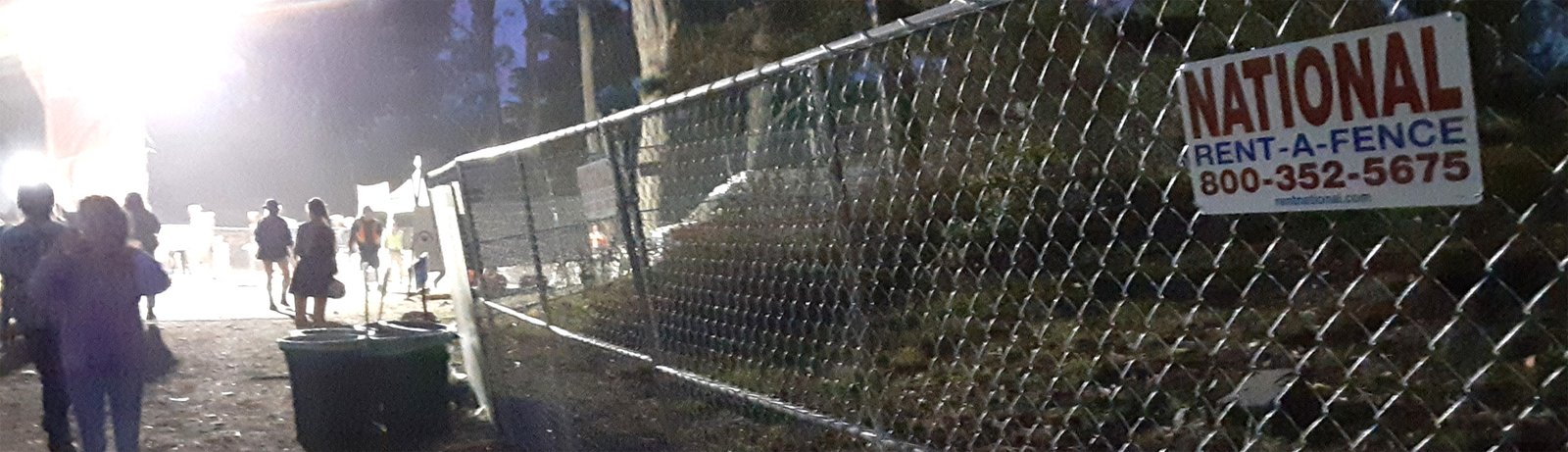
This year there was added security to the festival. National Rent-a-Fence surely made a lot of money fencing in the entire festival. This was a minor inconvenience but marked an end of an era where the festival had this magical pre-2001 vibe. Thankfully, there were no violent incidences. Perhaps instead of paying hundreds of extra policeman to stand around the festival, the festival could provide another water station out on the road by the Gold Stage. They had a water station at the Banjo Stage. It seems odd that that is the only one. In the hot sun you definitely need the hydration after all your beer and water runs out.
Until next year, that is the SF Journal 2019 Hardly Strictly Bluegrass Festival Awards.
ABOUT
The Hardly Strictly Bluegrass Festival in San Francisco is a little like Jazz Fest in New Orleans. Big-name bands, many kinds of music and a festive atmosphere. One of the amazing things about Hardly Strictly Bluegrass Festival is that even though there are tens of thousands of people, it is always a peaceful event, and in the end people seem to get along just fine and often make new friends. Everyone seems to pack out the trash pretty well too. Hardly Strictly Bluegrass Festival. Warren Hellman’s party. Communal music therapy.
“The challenge of absorbing this new technology into the values and practices of the existing culture has no precedent. The most comparable event was the transition from the medieval to the modern period. In the medieval period, people interpreted the universe as a creation of the divine and all its manifestations as emanations of divine will. When the unity of the Christian Church was broken, the question of what unifying concept could replace it arose. The answer finally emerged in what we now call the Age of Enlightenment; great philosophers replaced divine inspiration with reason, experimentation, and a pragmatic approach. “
The Metamorphosis is a very interesting article in The Atlantic. Co-written by three very influential people it muses over the impacts of artificial intelligence which is all the rage now. Some of the three writers end with forecasts that are optimistic. Others are more skeptical. It is easy to figure out who wrote what in the article. The quote above is surely Henry Kissinger reminding the kids of some of the fundamentals of history in the West. It is rather peculiar that Kissinger jumps from the medieval period to the modern in one fell swoop but so be it. I highly doubt that most kids graduate from college these days with even the faintest understanding of the Age of Enlightenment or any notion of this concept of history and humanity.
The other unifying concept was of course the creation and notion of the “self” but that is far too complex for most people to comprehend in our current age of narcissism and selfies. You can get a better understanding how this is relevant in the field of psychology by reading The Invention of the Self: The Hinge of Consciousness in the Eighteenth Century by John O. Lyons, my dear old dad who’s ashes are floating around somewhere in lake Michigan. Rest his soul.