Please do not pray for the President – It Creeps Him Out

“Even worse than offending the Founding Fathers, you are offending Americans of faith by continually saying “I pray for the President,” when you know this statement is not true, unless it is meant in a negative sense. It is a terrible thing that you are doing, but you will have to live with it, not I!”
– Donald Trump’s letter to The Honorable Nancy Pelosi – 12/18/2019

We live in such strange times and this letter to the Speaker of the House by the President Trump is just another example. That the President gets so irritated about Nancy Pelosi’s Catholicism and her daily prayer is actually sort of funny. It reminds me a bit of the final scene in the movie The Princess Bride in which the Spaniard states over and over again in the final duel “My name is Inigo Montoya. You killed my father. Prepare to die.” After about the fifth time the Count, who Inigo Montoya is about to kill yells “STOP SAYING THAT!” Donald Trump is just like the Count. “STOP PRAYING FOR ME! IT’S CREEPING ME OUT!”

Speaker Pelosi has gotten under his skin and Trump just cannot take it anymore. It may be Trump’s downfall in the end, and hopefully the Evangelicals that voted for him should be aghast. Questioning the ritual and power of prayer. How un-Christian. How un-American.

My bumper sticker for those “fly-over” states.

Please do not pray for the President – It Creeps Him Out

The Atlantic – How to Stop a Civil War – The December 2019 Issue

The Atlantic

Totally redesigned with a custom typeface. Magazine journalism at its best. Subscribe to The Atlantic today!

With the rapid decline of thoughtful, diverse journalism, The Atlantic’s latest issue is excellent, taking on the current volatile political and cultural climate as a theme. The articles are always at least a few pages long and seem to go a bit under the hood. Many pieces are collaborative ventures with two or more writers. This brings a depth that you would not get with a single voice.

Below are some quotes from “The Dark Psychology of Social Networks.” by Jonathan Haidt,
Tobias Rose-Stockwell


From The Decline of Wisdom from The Dark Psychology of Social Networks – The Atlantic

In 1790, the Anglo-Irish philosopher and statesman Edmund Burke wrote, “We are afraid to put men to live and trade each on his own private stock of reason; because we suspect that this stock in each man is small, and that the individuals would do better to avail themselves of the general bank and capital of nations and of ages.” Thanks to social media, we are embarking on a global experiment that will test whether Burke’s fear is valid. Social media pushes people of all ages toward a focus on the scandal, joke, or conflict of the day, but the effect may be particularly profound for younger generations, who have had less opportunity to acquire older ideas and information before plugging themselves into the social-media stream.


Our cultural ancestors were probably no wiser than us, on average, but the ideas we inherit from them have undergone a filtration process. We mostly learn of ideas that a succession of generations thought were worth passing on. That doesn’t mean these ideas are always right, but it does mean that they are more likely to be valuable, in the long run, than most content generated within the past month. Even though they have unprecedented access to all that has ever been written and digitized, members of Gen Z (those born after 1995 or so) may find themselves less familiar with the accumulated wisdom of humanity than any recent generation, and therefore more prone to embrace ideas that bring social prestige within their immediate network yet are ultimately misguided.

JONATHAN HAIDT,
TOBIAS ROSE-STOCKWELL
From The Decline of Wisdom from The Dark Psychology of Social Networks – The Atlantic


The polar icecaps are melting, the world is now run by reality TV stars,  Mark Zuckerberg and Facebook peddle lies, Jeff Bezos is the “borg” and now wisdom is in sad shape. Keep positive.

AI and the Metamorphosis – The Atlantic Article

“The challenge of absorbing this new technology into the values and practices of the existing culture has no precedent. The most comparable event was the transition from the medieval to the modern period. In the medieval period, people interpreted the universe as a creation of the divine and all its manifestations as emanations of divine will. When the unity of the Christian Church was broken, the question of what unifying concept could replace it arose. The answer finally emerged in what we now call the Age of Enlightenment; great philosophers replaced divine inspiration with reason, experimentation, and a pragmatic approach. “

From The Metamorphosis, The Atlantic  – Henry A. Kissinger, Eric Schmidt And Daniel Huttenlocher

The Metamorphosis is a very interesting article in The Atlantic. Co-written by three very influential people it muses over the impacts of artificial intelligence which is all the rage now. Some of the three writers end with forecasts that are optimistic. Others are more skeptical. It is easy to figure out who wrote what in the article. The quote above is surely Henry Kissinger reminding the kids of some of the fundamentals of history in the West. It is rather peculiar that Kissinger jumps from the medieval period to the modern in one fell swoop but so be it. I highly doubt that most kids graduate from college these days with even the faintest understanding of the Age of Enlightenment or any notion of this concept of history and humanity.

The other unifying concept was of course the creation and notion of the “self” but that is far too complex for most people to comprehend in our current age of narcissism and selfies. You can get a better understanding how this is relevant  in the field of psychology by reading The Invention of the Self: The Hinge of Consciousness in the Eighteenth Century  by John O. Lyons, my dear old dad who’s ashes are floating around somewhere in lake Michigan.  Rest his soul.


Kamala Harris Taking a Stand

“I know predators, and we have a predator living in the White House, and let me tell you, there’s a little secret about predators. Donald Trump has predatory nature and predatory instincts. The things about predators you should know, they prey on the vulnerable. They prey on those who they do not believe are strong. The thing you must importantly know, predators are cowards. I have a background where successfully, I have prosecuted the big banks who preyed on homeowners, prosecuted pharmaceutical companies who preyed on seniors, prosecuted transnational criminal organizations that preyed on women and children, and I will tell you we have a predator living in the White House.”

Kamala Harris
U.S. Sentaor
Presidential Canidate
July 3, 2019

You can point to Bernie’s “billions and billions,” Warren’s epiphany to break up the monopolies in big tech, even Andrew Yang’s idea that we need to move to higher ground, but the quote above speaks to the reality of our current society. There are predators taking advantage of the vulnerable everywhere and it has unfortunately become acceptable and part of business as usual.

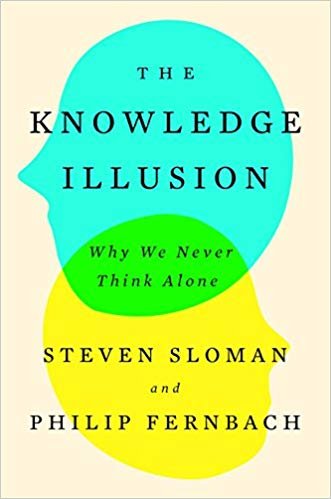
“The Knowledge Illusion” – Some Quotes

We live in a community of knowledge, and unfortunately communities sometimes get the science wrong. Attempts to foster science literacy cannot be effective if they don’t either change the consensus of the community or associate the learner to a different community.

People tend to have limited understanding of complex issues and they have trouble absorbing complex details (like answering factual answers to factual questions). They also tend not to have a good sense of how much they know and they lean heavily on their community of knowledge as a basis for their beliefs. The outcome is passionate, polarized attitudes that are hard to change.

…shattering people’s understanding by asking them to generate a detailed causal explanation also makes them less extreme.

From The Knowledge Illusion: Why We Never Think Alone by Steven Sloman (Author) & Philip Fernbach
Riverhead Books (March 14, 2017)

The Worlds’ Greatest Hitchhiker Quote

“This one little car ride instantly redeemed us and rejuvenated us, offering an almost irrational hope for what lay ahead down the road. This I realized was the real magic of hitchhiking: not how it supposedly affirmed your faith in the goodness of humanity, but how it could make and break the faith, over and over again, often multiple times in a single day.”

From The World’s Best Hitchhiker on the Secrets of His Success – The New York Times – 3/22/2018

Hitchhiking

The Sunday New York Times Magazine has been producing some very entertaining issues. In the travel issue was an article about a crazed Polish man, Aleksander Doba who obsesses about kayaking to the point where he has kayaked across the Atlantic three times by himself.
In the same issues is the story about “The World’s Best Hitchhiker on the Secrets of His Success,” quoted above. It is 2018. Rarely do we ever see someone hitchhike in the United States on America. There probably is an app for that, or perhaps just craigslist, of this thing called facebook. It is unfortunate that hitchhiking has died out as hitchhiking is ultimately a way to challenge people’s beliefs, perceptions of reality and has the potential to have people from very different walks of life and classes interact. It is a way of taking a true chance on strangers and humanity and in the end it can be profound. In the least, for the hitchhiker it can be a test of patience and a realization of how often it is more beautiful on the side of the road on an empty stretch of highway than in a car. How liberating it can be to throw off the shackles of time and schedules. “We’ll get there when we get there.”

Just about everyone over forty has a tale of hitchhiking. The cross country trip out West. The trip that got derailed in a rainstorm. The trip from New York to Key West Florida and the amazing sunrises in Georgia. The ride down the Snake River Canyon in the back of a pickup. So many tales. All of them true.

In the current fashion of personal narratives I will indulge the reader with my own experiences with thumb exposed. It started in earnest with a cross-state trip of about 150 miles to visit my older brothers who were attending a pottery camp in Iowa. I was just fourteen years old. My parents did not seem at all worried and basically said, “Sure, have a good time. Need a ride to the highway?” What different times we live in now.

I left early in the morning with a map, a backpack, some sandwiches and a few dollars for sure. I do not remember every ride but in the end it took over ten rides. I remember being picked up by farmers heading a just a few miles down the road. Truck drivers were always good as the ride tended to be longer and the chatter on the CB radio was always cryptic yet entertaining. One ride, out in that territory, maybe not on that maiden voyage, was perhaps my most dangerous. A large rusted-out Oldsmobile sedan stopped. Three people were in the car. I got in the back seat with one of the riders and soon discovered that everyone in the car was completely plastered out on a bender. In the backseat was a case of beer and I was immediately offered a beer which being fourteen I politely turned down. We then proceeded to drive away at breakneck speed, flying over the rolling farmland hills of southern Wisconsin. After about fifteen miles of so and going over 100 miles per hour we came to a crossing and the driver stopped, to which I departed the car and thanked them for the ride. I never heard later if they ended up driving off the side of the road or not as we had no internets at the time back then to scour the movements of other humans, but they probably made it home fine and ate brats and kraut for dinner… washed down with five more beers.

To be honest, I was not an epic hitchhiker by any means but I do remember some beautiful hitchhiking with an ex-girlfriend out West in Montana. I remember hitching from Bozeman Montana to Salt Lake City Utah. Somewhere along the way we were picked up by a fancy black BMW sedan. After about 5 minutes the driver’s “fuzz buster” made a sound and we slowed down to avoid the highway patrol and a speeding ticket. We had been moving so fast that when we slowed down It literally felt like we were going twenty miles per hour when we were now going sixty. In a few minutes we returned to the normal 120 miles per hour. Sort of the Montana autobahn perhaps. Rides in the backs of pickups were always a joy with the mountains and open skies, the padding of your backpack, which you used as pillow providing comfort. I remember a ride down the length of Wisconsin from Upper Michigan. We were picked up by a pastor who worked with Native Americans and he seemed like he needed someone to talk to to make the ride easier and perhaps clear his conscience. All of these rides courtesy of “the kindness of strangers.”

The last hitchhiker that I picked up was about twenty years ago. You simply do not see many hitchhikers today. It was some youngsters heading down the coast on Highway 1. I was checking out the surf at Ocean Beach in San Francisco and had a hunch that the waves were better down in Pacifica. The two people in their early twenties had a sign that said “L.A. Bound” and after telling them that I was not going but fifteen miles down the coast they said that it would suit them just fine. I let them off at Linda Mar Beach and by the time I got my wetsuit on I noticed that they were headed south, looking for a good spot to continue the journey. Free spirits on the road.

Hitchhiking. A way to connect with every walk of life and find commonality in the human condition. Way safer than the internets.


 

Zorba the Greek and Thugs, Leeches, Shouting and Playing Piano in the Lobby

“ Mr. Fintiklis, 39, declined to comment, but he has made several notable — and provocative — appearances at the hotel in recent days. On one evening, following a verbal confrontation with Trump employees, he and his entourage of about a dozen people retired to the lobby and had pizza delivered from a restaurant on the property. Then Mr. Fintiklis played music from “Zorba the Greek” on the lobby’s baby grand piano while his friends sang along.”

From N.Y. Times – Thugs, Leeches, Shouting and Shoving at Trump Hotel in Panama (March 3, 2018)

This story in the Sunday N.Y. Times seems like the perfect material for either a documentary or a piece of historical fiction. We are at a point where in the world of politics, reality is stranger than fiction. Imagine Mr. Orestes Fintiklis, a young millionaire in a tussle with Trump and he uses art (playing a song in the hotel lobby) as a way to state his position. If this was a proposed screenplay it would never make the cut – too unbelievable. I like the fact that this really rich guy takes pleasure in playing the piano and singing songs from the mid-twentieth century. Imagine the party eating probably Dominoes pizza in the lobby hanging around the piano singing songs while the security in military garb and armed with AK 47s stood guard. What a bizarre scene.

Perhaps the movie would be called Orestes the Cypriate.

Observations on the Word “Feminism”

“According to Merriam-Webster’s “feminism” was the most searched-for word in its online dictionary, up seventy percent from 2016. But who in 2017 needed to be told what “feminism” means? Upon searching, these people would have learned from Merriam-Webster that “feminism” is “the theory of the political, economic, and social equality of the sexes.” Some number of them where probably relieved to learn that it is still just a theory.”

From The New Yorker – Jan 8th, 2018 – Talk of the Town – Words of the Year (Louis Minead)

There are some words that are confusing by their very sound and came to life in a way that in the end does not serve humans or the word well. “Feminism” is one. “Net neutrality” is another.  Wordsmiths and politicians conjure up others. Citizens United, the law that allows corporations to be treated as citizens is another and should really be called Corporations United to Screw You Over. But once a word takes life it is hard to undo the confusion and damage.

The reason why people were probably looking up “feminism” is because for many it conjures up an image of the feminine – perhaps lipstick and high-heels, but originally it was not meant to mean that at all, but I digress and am “mansplaining”  – a word that is quite good and accurate – way better than “feminism.” But I hope the people who looked up the word “feminism” are satisfied with the Merriam-Webster’s definition. That is how I have always had it defined in my head.  Equality. Maybe it should be “equalitism,” but that almost sounds like a mathematical theory.

It is strange that the UCLA feminist magazine and website Fem is staffed entirely by woman. https://femmagazine.com/about/staff-2015-2016/. I think it may have to do with the confusion about the word “feminism” and perhaps a feeling by men that they are not welcome. Surely nothing could be further from the truth. One of my friend’s kids that is off to college joined the  school’s Latin Dancing Club and is loving it. Very few men and a lot of woman who are eagerly looking for dancing partners. Smart guy.

Anyway, this little essay ,Words of the Year, is extremely well written and also pretty funny. I have been exposed to the New Yorker since I was young. When I was a little kid, I would eat my bowl of cereal and page through the single pane cartoons and never get a single joke. Now I look at the cartoons and marvel at how they came up with such great ideas. Usually the Talk of the Town is all about the dreary state of politics. It is good that they mix it up from time to time.

Scheer Intelligence – Danny Goldberg: In Search of the Lost Chord

I cannot say I have read this book In Search of the Lost Chord but I have been really getting into this podcast. Robert Scheer, the veteran columnist from the LA Times and editor and producer of Truth Digg. The guests that Robert Scheer gets on the show are all surely friends of his but he still manages to keep their feet to fire and Robert asks some direct and often challenging questions. Here are some quotes from this interview.

Bill Graham also liked to get paid including in the 60s and he’s an example of somebody who balanced.. wasn’t perfect but the good outweighed the bad. I mean if you expect perfect people, you are going to be disappointed. Even Doctor King had some human frailties.

Danny Goldberg

When you bet on artists its a good bet and that’s the one thing I feel good about. I’ve always tried to put the artists I work with first and they have taken care of me.

Danny Goldberg

I have to say that it is a moment of sadness reading your book because San Francisco is gone. It’s gone not just in the sense of the summer of love its gone as the baudy town of honky tonks.

Robert Scheer

To check out the whole interview, go to http://www.kcrw.com/news-culture/shows/scheer-intelligence/danny-goldberg-in-search-of-the-lost-chord

Where is Janice Raymond?

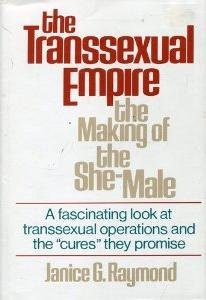
The Internet has a strange way of broadcasting value and worth. A forty-year-old book about transgender issues can be a cornerstone of critical thought at the time but then gets misquoted and passed off as old fashion. Today the book is out-of-print but fetches around $100 used on Amazon for a used hard cover edition. You have to wonder why the publisher does not make another printing? Modern books read like pop self-help books, quoting daytime TV shows and sourcing checklists of acceptable pronouns. The Transgender Empire written by a “radical lesbian feminist” (how did she ever get that label?) is both academic, historical and cuts to the chase and journeys deep into the topic. Below is just a short quote from the 1994 reprinting.

The medical model is also a disease model. And here exactly is the rub. If transsexualism is treated as a disease, then does desire qualify as disease? As Thomas Szasz asked in his New York Times review of The Transsexual Empire, does an old person who wants to be young suffer from the “disease” of being a “transchronological, ” or does a poor person who wants to be rich suffer from the “disease” of being a “transeconomical”? Does a Black person who wants to be white suffer from the “disease” of being a “transracial”?

All these questions, of course, raise larger social and political issues and remove these conjectural “diseases” from the medical/psychiatric framework.

From The Transgender Empire – Janice Raymond
Reprinted in 1994 by Teachers College Press, 1234 Amsterdam Avenue
New York, NY 10027
Originally published in 1979 by Beacon Press
Copyright © 1994 by Janice G. Raymond

Download the pdf

Quote of the Week

“I prefer someone who burns the flag and then wraps themselves up in the Constitution over someone who burns the Constitution and then wraps themselves up in the flag.”

― Molly Ivins

Heard this quote from a friend while riding bikes. Molly Ivins gets the point that’s for sure. If you have not read it in a while, The Constitution of the United States with the Declaration of Independence and the Articles of Confederation are actually a really good reads. Highly recommended for people in Wisconsin, Ohio and Pennsylvania.