Proposition E is the “Soda Tax” proposition and I must say that when I first heard about this I was thinking, “why do we need another tax?” In the first place, San Francisco is one of the most expensive places to live on the entire planet. Gas costs more. Food costs more. Housing costs more. Beer cost more. Need I say it, but parking tickets are outrageous. They are so punitive that when the City of San Francisco raised parking ticket prices a few years ago to raise revenue, and then were alarmed that revenue actually went down, they did not realize that $60 for a street cleaning ticket makes people be very careful where they park the Volvo. San Franciscans break into a cold sweat when the street cleaning truck goes by, in a mad mental dash confirming the last place they parked their car.
Anyway. About this soda tax thing. I don’t drink soda very often but when I do, I prefer a bottle of Mexican coke. The Mexican cokes, with the real sugar take you back about 30 years. Now that bottle of pop will cost another 24 cents, or 2 cents and ounce. I remember when a coke cost a quarter but that is another story.
So my first thinking on Proposition E was, why this regressive tax that in the end really only effects poor people? You work a crappy job pushing a broom all day, or cleaning toilets or hauling stuff to the dump and your simple gratification at the end of the day is a can of soda. Maybe they should tax the big folks like GE, Twitter and Google all companies with office floors of tax lawyers finding ways to shelter the profits? Let the common folk get their simple pleasures.
But then I read in the paper that the beverage industry has spent 9.1 million to try to defeat Proposition E. 9.1 million! San Francisco has around 450,00 registered voters. About 200,000 actually turn out to vote in any given election. So that means that every vote costs $45 to the beverage industry. By election day it will be $50. I think the beverage industry is nervous and does not want to have San Francisco set precedence for this type of taxation. Once it passes in San Francisco, it is all just a matter of time and that it will pass in other places. Just look at smoking. Thirty years ago who would have thought that smoking in bars would be illegal. And then I thought, why not tax soda? Obesity and diabetes are out of control here in the land of the free. Somehow we all will have to pay the medical bills for these ailments. Slowly I then went from a “stop taxing me to death” stance to a vote “yes” on Proposition E. My message to The Coca-Cola Company is you cannot buy my vote. Now, if you had only dropped off a case of coke and a bottle of Jamaican rum before our last party that may have done the trick, but in all honesty my vote is not for sale. As a matter of principle, you lost my vote on this one. San Francisco. Let’s prove the big money wrong and show them they cannot buy our vote.
Vote Yes on Proposition E. It needs a 2/3rds super majority to pass.
As is the case with years past, The Pelican Café gives out awards for the Best of Hardly Strictly. It is a great honor to have been chosen once again for this task.
BEST FIDDLE PLAYER
Joe Spivey with The Time Jumpers Featuring Vince Gill, Kenny Sears, Dawn Sears and Ranger Doug Green
Joe Spivey played some great fiddle on the Banjo Stage during this set on Saturday and for me it came at a perfect time. I had just had an earful of Deltron 3030 with The 3030 Orchestra at the Gold Stage (what a disaster that show was, especially in terms of sound) and needed to hear something down-home. There is something beautiful about bluegrass fiddle when played well. It combines speed, a singing sound and when done well a lot of funky polyrhythms. Joe Spivey has probably been delivering on this and more for years. He sounded great.
BEST SINGER THAT MADE YOU WONDER “HOW CAN ANYONE SING LIKE THAT AND NOT LOSE THEIR VOICE
St. Paul w/ St. Paul & The Broken Bones
If you like in-your-face, soulful, Aretha Franklin southern Gospel singing, St. Paul is your ticket. He can simply belt out tunes, one after the other like there is no tomorrow. His stage presence, in a dapper blue suit and entertaining banter was perfect for his throwback style. If you are a singer or study voice, you must check out this guy. He does not take prisoners.
BEST BAND PERIOD, NOT IF AND OR BUTS
Jon Batiste and Stay Human
I must confess that I have a weakness for music from New Orleans. There is a beautiful combination of elements – spontaneity, virtuosity, soul, community, creativity and an artist to audience communication that transcends other music’s. Jon Batiste and Stay Human show at the 2014 HARDLY STRICTLY BLUEGRASS FESTIVAL was outstanding. It all started with just the drummer coming out on stage playing just a tambourine in a very funky style. He was then joined, one at a time, by other members of the band. Alto sax, then tuba then Jon Batiste on a trumpet looking melodica. They played in a very traditional but polyphonic style. The set was full of surprises. For many tunes they would get behind there instruments, Jon at the piano, the drummer at his kit and just make magic. Funky numbers. Traditional tunes. At one time the sax player picked up a curved soprano and played a tune that harkened back to Sidney Bechet. Other times they would break into a sort of modern jazz, free-jazz thing that would make Ornette Coleman smile, then in the next moment they played a corny 70s tune, Killing Me Softly with just horns. The ensemble playing was impeccable. They closed out the set by heading out to the crowd in a line, playing their instruments, marching band, second line style. Pure magic.
BEST SURPRISE BAND THAT YOU NEVER HEARD OF THAT REALLY SOUNDED GREAT
The Lone Bellow
From Brooklyn, New York, The Lone Bellow’s set at the 2014 HARDLY STRICTLY BLUEGRASS FESTIVAL just made you wonder were this alt-country band will be in a few years. Fine guitar playing and really impressive, authentic vocals by the entire group. Kanene Donehey Pipkin (mandolin, vocals) can really sing this stuff. As group singing goes, The Lone Bellow was amazing. Strong. On pitch. Well rehearsed.
BEST CANADIAN BAND WHERE OVER HALF THEIR SONGS SOUNDED LIKE DON MCCLEAN’S “AMERICAN PIE”
Blue Rodeo
I suppose of you like that sort of formulaic 70s pop tune sound with the predictable hooks and uneven singing this would be your band, but they could have thrown in a “drove my Chevy to the levy but the levy was dry.”
Prelude
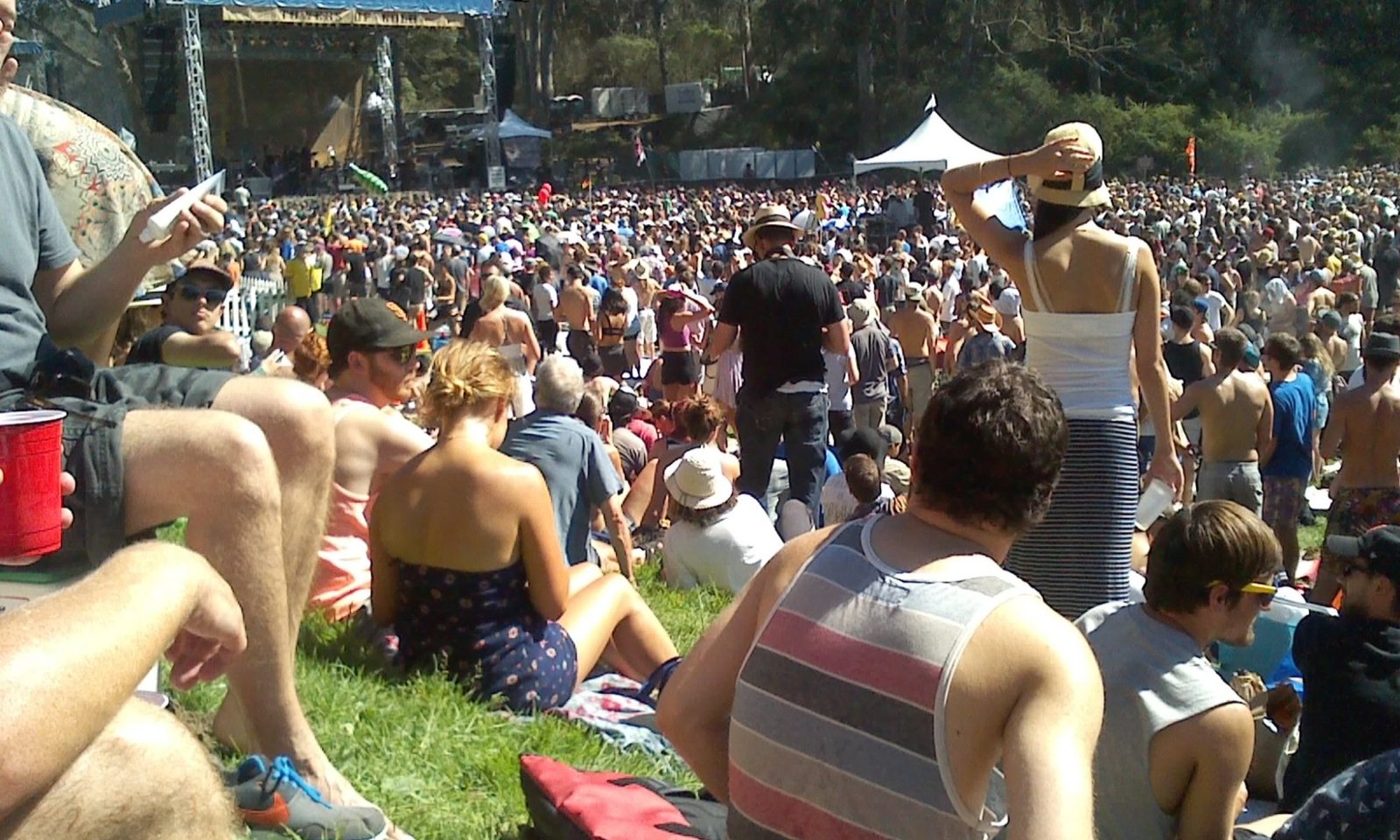
The Hardly Strictly Bluegrass Festival always takes place the first weekend of October in San Francisco’s Golden Gate Park. In 2014, the weather was superb, with clear skies both days. Unlike some years, it was actually a bit too hot for some people and at many stages people sat far away preferring the shade of the trees. Ocean Beach had a long period swell running, sixty degree water temperatures and east winds so the surf was good. The Giants were in the process of defeating the Washington Nationals in playoff baseball. On Saturday, the festival was not as crowded as usual as the baseball game was in the afternoon. That game lasted six and a half hours and was won by the Giants in the 18th inning on a Brandon Belt home run. Life is good in the Bay Area.
Next year I think I am going to hang out a bit further west at HSB. Closer to the old time stages and the music from Appalachia. Ralph Stanley, winner of a 2013 HARDLY STRICTLY BLUEGRASS FESTIVAL OFFICIAL PELICAN CAFÉ AWARD played the Banjo Stage on Sunday but I was already parked with my family at the Star Stage listening to Rosanne Cash. The difficult choices we have to make this time of year.
HSBG 2014 at the Gold Stage
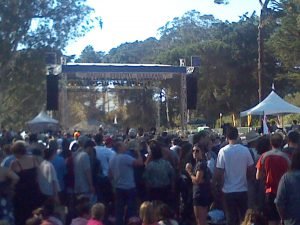
HSBG 2014 at the Arrow Stage
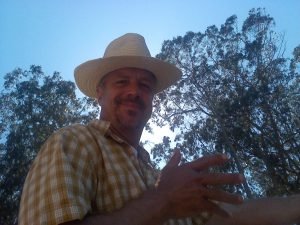
Paul enjoying the weather and sounds…
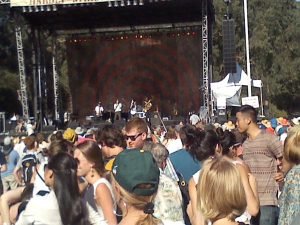
Saturday at the Arrow Stage listening to Jon Batiste.
View from Grand View Park towards Golden Gate bridge
View from Grand View Park towards Golden Gate bridge
View from Grand View Park Looking West
View from Grand View Park Looking West
A local tourist many years ago
The stairs
There are many neighborhoods in San Francisco that seem to have a paucity of parks. Parts of the Sunset. The Excelsior. Endless square blocks of houses, squeezed together like sardines. There may be huge beautiful parks like Golden Gate Park and McClaren Park, but there are not many little ones where you can just get out and escape the confines of your house to walk the dog our throw a ball around. People in each neighborhood really know about these little parks, but outsiders often require time to even find and explore them. One such park in the Sunset District is Grand View Park.
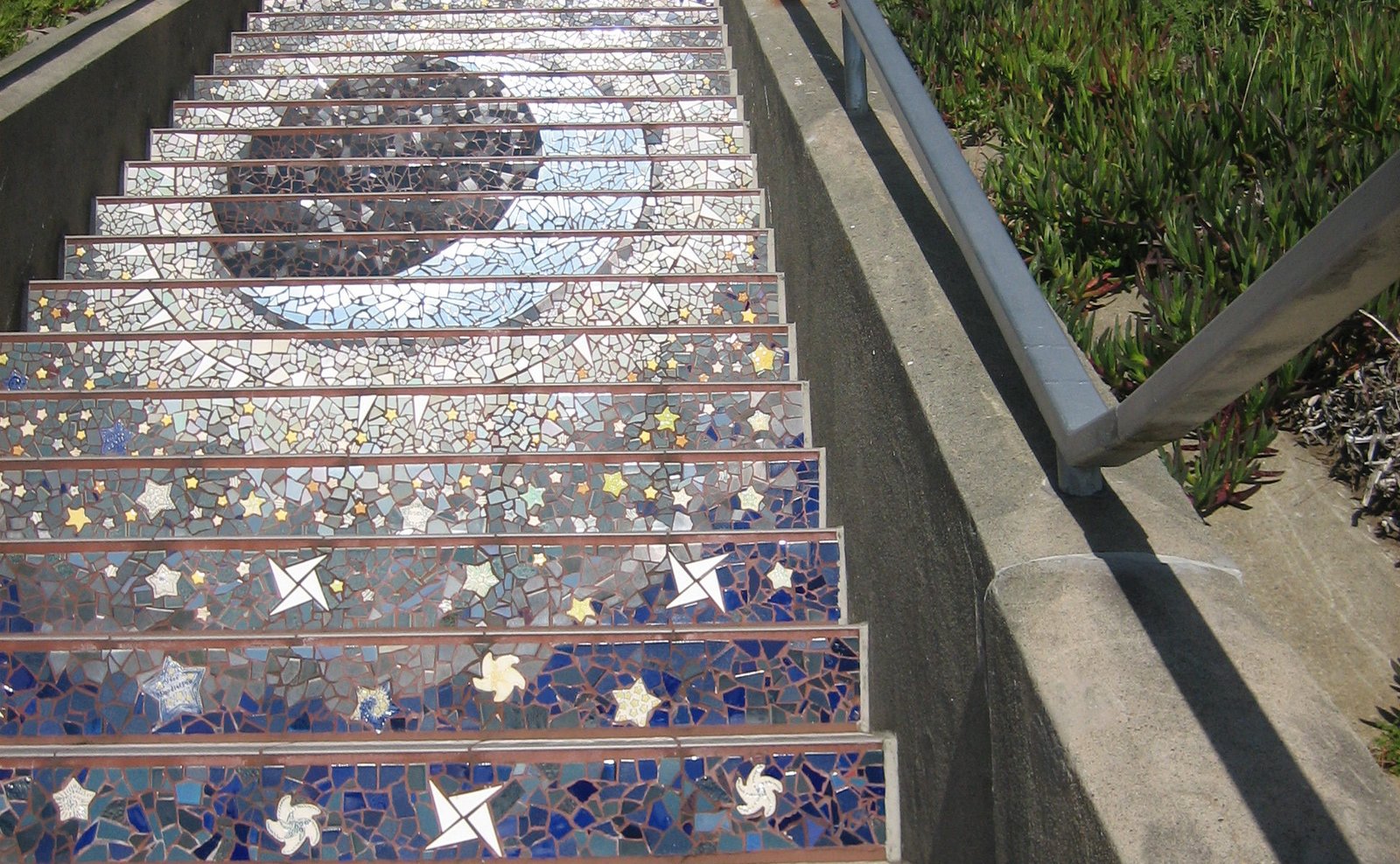
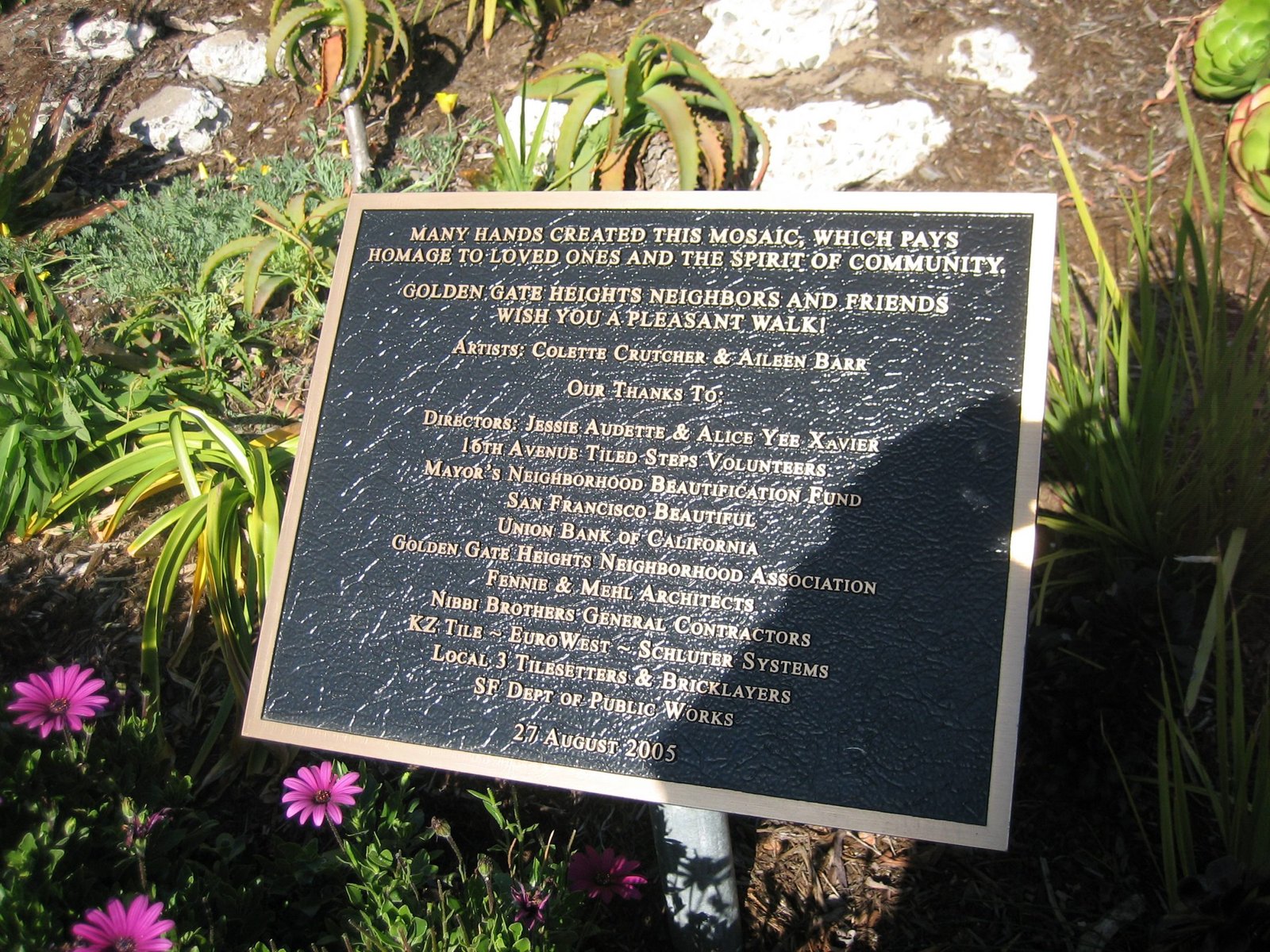
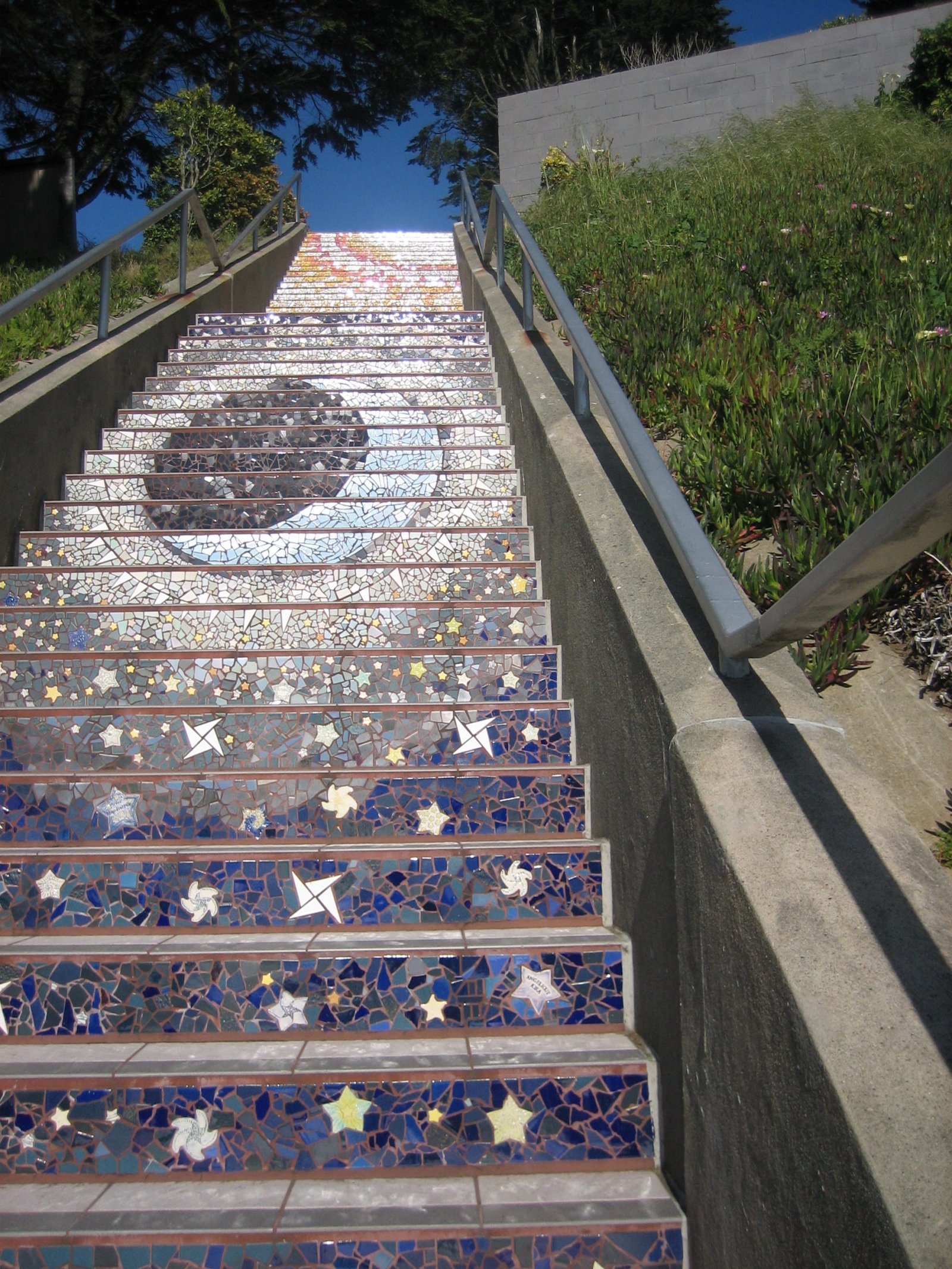
Grand View Park is simply a good-sized hill off of 19th Ave. It is surely used by the local dog walkers and morning exercisers. An interesting way to get there is to go east from 19th avenue on Moraga. When Moraga ends park. There is a most amazing stairway that leads up the hill. This stairway, a product of the Golden Gate Heights Neighborhood Association, has a beautiful mosaic running up its steps.
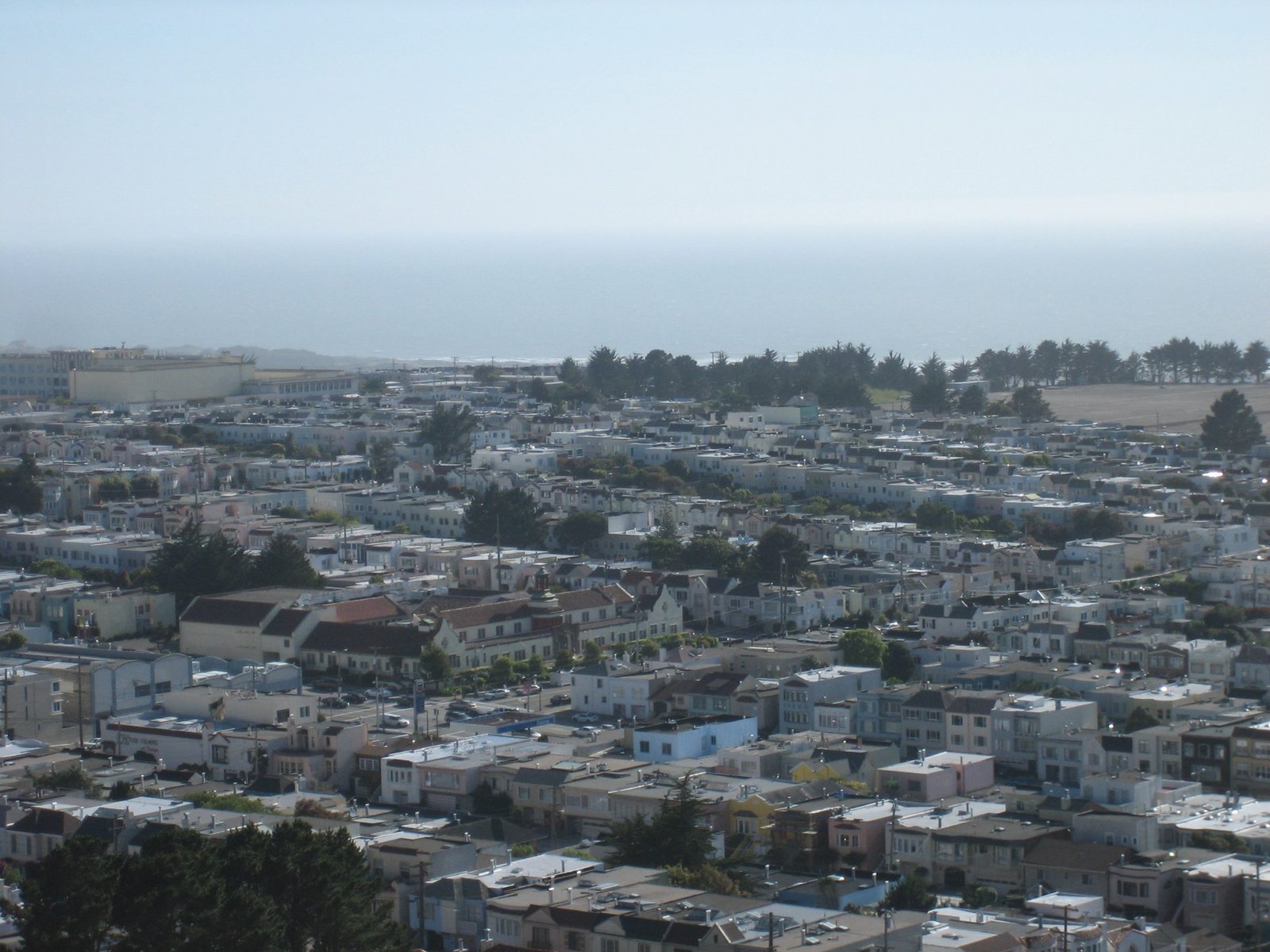
After climbing these steps, one winds ones way up more steps to the top. The views at the top are stupendous. One can see downtown, Alcatraz, the Golden Gate Bridge, the Marin Headlands and of course the immense Pacific Ocean. Below are some photos of Grand View Park where tourist buses rarely venture.
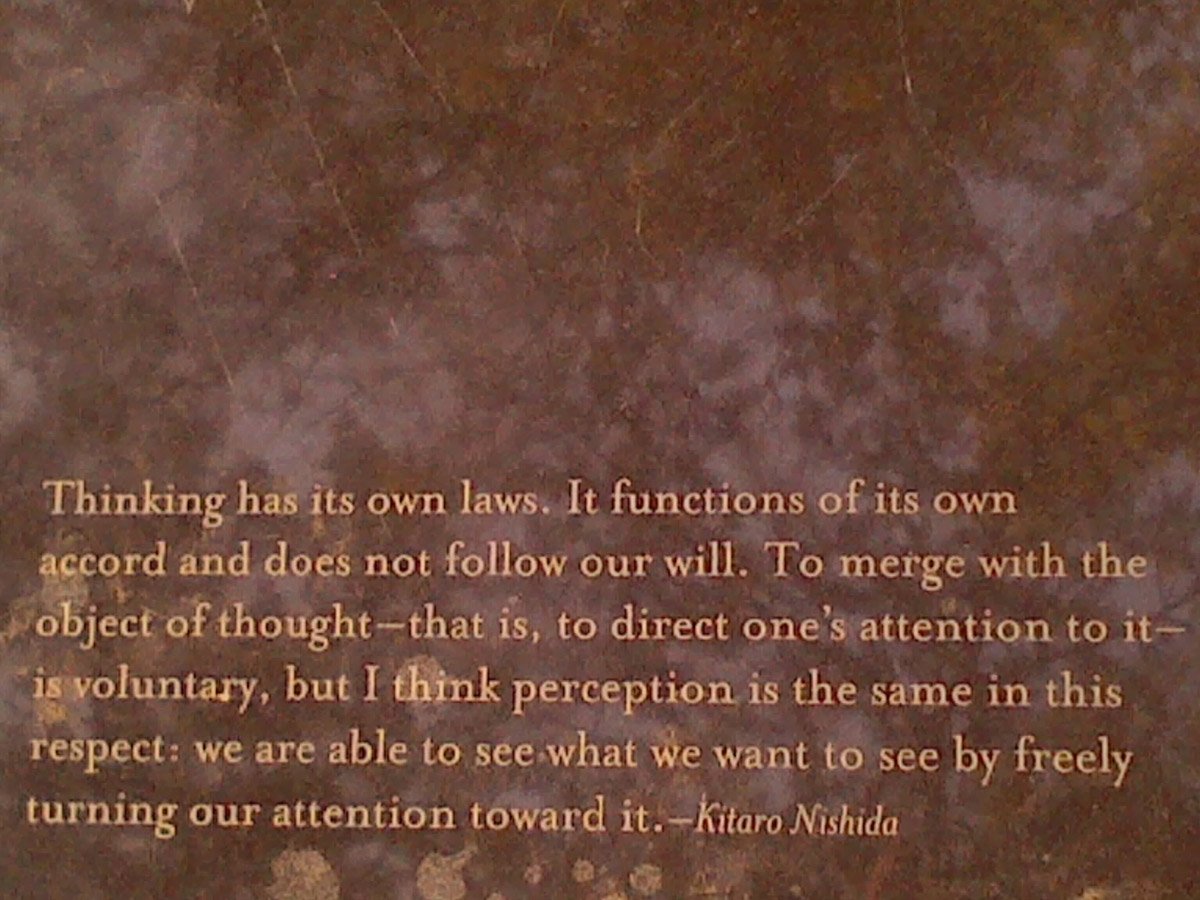
Thinking has its own laws. It functions of its own accord and does not follow our will. To merge with the object of thought – that is, to direct one’s attention to it is voluntary, but I think perception is the same in this respect: we are able to see what we want to see by freely turning our attention to it.
Kitaro Nishida
From a stone on the Philosophers Walk in McLaren Park in San Francisco
For people who are tired of that old drab happy birthday song, here is sheet music for a birthday song that has to be sung like a drinking song. It has been known to mend a relationship on the rocks. It can also brush over the fact that you forgot a present…
Beauty Operators in the house this weekend. Great song writing. Amazing harp player. A mix of old tunes, originals and interesting adaptions of standards from the 70s and 80s.
What is pretty interesting about these venues, is that I doubt any doctors show up at the Doctor’s Lounge
and I never saw anyone drink milk at the Milk Bar.
There are still a few copies of this limited release CD. Listen to examples and get the CD at Add to Cart at CD Baby!
Album Notes
Kai Lyons – Guitar
Erik Von Buchau – Drums
Dillan Riter – Bass
Recorded at Granada Studios in Half Moon Bay on August, 29, 2013, FIRST TIME AROUND by the Butterfly Jazz Trio is a spontaneous romp through some funky grooves, subtle ballads and straight ahead explorations. The session was inspired by gigs the Butterfly Jazz Trio played in downtown San Francisco in various bars and hotels during the summer of 2013.
All tunes were chosen like they had been on the gigs – spur of the moment, like many of the great sessions of the late 1950s and early 1960s. Two takes were done of most tracks but invariably the first was the one chosen. Freshness and immediacy was the agenda. There are no click tracks, prefabrications or overdubs of any kind. Just real instruments, listening, talented players and a splendid warm-sounding tube amp built by Rico Macalma, the engineer on the session.
At around 5pm, the crew packed up realizing that we all needed a break. We headed up to the Mission District in San Francisco for dinner. Time to chill before another gig at a hotel off of Union Square.
If you are a fan of the jazz guitar trio, music that swings hard and melodies that stay with you long after you finish that last track, check out the CD. Makes a great gift too. You may just want to listen to it again and again.
A FEW SAMPLES
There are still a few copies of this limited release CD. Listen to examples and get the CD at Add to Cart at CD Baby!
Engineer & Mix by Rico Macalma, Mastering by Rainer Gembalczyk
Executive Producer & CD Design – Paul Lyons
Unauthorized copying and reproduction prohibited.
Copyright 2013 – Butterfly Jazz Trio – All Rights Reserved – kailyons.com
Every now and then you have to pay attention. It seems the older you get the faster time goes by. The other day I searched on YouTube for some of the songs that I composed and arranged back in the late 1990s with various groups in San Francisco. Some of these tunes have 100,000 plays which is sort of cool but I am sure that at this point no one in this group is making money off those plays. We did it for love anyway. And the dancers.
Arrangements by Paul Lyons
Orq. Azabache – This Moment
Hi. This is Paul Lyons the arranger of this song and many tunes on this album – Azabache from 2000. Thanks for posting this video.
What makes this song so cool is that it is a salsa song about breaking up. There are very few of those. Usually salsa songs in English are love songs and are quite corny. Not with this one.
These charts where written originally for trumpet, trombone and baritone sax. Notice that on this recording the band played the song with trombones. What is so strange about this recording is that the second mambo I wrote originally as an afterthought to the song. I always imagined a solo on top of the trombone line. But I love this tune and knew it would touch people.
Julio Bravo, Sin Rencor
Arranged by Paul Lyons from San Francisco. Another tune I actually do not remember arranging. 2000 was such a crazy time. People thought the world was going to end. I just had had my second kid, a daughter Lucia. At the time I was writing about one arrangement a week and every now and then complete originals would be commissioned. The phrasing of the horns is stellar. Bill Thuerer, Derek James, Stephen Khuen. The orchestration is how it was written.
Simplemente Complicada – Orquesta Azabache.wmv
https://www.youtube.com/watch?v=7z7Cr-zIX2Q
Composed and Arranged by Paul Lyons. Lyrics by Ray Martinez. This is a tune/melody that I wrote that Ray wrote lyrics to. It was about a relationship he was having at the time. So Ray put words to the song and then brought it back to my place with a scratch recording. We probably hung out for a while and brainstormed some ideas. I then wrote the arrangement that afternoon. All of the songs on this album came together in one six month period and I am certain this project (Azabache 2000) was self produced. It is not in print anymore. Someone call Ray and tell him to press a few thousand more.
Azabache – Cinco a Diez
Arrangement by Paul Lyons (Azabache 2000). About 100,000 views makes me scratch my head at how crazy the music industry is. This is a very cool tune about a very difficult situation – 5 to 10 years in jail.
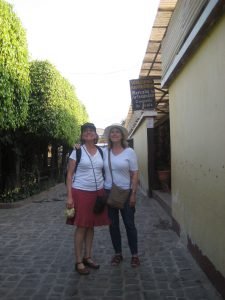
After eight years living a life of opulence in San Francisco, we made a return trip to Guatemala the first week in April 2014. Traveling was Andy, my wife, Lucia my 14-year-old daughter, Lisa our friend who is traveling for research work and myself. From San Francisco there are no direct flights, so we were routed through Dallas. A five-hour layover that turned into six, we ate a very poor meal at TGIF Fridays. Over-processed stuff. Chicken that tasted like rubber. Grilled vegetables that were cold and tasteless. You would think in the United States we could do better than this, but apparently not. In most airports food is either fast food or restaurants that are really sports bars, which serve over salted food, and who’s main objective is to tempt you with overpriced mass-produced cocktails.
Paul in Antigua
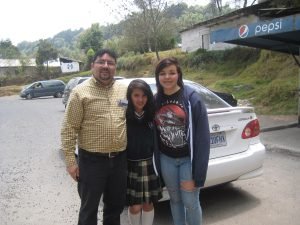
Lucia at Agua Tibia
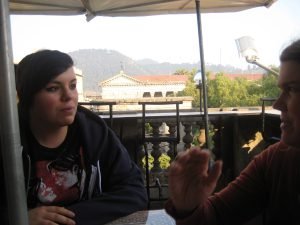
Andy and Lisa
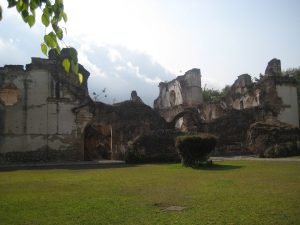
La recoleccion ruins by bus station
La recoleccion ruins by bus station
Antigua
Antigua
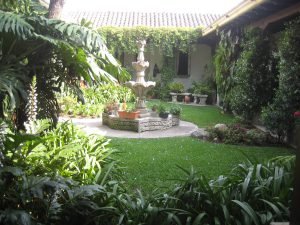
Hotels in Antigua
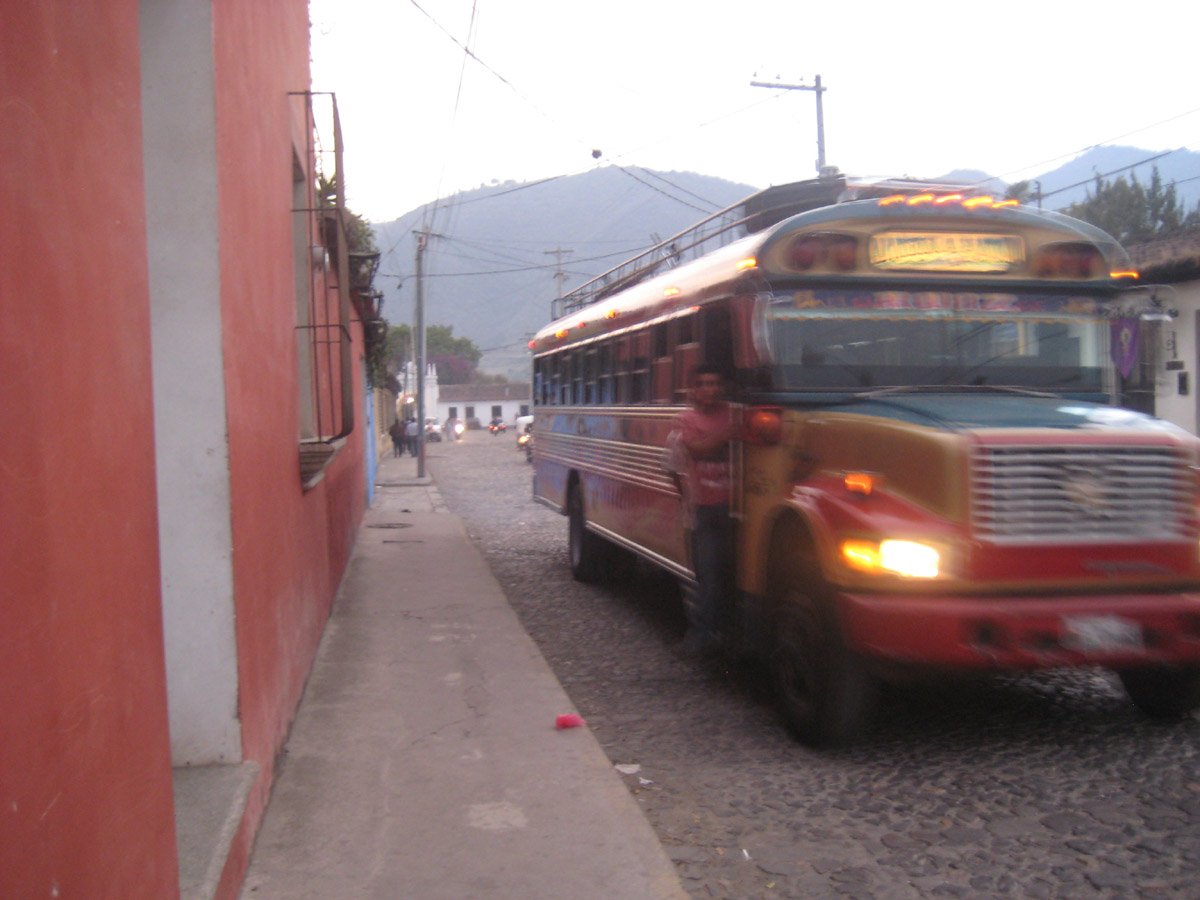
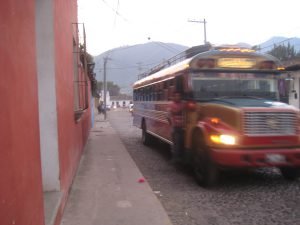
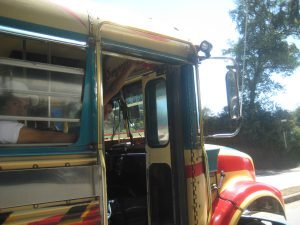
Chicken Bus
Lucia in Xela
7000 feet in San Lorenzo
Mario, Chaito and Lucia
San Marcos Guatemala
LLa recoleccion ruins by bus station
Agua Tibia
In Guatemala City, at the airport in the dark we caught a taxi to our Bed and Breakfast, a place we had stayed before. While it was close to the airport the taxi driver ended up roaming around a bit aimlessly. We entered gated neighborhoods with armed guards eventually exiting in confusion. After about 15 minutes, we got our bearings and found the place. It is not easy finding an urban dwelling surrounded by walls. The addresses are often cryptic and the order of streets is frequently unruly and illogical.
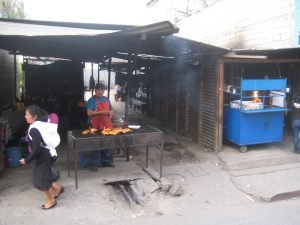
The next morning, at the bed and breakfast, after a homemade breakfast of papaya, eggs, beans and coffee, we rode to Xela in a private van with many empty seats. It is important to appreciate ample personal space when traveling in Guatemala, as often you can be crammed into the public chicken buses with three to a seat. Soon on the highway the experience begins to all fall into place. Lots of people walking on the side of the road – Mayan woman in their colorful garb carrying bundles on their heads, men in cowboy hats, kids on bikes patrolling the hood. Volcanoes soaring into the sky off in the distance. The brightly painted walls and signs for everything from hardware stores, to dentists, to political parties to the ubiquitous Tigo – the phone company. I vaguely remember each of the towns on this journey though the road seems a lot better now then it did in 2006. It is two lanes in both directions, which is new. Along the way we ate a roadside restaurant called Kape Paulinos where the food was excellent. The chicken was delicious and the freshly squeezed juices and handmade tortillas were superb.
Muerte de General Rufino Barrios
We arrived in Xela around 3pm, found our hotel, got money from the ATM and chilled out for the rest of the day. After dark fell, we did go to a café that doubles as a museum. On one of the walls was a painting named Muerte de General Rufino Barrios. The date on the work was 1944 and I do not know if it was based on another painting, but I really became enthralled by the tragic scene. Rufino Barrios looms large in the history of Guatemala. In fact, the little town where I am writing this, San Lorenzo is the birthplace of Rufino. He was an enlightened fellow who became president of Guatemala and fought for the empowerment of the poor Mayans and Guatemala in general. He attempted to institute land reform, always a precarious topic for politicians, especially in Latin America. There is something about the painting of Rufino Barrios, dead on the battlefield that metaphorically tells a story that remains tragically the same today. Unlike, Peru or especially Bolivia, in Guatemala the indigenous peoples are pretty marginalized politically.
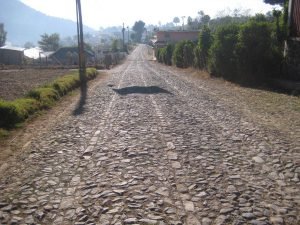
The next day at 6am we were picked up from our hotel by Eduardo, one of the longtime workers of health studies that have gone on in San Lorenzo for the past two decades and was the reason for our family’s yearlong stay in 2006. Up an insanely steep cobblestone road to 7000 feet and the Altiplano and San Lorenzo.
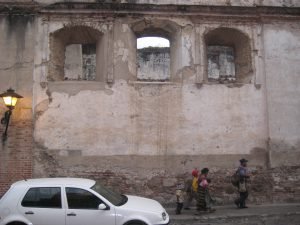
In the afternoon, Lucia and I got on the bus and made our way down to San Marcos, where we lived for a year. A lot has changed. The new bus station on the north side of town has changed the traffic flow and has surely been a boon for stores in that area. The earthquake last year destroyed many of the old buildings. The building where my kids went to school, San Carlos, was destroyed. I remember that school as being very quaint, with its lathe and plaster walls, little balconies and rickety stairs. Fortunately, when the earthquake hit, there were not many people in the school. Many of the buildings more than eighty years old seemed to have crumbled. Unfortunately, they are all being replaced with the modern cinder-block construction that you see all throughout Mexico and Latin America. Unimaginative and cold. With the loss of these old buildings, the city has lost part of its charm.
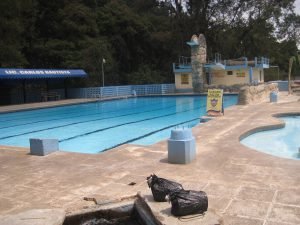
We went by the house were we lived for a year in 2006 and ran into the son of our landlord. We met up with Mario and Chaito, some old friends as school was letting out. They then drove us down to Agua Tibia, the spring fed swimming pool at the edge of town. People in San Marcos always complain about Agua Tibia as being too cold but to me the pool is quite pleasant. We swam and dove off the three and five meter platforms. After buying some bread and hanging out in the main plaza, we walked the five or so blocks to the bus station and headed back up to San Lorenzo. It always amazes me how efficient the bus system is in Guatemala. You never have to wait more than 15 minutes and a bus, going exactly where you need to go is available. How these bus drivers make money does not seem logical. Our fare for the 45-minute ride up 2000 vertical feet was only one dollar each. The bus holds about 20 people.
The weather this whole trip has been splendid. It has been warmer than normal and even during the nights it has been pleasant. In times past, staying up here in the Altiplano was a bit grueling as there often is a chill that gets inside your bones. Running water and hot showers are intermittent at best. Heat is often a brick wood stove. But the people persevere. It is an odd paradox that sometimes people with so little enjoy the day more and generally seem happier than those with vast material possessions. For sure, there is a lot of pain and suffering here, mostly caused by the dire poverty, but yesterday, while walking, we ran into an elderly woman, in traditional Mayan garb, about 4 feet tall, with a long grey ponytail and brilliant grey eyes, tending to her sheep. She was sitting by the side of the road, simply enjoying the day. We could have stayed and conversed for a long while and she seemed at peace with the world. The sun was shining. Little kids as they walked by would greet her with respect. Every now and then she would take her 20 foot long whip out and with great control violently smack it on the ground next to one of her sheep who seemed to be wondering too close to the road. It seemed a bit like a scene from the Hobbit Shire in Lord of the Rings. At any moment Gandalf was going to appear on a horse.
The following day, Andy and I headed back down to San Marcos. We met up for lunch with our good friends, Checha, Paoula and their three beautiful kids. Perhaps the best English speakers in town, they cobble together various jobs as English teachers to make ends meet. On the weekends, Checha sings in various rock and cumbia bands. Earlier, on the street, we ran into one of the shopkeepers who sold school uniforms we had met years back. Unlike my old buddies at the hardware store and pool, he actually recognized me. His shop next to San Carlos school had crumbled in the earthquake. We exchanged pleasant greetings but he did not seem the confidant entrepreneur I remember but a man trying to gather his bearings. We made a trip over to San Pedro via taxi and experienced the market that had not changed a bit. A taxi to San Marcos then a chicken bus back up to San Lorenzo. You have not experienced Guatemala, if you have not been on a chicken bus. They are brightly painted old Blue Bird school buses from the United States. They are often packed with riders. On this particular trip back to San Lorenzo, I spent most of the time standing up crammed in with all the campesinos. The driver seemed to be around 18 years old and had mastered driving the bus like a formula one racer. Hairpin turns at top speed, double shifting, avoiding potholes, passing trucks with skill. I noticed a few bicyclists run off the side of the road as well. Meanwhile his assistant did everything from collecting fares, to climbing up to the roof to store rider’s packages, to assisting the driver negotiate tight intersections or an oncoming vehicle. Bus driver assistants never get on the bus when it is still. The bus must be going at least 10 miles an hour. While shouting out the bus’s destination, they will run parallel to the bus and at the last minute grab on to the railing and board. Often they will disappear and ride on the back ladder and make their way in through the back emergency exit. It takes a remarkable athleticism to be a bus driver assistant.
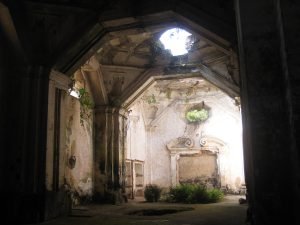
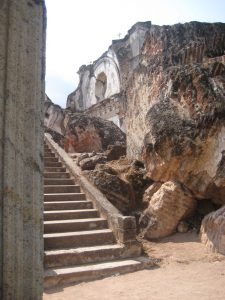
The last few days we spent in Antigua. A bit touristy for sure, but beautiful and full of fond memories. Hot showers, amazing meals, very cool old ruins. One night we walked by THE BLACK CAT Antigua, once a very happening hostel, restaurant, bar establishment. It had changed ownership and right a way I could tell it was not the same place. They did a remodel job that was a bad idea. While I tried to figure out the situation they tried to coerce us in, but we knew better and continued on our way. The place was pretty empty. Word of mouth still travels very fast. It looks like the real BLACK CAT is now in XELA.
For anyone who has made a WordPress theme, the default themes have always been lacking something. After this site got hacked, I came around to it and updated the theme of the Pelican Cafe with the new Twenty Fourteen for the WordPress theme. I would give it 5 stars. For future projects in WordPress I will be using this as the base theme. Nice work WordPress!
There is really no such thing as a music called jazz, or a music called bluegrass or a music called blues, music called black music or music called white music. It is all music from America. A vibrant living music. In the end, the names do nothing but to segregate music at different drinking fountains. The best of American bands can play any of these strands well. I was blown away when the Lyle Lovett large band opened their show with Charlie Parker’s Donna Lee. A band from the heart of “country” music, playing another music from the opposite hue of the musical spectrum. The tempo was blazing. The solos were fresh. But bands with great players from Nashville can do that kind of thing and make it feel natural. The concept that jazz is America’s “classical” music I find disturbing as it means that it has died and run its course. When Bach and Mozart were writing and playing, it was not classical anything. It was just music.