Technology, The Digital Era and the Shaping of a New Geography

It took until I went to college in the early 1980’s that I learned that geography was not only about maps, states, countries and continents. I took a class by Yi Fu Tuan where I learned about spaces and places. That besides physical geography there was also the whole world of human geography. Inside of human geography there were many sub types, cultural and political to name but two.

Political geography is defined as:

“Political geography is concerned with the study of both the spatially uneven outcomes of political processes and the ways in which political processes are themselves affected by spatial structures. Conventionally, for the purposes of analysis, political geography adopts a three-scale structure with the study of the state at the centre, the study of international relations (or geopolitics) above it, and the study of localities below it. The primary concerns of the subdiscipline can be summarized as the inter-relationships between people, state, and territory.” –
Wikipedia

I find it interesting that I have been unable to find any writings on how technology has affected human geography over time. Imagine with every technological change how our understanding of the earth, other spaces, places and cultures have been influenced. For instance, starting with the invention of the wheel the world has become a smaller place. People are always devising new ways to get around more efficiently, faster or easier. Fast-forward to 1450, in the West, the printing press made it so descriptions of faraway places were mass-produced and then could be consumed by many people. Notions of that world were given a perspective always from the cultural point of view of the observer. The telegraph made it so people continents apart could send messages instantly. Later the telephone, radio and then television perpetuated this phenomenon of space taking on new meaning. As time goes on, these technological advances have had profound effects on human psychology and geography. The world is no longer your family and farm, local community or village. It is seven continents and you can visit any one digitally and by pushing a few buttons. In our current world, this notion of space and presence has been invaded by the internet, but more significantly the cellphone and specifically, the “smartphone.”

From a human experience perspective, all of the modern communications technologies of the last 150 years have to do with changing this sense of space. A telegraph over the wire was like an arm reaching across an ocean. Radio had the effect of making it so someone hundreds of miles away was seemingly sitting in your living room. Television. simply added a visual component. At the beginnings of each of these technological advancement was a time of readjustment and decentralization of society and political power. Eventually, overtime, the power became monopolized by few powerful players. In television, in the United States it was the three major broadcasting networks. Now on the internet it is Google, Facebook and Amazon.

In 2019 the cellphone makes it so many people for most of the day are mentally not even in the physical location that they preside. I noticed this phenomenon when at the beach. It was a hot day and people went out to the ocean to cool off. I noticed a woman wading in the water while at the same time having a video chat with someone on her cellphone. Was the woman at the beach or was she with the person on the cellphone? Where was the woman? Is human geography simply where we occupy the planet or where we preside in our minds? The digital era makes it so geography no longer is a place at all but spaces that are digital and psychological.

The ramifications of this effect are many. We see it in the way the political systems around the world are in upheaval. No longer do you simply build walls and moats to keep away intruders as in the end the digital landscape has no borders. We see it in how political systems have become more reactionary and full of jingoism.

Furthermore, while people have this notion that they are in control, nothing could be further from the truth. The large internet companies are tracking everyone’s digital landscape and using techniques from behavioral psychology to reward or punish certain behaviors with the motivation of both political and economic influence. This has been dubbed the “surveillance economy.” George Orwell is surely snickering in his grave but probably not, as humour was not his strong suit. He is probably screaming – “I told you so!”

Where this will end up is unknown but for those who think that the digital era is a time of liberation and some sort of political and economic equalization are wrong. The same centralization of power that happened in previous technological eras has happened again. Monopolies have emerged as the powerful players. There are dangerous silos of digital communities that are like echo chambers reaffirming racist and cult-like manifestos based on ignorance and flawed science. This is happening in all spaces, both on the political right and left

What is the one constant is that the undesirable qualities of humans that have existed over centuries are unchanged – greed, vengeance, vanity, violence to name a few are still prevalent. In some ways, with the internet they simply are amplified.
“Surfing the Internet”, “The Cloud” and other Silly Acts of Language Appropriation


Cultural appropriation, at times also phrased cultural misappropriation, is the adoption of elements of one culture by members of another culture. This can be controversial when members of a dominant culture appropriate from disadvantaged minority cultures.
Wikipedia

Among many segments of society there is a lot of attention to the issue of “cultural appropriation.” Researching it online you find that the phrase “cultural appropriation” goes back to the 1960’s. So much of that appropriation seemed to come about rather naively and certainly due to ignorance and insensitivity. The end result, besides being disrespectful was often downright silly. The Atlanta Braves. The Kansas City Chiefs, The Washington Redskins all seem to be names associated with a time when ignorance and a lack of cultural awareness was common and not even understood as a problem. Today, cultural appropriation seems to come to light mostly when a celebrity dresses in a certain way and does not understand the significance of the garb, or college students use “Day of the Dead” as simply an excuse to get drunk and try out new costumes, make- up, tequila and margarita mixes.

“Surfing the Internet”

But just as cultural appropriation was and is fueled by the marketing industry, so too is language appropriation. In the internet era there are many new marketing terms associated with the digital things that have metaphors from a romanticized analog object. The phrase “Surfing the Internet” conjured up in the mid 1990’s was a precursor for things to come. This phrase “surfing the internet” is simply strange for anyone who has ever actually surfed. When you surf, you often drive a car to the beach, paddle out past the incoming waves, wait for often a quarter of an hour for a set to come and fight off at least ten other people to catch a wave. Most of the time is spent far from any digital technology in the nature. As many big wave surfers say – “once you leave the beach you are in the wild.” Unlike being at your computer looking up websites, when you go surfing you do get a lot of exercise.

By contrast, when you open an internet browser you rarely get any exercise. You can instantly choose a website from a URL in your head, or go to an number of URLs that you have already visited. New pages flash in front of your face but you never get any of that energy that you get when you are in the ocean. The whole experience is actually nothing like surfing. Take up surfing. You will see what I mean.

“The Cloud”

Another silly term/metaphor is “The Cloud.” When I first heard this term in around 2005 the next weekend I was at a Super Bowl party with someone who is a network administrator and we were laughing about “The Cloud.” What is “The Cloud?” “The Cloud” is simply a server or data center connected to a network that can have redundancies and co-locations so that you can access data and applications from anywhere. The point is to make things secure, predictable and easy to maintain. It is also about monetizing software and data.

Real clouds, on the other hand are anything but predictable. They do not store any digital data and they often move in unpredictable ways, release large amounts of water, ice, hale and snow and sometimes play a dance with the earth and electricity. Real clouds are nothing like “The Cloud.” They are in the sky. Data centers are often those huge, nondescript warehouse buildings next to highways that look very nondescript.

Your data is not somewhere up in the sky floating around in a cloud. More likely it is along highway 101 along with a lot of refrigeration to keep all the servers from melting down. Sometimes the data center is in Florida as we know when there is a hurricane whole data centers can go down.

“You Guys” and the Death of “Ladies and Gentlemen”

I am not sure when this expression “you guys” became ubiquitous but among people under forty it is everywhere. I find it often used when a group of woman are together and one is addressing the entire group. “You guys, let’s go get some coffee!” Does the speaker not see they are addressing only woman? Do they not realize that their great grandmother did not actually have the right to vote and this may be insulting? But perhaps it is the informal nature of our society. Perhaps it is just an expression without any real thought. Perhaps it is, and this is my general observation, the new “ladies and gentlemen.” Indeed when I hear the phrase “you guys” over and over again, instead of wincing, in my head I just replace “you guys” with “ladies and gentlemen.” I do not dislike the “you guys” people. I just find the expression inaccurate and sexist and it plays into our misogynistic and patriarchal society. For woman, “you guys” is not empowering and should actually be insulting.

What is even more peculiar about “you guys” is that we live in times when whole generations, organizations and academic institutions are very sensitive about pronouns. “Please call me “he” on Mondays but by Wednesdays I usually am feeling very non-binary so on Wednesdays use “they.”” Good grief what a quandary! Perhaps we should all go by UGYZ the new “you guys” which is really “ladies and gentlemen” which doesn’t really have a gender, just like the phrase “mankind” which does not actually have a gender but in the end really just means “humans.”

UGYZ. Upper or lowercase. It means the same. Invented here on the pelicancafe.net. Use at your own discretion and now approved for use in Scrabble when you are having a problem getting rid of your “Z.”


Why Facebook Really Sucks

Over five years ago I wrote a piece for this publication called THE VAPID STATE OF AFFAIRS – FACEBOOK AND THE NEW NARCISSISM (MAY 26, 2012). In it I mused over the Facebook IPO and whether it would survive as the revenue model was all in advertising and market share. I have never clicked on a Facebook ad in my life and I do not even remember what they are about except recently they have become a bit more aggressive as I am suppose to go to Kelly Slater’s surf camp next summer. Yeah right. I was wrong. Subliminal messaging is a gold mine. The new narcissism has now elected a narcissist buffoon as president of the United States of America. As a nation we are becoming less intelligent and self-absorbed by the second.

I have always been skeptical of Facebook and it’s privacy policy, the algorithm that determines my feed and just the weird way that Facebook has made it so it is actually more difficult to contact your “friends.” In this post, I will outline the features of Facebook that really suck. No one talks about this much but it is time to shine some light on this strange company, actually a monopoly,  that has crept into the private lives of so many people.

7 REASONS FACEBOOK REALLY SUCKS

  • 1984 and Rewriting of History: Probably the #1 reason Facebook sucks is that Facebook will delete your posts if you are critical of Facebook as though they are  “thoughtcrimes” controlled  by the Thought Police as described in the novel 1984. I have experienced this first hand on Facebook.  A few years back I made a post explaining that Facebook was a for-profit corporation and that the space is actually not public but private and while they try to appear public the key motivating factor is profit and money. It made for a lively discussion on Facebook and (not that I care) got more likes and interaction than I had ever seen for a post of mine. When I tried to find that post months later, it was wiped from the site. Creepy shit. Mark Zuckerberg’s plea that the platform promotes democracy is just plain horseshit. Stop deleting posts that are not out of line if they happen to intelligently critique you or one of your allies.
  • Mental Health: Your feed is like a lab rats sugar water bottle feeding you spiritually non-nutritious waves of energy. Harry Shearer calls it the “envy machine.” “Good grief! Look at Charlie  Jones on vacation having such a good time and his dog is just adorable.” “What the hell am I doing in this cubicle thinking about picking up that flea medicine for Fido.” In the hospital mental health wards in a few years there are going to be people with Facebook addictions and 12 step social media recovery groups.  People who feel let down that people simply did not read their posts. My 23 year old son says that the site should have a warning when you log in similar to cigarette products. WARNING: THIS WEBSITE CAN BE HAZARDOUS TO YOUR MENTAL HEALTH. IT HAS KNOWN TO CAUSE DEPRESSION, ANXIETY AND UNPREDICTABLE NEGATIVE REACTIONS. PROCEED AT YOUR OWN RISK.
  • Terrible contact system: Contacting people on Facebook is obfuscated.  Do not even get me started with Messenger. It crashed my android phone.  By being able to control your method of contacting other people you are giving Facebook incredible power. How many people, your “friends” on Facebook do you actually have a mailing address, email or phone number for?   This is strange and devious.  Why can’t you just leave your phone number and email address on Facebook and get on with your life? These are your “friends” Here’s my number. When you are in town give me a call. I have left my phone number in a post and it is always wiped from the system.
  • Privacy: The sick concept of making money off of peoples’ intimate life experiences starting with your birthday. Why would users waste so much time contributing content to a website that could disappear in a flash or simply hold your content ransom? What happens in thirty years when you want to find something or someone you connected to on Facebook?  Will you have to pay to obtain the information you created? I simply do not trust it with any of my information. As they say, it is free and you get what you paid for.
  • All the bad parts of high school on steroids: Facebook is a bit like those cliques in high school but unlike in high school, you really have no idea who is in your clique. This is just creepy. Your feed comes up steering you psychologically in directions not of your choosing. It is like a carnival ride.
  • Facebook does not work for promoting local events If you play in a band Facebook is terrible as a platform for promoting an event.  You can invite people. Make a link to the event. It hardly ever works to get people out. The other problem is that your friends are all over the freaking world end up being the people who get more excited about your “local” event so promoting an event is pretty much useless. I get the feeling that the local people do not even see your post about the event.
  • San Francisco General Hospital This is something that is not written about in the news much, but it is the phenomenon of tax-dodging tech billionaires either building hospitals our making wings of hospitals and then having their names on the the front of the hospital. San Francisco General Hospital after Mark Zuckerberg gave 75 million dollars to the hospital is now called Zuckerberg San Francisco General Hospital and Trauma Center and the hospital had to go through the hoops of changing the actual acronyms of the hospital to ZSFG. What a jerk. “I will give you this money but only on the condition that you change your name and jump through these hoops.” Zuckerberg’s wife is a doctor/resident that works in that hospital. In essence he was simply making for better working conditions for her and twisting city higher-ups around.  This becomes even more disgusting when you realize that Facebook for many years has been avoiding paying taxes and offshoring capital.

https://www.forbes.com/sites/robertwood/2013/02/19/tax-increases-why-facebooks-billion-dollar-income-isnt-taxed-at-all-by-irs/#49d7aba0d92c

Benevolent player for the betterment of humankind? I think not. Just the same old greedy capitalist.  Giving money to public institutions should not make it so your name goes on the front of the building. Photos of the all the signs they had to change coming soon.

Now I could post this little piece on Facebook but it would be gone in a few days – dragged off in handcuffs to the great Facebook digital trashcan.″

The 10th Anniversary of the Google Content Id System – BETA forever…

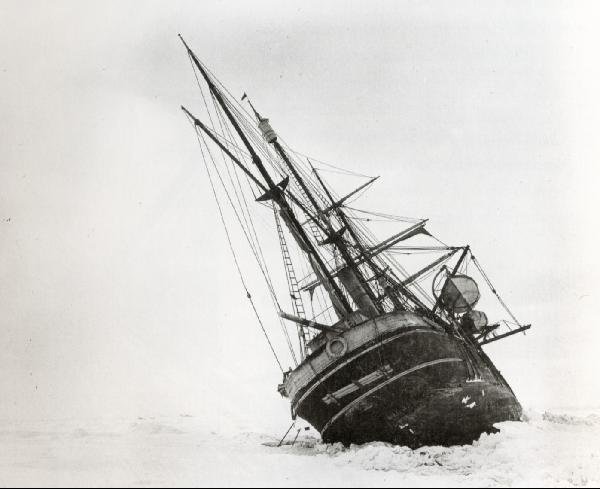
Photos is from the failed Ernest Shackleton voyage to the South Pole.   Sometimes it is just really hard and you get stuck.

Just putting this out there for the technology trades that the Google Content ID project has remained in BETA for 10  years. Man, I have worked at some slow projects in the software world, but 10 years! Hello people in the white buses…

Google (Alphabet, Inc.) has poured resources into automated cars, artificial intelligence, buses to ferry workers back and forth to San Francisco, gender qualifying in movies (creepy stuff), a more cryptic privacy policy and better marketing tools and analytics… but God forbid they get Content ID out of BETA. No money to be made there.

June 14, 2017 – 10 year anniversary! 

Google Content ID project has remained in BETA.

NUMBER OF DAYS content identification tools for YouTube HAS BEEN IN BETA

[getdays]

Why does this matter? The YouTube/Google Content ID is how Google pays the band. If you make it appear that you do not know the band even exists, then there is no one to pay and all the money just goes into Googles bank account. Brilliant plan for Google. Because of how the 1998 DMCA was written, there is no way (except for endless take-down notices) to get your work off of YouTube. For musicians, bands and artists – Google in the end is your master and owns you. My condolences.


“Imagine a business model where you are given all of the music publishing content for the last hundred years for free. After you build the initial interface, you basically do not have to do anything. The system is set up so that users and fans just give you content even though they have no rights to the ownership of that content. With much of this illegal content you garner about 50% of all advertisement revenue generated by that content. This can go on indefinitely. Sounds like there is no way you can fail. You will make billions off this stuff. YouTube just laughs all the all the way to the bank.”

Anonymous


BETA [bey-tuh or, esp. British, bee-] adj.
A pre-release of software that is given out to a large group of users to try under real conditions.
– PC Magazine Encyclopedia


At what point will the DMCA (Digital Millennium Copyright Act) of 1998 ever make it into the news? It is the basis of our digital world and the piracy it created was/is a huge giveaway from the creative class to the tech class.

from a few years back….

https://sfjournal.net/blog/digital-millennium-copyright-act-18-year-anniversary/

https://sfjournal.net/blog/breaking-news-after-over-8-years-googles-content-id-system-is-still-in-beta/

Open letter to Robert Thompson of NewsCorp

This is an open letter to Robert Thompson of NewsCorp. There is no link on your webpage on how to contact you so I thought I would write a letter. Sort of “old-school” don’t you think? I recently read Fake News and the Digital Duopoly in the April 5th version of the Wall Street Journal. Found it on a cafe table. Great op-ed, and I agree with everything in it. Clear and crisp writing and the article shed much needed light on lots of things.

Fake News and the Digital Duopoly
Google and Facebook have created a dysfunctional and socially destructive information ecosystem

Robert Thompson – Wall Street Journal


“publishers will routinely and selectively “unpublish” certain views and news.”

Robert Thompson – Fake News and the Digital Duopoly Wall Street Journal


I posted a piece on Facebook that was critical of Facebook and Google, the gist of which was just making sure all my “friends” know that Google and Facebook are private companies and that the space is NOT public and that they gather and mine your intimate personal history starting with – of course your birthday. This post of course disappeared from my history a few months later… never to be found again.


Your business model can’t be based on both intimate, gradual details about users and no clue whatsoever about rather obvious pirate sites.


I hate to tell you Mr. Thompson. Google and YouTube are the pirates. YouTube is one massive landscape of unlimited counterfeit movies and music. That should be the first thing addressed. It is called the revising of the Digital Millennium Copyright Act. It is wishful thinking that this will happen by the sense of goodwill and altruism of YouTube.

Read about it here –

https://sfjournal.net/blog/breaking-news-after-over-8-years-googles-content-id-system-is-still-in-beta/


and


DIGITAL MILLENNIUM COPYRIGHT ACT 18 YEAR ANNIVERSARY

Digital Millennium Copyright Act 18 Year Anniversary

Passed on October 12, 1998, by a unanimous vote in the United States Senate and signed into law by President Bill Clinton on October 28, 1998, the DMCA amended Title 17 of the United States Code to extend the reach of copyright, while limiting the liability of the providers of online services for copyright infringement by their users.
wikipedia.org

It is 1998 – The Senate Now Has E-Mail
Let’s Have a Party!

18 years ago today the Digital Millennium Copyright Act was passed. I would wager that very few people even know what the DMCA is, but it has affected modern life substantially. It is in many ways just one more version of an old story of plunder by larger more powerful entities, and the taking advantage of the smaller, but often more vibrant creators. In many ways, it has made it so the copyright laws in such industries as music are pointless.

But let’s back up a bit. Everyone can remember the transition that happened when CDs came out and then everyone was ripping their CDs to MP3s and handing off 100 gig drives full of music files to their buddies. Then there was Napster that simply stitched all these drives together in one big mass orgy of free MP3s. Napster got the injunction primarily because the established music industry  had no cut of the racket. Along come tech giants like Google, Apple, Microsoft and Samsung and to cover their liability the DMCA made perfect sense. If someone has “illegal” music on their devices, they should not be held accountable. Furthermore, if someone uploads a Beatles tune as a video with a picture of Ringo Starr as the graphics to YouTube, why should YouTube be held accountable for such blatant infringement? All good and well. But that was 1998. Today is 2016. I am certain that in 1998 most members of the Senate had no idea the true implications of the DMCA. In 1998, most of the members of the Senate probably did not even know how to manage their own email. They were still licking stamps.

The DMCA’s principal innovation in the field of copyright is the exemption from direct and indirect liability of Internet service providers and other intermediaries.
wikipedia.org

Let’s look back a bit. In 1998 the leading browser of the day was Netscape 2. Internet Explorer was at version 5.5. If anyone remembers IE 6, imagine how terrible IE 5.5 must have been. Windows 98 had probably just been released.  Man, that is scary. My point is that the DMCA has not been updated for 18 years and is an extremely flawed piece of legislation. The large tech companies have in many ways based their entire industry on the Digital Millennium Copyright Act. It allows for basically everyone to break the law everyday and not have to worry about it. When was the last time that a cop pulled someone over and wanted to check if the person had pirated music on their phone? There probably is thousands of dollars of contraband on everyone’s devices. Ain’t gonna happen.

Times Have Changed – Google Is Our Master of Information

But this is what is disingenuous about the DMCA. Companies like Google know just about everything about you. What you buy. What websites you visit. Your birthday. Your favorite color.

In 2016 they have the ability to determine if a piece of music is copyrighted via matching wave forms, and indeed this is how they “monetize” this work.  But YouTube refuses to acknowledge this UNLESS they are in a position to make money off of that music – they make money anyway but that is another post. The only way the copyright holder can get the videos of their music taken down is with take-down notices. If a song is popular, this can mean hundreds of separate videos with the same song on it.  The artists cannot simply tell the ISP such as YouTube “I do not want my work on your network.” YouTube is sort of like that creepy neighbor running a crack-house who borrowed your weed-whacker last spring and refuses to give it back claiming ignorance. Musicians, songwriters and composers have better things to do with their time than chase down illegal version of their work.

YouTube is sort of like that creepy neighbor running a crack-house who borrowed your weed-whacker last spring and refuses to give it back claiming ignorance. Musicians, songwriters and composers have better things to do with their time than chase down illegal version of their work.

Which brings me back to 1998. Do you really think in 1998 anyone could predict such entities as YouTube or Facebook? And unlike the owners of these companies, I believe these entities are not just platforms, they are simply publishers with free content providers and creators. These publishers have to take responsibility as well for copyright infringement. It is within their technical realm but they are playing dumb as the Digital Millennium Copyright Act of 1998 suits them just fine. The DMCA is to their advantage.

The real master of deception with the Digital Millennium Copyright Act is  YouTube. Facebook, Twitter and the like have simply entered personal lives and monetized birthdays and other important life events until people depart from this world. Personalized marketing on steroids that the users all agree to though without  really reading the privacy policies.

But all such companies are the modern-day plunderers. Instead of grabbing continents, forests, rivers, enslaving the natives and digging for gold, they are plundering your personal events and consumer habits along with the likes of great artists like James Brown, Elton John, Charlie Palmieri, Vince Gill,  Willie Green,  Slayer, Bette Midler, Woody Guthrie (the list is endless) and any person who has recorded or published a piece of music in the last hundred years.

Conclusion

The Digital Millennium Copyright Act needs to be reexamined and rewritten every five years to reflect and take into consideration the changes in technology, creativity and platforms. It is an important part of combating the many inequities in our society.

BREAKING NEWS! After over 8 years, Google’s Content ID system is STILL IN BETA!

NUMBER OF DAYS content identification tools for YouTube HAS BEEN IN BETA

[getdays]


BETA [bey-tuh or, esp. British, bee-] adj.
A pre-release of software that is given out to a large group of users to try under real conditions.
– PC Magazine Encyclopedia


We all are amazed at this tech giant Google and their many other companies such as YouTube. Their ability to meet the technological challenges of our times is phenomenal. Back in June 14, 2007, they announce an exciting new program called content identification tools for YouTube. I am certain the marketing department had many long meetings trying to figure out a catchy name for this new tool.

The state of our video ID tools
(From googleblog.blogspot.com – June 14, 2007)

“We’ve been developing improved content identification for months, and we’re confident that in the not-too-distant future, we’ll unveil an innovative solution that will work for users and content creators alike. This is one of the most technologically complicated tasks that we have ever undertaken. But YouTube has always been committed to developing sustainable and scalable tools that work for all content owners.

Even though we haven’t given too many details, we’ve been hard at work.”

Hard at work? Really? Then why is this program still in BETA?

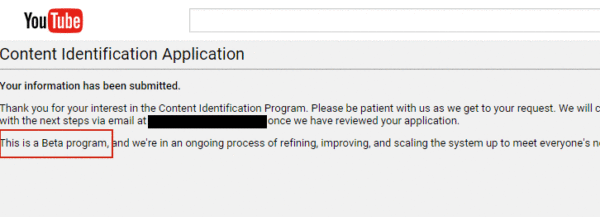
From my submission 11/28/2015

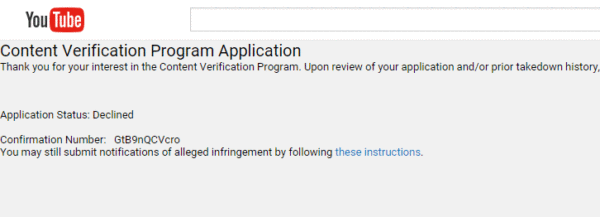
And then when you try to see what is going on with your Content ID submission you get a denied. Just because you took down videos to protect your copyrights should logically have no bearing as to the fact that you own the copyrights to that material.


Ted calls Google, which owns YouTube, “a company that has done more to impoverish musicians and other creative professionals than any entity on the face of the planet.”

Ted Gioia from
http://www.artsjournal.com/culturecrash/2014/10/stop-working-for-free.html


So Google, just so you can keep your important projects up-to-date and rolling out in time, I will keep a YouTube Content ID in BETA widget on the right column of this website. Keep up the hard work Google! Maybe some day by the next millennium in the year 2107 Google’s YouTube Content ID project will get out of BETA and have a Release candidate of this product. Trust me. I am NOT holding my breath!


“Imagine a business model where you are given all of the music publishing content for the last hundred years for free. After you build the initial interface, you basically do not have to do anything. The system is set up so that users and fans just give you content even though they have no rights to the ownership of that content. With much of this illegal content you garner about 50% of all advertisement revenue generated by that content. This can go on indefinitely. Sounds like there is no way you can fail. You will make billions off this stuff. YouTube just laughs all the all the way to the bank.”

Anonymous

FURTHER READING ON THE SERIOUSLY FLAWED Digital Millennium Copyright Act

Passed on October 12, 1998, by a unanimous vote in the United States Senate and signed into law by President Bill Clinton on October 28, 1998, the DMCA amended Title 17 of the United States Code to extend the reach of copyright, while limiting the liability of the providers of online services for copyright infringement by their users.

Here is a really funny transcript of a Senior Copyright Lawyer’s speech to congress in April 2014 Why the Digital Millennium Copyright Act Is Working Just Fine… by Katherine Oyama ,Google Senior Copyright Counsel.

Check out the absurdity with this comment

Congresswoman Judy Chu, a job creation advocate from California, provided real time proof that Google was failing in burying pirated sites in their search results. Barely typing in a few keystrokes associated with the Oscar Winning Film, 12 Years a Slave, numerous pirate sites appeared immediately on her iPad near the top of Google’s first search page. Unfazed, the representative from Google continued to extoll the progress that was being made by her company in pushing these pirate sites down in their rankings.