It was a rather ordinary August afternoon in San Marcos, Guatemala. The sky was beginning to fill with the usual afternoon clouds that would soon make for scattered showers that are so common this time of year. I was going about town with Lucia, my seven-year-old daughter, doing some errands – a spool of white thread, socks, stop at the supermarket for the usual. Suddenly I saw her. She saw me. Our eyes met and I knew at that moment I had to have her. Her hands were together as though in prayer, and out from the crowded street, she called my name.
“Pablo, how are you these days? I need to speak with you. The matter is urgent.”
I quickly looked around, wondering whom it was that had spoken, when I suddenly realized it was she – the poster of The Virgin Guadalupe. Among the other tacky posters around, two puppy dogs with some corny slogan in beveled font, Don Johnson next to a Mustang looking so cool, she stood out as something of exquisite beauty and value.
“I am fine Guadalupe. And why do you inquire?”
“In the last five hundred years, after my meeting with Juan, we have built thousands of fine temples, and given peace and joy to the down trodden and suffering.”
“I know, there are many fine churches throughout the land now. They ring their bells early and late. Is this something that you can help me with? It often wakes me early in the morning, especially on the weekends. I believe it is recorded bells too, which I find cheap and disingenuous.”
“I hear you clearly my dear Pablo. I find it strange that the bells never make a mistake as well. If they are recorded, the least they could do is play in tune. I will do what I can.”
“But I am speaking to you now as merely a friend. I need your help. I have listened to the weeping, the sadness, the troubles and miseries of the people of this downtrodden land for five hundred years, and to be perfectly honest, I am a bit tired and depressed. Take me home with you.”
“You seem to be a person of great quality but I have never brought someone of your stature home. I think it would also make my wife a bit uncomfortable… you know another woman in the house and all.”
“My dear friend Pablo, I am a virgin and I intend to stay that way. Your wife should not worry. Besides I promise that I will just blend into the wall as best as I can.”
“But what of that little cherubic kid at your feet? Does he have to come along too?”
“Yes, he is my son. The Son of God. I fear waiting here in the bus station any longer will not be good for his health. You see he is not breathing too well the last few days. The fumes from all the buses are affecting his asthma. To be quite frank, because of all the noise, he has missed his nap all week and has been a real pill. He bugs me constantly for suckers and candy from all the venders who pass by. I do not think I can last much longer. Besides that, this Don Johnson guy next to me is really getting on my nerves. He thinks he’s soooooo cool. What an ego!”
“But I thought you were a virgin? Is your son adopted?”
“No he is not adopted. It is a long story and something that Joe, my former husband and I, have had to try to explain so many times… it is complicated. But do not fear. I am a woman of great quality and believe me, a virgin.”
Lucia and I stood on the narrow sidewalk and were truly captivated by the beauty of Guadalupe. We tried to ignore her pleas and walked away more than once, only to be called back by some sort of magical force. She had cast a spell on us. We had to have her. She seemed to be a work of art, unlike no other, in this culture-starved city.
We asked her master what was her price, thinking that perhaps she was holding our dear Guadalupe hostage, and would suggest an outrageous ransom. “Ten quetzals” she replied. I was astonished. A little over a dollar and I could free my new friend and her child from their misery.
As we walked home with Guadalupe rolled up, she continued to speak to me. “Pablo, thank you so much. I promise to look after you and your family. You know that nasty stomach infection you had. It was the water. Always brush your teeth with the bottled stuff. I promise, it won’t happen again.”
When we got home, we let Guadalupe have some space by herself at the end of the hall. She now looks after us daily. Her little kid who always hangs out at her feet no longer whines and is reading Mark Twain for a change. We all feel the arrangement is just grand.
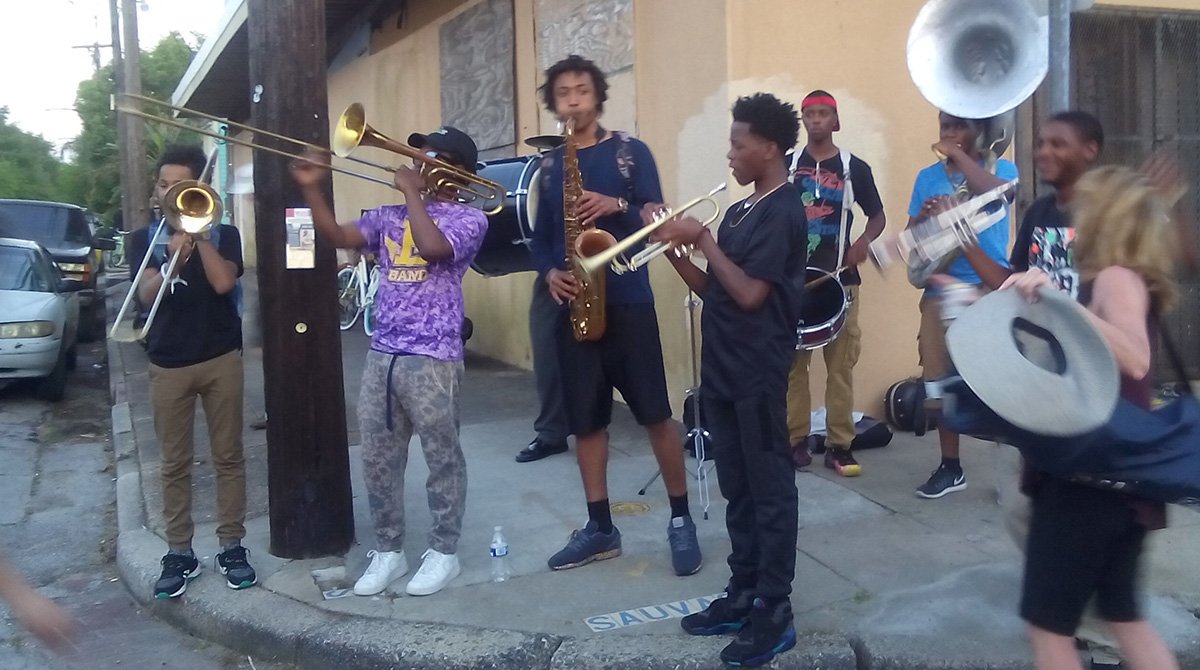
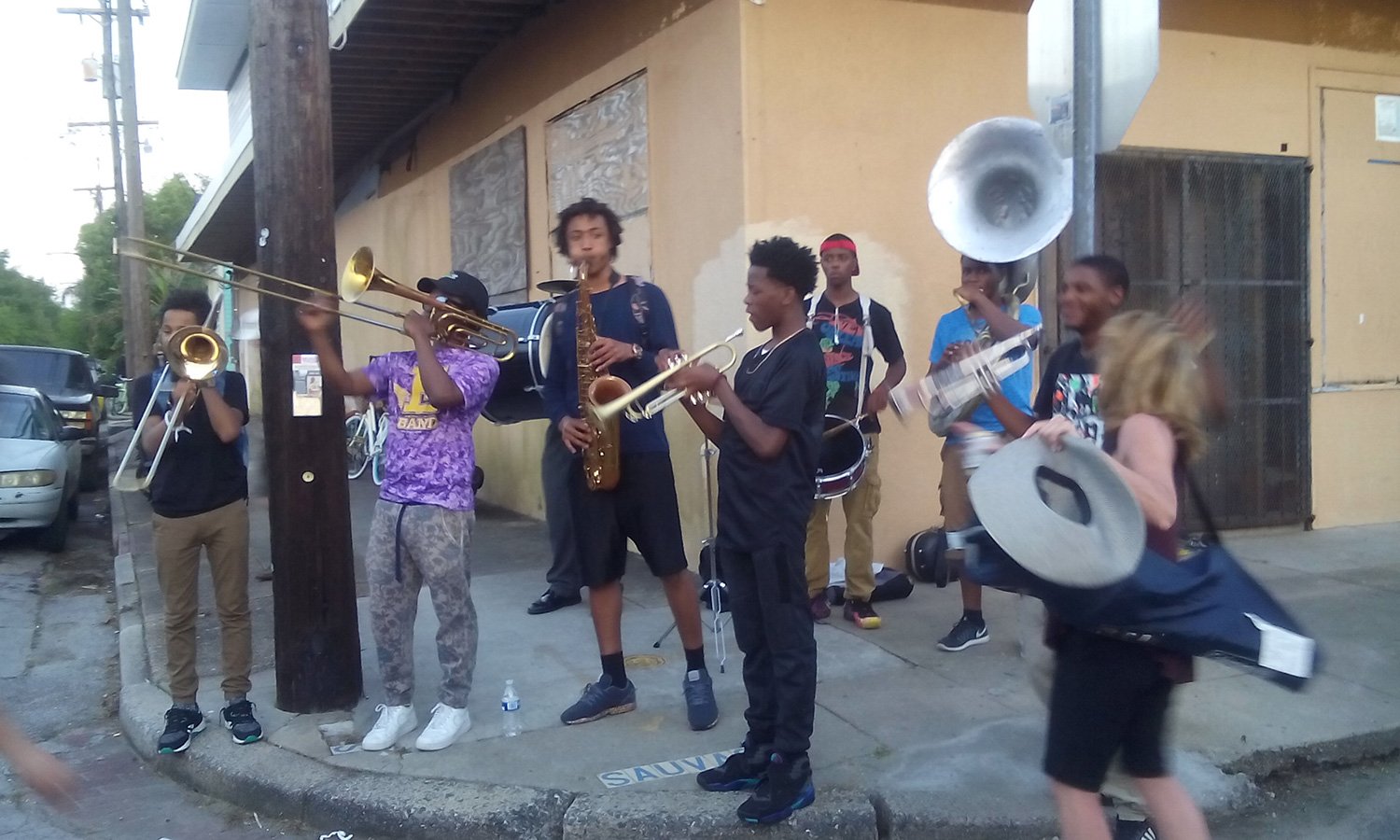
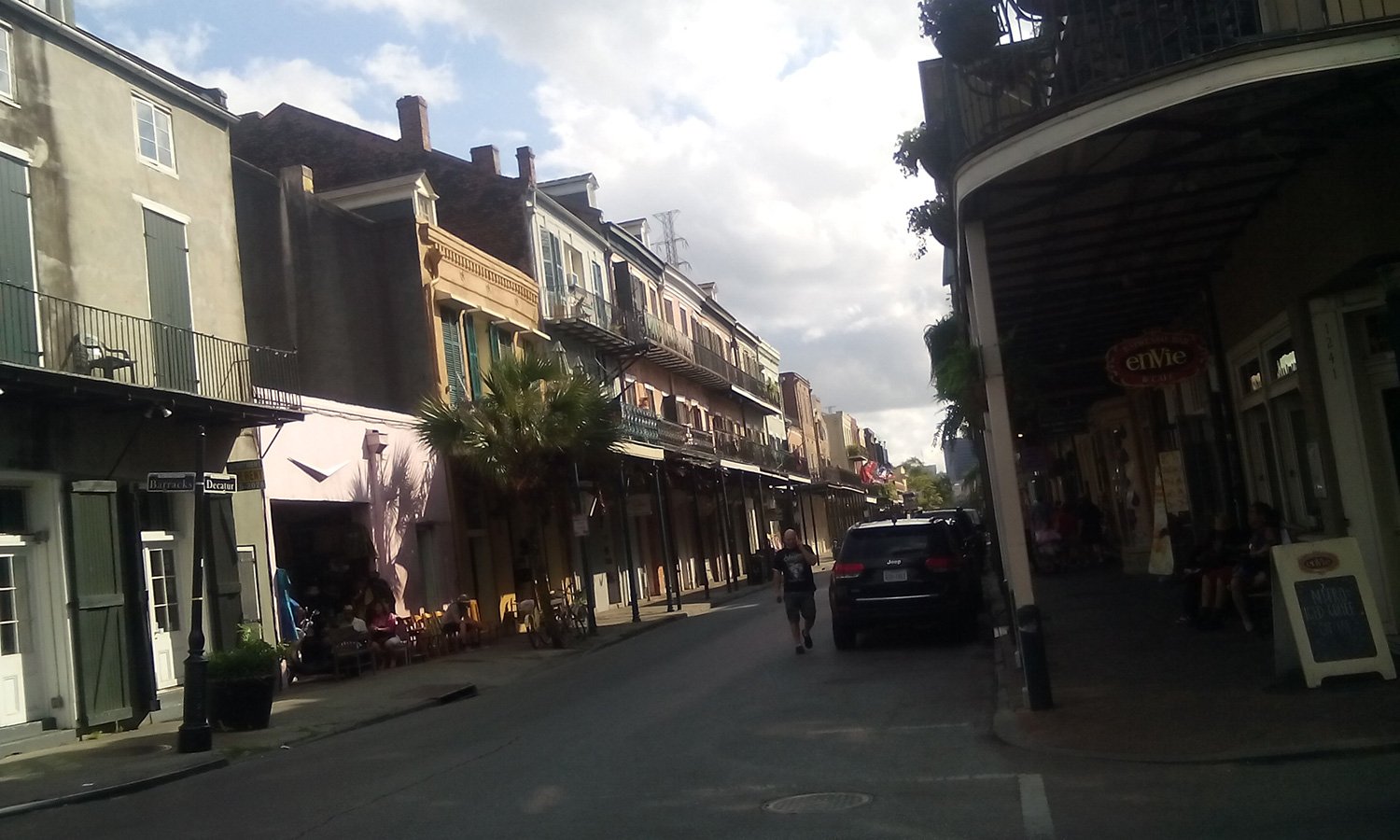
I wanted to post this video back a while back and found it in my files. It is a trumpet section practicing in a neighborhood near Frenchman’s Street in New Orleans around jazz fest this past April. Unlike most of the world, I often like hearing musicians practice more than the actual performance. You can learn a lot just from how they go about breaking down the music and get a real sense of the amount of work it takes to play well. I do not know what this tune is but I was walking and heard this trumpet section practicing. A guy came up to me and started trying to bum some money off of me. I asked him to just give me a few minutes to listen to the horns. He explained to me that they were running the scales and that you get a better sound if you tighten your lips. We converse for a bit and I spotted him a few Washington’s for keeping the block safe.
The scale they were playing is what sometimes is called the diatonic bebop scale. I remember hearing that David Baker coined the term but it does not really matter, as I call it the New Orleans scale.
What I love about it is the tension of the I to VII to flat VII. How about the “Welcome to America” scale.
At the New Orleans’s Jazz Fest you can buy tickets at the gate. We never had to wait more than a few minutes. The price per day was $75 and we paid no service fee. One day, my cousin Ben had one to give away. Thanks Ben! This simple information was not easy to find. I would rather give a few more bucks to the festival than Ticketron. Just saying.
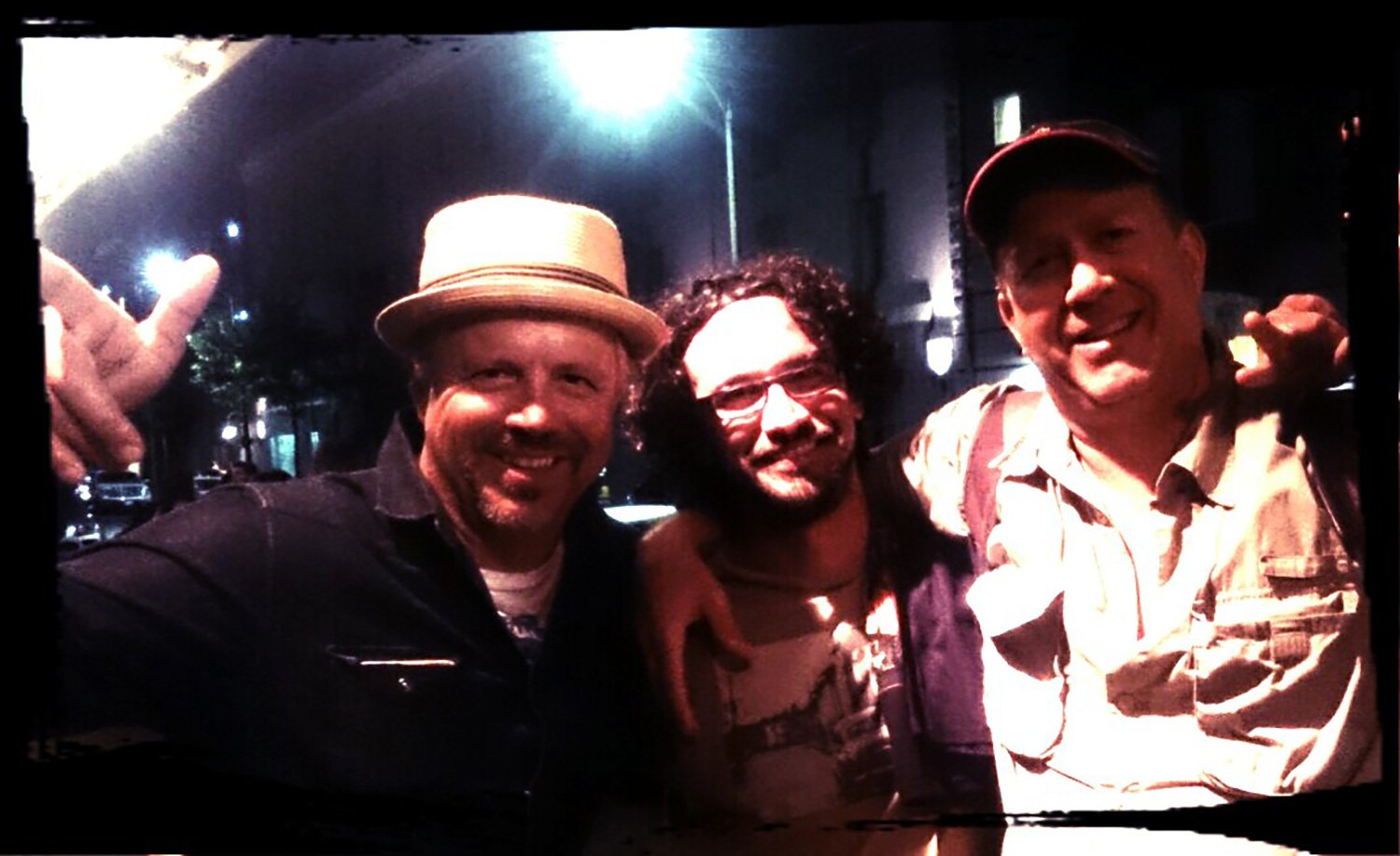
Paul, Guy from Argentina and Steve. Three outsiders making the trek to one of the Holy Lands of music.
First, I need to give a disclaimer that this essay is absolutely ridiculous. There is no way to give awards out at this festival. Every day at the New Orleans Jazz Fest there are at least 60 bands on all kinds of stages. To possibly cast judgement and give out an award, besides being absurd, you would have to literally be six places at once. Instead, in the interest of confessional writing so prevalent today, I will simply highlight the journey and give out a few awards , the most accurate being the one at the end – MOST OUTSTANDING MUSICIAN IN NEW ORLEANS.
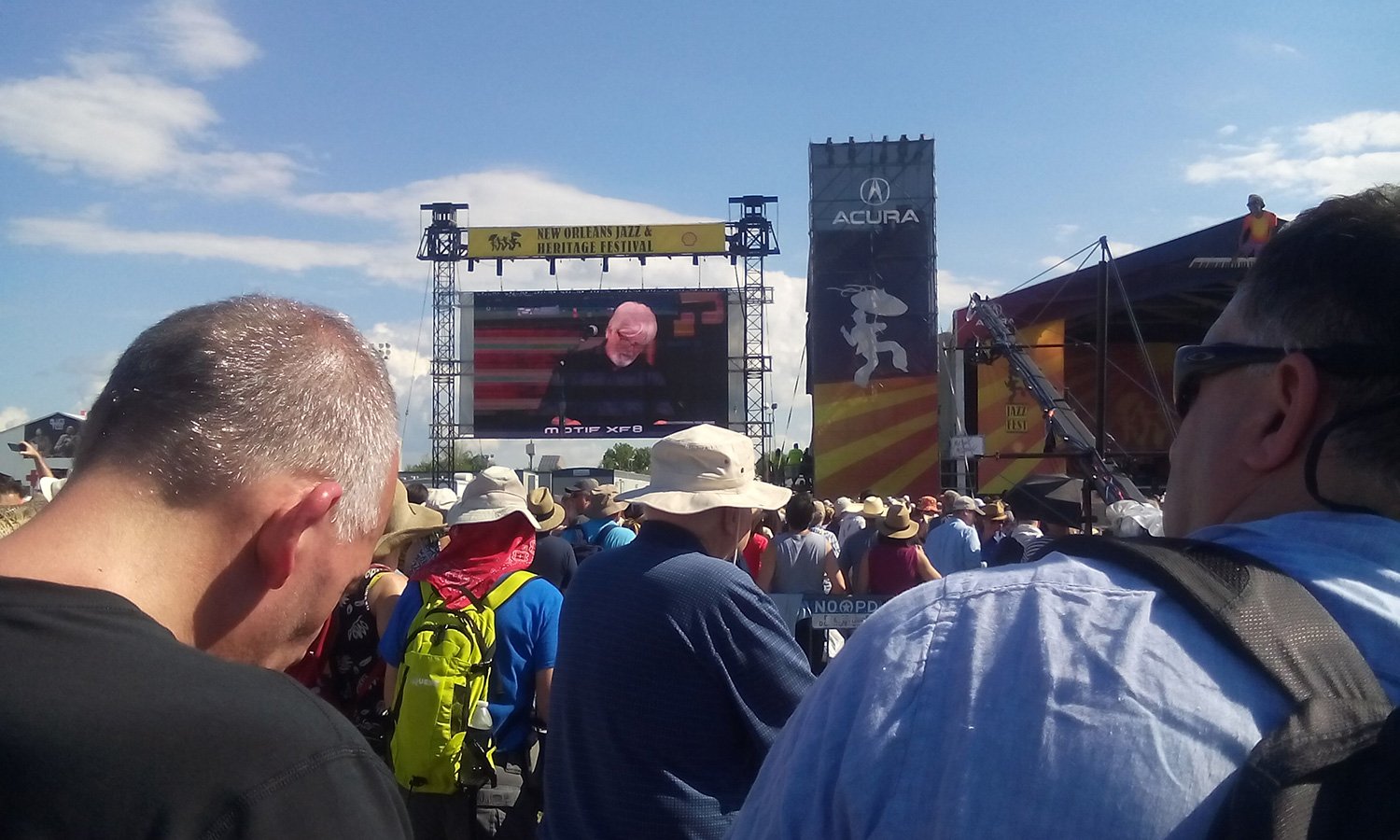
Below are the groups that I heard. Many were planned. Others just sort of happened based on the bathroom lines and meal breaks. By the end of the day the portapotties look like they were ready to tumble over but never did. In the concessions, the trout with crab on top was excellent. All the food was really good.
Friday, April 22
Alexis Spight
New Orleans Classic Recording Divas featuring The Dixie Cups, Wanda Rouzan and Jean Knight
Kermit Ruffins
Real Untouchable Brass Band
Michael McDonnald
Steely Dan
Saturday, April 23
Big Sams Funky Nation
Tad Benoit
Keith Frank and the Soliel Zydeco Band
DeJonnette, Coltrane and Garrison
Boz Scaggs
Night at a Club
George Clinton and Parlament
Sunday, April 24
The New Orleans Suspects
Henry Butler and Jambalaya
Leroy Jones and the New Orleans Finest
The Zion Harmonizers
Herbie Hancock and Wayne Shorter
John Mayall
Other Shows of Note
Treme Brass Band at DBA
Harmonica Marathon at Frenchman Theater
INTRODUCTION
Every time I go to New Orleans I cry. In fact, I remember the exact moment that I cried every day of the festival. It often happens unexpectedly. It is similar to what happened to me the first and only time I got acupuncture. I am not sure modern medicine has researched it but crying, especially for joy is a good thing and the therapy is all that sometimes works to get you through the ups and downs of life. It is cathartic and surely the great balancer of the soul.
Alexa Spight in the Gospel Temt
The first day we had a very rough plan and were a little disoriented as we entered the gates. To get our bearings we walked into the Gospel Tent and heard Alexis Spight. We sat in the front row, as it was an early show and there I was overcome with emotion. Her voice was strong and clear and you could hear decades of gospel tradition in her voice. The band seemed a bit under rehearsed but the spirit was there and it seemed like the entire group just went with it. And as it does often with the first show, the tears came streaming down my cheeks. Probably not the first person to wail in the Gospel Tent.
Keith Frank and the Soliel Zydeco Band
The second day it was listening to Keith Frank and the Soliel Zydeco Band. Many times I heard people in New Orleans area say that Zydeco songs “sound all the same.” To me this makes no sense. Sure the accordion can be irritating, in the same way as say the banjo, but the songs do not sound all the same. One of the grooves from Keith Frank sounded like James Brown or perhaps something James Brown appropriated. The next like we were on the Bayou in a cowboy hat. Somewhere, during that James Brown groove it hit me again. Keith Frank with his two kids under ten, one on accordion and the other on cowbell by his side, it just got me again. Tears of joy.
Which brings me to an award.
BEST TROMBONE SOLO IN A SECOND LINE BAND
The Real Untouchables Brass Band… the guy on the far right – stage left. I was unable to figure out his name and apologies about that, but if you show up and San Francisco I will buy you dinner. His solos combined the street sound, the grit and dirt with great pitch and rhythm. I can never get enough of second line brass bands. The reason why I liked this guy’s playing so much is his sound. Full of dirt and smears and all in a very organic, lyric way.
Real Untouchable Brass Band
Later that day I heard Steely Dan with the very fine trombonist Jim Pugh who’s long career even includes writing the theme that still runs for NPR’s Morning Edition. But Pugh’s playing, when he finds himself in a bit of improvisational jam, relies on his squeaky high chops and lots of notes. In New Orleans, trombones usually just go with growls and smears. The Untouchables trombone player had that and much more.
But I have become distracted. On the third day I broke down listening to Herbie Hancock and Wayne Shorter. The crowd was building up for this one. Big names in jazz. Not a seat in the Jazz Tent. Standing room only. I thought – do people really know what they are getting into here? Herbie and Wayne are some of the most expert improvisers on the planet and the show was just that. Herbie played both acoustic and electric and his synth work brought to mind some of Wayne’s work with Joe Zawinul and Weather Report. Too much music for many folks ears which for the rest of us meant a good seat as people left. The last tune they played was something I would have never expected. A modern, sort of loosely constructed version of “Now’s the Time” in a boogaloo groove. This was not a 12 bar blues but more of a free-flowing thing and was a great vehicle for Wayne’s sparse but thematic solos. He played all soprano throughout the entire set.
BEST TENOR SAXOPHONIST I HAD NO IDEA WAS SO DARN GOOD
Ravi Cotrane. What an excellent player. Period. Not sure how you follow in the footsteps of his father John but Ravi does it well.
ODDS AND ENDS
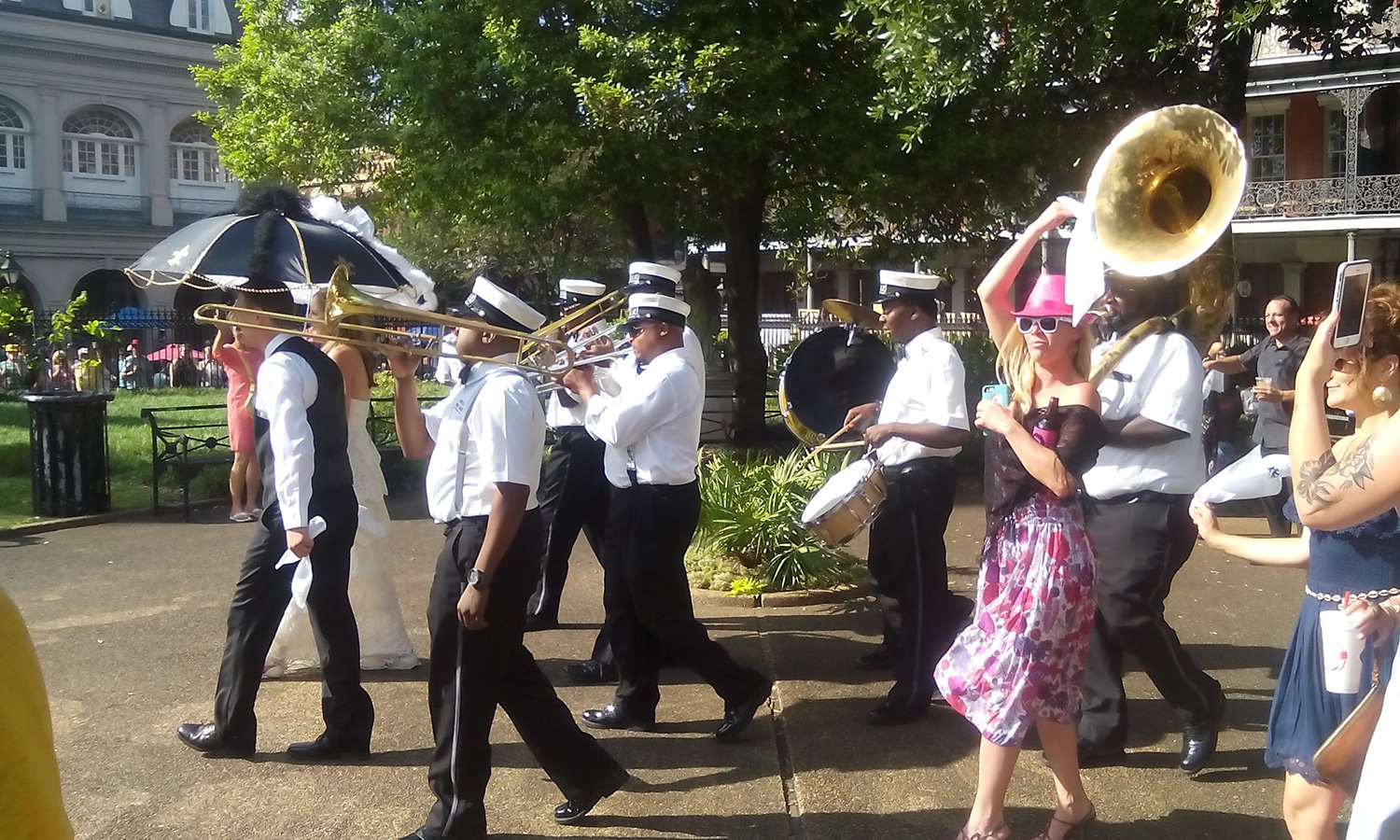
Some notable experiences while in New Orleans were crashing a Crawfish Boil party in the Garden District and finally learning how to propery eat these bugs. We left that party a bit too early only to be packed like sardines into Frenchman Street clubs and hear some of the locals sweat it out with the tourist crowds.
After the second day, eating another crawfish boil in the garage of a house next to the festival and then heading off to catch George Clinton and Parliament at a club in the Wearhouse District. Now that was about as funky as it gets. 15 member band. George sitting on a stool in the middle of it all directing traffic. I have a feeling there is not a conductor on the planet that could pull that off with such effortlessness. Everyone got a moment to shine and band was dynamic. George is still going strong.
MY PARTNERS IN CRIME
Special awards go to Ben my nephew and Natalie who put me up and Steve my buddy from high school who was an amazing partner on this adventure in New Orleans. Steve still has the ability to scope out a situation, make friends, avoid getting mugged and still brush his teeth when he gets back to the crib at 2 am.
THE WEEKDAYS BETWEEN
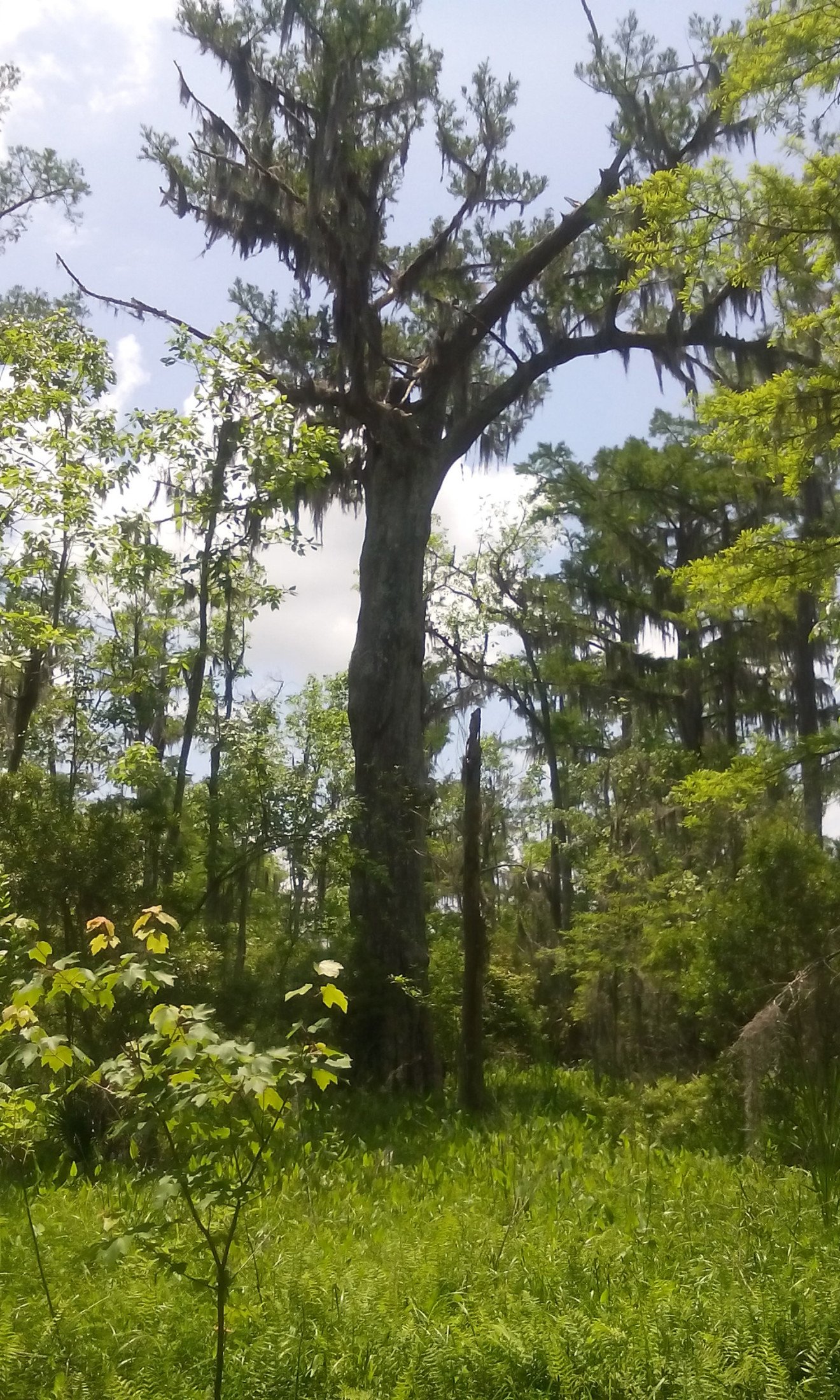
Steve caught a plane back home on Monday. I stuck around New Oreans until Thursday riding around on Ben’s bike and exploring New Orleans and taking photos. One day Ben took me to the Jean Lafitte National Historical Park and the Barataria Preserve. We hung out in the swamps with the snakes and alligators for a few hours. Tuesday night I caught The Treme Brass Band at DBA with Ben. It was a great to hear them on their home turf. Shamarr Allen on trumpet sounded to me of tradition and essence of New Orleans. Cities get their signature sounds and in New Orleans that sound is the sound of the trumpet. Shamarr was playing what looked like a cornet looking pocket trumpet – tarnished brass, with a sound and skill that would make Louis Armstrong smile. Shamarr’s playing reaches back a hundred years but makes a clear statement about the present. His sound and chops will just blow your mind. Beyond that his singing and rapport with the audience was simply awesome. Everyone was having a great time.
MOST OUTSTANDING MUSICIAN IN NEW ORLEANS
Shamarr Allen… need to say more.
LEAVING
For a few days I probably did not cry. That will happen after you experience about 30 bands over three days. You are all cried out. But, leaving New Orleans, heading to a wedding in Austin and seeing that Megabus in the distance, with Houston on the front, it happened again and I got all choked up. New Orleans. I wouldn’t want to live there but a great place to visit and hear some great American music.
[click on images]
Jazzfest 2016
George Clinton and Parliament
John Mayall
Keith Frank and the Soliel Zydeco Band
Spotted Cat
Real Untouchables Brass Band
After the Festival
Michael McDonald
Wedding band
New favorite meal
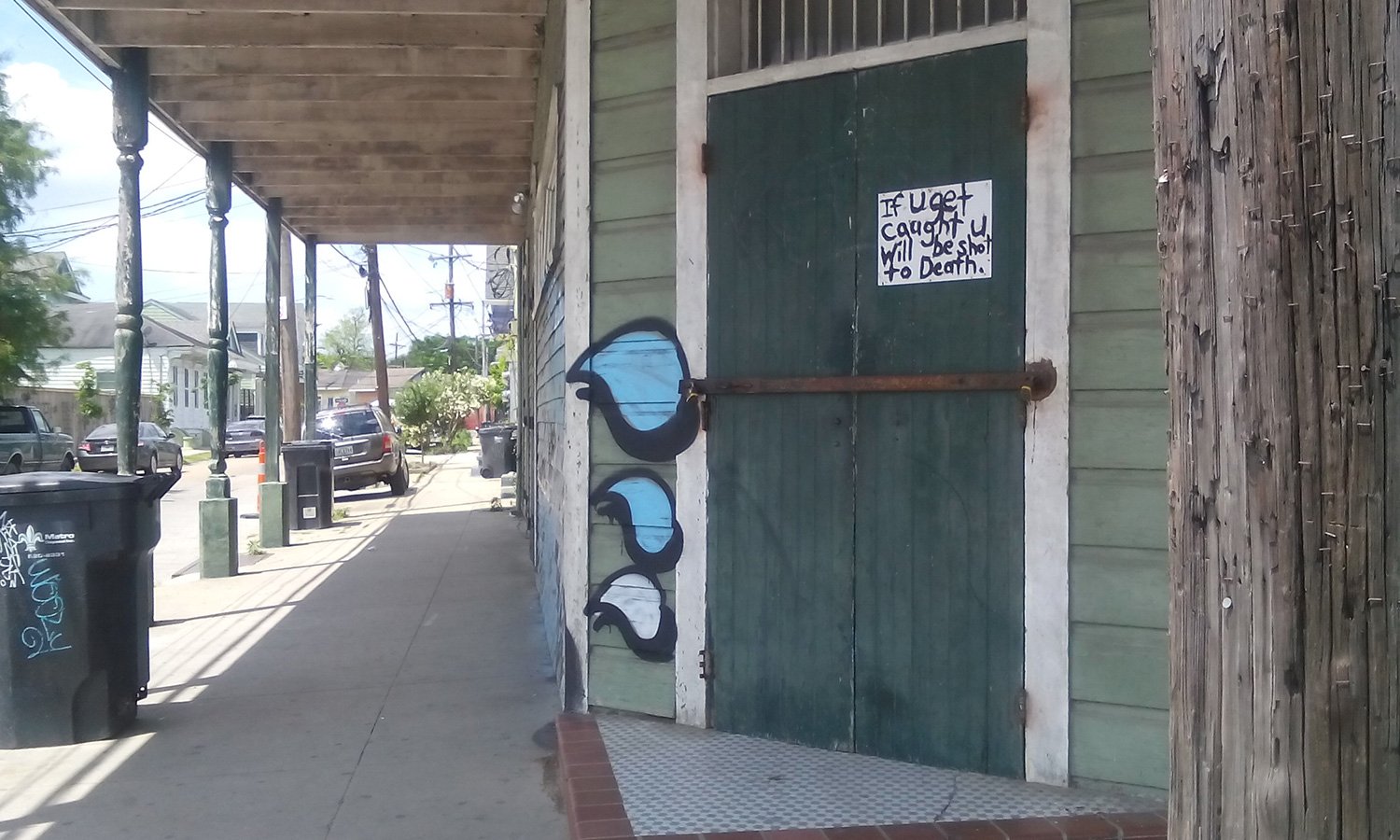
Local Barber Shop
Local Barber Shop letting the tagger the rules
New Orleans Jazz Fest 2016
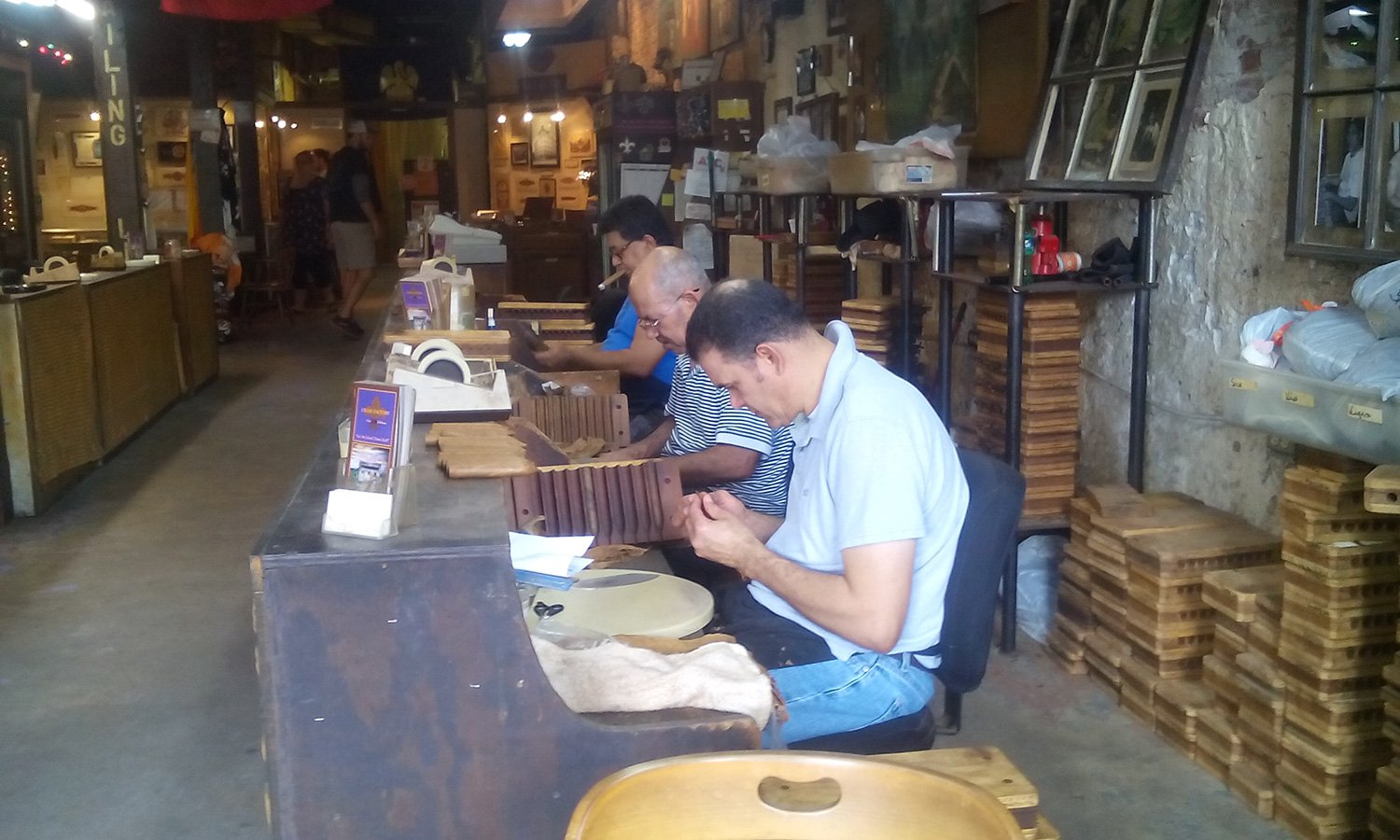
Cigar Shop
Cigar Shop
After the Festival
Spotted Cat
Real Untouchables Brass Band
Alexa Spight in the Gospel Temt
Paul, Guy from Argentina and Steve. Three outsiders making the trek to one of the Holy Lands of music.
I am not sure that many Americans know the name Allen Toussaint. I surely did not until I was well into my twenties. Like so many really important things, Mr. Toussaint was not a part of the standard core curriculum. I think Allen Toussaint should be on a stamp! He was an incredible musician and force in 20th Century American music. Period. But unfortunately, Mr. Allen Toussaint has left the building and passed away November 10, 2015.
Allen Toussaint
January 14, 1938 – November 10, 2015
Harry Shearer’s radio show, Le Show, this week plays an interview with Allen Toussaint from a few years back. It is about ten minutes in, just past the “apologies of the the week.” http://wwno.org/post/le-show-week-nov-15-2015
>>>>>>>>>>>>>>>>>>>>>>>>>>>>>>
I am not qualified to write about this man. I heard Allen Toussaint play live just one time. It was at the San Francisco Hardly Strictly Bluegrass festival in about 2012. It was at the Star Stage and I was simply amazed that there were not more people in attendance. Allen Toussaint, on the stage, with a grand piano, for free!!! He was there with a quintet. I remembering seeing him back stage, impeccably dressed, smoking a cigarette, by himself. He seemed to be going over the lyrics in his head. His gaze was far off and he seemed to be talking to himself. He was about to go out and sing about twelve tunes in a row, probably a few he had not played in a while. His band seemed in a bit of disarray. But then they hit and all was good. I distinctly remembering him sing a beautiful rendition City of New Orleans by Steve Goodman. Like the absolute pro he was, he nailed every verse.
Night time on the City Of New Orleans
Changing cars in Memphis Tennessee
Halfway home – we’ll be there by morning
Through the Mississippi darkness, rolling down to the sea
“So imagine the Zarabanda, the Congo god of iron – the cutting edge, if you will – traveled on a slave ship with his magic, his mambo, and his machete as soon as the New World was open for business. Then he went back through Havana, across the ocean again, where he got all of Spain dancing, then covertly crept upward through Europe – through the servant’s entrance, of course – and became part of what we now call classical music. In the process, his name was frenchified, he lost his drum and his voice, and his tempo slowed way down. All that remained was the distillation of his dance onto the lute and the guitar, with only the barest trace of the original flavor remaining. Today we call that process going mainstream.”
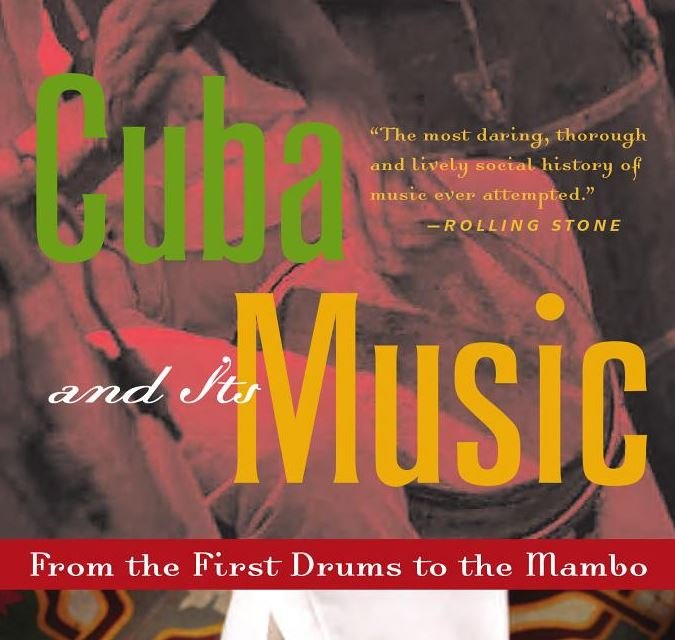
Ned Sublette Cuba and its Music – From the First Drums to the Mambo (2004)
In December, my brother-in-law, Ted “Banjo” Kuster gave me Cuba and Its Music: From the First Drums to the Mambo by Ned Sublette. It is five hundred and eighty pages long and I thought that it would take me until the following December to finish the book, but it was a page turner, at least for any musician who plays American music. In 1998 I wrote a book called Arranging for Salsa Bands – The Doctor Big Ears Essay were I stated – “Let us look deeply into music and explain why things are the way they are.” Ned Sublette goes very deep.
There are many fascinating ideas in the book. One of the main ideas is that African music has had a much larger effect on Western classical music than we realize as the quote above illustrates. The Zarabanda is the grandmother as the Sarabande which composers like J.S. Bach used in pieces like his Bach Cello Suites. And as has been duly noted in many books, the influence of Cuban music on North American music is often ignored and unacknowledged.
The Elephant in the Room – Ned Sublette on the Spectrum of American Music
“If you ever heard an America sax player fail to lock in while jamming with a salsa band, or heard a Cuban band take on a bluesy jazz tune that doesn’t feel right, you know for all that Afro Cuban and African American music might have in common, they’re also very different than each other.
Why? Because essential elements of these two musics came from different parts of Africa, entering the New World by different routes, at different times, into different structured societies.
Ned Sublette Cuba and its Music – From the First Drums to the Mambo (2004)
Here Sublette points out how the differences between the Muslim influenced sub-Saharan Africa as opposed to the forests of the Congo. It is the thesis of the book and he convincingly states the case. This concept alone is worth the price of the book.
Ninth Voluntary Infantry Immune Band from New Orleans
During the time of the Spanish-American war, 1898, the US Army sent a band from New Orleans to Cuba. At the time they thought that black people were immune to yellow fever. Unfortunately they were not. Just imagine the mind set of the military. “Let’s get those jammin’ horn players from New Orleans and send them into war in Cuba. They will do anything!” Anyway, the Ninth Voluntary Infantry Immune Band from New Orleans went down to Cuba for about a year.
“There is no documentation of the Immune Band having performed in Cuba, and it is impossible to say whether their stay in Cuba affected the course of New Orleans music or not. But if a band of the best horn players could stay in Cuba for nine months without absorbing something, at a time when the oquestas typicas were all the rage in Cuba, they would be unlike any musicians this writer has ever known.
Ned Sublette Cuba and its Music – From the First Drums to the Mambo (2004)
As in many places in the book, the scenes seem almost like historical fiction. It would have been fun to hear this band and if they make a movie, just think of coveted gig of being the costume designer for this epic Hollywood blockbuster! Sublette, of course, points out that Havana and New Orleans were were like cousins both being important and vibrant port towns. Wild and crazy places. The Immune Band was just one of many cultural exchanges.
Puerto Rican’s in New York – The Jones Act
The 1917 Jones Act gave Puerto Ricans U.S citizenship. This enable Uncle Sam to fortify the army for the nastiness of World War I. But the Jones Act would also change the cultural and musical landscape in New York in very interesting ways. Most folks just think of West Side Story but of course much more was going on in the art and music worlds.
Any history of jazz that doesn’t mention Puerto Ricans, is leaving something out.
Ned Sublette Cuba and its Music – From the First Drums to the Mambo (2004)
Modernism
Then Sublette presents this heavy concept about modernism that probably makes many academics roll their eyes, but which is an interesting perspective. They did not teach this point of view, in terms of African influence of European music when I was in school, that is certain. Part of the concept has to do with the looting and display of African art around 1900, and that this art was being influential to the abstract artists in Europe such as Picasso and his “Africa period,” but it also has to do with the empowerment of black artists no longer in Africa.
It would later become academic common practice to speak of modernism as being a move toward abstraction and stylization and away from representation and realism, it could perhaps be better explained as the consequence of the liberation of black creativity – which to many white people was an abstract concept.
Ned Sublette Cuba and its Music – From the First Drums to the Mambo (2004)
Conclusion
These are all the quotes I will pull from Ned Sublette Cuba and its Music – From the First Drums to the Mambo (2004). There are many more but at this point you’ll just have to buy the book. The book finishes with a few sections about the Mambo and explores briefly the beginning of television, Desi Arnaz and Perez Prado. It is curious to think that Prado and his dissonant, in your face music, was banned from writing in Cuba and had to go off to Mexico where he eventually became an international sensation. There is mention of many Mexican movies that feature his music that I am really interested in checking out. Prado’s music introduced an adventurous dissonance, resolutions to a dominant 7 #11 b9 chord for example, that now we associate with Mambo, but it was very disturbing for many. I have a feeling that this adventurousness then helped propel some of the more interesting work of later “salsa” artists, like Eddie and Charlie Palmeri, Willie Rosario, Ray Barreto and many of the Fania record label.
This era, from about 1970 to 1990, when the urban music of the Harlem Renaissance known as “be-bop,” a music that signaled the end of jazz as dance music, a harmonically and rhythmically rich music that was pushing the status quo, completely fused with the Cuban son and other rhythms in such a way that made both musics even more vital – and people danced. That is not in the book but is my thesis, and I am standing by it!
If you are interested in actually writing for Latin music groups and want to explore more some of the basics of clave, orchestration and arranging, I would seriously recommend the book below. I reread it last week, and I still think it fills a void in the published material in this field. Below is a link to the first chapter which is pretty silly but actually very important. A lot of people from France seem to be buying it.
After eight years living a life of opulence in San Francisco, we made a return trip to Guatemala the first week in April 2014. Traveling was Andy, my wife, Lucia my 14-year-old daughter, Lisa our friend who is traveling for research work and myself. From San Francisco there are no direct flights, so we were routed through Dallas. A five-hour layover that turned into six, we ate a very poor meal at TGIF Fridays. Over-processed stuff. Chicken that tasted like rubber. Grilled vegetables that were cold and tasteless. You would think in the United States we could do better than this, but apparently not. In most airports food is either fast food or restaurants that are really sports bars, which serve over salted food, and who’s main objective is to tempt you with overpriced mass-produced cocktails.
Paul in Antigua
Lucia at Agua Tibia
Andy and Lisa
La recoleccion ruins by bus station
La recoleccion ruins by bus station
Antigua
Antigua
Hotels in Antigua
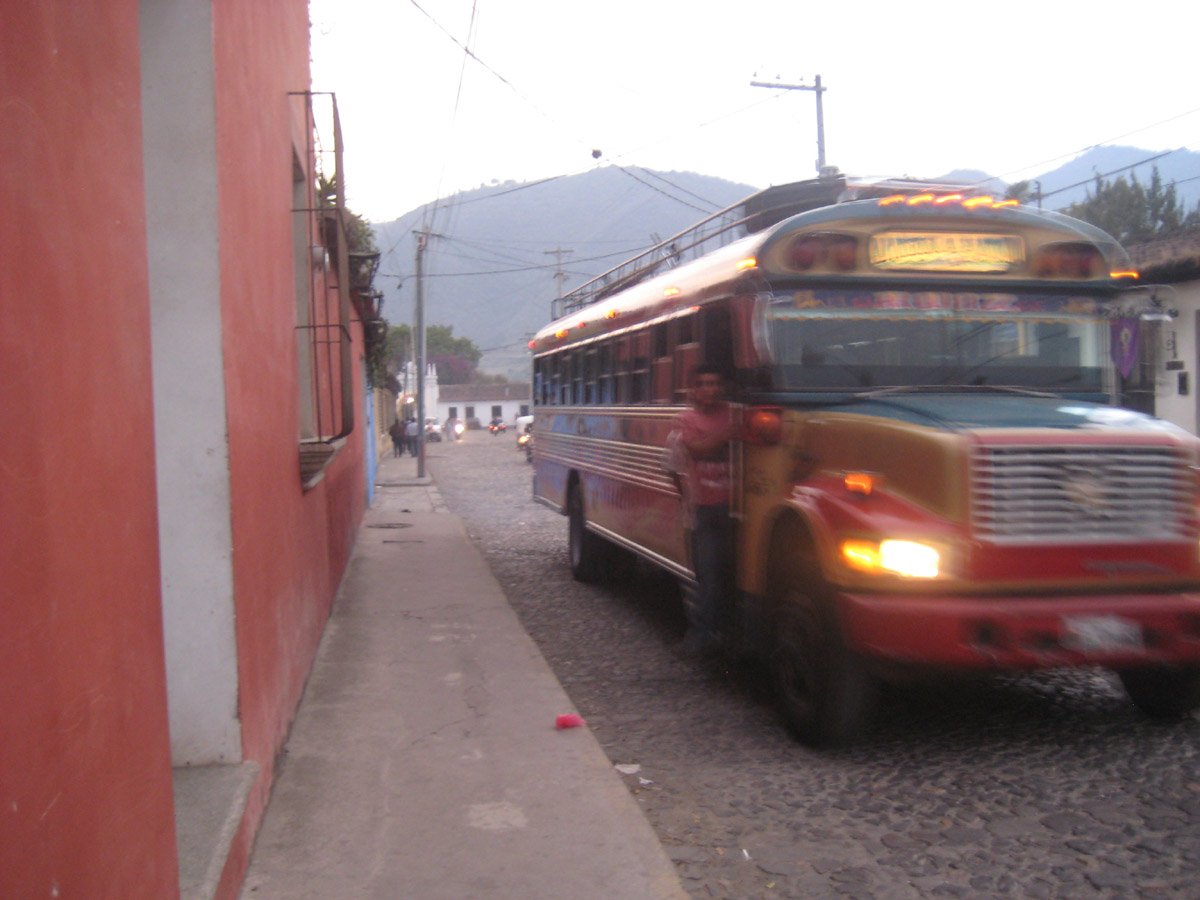
Chicken Bus
Lucia in Xela
7000 feet in San Lorenzo
Mario, Chaito and Lucia
San Marcos Guatemala
LLa recoleccion ruins by bus station
Agua Tibia
In Guatemala City, at the airport in the dark we caught a taxi to our Bed and Breakfast, a place we had stayed before. While it was close to the airport the taxi driver ended up roaming around a bit aimlessly. We entered gated neighborhoods with armed guards eventually exiting in confusion. After about 15 minutes, we got our bearings and found the place. It is not easy finding an urban dwelling surrounded by walls. The addresses are often cryptic and the order of streets is frequently unruly and illogical.
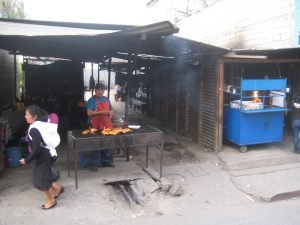
The next morning, at the bed and breakfast, after a homemade breakfast of papaya, eggs, beans and coffee, we rode to Xela in a private van with many empty seats. It is important to appreciate ample personal space when traveling in Guatemala, as often you can be crammed into the public chicken buses with three to a seat. Soon on the highway the experience begins to all fall into place. Lots of people walking on the side of the road – Mayan woman in their colorful garb carrying bundles on their heads, men in cowboy hats, kids on bikes patrolling the hood. Volcanoes soaring into the sky off in the distance. The brightly painted walls and signs for everything from hardware stores, to dentists, to political parties to the ubiquitous Tigo – the phone company. I vaguely remember each of the towns on this journey though the road seems a lot better now then it did in 2006. It is two lanes in both directions, which is new. Along the way we ate a roadside restaurant called Kape Paulinos where the food was excellent. The chicken was delicious and the freshly squeezed juices and handmade tortillas were superb.
Muerte de General Rufino Barrios
We arrived in Xela around 3pm, found our hotel, got money from the ATM and chilled out for the rest of the day. After dark fell, we did go to a café that doubles as a museum. On one of the walls was a painting named Muerte de General Rufino Barrios. The date on the work was 1944 and I do not know if it was based on another painting, but I really became enthralled by the tragic scene. Rufino Barrios looms large in the history of Guatemala. In fact, the little town where I am writing this, San Lorenzo is the birthplace of Rufino. He was an enlightened fellow who became president of Guatemala and fought for the empowerment of the poor Mayans and Guatemala in general. He attempted to institute land reform, always a precarious topic for politicians, especially in Latin America. There is something about the painting of Rufino Barrios, dead on the battlefield that metaphorically tells a story that remains tragically the same today. Unlike, Peru or especially Bolivia, in Guatemala the indigenous peoples are pretty marginalized politically.
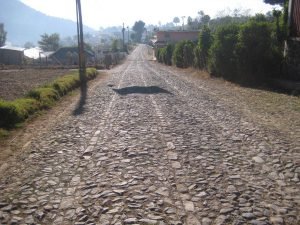
The next day at 6am we were picked up from our hotel by Eduardo, one of the longtime workers of health studies that have gone on in San Lorenzo for the past two decades and was the reason for our family’s yearlong stay in 2006. Up an insanely steep cobblestone road to 7000 feet and the Altiplano and San Lorenzo.
In the afternoon, Lucia and I got on the bus and made our way down to San Marcos, where we lived for a year. A lot has changed. The new bus station on the north side of town has changed the traffic flow and has surely been a boon for stores in that area. The earthquake last year destroyed many of the old buildings. The building where my kids went to school, San Carlos, was destroyed. I remember that school as being very quaint, with its lathe and plaster walls, little balconies and rickety stairs. Fortunately, when the earthquake hit, there were not many people in the school. Many of the buildings more than eighty years old seemed to have crumbled. Unfortunately, they are all being replaced with the modern cinder-block construction that you see all throughout Mexico and Latin America. Unimaginative and cold. With the loss of these old buildings, the city has lost part of its charm.
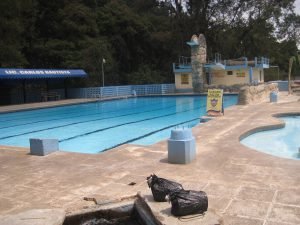
We went by the house were we lived for a year in 2006 and ran into the son of our landlord. We met up with Mario and Chaito, some old friends as school was letting out. They then drove us down to Agua Tibia, the spring fed swimming pool at the edge of town. People in San Marcos always complain about Agua Tibia as being too cold but to me the pool is quite pleasant. We swam and dove off the three and five meter platforms. After buying some bread and hanging out in the main plaza, we walked the five or so blocks to the bus station and headed back up to San Lorenzo. It always amazes me how efficient the bus system is in Guatemala. You never have to wait more than 15 minutes and a bus, going exactly where you need to go is available. How these bus drivers make money does not seem logical. Our fare for the 45-minute ride up 2000 vertical feet was only one dollar each. The bus holds about 20 people.
The weather this whole trip has been splendid. It has been warmer than normal and even during the nights it has been pleasant. In times past, staying up here in the Altiplano was a bit grueling as there often is a chill that gets inside your bones. Running water and hot showers are intermittent at best. Heat is often a brick wood stove. But the people persevere. It is an odd paradox that sometimes people with so little enjoy the day more and generally seem happier than those with vast material possessions. For sure, there is a lot of pain and suffering here, mostly caused by the dire poverty, but yesterday, while walking, we ran into an elderly woman, in traditional Mayan garb, about 4 feet tall, with a long grey ponytail and brilliant grey eyes, tending to her sheep. She was sitting by the side of the road, simply enjoying the day. We could have stayed and conversed for a long while and she seemed at peace with the world. The sun was shining. Little kids as they walked by would greet her with respect. Every now and then she would take her 20 foot long whip out and with great control violently smack it on the ground next to one of her sheep who seemed to be wondering too close to the road. It seemed a bit like a scene from the Hobbit Shire in Lord of the Rings. At any moment Gandalf was going to appear on a horse.
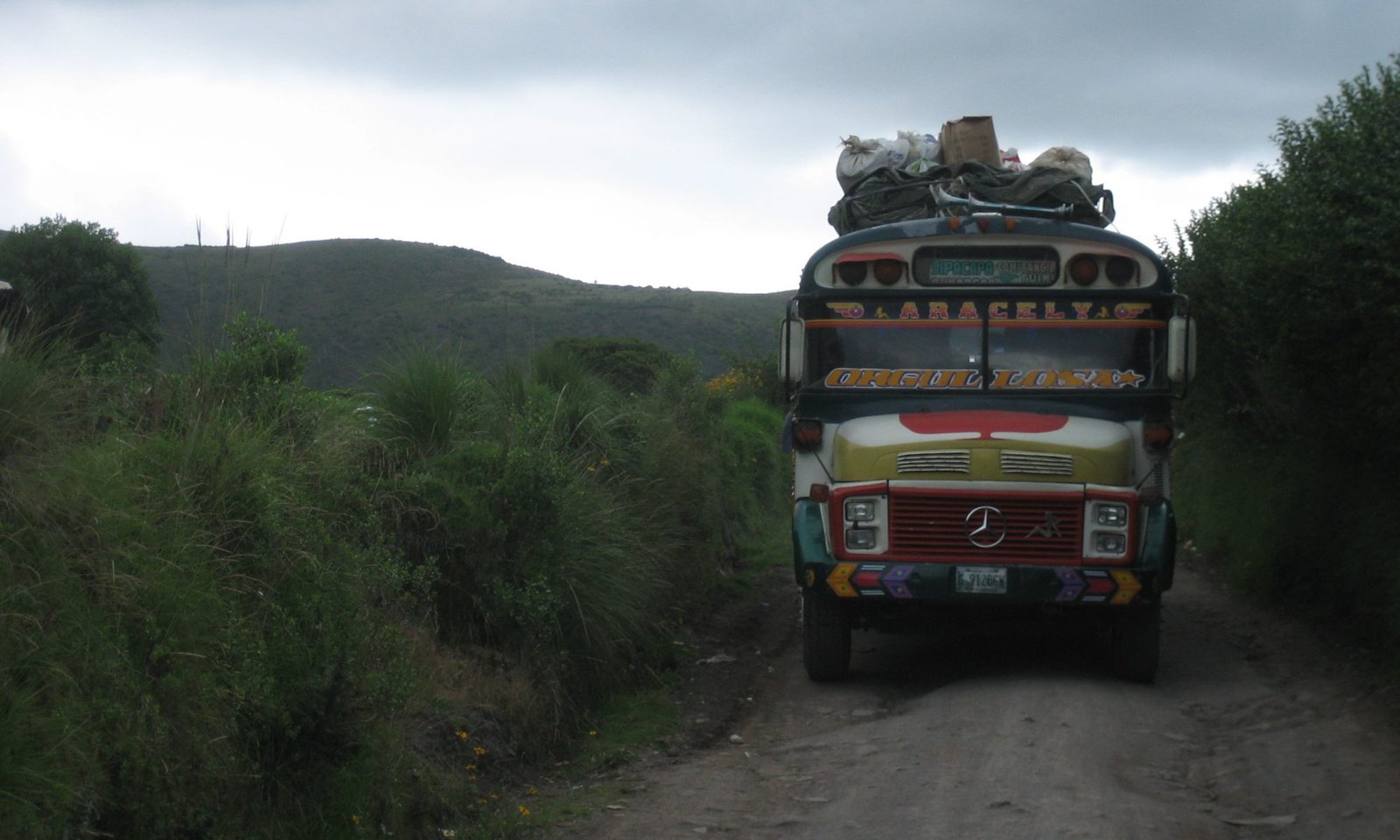
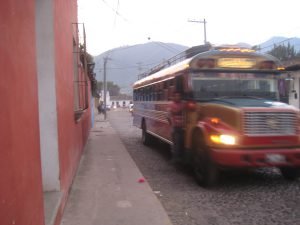
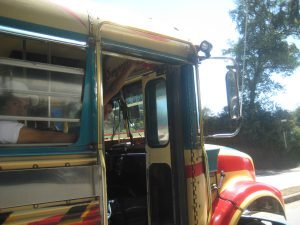
The following day, Andy and I headed back down to San Marcos. We met up for lunch with our good friends, Checha, Paoula and their three beautiful kids. Perhaps the best English speakers in town, they cobble together various jobs as English teachers to make ends meet. On the weekends, Checha sings in various rock and cumbia bands. Earlier, on the street, we ran into one of the shopkeepers who sold school uniforms we had met years back. Unlike my old buddies at the hardware store and pool, he actually recognized me. His shop next to San Carlos school had crumbled in the earthquake. We exchanged pleasant greetings but he did not seem the confidant entrepreneur I remember but a man trying to gather his bearings. We made a trip over to San Pedro via taxi and experienced the market that had not changed a bit. A taxi to San Marcos then a chicken bus back up to San Lorenzo. You have not experienced Guatemala, if you have not been on a chicken bus. They are brightly painted old Blue Bird school buses from the United States. They are often packed with riders. On this particular trip back to San Lorenzo, I spent most of the time standing up crammed in with all the campesinos. The driver seemed to be around 18 years old and had mastered driving the bus like a formula one racer. Hairpin turns at top speed, double shifting, avoiding potholes, passing trucks with skill. I noticed a few bicyclists run off the side of the road as well. Meanwhile his assistant did everything from collecting fares, to climbing up to the roof to store rider’s packages, to assisting the driver negotiate tight intersections or an oncoming vehicle. Bus driver assistants never get on the bus when it is still. The bus must be going at least 10 miles an hour. While shouting out the bus’s destination, they will run parallel to the bus and at the last minute grab on to the railing and board. Often they will disappear and ride on the back ladder and make their way in through the back emergency exit. It takes a remarkable athleticism to be a bus driver assistant.
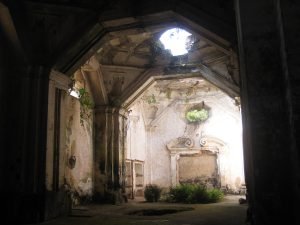
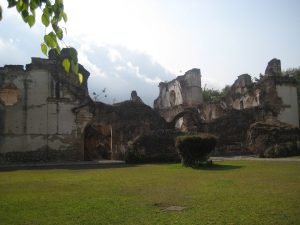
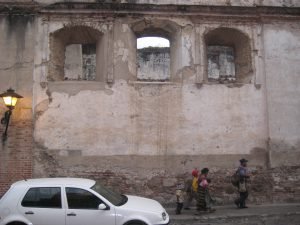
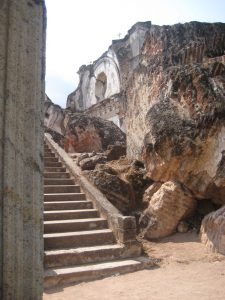
The last few days we spent in Antigua. A bit touristy for sure, but beautiful and full of fond memories. Hot showers, amazing meals, very cool old ruins. One night we walked by THE BLACK CAT Antigua, once a very happening hostel, restaurant, bar establishment. It had changed ownership and right a way I could tell it was not the same place. They did a remodel job that was a bad idea. While I tried to figure out the situation they tried to coerce us in, but we knew better and continued on our way. The place was pretty empty. Word of mouth still travels very fast. It looks like the real BLACK CAT is now in XELA.