Review of Culture Crash: The Killing of the Creative Class by Scott Timberg

in 2014 when I read that Scott Timberg was writing a book about the modern perils of people in the arts I got a bit excited. The topic of how the internet and digital economies had laid waste to many traditional arts forms, trades and professions, has been a story that is not told very often and rarely very well. While everything in Culture Crash: The Killing of the Creative Class is pretty much depressingly true, it fails to address the most important question. Why and how is the creative class being killed?

A few of the professions that have been lost or are under stress are book, record and video store clerks, writers and in particular journalists, of course all performing artists such as musicians and dancers, architects – the list is long and pretty much everyone I know is well aware of the lower pay for creative work – people being paid ridiculously low wages to write, musician playing bars and restaurants for just tips..  Timberg seems to have had a soft place in his heart for the book and record store clerk as being a sort of cultural ambassador for the towns and neighborhoods where they live. Think of one of those cool small record stores you rarely see these days. Every employee has a strong personality, unique wardrobe and an expertise in a certain genre. Often such places would have favorite playlists of the week written on a chalkboard behind the register and it would range from thrasher metal to perhaps a new Brahms recording. Cool places no doubt. Hard to find these days save for a few stores in larger metropolitan areas.

The money being spent on music is not ending up in the hands of musicians, or even labels, or members of the creative class, from the record store clerk to  a label president. It’s going to Apple – which thanks to iTunes, could buy every surviving label with pocket change – and other gargantuan technology companies.
– Culture Crash: The Killing of the Creative Class by Scott Timberg

The first few chapters “When Culture Works” and “Disappearing Clerks and the Lost Sense of Space” muse nostalgically about this bygone era. “Back in the day” reminisces. Local mid-level working bands with a full calendar of gigs, paying not much but a living wage. Entry level journalists doing beat writing. Those were the days.

San Francisco and New York are becoming cities without middle classes: writers and musician lacking trust funds are being replaced by investment bankers and software jockeys, as well as a large servant class that commutes into town from poor precincts to clean their lavish kitchens and watch the children.
– Culture Crash: The Killing of the Creative Class by Scott Timberg

I have never heard the term “software jockeys.” Software programmer, UI designer, web programmer but not “jockey.” Indeed, the world changes and one thing that Timberg seems unaware of is that people graduate from art school and then get a job at Apple or a large construction firm designing marketing materials and email headers. Musicians often have day jobs creating “apps” or programming websites. Being flexible and learning new skills has always been the forte of studying the liberal arts. Writing the great American novel has always been a luxury afforded to only the wealthy or the scrappy staving poor.

There is a chapter where Timberg throws the  critic Pauline Kael under the bus for making fun of serious art and preferring popular trash. He also laments the avant-garde that pushed people away from the concert halls and museums. Indeed it seems that Timberg would prefer a well-attended Mozart festival to an auditorium a quarter-full of people trying to get their heads around some experimental modern piece.

The chapter near the end of the book entitled “Lost in the Supermarket – Winner Take All” is interesting as the book was published over five years ago, at a time when the monopolies of Amazon, Google and Facebook were solidifying and further buying out their competition. All books written that mention technology seem like dinosaurs by the time they are printed as the landscape does change.  The tech monopolies in 2020 are even more entrench than ever.

By the end of the book, the hope is that somehow we need to regain the middle again where instead of a anti-intellectualism so prevalent in society, ordinary people go to art museums and local jazz shows.  People read serious novels and discuss poetry. The gist of the book is a plea for the “middle-brow” world where culture is consumed by all. “Good luck” is all I can say. It’s a brave new world we live in with people mesmerized by social media, stupid YouTube videos and their cellphones.

Which gets me to my conclusion. What Culture Crash: The Killing of the Creative Class leaves out is the”how” and  the “why. ”  Why is the creative class being killed? There is one mention of Telecommunications Act of 1996 which was like a wrecking ball for many artistic environments. Shrouded in the guise of fair competition, Clear Channel went into every market and bought out smaller players.  This ruined local radio, local music scenes, weekly papers and eventual laid waste to print journalism.

But the law that has done the most damage, and that was surprisingly never mentioned in Culture Crash: The Killing of the Creative Class  is the The Digital Millennium Copyright Act (DMCA) of 1998. Just two years after the Telecommunications Act of 1996, the DMCA was signed by President Bill Clinton, with every member of congress voting “yes” and cheering the law on like a high school pep-rally. Neo-liberalism ( a truly misleading term) was all in vogue with the silly notion that free competition, while never really free as the big players have teams of lobbyists in Washington, will solve every problem. As pointed out many times on this website, the 1998 DMCA was a massive gift from the creative class to the tech class.  It is a major reason “why” the creative class has been “killed.” It is odd that no one saw it coming. The internet has the potential to be a fair platform for publishing. The rules of “safe-harbor” have been so stretched and bent that for years technology companies’ revenue strategies are often a slimy exercise in cultural thievery – all perfectly legal. In 2020, it has gone a step further, as money is made off of peoples’ personal data, well-named as “surveillance capitalism.” But I digress. The DMCA is a failed law that needs revision every five years.  I have pointed this out since 2015.

Digital Millennium Copyright Act 18 Year Anniversary

Unfortunately, far too young,  in December of 2019, Scott Timberg passed away. A very good writer, a brilliant thinker, an idealist and surely a great guy. We need more people like Scott.


Culture Crash: The Killing of the Creative Class by Scott Timberg
Hardcover: 320 pages
Publisher: Yale University Press (January 13, 2015)
Language: English
ISBN-10: 9780300195880
ISBN-13: 978-0300195880

The Quarterly Report – April 2020

COVID-19 and the Coronavirus

It is no surprise that the San Francisco Journal The Quarterly Report – April 2020, leads with the global Coronavirus, COVID-19 pandemic. This is “slow news that doesn’t break,”  and this pandemic will be around for a while. In San Francisco the self-isolation order started around Monday, March 16. Those who are employed in the world of the internet have a huge advantage over those that work in close distances to people. Being able to get paid to work from home is a privilege.

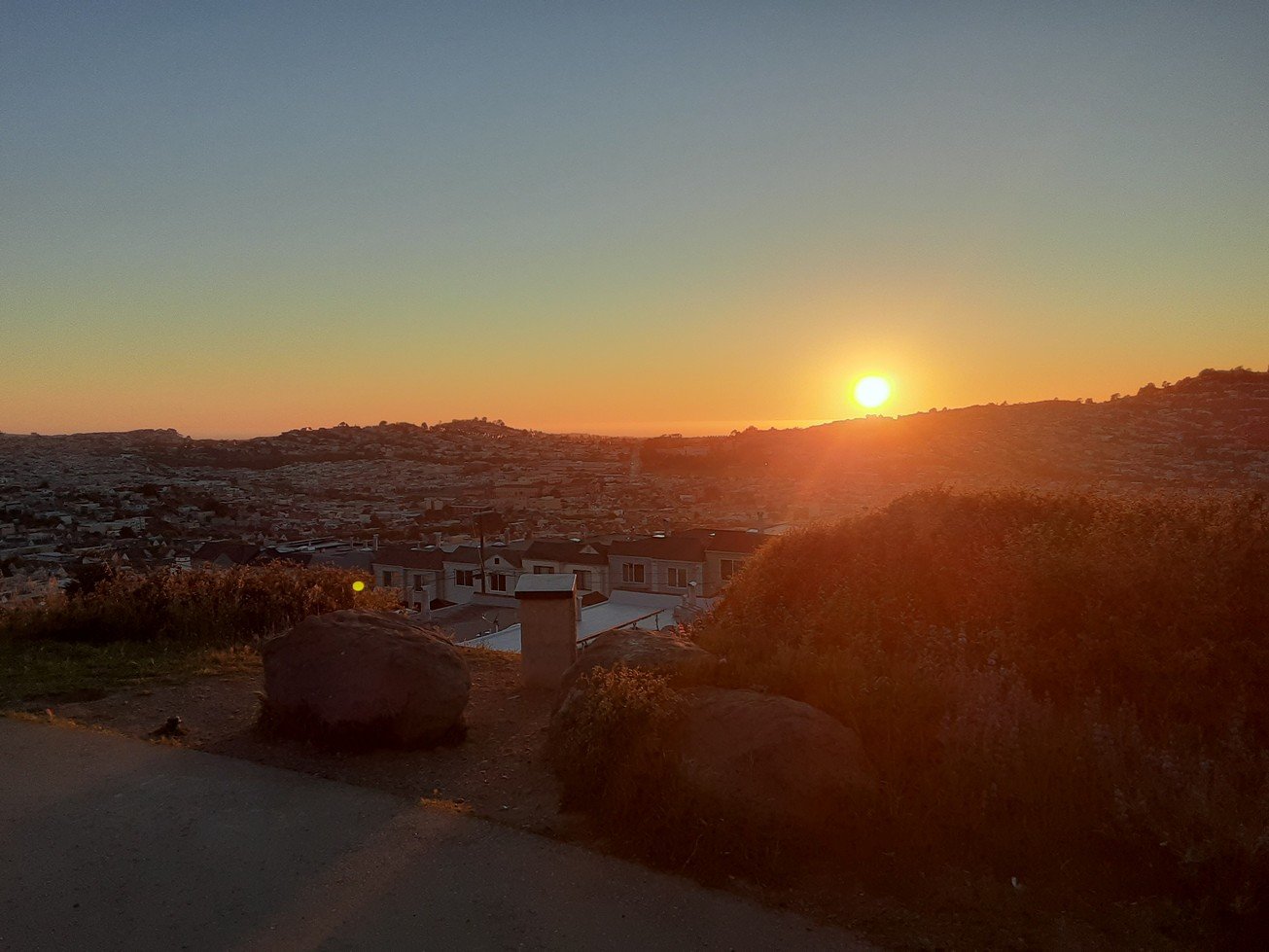
While we have not had to lay off any of the staff at the San Francisco Journal, the toilet paper ran out a few days ago so we are using facial tissue in all bathrooms at the main facility.  Sorry for any inconvenience this may cause. Besides that, it has been rather pleasant with mild temperatures and incredible sunsets for days on end.

Some of the things that I have noticed as everything slows down.

  • The city is quieter. All that white noise bouncing around the concrete jungle is less.
  • Fewer planes overhead. The sky is clear of that traffic.
  • Families are going out for walks together.
  • Neighbors are getting to know each other from afar.
  • No street cleaning tickets and the street cleaning trucks seem to be mostly in the barn.

7 Things to do while self-isolating

The only way to approach self-isolation, if you have a roof over your head and plenty of food  is to look at it as an opportunity not a setback.  You will no longer be in a hurry to run out the door to get to that work, social engagements or jury duty. Instead, it is possible to think of all the things you would do if you had three months with no commitments. Here are a few ideas:

  1. If you have a musical instrument in the house, learn how to play it. Maybe it is your clarinet that you tried out in middle school that is deep in you closet. Maybe it is a harmonic in the drawer of your desk. There are many online resources. Hire a local musician to teach you via video-conferencing.
  2. Fix something in your house. I was able to refurbish a bathroom scale that we picked up out of the trash ten years ago. Some sand paper and a can for white spray paint did the job. What is great about this scale is that it is always at least five pounds less than the actual weight. This will come in handy.
  3. Read a book. What a strange idea.
  4. Take up long distance running. Indeed running is something you can do during a pandemic like this. Start with a few miles and build up to twenty or thirty miles per day.
  5. Study any cookbooks you have around and make a dish out of stuff you have left around the house. Great way to get rid of food that you may have never eaten anyway.
  6. Listen to some music buried deep in a closet in your house. Could be the radio,  old cassette tapes, a CD or perhaps some vinyl albums. Listen from start to finish. Do nothing else.
  7. Clean out your dresser and go through your sock drawer. (OK. Now I am getting desperate. )

Photos from March 2020, Before Self-Isolation

Redwood City put on some Fat Tuesday events. Great celebration. Also some photos of Los Compas at El Rio.

Technologies from science fiction books, television shows and movies in the 1960s and 70s – ones that came to fruition and ones that did not

It is interesting that during this pandemic we have the crutch of digital technology. Some of these concepts seemed unbelievable fifty years ago. Many will never become a reality. Here is a list of future technological notions  from popular culture fifty years ago and whether they came to fruition.

  • Get Smart’s mobile phone in his shoe –  While our cellphones are not in our shoes this has happened.
  • Video conferencing with aliens such as Klingons. – While my relatives are not Klingons sometimes their behavior on ZOOM conferences seems alien.
  • Beaming people from a spaceship thousands of miles down to the planet like they did on Star Trek. – Has not happened. I do not have confidence that this will ever happen. We are struggling with high-speed rail, beaming people. Not going to happen.
  • Telling a speaker what music to play and having them choose music. – I remember Jean-Luc Picard requesting music on Star Trek by asking some listening device to play him Bach or something. This is now a reality if you are into having some creepy corporation listening on everything you say.
  • Individual tiny airplanes that are used for commuting as in the Jetsons – This has not happened though there are now a lot of new transportation devices popping up. Electric bicycles, electric scooters and skateboards. A personal flying contraption. Actually not a very good idea to begin with.

Weather

When the social-distancing  began in San Francisco a few weeks back, the weather became calm and tranquil, sort of like how it gets during Indian summers in the late fall. For a while people flocked to the beaches and did their social distancing in the sand and waves. The surf at Ocean Beach was very good and lovely with a week of very small yet clean surf.  It is now raining which is always welcome this time of year.

The Sierra mountains had a very dry February and a little snow in March. By the end of March a good storm showed up that dropped about 40 inches of snow above 6000 feet. Unfortunately around that time the resorts had to close because of the pandemic. Not sure it would even be a good idea to do backcountry at this point.

Sporting News

All sports are called off until further notice. Go for a bike ride or a run.

Mark Zuckerberg’s Lost Notebooks – Further Proof that Facebook is Not Your Friend

In the March 2020 edition of Wired Magazine is an article written by Steven Levy entitled Mark Zuckerberg’s Lost Notebooks. Steven Levy has known Zuckerberg for many years so had a fair amount of access. These notebooks are where Zuckerberg  plotted to rule the world and the notion of physical evidence like notebooks surely adds to the intrigue and mystique of one of the powerful players on the world stage.

Of all the internet billionaires, Mark Zuckerberg is perhaps the most controversial. Starting with your date of birth and your high school, Facebook’s creepy form of surveillance capitalism built the Facebook empire. The Facebook empire influences all things in our modern society –  journalism, marketing,  advertising, commerce, education, politics and personal lives to name the obvious. It is a platform build on modern humans’ natural addictive tendencies, narcissism and social insecurities and is nothing about the justice and equality that seemed possible in the early days of the internet. That people are so gullible to the deviousness of Facebook is surprising.

The secret sauce of Facebook is outlined below:

“Zuckerberg envisioned a three-tier hierarchy of what made stories compelling, imagining that people are driven chiefly by a blend of curiosity and narcissism. His top tier was “stories about you.” The second involved stories “centered around your social circle.” In the notebook, he provided examples of the kinds of things this might include: changes in your friends’ relationships, life events, “friendship trends (people moving in and out of social circles),” and “people you’ve forgotten about resurfacing.”

“The least important tier on the hierarchy was a category he called “stories about things you care about and other interesting things.” Those might include “events that might be interesting,” “external content,” “paid content,” and “bubbled up content.”

From Wired Magazines’ “Inside Mark Zuckerberg’s Lost Notebooks”

This secret sauce reaffirms my disgust with Facebook and social media as a whole. Web 2.0 and Facebook in particular has perpetuated our present era of what I call the era of “Digital Narcissism.”

“He was an avid Latin student, developing a fanboy affinity for the emperor Augustus Caesar, an empathetic ruler who also had an unseemly lust for power and conquest.”

There is this tendency in the United States of adulation of the rich. The notion that Zuckerberg was an “avid Latin student” attempts to affirm a notion that Zuckerberg was some sort of child genius who studied the classics. Whenever I have heard Mark Zuckerberg speak in public he does not seem worldly, well educated or secure in the least. Memorizing a few Latin phrases when you were eighteen to help you conquer a video game does not a Latin scholar make. In reality, Zuckerberg was mostly writing php “for loops” and working on “membership data models. ” Latin scholar… yeah right.

Zuckerberg’s initial reaction to criticism was most often defensive. But when misinformation could not be denied and Congress came calling, he clicked back into apologize-and-move-on mode.

And then near the end of the article there is this completely strange and obtuse  sentence that would make even  George Orwell snicker. “When misinformation could not be denied” means when written in plain and clear English – “when the truth came out. “ Indeed, truth is in short supply and Facebook is in the business of often perpetuating lies.

Mark Zuckerberg’s Lost Notebooks is an interesting and insightful piece but as with most articles in Wired, barely questions the digital powers that be and instead holds them up in reverence.  Reverence is not journalism –  it is cheer-leading.  There is no mention of Facebook’s tax avoidance, the millions of accounts where passwords were in plain text and hacked, the perpetuation of false advertising and political smears and lies that are ubiquitous on the platform.  A quote not mentioned that was literally Facebook’s mantra for years is “move fast and break things.” Now that Facebook has broken lots of things, why cheer on Goliath?

Hiram Johnson, Grooms and Corpses

Hiram Johnson, governor of California around 1911 and part of the Progressive Republican party. It is so odd to think that Republicans at one point were actually progressive, fighting for the environment, working folk, attempting to combat the concentration of wealth.

Below is amusing quote from an excellent book on California history.

“The personality of Hiram Johnson bore some resemblance to that of Theodore Roosevelt, and in the early years of their association Johnson exploited this resemblance to the point of imitating Roosevelt’s gestures and exclamations. Both were extraordinarily intelligent and courageous political fighters, but also had in extraordinary degree the human failing of self-centeredness. It might have been said of Johnson, as it was said of Roosevelt that he disliked attending weddings and funerals because at a wedding he was not the groom and at the funeral he was not the corpse.”
California – An Interpretive History – Eight Edition James Rawls, Walton Bean (p. 280)

Progressive Republican party, these days seems like quite an oxymoron. While politicians are al
ways full of themselves, the quote above puts a comic spin on the self-indulgence

How to Replace a Main Control Panel (Overlay) on a Modern Stove Made in 2016

It happens. Someone in your house made a pot of beans, soup or maybe some pasta and the lid ended up steaming and melting the front or your incredibly poorly designed high-tech stove. They may even have rested a hot lid over the control panel, called the membrane or overlay . If your stove looks like the photo below there is hope.

Stove from the front after I had already taken the top off.

It is possible to replace the front control panel of the stove. It will cost around $150 for the part and about an hour of your focused attention mostly with a screw driver. Make sure that the clock still has a working light. If the clock is fried you may be totally out of luck.

STEP 1:
Find the part online. Get the exact model number of your stove and enter it into an internet search engine  along with words like “control panel, stove front, overlay.” Mine was a Frigidaire. Do not buy a part unless you are absolutely sure you are getting the correct part.

STEP 2:
Wake up the next day after you get your part in the mail. Make a strong cup of coffee. Make sure you have plenty of light.

Stove control panel fried

STEP 3:
Assess your stove. Determine of there is light coming from the clock. Do not play around with the melted overlay. Unplug stove.  Pull it out from the wall. Take some pictures of both sides for when you put it together you may get some valuable historical data.

STEP 4:
Find the screws that hold the front on which will be on the back. Start unscrewing putting all screws in a little cup..

STEP 5:
Pour another cup of coffee.  When you get the back and metal top off, assess the damage. If the computer board from the back looks like it is melted I would figure out how to return the part you just bought and start shopping for a new stove.

From the back

STEP 6:
Pull the old control panel cover off. Probably some more screws. At one point mine was so melted I had to carefully cut it off with a razor blade as it was melted together.

After taken off

STEP 7:
Put the new control panel on. Connect to the computer board. Mine looked like a large flat ribbon. (I used some blue painters tape to hold the overlay in place while I plugged it in.)

STEP 8:
Cross your fingers.

STEP 9:
Plug in the stove. You should see the clock start up and show 12:00. Peal off the plastic protective stuff on top of your new overlay.

STEP 10:
Connect all the screws in all the places that you just took out twenty minutes ago to the top and back covers.

You just saved yourself at least $300 by not having to buy a new stove.

Disclaimer: I do not guarantee that you will be able to replace this part successfully. I was able to swap out the part and the stove has been running fine for about a year. I was actually surprised it all worked out.

Replaced

PROLOGUE
Our appliances, like all technology, are  based on the generation and times that they are made. The stoves built in the 1960s were built of metal, chrome and glass. They often had mechanical clocks and timers which after 20 years would sometimes fail. The front of the stoves were often made of heat resistant glass. Over time these stoves did wear out but many are still in operation today and look great. Kenmore stoves from this era were like tanks and designed very well.

Contrast that with what $600 will get you in a stove today. The contast in workmanship and materials is almost shocking. Today they are designed poorly and of cheap materials made to wear out and fail. Appliances were made better in the 1950s and 1960s. Why today engineers and designers have not realized that having plastic control panels near heat surfaces is not a good idea, I will never know.

STEP 11:
Make a huge dinner and invite your friends over for a feast.

Zoe Lofgren States the Obvious

“Representative Zoe Lofgren said that like Nixon, Trump abused his power when he attempted to influence the 2020 presidential election. But unlike the former, Trump “used a foreign power to do it.”UPI.com – House leans on Rep. Zoe Lofgren’s experience from Nixon, Clinton impeachments

Zoe Lofgren is a Rock Star
Zoe Lofgren is doing a great job as well as Adam Schiff and all the house managers. In recent times two Republicans were impeached by the House of Representatives for attempting to rig a Presidential election – Richard Nixon and Donald Trump. Nixon had the wherewithal to simply resign and get on an airplane, walk up the stairs with Pat, raising his arms with that ironic and  stupid victory sign thing that Roger Stone (now in jail) has tattooed on his back.

Bill Clinton, however, after Ken Starr followed him around like a gringo Inspector Clouseau for two years , ended up getting impeached for getting far to close to the interns, surely sexual harassment  and personal misconduct.

So there is a moral to this story. Never trust sleazy hotel mobsters who like to hide their taxes and thus ties to Russian mobsters. Never trust paranoid, baritone, hard drinking former governors with really bad posture. And surely never trust “neo-liberal” saxophone players who chase dresses, harass women, never practice and can barely play in-tune.

Trump Impeachment Trial Summary
Sure, let us have more witnesses for otherwise this would not even pass the sniff-test for city jury duty. President Trump has been publicly calling foreign  governments to meddle in our national elections since 2016. The trial is simply about Trump again meddle in our elections through executive and back channels. This is completely obvious. Republican Senators. Have you completely lost your senses?

NOTE: The opinion above is only that of the author and does not represent the San Francisco Journal, investors or subsidiaries. Letters to the editors can be sent via the contact link below.

The Quarterly Report – January 2020

It is pretty much the same old story in San Francisco since the last Quarterly Report. Always good to look both ways when crossing roads in this town, even when the street is a one-way. Chesa Boudin did win the election for District Attorney and did lay off a few attorneys which got some people all wound up. Kimberley Guilfoyle , the former wife of Governor Gavin Newsom had an op-ed in the San Francisco Chronicle titled San Francisco’s dangerous new DA . The title pretty much sums up the article.

For criminals, actions should have consequences. That will also be true in 2020 at the ballot box when voters are provided a choice between protecting law and order or protecting criminals. Kimberly Guilfoyle – senior adviser to Donald J. Trump for President Inc.

Indeed! Let’s protect law and order! Criminals such as Donald Trump should be prosecuted according to the letter of the law starting with the United States Constitution. If this were the case, Trump will be in jail very soon.

What Guilfoyle leaves out of the article is Chesa Boudin’s fight to turn around the chronic incarceration of “people of color.”  Chesa Boudin’s swearing in ceremony evidently was amazing in that people of all walks of life attended and the speeches were superb.

One of the topics that Guilfoyle noted in her op-ed was “Boudin seeks to end the prosecution of what he deems “quality of life crimes,” including public camping, offering or soliciting sex, public urination, and blocking a sidewalk.” This is an absurd comment. San Francisco presently does not prosecute these crimes anyway – public camping and urination is not new to these parts and I have never seen these prosecuted save for one time when the police did a clearing of an entire tent city under Interstate 280.

Weather

Fortunately the rain arrived before Thanksgiving which helped to put out the forest fires. It has continued to rain and the Sierra snow-pack is about normal. There is plenty of very good skiing in the mountains. The surf has often been very good but quite big for weeks on end.

Sporting News

Being a fair-weather fan, I must say it pretty difficult not to be drawn into the NFL post season games when the home team is winning.  The San Francisco 49ers are headed to the Super Bowl after dominating both the Minnesota Vikings and Green Bay Packers in the playoffs. They play the Kansas City Chiefs on February 2nd.

We took in the 49er – Vikings game from a bar called “Old 40” at Donner Ski Ranch. In attendance were a variety of folk – families, retired folk and ski bums. One fine ski bum insisted that my beer was always filled with his pitcher that he often tasked me with guarding the pitcher whenever he left to relieve himself. It is always fun to enjoy a game with strangers when the home team wins.

The Club and Arts Scene

There are still a lot of places in San Francisco to hear live music, however another venue will be closing. The club Amnesia on Valencia Street is calling it quits. The rent is too high. It is an unsustainable business model. And so it goes.

Haight Ashbury Music and Wise Surfboards Closing

Happy New Year! Out with the old, in with the new! It is 2020, a number with a perfect ring. Even. Clear and surely a year that will be remembered as long as we are on the planet –  which according to the latest reports may not be that long.

What will hopefully be remembered are two great San Francisco stores, Haight Ashbury Music Center  and Wise Surfboards – both are closing.  (Haight Ashbury Music will be open until January 20, 2020.)

Haight Ashbury Music Center and Wise Surfboards were essentially unsustainable, competing with eCommerce and the internet.  Retail can be a pretty cut-throat world and eventually even Walmart will feel the heat.

PART 1: Haight Ashbury Music

“Haight Ashbury Music Center got it’s start on Haight Street in 1972. Hundreds of famous — and thousands of not-so-famous! — great musicians have walked through our doors over the years. Along with thousands of student players just starting out. Unlike many of the big-box retailers, we’re a locally owned music store and have been under the same management for over 30 years.”– https://haightashburymusic.com/about/

The quote above kind of says it all. A neighborhood music store started at a time when a lot of famous musicians lived within a few blocks and surely Bob Dylan, Janis Joplin and Jerry Garcia walked through the front door.  Rock and Roll was everywhere. Haight Ashbury Music carried all kinds of instruments – even wind instruments. Many a time I have found myself in Haight Ashbury Music  buying a  harmonica in a weird key for some gig in a hour.  It was an excellent shop with a great vibe and will be missed. RIP.

PART 2: Wise Surfboards

Wise Surfboards has had many locations out in the Sunset neighborhood of San Francisco. For many years the store had a seemingly endless quantity of excellent surfboards, all with their beautiful clean decks pointed towards the sky. Long boards that everyone would drool over – all out of our price range. The place was hopping. Wise Surfboards is where surfers in San Francisco would buy their boards and wetsuits. The last time I went in the place it was dead with not a single customer. I made my way to the third floor and bought a surf hoodie for the cold Ocean Beach waters and knew the days were numbered.

Part of the fabric of the San Francisco surf scene will be forever altered. Wise Surfboards hosted many community events. The great big wave surfer Fred Van Dyke once did a book signing. Surfboard shapers would give talks about surfboard design. Sometimes Wise would even screen new surf movies. In the morning you could call a number and they would give you the surf report. You got to know the voices and it was odd when you finally met the person face to face. Sort of like seeing a radio host for the first time. One day a young employee was on surf report duty and had the brilliant idea to tell the world that the surf was terrible when it a was actually very good.  He had the day off and was heading out to go surf and he did not want a crowd in the line-up.  Bob Wise, was a bit perturbed as I remember, True story.

http://www.wisesurfboards.com/

So If you are in San Francisco heading to the ocean, plan ahead. Bring your wax and an extra leash. Pretty soon there may not be a single surf shop out by the beach.


Please do not pray for the President – It Creeps Him Out

“Even worse than offending the Founding Fathers, you are offending Americans of faith by continually saying “I pray for the President,” when you know this statement is not true, unless it is meant in a negative sense. It is a terrible thing that you are doing, but you will have to live with it, not I!”
– Donald Trump’s letter to The Honorable Nancy Pelosi – 12/18/2019

We live in such strange times and this letter to the Speaker of the House by the President Trump is just another example. That the President gets so irritated about Nancy Pelosi’s Catholicism and her daily prayer is actually sort of funny. It reminds me a bit of the final scene in the movie The Princess Bride in which the Spaniard states over and over again in the final duel “My name is Inigo Montoya. You killed my father. Prepare to die.” After about the fifth time the Count, who Inigo Montoya is about to kill yells “STOP SAYING THAT!” Donald Trump is just like the Count. “STOP PRAYING FOR ME! IT’S CREEPING ME OUT!”

Speaker Pelosi has gotten under his skin and Trump just cannot take it anymore. It may be Trump’s downfall in the end, and hopefully the Evangelicals that voted for him should be aghast. Questioning the ritual and power of prayer. How un-Christian. How un-American.

My bumper sticker for those “fly-over” states.

Please do not pray for the President – It Creeps Him Out

Treating Symptoms, Not Causes – Why the United States Will Never Adopt a Single-Payer Medical System

It’s Treatment Based on Symptoms, Not Income
Billboard in San Francisco – Sutter Health

That healthcare can be a lucrative line of work has been a feature of the healthcare system in the United States for over 150 years. The American Medical Association (AMA) has been doing all it can to elevate doctors and dismiss community traditions like midwives and alternative medicine. Of course when there is money involved all sorts of shady people come out of the woodwork, trying to make a buck. Think of the wallpaper that you sometime see on folksy restaurant bathroom walls of reproductions of late 18th century newspapers. Ads for tonics and elixirs, perhaps often disguised liquor, that cure everything from heart conditions, digestion issues and even your sex life.

This sort of commercialization of healthcare, even when they are  “not for profit” institutions is so ubiquitous that people rarely think twice. So when I saw the Sutter Health slogan “It’s Treatment Based on Symptoms, Not Income” I was struck with the thought of whether this was created by the Sutter Health marketing department, the Sutter Health finance department or the Sutter Health doctors. It all sounds so altruistic and noble but give me a break; the CEO of Sutter Health a few years back made over 7 million dollars a year; the CEO of Kaiser Permanente made 16 million a year. Even though these institutions go under the moniker of “non-profit” in the end it is really about money and just like the petrol-chemical and banking industries, the main message of most marketing is often not about the actual product but about the political spin and supposed benevolence of the organization. I would wager that there are people today dealing with the Sutter Health billing department.

A larger question would be what does “treating the symptoms” actually mean?  If you were a roofer, treating the symptoms would mean that your leaking roof would never actually get fixed. Instead of treating the cause, that perhaps your roof is twenty years old and needs to be replaced, roofing companies would simply charge you for expensive plastics buckets indefinitely to capture the symptom – the water dripping through the ceiling. If you were a glass shop, you would indeed treat the symptom, the broken window but never get to the cause – perhaps  the golf driving range next door.

If our healthcare is now simply about “treating symptoms,” our healthcare system will over time become more expensive and never become single-payer. There are simply trillions of dollars, whole economies, insurance companies,  medical technology companies, a cultural ethos and entire small cities built around our current healthcare system.  That the pharmaceutical industry is also built around treating symptoms simply closes the loop.

A better slogan, but one where there is a lot less money to be made would be,

“Identify the cause,  the symptoms may go away.”

But that would would take some actual work and people always want a quick fix – give me a pill, make it go away.

Kaiser Permanente

While taking the BART back from a show in Oakland, I was struck by the fact that every single billboard in the 19th Street Station was bought out by Kaiser Permanente.  All fifty or so billboards had doctors looking directly at you.  With the slogans “There When You Need Us”, “Care at the Center”. This must have cost a lot of money. Every billboard was rented which meant perhaps fifty units in one of the most expensive markets in the United States. Meanwhile, every few minutes a somewhat desperate looking person would approach you  panhandling and looking for a few bucks. The irony was a bit hard to take.

Modern medicine, especially the technological advances when it comes to intricate surgeries, are amazing. If you get in a car accident, the tools available to doctors today are much more powerful than just ten years ago, but that is just part of the story of our current state of Western medicine.

The “Medical Industrial Complex” is upon us. Dwight Eisenhower who’s final speech as president gave us the term, “Military Industrial Complex” is probably just shaking his head. It is probably dangerous for healthcare slogans to be made by marketing departments and in the end not good medicine.

Photos of Ocean Beach from the Cliff House

If you are in San Francisco, and there is no fog and just maybe that dynamic weather that happens during the winter when the storms start to roll in, head out to the Cliff House along The Great Highway and take in the spectacular view. If you time it right,  the rays of sun will break through the clouds and you will be spellbound. It is better than going to the movies.

The 38 Geary bus, a bike ride through the wiggle and out through Golden Gate Park or even the N Judah train will all get you out to Ocean Beach in San Francisco. From the walkway at the Cliff House you can look south down the full length of Ocean Beach; one of my favorite places in San Francisco.

Close by is the Lands End Lookout Visitor Center and Lands End where you can muse over the the remains of the Sutro Baths.  Another cheap thrill is to head south and walk along the promenade. If you want to get closer to the ocean it is best at a low tide and keep you eyes out if the swell is big. Alternately you can make your way to the Beach Chalet. The first floor is a small museum with elaborate murals painted by Lucien Adolphe Labaudt  as a 1936 Works Progress Administration project. The murals depict people and scenes from San Francisco in the 1930s. What a bunch of characters!

At this point you may be hungry or thirsty and the Beach Chalet Restaurant on the second floor, while not cheap is very good. The wide selection of beer on tap is brewed in-house.  From the dining room you can continue to enjoy the view of Ocean Beach.

Before you go, just check the weather and the tides. That is your cheap thrill of the week.