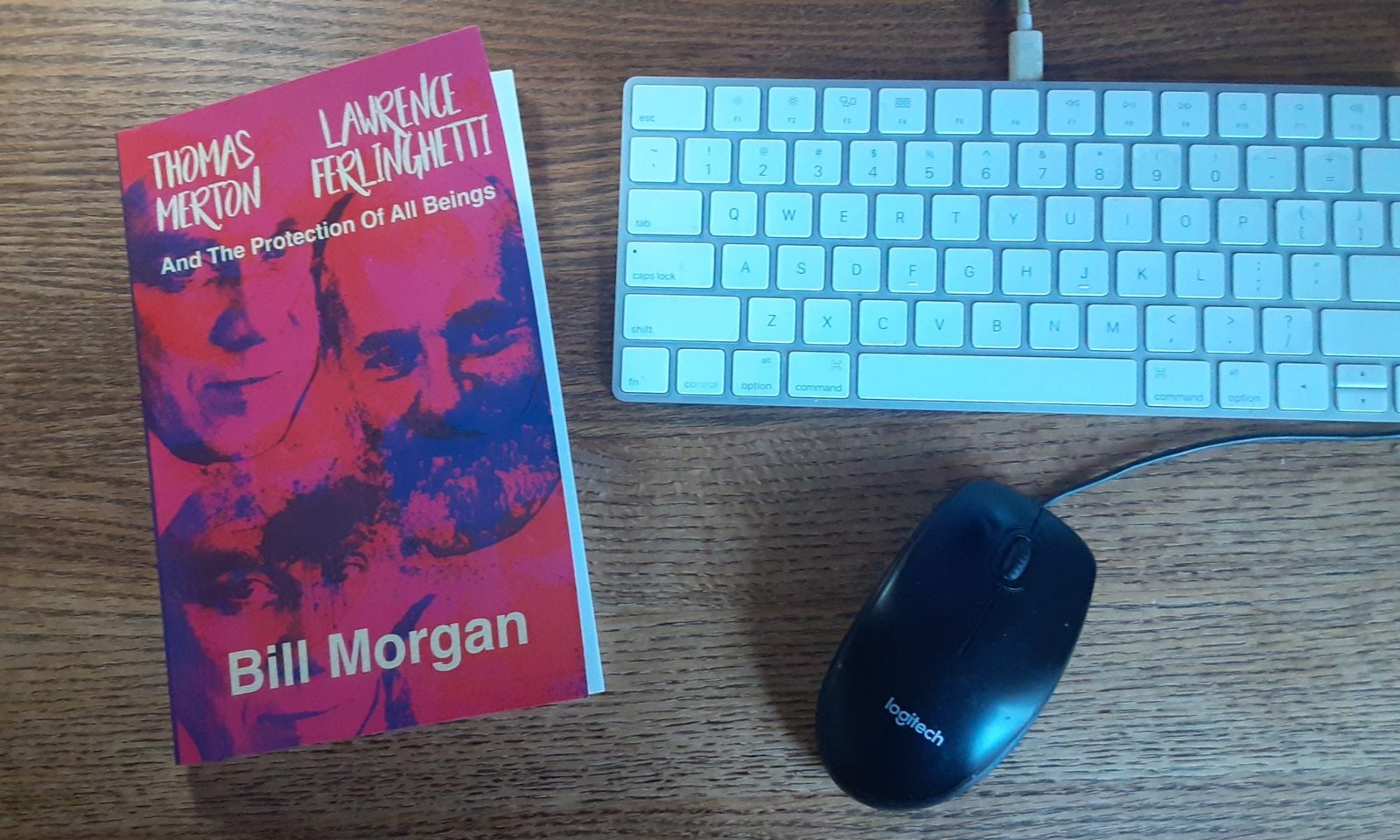
Thomas Merton, Lawrence Ferlinghetti, And The Protection Of All Beings – A Review

Thomas Merton, Lawrence Ferlinghetti, And The Protection Of All Beings is a book by Bill Morgan soon to be released by BEATDOM BOOKS. While the book is rather short, about a 100 pages, it is one of those “pandemic projects” that creative people were taking on in 2020 and 2021.  We are all the wiser for the fascinating story of two men, from very different circles, both “yearning to discover a spiritual basis for life” and their correspondences while Ferlinghetti attempted to publish a journal for City Lights Books called  Journal for the Protection Of All Beings.

Thomas Merton had a best selling book The Seven Story Mountain which sold over a million copies.  After writing that book Merton went on to pursue spirituality in the Catholic tradition, eventually becoming a Trappist Monk in a monastery in Kentucky. Lawrence Ferlinghetti, on the other hand, was a founding partner in City Lights Books in San Francisco and wrote such classics as A Coney Island of the Mind. One would think that these two men would be very different, however they became pen-pals and had a lot of mutual respect for one another.  They both became bound by their pacifism and spiritualism and a searching for a deeper meaning to life.

Poets come out of your closets,
Open your windows, open you doors,
You have been holed up too long
in your closed worlds.
Lawrence Ferlinghetti

The concept behind Journal for the Protection Of All Beings was to have contemporary writers submit essays and poems to shed light on the current situation in the world. Of course, the existential threat at the time was the atomic bomb and the constant threat of nuclear war.  Thomas Merton had recently written a poem  Original Child Bomb, written in a sort of detached objective style which  called for pacifism. In the Thomas Merton, Lawrence Ferlinghetti, And The Protection Of All Beings, there is much back and forth about including Original Child Bomb in the Journal for the Protection Of All Beings. Merton had to get all his published writings approved by the Catholic church which was often tentative about Merton being associated with the Beats. In the end, it was published in the journal along side a wide range of submissions. Such was the travails of publishing something from authors in different circles in 1961.

If you are visiting San Francisco, and want to get a sense of who the Beats were and a feeling for how San Francisco was in the 1950s and 60s Thomas Merton, Lawrence Ferlinghetti, And The Protection Of All Beings is a great start. So often the Beats are seen only from the anarchistic, bleary-eyed, drug crazed, sometimes homosexual counter-culture lens, but they were of course much deeper. Thomas Merton, Lawrence Ferlinghetti, And The Protection Of All Beings gives you a view into this world of people who were deep readers, writers and thinkers.

Merton underwent a similar type of visionary experience on a street corner in Louisville Kentucky. On March 18, 1958, as he was walking through the downtown shopping district, he stopped at the corner of Walnut and Fourth Streets, where he was “overwhelmed with the realization that I loved all these people, that they were mine and I theirs, that we could not be alien to one another though we were total strangers.” “If only everybody could realize this! But it cannot be explained. They were all walking around shining like the sun,” he later explained. He saw that everyone was sacred, just as Ginsberg had declared that everyone was “holy.”
Thomas Merton, Lawrence Ferlinghetti, And The Protection Of All Beings

Merton, Lawrence Ferlinghetti and Ginsberg all looked upon industrialized civilization and hoped for its demise. They saw all humans as “sacred” or “holy.” Some went on a spiritual path through Catholicism others through Zen Buddhism. One opened a bookstore and lived to be over one hundred.

What is interesting to this reader is the idealism of those times. San Francisco was much more bohemian than it is today. There must have been a sense that publishing poems and short essays could actually do something to bring about world peace. Having Original Child Bomb in the journal would somehow aid in nuclear disarmament. Reading a poem could not only change one person but the entire planet. Poems and literature actually mattered. What rose-colored glasses!

What a different world that was and how the city of San Francisco has changed. You got a little sense of that idealism in the early days of the internet but that period is long gone. San Francisco is primarily about digital technology and now more often about libertarian get rich schemes, venture capital, startups and a sort of selfish individualism.  Automated driverless car technology and mining people’s personal data for profit. Individuals are no longer “sacred” or “holy” but a mass of data points. Surely, there is still a creative vibrancy, but the rents are high and the parking tickets and bridge tolls steep. Everyone needs a day job to make rent. There are surely no poets today in San Francisco that have the delusion that their poems are going to change the world. Sorry for the buzz-kill folks.

While reading Thomas Merton, Lawrence Ferlinghetti, And The Protection Of All Beings I could not help but imagine a screenplay of this book. It could be  a low budget film with historic photos and videos of San Francisco. The notion that these two men, in very different places had such a deep literary and philosophical relationship, simply draws you in. You can almost hear the fog horns, seagulls and a typewriter tapping away from a little apartment in North Beach. I am still undecided if I would have the tragic, accidental death of Thomas Merton, electrocuted in a bathtub in Thailand at the beginning or the end. Perhaps both.

DISCLAIMER:  This book reviewer received an advanced copy of this book from the publisher.
Barbara Ehrenreich – Legacies and Book Recommendations

I never think delusion is ok.
Barbara Ehrenreich in an interview with Jon Stewart

Barbara Ehrenreich died on September 1, 2022 at the age of 81. She was a modern-day muckraker who’s books exposed sexism and rampant capitalism  in the health care system, wage inequalities, the latest silly fads in psychology and the challenges of living in our modern capitalist America. Her best selling  2001 book Nickel and Dimed: On (Not) Getting By in America, is a memoir of her three-month experiment surviving on a series of minimum wage jobs. It is an easy read, a bit of a “one hit wonder” and ironically gave her some financial freedom to continue to write on topics of her choosing. You can read the New York Times obit which seems to have been picked up by other papers and is  the only obit of Barbara Ehrenreich that I could find.

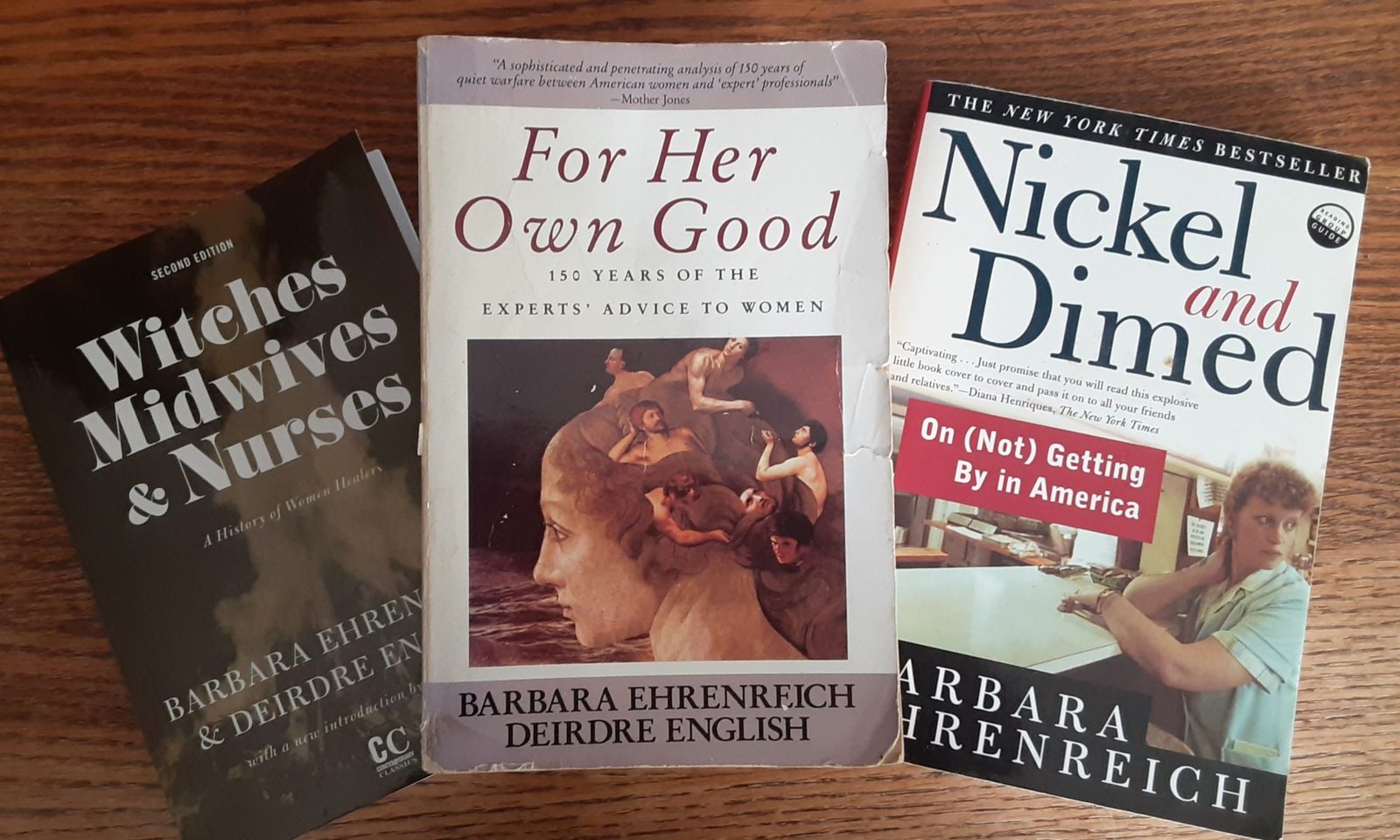
I have three of Barbara Ehrenreich’s books.  It has baffled me how of all her books Nickel and Dimed was so successful.  People did not know that living off of a minimum wage job is next to impossible? But then again Nickel and Dimed was written as gonzo journalism and hit right when reality television shows were coming of age. People often read to confirm their beliefs not to challenge them. Many of Ehrenreich’s books were written in this first person, lived confessional style. However, to this reader, if you want to read some of her most interesting and powerful works, read the books she co-wrote with Diedre English, Witches, Midwives, and Nurses: A History of Women Healers (1972). and For Her Own Good: Two Centuries of the Experts’ Advice to Women (1978) were she writes as a researcher and scholar about the disenfranchisement of women and  the transformation of healthcare over the last 200 years. This is a story that our present medical model and especially the AMA (American Medical Association) does not want the public to know.

Witches, Midwives, and Nurses: A History of Women Healers ( For Her Own Good: Two Centuries of the Experts’ Advice to Women  are both books written in the 1970s at the height of Second-wave feminism.  Both books look at the history of medicine and how the role women as healers and experts was usurped  by the emergence of a medical “profession.”  The overriding theme is how this new male dominated profession dealt with what was called the “Woman Problem.”

For decades into the twentieth century doctors would continue to view menstruation, pregnancy and menopause as physical diseases and intellectual liabilities. Adolescent girls would still be advised to study less, and mature would be treated indiscriminately to hysterectomies, the modern substitution for ovariotomies. The female reproductive organs would continue to be viewed as a kind of frontier for chemical and surgical expansionism, untested drugs, and reckless experimentation.
For Her Own Good: Two Centuries of the Experts’ Advice to Women

In many ways this sort of medical arrogance has continued. For years women who went through menopause would be prescribed hormone replacement therapy to deal with their “Woman Problem,” as though nature needed help with the natural process of life and aging. It was later found that hormone replacement therapy created risks including heart disease, stroke, blood clots and breast cancer.

And as of 2014, gender is now considered a pre-existing medical condition where God often seems to makes “mistakes.” In many ways, if you connect the dots, the “Woman Problem” has not ended – it just has been repackaged.

Hopefully, someone will take up the torch of critical thinking that Barbara Ehrenreich lit and continue on with her early style of research and questioning the medical establishment and the powers that be. An interesting study would be how the profession has changed now that women are entering the field of medicine at about the same rate as men.

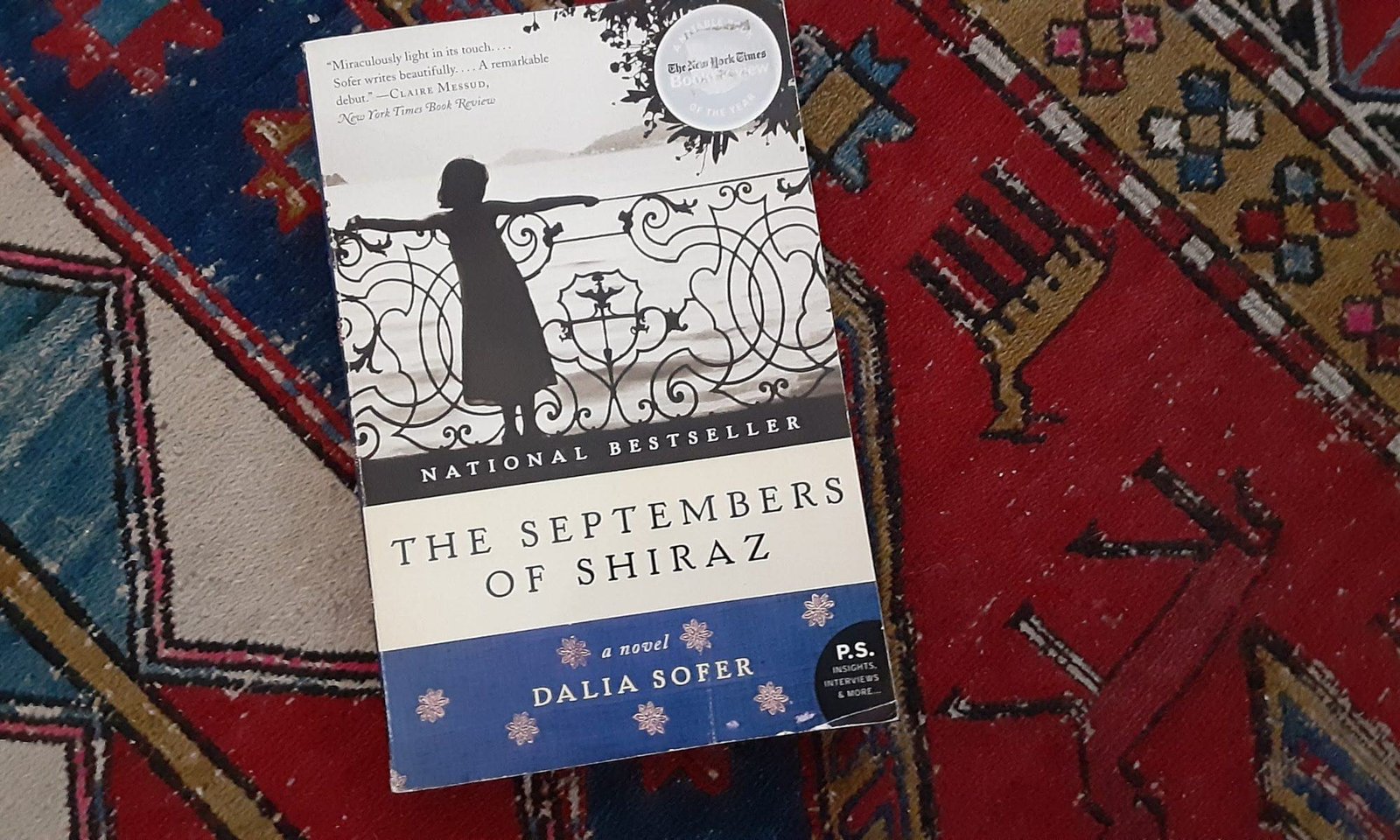
The Septembers of Shiraz by Dalia Sofer – A Review

I found the first novel by Dalia Sofer The Septembers of Shiraz  for one dollar while looking through books at a Goodwill store in Minneapolis. The shelves were in no particular order, so the same books promoted by the big publishing houses  could be found ever fifty or so books –  volume printing now on sale. While The Septembers of Shiraz, according to the cover,  was a national bestseller, it was the only copy on the shelf and I had not heard of the novel. Lucky me. I found the book to be quite a page turner.

What makes the novel so compelling is how it weaves together multiple stories seamlessly. For Sofer, while the world is turned upside down, the one constant is time. Tehran and New York City may not see the sun rise and set at the same time,  but they eventually do. While someone is in prison in solitary, someone else is taking in laundry. This contemporaneousness and  universality seems to bring the characters hope and the ability to persevere against the odds . She writes about these and many other themes with a poignant restrained lyricism. Her depictions of Tehran and Iran are so vivid you can almost hear and smell the streets.

Iran will be in the news for years to come and the years following the 1979 revolution will always be a pivotal time in history. While I will do the best to not spoil the story, the novel is in many ways autobiographical. Dalia and her family did attempt to leave Iran and unlike the movie Argo they did not pose as a Canadian film crew. I will leave it at that.

This reviewer gives The Septembers of Shiraz by Dalia Sofer 5 stars. Feel free to pay the full price at your local book seller.


John Boutte and Echoes of New Orleans

The 2022 French Quarter Festival in New Orleans happened and all was pretty much back to normal with maybe a few more people than years past – it was packed. It is a great festival and the music of New Orleans and Louisiana shines.  So many bands. So many acts. So many restaurants. So much amazing food.  It is one of those events that will bring back meaning to your life. Every time I have gone to New Orleans, I discover a musician who simply knocks my socks off. This year it was John Boutté.

John Boutté is a New Orleans native. His set at the GE Stage in Jackson Square had me spellbound. He combines a beautiful soulful voice with phasing that makes your hair stand on edge. His ability to speak from the heart in an honest, heartfelt way completes the experience. During the set he made a plea for non-violence. He wondered why war and guns have not been made illegal.  He made a pledge for peace. Then later on in the set he cut his finger on his tambourine, and pointed out how we are all part of the human race and the color of our blood is all the same red.  A stage hand handed him a towel. A beautiful, poignant moment in the city of music – New Orleans.

Below is a John Boutté WWOZ video during the pandemic. Enjoy.

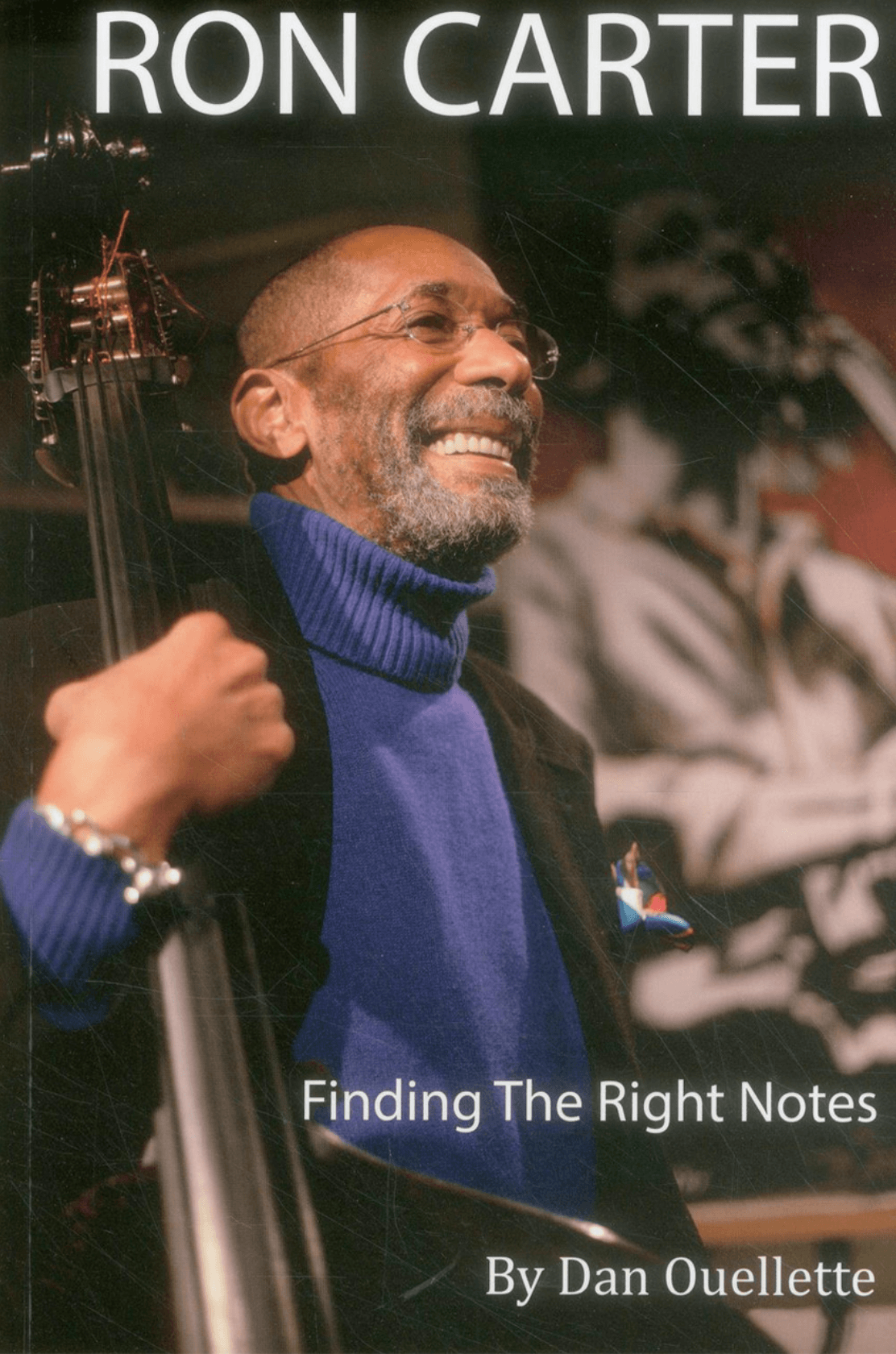
Ron Carter and the Finding the Right Notes

I think that the bassist is the quarterback in any group, and he must find a sound that he is responsible for.
– Ron Carter (Finding the Right Notes – 2017)


“After a couple of months on the road with the band, Herbie began to feel frustrated. He was copying all the other pianists but not allowing himself to come out from hiding. Finally the frustration came to a head. “I thought I’ve just got to play, to really play,” Herbie said. If that conflicts with Miles, I’ll just have to bear the consequences. So at the Sutherford Lounge in Chicago one night, I let it loose. I figured Miles was going to fire me after the set, but he leaned over to me and said. “Why didn’t you play like that before” That shocked me. Then it dawned on me that a copy is never as good as an original. Miles wanted to hear me. And so did Ron and Tony.”
– Herbie Handcock quoted in (Finding the Right Notes – 2017)

Aldous Huxley’s Brave New World – 90 Years Later

“Lacks literary value which is relevant to today’s contemporary multicultural society”
– Banned Books Week: Banned BOOKS in the Library

It is remarkable how the novels of the 20th century have often predicted the 21st with amazing accuracy. So many of the novels of Orwell, Bradbury, Vonnegut and Huxley were spot on.  While the exact details may differ the general concepts are so often clairvoyant to the point of being spooky.  I reread Brave New World by Aldous Huxley having maybe read it a long time ago.  So many of the predictions have become reality. The social engineering, the control of people through pharmaceuticals, the engineering of humans, the disdain for truth and history, the censorship, the obsession with consumerism, the obsession with sex –  the list is long.

Of course the novel is not Disney-approved so has been banned at times mostly for the notion of unlimited sex and the concept of a sort of “free-love” with an advocacy of people having many partners. No doubt that would wake up many boys in tenth grade English class but there is absolutely nothing graphic in the novel and that is maybe the one thing that has not become a reality – at least not in my circles. And everyone please remember: this is a novel and not a manual for how to live life.

While sex with many partners is perhaps not common today the pharmaceuticals are everywhere. The line below seems like it could be the marketing material for Prozac.

“And if ever, by some unlucky chance, anything unpleasant should happen, there’s always soma to give you a holiday from the facts.”

And then there is this concept of “universal happiness” at the expense of truth and beauty so necessary for our present consumerist society.

“Our Ford did a great deal to shift the emphasis from truth and beauty to comfort and happiness. Mass production demanded the shift. Universal happiness keeps the wheels steadily turning; truth and beauty can’t.”

Of course if your comfort is beginning to wane in Brave New World there was a sort of virtual world called the Feelies. Here people could go just to get back to this sort of duped sense of happiness, perhaps a little bit like the new Metaverse.

“A lot of people think that the metaverse is about a place, but one definition of this is it’s about a time when basically immersive digital worlds become the primary way that we live our lives and spend our time,” Zuckerberg told Fridman. “I think that’s a reasonable construct.” – Mark Zuckerberg from businessinsider.com

The notion that the 1932 Brave New Worldlacks literary value which is relevant to today’s contemporary multicultural society” is a pretty odd critique. I have a hard time thinking of themes and topics in the novel that are not relevant.  Perhaps, this is why the brave schools have kids read and discuss  this work. The main problem with having to write a paper on Brave New World is that there are too many relevant contemporary themes.

Remembering Pat Martino

Pat Martino (Patrick C. Azzara) (1944 – 2021) passed away November 1, 2021. He was an amazing guitarist and had a life story that is interesting on so many levels. The most unusual aspect is that in 1980 after a brain hemorrhage, Pat lost all his memory and had to literally relearn how to play guitar from the very beginning. He then went on to continue his career as a phenomenal jazz guitarist.

Martino had been performing until a hemorrhaged arteriovenous malformation caused a “near-fatal seizure” in 1980.[5] The resulting surgery which removed part of his brain left him with amnesia and no recollection or knowledge of his career or how to play the very instrument that made him successful. Martino says he came out of surgery with complete forgetfulness, learning to focus on the present instead of the past or what may lie ahead. He was forced to learn how to play the guitar from zero. This circumstance is crucial to understand his career and his particular way of thinking. – Wikipedia

Here on Angel Eyes, Pat Martino has the melody and is featured.

There are a few documentaries that follow Pat Martino’s journey. Martino Unstrung is an excellent look into Pat Martino’s musical and medical life and should be fascinating to anyone in the fields of music, psychology, medicine or brain science. I highly recommend this film.

While I have been an avid jazz fan since listening to my dad’s Duke Ellington and Henry Red Allen records in high school, I had not listened to much Pat Martino. I knew his name but did not own any of his music. This is how it worked before the internet.

In 2010, Pat Martino had some gigs in the San Francisco Bay Area.  He was playing Kimball’s East. My high school-aged guitar-playing son had just fallen in love with jazz and was a big Pat Martino fan. He had purchased tickets to hear Pat and his friend for some reason could not go. I was invited to go to the concert.  We took the ferry over to Jack London Square and arrived a bit early. Knowing where the back stage entrance was my son seemed determined to shake Pat Martino’s hand. The bouncer at the door called up to see if it was alright if a kid and his dad came up for an autograph. “No problem. Send them up.”

We went to the dressing room and there was Pat and his young piano player hanging out. Pat was eating sushi and what we both remember is that he was drinking a quart carton of whole milk.  Sushi and milk. An odd combination. Pat was gracious and we basically just hung out for about fifteen minutes. He had these very clear alert eyes that often seem to be enlarged because of his thick glasses. He probably signed a CD and then I took this photo.

Pat Martino and Kai Lyons backstage at Kimball's East
Pat Martino and Kai Lyons backstage at Kimball’s East

It is 2021 and people born in the 1940s are starting to pass on a regular basis.  Many of these folks are my heroes. Pat Martino. A beautiful cat. RIP.

Epilogue

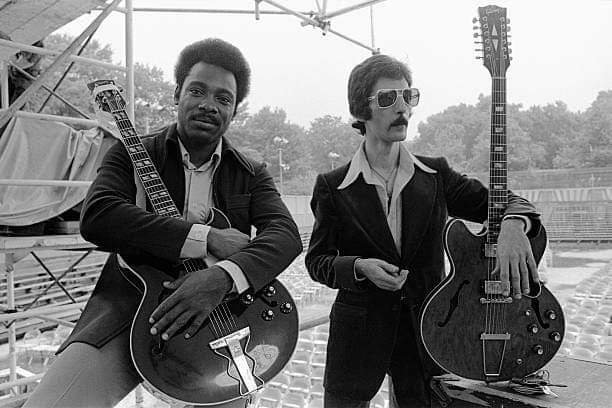
If you watch the documentaries about Pat Martino, one of the common themes is how guitarists had a lot of respect and admiration for Pat. There is the story of George Benson. then a young cocky musician, going of to hear Pat Martino for the first time thinking how could this skinny Italian kid from Philly be any good. Needless to say George was blown away and left the show a humbler man. The photo below is of these two amazing musicians and speaks to the diversity in this genre of music the industry calls “jazz.”

George Benson and Pat Martino

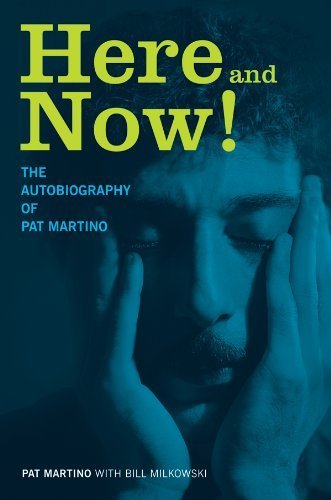
For further reading, Pat wrote an autobiography.

Here and Now!: The Autobiography of Pat Martino

This is an excellent book and I highly recommend!


Remembering Robert Altman 1946-2021

Robert Altman, known mostly for his years photographing musicians and counter-culture icons in the late 1960s and early 70s has passed.  He was a staff photographer for Rolling Stone for a bit. I read his obit recently and and was saddened to hear of his passing.

In the late 1990s I took a class that was taught by Robert Altman at San Francisco State College of Extended Learning on Market Street in downtown San Francisco. It was a basic HTML class for this new thing called the World Wide Web and in order to get on board the first thing you had to know was HTML. People made websites mostly one page at a time. Robert Altman was the teacher, and probably the only reason he knew anything about this stuff was that he had built a website to sell prints of his photographs. This was the early days of the internet, when for a brief time the idealism of the 1960s took hold in this new digital era. Perhaps the playing field would level out and artists, writers, photographers and musicians could sell their work directly, cut out the middle-men, control their work and get paid their fair share.

Of course, in many ways this was one big pipe dream as over time the internet became more corporate and the monopolies of our day began to dominate the system, control the politics and narratives and literally write all the rule books. And as Ruth Bader Ginsburg commented about sexism “I ask no favor for my sex; all I ask of our brethren is that they take their feet off our necks,” the same can be said of the stranglehold on smaller players by the big tech monopiles today.

Back when I was taking this HTML class with Robert Altman he was in his mid-fifties and always had his reading glasses at the ready, perched on the top of his head. He was passionate and generous. He dove right into the more advanced aspects of HTML at the time. We started learning tables, rowspans and colspans on day one. This is back in the day when all websites were made with tables and single pixel gifs to lock designs into place. If someone would have spoke of responsive design then you would have gotten a blank stare. People still made phone calls with payphones and your answering machine was perhaps the most important tool for any freelancer. Robert was this middle-age guy – vibrant, fearless, creative and giving. He was like – “look, if I can learn this coding stuff, anyone can do it!” So we all looked on at this new markup language, most everyone there because it was the unavoidable future and eventually it would lead to a decent job and some sort of economic stability.

Now when people are choosing a career in programming, there is this idea that if you do not start young it is not worth the effort. The notion of the child genius creating something miraculous in the digital world is a common theme.  The college dropout who creates an app that disrupts entire industries. If you are in your late twenties, it is too late. However this is silly.

Robert Altman, putting borders on all his tables, creating something beautiful out of nothing is evidence that anything is possible.

Read the San Francisco Chronicle Robert Altman Obituary


Kurt Vonnegut – A Man Without a Country – The Review

If you live in San Francisco, check out Bird and Beckett Books. A great place to buy books and listen to live music.

Bird and Beckett Books

Remember, before you buy a book from Jeff Bezos consider supporting your local bookstore. You get that warm fuzzy feeling just thinking that you may have kept a local business alive and you may even make some real friends.


When I was a younger man, but decades after the bombing of Dresden, Kurt Vonnegut was an author that people took seriously, but he was never taught in your  English class. Too modern. Too rock-an-roll. Far too funny. It was just assumed that everyone read Vonnegut.  The language was crisp, often ironic, sometimes funny as hell and always profound. The chapters always short, you could often finish a book in a day.

I finally got around to reading A Man Without a Country by Kurt Vonnegut. It was a gift from a dear friend and in the end it it made me reread Slaughter House Five and God Bless You Mr. Rosewater; I just needed more Vonnegut. I realized that all Vonnegut’s work is worth rereading. Slaughter House Five should be required reading in high school.

Electronic communities build nothing. You wind up with nothing. We are dancing animals. How beautiful it is to get up and go out and do something. We are here on Earth to fart around. Don’t let anybody tell you any different.
– Kurt Vonnegut

A Man Without a Country is unlike any of Vonnegut’s books. He wrote it later in life when in his 80s. It is confessional and in many ways but a brief autobiography – a great place to get to know some of the core values that undermine much of Vonnegut’s work. Early on he recommends everyone read what he believes to be the greatest short story in American literature –  An Occurrence at Owl Creek Bridge by Ambrose Bierce. You can download it as a pdf.

Do you think Arabs are dumb? They gave us our numbers. Try doing long division with Roman numerals.
– Kurt Vonnegut

One of the reoccurring themes of Vonnegut’s life of course is World War II and the realization that World War II was fought, like all wars, by children. This is why Slaughter House Five has a subtitle of The Children’s Crusade. 

Reading A Man Without a Country, it is interesting to get Vonnegut’s take on drinking and smoking. I never really knew that he smoked two packs of Pall Malls, unfiltered every day. Incredible, that he lived into his 80s. Born in 1924, He was a man of his times.  Most everyone in his generation smoked like chimneys at one point or another.

He was a humanist, pacifist, a stealth stoic, an environmentalist who believed strongly in the notion of community. One of his guiding moral principals was kindness.

And when he reflects back on America he signals out African Americans.

…the priceless gift that African Americans gave the whole world when they were in slavery was a gift so great that it is now almost the only reason many foreigners still like us at least a little bit. That specific remedy for the worldwide epidemic of depression is a gift called the blues.
– Kurt Vonnegut

Experiencing the fire-bombing of Dresden made him a pacifist. He also sees that all wars and the destructive nature of capitalism (he was a huge fan of Eugene Debs) will do us in in the end. The quote below is from almost twenty years ago.

That’s the end of the good news about anything. Our planet’s immune system is trying to get rid of people. This is sure the way to do that.
KV, 6AM 11/3/2004

A Man Without a Country by Kurt Vonnegut. I am giving it 5 stars as just being in the presence of Kurt Vonnegut’s wit is 5 stars. You can read A Man Without a Country in an afternoon.

Ray Barretto in 1973

In 1973, Barretto recorded the album Indestructible, in which he played “La familia”, a song written by José Curbelo in 1953 and recorded by the sonero Carlos Argentino with the Cuban band Sonora Matancera; Tito Allen joined as new vocalist. Allen left the band after “Indestructible”. This series of departures left Barretto depressed and disappointed with salsa; he then redirected his efforts to jazz, while remaining as musical director of the Fania All Stars. In 1975 he released Barretto, also referred to as the Guararé album, with new vocalists Ruben Blades and Tito Gomez.
-Wikipedia

How we learn new stuff every day. Incredible.

And people close to me often wonder why I refuse to give my white pants and long-sleeve red shirts to Goodwill.

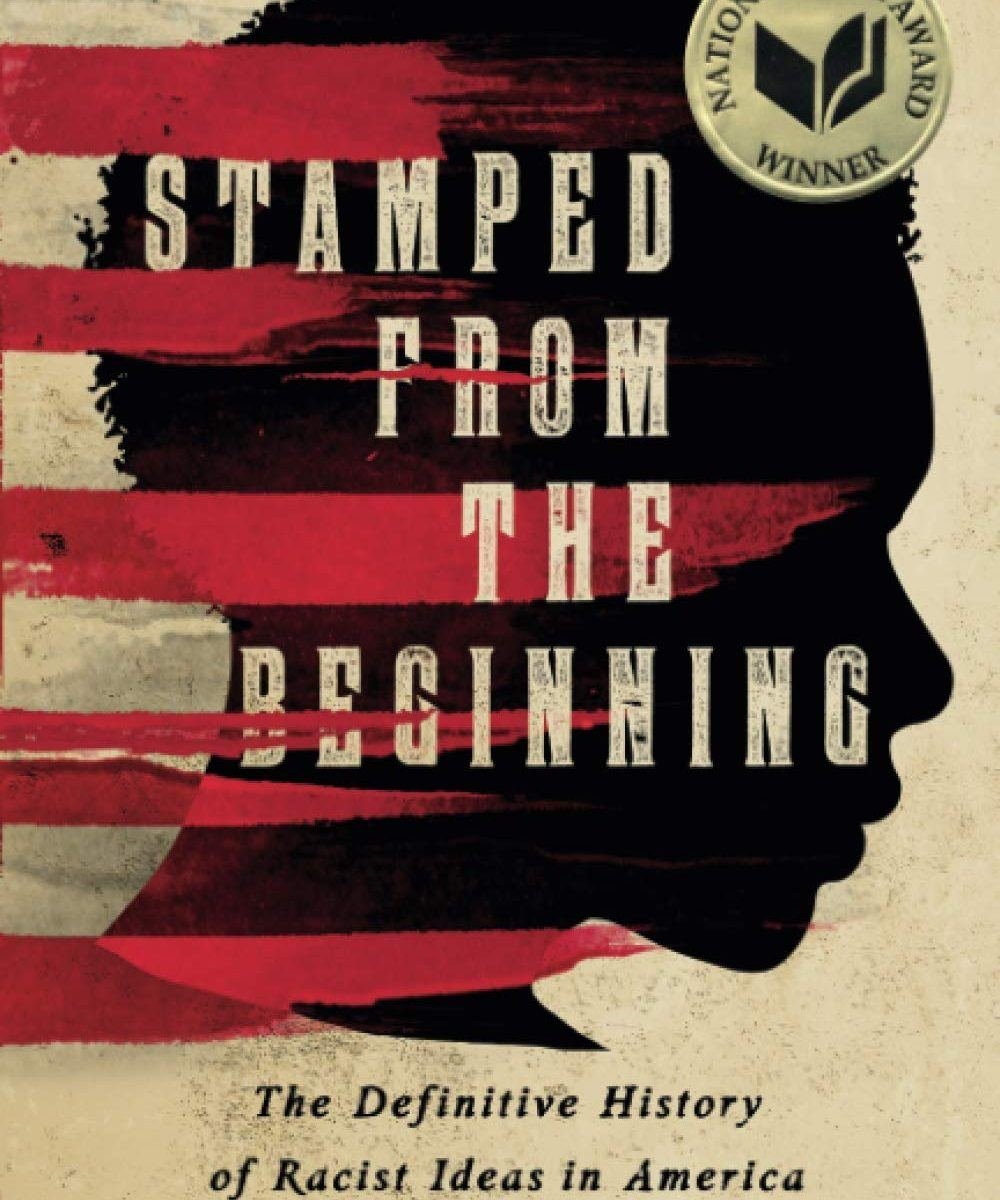
“Stamped from the Beginning: A Definitive History of Racist Ideas in America” – The Definitive Review

While “Stamped from the Beginning: A Definitive History of Racist Ideas in America” is a welcome addition to the scholarship of U.S. history the title is a bit misleading. It is not a “definitive history” as that is impossible. Rather it is a long rant on who is in what bucket: racists, assimilationist or anti-racist. Kendi’s thesis is that assimilation in the end is simply just a facet of racism as it does nothing for justice and systemic racism in society. He pleads for an anti-racist world from all segments of society. Fair enough.

One thing I take issue with in the book is the naive notion of racism having no historical context. That David Hume, the philosopher of the Enlightenment is taken to task about his polygenisist beliefs is silly. Most white people at the time, including scientific organizations, thought humans were many species. (This is probably, though rarely mentioned, the root of modern racism) Throwing Hume under the bus makes it so people do not actually read Hume and dismiss his many brilliant ideas because it is so unfashionable to read the works of a “racist.” Kids these days have not a clue what the Enlightenment was and is. The same can be said for pretty much everyone in the 19th century. John Muir, of course the racist, who just happened to be a naturalist and wanted to “save the planet’ before it was fashionable, and who talked on some mountain top to another racist, Theodore Roosevelt. The list is long.

The other issue I have is that Fred Hampton, the Black Panther murdered by the FBI, who’s politics were far beyond the identity politics of race and terrified the FBI as he spoke of economic injustice beyond the systemic racism is not even mentioned. Harry Belafonte, who was a major figure in the Civil Rights era of the 1960’s is left out as well.

This is but a brief review. Read the book.

Definitive. I think not.

Overture, MIDI, GM Instruments, Audacity

Overture 5.2.1, Fast Track Pro, MIDI, GM Instruments, Audacity 2.42, TASCAM DR-1 (to record the final Audacity production, any digital recorder will do or even another computer)

BEWARE: THIS IS INSTRUCTIONAL:
That is how you can take an Overture 5.2.1 score and create an MP3 file. Make sure you have the latest version of Audacity or you may not be able to play MIDI files.

STEP 1:
I am on a Windows 7 machine. The first thing to do is buy and download the stuff above. Audacity is Free.

STEP 2:
Write an amazing and complicated piece of simple song with Overture. Make note of the tempo of the song. Mine was 170 beats per minute.

STEP 3:
Export what you did in Overture as a MIDI file. The key for me was to just use GM Instruments and not the sound card from my Roland Keyboard.

STEP 4:
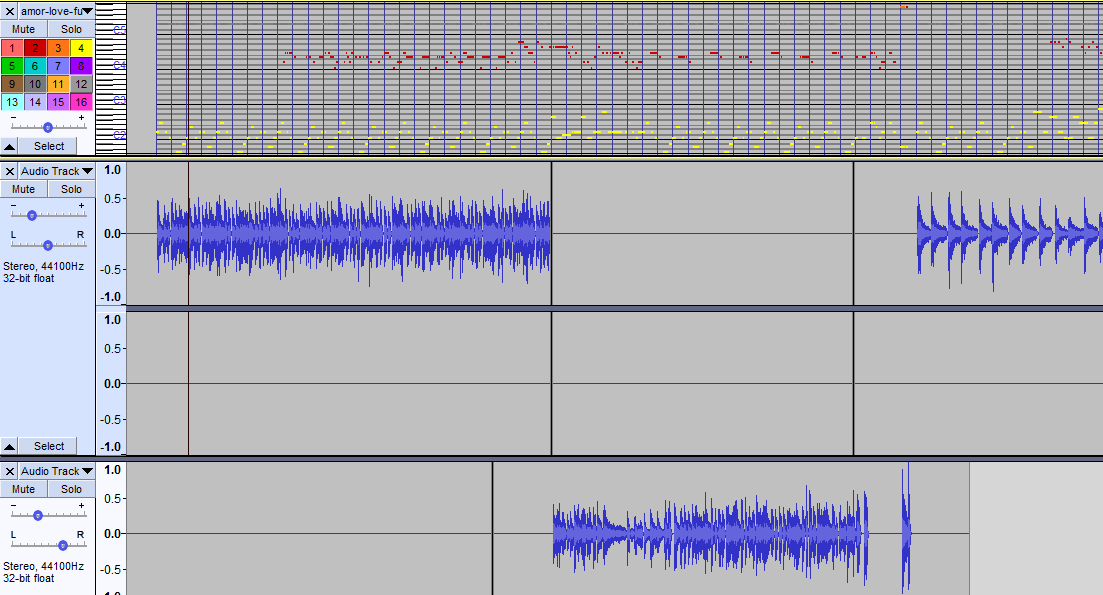
Import MIDI you exported out of Overture into Audacity.

STEP 5:
In Audacity create a new track by going to Generate > Rhythm Track.

STEP 6:
Do an offset so that the tempo in the rhythm track gives you a count off for recording other tracks. For some reason my MIDI was a little off. Zoom in and get it at the correct spot.

STEP 7:
When you are finished, plug in the TASCAM DR-1 into the headphone jack on you computer. Set the mode on the DR-1 to “Line In” and play your Audacity file while recording it on you DR-1.

STEP 8:
Plug your TASCAM DR-1 into your computer and retrieve you masterpiece.

A little more complicated than baking a cake. This is here so that in 6 months when I want to do the same thing… I got the notes.

Be careful out there everyone!