Thoughts on the New APA Guidelines for Men

Recently the American Psychological Association (A.P.A.) published their new guidelines entitled the American Psychological Association’s guidelines for practice with men and boys . Writing and publishing something like the guidelines for practice with men and boys is a strange and ill-advised project. Creating guidelines for protologists on the use of the FOS-425 for colonoscopies on men over fifty seems like a good idea, but men are far too  varied and complex to create generalizations and guidelines.

Before you read further, I highly recommend that you read the actual paper. It is rather odd that like Moses’ 10 Commandments there are 10 A.P.A. guidelines for practice with boys and men. But perhaps it is more like an A.P.A. awards document as I am sure that of all the researchers and contributors who’s studies are cited celebrated this career triumph with a lot of wine and champagne to fortify their narcissistic egos. I believe the  guidelines will be viewed as a curious historic document, similar to writings and guidelines for women during the late 19th and early 20th centuries when doctors and the medical scientists viewed woman as having the “woman problem.”  This is clearly outlined in For Her Own Good: Two Centuries of the Experts Advice to Women by Barbara Ehrenreich.

Her Own Good: Two Centuries of the Experts Advice to Women by Barbara Ehrenreich.

Now that Western medicine has terrorized woman for over 200 years, for some reason they now have moved on to men. In fifty years, the  American Psychological Association’s guidelines for practice with men and boys will be embarrassing evidence on just how absolutely naive, cult-like, dangerous and  ignorant the A.P.A. is to history, philosophy, language and actual science.

Indeed, after the American Psychological Association’s guidelines for practice with men and boys were released it created a bit of a firestorm. People on the conservative right and academics of all walks often criticized the paper as either being an attack on men and traditional morals or simply inaccurate and absolute intellectual self-deception. The New York Times ran an opinion piece that basically side-stepped the issue and did a report of how various people and authorities on the subject responded to the “guidelines.” However, the critique I found most perceptive was by Jacob Falkovich and his essay Curing the World of Men

Curing the World of Men

This is, after all, the same organization that classified homosexuality as a mental disorder until the seventies, and whose members were not discouraged from recommending conversion therapy until 2009. You’d think being wrong about gays for a century may teach the APA some humility. –Jacob Falkovich

What I find alarming about the A.P.A. is the fabric of the organization. To me it has characteristics more in keeping with a cult or a religious organization than a scientific organization.  If you simply start with the “definitions” at the beginning  (gender, cisgender, gender bias, gender role strain, etc.)  you can see right away they are laying the ground work for current fashionable cultural assumptions and not science.   For example, the term “gender non-conforming,”  which is so in fashion in psychology these days, rarely gets scrutinized. “Gender non-conforming” – based on what? Is the A.P.A. now determining the “style” of a certain gender. Is a gender “style” for some reason now an important part of psychotherapy and also a subject of science? From the very introduction, the paper begins with some pretty shallow assumptions.

Boys and men are diverse with respect to their race, ethnicity, culture, migration status, age, socioeconomic status, ability status, sexual orientation, gender identity, and religious affiliation.

Seeing as men make up about half of the 7.5 billion humans on the planet, this statement seems accurate.  However, how can boys and men be diverse with regards to gender identity? They are both male. Last time I bought airline tickets I had to choose between either male or female in the gender dropdown. If the A.P.A. has discovered additional genders they perhaps should inform United Airlines. I do hear of non-binary as being another gender and there is of course intersex or hermaphrodite people but this paper and guidelines are for men. Then the next sentence gets to the core of how the A.P.A. defines gender.

Each of these social identities contributes uniquely and in intersecting ways to shape how men experience and perform their masculinities – Introduction to A.P.A. guidelines

“… how men experience and perform their masculinities.” What a strange notion that a man simply performs “masculinities” as though a gender has no biological basis and is simply a “performance.”  This notion perhaps comes from the psychologist Judith Butler and her notion that gender is defined by “gender performativity.”  That the A.P.A. adopts this theory as being a scientific fact is rather odd. This is why the A.P.A. is more akin to say the Catholic Church. Indeed if you create a study that is peer reviewed and published that challenges another prominent researchers’ work, you immediately get called out for not towing the accepted line. This is exactly what happened to Lisa Littman when her paper Rapid-onset gender dysphoria in adolescents and young adults: A study of parental reports when data challenged the  assumptions of other scientists currently in fashion. That people like Diane Ehrensaf, PhD from UCSF dismissed the study outright just shows how political and cult-like is the field of psychology and the APA. As a scientist, you would think Ehrensaf would be curious. “Interesting. You are taking a different angle than I did and found that kids with Rapid Onset Gender Dysphoria seemed to be due to environmental factors and a common feature was an addiction to the internet.”  Instead, Ehrensaf dismissed the findings outright even though her work is often based on studies that have yet to be replicated.  This is but one example of how the APA is not really interested in science but ideological conformity. Often, in the end they become the unknowing henchmen of the pharmaceutical industry.
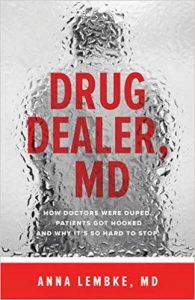


Not related to men specifically, Drug Dealer, MD is an insightful look how the medicine in the United States is the cause of the opiod crisis.  That “pain” is now considered a vital sign has profound influence on the prescribing of narcotics and other prescription drugs.


While reading the comments from the New York Times article it was interesting to read that the guidelines use of the word “stoic” is actually inaccurate, shallow and lacking of historical perspective. It is almost as though the modern psychologist notions of the topic of men was informed only by time spent reading the latest studies, watching beer and truck commercials, John Wayne movies and never bothered to learn some of the fundamentals.  Three times in the paper it discusses how stoicism in men is a bad thing, that “not showing vulnerability, self-reliance, and competitiveness might deter them from forming close relationships with male peers.” A rather odd statement for anyone who has ever participated in athletics and formed bonds with teammates and opponents. Online, in the comments, someone pointed out that “Stoicism” as a ancient philosophy of life is very different than what perhaps how the APA defines stoicism.  Recommended reading was the book A Guide to the Good Life: The Ancient Art of Stoic Joy Irvine, William B.

A Guide to the Good Life: The Ancient Art of Stoic Joy Irvine, William B.

It is good read and what you learn is that Stoicism as an ancient philosophy of life has more in common with Zen Buddhism than emotional repression and asceticism. I am certain learning about Stoicism is much more worthwhile than reading the APA guidelines. For when after the APA psychologist, who is having therapy session with your anxiety-prone child, decides “maybe its time to start medication or hormones” and suggests Prozac or Ritalin, you will need to consult some of the practical advice from the ancient philosophy of Stoicism in order to come to terms with your life’s turn of events.  But now I am going to stop writing, and as my father did before me, a very stoic creature,perform one of my many “masculinities” and do the dishes and clean the house.

Although there are differences in masculinity ideologies, there is a particular constellation of standards that have held sway over large segments of the population,
including: anti-femininity, achievement, eschewal of the appearance of weakness, and adventure, risk, and violence. These have been collectively referred to as traditional masculinity ideology

– From American Psychological Association’s guidelines for practice with men and boys.

What a strange definition of something the APA calls “traditional masculinities.” Of all the thousands upon thousands of men I have known, I have yet to know any who embrace that list. To stereotype people is a sign of a shallow intellect and for health care providers a dangerous path.

AJ Lee and Blue Summit – Don’t Miss this Band!

It is a strange thing that in this information age more people do not know about the band from Santa Cruz, California by the name of AJ Lee and Blue Summit. Last Sunday I went to the show at the Chapel and along with the usual familiar bluegrass community heard a really great line up of bands. It was the  Be Unbroken: Bluegrass Fire Relief Benefit Concert & Auction , a benefit for victims of the recent Butte County fires. On the bill were The T Sisters,  Lost Radio Flyers and Blue Summit. Blue Summit closed out the show and unlike other times I have heard them they were rightfully placed as the headline act.

Even though AJ Lee and Blue Summit are all under twenty five and AJ is just twenty they play and sing with a skill, soul and maturity beyond their years. That they have not been signed to a big record deal is amazing. That they often get called upon to play opening sets for bands way under their level is surprising. That they do not get called upon to play big festivals or even big local festivals like Hardly Strictly Bluegrass is just strange. People in San Francisco into all genres of music should know about this band – they are that good.

Anyway, this post is a big shout out to AJ Lee and Blue Summit. AJ’s singing is steeped in the blues and when she plays the mandolin hold on to your hat because she can really play. When you do see them on some trendy late night show in a few years, just remember that I warned you, but I have been saying that for a few years now.

SEE: https://www.bluesummitmusic.com/


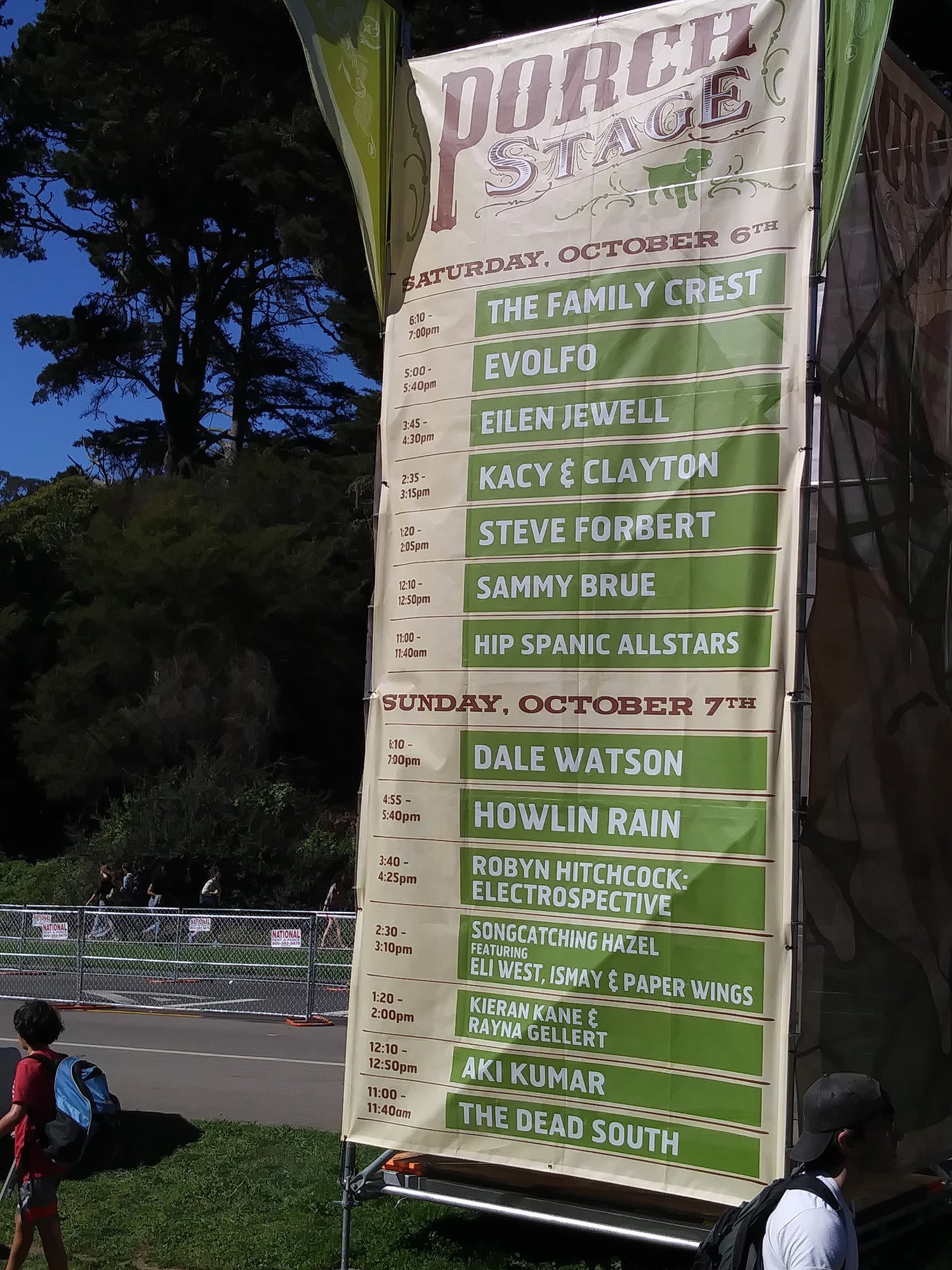
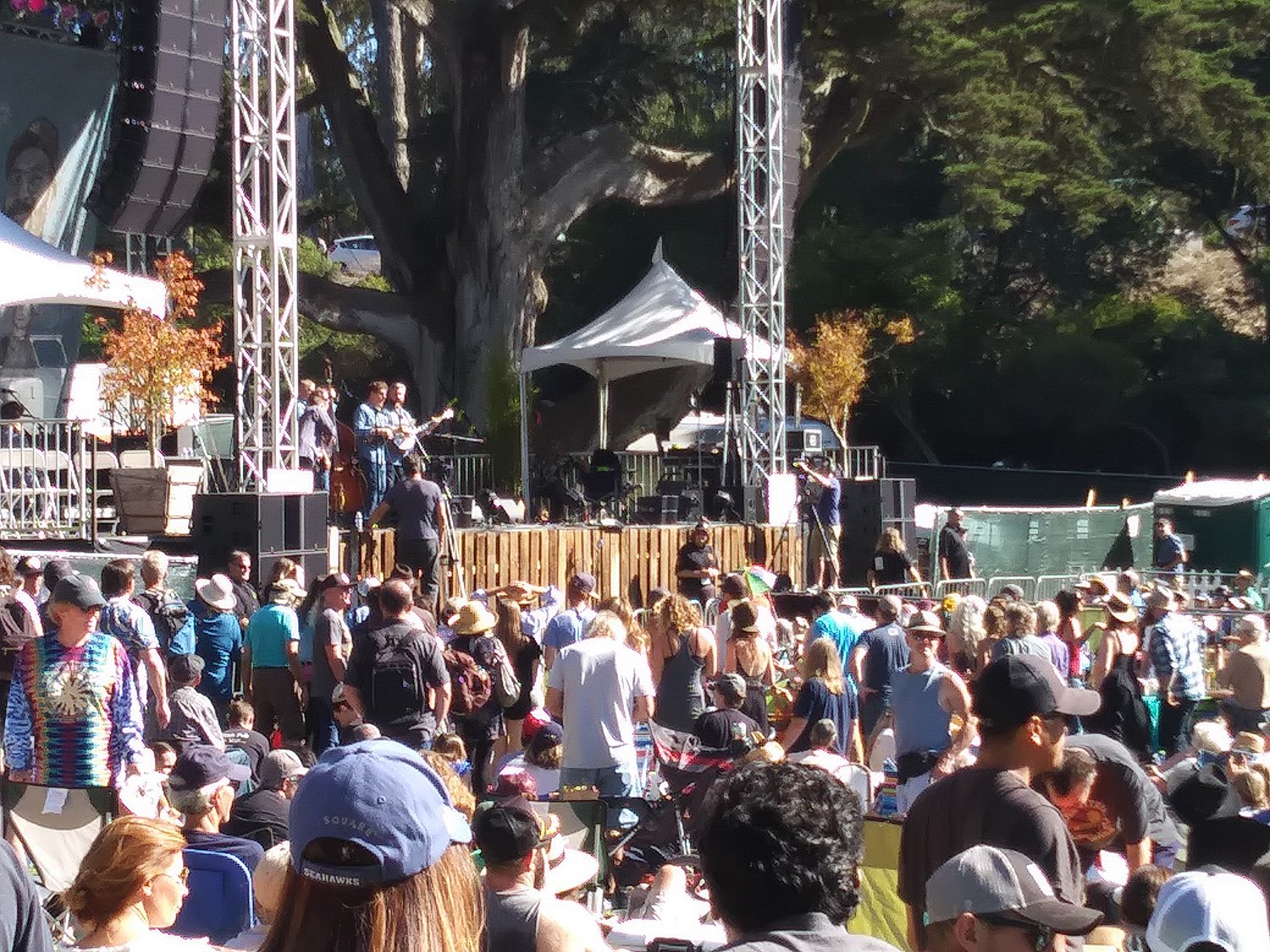
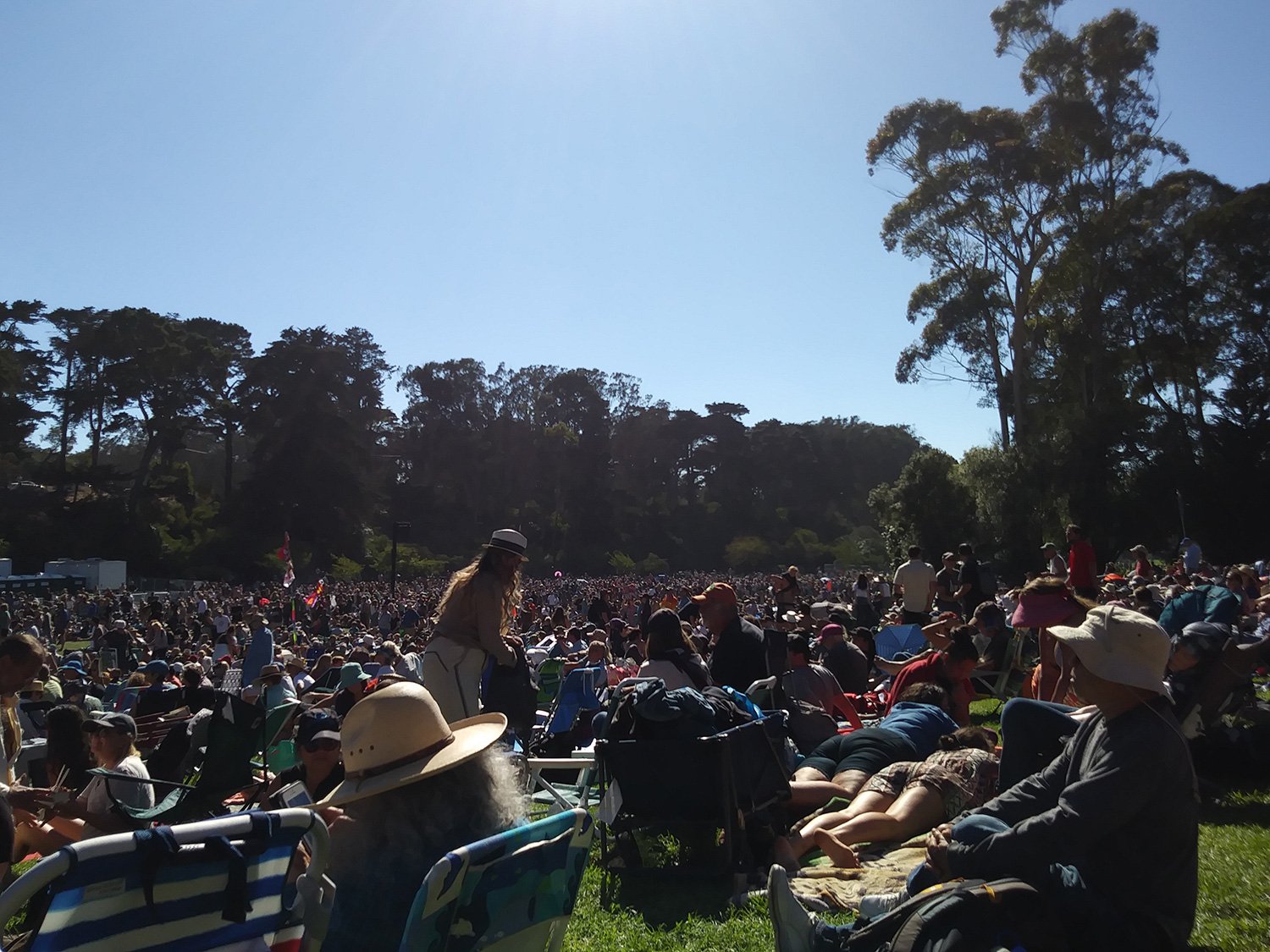
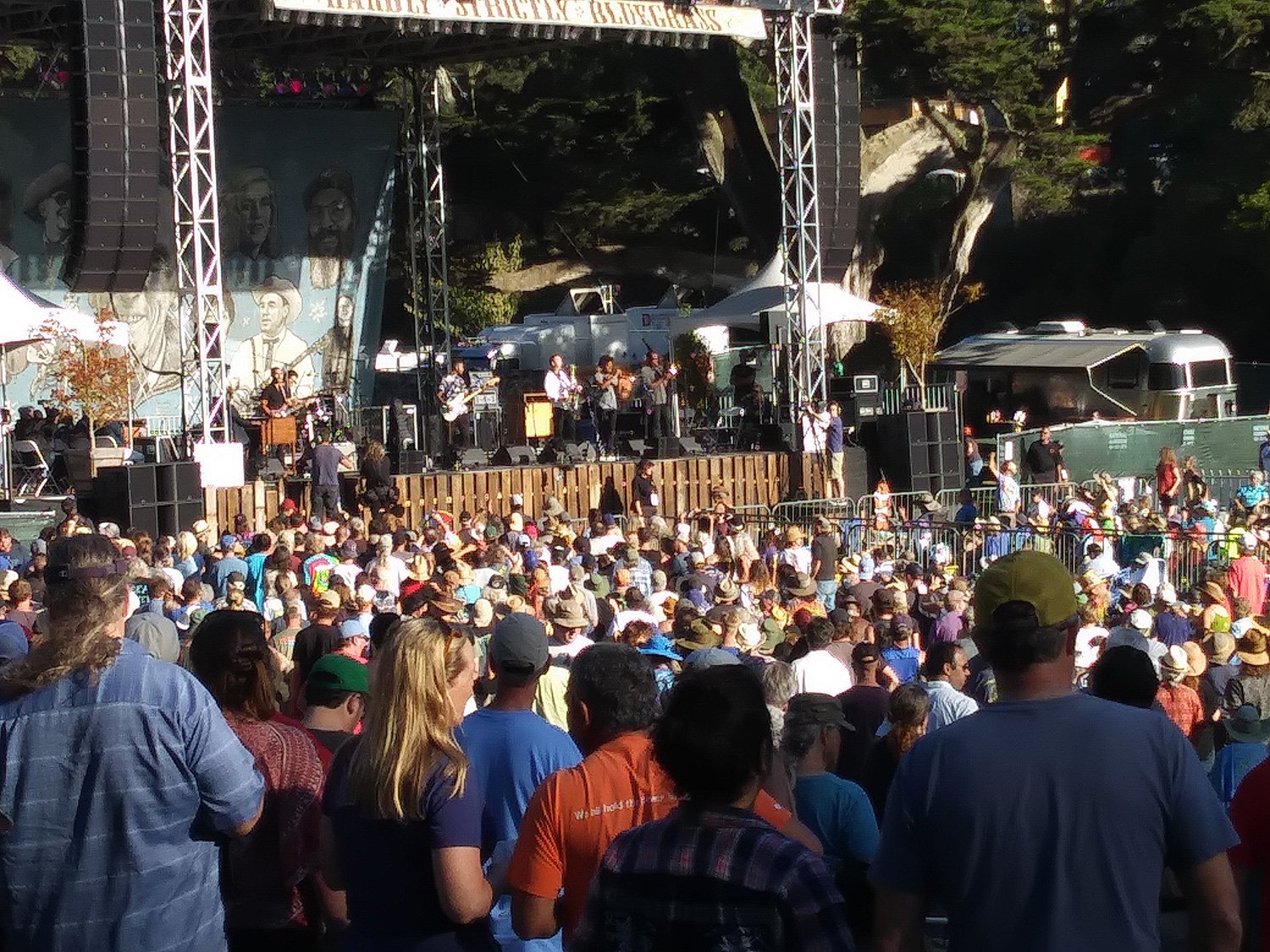
2018 Hardly Strictly Bluegrass Festival Awards

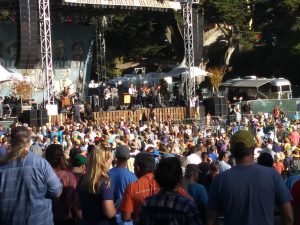
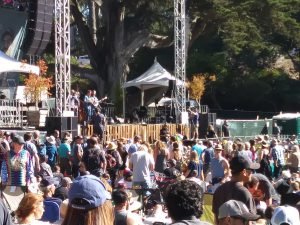
It is again a great honor and privilege to be able to bestow many of the great musicians and participants of the 2018 Hardly Strictly Bluegrass Festival with the prestigious Pelican Cafe Hardly Strictly Bluegrass Festival Awards. We have been giving these awards out for at least the last five years, and this year the committee had a hard time agreeing on some of the winners. So many acts! So little time!

Usually early October in San Francisco has people dialed into a local professional baseball team as the playoff games often conflict with the festival, but not this time. By the time the festival began, the scrappy Oakland A’s had already lost a one game wildcard playoff game to the Yankees, so the baseball distraction was never to be.  The San Francisco Giants season was pretty much over by the All-Star game.

Instead, the mood was rather one of shock as the only score that seemed to matter was the game in the U.S. Senate – it was on many people’s minds.  Brett Kavanaugh, with a 50-48 vote was confirmed to the U.S. Supreme Court, and once again the voices of women were disregarded and ignored. The court now has added a very mediocre mind,  accused sexual molester and rapist, conservative partisan ideologue to the court and you can safely say that the “old boys network” is still in charge.  One can only hope that the midterm elections puts more woman and progressives in the upper echelons of government. I am not optimistic. We are an illiterate populous and our media is controlled in such a way that the narrative is often scripted by the wealthy plutocrats and truth is in short supply..

But to take a break from that madness and sorry state of affairs there is the 2018 Hardly Strictly Bluegrass Festival and what a great time it was.! Music is the best medicine.


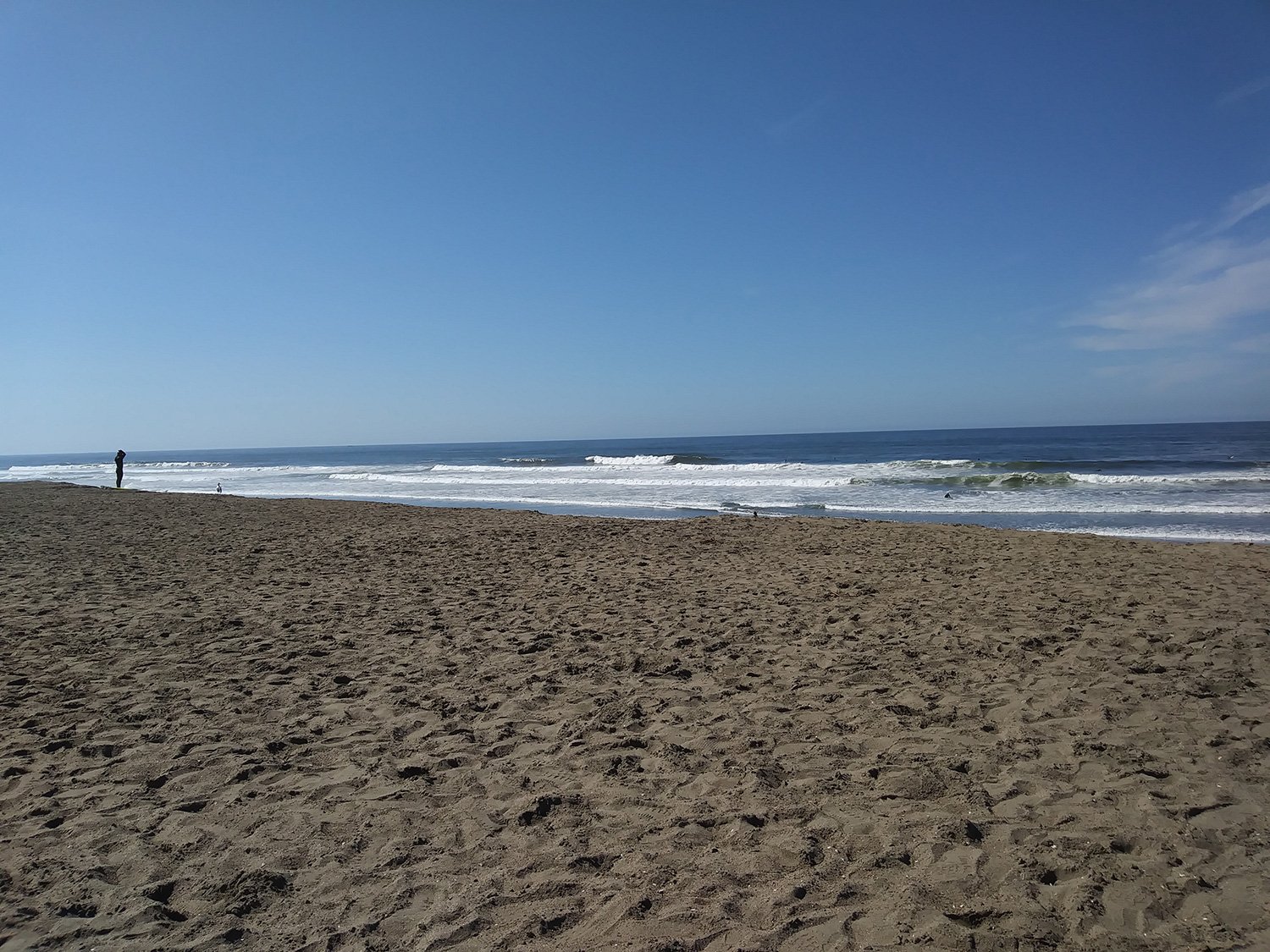
BEST WAVES AT OCEAN BEACH: Friday Morning

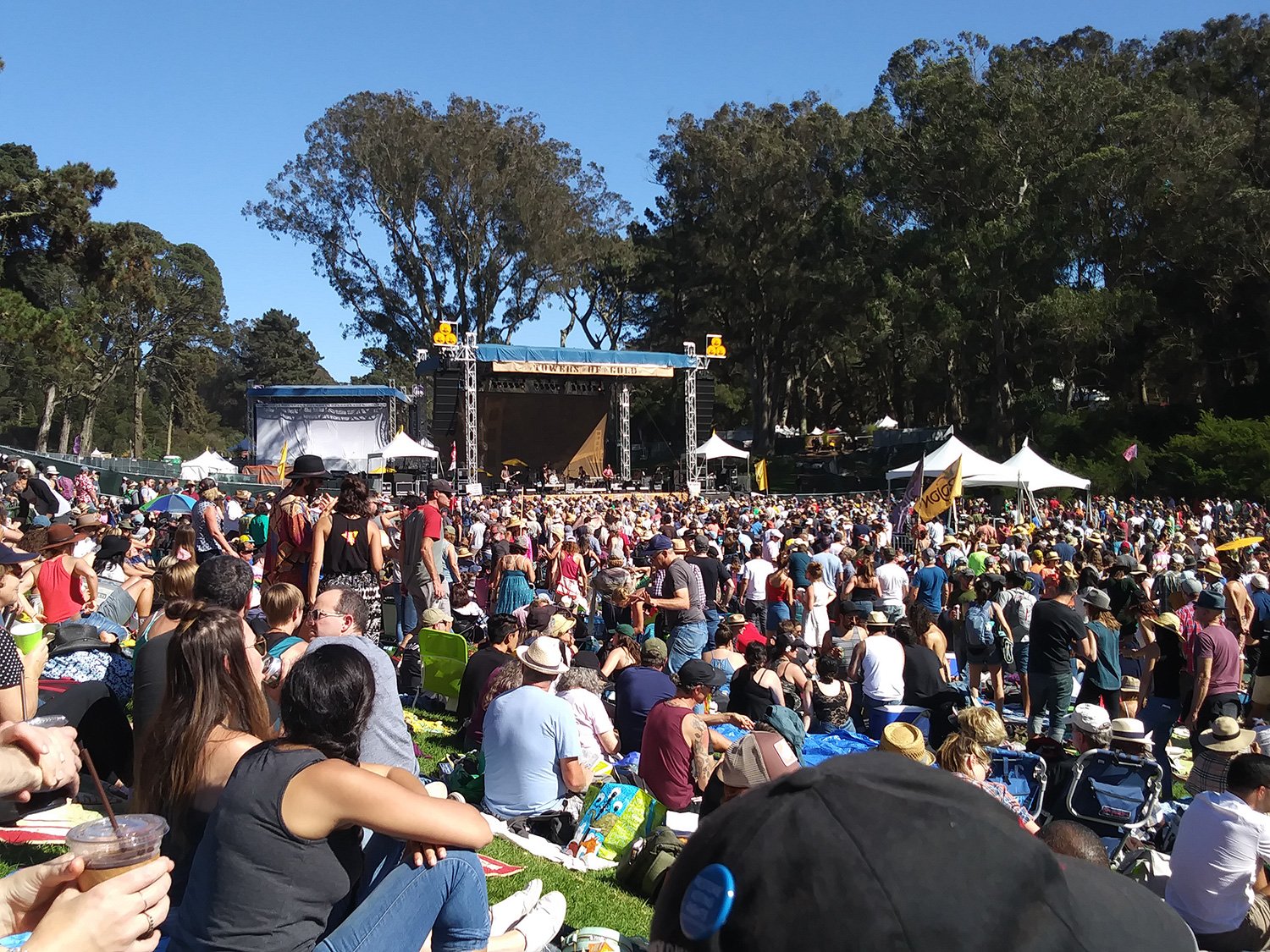
I always begin the awards with a weather round up. The entire weekend during the festival experienced beautiful weather – sunny skies, and while the wind was strong out at the ocean from the northwest, it was actually not bad at the festival. In terms of surf, Friday morning before the wind came up was the best to be had. The waves were about 6-8 feet and really fun. After that, the wind picked up and it was all about the music.

Ocean Beach on Friday

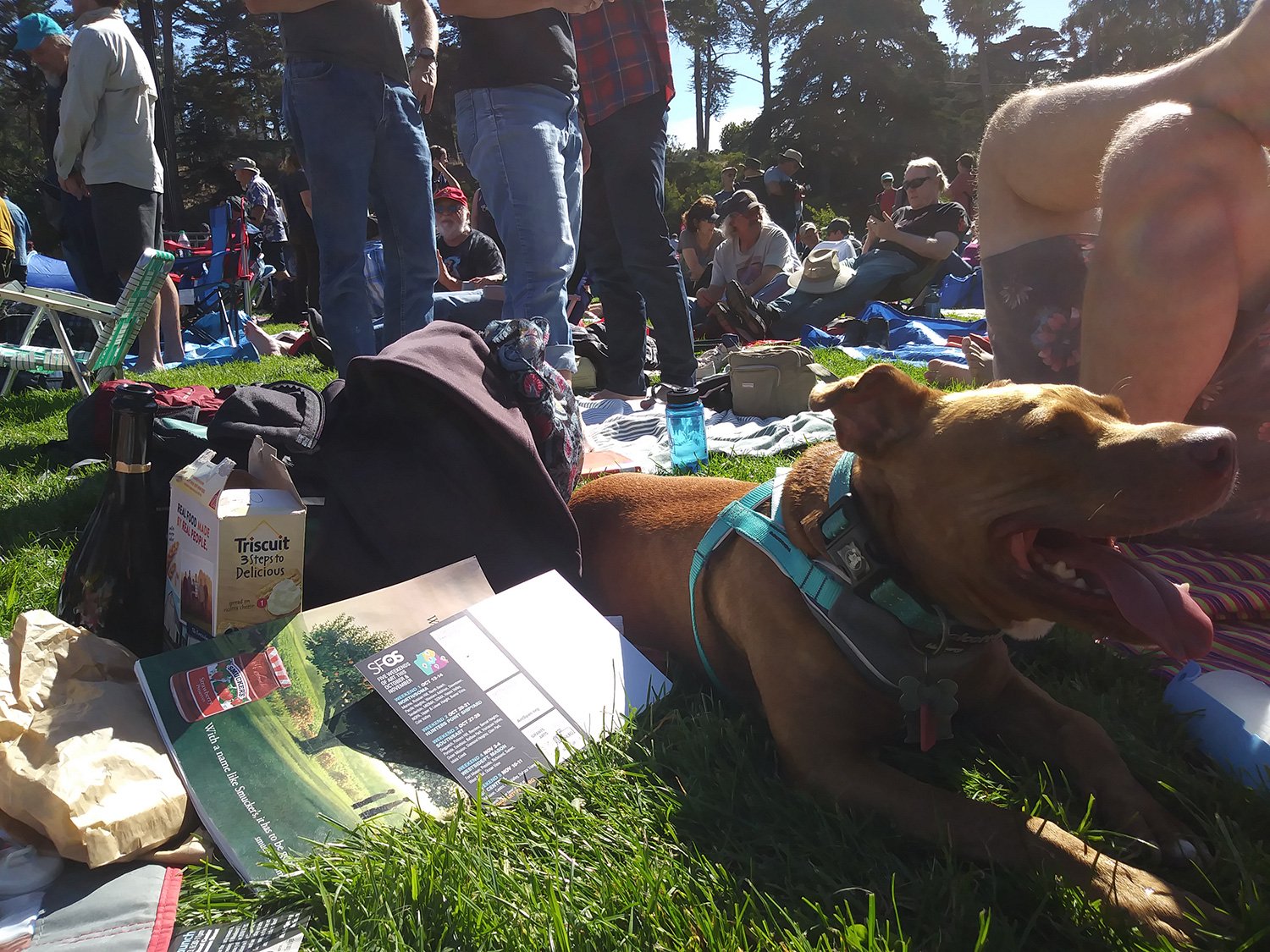
BEST FESTIVAL DOG: The pleasant female pit bull hanging out on the main lawn at the banjo stage.

Talk about a chill dog and this dog was really fun to hang with. She just chilled on the lawn and nothing phased her at all.  People walking by practically stepping on her, strange smells, food dropping all over the place.  She was at the next blanket over and we enjoyed Dave Alvin, Mavis Staples and Allison Krauss together.  Why does Dave Alvin play blues harmonica in first position, I will never know but it did not even get a howl out of this pooch.

Favorite dog

BEST HORN SECTION: Booker T. and the three guys just nailing the classic tunes

The Booker T.  show on Sunday at the banjo stage was packed with talent. Lead singers nailing the classic R&B tunes. The horn section, seemingly a bunch of youngsters, were never introduced but these guys sounded great and  played with both power and dynamics. At festivals like this it is often the supporting characters that are what elevate the whole experience. The Booker T horn section was outstanding.

Booker T.

BEST SET THAT I ALMOST MISSED: Don Was

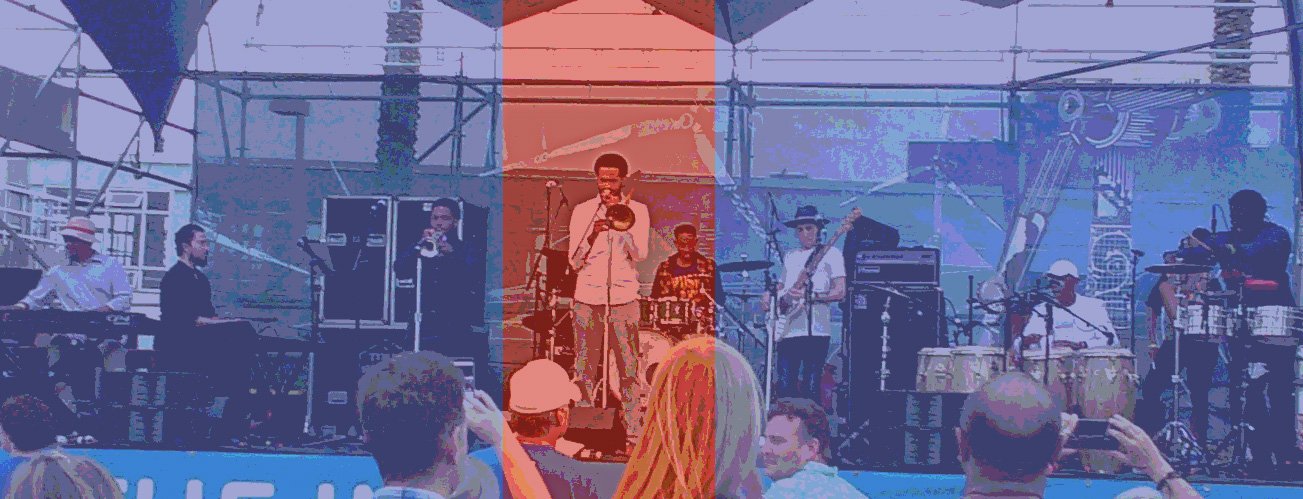
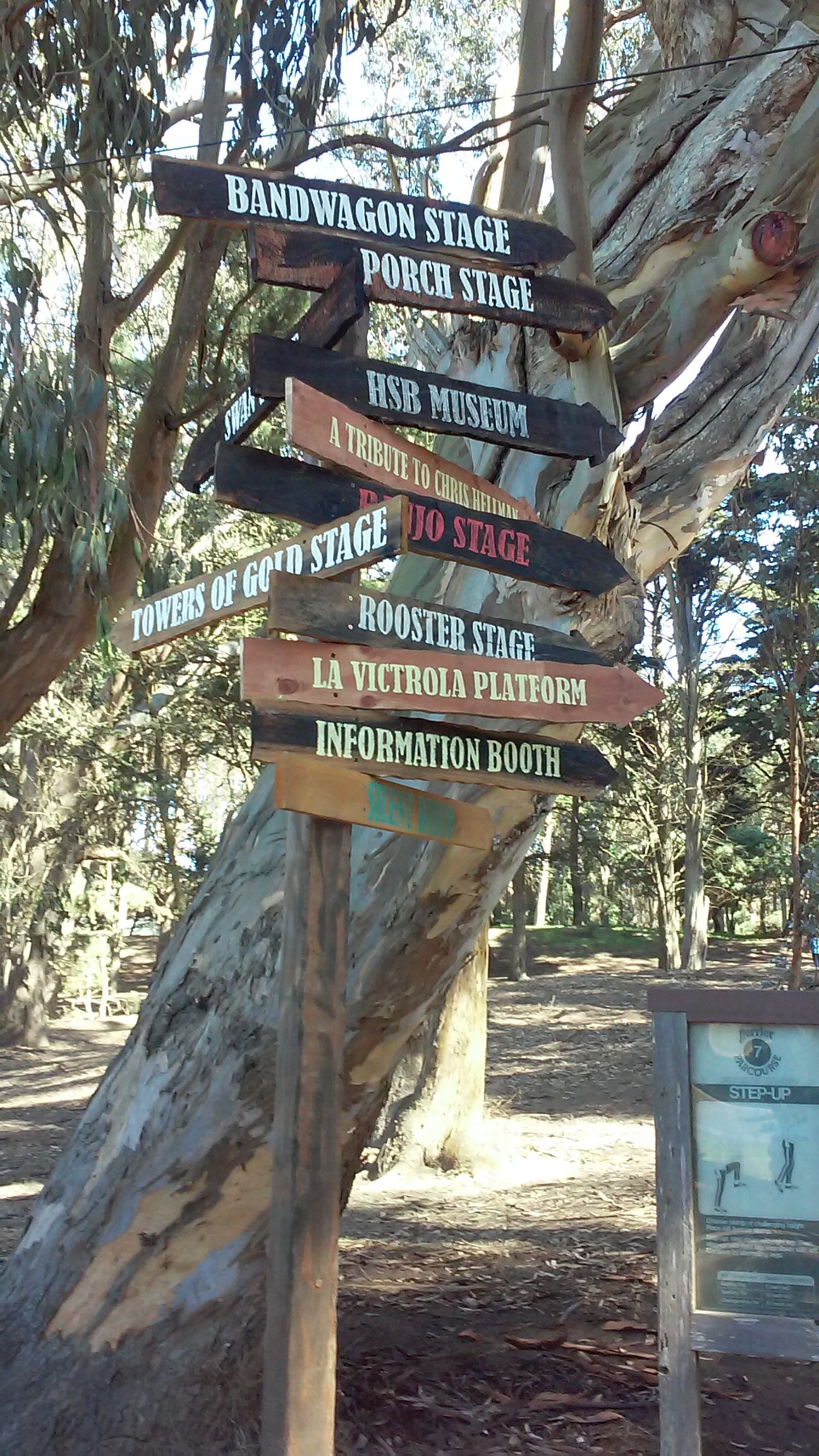
I was hanging out with friends on the Gold Stage when I heard this amazing trumpet player. Who could that be? Turned out it was Terrance Blanchard wailing away. I made a b-line to the Swan Stage and caught the set from the road which is a good perch to see what is really going on on stage. Then Bob Weir was invited into the jam and he sang a tune “Days Between.” Very cool!


THE BOB WILLS AWARD: Aki Kumar

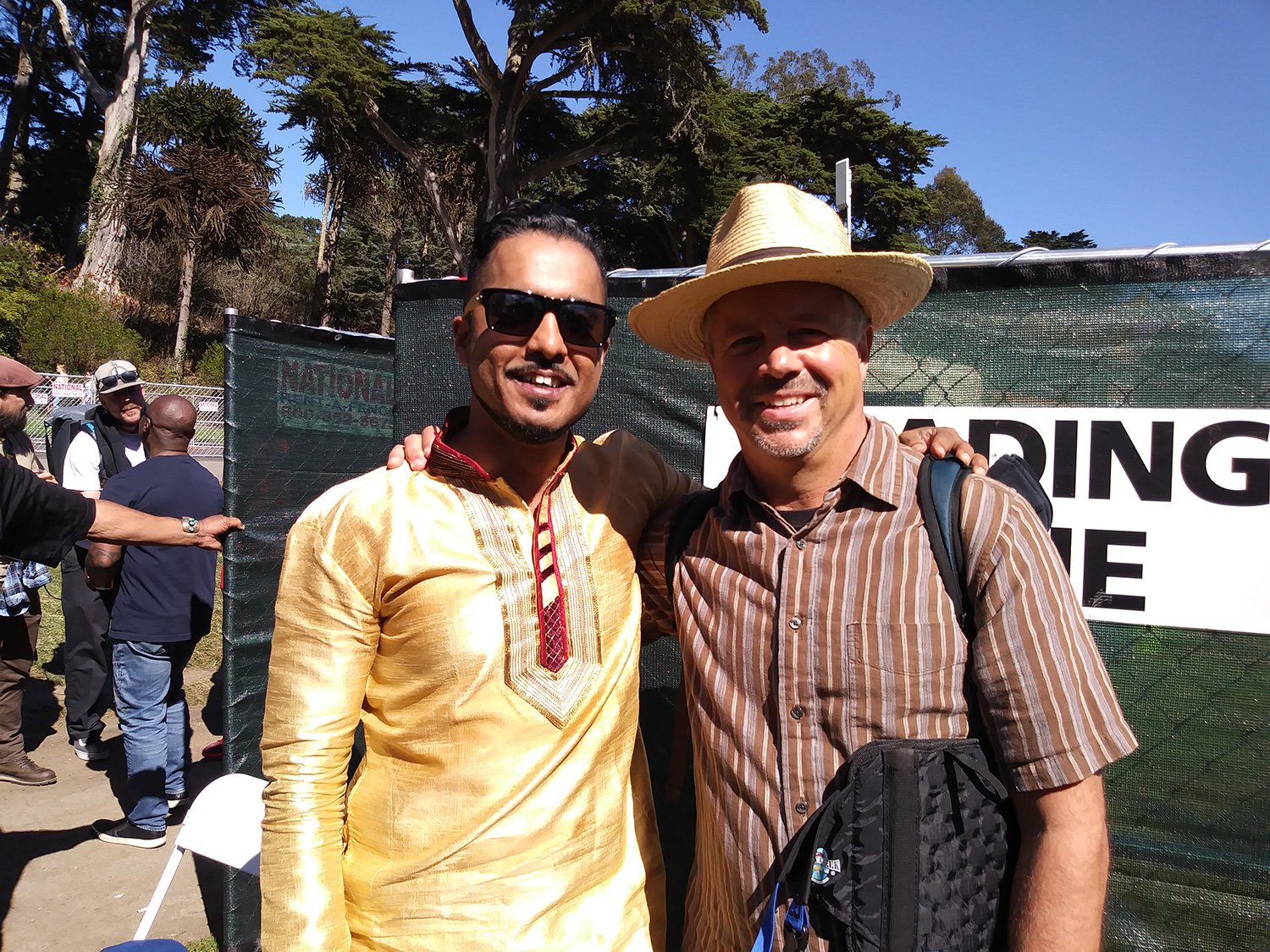
Besides being a great harmonica player, Aki puts on a completely entertaining show. His style is what has been called Bollywood Blues and he sings these awesome songs in what I guess is in Hindi. He has the ability to lead a group, play and sing extremely well, communicate with the audience with joy and humor and keep every tune playing back to back just like Bob Wills did it with the Texas Playboys. His band often used the sitar. Talk about some cultural fusion! What is also cool about Aki’s approach is he really lets player take extensive solos.

Paul with Aki Kumar.

BEST BANJO PLAYER AWARD: Tim O’Brien’s Banjo Player

I actually did not hear too many banjo players. The banjo player with Tim O’Brien’s band did not bother me too much. He gets the award.

Tim Obrien

BEST WOMAN TRIO: The Wailin’ Jennys

There seems to be more and more woman trios out there, singing great harmonies and pickin’ some fine mando. The Wailin’ Jennys put on a great set at the Swan Stage. Really good three part harmonies with some modern touches. They did an a capella versions of Paul Simon’s Love Me Like a Rock that was awesome.


ABOUT
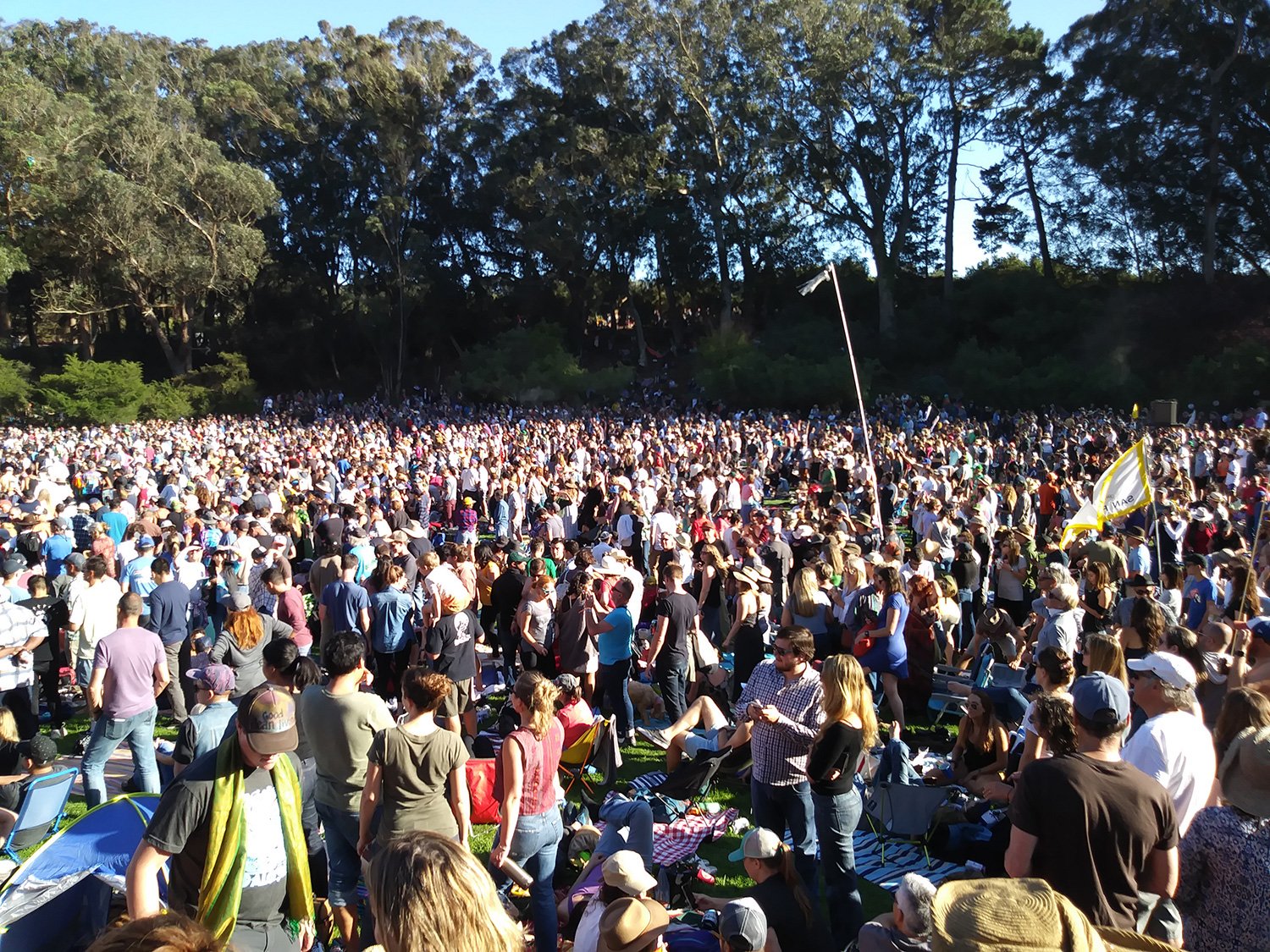
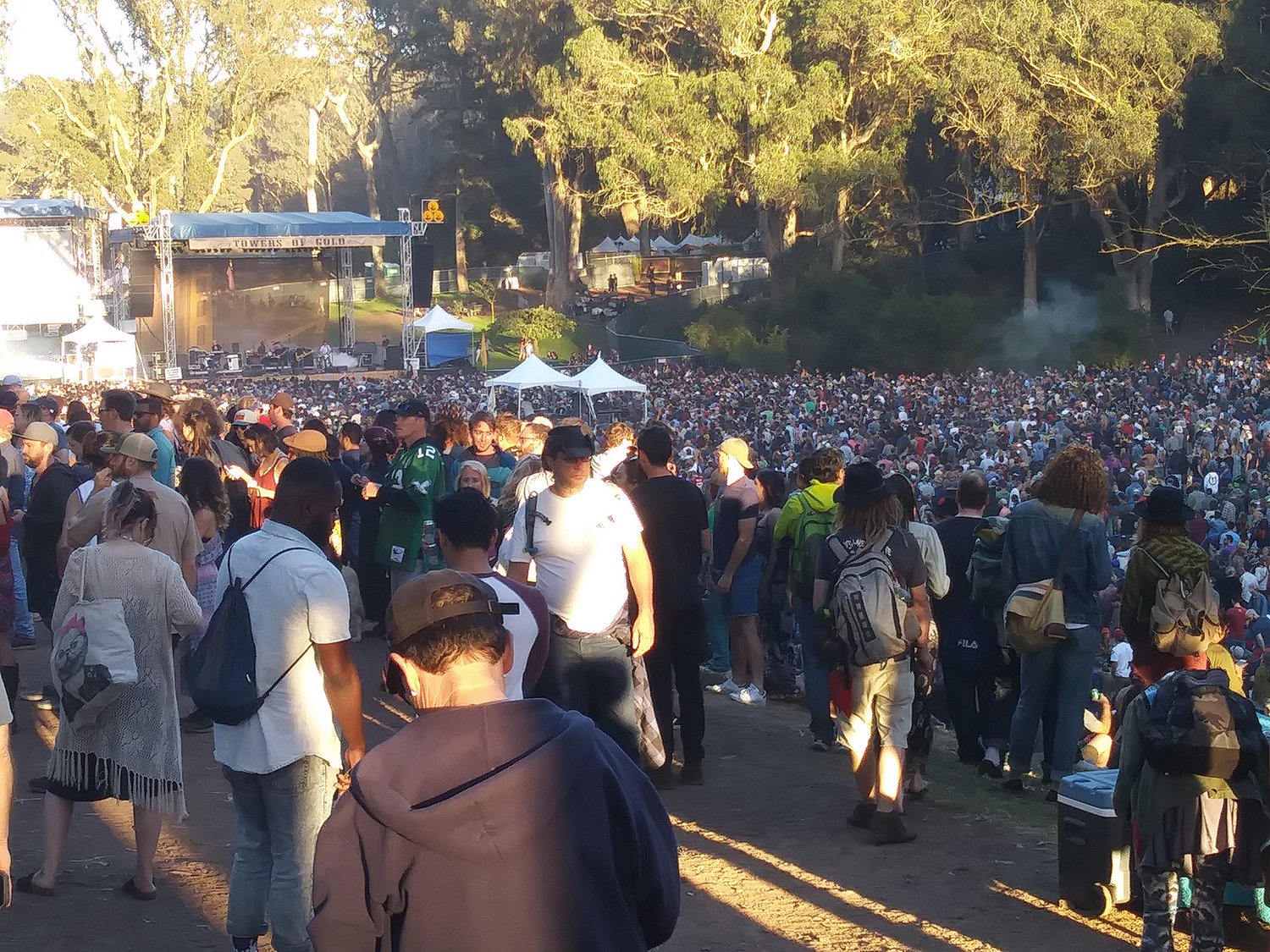
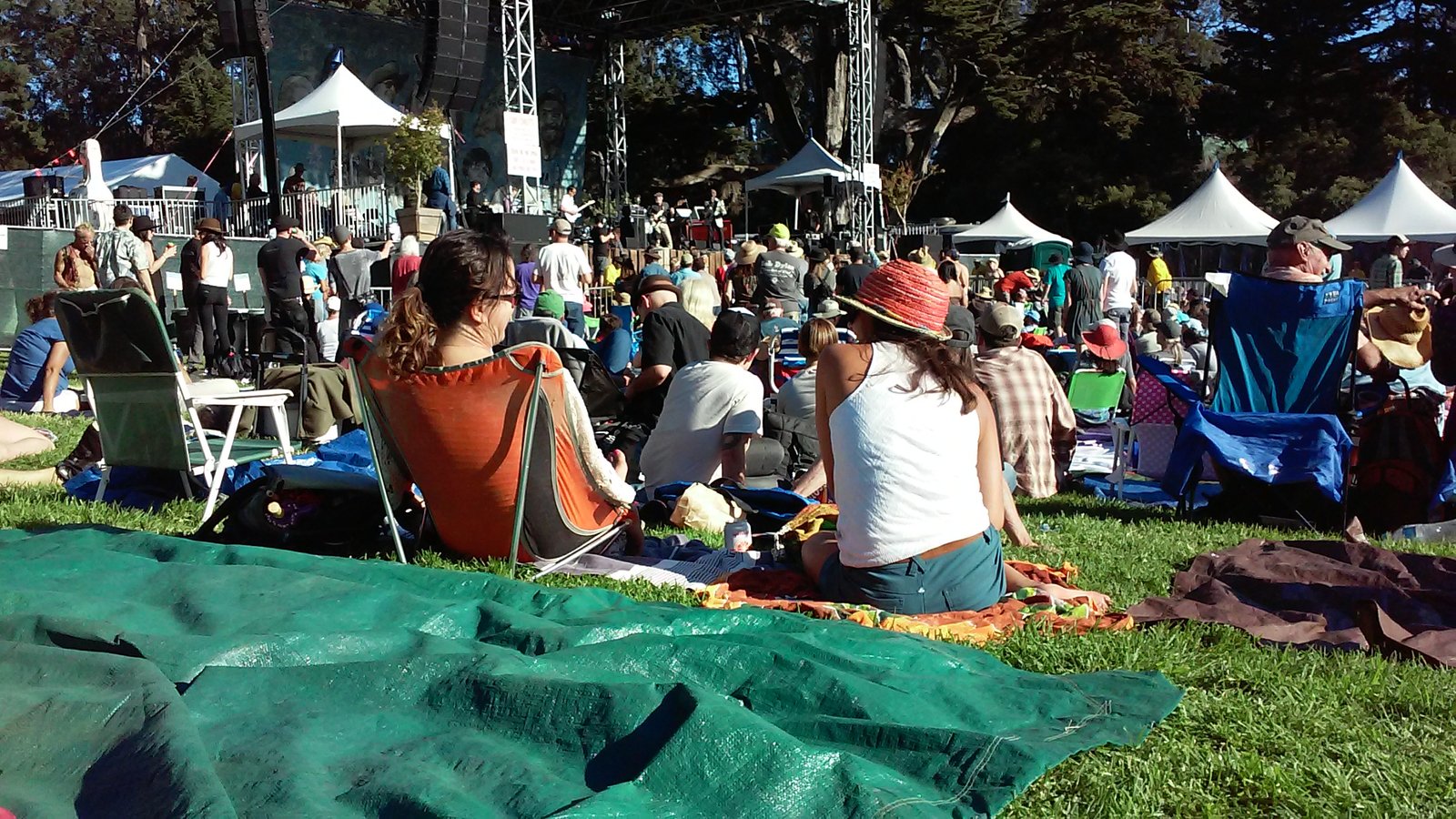
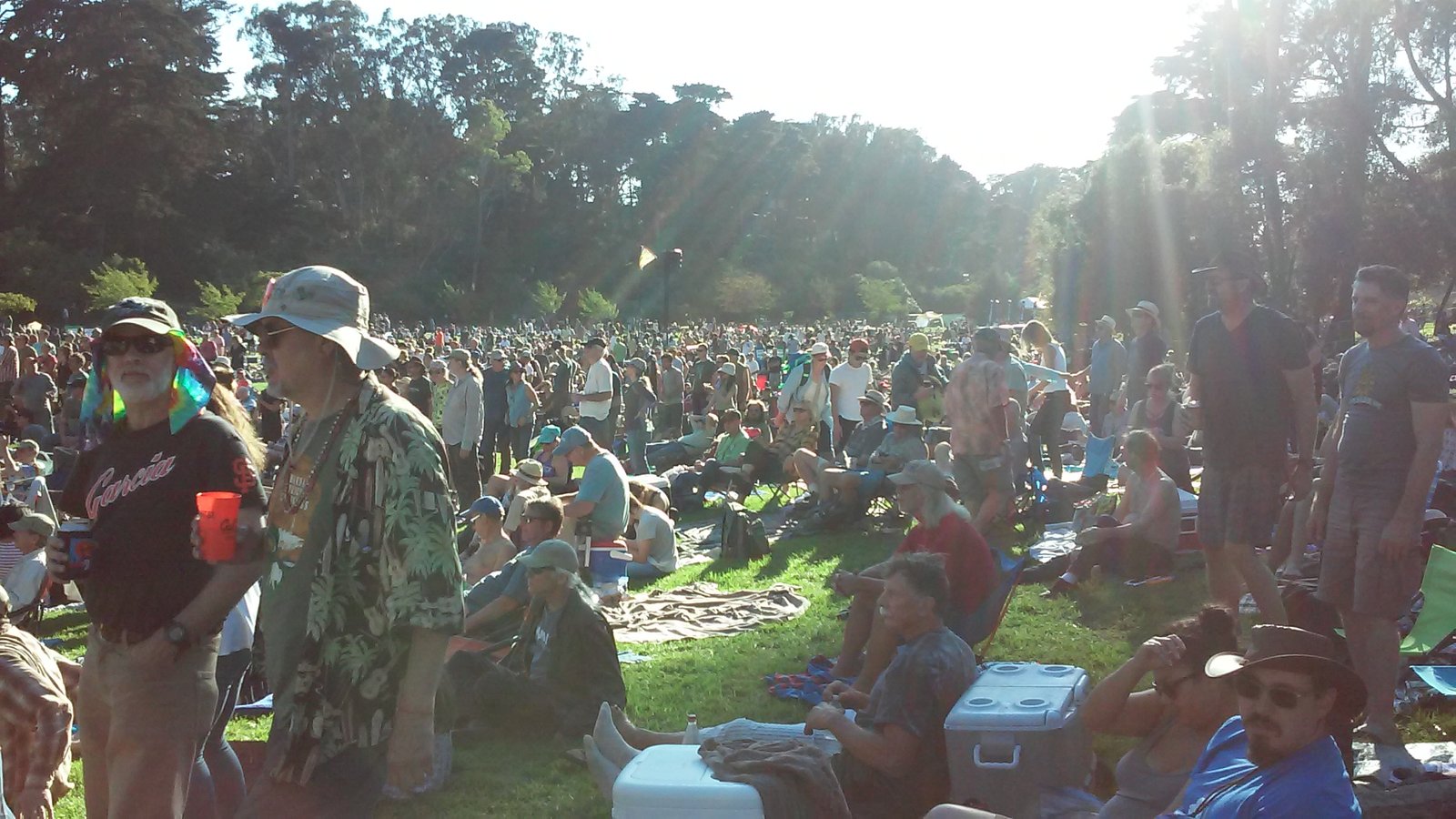
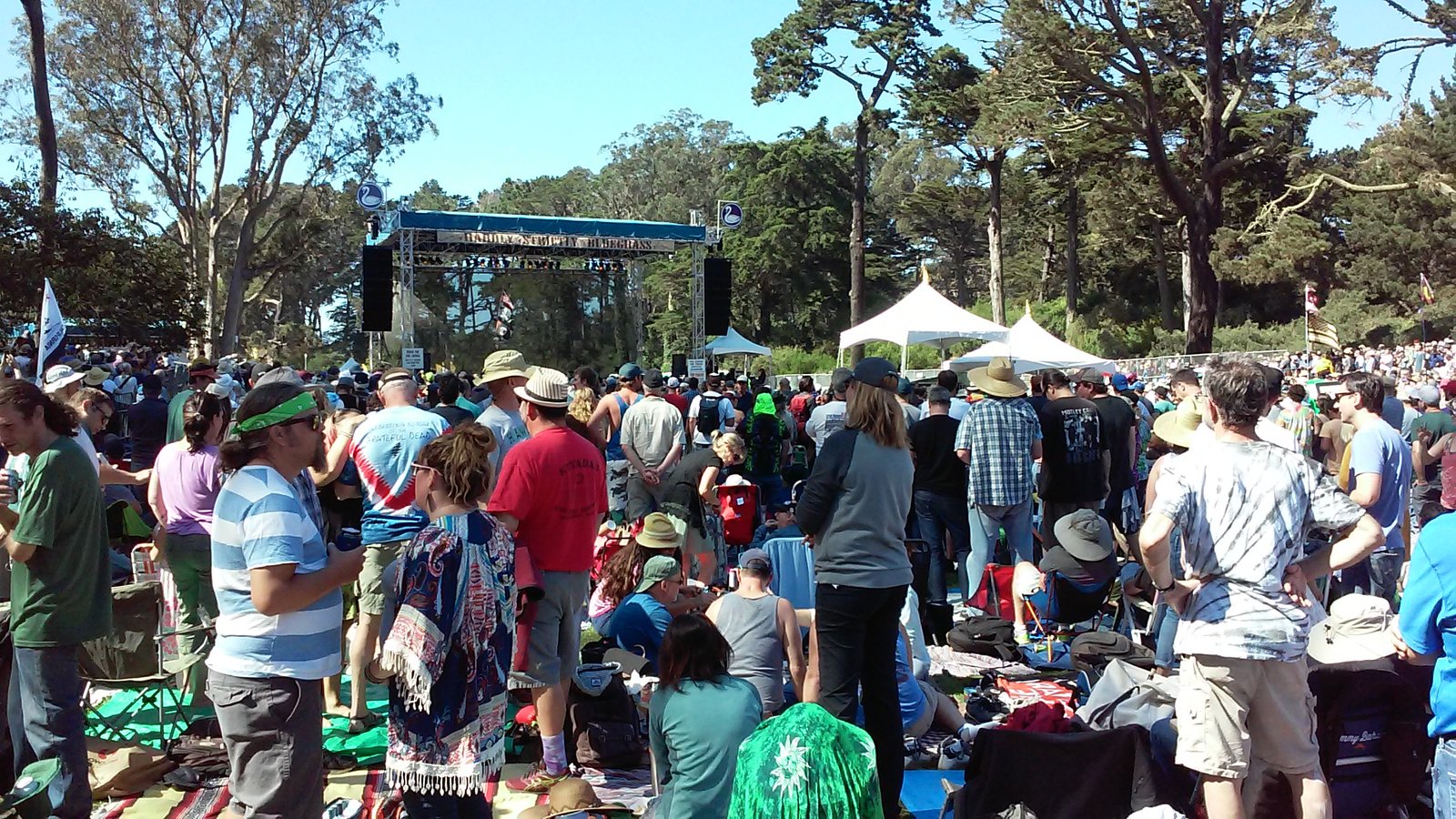
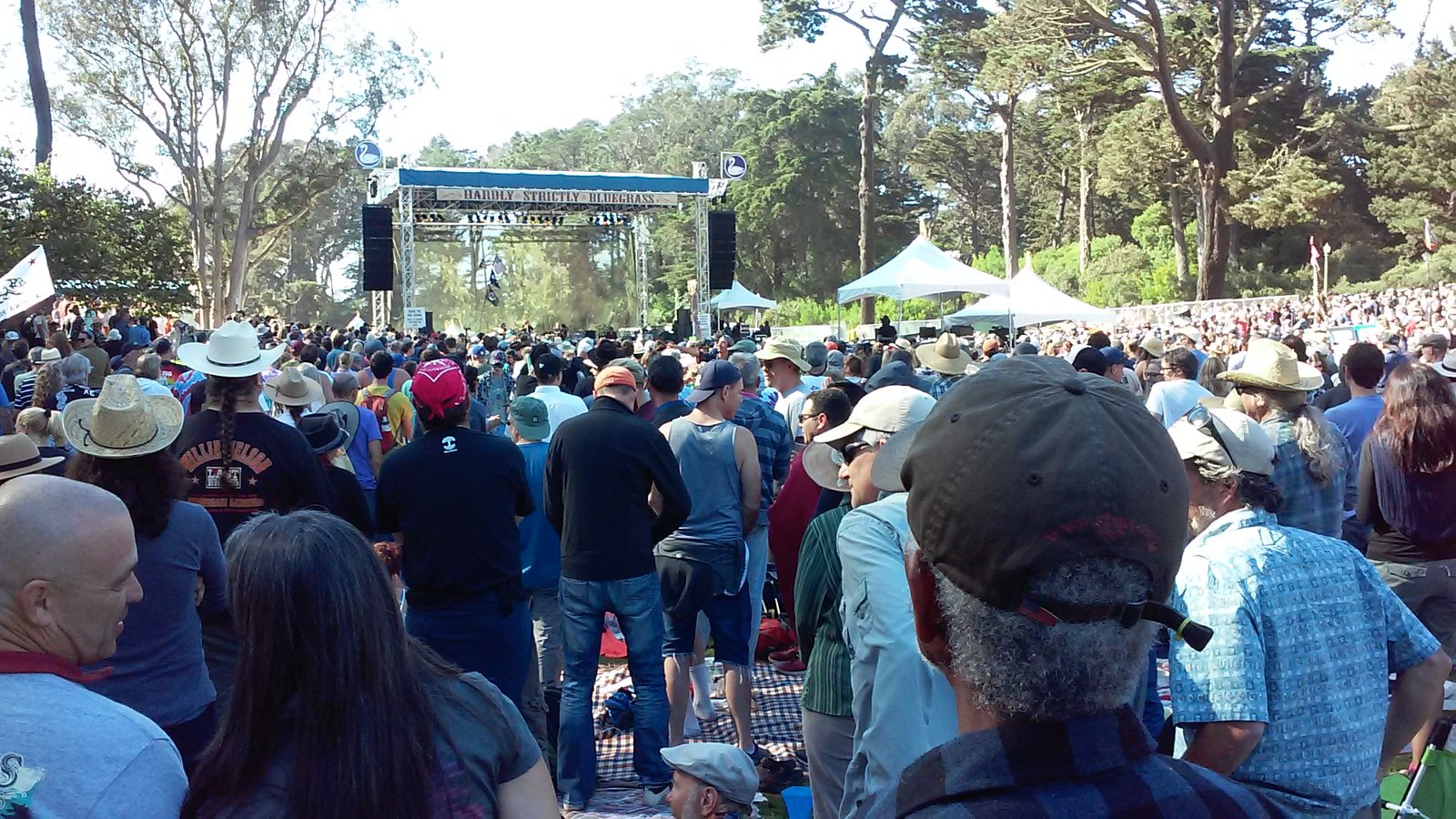
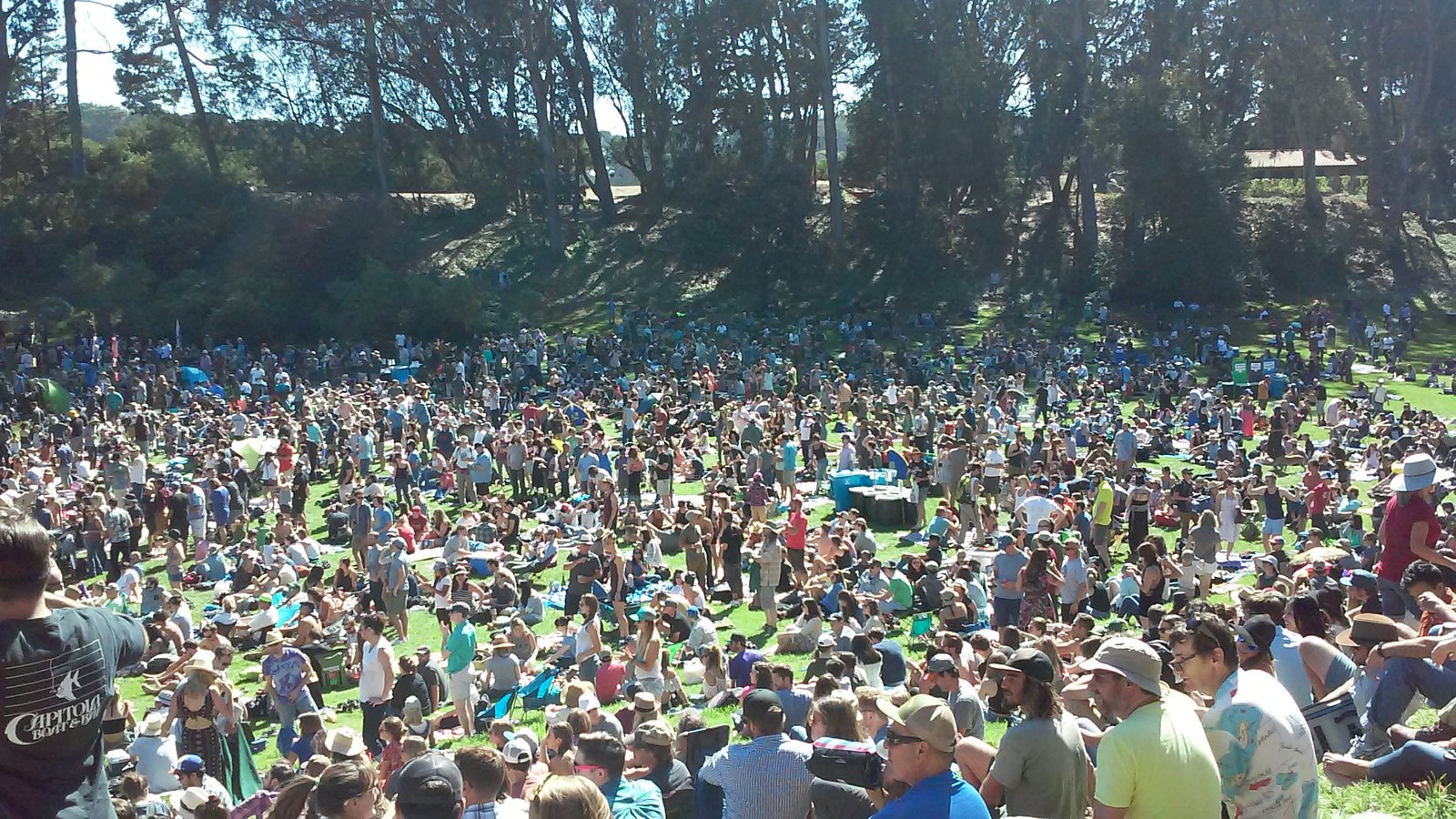
The Hardly Strictly Bluegrass Festival in San Francisco is a little like Jazz Fest in New Orleans. Big-name bands, many kinds of music and a festive atmosphere. One of the amazing things about Hardly Strictly Bluegrass Festival is that even though there are tens of thousands of people, it is always a  peaceful event, and in the end people seem to get along just fine and often make new friends. Everyone seems to pack out the trash pretty well too. Hardly Strictly Bluegrass Festival. Warren Hellman’s party.  Communal music therapy.

PAST AWARDS

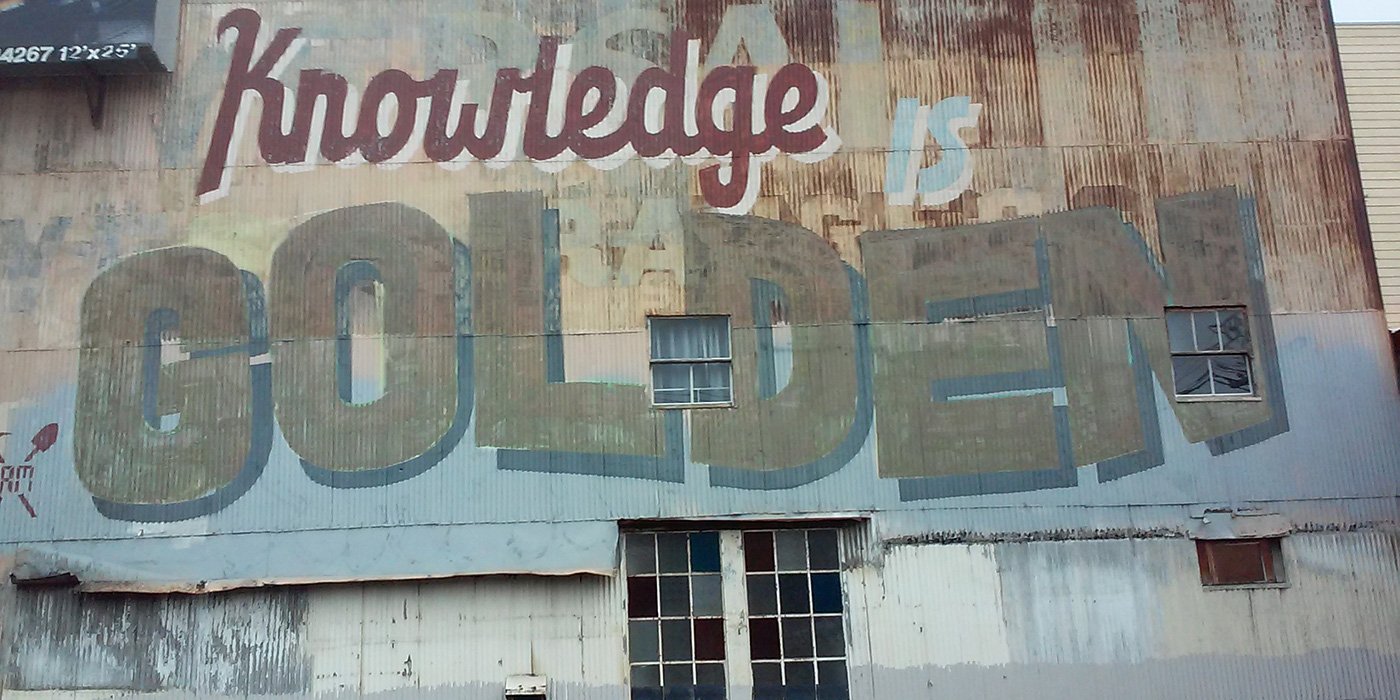
“The Knowledge Illusion” – Some Quotes

We live in a community of knowledge, and unfortunately communities sometimes get the science wrong. Attempts to foster science literacy cannot be effective if they don’t either change the consensus of the community or associate the learner to a different community.

People tend to have limited understanding of complex issues and they have trouble absorbing complex details (like answering factual answers to factual questions). They also tend not to have a good sense of how much they know and they lean heavily on their community of knowledge as a basis for their beliefs. The outcome is passionate, polarized attitudes that are hard to change.

…shattering people’s understanding by asking them to generate a detailed causal explanation also makes them less extreme.

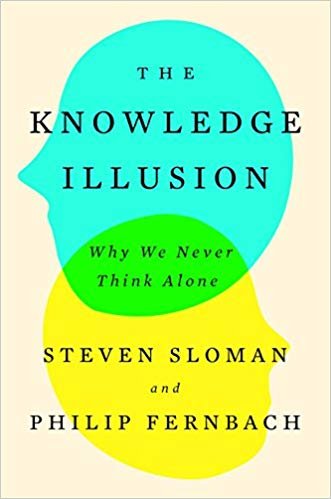
From The Knowledge Illusion: Why We Never Think Alone by Steven Sloman (Author) & Philip Fernbach
Riverhead Books (March 14, 2017)

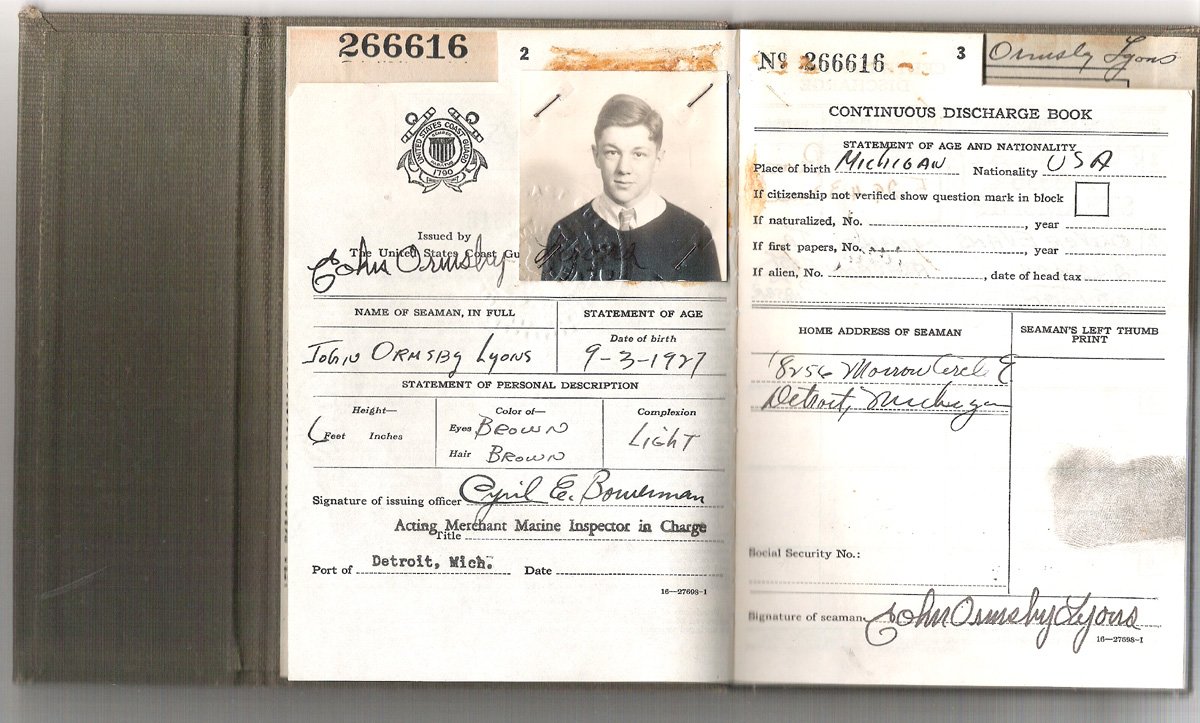
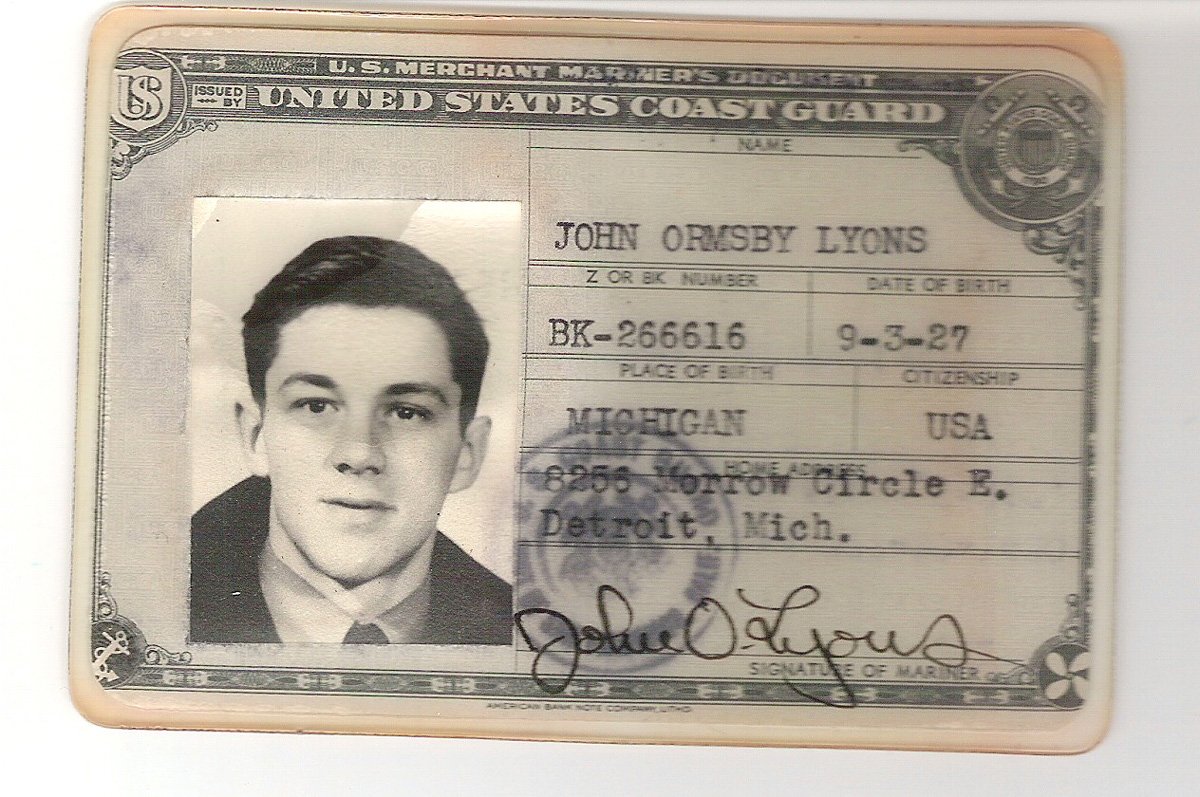
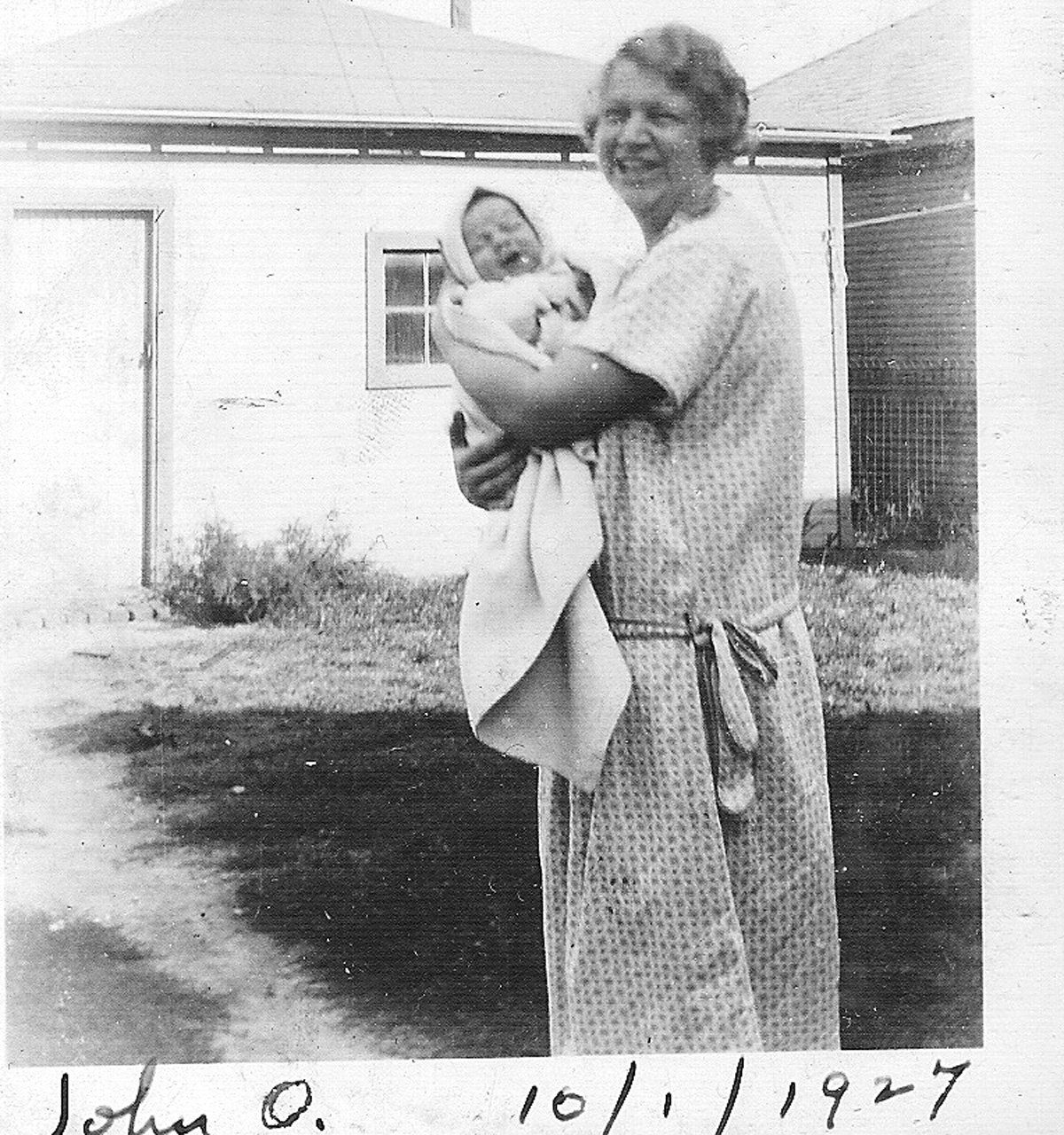
John O. Lyons (3 September 1927 – 7 September 2003) – The Wiki

“The self, as Hume saw, cannot be aware of itself, and as soon as it is it ceases to be a self because it is lost in the seas of influences upon it. Boswell begins his journal with the observation that the discipline of recording his experiences and emotions will lead him to an understanding of himself. No doubt the process of composition assist his memory of his life, and yet it also distorts that life.”
The Invention of the Self: The Hinge of Consciousness in the Eighteenth Century, Southern Illinois University Press (1978)

Wikipedia submission – January 2018

John O, Lyons was a professor emeritus of English at the University of Wisconsin from 1960 to 1993. Previously he taught briefly at Bowdoin and Dartmouth. He received a B.A from Kenyon College in 1951, an M.A from Columbia University in 1952 and a Ph.D from the University of Florida in 1960.

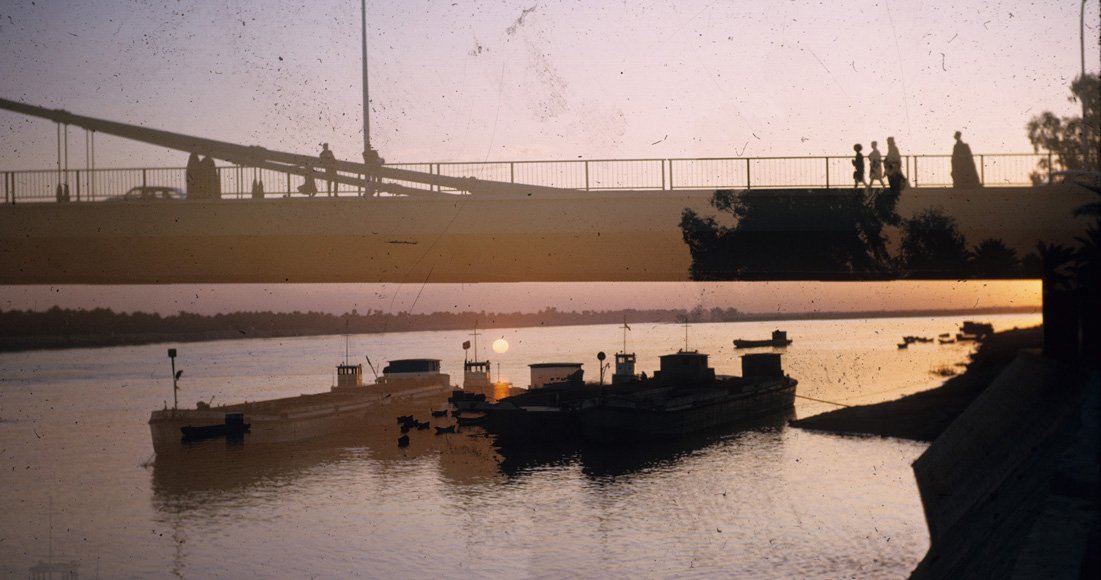
He received two Fulbright-Hays Fellowships, one to the University of Baghdad (1964-1965) and another to the University of Tehran (1970-1972). Before entering Kenyon, he served in both the U.S. Army and Coast Guard.

Bibliography
The College Novel in America, Southern Illinois University Press (1962)

Studying Poetry: A Critical Anthology of English and American Poems, Southern Illinois University Press (1965)

The Invention of the Self: The Hinge of Consciousness in the Eighteenth Century, Southern Illinois University Press (1978)

References
The Invention of the Self: The Hinge of Consciousness in the Eighteenth Century [1] [2]has been referenced in numerous papers and articles ranging from history, philosophy to psychology.

Martin, Professor Jack; McLellan, Professor Ann-Marie (2013). The Education of Selves: How Psychology Transformed Students (1st Edition ed.). Oxford University Press. p. 256. ISBN 0199913676.
Martin, Professor Jack. “A Case against Heightened Self-Esteem as an Educational Aim” (PDF). Journal of Thought. vol 42 issue 34 (Fall/Winter 2007): 16.


Above is my Wikipedia submission

Above is my Wikipedia submission that still is awaiting approval.  For some reason there are not enough references. I have not time to dally in the bureaucracy of Wikipedia. I have the ability to add something to the internets. I thought it fitting that I post it here.

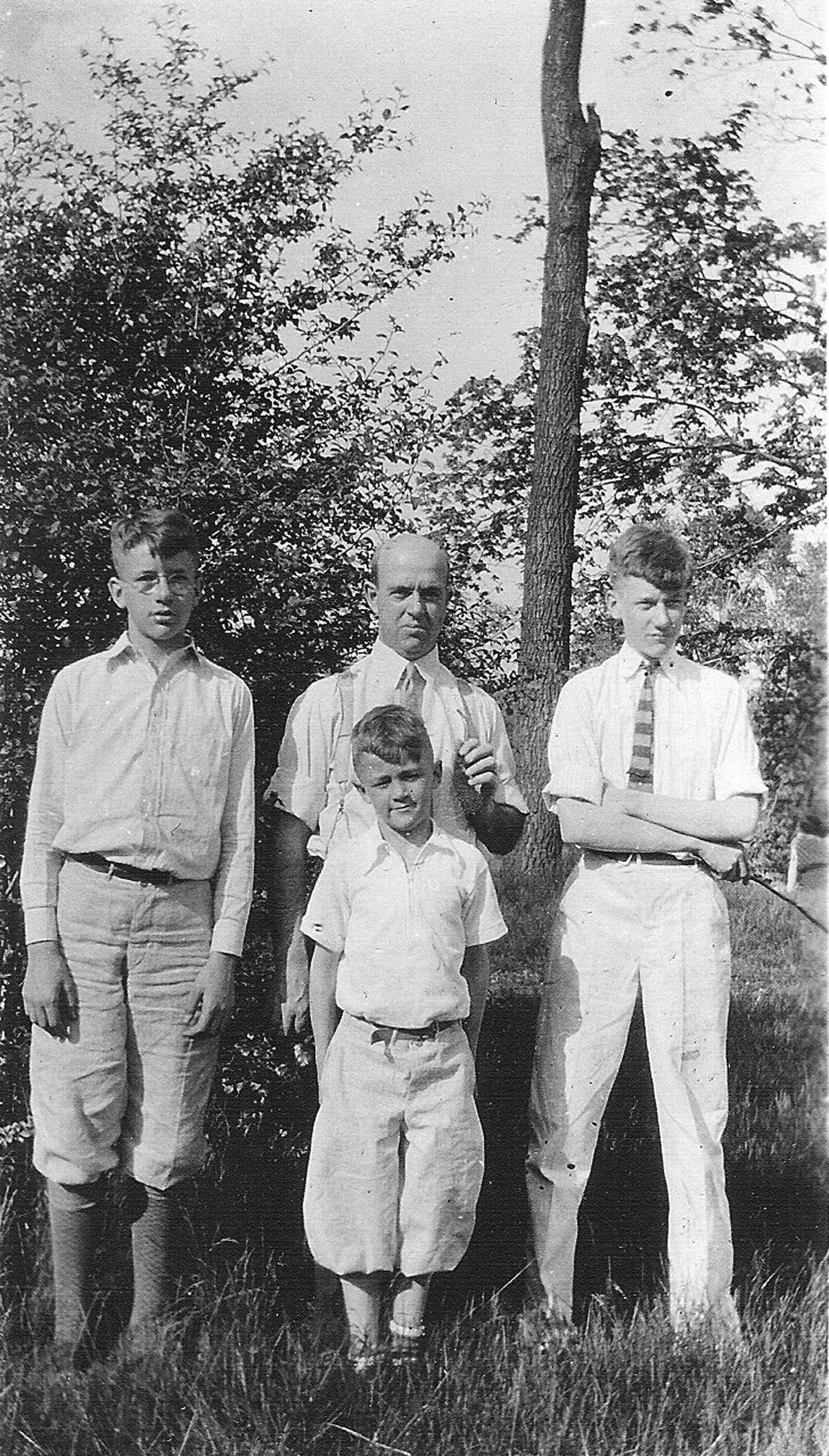
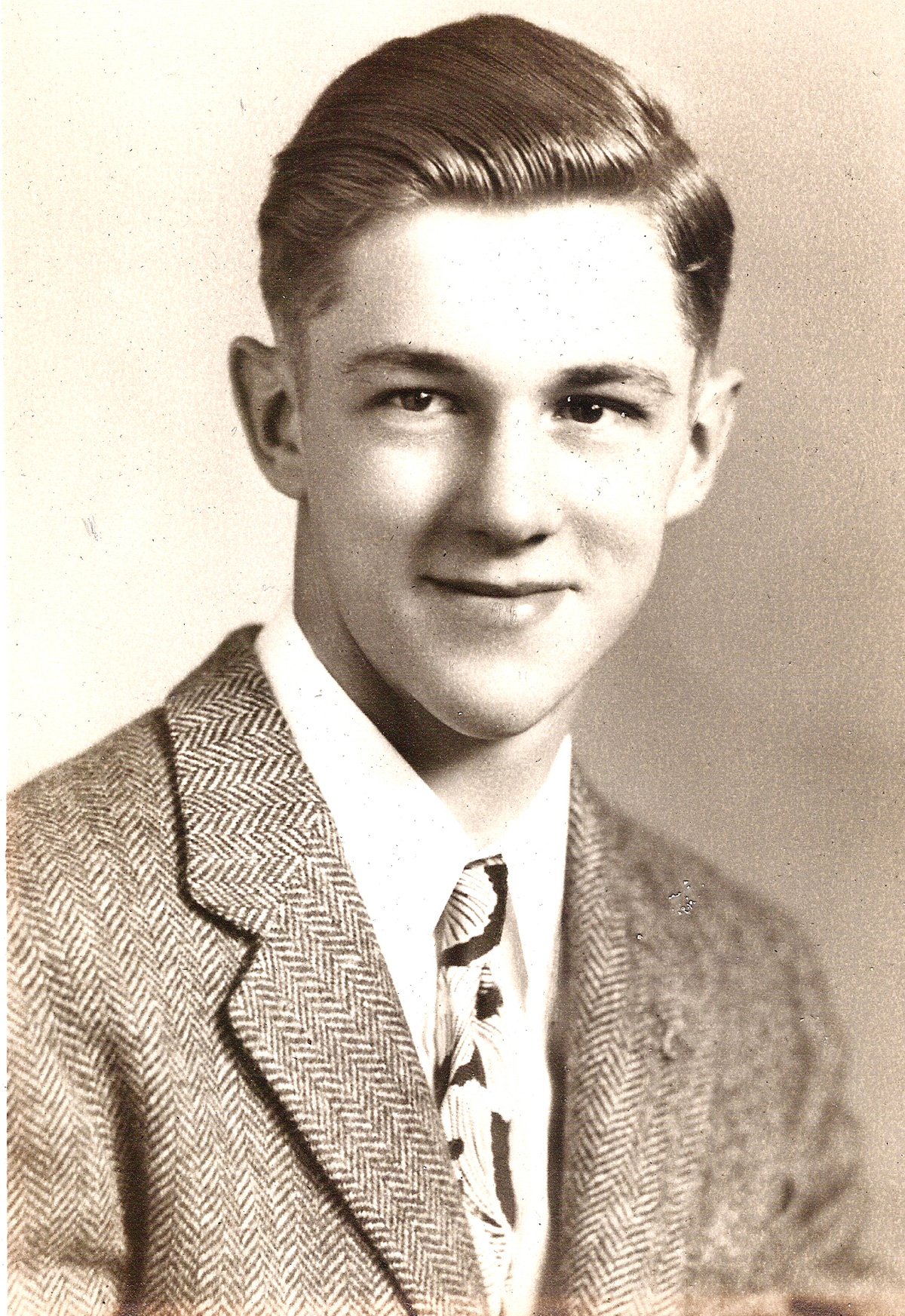
John O. Lyons was my father. He lived an incredible life. His book The Invention of the Self: The Hinge of Consciousness in the Eighteenth Century is amazing for its insight and depth. Like many books written in the late 1970’s and early 1980’s by the “Greatest Generation” that are now out of print, the authors were not out to make a buck. Instead, they were were scholars in order to uncover the truth no matter where it lead.  By the time John O. Lyons was 21, he had read extensively as during his tours of the Pacific during World War II in the Navy and Merchant Marine, he had absolutely no distractions and spent the entire time reading. There are few scholars today who are in that situation. If you are interested in his reading list at that time send me an email. This  reading list will give you an understanding as to the breadth of knowledge that was the foundation of his writings.

Below are some quotes for the book.

“The problem is perhaps most succinctly posed by Lichtenberg who goes back to Descartes and says that he should have said “It thinks,” not “I think” – which moots the whole question of personal identity.”

“My message is, put baldy, that the self, which modern doomsayers accuse of being invisible, was a fiction in the first place. This may not ease the pain and feeling of the loss, for a hypochondriac suffers just as grievously as the truly sick, but it may help us understand the illness.”

“The invention and spread of movable type is probably the most important mechanical contribution to the idea of the unique self, but other forces – religious and political revolutions, the rediscovery of the admiration for classical models of being – retarded the assertion of the self. The intimacy between the writer and the “dear reader,” which we tend to think of as beginning in the eighteenth century, assumes a situation that was rarely assumed before that time.”

Quotes from The Invention of the Self: The Hinge of Consciousness in the Eighteenth Century.

If you care to post here on this website and add to the knowledge base (that is essentially the concept of Wikipedia – a common accepted notion of facts and the truth), feel free to comment.

YouTube’s Content ID – A Case Study

UPDATE: 2/2024: This Azabache CD published in 2000 had over 2 million streams and digital transactions in 2023. Each stream payed out 0.000758311565 US$ minus the 24% for taxes (7 hundredth of a penny). So the album is actually being paid more per stream than a few years ago. We are not sure why. The services were YouTube Music, Spotify, TikTok, Pandora Premium, Facebook, Tidal and others. One of the fascinating questions is what does YouTube Music and others pay for taxes in this arrangement? 

Between July, 2021, and June, 2022, YouTube paid more than six billion dollars to rights holders globally.
The New Yorker – Inside the Music Industry’s High-Stakes A.I. Experiments

If YouTube paid the same taxes as the artists (24%), this would amount to one billion four hundred forty million (6 billion * .24). I highly doubt anyone is keeping track of this.

UPDATE: 10/2023: This CD now streams at about $900 per 1 million views. For those keeping score. However, the streaming services and providers are now taking out about 24% for taxes off the top. 


The Original Story from 2018

How much do artists get paid for YouTube videos? The other night I was going over some fascinating numbers for the 2000 Azabache CD that a few years ago we started selling on CD Baby which then registered the album on all the digital streaming services and affiliates – Amazon, iTunes, Deezer, Spotify… the list goes on. This article is a look, for those who are curious – and I am sure there are many, at what the accounting looks like from just YouTube when you get paid “royalties” though their Content ID system. Do let it be known that the payout to artists entering the program is 30% while YouTube gets 70%.

Below are the plays just on YouTube which for 2017 came to 2,561,994 – that is two and a half million plays for just one year of a CD that is now eighteen years old!

On that CD I co-wrote one of the songs and most of the arrangements. I had a feeling at the time that the music would resonate with people as everyone on the project was in the zone. I choose to not be paid as “work for hire” on this project but wrote up copyright agreements instead. Below are the YouTube royalty statistics for 2017.

Azabache YouTube  Royalties 2017 – $162.52

SONG PAYMENT NUMBER OF PLAYS
Cinco a Diez $9.48 72,473.00
This Moment $51.04 213,489.00
Luna Cha-Cha-Cha $0.01 42.00
Simplemente Complicada $0.63 2,523.00
Surrender $0.00 5.00
Montuno Street $19.71 257,237.00
Batman and Spiderman $70.44 1,982,296.00
Besitos de Coco $10.74 33,216.00
Thanks for the Mambo $0.47 713.00
$162.52 2,561,994.00 Plays

So if you were ever wondering how much the artist gets paid (if anything) when you listen to a song on YouTube it is $0.00006343496 – or around six thousandths of a cent.

1 view pays $0.00006343496
It takes 157 views to make 1 penny
1 dollar is made after 15,764 views

If each time a YouTube video was played it paid the artist a penny it would a different story 2,561,994 * .01 = $25,619.94. When was the last time you bent down to pick up a penny. I do it all the time now.

I do not know the whole story about the woman who stormed YouTube with a gun a few months back but I did hear that it had to do with the meager payouts. Perhaps the general population should be more informed as to these business arrangements as I often am amazed at how little people know about publishing and royalty payments in general – especially in the digital age.

So how did we get to this situation?  The Digital Millennium Copyright Act of 1998 which I believe is against the spirit of the U.S. Constitution.

 [The Congress shall have power] “To promote the progress of science and useful arts, by securing for limited times to authors and inventors the exclusive right to their respective writings and discoveries.”

– Article I Section 8 | Clause 8 – Patent and Copyright Clause of the Constitution.

The reason that the Digital Millennium Copyright Act is so flawed is that it is impossible to have your music NOT on a platform. Meaning there is only an opt-in but no opt-out as the DMCA created a “safe harbor” which should now be obvious to anyone was a gift to the tech industry.  If Azabache decided to leave the YouTube program there would be no way to make it so our music would be off the YouTube platform. In what way does that qualify as the exclusive right to their respective writings and discoveries? There is nothing exclusive in terms of copyright when dealing with YouTube. Perhaps this is one of the many reasons for the huge income disparities in our society.

So each year we split up our meager earnings from this project. Create other works of art and music. Play our gigs. Teach. Do our day jobs. Bring truth and beauty into the world and keep the spirit whole.  Just like before the internet when music publishers screwed over the artists, the artists keep it real and bring the joy.

Below is an extended sample of a song called “This Moment.” I usually do not care for Latin music in English, but love this song and Manny Martinez’s lyrics and rhythm just work. 

This Moment
J.M Martinez/ (5:54)
Arr. Paul Lyons

You can no longer purchase the CD online however there is now a vinyl version that was created in Colombia.

The full original sheet music arrangements for many of the songs are available at Paul Lyons Music.

Michael Watson and Amazing Musicianship

It never ceases to amaze me how many truly phenomenal musicians call New Orleans home. Most of these musicians are unknown to the jazz world and the rest of the world.  I heard Michael Watson  play trombone and sing  in April 2018 at the French Quarter Festival in New Orleans and was blown away.  An incredible trombonist and an extraordinary singer,  it is truly odd that more people do not know of this amazing talent.

We heard him play with Bill Summers and his band Jazalsa. Ben Casey on bass, and one of the many great Batiste family drummers on drums.  The entire band was outstanding.

To get an idea of the breadth of Michael Watson’s musicianship and talent, here are two videos. At the show I heard, his trombone playing was both explosive and extremely sophisticated all at the same time.

I do not understand why these videos have so few views. I must have strange tastes in music.


3 Best Music Documentaries on Netflix Streaming – November 2017


I Called Him Morgan

I have watched this documentary two times it was so good. The great trumpet player Lee Morgan lived a life of many ups and downs.  When he was just eighteen, Dizzy Gillespie hired him and Morgan became a featured soloist in Dizzy’s big band.  Before the movie I only knew Lee Morgan from reading album covers and the Blue Note sessions, in particular John Coltrane’s Blue Train. I had heard of a rumor that Morgan was shot in a bar at a young age by his wife. You hear a story like that and your imagination just runs wild with scenarios – all fictitious.

I Called Him Morgan is inspired by a cassette tape interview of Helen Morgan, Lee Morgan’s wife.  Besides the amazing trumpet playing and prolific music-making, what is refreshing about this documentary is that all the people interviewed are black; there are none of the usual erudite white jazz critics.  Just about every person that was on the bandstand the night Morgan died is in the movie and is interviewed. Billy Harper’s and Wayne Shorter’s insights and emotions are particularly illuminating.  The photos of the Blue Note sessions are incredible. In the end it is inspiring to see these incredible musicians all seemingly healthy and vibrant in their seventies and eighties.


The Zen of Bennett

Even if you do not like Tony Bennett, this documentary about the making of one of Tony Bennett’s duet albums is beautiful. The film features Bennett’s recording sessions with Andrea Bocelli, Lady Gaga, Amy Winehouse, John Mayer, Willie Nelson, and others. It is very informative for anyone who wants to live a long life, what are the qualities of the “good life.”


Jaco

Jaco is a 2014 American documentary that depicts the life and death of jazz musician Jaco Pastorius. The film was directed by Paul Marchand and Stephen Kijak and produced by Robert Trujillo of Metallica and John Battsek of Passion Pictures. The film features interviews with Herbie Hancock, Wayne Shorter, Sting, Joni Mitchell, Carlos Santana, Jerry Jemmott, Jonas Hellborg, Bootsy Collins, and Flea. (from Wikipedia)
If you are a bass player and do not know who Jaco Pastorius is, you are not a bass player. Jaco redefined the bass. The movie Jaco gives a deeper insight into Jacos’s life, his family life,   great footage of concerts and interviews and his tragic struggles with mental illness.  We all miss this guy.

Two other great Documentaries NOT on Netflix

The reason you are reading this post is that  you have a Netflix streaming account and are looking for movie suggestions, it is raining or snowing outside, and you just cannot get it up to go to church or the corner bar.   Suffice it to say that the greatest music documentary of all time is not a music documentary but a boxing documentary called When We Were Kings about the famous “Rumble in the Jungle” heavyweight championship match in 1974  in Zaire between Muhammad Ali and George Foreman. What happens in the course of that event and the musicians involved is phenomenal.

And then there is the movie  Muscle Shoals about an Alabama city that holds a prominent place in music history and the funky rhythm section that finally gets some recognition. But you are limited. You have Netflix streaming.

2017 Hardly Strictly Bluegrass Festival Official Pelican Café Awards

The 2017 Hardly Strictly Bluegrass Festival was blessed with great festival weather – sunny and never too hot or too chilly and the winds never blew too hard. Out at the ocean there was a large short period swell in the water and moderate onshore winds in the afternoon so unlike some years in the past the surfing was not happening. Good thing there were over 100 bands and 6 stages to experience some great music. Coinciding with the festival were the Blue Angels flying maneuvers over the city of San Francisco. Sometimes a single jet would stall right above Golden Gate Park and then shoot like a rocket straight up only to then arch moments later with a big turn. Many oohed and aahed. Some who have seen the darker sides of war and reality and probably have been through this  routine before, looked to the sky with one-finger peace signs on both hands and sneers on their faces. The middle-aged woman M.C. at the new Victrola Stage just sighed and said something about if only we used all that money for the schools. Starting with Billy Bragg on Friday and going through many acts was a theme of political awareness and either concern for the state of things in the world or ways to contend with the fear and despair.

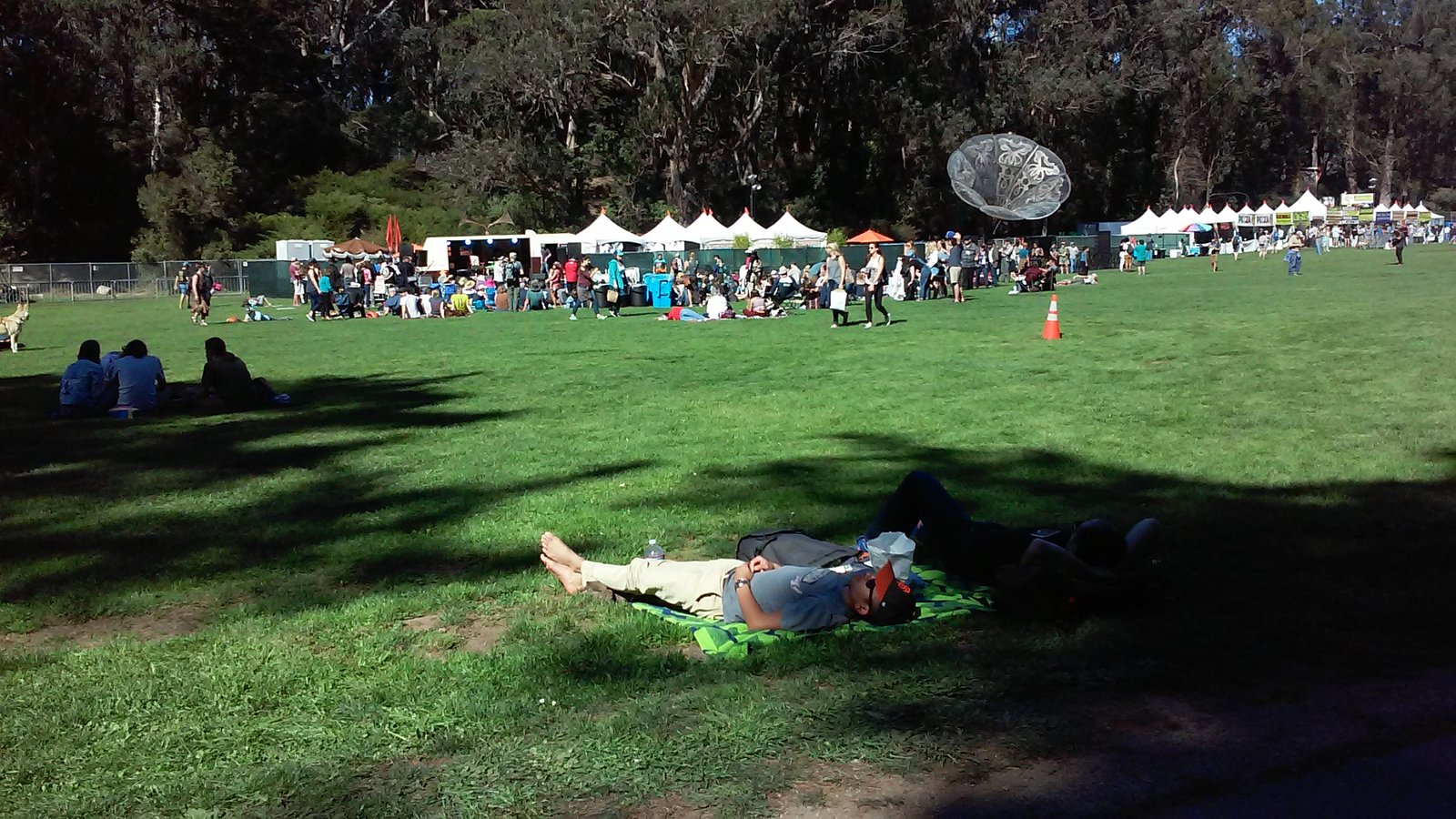
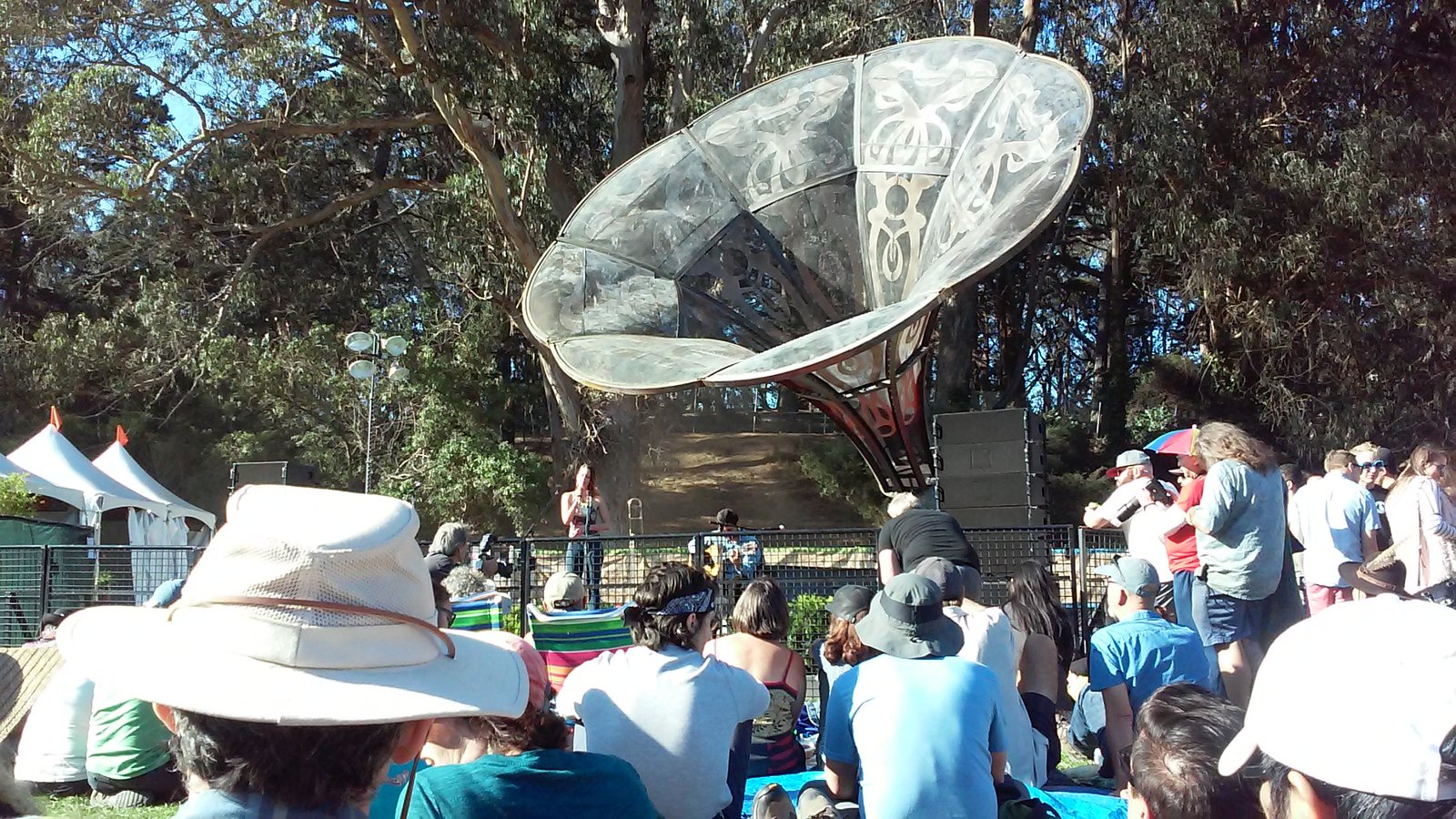
One of the ways was to simply enjoy all the music and friendly company. As you can see by the photo below, the festival began quite peacefully.

Stressful beginning. Victrola stage in background

BEST HORN SOLO:
Francisco Torres solo on Watermelon Man – Trombone

There are no trombones in bluegrass music  that is certain, but at the 2017 Hardly Strictly Bluegrass Festival there were at least two. I heard more saxes, trumpets and trombones than I did banjos.  Both the banjo and the trombone have known to break up marriages as both are actually very hard to play. Francisco Torres plays trombone and plays it very well with Poncho Sanchez and his Latin Jazz group. They played at 11:40 am on Saturday at the Swan Stage.  The crowd,  a bit subdued, seemed like they were either waiting for the coffee to kick in, the neighborhood blunt to take effect or maybe were simply biding time till “that cool band plays at 2:30.” Overall the band seemed a bit under-microphoned but Poncho Sanchez and his Latin Jazz group band is full of veteran-pros and eventually you knew you would hear something great. I have heard Francisco Torres play trombone live before and was impressed. This guy has great chops and outstanding musical sensibilities and can even channel John Coltrane. His solo on Watermelon Man was outstanding.

MOST AMAZING SOUL SINGER OVER THE AGE OF 75:
Don Bryant

People who have been attending the Hardly Strictly Bluegrass Festival for years know that part of the fun is discovering new musicians and bands.  On Friday I heard the The Bo-Keys. The horn section was fantastic playing with impeccable ensemble. The baritone sax had this beautiful fat sound and and held down the bottom like a anchor.  The arrangements were a little unimaginative but I am told that that is the classic R&B style (I guess Tower of Power never got that memo). Anyway, the second half of the set featured Don Bryant and let me tell you this guy is still going strong. Decked out in a gorgeous ornate black and silver jacket, at 75 he gave a clinic on singing R&B. He was channeling the voice of Otis Redding, James Brown and Sam Cooke all at once – all while having a  great time. The style of blues shouting has many casualties in the vocal world and I hear that people who sing in this style are often  frequent visitors to the  Ear, Nose and Throat clinics across the land. It is an especially difficult style to sing night after night. Don Bryant seemed like the Pavarotti of R&B  and for the entire set he  looked like he was having a gas. All the E.N.T. people should really just figure out how this guy does it. Case closed.


I would rather live a short life of love, than a long one of fear

Lucas Nelson

BEST stage TO BE ON SUNDAY:
Swan Stage

There are basically two approaches to attending the festival. One is to pack light, stake out your spot on one stage then meander over to other stages. This way you can maximize your band count. I know many people who do this and I have come to the conclusion that if you choose this route it is best to go the the festival solo. Alone, you can head off and hear Allison Brown in a moment’s notice. The other approach is to simply bring enough food and drink for the day and stay at one stage that your party has chosen as the best. Sunday I was traveling solo but nevertheless ended up spending four hours at the Swan Stage around a very friendly crowd. For me, the line-up of Poor Man’s Whiskey, Randy Newman and Lucas Nelson (Willie Nelson’s son) was the highlight of the entire festival. Outstanding!
Most Improved:
Poor Man’s Whiskey

Speaking of which, Poor Man’s Whiskey’s set was excellent. I am not sure if there are new members in the band or they changed their beverage of choice but these guys brought it on – great vocals at times, awesome songwriting and some truly interesting guitar solos. Their sound is many things – a bit country, a bit rock and roll, a little Northern California jam-band. During the set one of the band’s members proposed marriage to his girlfriend. That was pretty special.


It’s play time now. There’s no democracy. Democracy’s gone.

Randy Newman

BEST SET BY A MUSICIAN WHO HAS WRITTEN MUSIC FOR OVER 8 PIXAR FILMS:
Randy Newman

When musicians become commercially successful sometimes people no longer take them seriously. Randy Newman’s body of work is outstanding. Sitting at a grand piano playing solo he quieted everyone down and truly delivered. He played some new songs (a funny one about Putin) but also played classics like Short People.

MOST AVANT GARDE SET WHERE PEOPLE JUST GOT UP AND LEFT:
TIE: T-Bone Burnett & Ornette’s Prime Time Band Reunion

The Pelican Cafe has been giving out these awards for six years now and this is the first time that the judges have split their decisions. In the category of Most Avant Garde we have a tie! You had to have been there.  T-Bone Burnett did over an hour of a new direction he is going. Electronic music with prerecorded tracks, a drummer and T-Bone Burnett doing spoken word. There was some mention at the beginning of T.S. Elliot but at a festival like this, subtleties are lost.  Probably pretty cool stuff if you are in the right mood and a smaller venue. At a festival this size you need to paint with a fatter brush. Ornette’s Prime Time Reunion Band played many of the old tunes and sounded really interesting. There were loud like a rock and roll band.  I now am musing over what it would have sounded like if Ornette and Charlie Haden had done the gig as a duo.  Maybe they were up in the clouds flying around in those airplanes. Stranger things have happened lately.

>>>>>>>>>>>

The Hardly Strictly Bluegrass Festival in San Francisco is really like Jazz Fest in New Orleans. Big-name bands, many kinds of music and a festive atmosphere. One of the amazing things about Hardly Strictly Bluegrass Festival is that even though there are tens of thousands of people, it is always a  peaceful event, and in the end people seem to get along just fine and often make new friends. Everyone seems to pack out the trash pretty well too. Hardly Strictly Bluegrass Festival. Warren Hellman’s party.  Communal music therapy.


PAST AWARDS

https://sfjournal.net/blog/2016-hardly-strictly-bluegrass-awards/


https://sfjournal.net/blog/the-2015-hardly-strictly-bluegrass-awards/

https://sfjournal.net/blog/2014-hardly-strictly-bluegrass-festival-official-pelican-cafe-awards/

https://sfjournal.net/blog/2013-hardly-strictly-bluegrass-festival-official-pelican-cafe-awards/

https://sfjournal.net/blog/2012-hardly-strictly-bluegrass-festival-highlights/


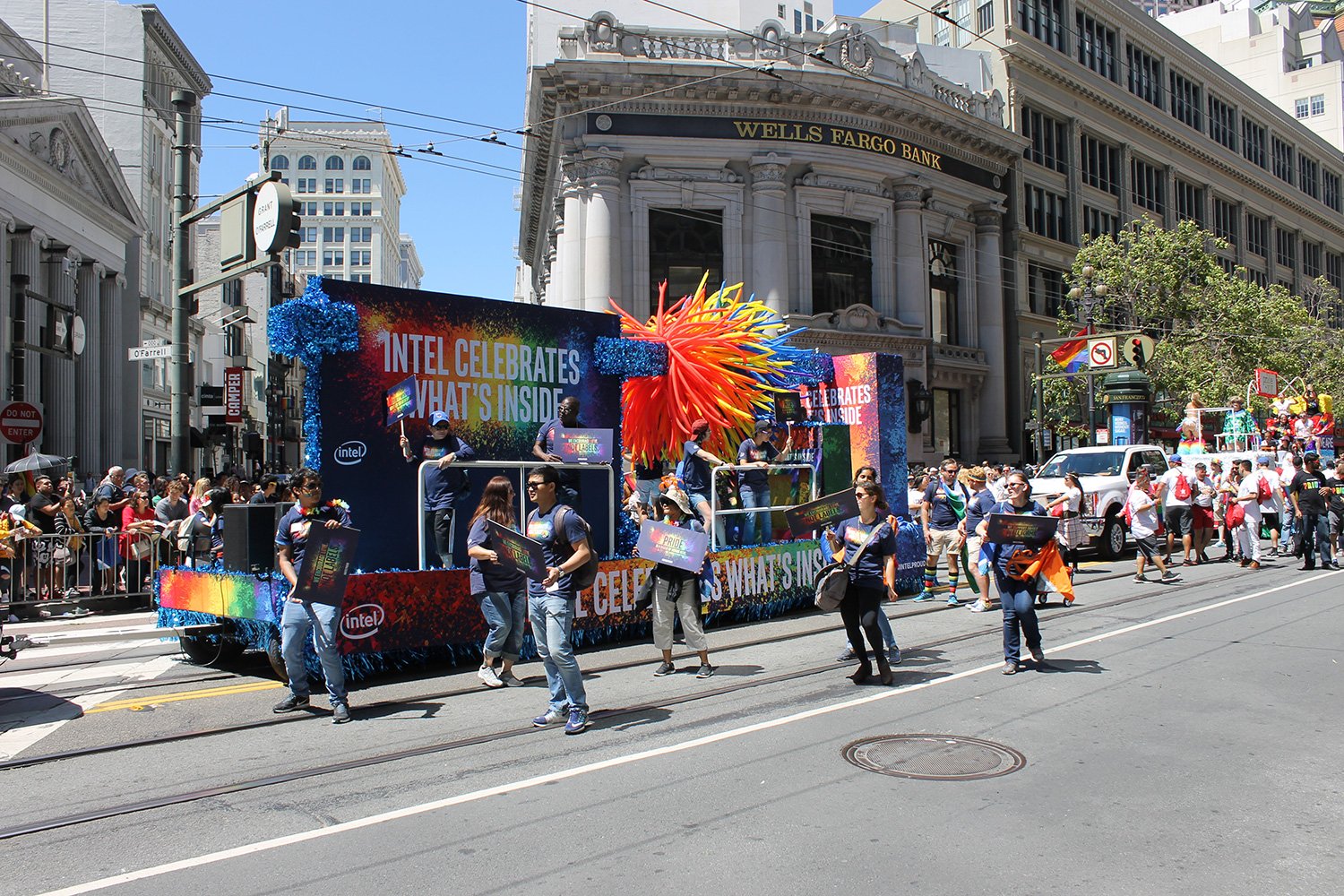
San Francisco Pride Parade 2017

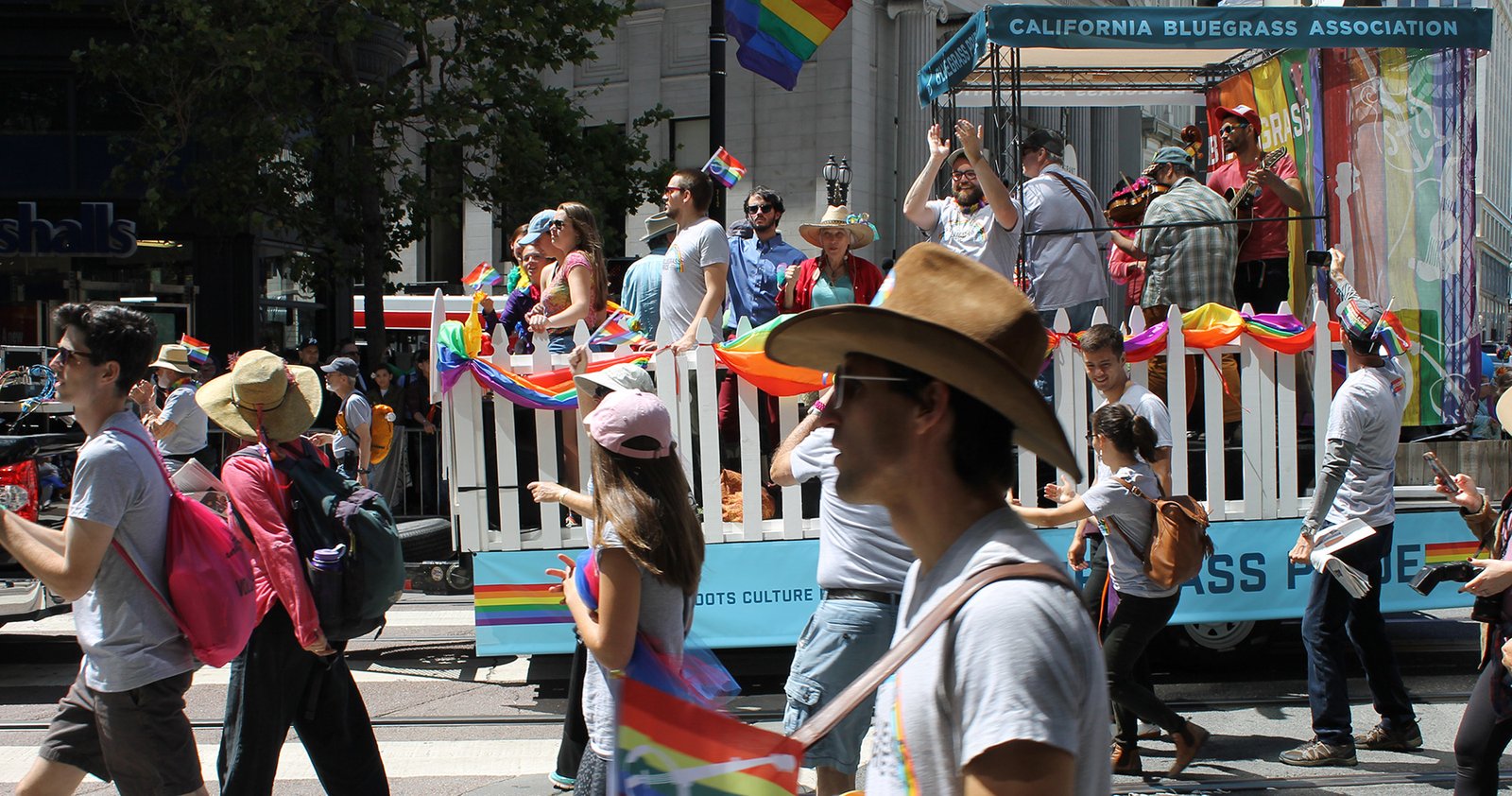
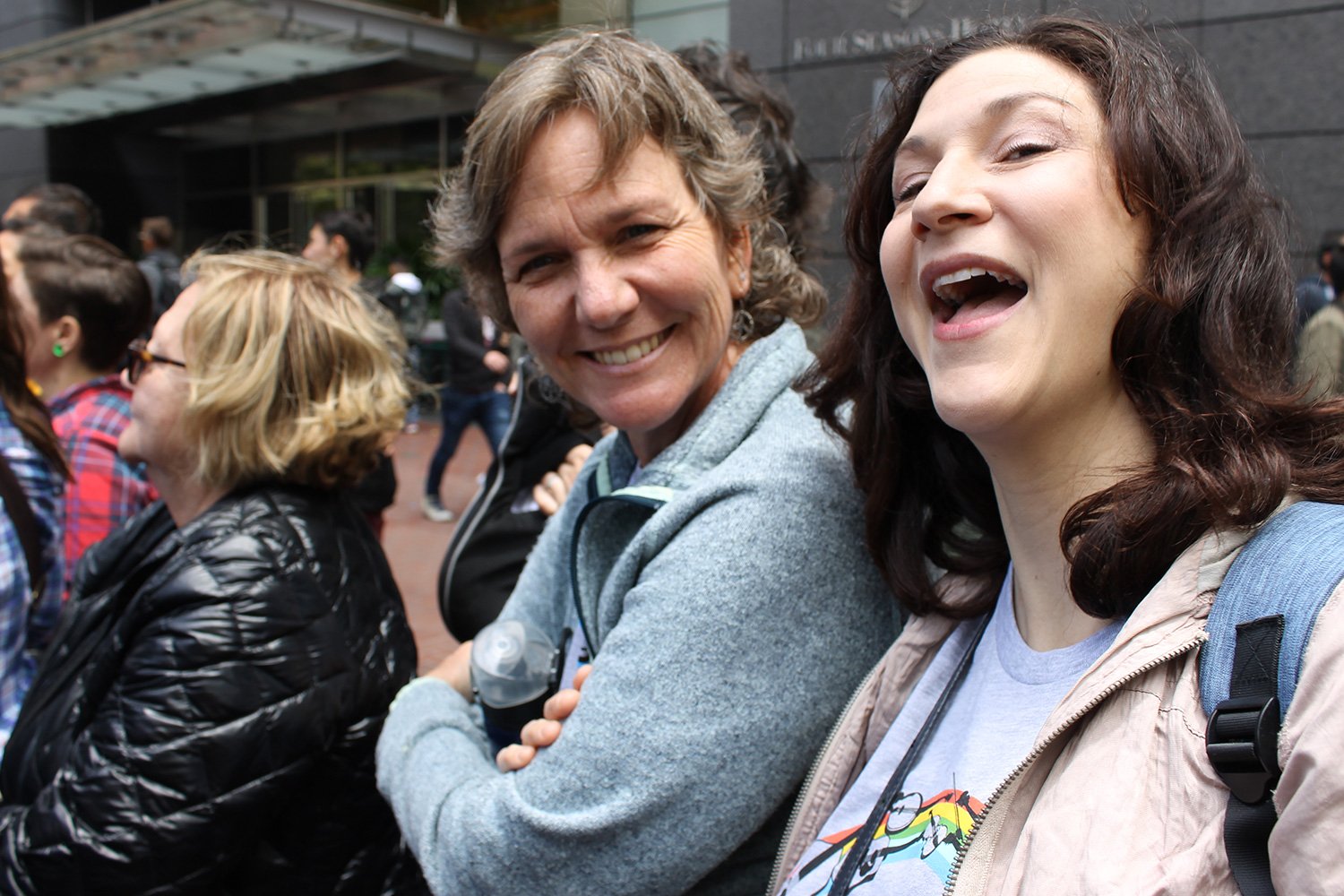
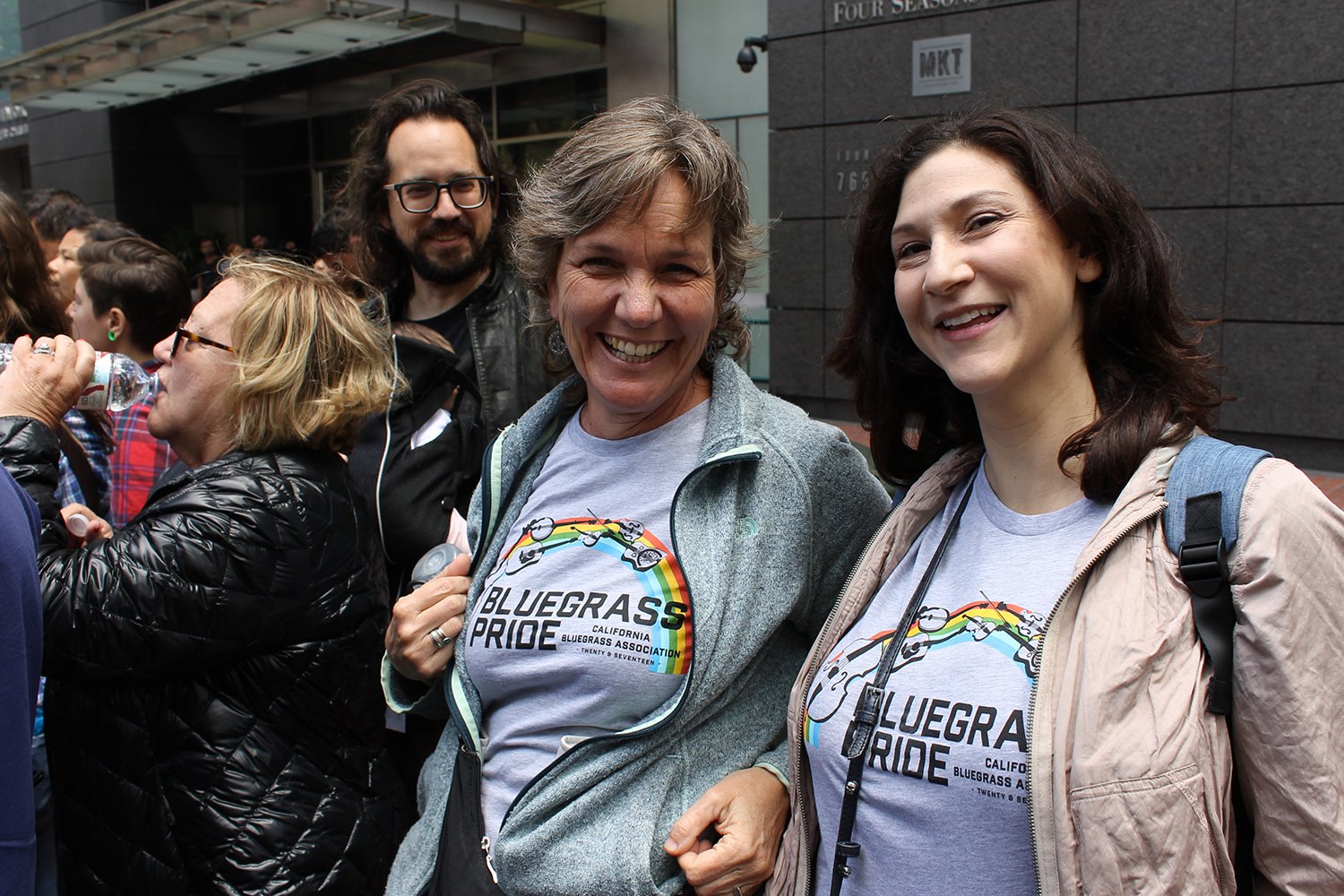
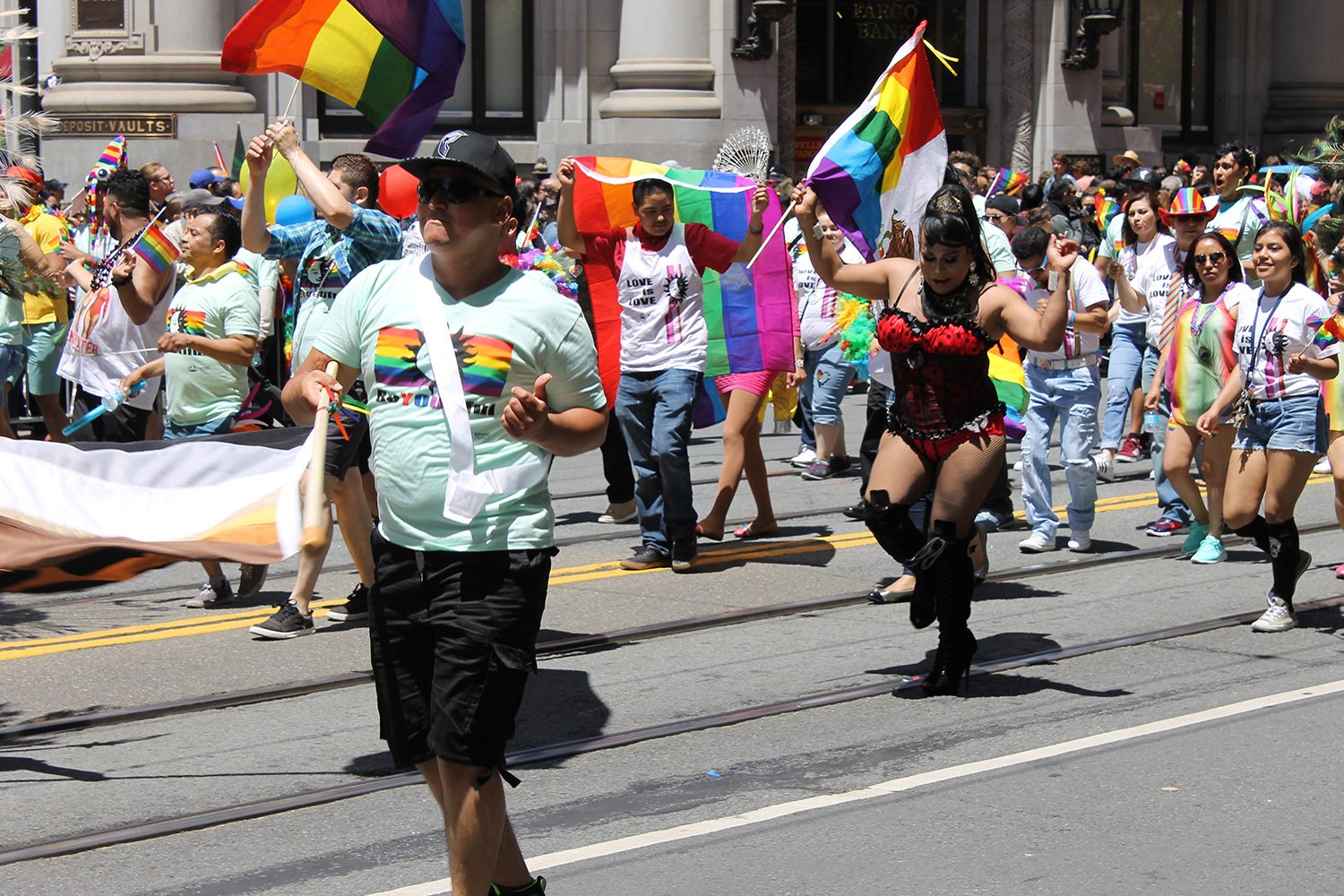
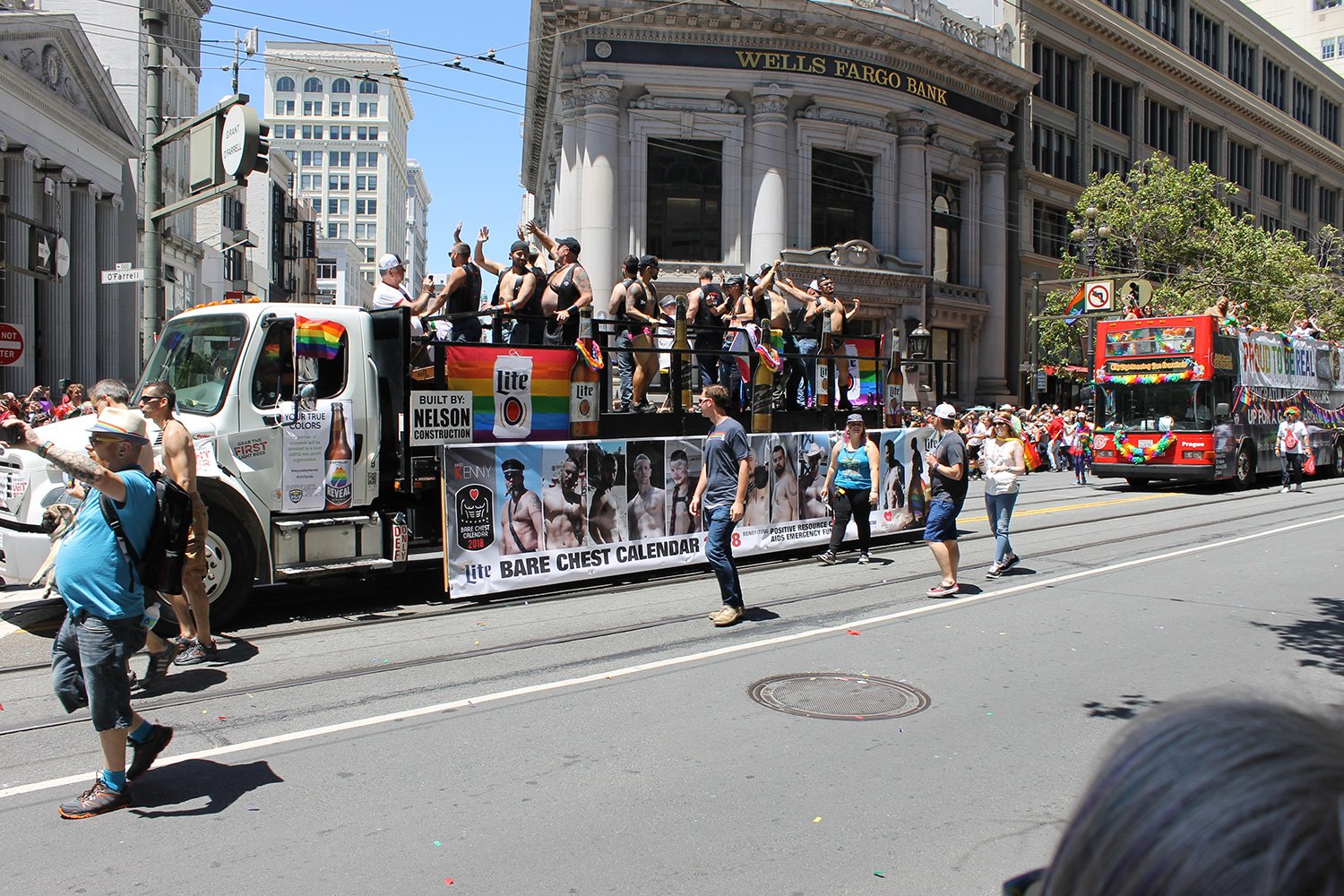
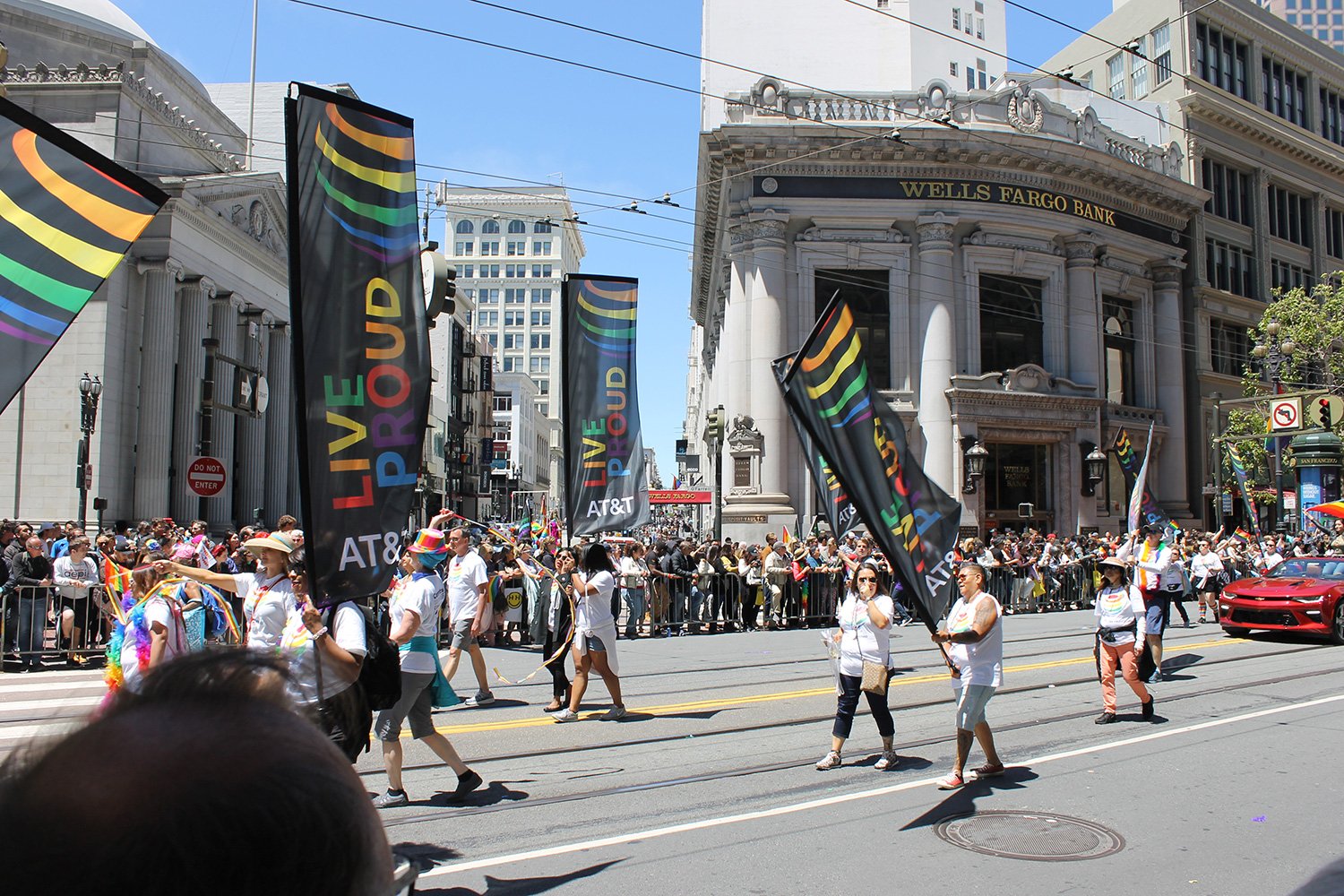
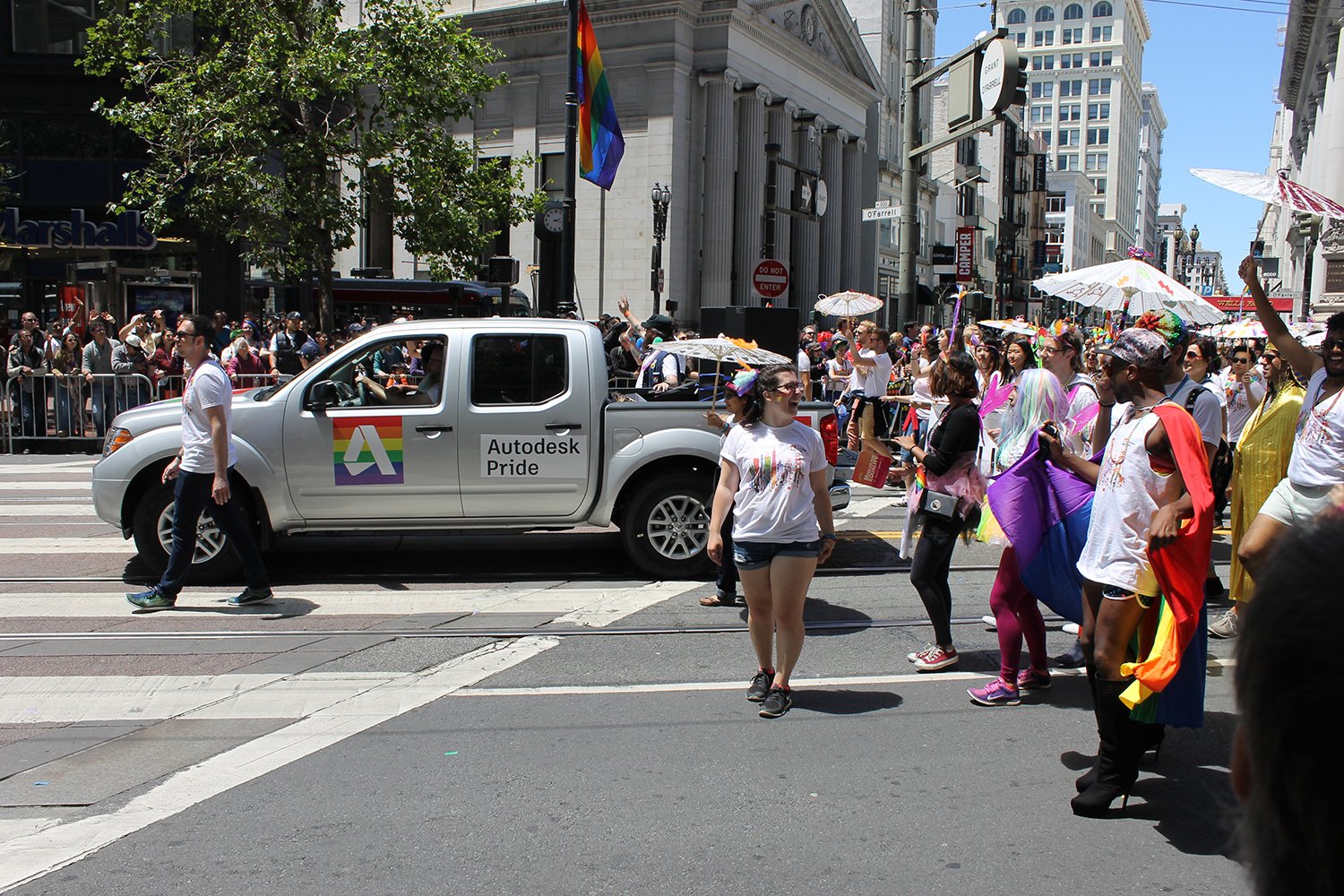
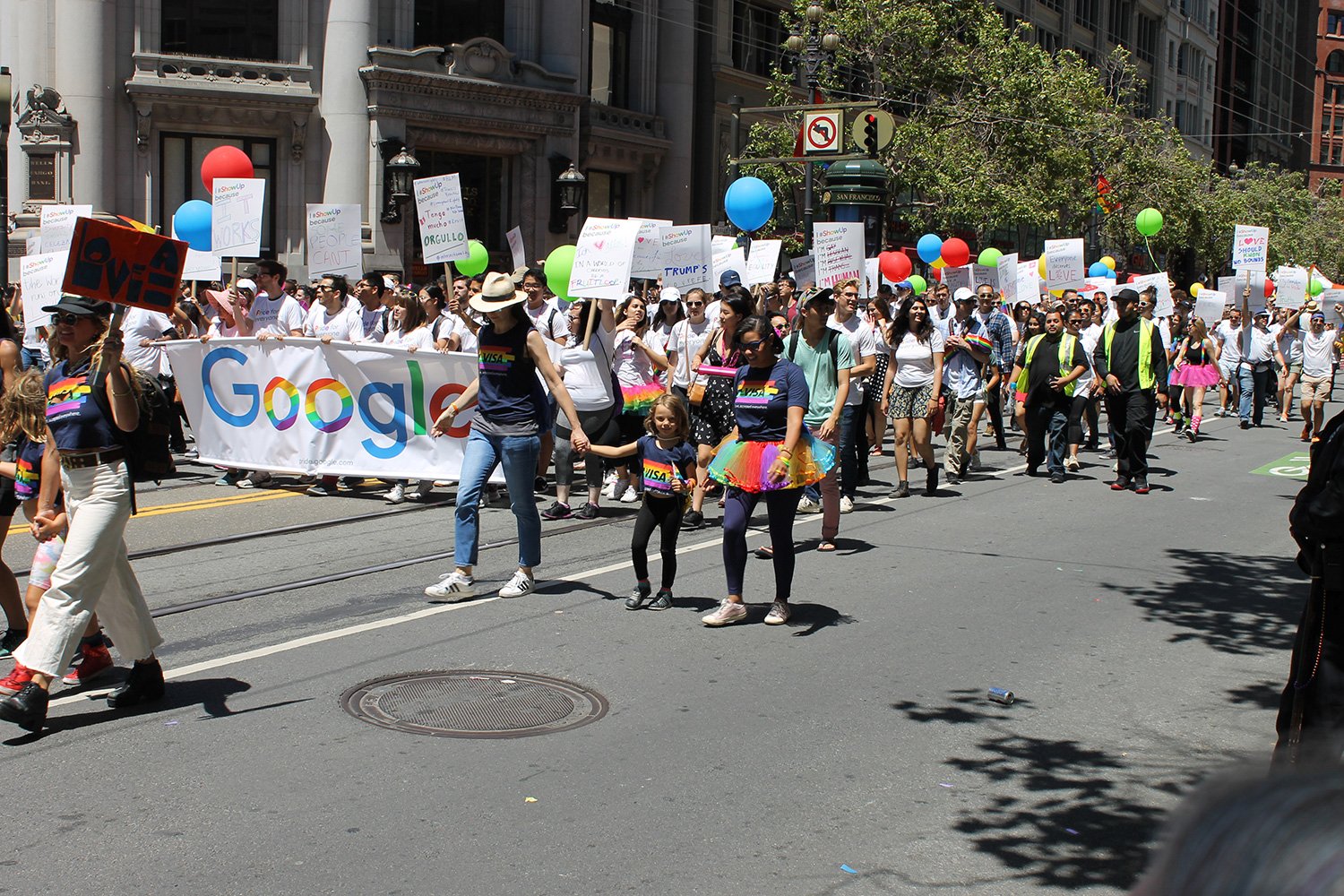
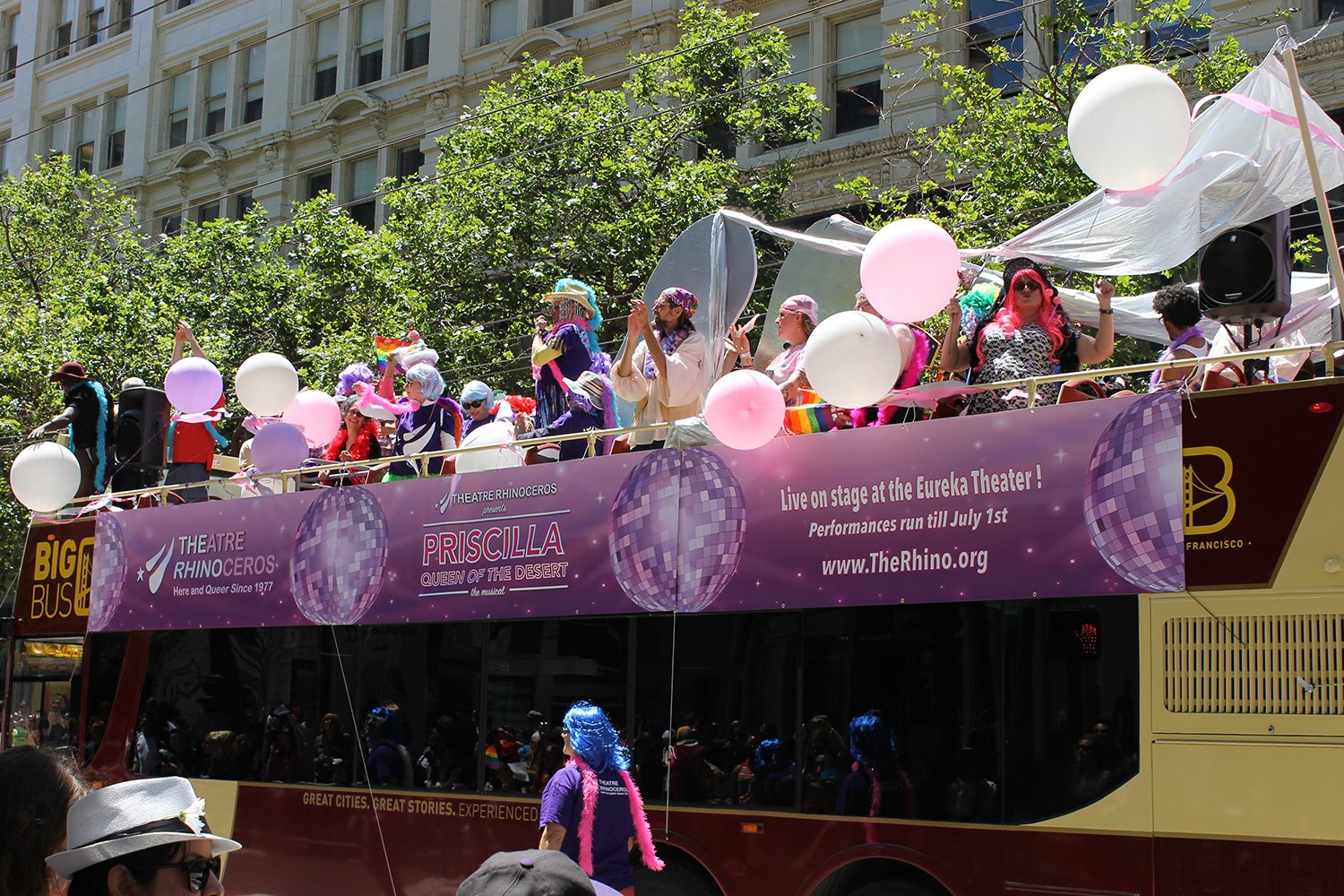
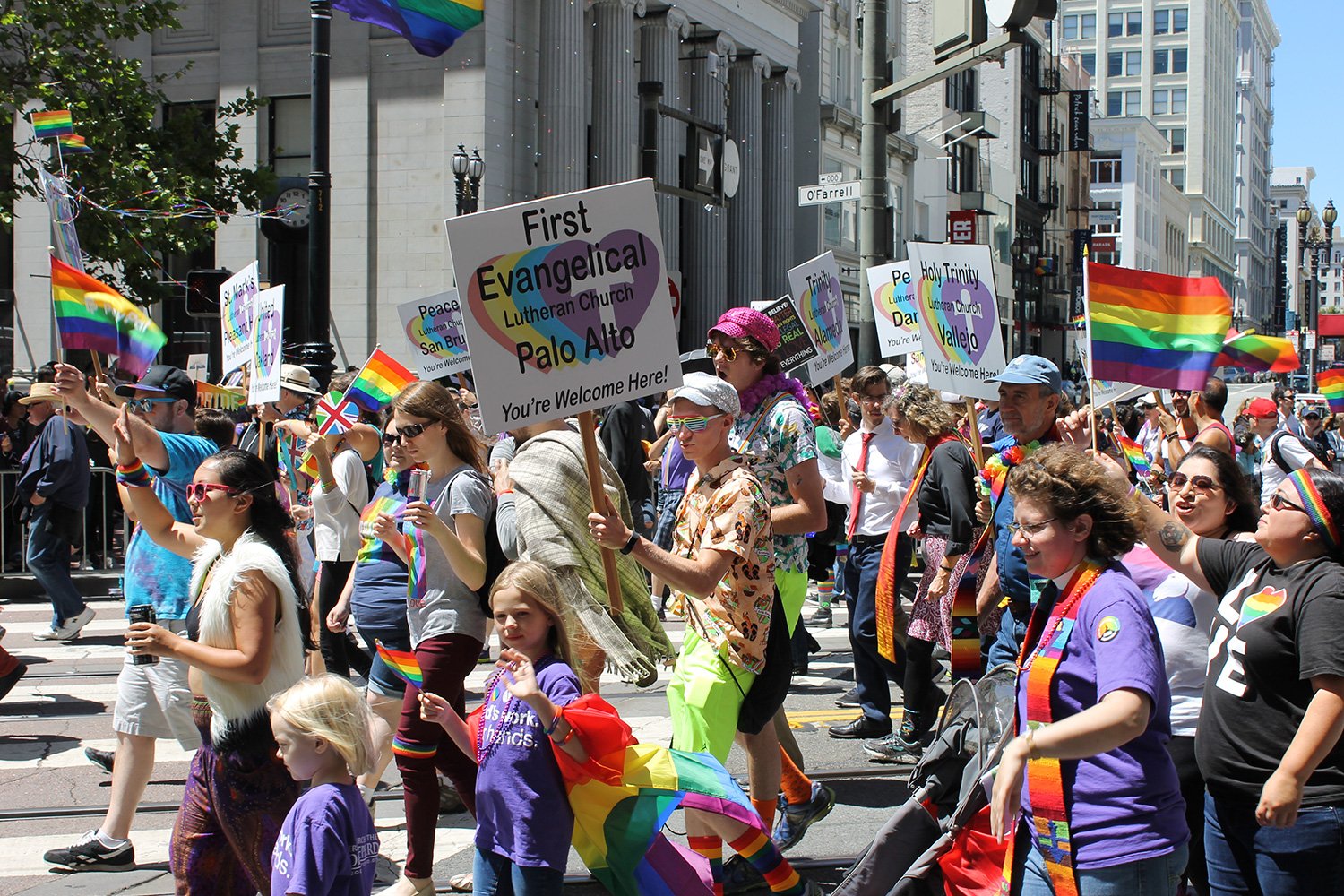
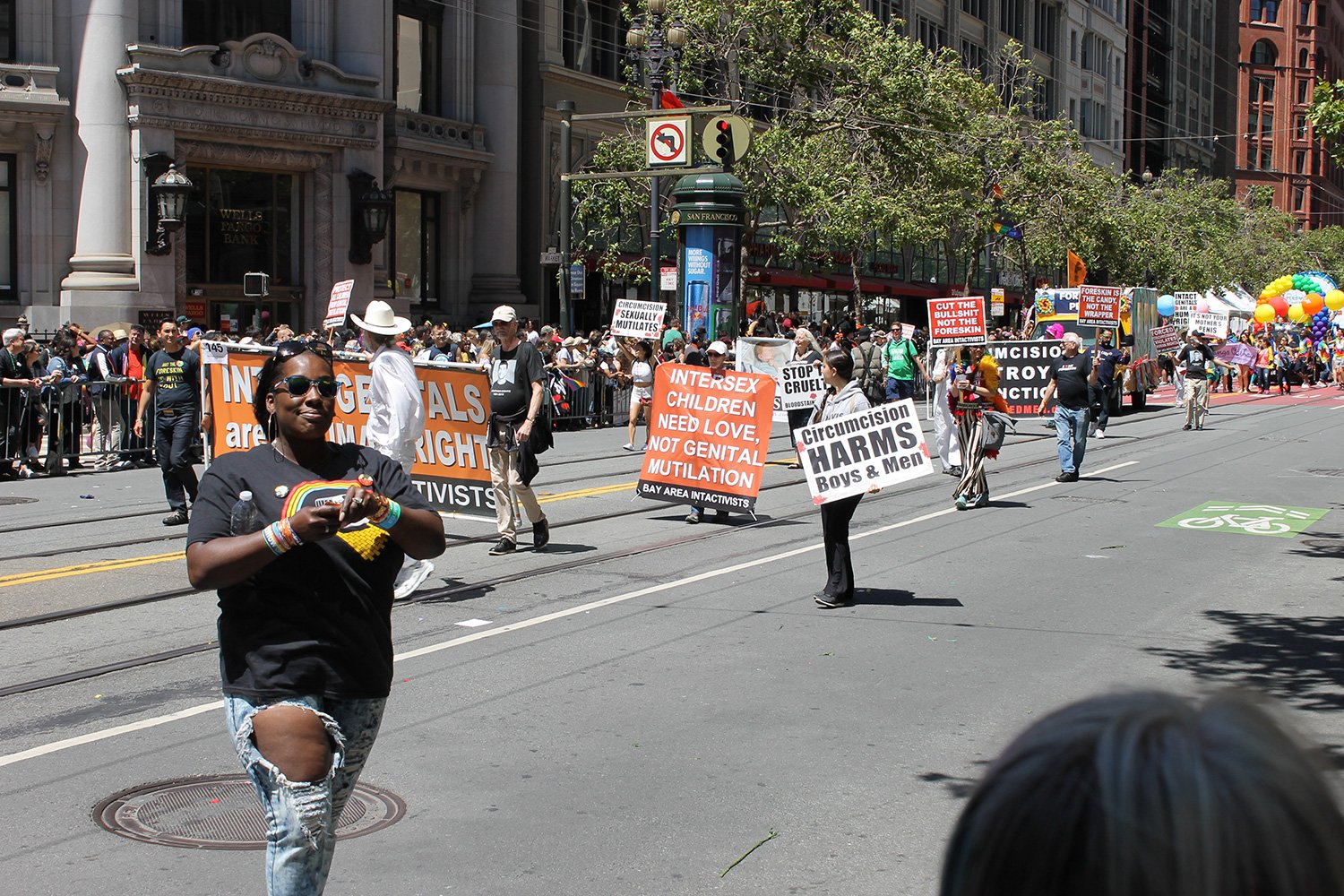
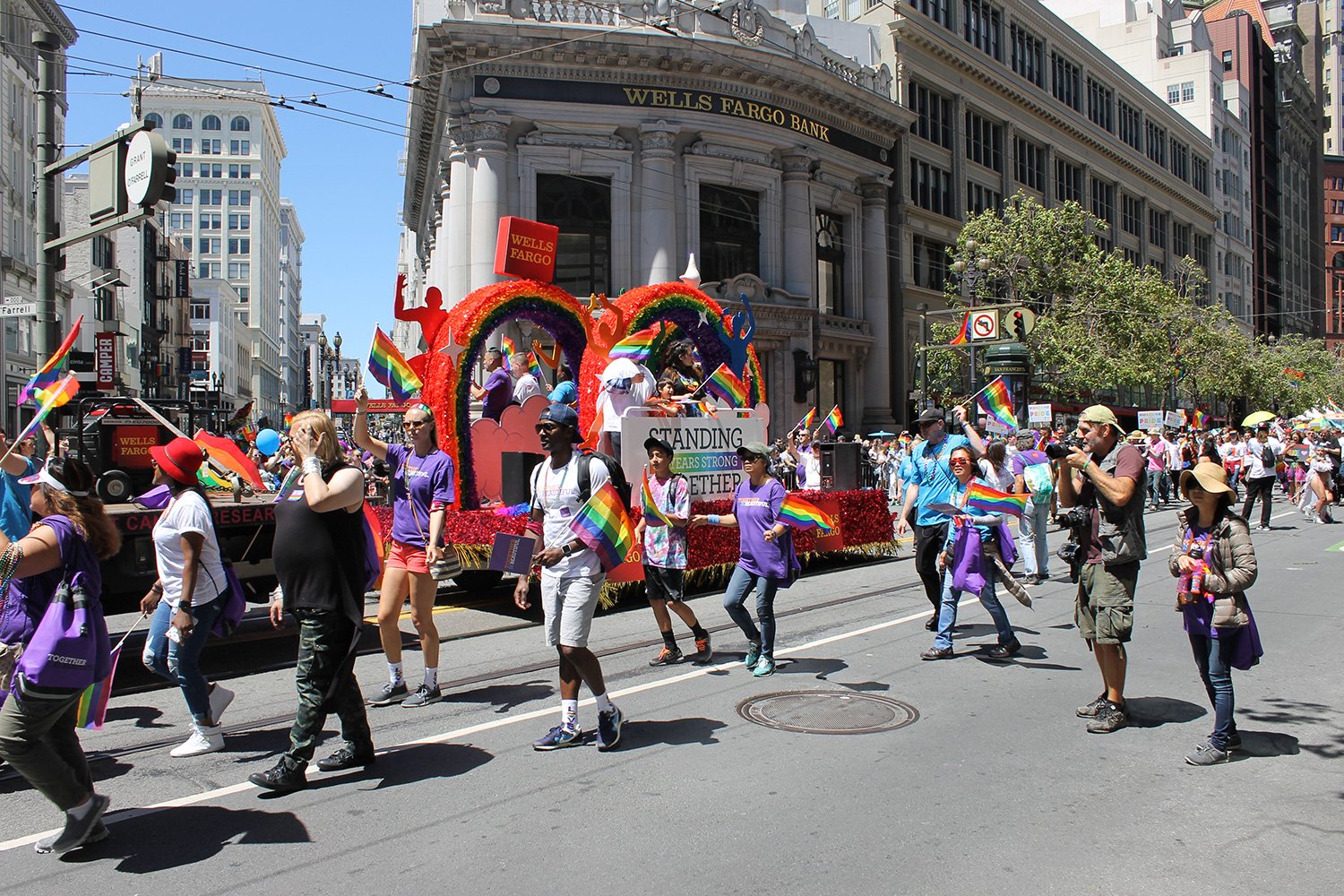
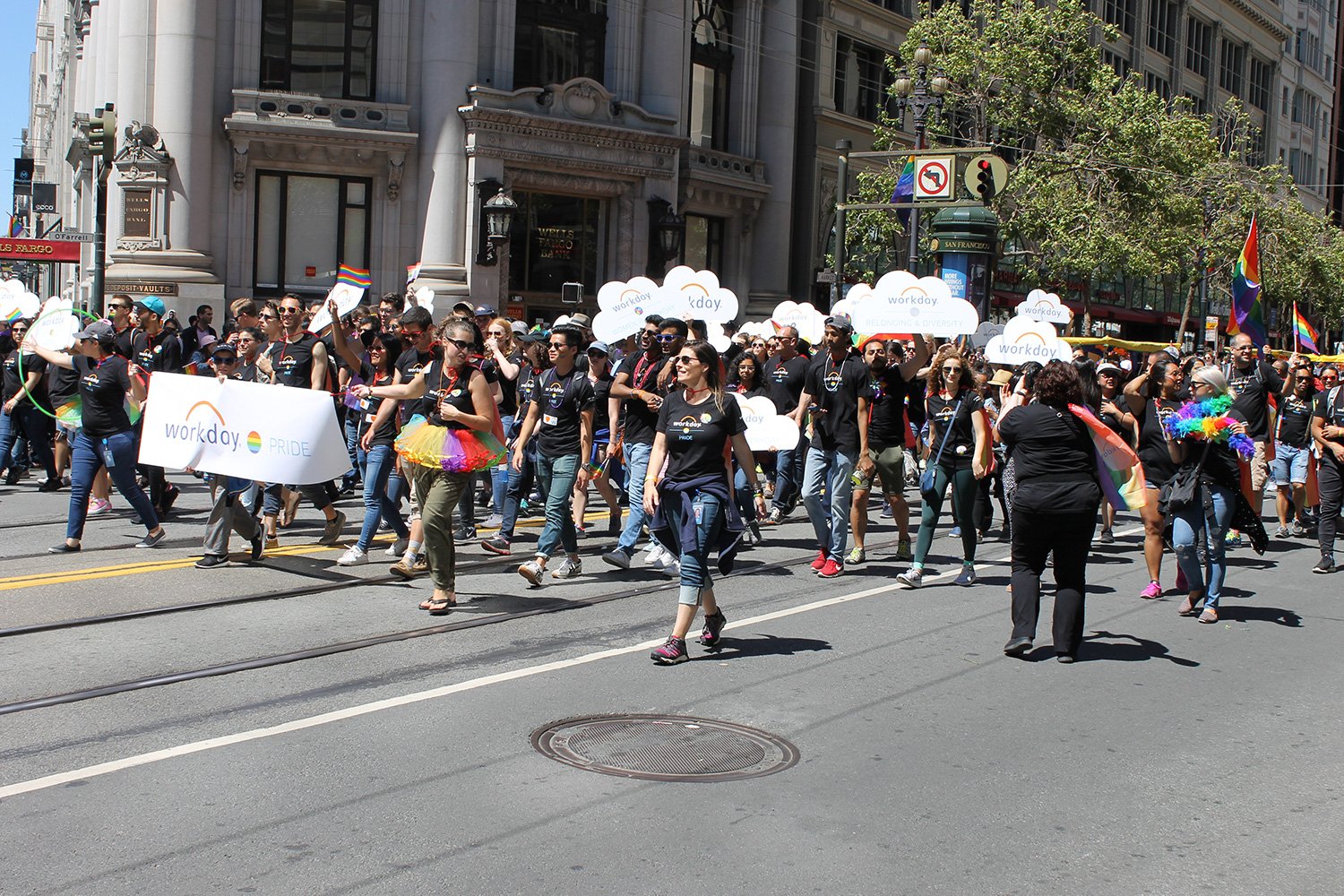
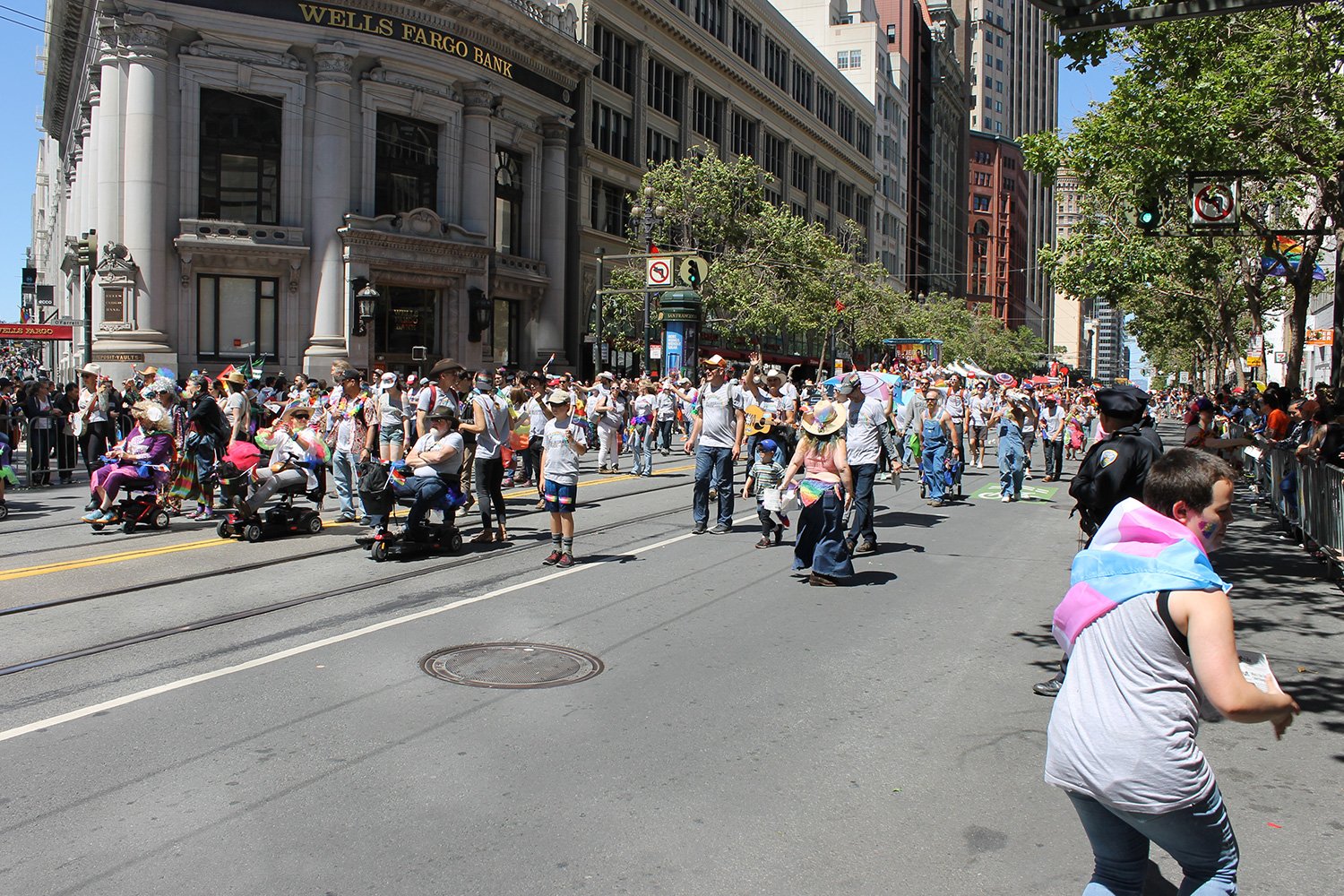
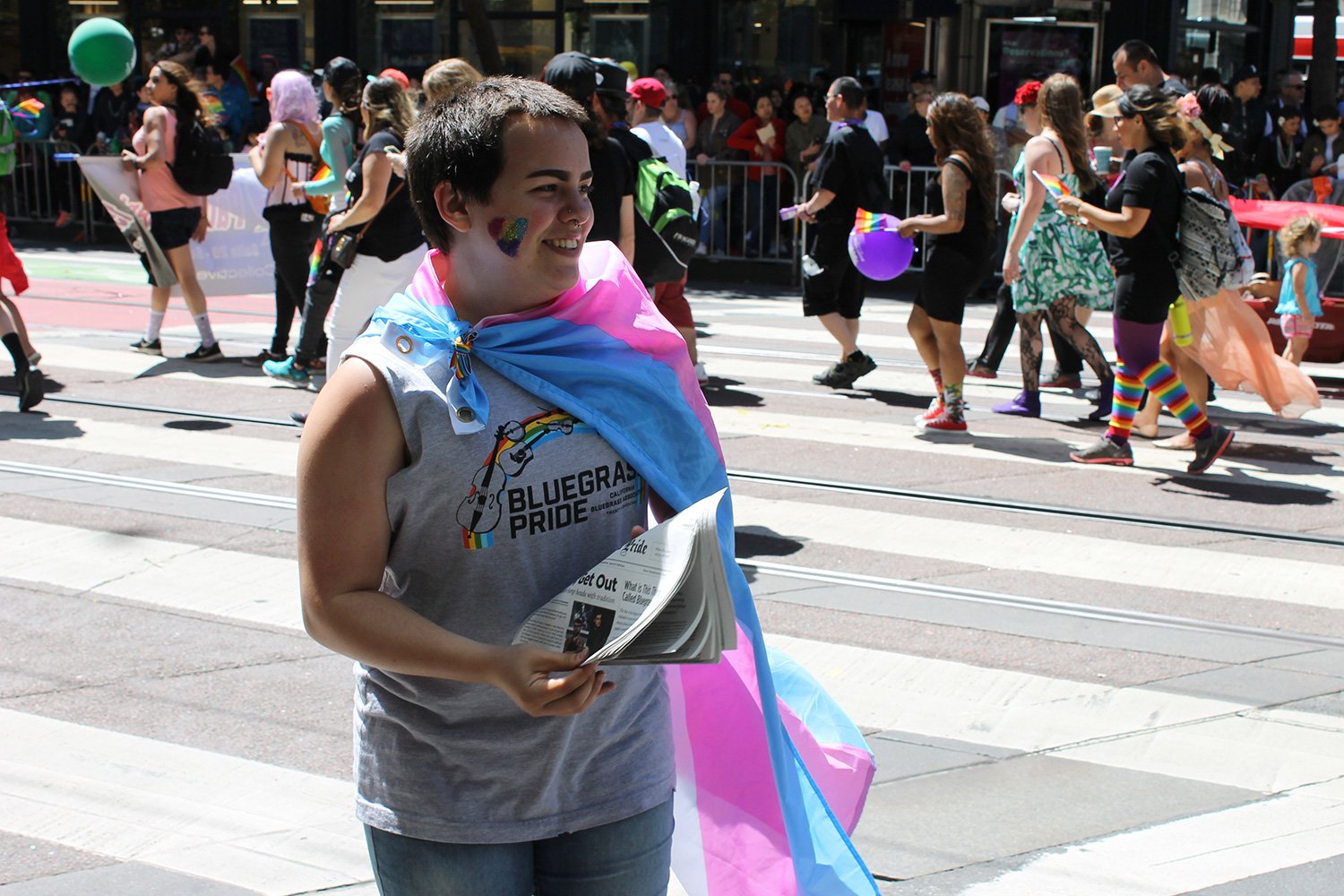
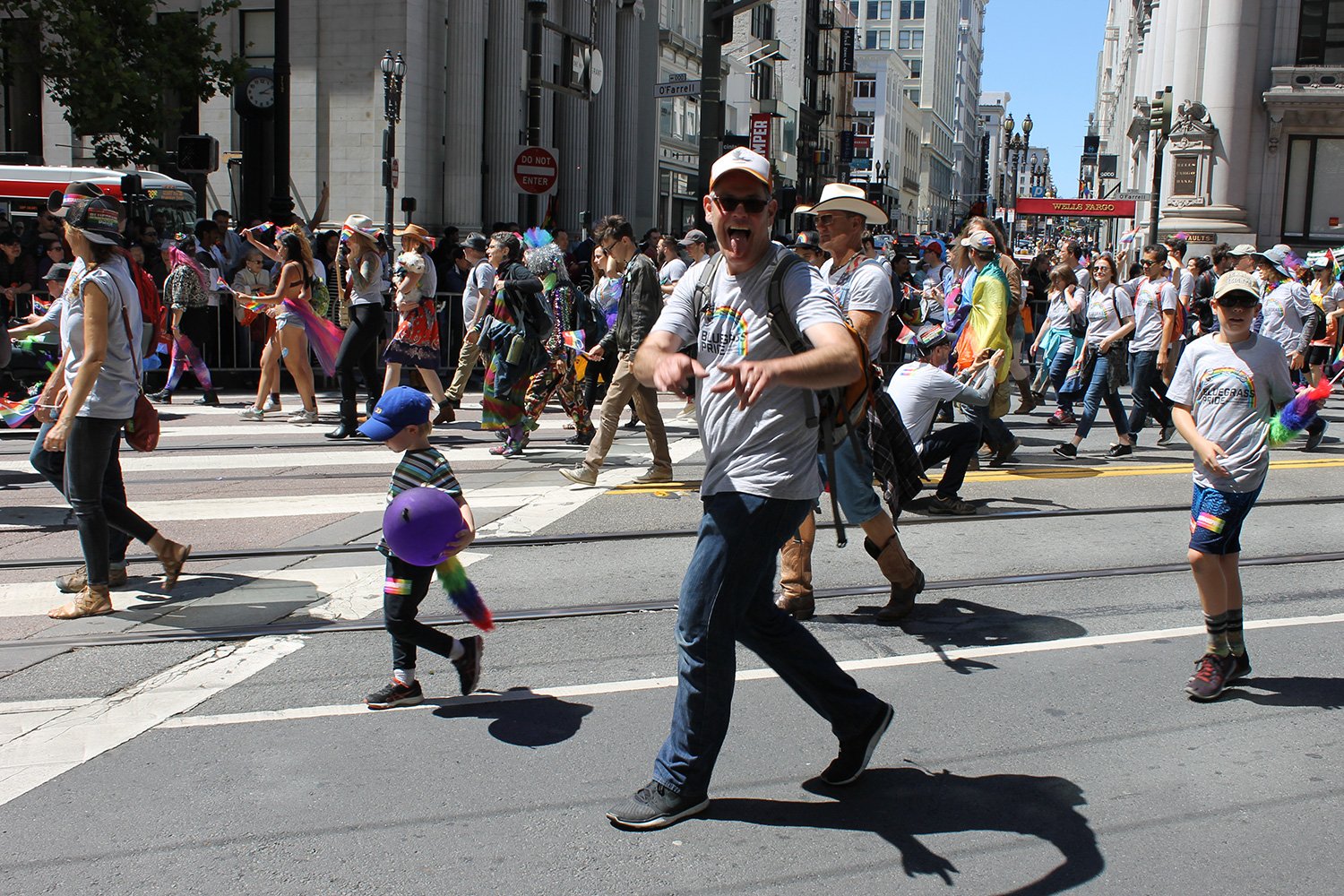
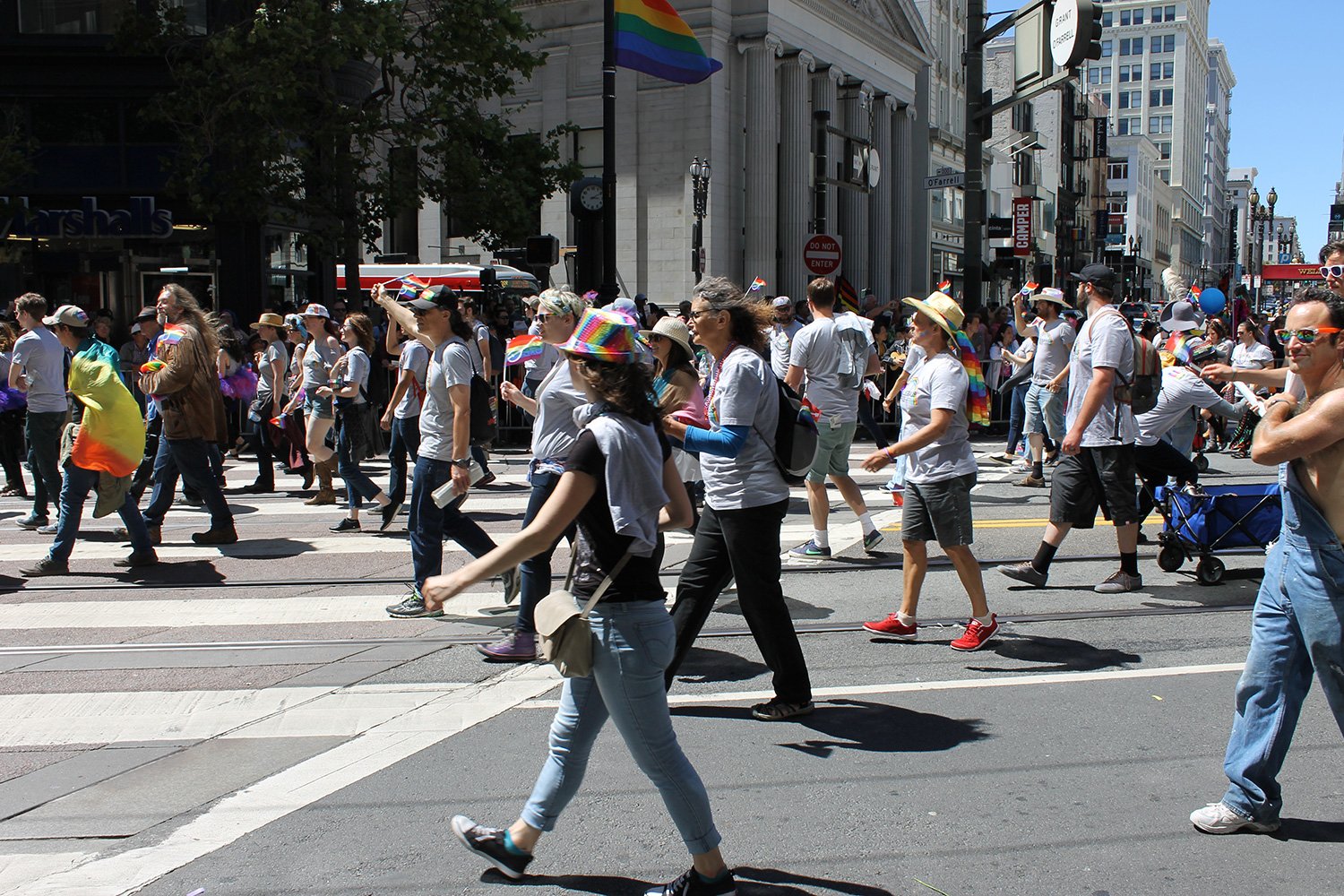
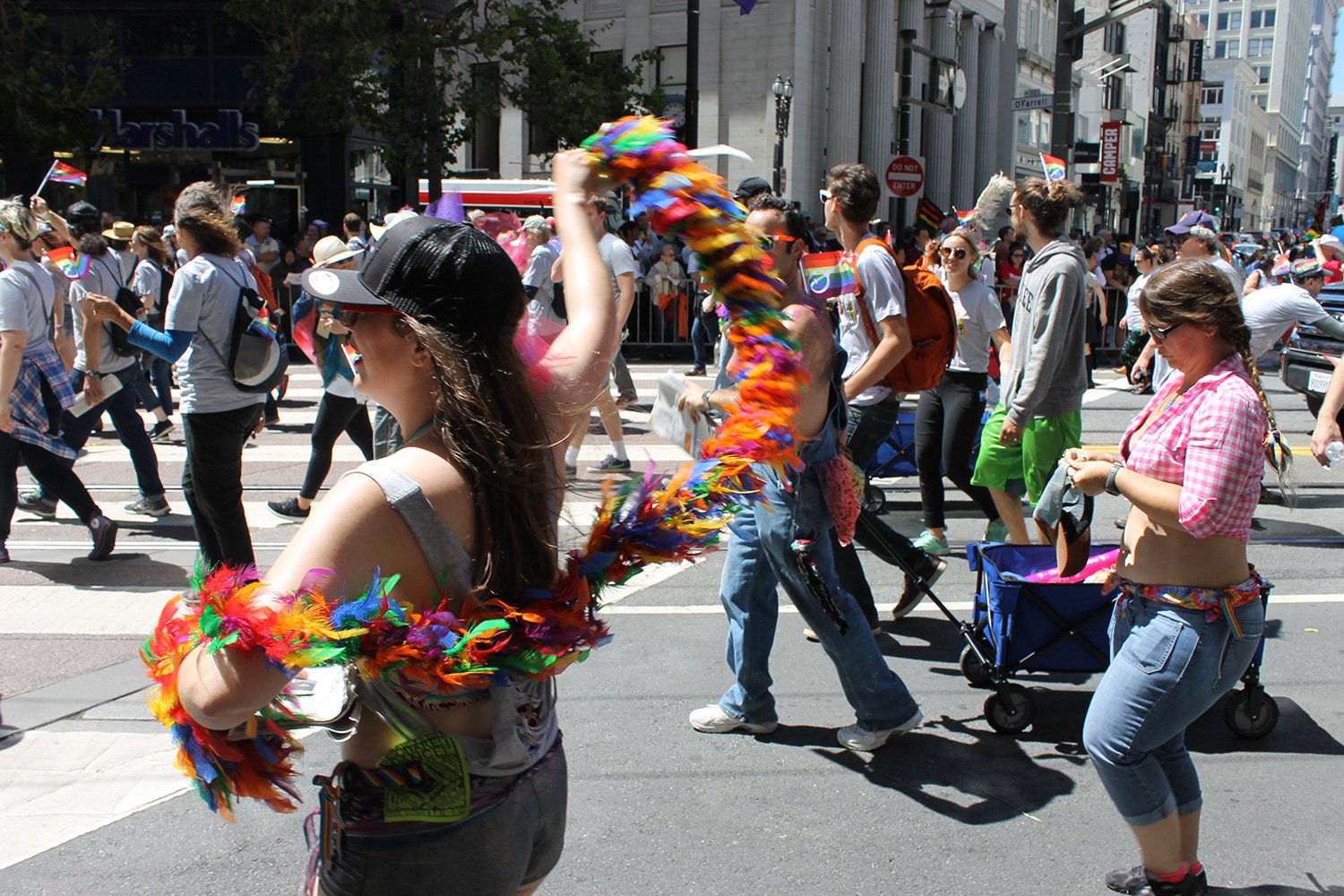
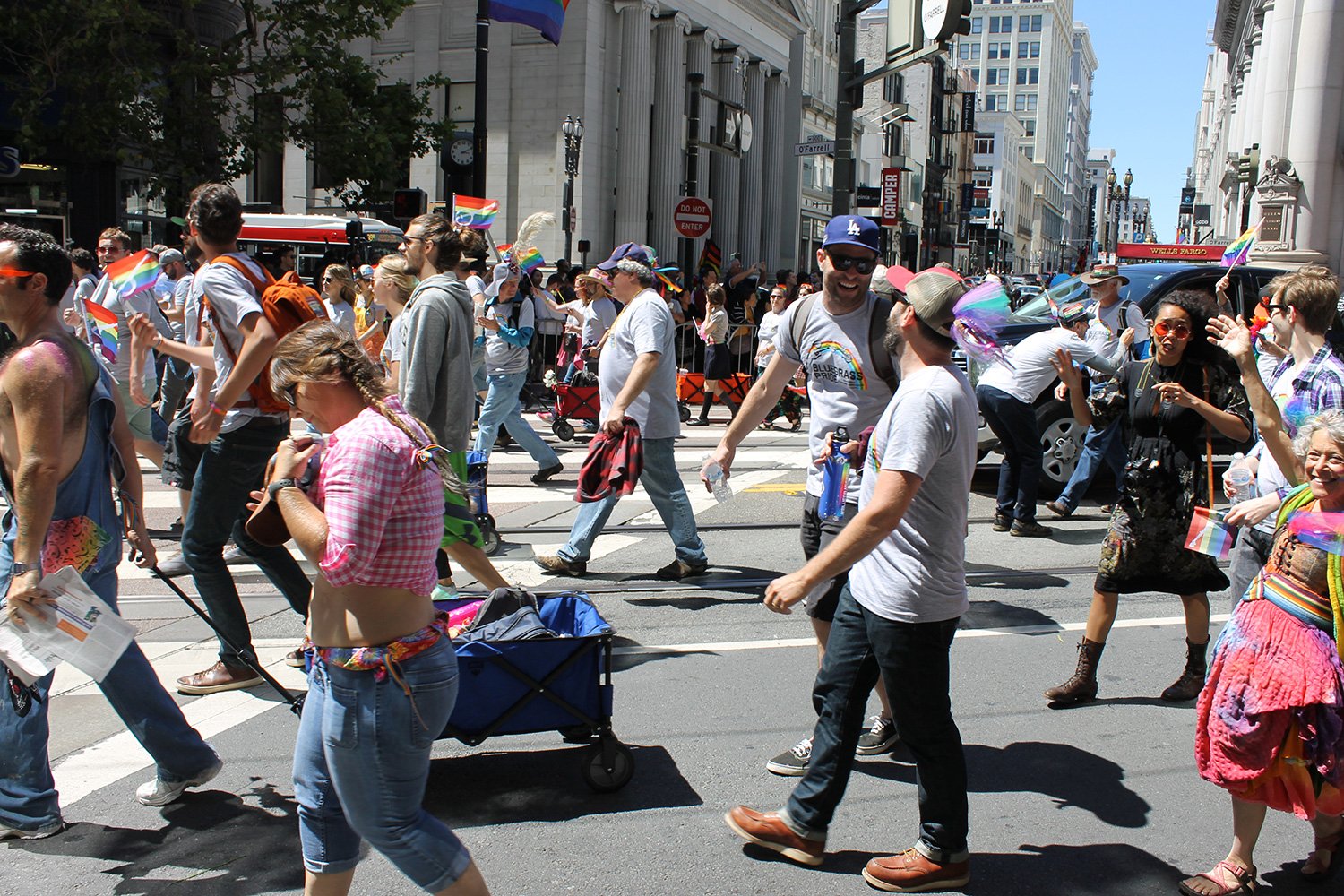
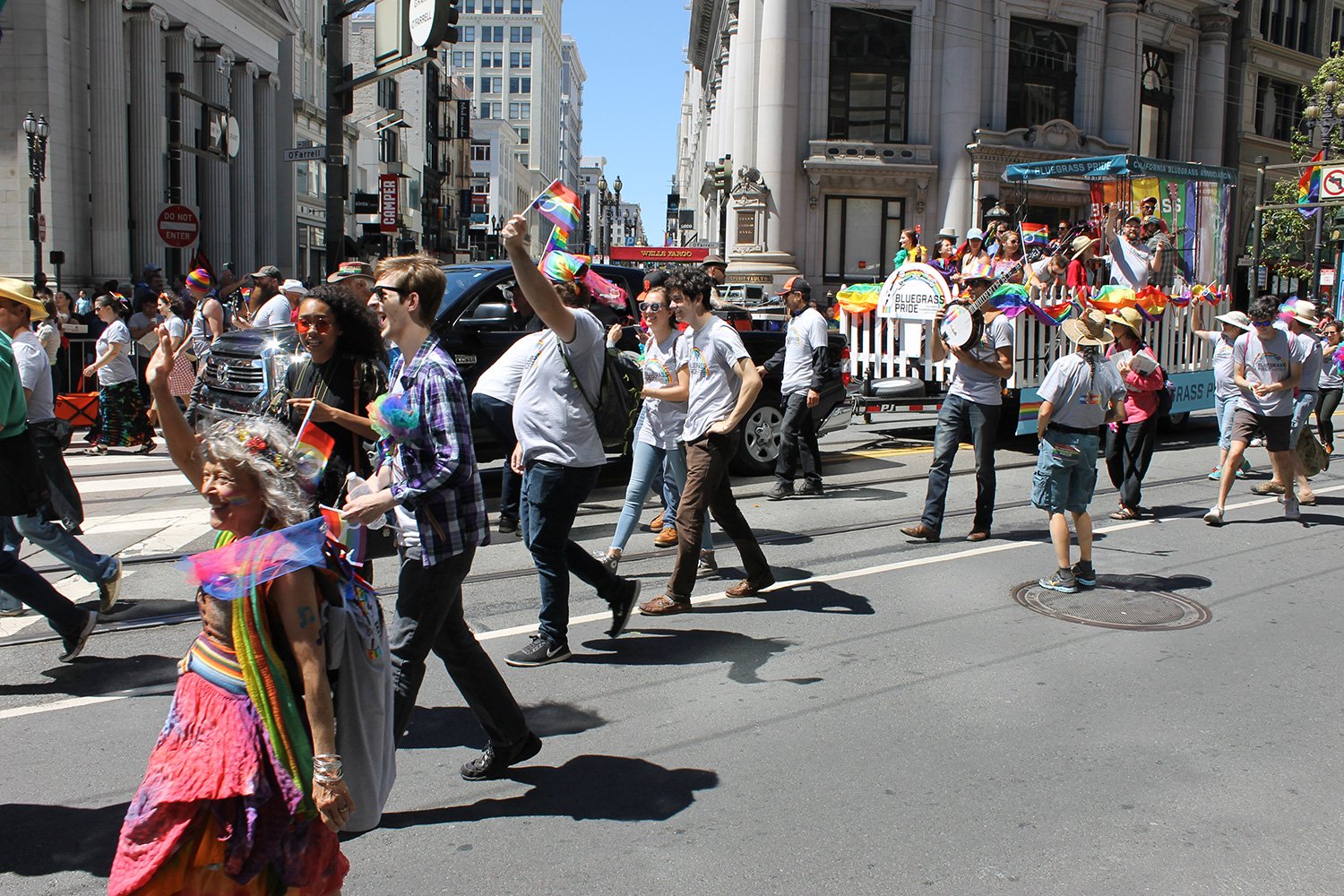
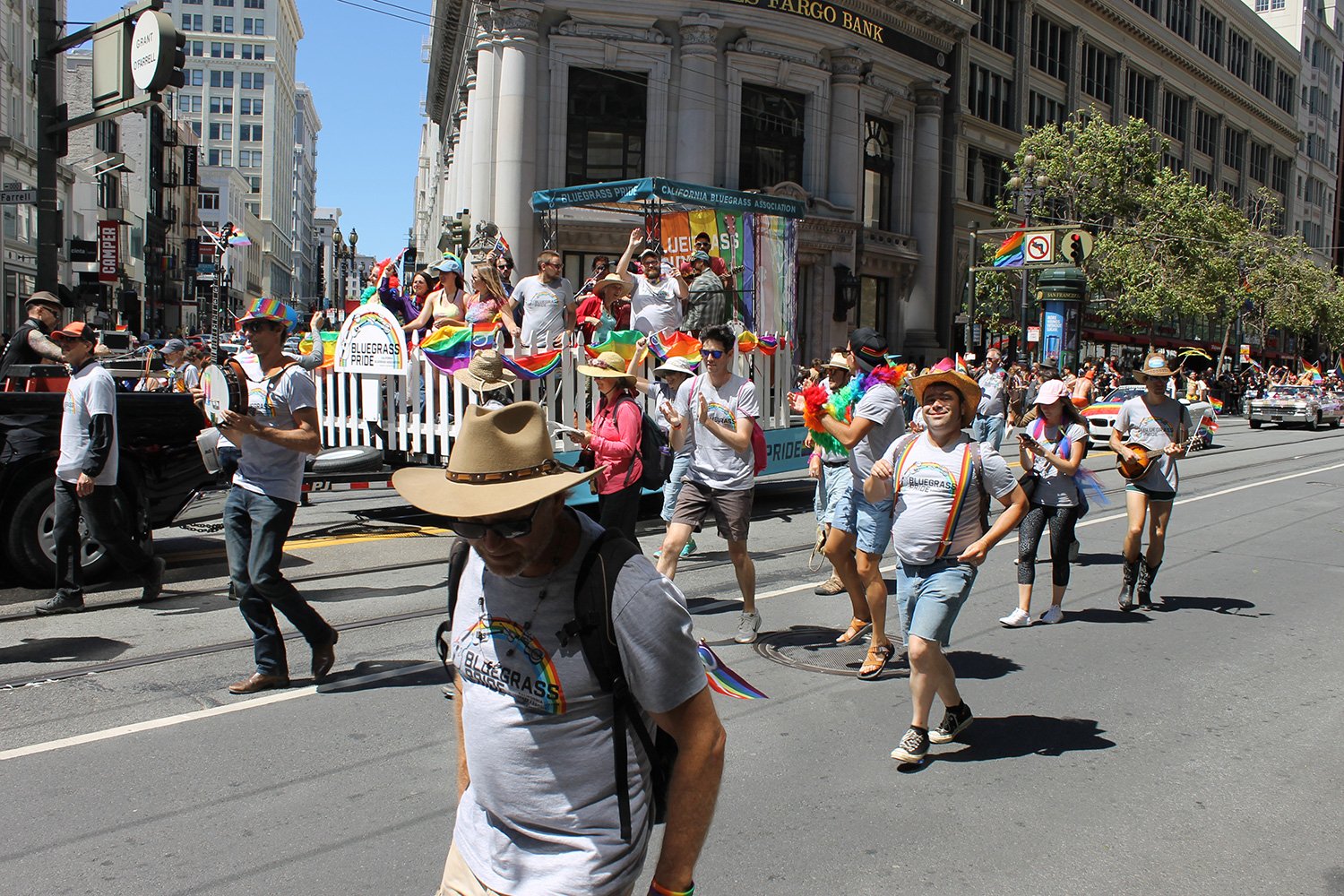
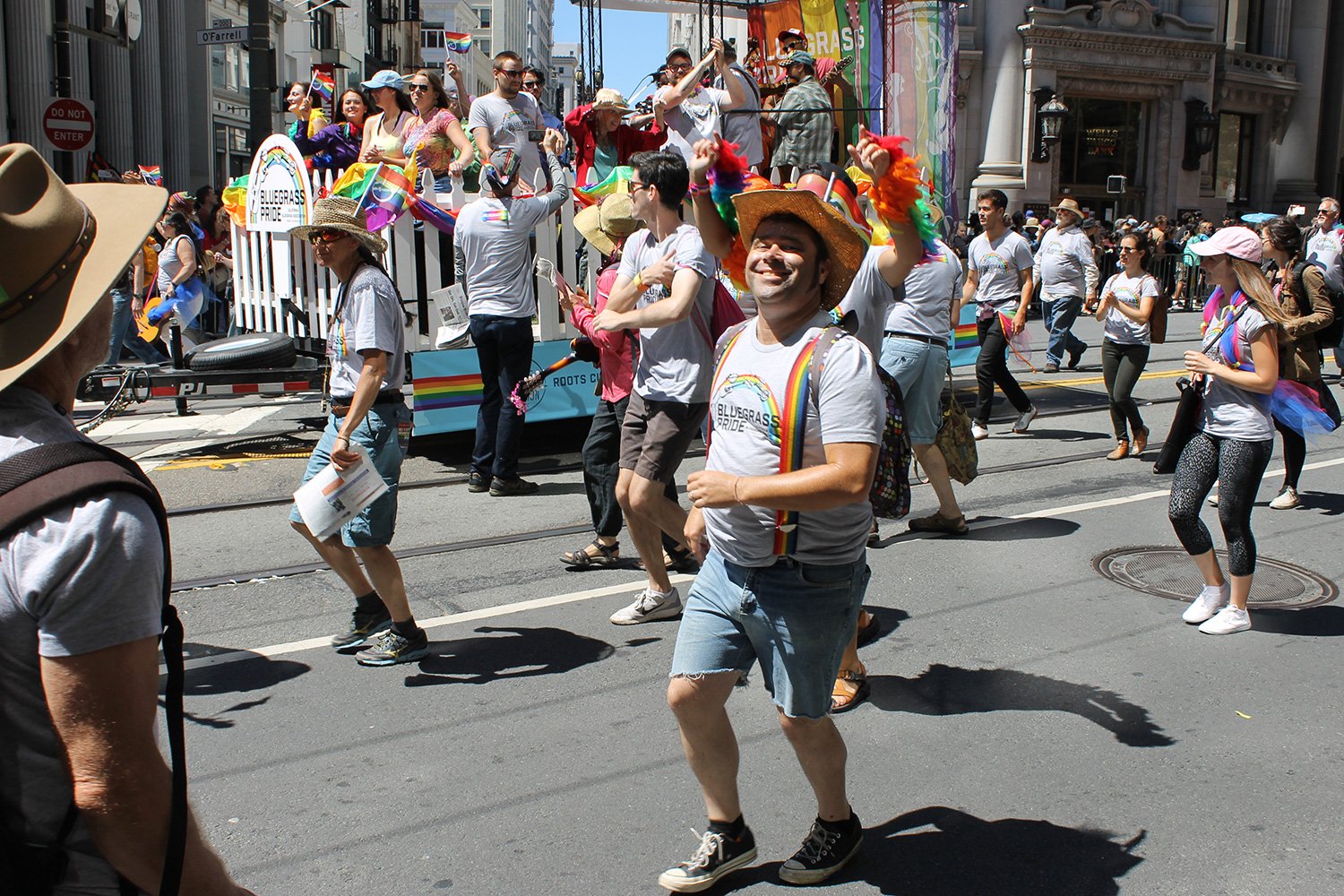
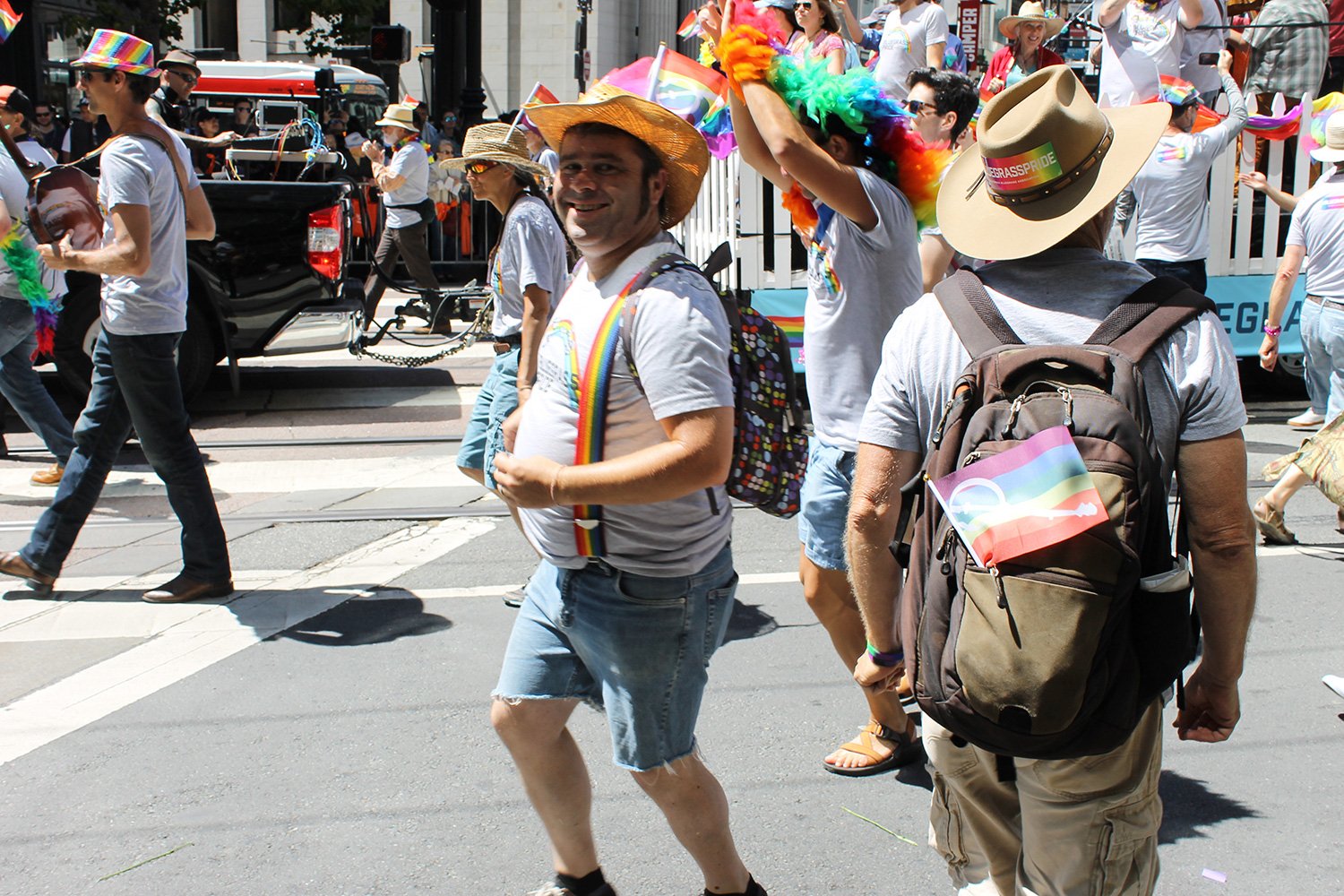
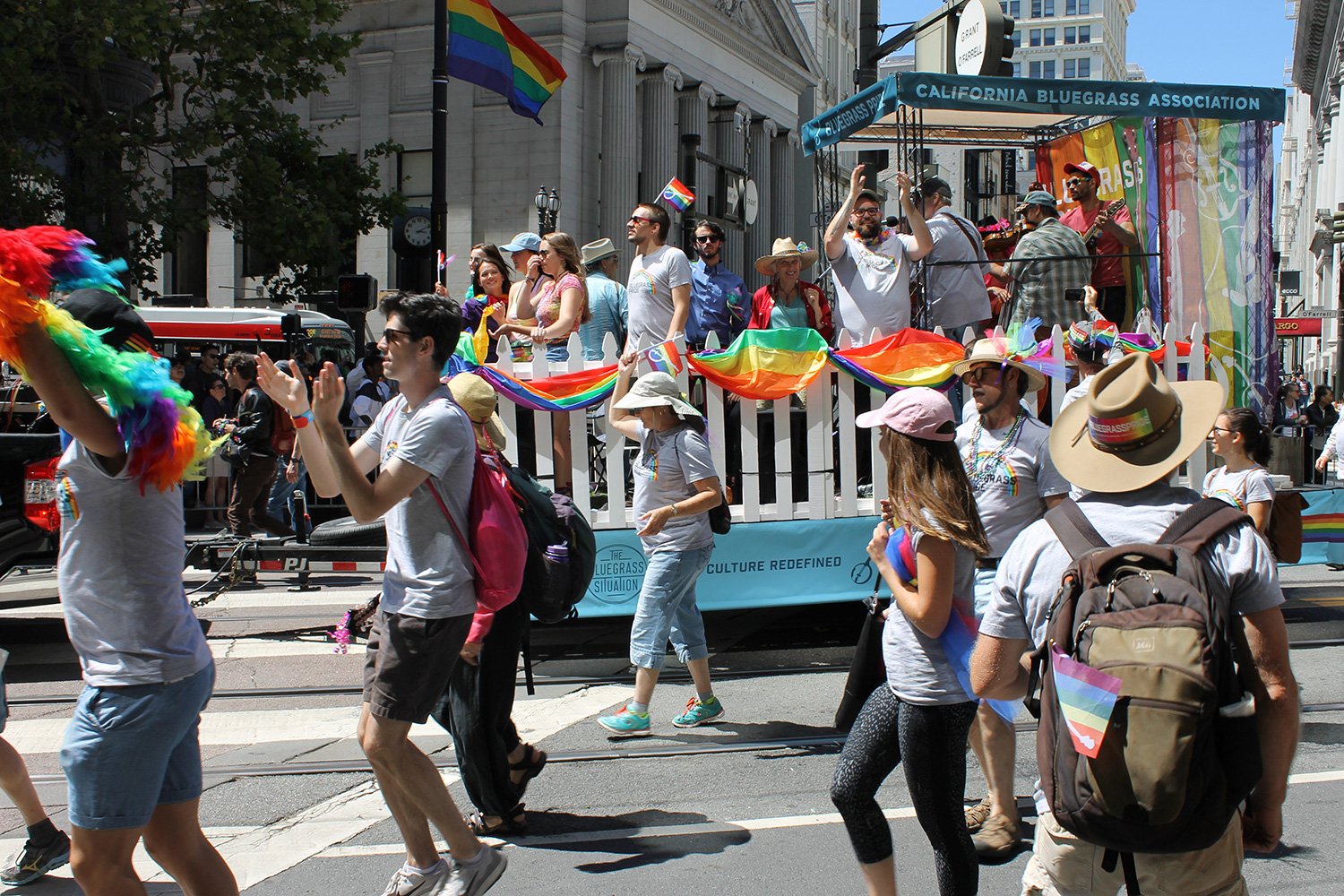
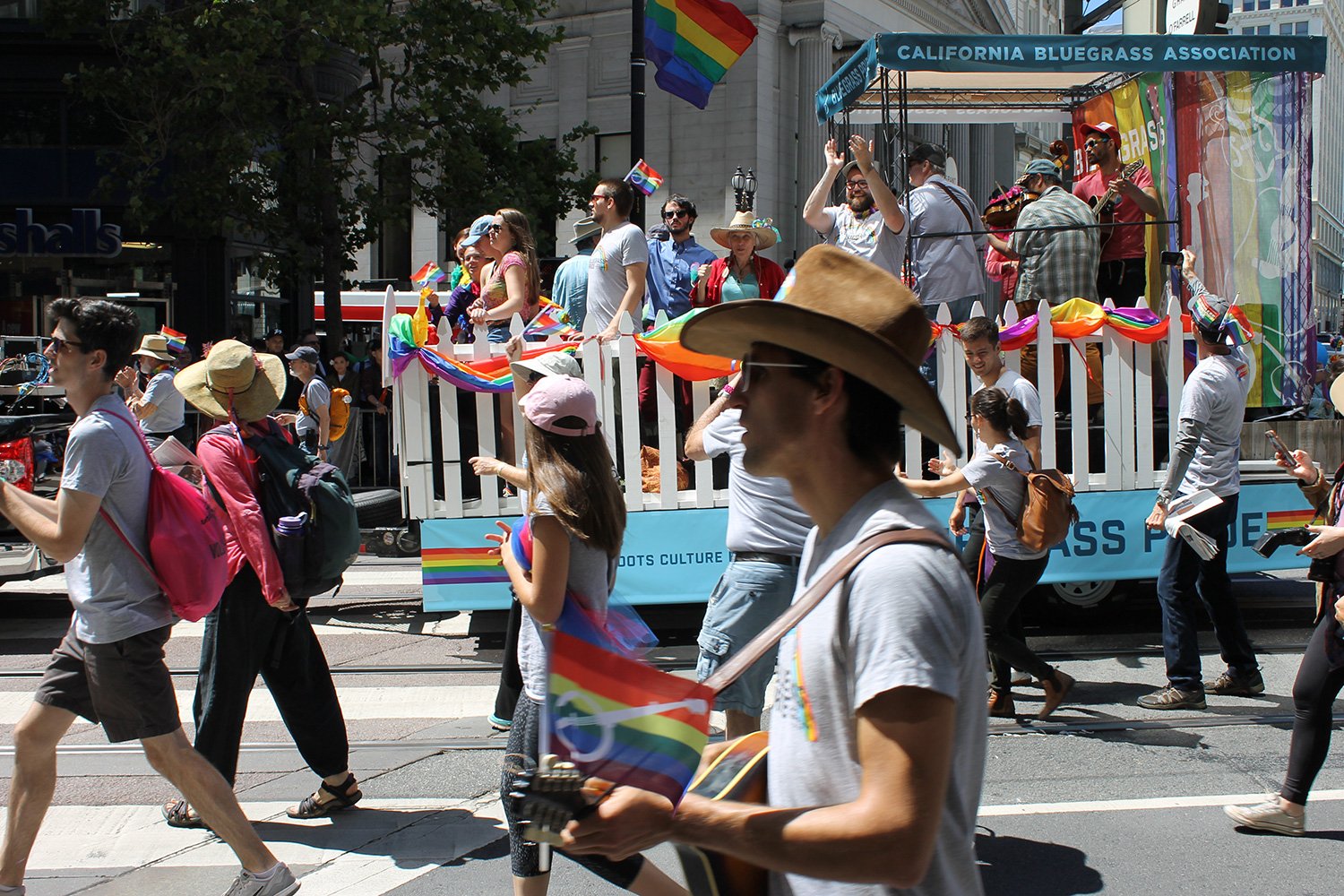
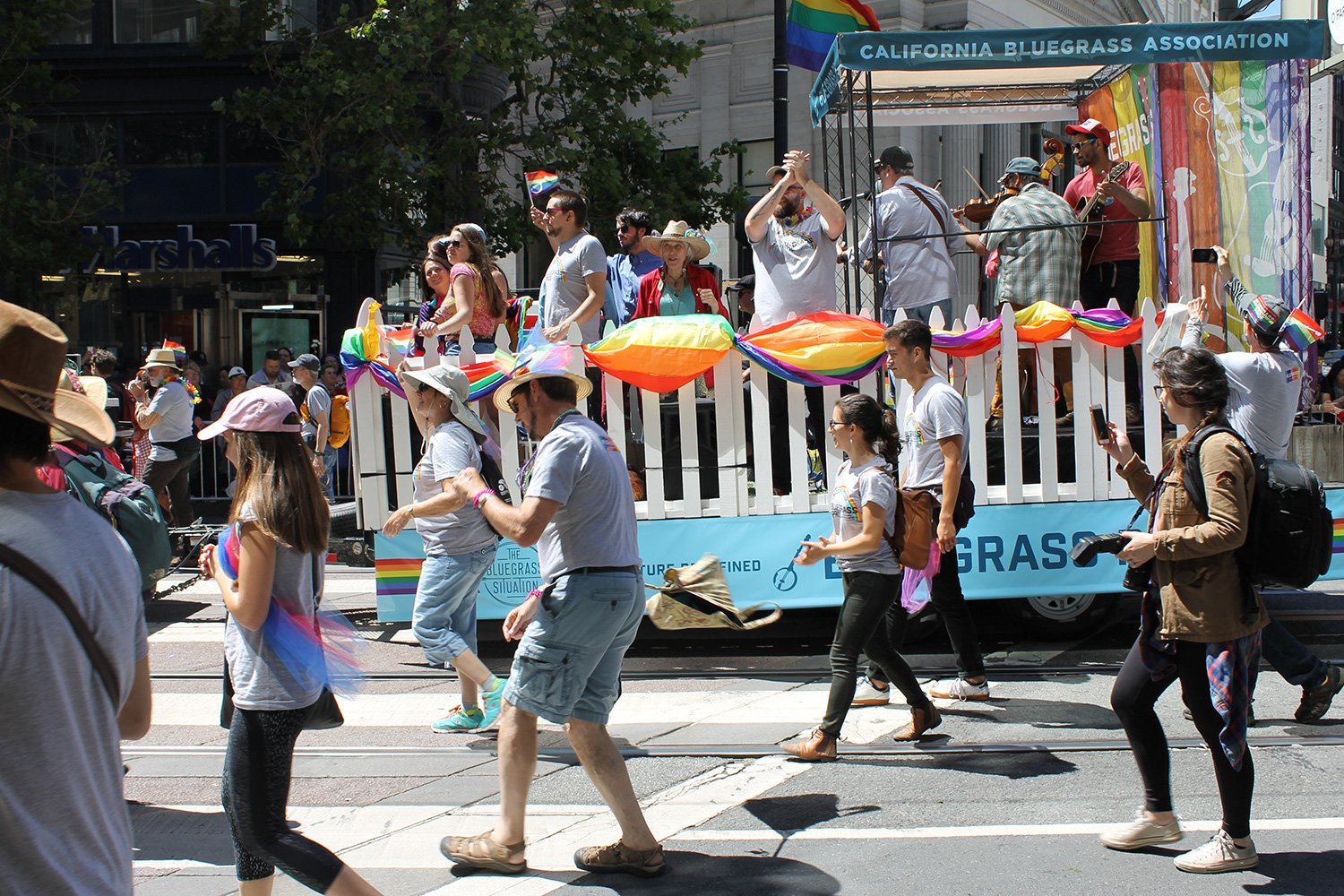
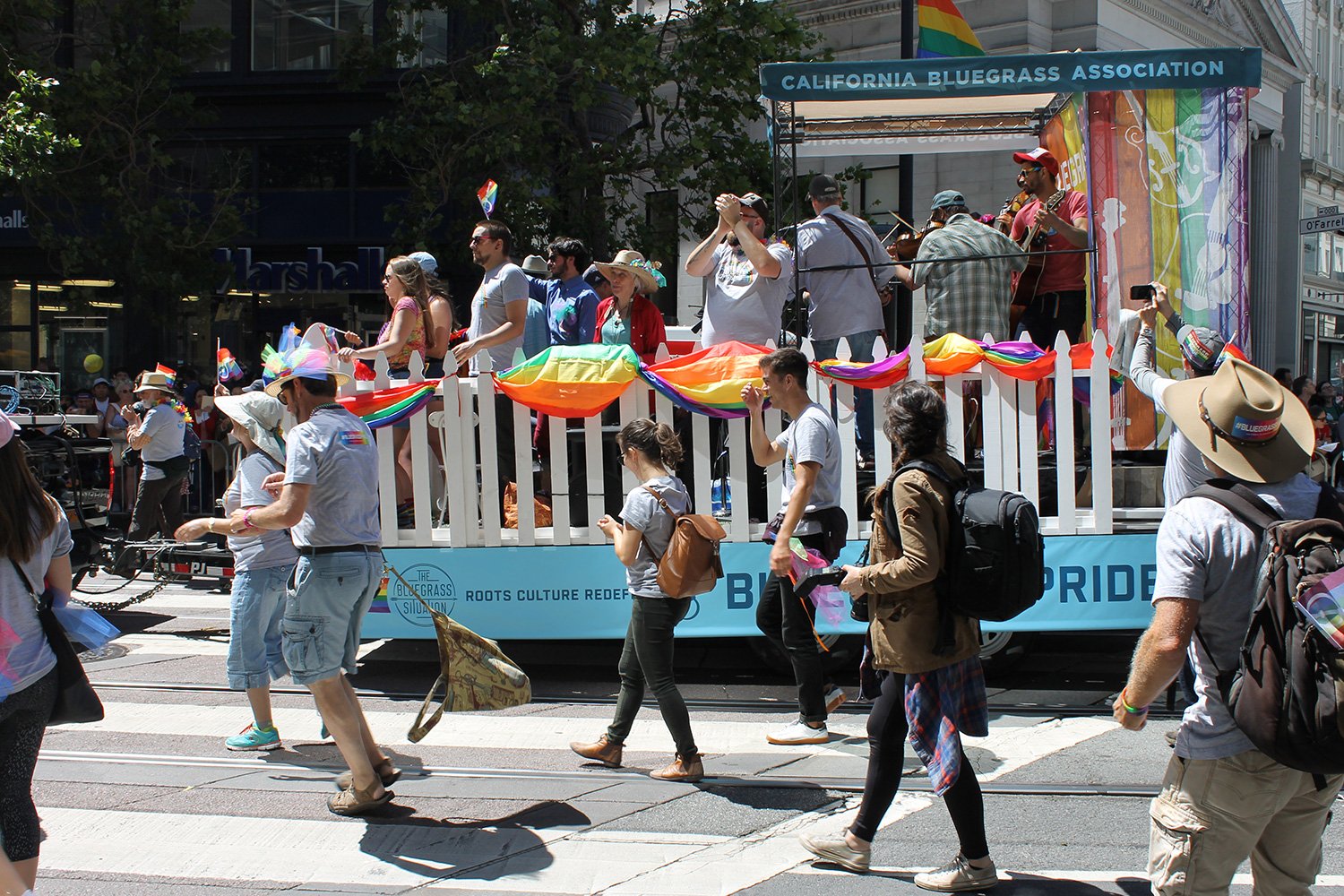
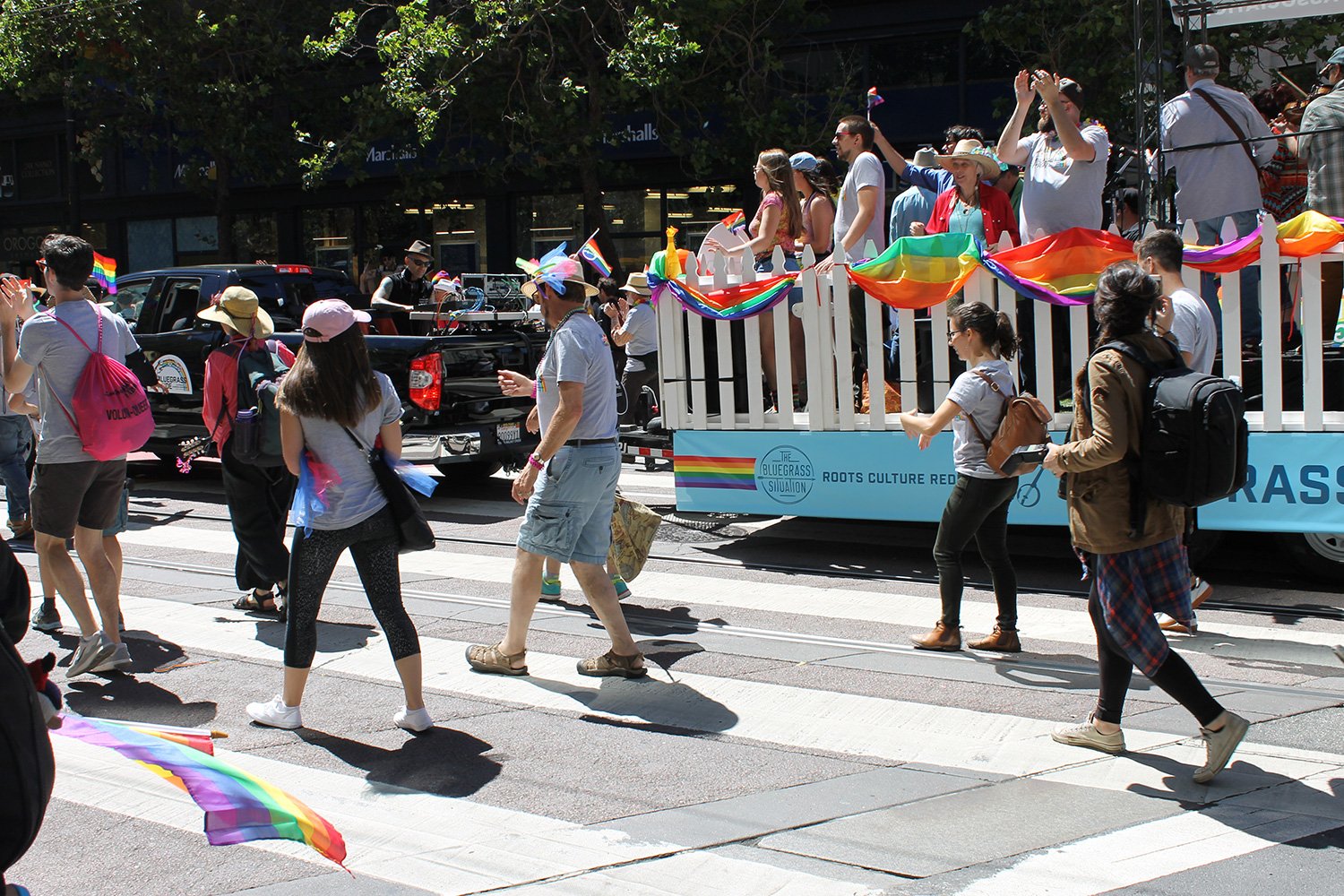
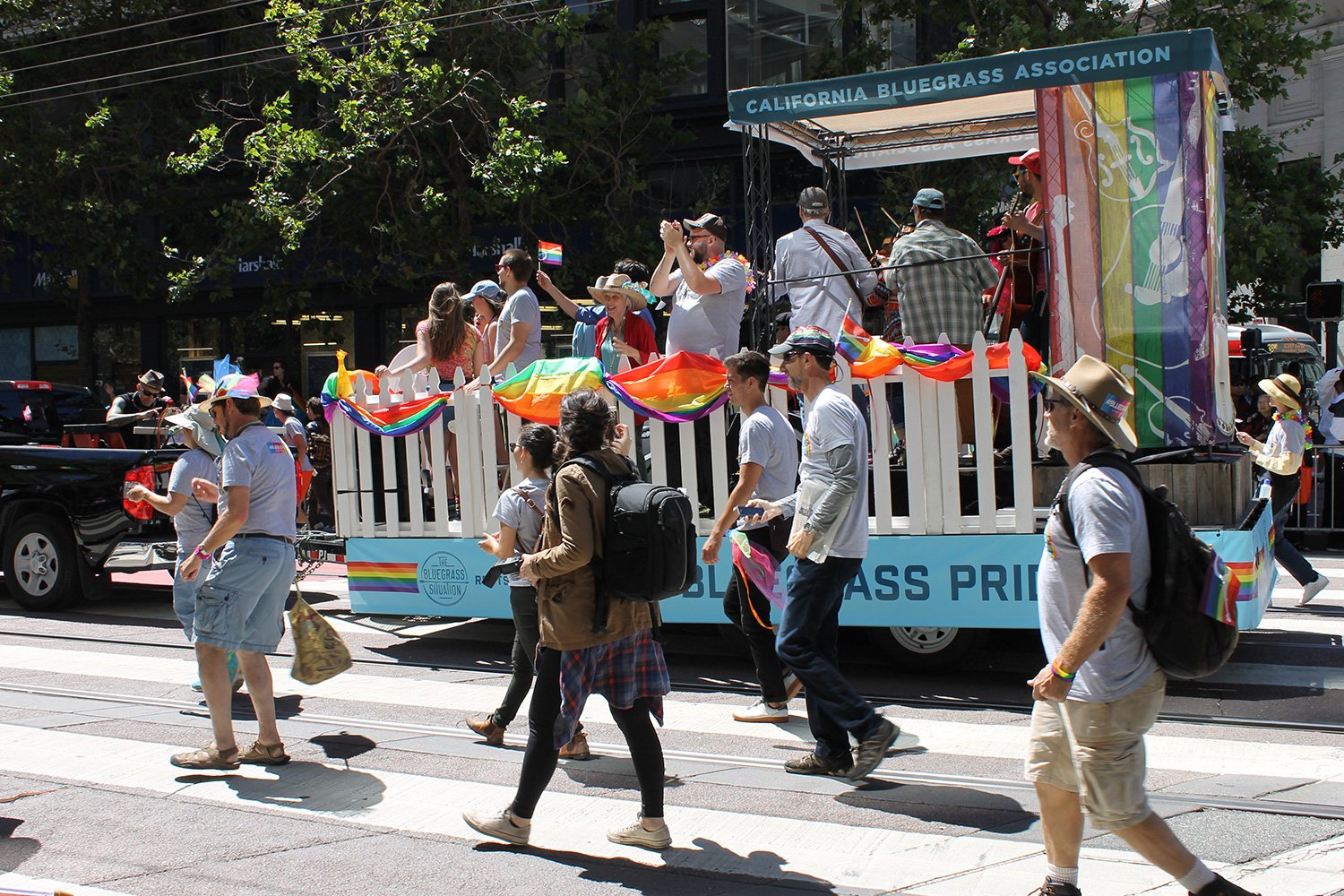
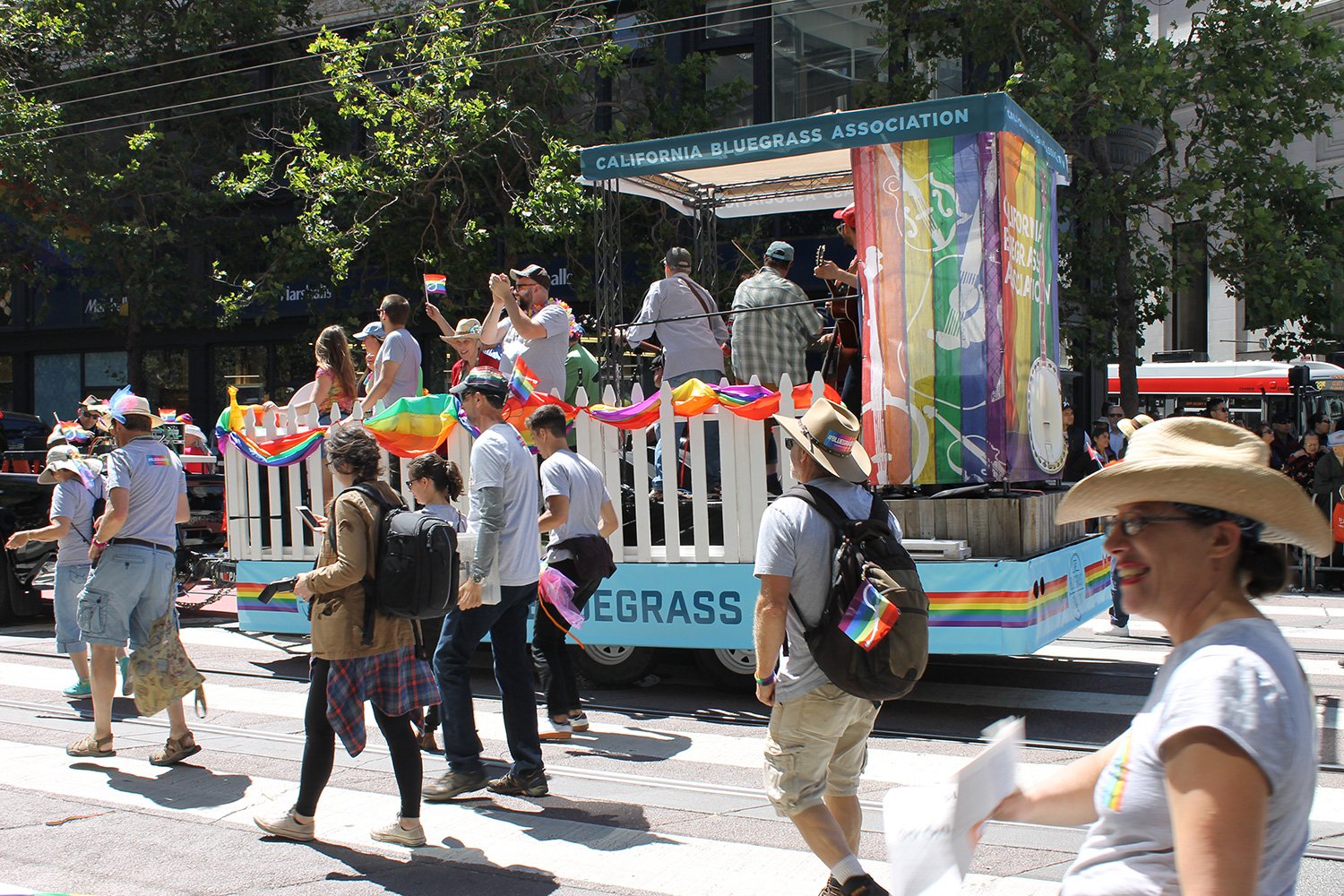
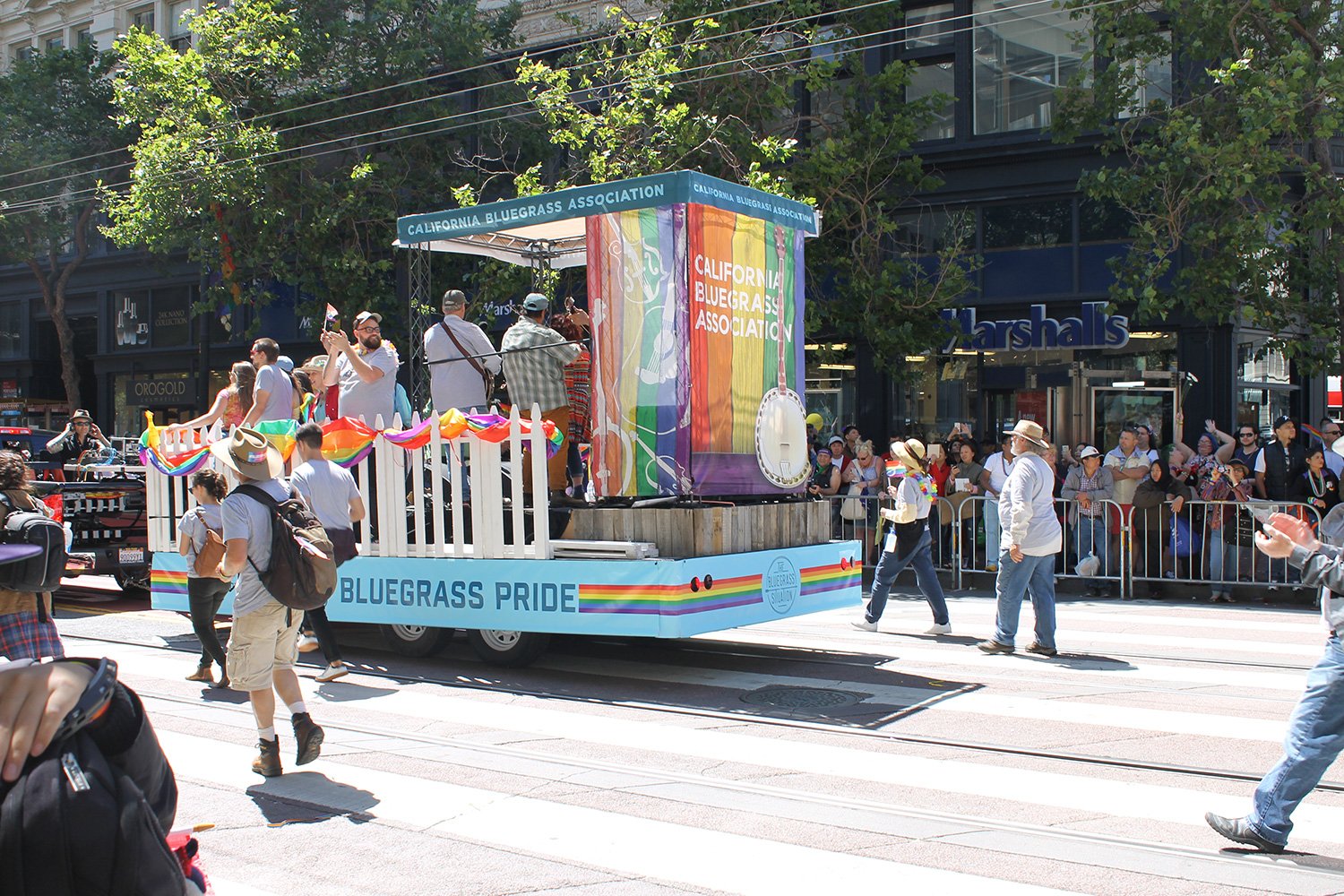
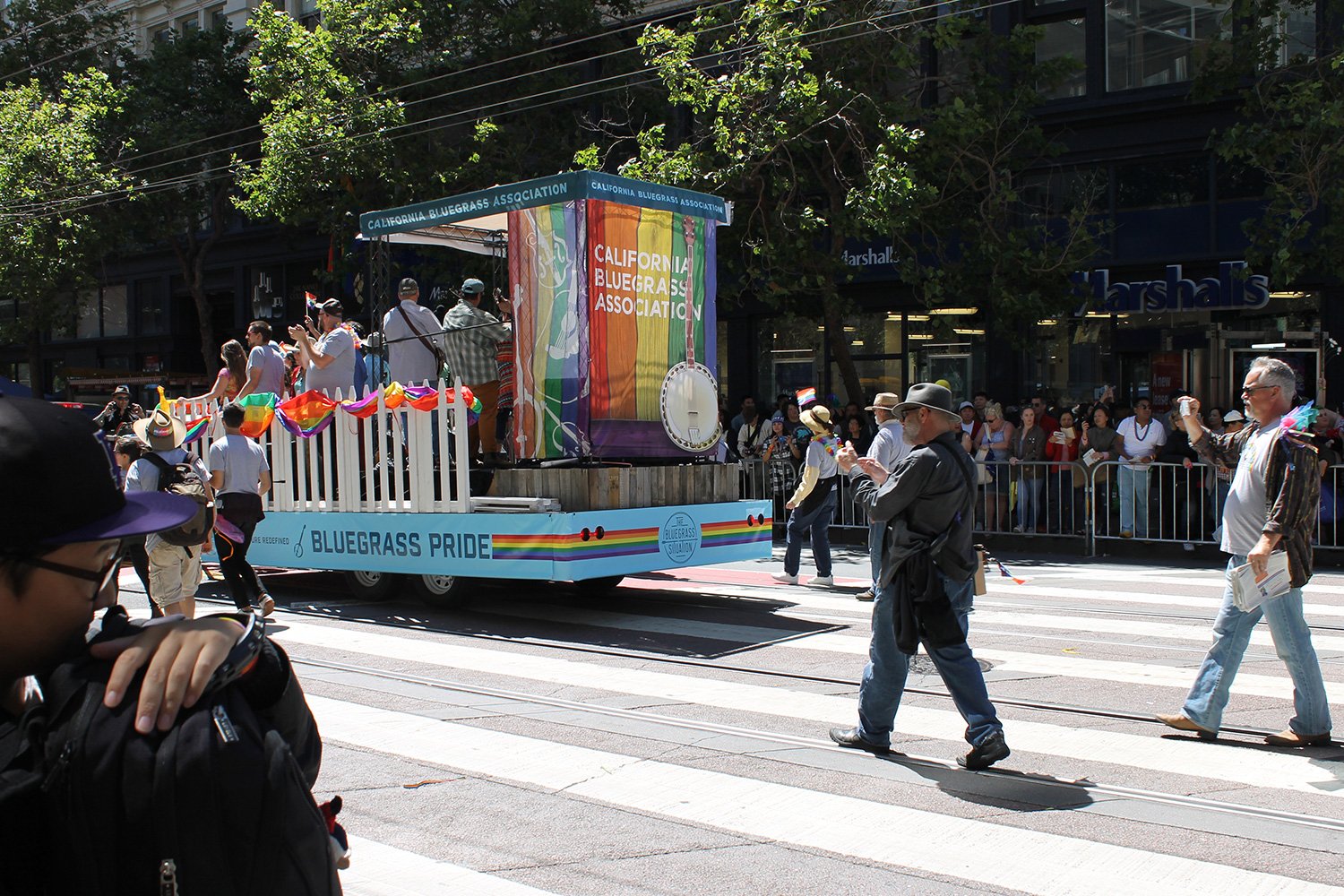
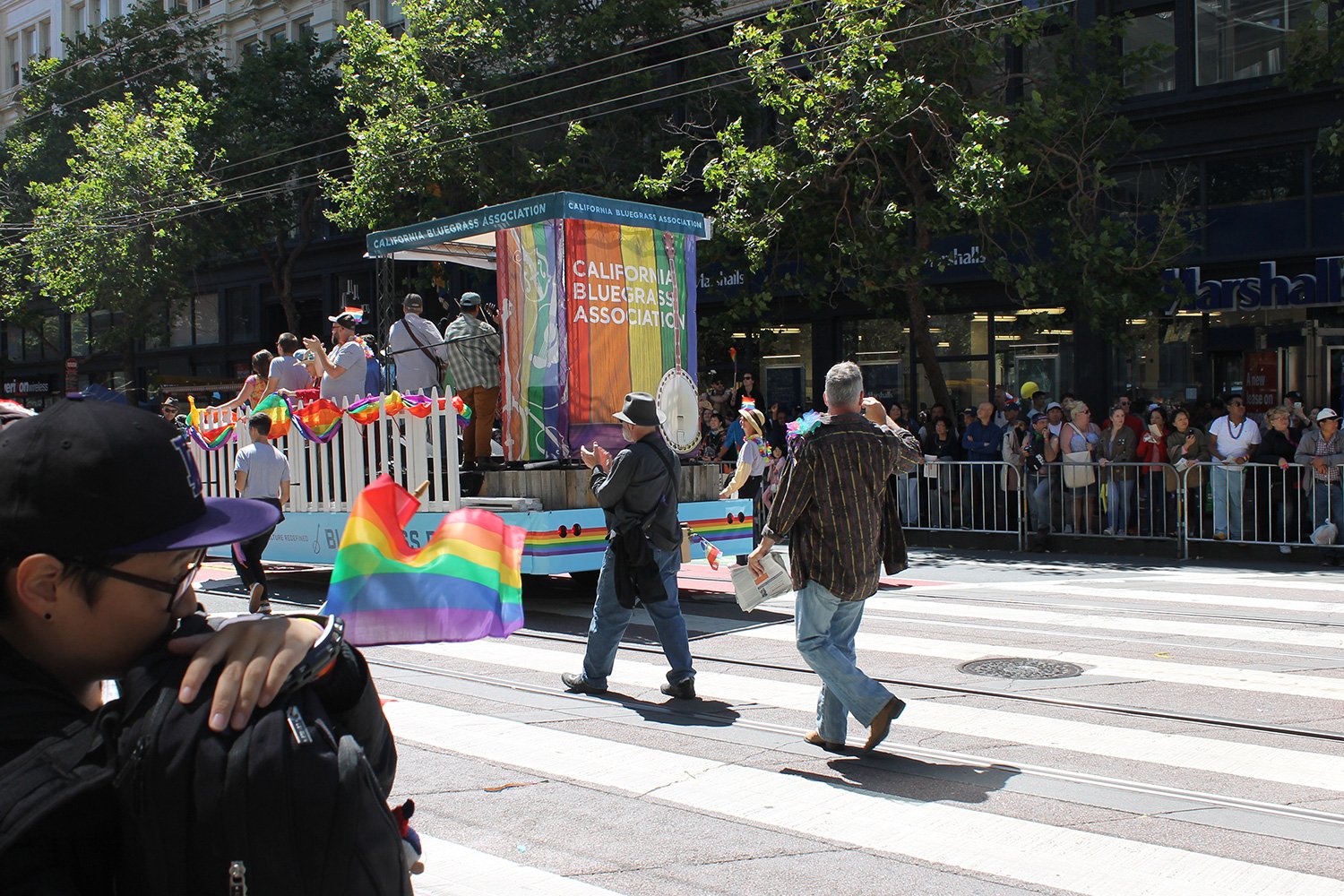
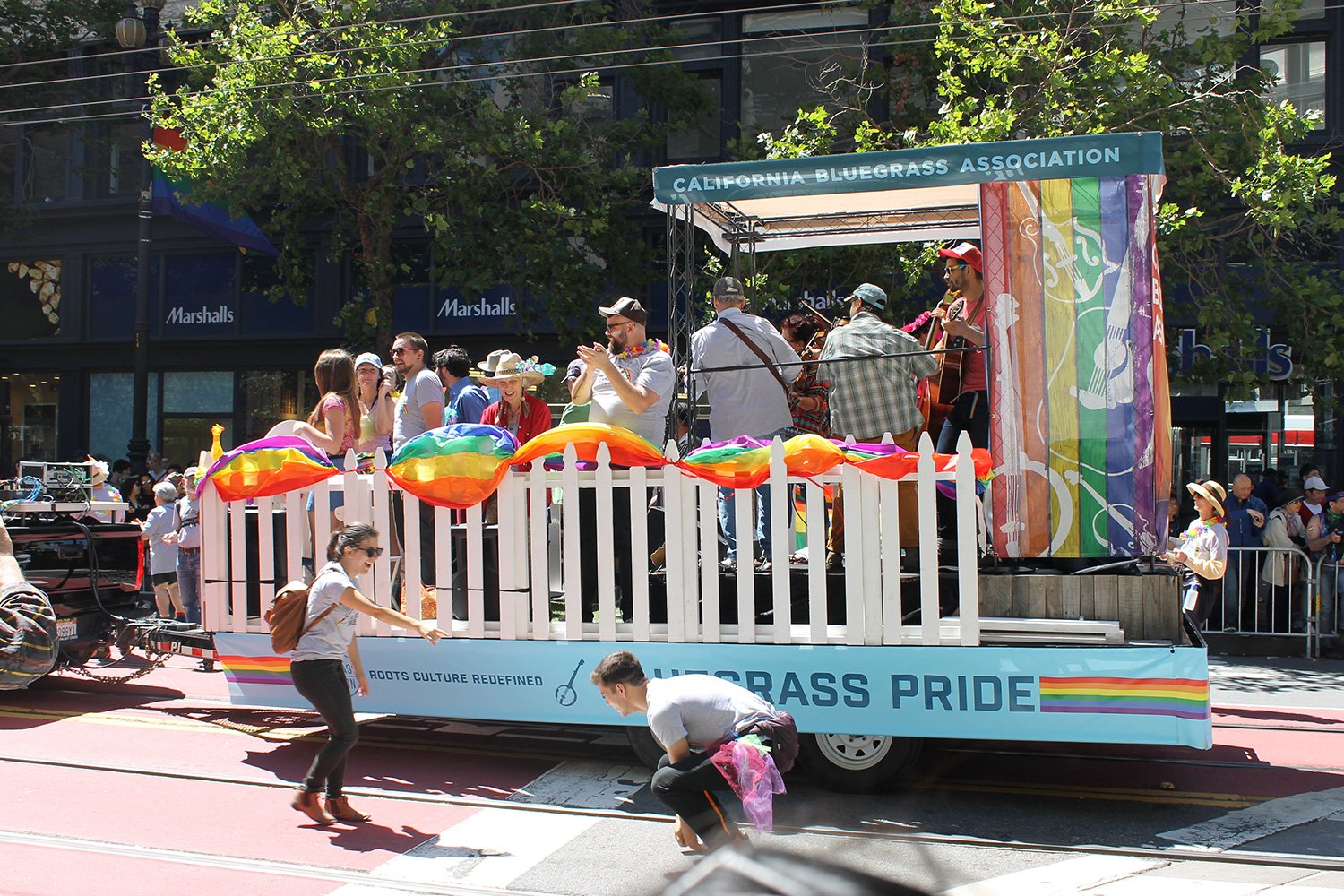
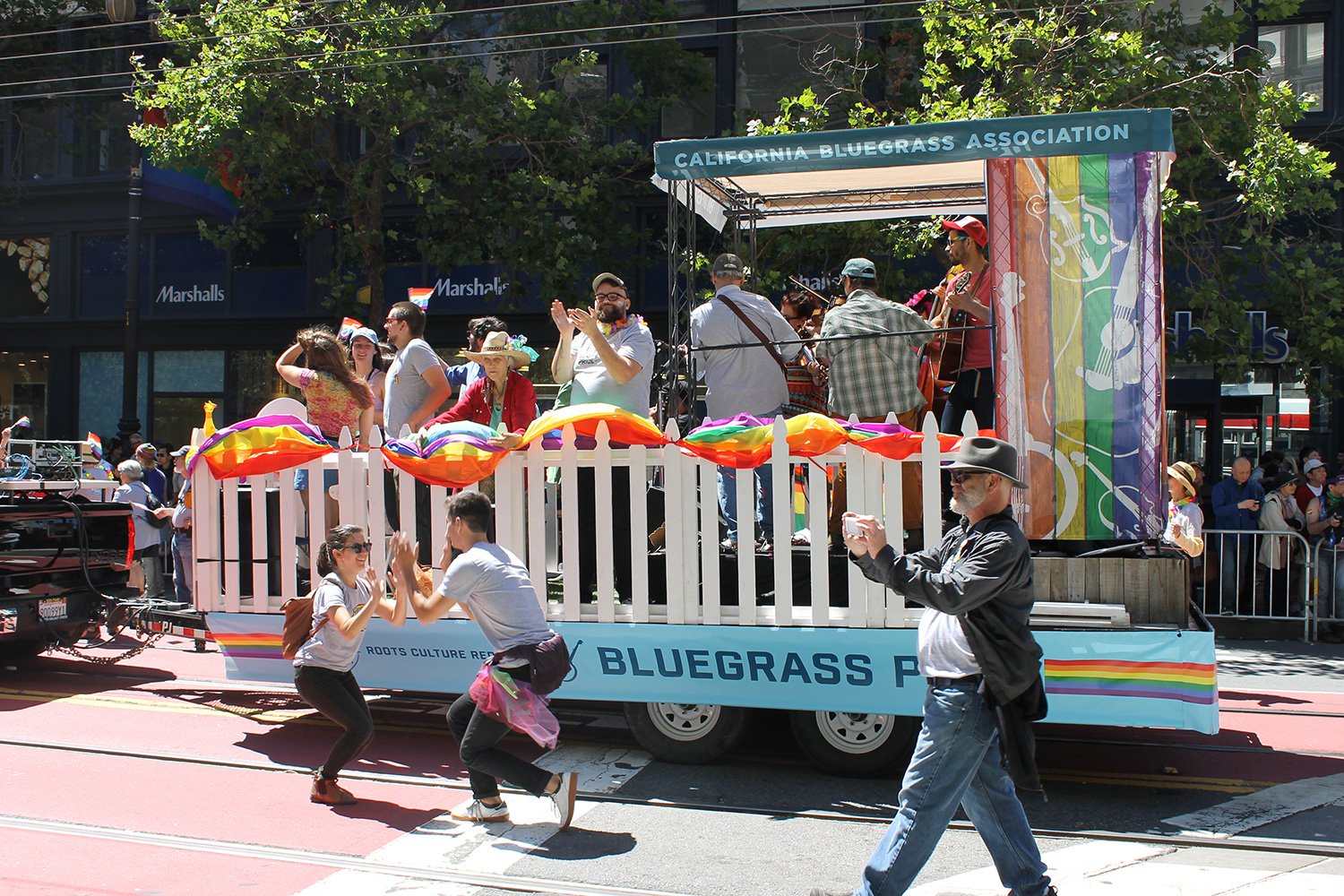
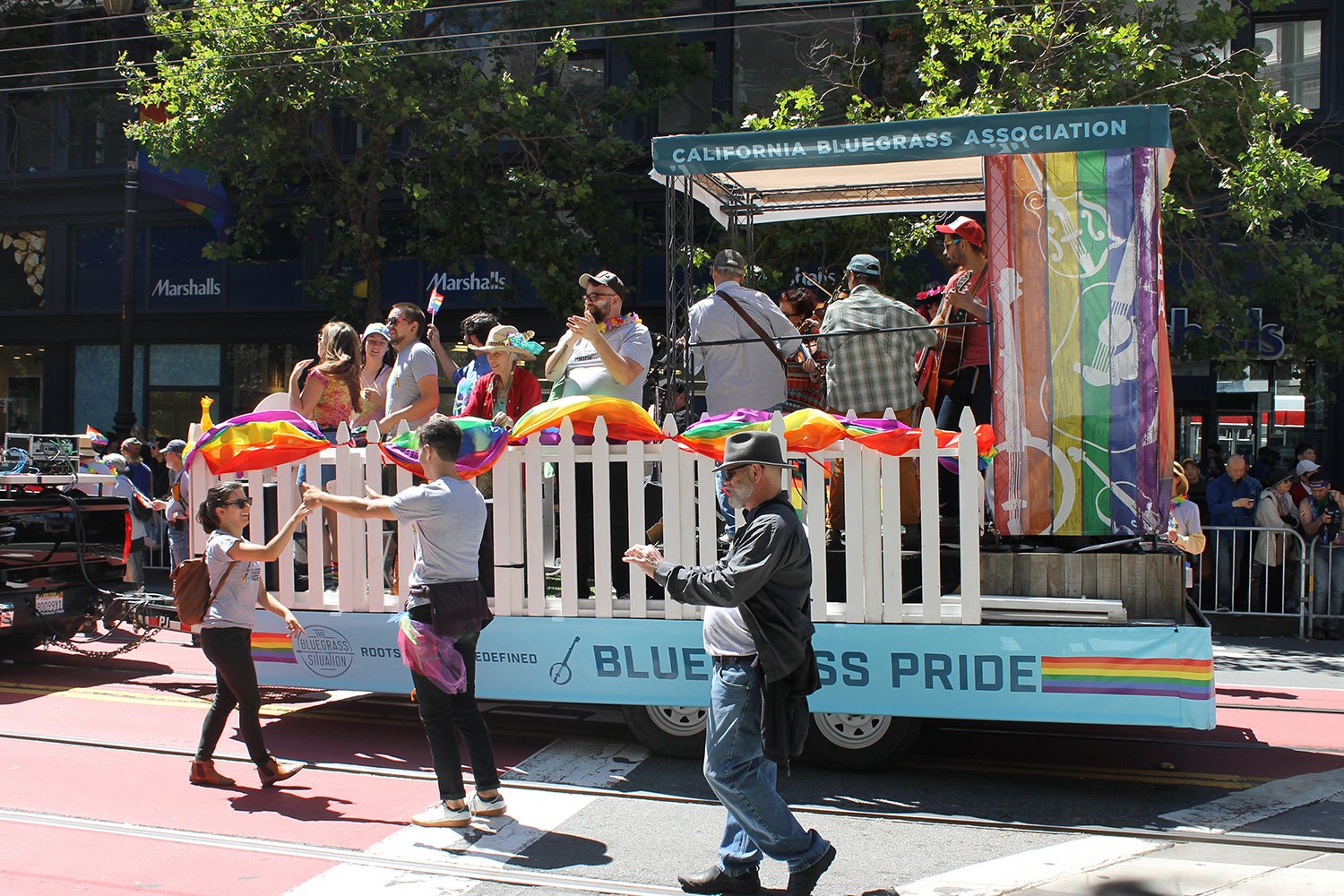
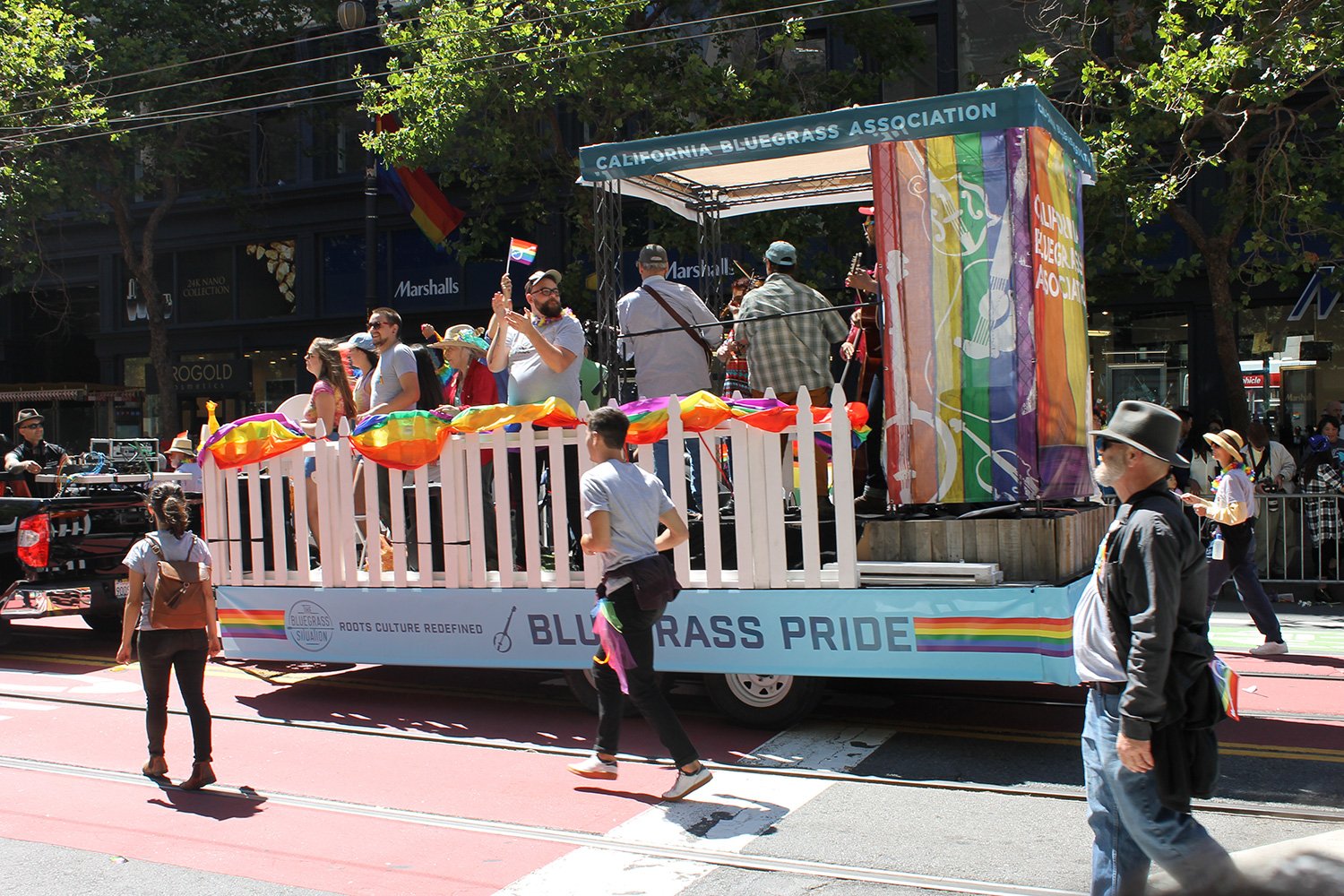
June 25th, 2017 was the day of the big parade for San Francisco Pride – a celebration of diversity. For many years I had not paid attention to this event, usually trying to avoid the traffic congestion associated with such a large crowd in town. This time I had relatives and family marching along with the California Bluegrass Association Pride float. Below are mostly photos of California Bluegrass Association Pride float but I could not help myself to get photos of all the “diversity” and “causes.”

Intact Genitals are a Human Right

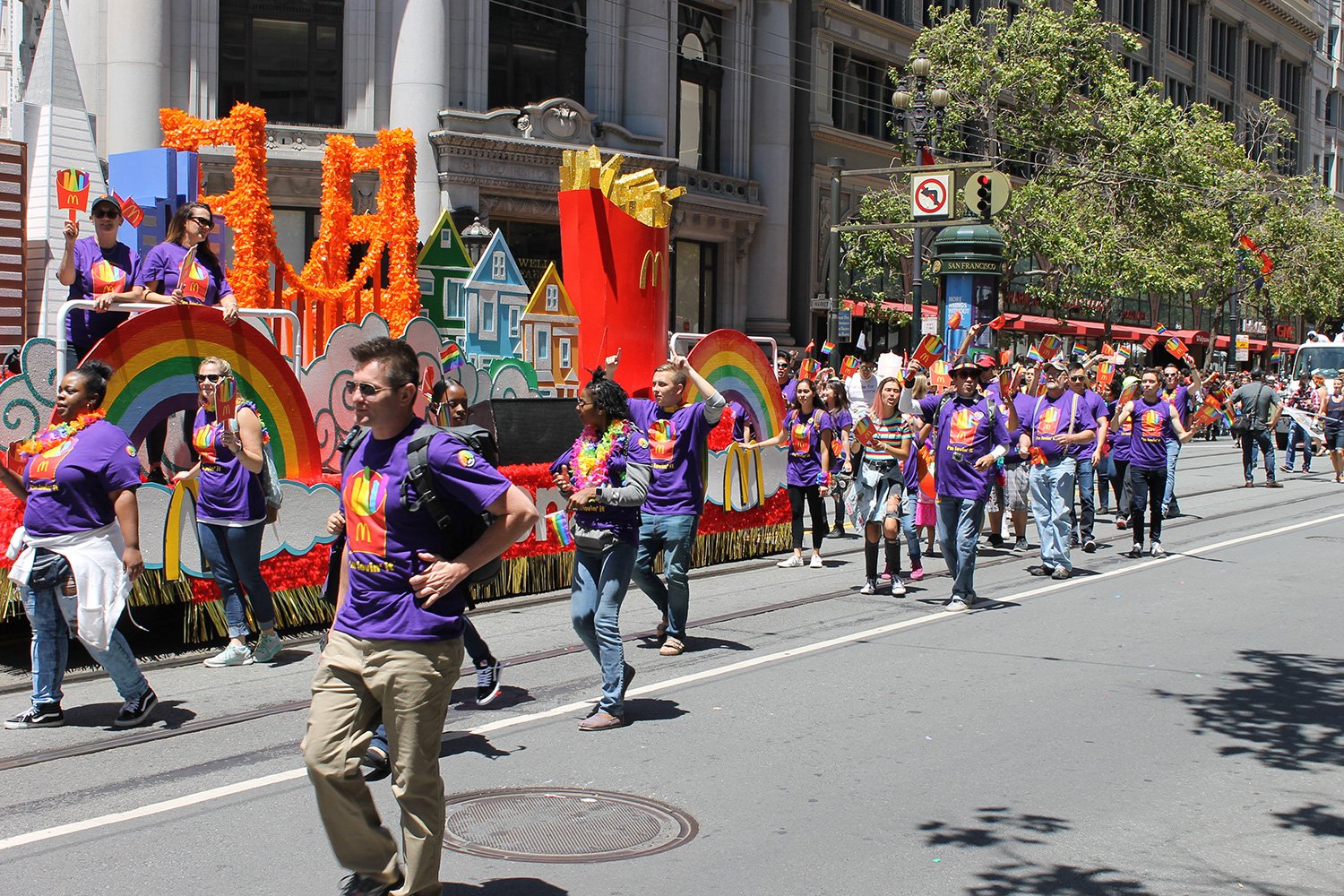
I vaguely remember the Gay Pride parade as being in the Castro but that was years ago. This year it was amazing how many sections were corporate – VISA, Google, Facebook, Workday, Wells Fargo, Intel, Bloomingdale’s, Levis just to name a few. These were all pretty tame in terms of visual presentation and you just had to wonder about the concept of punching the clock for your corporate job and walking down Market Street for your gay pals at VISA – how tame.

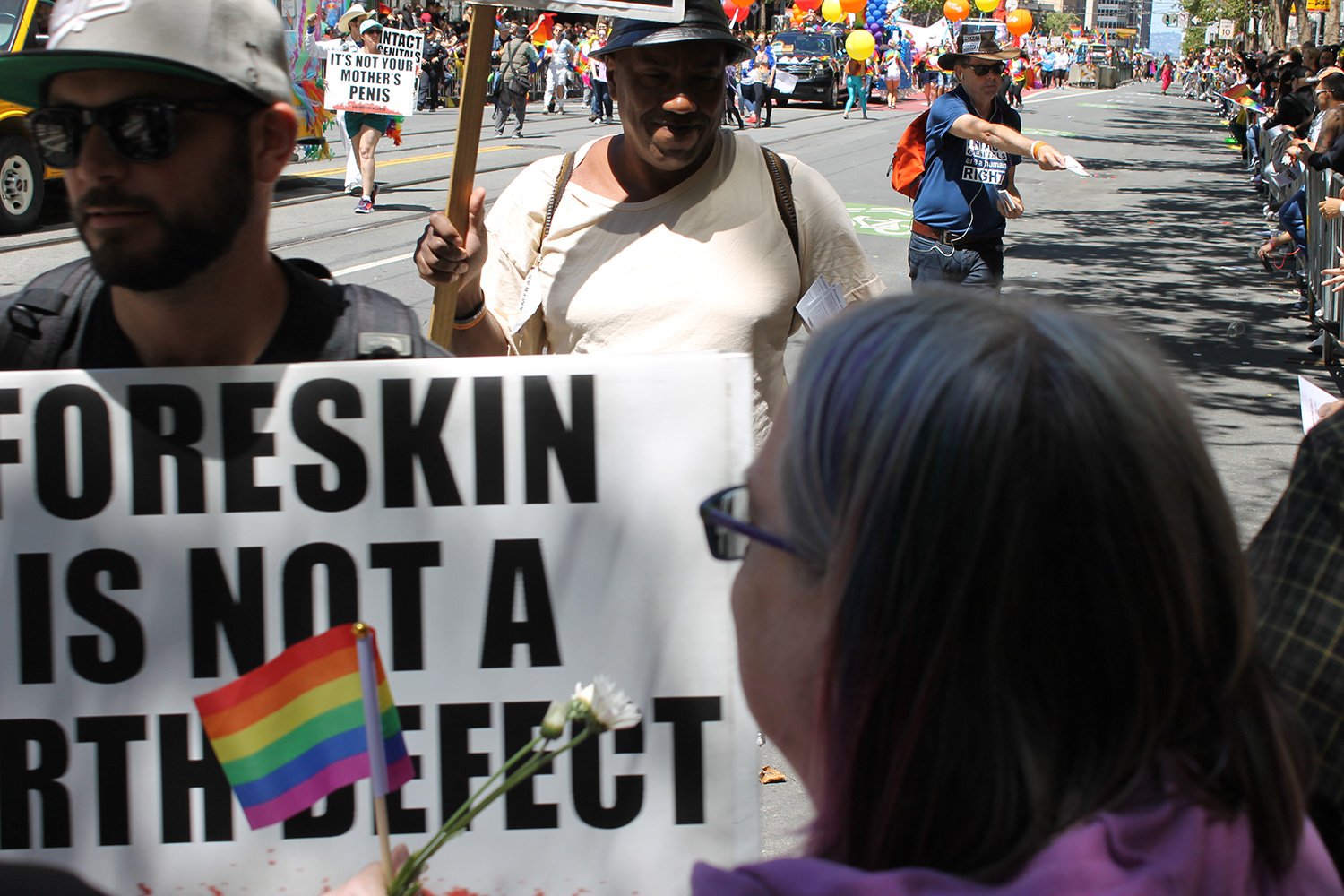
Foreskin is not a Birth Defect and It’s Not Your Mother’s Penis 

Signs at the SF Pride Parade

How times have changed as there are surely a few old timers in the gay community scratching their heads about the irony of success. Unlike a lot of parades the music in the Pride Parade is not really the showcase. When there is music it seemed to steer towards a prerecorded sort of night club drum and bass thing. Strange I never heard “I Will Survive,” Tina Turner or even Tony Bennett. There is a musical history to this movement.

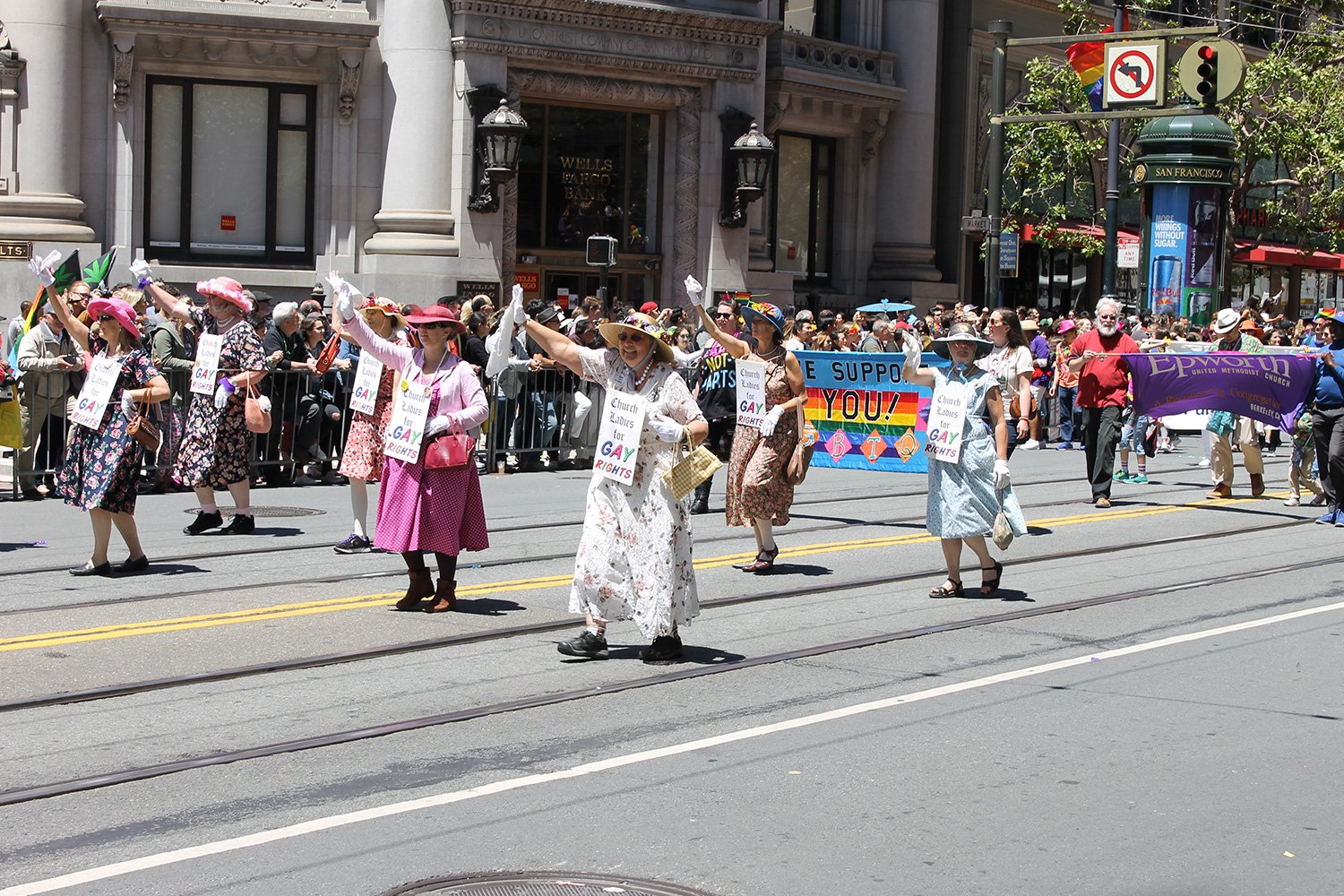
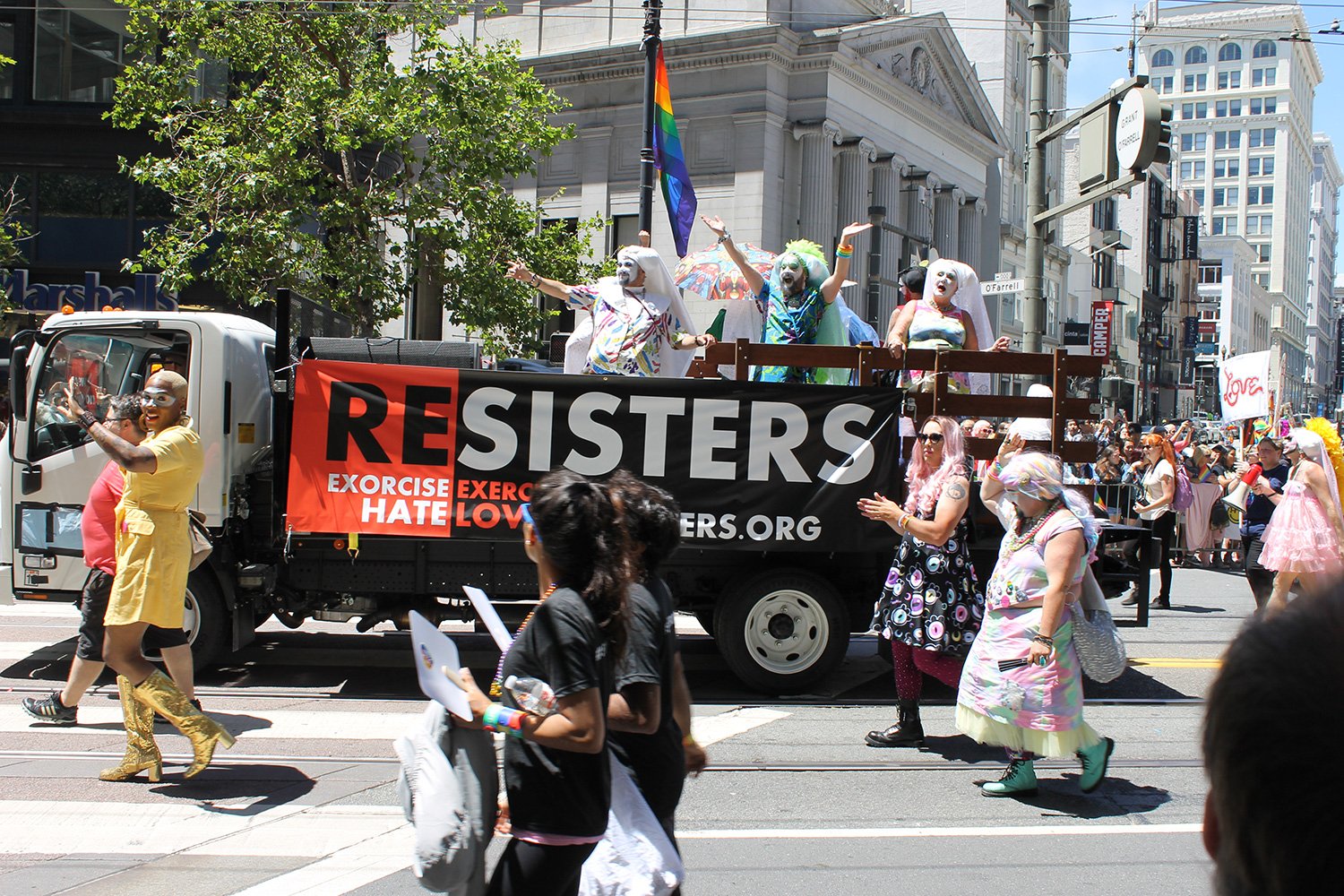
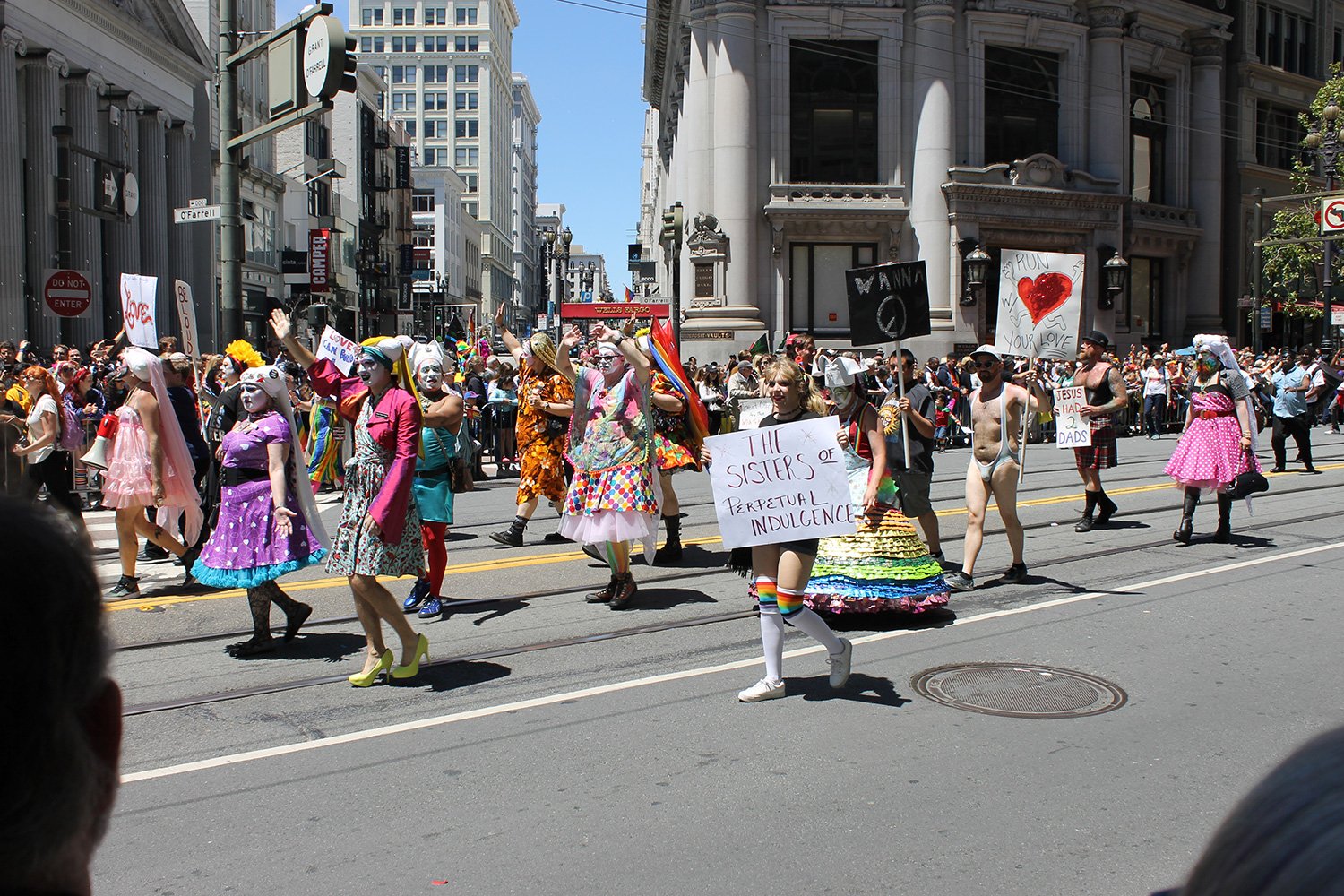
Nevertheless, here were some truly interesting and bizarre groups. My favorites where the “Sisters of Perpetual Indulgence” (just the name is awesome), Church Ladies for Gay Rights dressed in loose-fitted old fashion dresses,  and the many church groups marching.  -The group against circumcision – Foreskin is not a Birth Defect and It’s Not Your Mother’s Penis was an interesting juxtaposition to the many medically altered people marching.

California Bluegrass Association Pride Float

Then the California Bluegrass Pride Float came by. The float was truly awesome with the rainbow colors and a sort of front porch theme. The band was picking some fast fiddle tunes when they went by our spot. I am not sure if bluegrass has been played in many parades but the high register of the instruments and the lack of brass and drums make it a bit tricky to garner much impact.  It sounded a bit like bees a buzzin’.  But overall it was truly great to see some headline acts participating on the float – veteran Laurie Lewis along with members of the band Front Country.

While in the San Francisco bluegrass community there are actually very few openly gay people,  you could tell it was pretty special for Brandon Godman who came to San Francisco after being outed and discriminated against in Nashville. Brandon is an amazing fiddle player and was welcomed into the San Francisco musical community with open arms. In San Francisco, people are usually not discriminated against for who they love and choose to sleep with. Just ask the Church Ladies for Gay Rights standing up for others in their community. Women have been shit upon and pushed around since the beginning of time so look out –  the Church Ladies got your back!

[ CLICK ON IMAGES + ]

Where is Janice Raymond?

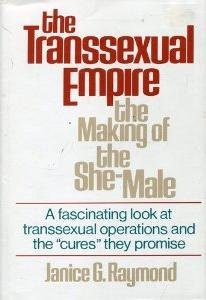
The Internet has a strange way of broadcasting value and worth. A forty-year-old book about transgender issues can be a cornerstone of critical thought at the time but then gets misquoted and passed off as old fashion. Today the book is out-of-print but fetches around $100 used on Amazon for a used hard cover edition. You have to wonder why the publisher does not make another printing? Modern books read like pop self-help books, quoting daytime TV shows and sourcing checklists of acceptable pronouns. The Transgender Empire written by a “radical lesbian feminist” (how did she ever get that label?) is both academic, historical and cuts to the chase and journeys deep into the topic. Below is just a short quote from the 1994 reprinting.

The medical model is also a disease model. And here exactly is the rub. If transsexualism is treated as a disease, then does desire qualify as disease? As Thomas Szasz asked in his New York Times review of The Transsexual Empire, does an old person who wants to be young suffer from the “disease” of being a “transchronological, ” or does a poor person who wants to be rich suffer from the “disease” of being a “transeconomical”? Does a Black person who wants to be white suffer from the “disease” of being a “transracial”?

All these questions, of course, raise larger social and political issues and remove these conjectural “diseases” from the medical/psychiatric framework.

From The Transgender Empire – Janice Raymond
Reprinted in 1994 by Teachers College Press, 1234 Amsterdam Avenue
New York, NY 10027
Originally published in 1979 by Beacon Press
Copyright © 1994 by Janice G. Raymond

Download the pdf

BREAKING NEWS! We Insist! Max Roach’s Freedom Now Suite – Temporarily out of stock.

$45.73 on amazon.com

Temporarily out of stock. Order now and we’ll deliver when available.

Great to hear that vinyl is still the go to medium! Booker Little on trumpet is completely amazing! This is an album that I am not familiar with that is perfect for these times. It is truly incredible that it is over 50 years since this was made. It gives you the feeling that in present times we are moving backwards

https://en.wikipedia.org/wiki/We_Insist!