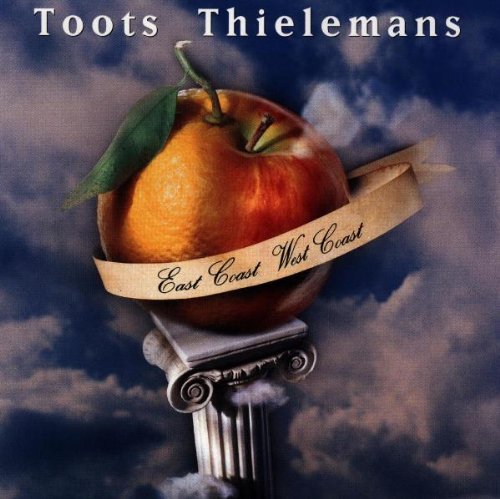
Toots Thieleman’s Solo on Con Alma East Coast West Coast 1994

This last month I have been a bit obsessed with Con Alma by Dizzy Gillespie. It took me a few days to really start to understand the changes. I found that playing the chords slowly on piano in the lowest register possible and really getting the counterpoint and voice-leading in my head, helped a lot. Then of course, being the compulsive, analytical creature that I am, I transcribed Toots Thieleman’s solo from his album East Coast West Coast (1994). This is another get Toots album with a stellar group of players from John Scofield to Mike Mainieri to Charlie Haden on bass, Peter Erskine on drums, Terrance Blanchard. I mean… how can you possibly go wrong with this album. 5 stars on Amazon.

Toots’ ability to milk the meaning out of ballads will always amaze me. Like some of his other work, he will bring an arrangers perspective to the tune. Con Alma starts as a ballad in 4/4 time. Two measures before the solos begin, the tune turns into a 6/8 waltz. When the tune ends we are back into a very rubato ballad. Brilliant!

Here is the Toots solo.

toots-con-alma-page1

Toots-Thielemans Solo on Con-Alma (pdf)

“Smoke” (1995) by Wayne Wang – Auggie Wren and his Philosophy of Time

It is not an objective task or even fair to review your favorite movie. “Smoke” (1995) by Wayne Wang and written by Paul Auster is a gem. It is a theatrical movie and could have been performed on stage across the land except for the fact that throughout the movie people smoke. They smoke cigarettes. They smoke cigars. They smoke more cigarettes. They smoke all the time. This is how people used to live. How do I know? I was there. There is no way local health ordinances would have allowed the play Smoke in a high school. But it matters not. Art for art sake. “Smoke is a great movie.

What is refreshing about the movie “Smoke” is that it takes place during that magical time period before the internet. The Twin Towers are seen in the skyline. People smoke in bars and restaurants. People watch baseball games on old analog televisions with antennas and sometimes even in black and white. People hang out. People interact with their neighbors. The late 1980s was the end of the old times. Before the internet. Before cellphones when life was great. “Smoke” is a very well told story, an excellent screenplay, great and interesting acting even by the incidental parts.  And by the time you get to the end, the movie it is but a wise and paradoxical Christmas story about kindness, truth and the power of stories and illusion.

The movie follows the lives of over a half dozen people and the main gathering place throughout the movie is a smoke shop in Brooklyn.  You are immersed into the working lives of ordinary people save for the main character, the somewhat famous author Paul Benjamin (William Hurt). He has a special relationship with the smoke shop owner Auggie Wren (Harvey Keitel).

The quote below really summarizes the humanity of the film.

Auggie Wren: You will never get it if you don’t slow down my friend.
Paul Benjamin: What do you mean?
Auggie Wren: You are going so fast you are hardly looking at the pictures.
Paul Benjamin: They are all the same.
Auggie Wren: They’re all the same, but each one is different than every other one. You got your bright mornings, your dark mornings. You got your summer light, your autumn light. You got your weekdays, your weekends. You got your people in overcoats and goulashes and you got your people in t-shirts and shorts. Sometimes the same people. Sometimes different ones. Sometimes the different ones become the same. The same ones disappear. The earth revolves around the sun and everyday the light from the sun hits the earth at a different angle.
Paul Benjamin: Slow down, huh?
Auggie Wren: That’s what I recommend. You know how it is. Tomorrow, and tomorrow, and tomorrow. Time creeps in its petty pace.

From the movie “Smoke” (1995) by Wayne Wang

And as the the movie progresses the plot thickens. There are crimes, murders  pregnancies, business deals that go south and serendipitous reparations There is an ingenious view into the  psychology of adolescence and the defense mechanism of  impersonation as Rashid reinvents himself many times thoughout the film.  It dives into the complexities of parenthood, tragedy and broken families.  By the end, through all the  unforgiving realism, we end up with a Christmas story and a simple act of kindness as Tom Waits, in his rusty voice, sings the closing theme You’re Innocent When You Dream.

This is a great movie not on anyone’s holiday movie list. 5 Stars.

NOTE: Review updated 12/9/2024

YouTube, Bob Marley and Following the Money Trail

Everyone likes cheap. Get a deal on something and you feel good. More money for maybe something else. The only thing better than cheap is free. And so I pondered the economics of YouTube videos, especially how you can listen to just about any track made since the beginning of recorded time on YouTube. For musicians and the public alike, this is simply amazing. For free, you have access to an amazing wealth of music. Download a YouTube to MP3 ripper, and you can claim to be a pirate way beyond the skills of Captain Jack Sparrow.


Ted calls Google, which owns YouTube, “a company that has done more to impoverish musicians and other creative professionals than any entity on the face of the planet.”

Ted Gioia from
http://www.artsjournal.com/culturecrash/2014/10/stop-working-for-free.html


For example, I was checking out the music of Bob Marley and noticed that just one of the YouTube videos had 15,514,525 views. 15 million views! I also noticed that before the video there was an advertisement. How does the licensing of this music on YouTube work and whom gets paid out? Does the estate of Bob Marley get a cut? Does the person who uploaded the video get something? How much does Google get paid?

https://www.youtube.com/watch?v=n6U-TGahwvs

After searching on the web for an answer I found very little. The best article states that the deals are private but one recent stat for a popular video got just $38.49 for the 2,118,200 views. Something seems terribly off here. Google is a company worth 78 billion dollars paying the creatives chump change.


Google/YouTube deals are covered by non-disclosure agreements – and do not allow independent labels to demand audits


http://www.theguardian.com/media/2012/oct/10/music-streaming-songwriters-youtube-pandora

So you really have to ask the question, who is the robber baron here? Much of Google’s acquiring of vast wealth is simply based on the exploitation of content and ridiculously low payouts. If the estate of Bob Marley got just one penny for each of that videos views, it would amount to $150,000 dollars. Larry Page. Seems like it is time to pay the band.

I would also like to add the copyright notice for this article. Seems like this is always on all the recordings and books I have purchased.

If anyone has more complete information, say how much does the estate of Bob Marley make on the vast amount of copyrighted material available on YouTube, please email me or add a comment below.

Copyright © 2014 by Paul Lyons

All rights reserved. No part of this publication may be reproduced, distributed, or transmitted in any form or by any means, including photocopying, recording, or other electronic or mechanical methods, without the prior written permission of the publisher, except in the case of brief quotations embodied in critical reviews and certain other noncommercial uses permitted by copyright law.

Hunter S. Thompson Music Quote

“The music business is a cruel and shallow money
trench, a long plastic hallway where thieves and
pimps run free, and good men die like dogs.
There’s also a negative side.”

― Hunter S. Thompson


What a great quote. Things have not changed at all but I thing now it would be a “long fiber optic trench.” Stay positive friends in the biz. The act of playing music, in the end, is the reward. The vultures are still in the suits, and be wary.

2014 HARDLY STRICTLY BLUEGRASS FESTIVAL OFFICIAL PELICAN CAFÉ AWARDS

As is the case with years past, The Pelican Café gives out awards for the Best of Hardly Strictly. It is a great honor to have been chosen once again for this task.

BEST FIDDLE PLAYER

Joe Spivey with The Time Jumpers Featuring Vince Gill, Kenny Sears, Dawn Sears and Ranger Doug Green

Joe Spivey played some great fiddle on the Banjo Stage during this set on Saturday and for me it came at a perfect time. I had just had an earful of Deltron 3030 with The 3030 Orchestra at the Gold Stage (what a disaster that show was, especially in terms of sound) and needed to hear something down-home. There is something beautiful about bluegrass fiddle when played well. It combines speed, a singing sound and when done well a lot of funky polyrhythms. Joe Spivey has probably been delivering on this and more for years. He sounded great.

BEST SINGER THAT MADE YOU WONDER “HOW CAN ANYONE SING LIKE THAT AND NOT LOSE THEIR VOICE

St. Paul w/ St. Paul & The Broken Bones

If you like in-your-face, soulful, Aretha Franklin southern Gospel singing, St. Paul is your ticket. He can simply belt out tunes, one after the other like there is no tomorrow. His stage presence, in a dapper blue suit and entertaining banter was perfect for his throwback style. If you are a singer or study voice, you must check out this guy. He does not take prisoners.

BEST BAND PERIOD, NOT IF AND OR BUTS

Jon Batiste and Stay Human

I must confess that I have a weakness for music from New Orleans. There is a beautiful combination of elements – spontaneity, virtuosity, soul, community, creativity and an artist to audience communication that transcends other music’s. Jon Batiste and Stay Human show at the 2014 HARDLY STRICTLY BLUEGRASS FESTIVAL was outstanding. It all started with just the drummer coming out on stage playing just a tambourine in a very funky style. He was then joined, one at a time, by other members of the band. Alto sax, then tuba then Jon Batiste on a trumpet looking melodica. They played in a very traditional but polyphonic style. The set was full of surprises. For many tunes they would get behind there instruments, Jon at the piano, the drummer at his kit and just make magic. Funky numbers. Traditional tunes. At one time the sax player picked up a curved soprano and played a tune that harkened back to Sidney Bechet. Other times they would break into a sort of modern jazz, free-jazz thing that would make Ornette Coleman smile, then in the next moment they played a corny 70s tune, Killing Me Softly with just horns. The ensemble playing was impeccable. They closed out the set by heading out to the crowd in a line, playing their instruments, marching band, second line style. Pure magic.

BEST SURPRISE BAND THAT YOU NEVER HEARD OF THAT REALLY SOUNDED GREAT

The Lone Bellow

From Brooklyn, New York, The Lone Bellow’s set at the 2014 HARDLY STRICTLY BLUEGRASS FESTIVAL just made you wonder were this alt-country band will be in a few years. Fine guitar playing and really impressive, authentic vocals by the entire group. Kanene Donehey Pipkin (mandolin, vocals) can really sing this stuff. As group singing goes, The Lone Bellow was amazing. Strong. On pitch. Well rehearsed.

BEST CANADIAN BAND WHERE OVER HALF THEIR SONGS SOUNDED LIKE DON MCCLEAN’S “AMERICAN PIE”

Blue Rodeo

I suppose of you like that sort of formulaic 70s pop tune sound with the predictable hooks and uneven singing this would be your band, but they could have thrown in a “drove my Chevy to the levy but the levy was dry.”

Prelude

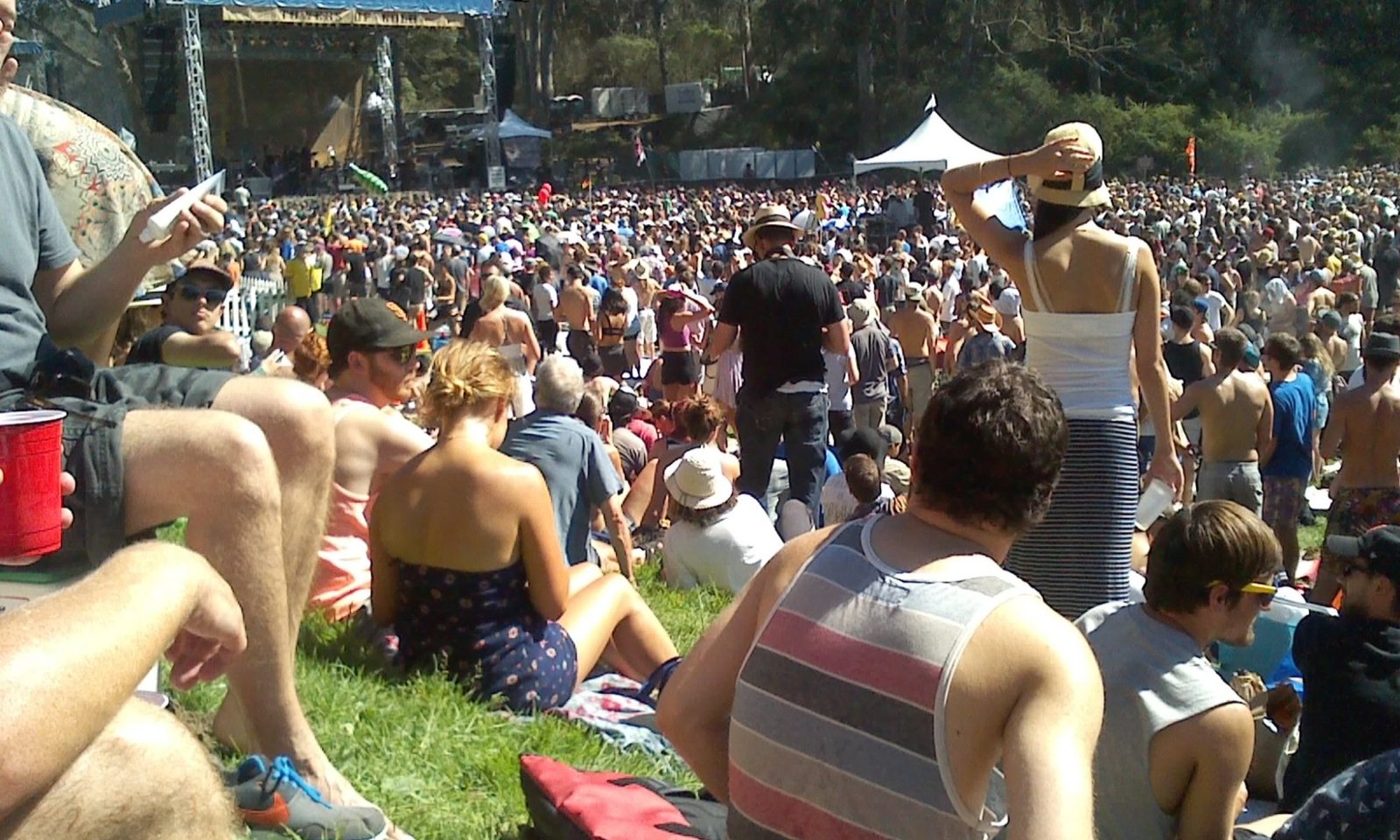
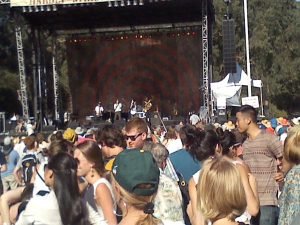
The Hardly Strictly Bluegrass Festival always takes place the first weekend of October in San Francisco’s Golden Gate Park. In 2014, the weather was superb, with clear skies both days. Unlike some years, it was actually a bit too hot for some people and at many stages people sat far away preferring the shade of the trees. Ocean Beach had a long period swell running, sixty degree water temperatures and east winds so the surf was good. The Giants were in the process of defeating the Washington Nationals in playoff baseball. On Saturday, the festival was not as crowded as usual as the baseball game was in the afternoon. That game lasted six and a half hours and was won by the Giants in the 18th inning on a Brandon Belt home run. Life is good in the Bay Area.

Next year I think I am going to hang out a bit further west at HSB. Closer to the old time stages and the music from Appalachia. Ralph Stanley, winner of a 2013 HARDLY STRICTLY BLUEGRASS FESTIVAL OFFICIAL PELICAN CAFÉ AWARD played the Banjo Stage on Sunday but I was already parked with my family at the Star Stage listening to Rosanne Cash. The difficult choices we have to make this time of year.

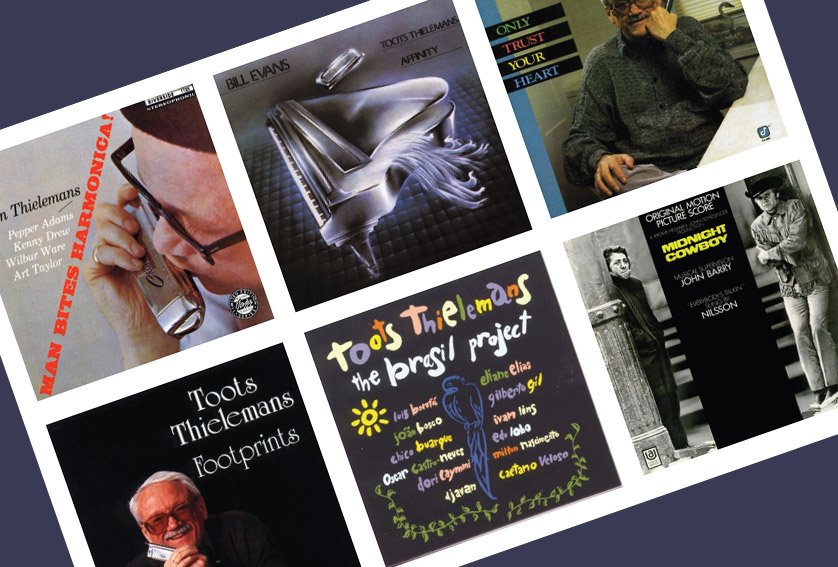
Essential Toots Thielemans Albums

I have just finished a series of transcriptions of Toots Thielemans solos from a various albums. After having done a few in 2013, I made it a New Years Resolution to do ten. Why someone would take on such a maniacal task is beyond me, but people have done crazier things. Ten for Toots – 10 Toots Thielemans Chromatic Harmonica Solos – Transcribed and Analyzed, will be available in both ebook and paper form in September 2014. If you are interested in adding a few jazz albums to your collection that feature the great Toots Thielemans, start with three. This is after many years of narrowing down the list. Toots is the man!

Here are my top three.

toots-aff
1. Bill Evans Affinity (Warner Bros., 1979)
Toots playing on this album is magical. The rapport between Toots and Bill Evans is great and just about everything about this album makes it a must have. It is one of those albums where in many ways the music is so collaborative, who the leader is not needed. Toots had a lot of input on the choice of material for this album. The tunes bounce back from jazz standards to interesting takes on more contemporary material. A few really unknown tunes are also played. The quality of the harmonica micing with this recording is probably the best I have heard. Great band!


toots-bites
2. Man Bites Harmonica! (Riverside, 1958)
A great straight ahead jazz album and Toots plays with a lot of drive throughout. The pairing of harmonica with Baritone Sax (Pepper Adams) is unusual but works really well. I am putting this as number two as it will give the listener some perspective as to how Toots’ music developed over time.


If you love Brazilian music and want to discover artists that will blow you away, this is your album!

anonymous


toots-brazil
3. The Brasil Project (BMG, 1992)
I have not heard The Brasil Project 2, but after hearing The Brasil Project, I must say that this is a phenomenal album. Not only does if feature a who’s who in Brasilian music, Toots playing is simply outstanding. The songs by Joao Bosca and Djavan are excellent. Luis Bonfa playing his song Black Orpheus in a definitive way, will make you rethink this now jazz standard after may years of abuse north of the equator. Outstanding production values.


10 Toots Thielemans Chromatic Harmonica Solos – Transcribed and Analyzed

By Paul Lyons

TenForToots_tn

Now available at Lulu Press – Print

Now available at Lulu Press – Digital

An in-depth look at the style of one of the great improvisors of the last 50 years. Excellent for not only chromatic harmonica players, but jazz players of all instruments.


Table of Contents

  • Introduction – 3
  • Why Transcribe – 5
  • Don’t Blame Me – Man Bites Harmonica! (Riverside, 1958) – 6
  • Three In One – Man Bites Harmonica! (Riverside, 1958) – 11
  • Sno’ Peas – Bill Evans Affinity (Warner Bros., 1979) – 18
  • Blue in Green – Bill Evans Affinity (Warner Bros., 1979) – 20
  • Jesus’ Last Ballad – Bill Evans Affinity (Warner Bros., 1979) – 23
  • Only Trust Your Heart – Only Trust Your Heart (Concord Records, 1988) – 26
  • C To G Jam Blues – Footprints (Polygram Records, 1991) – 30
  • Felicia and Bianca – The Brasil Project (BMG, 1992) -36
  • Coisa Feita – The Brasil Project (1992, BMG) – 38
  • Everybody’s Talkin’, Midnight Cowboy: Original Motion Picture Score [Soundtrack] (1969) – 45
  • Conclusion – 48
  • References – 48
  • Etudes – 49 – 80

1983 Open Letter – The Declaration of the “Sh!t Hit the Fan”

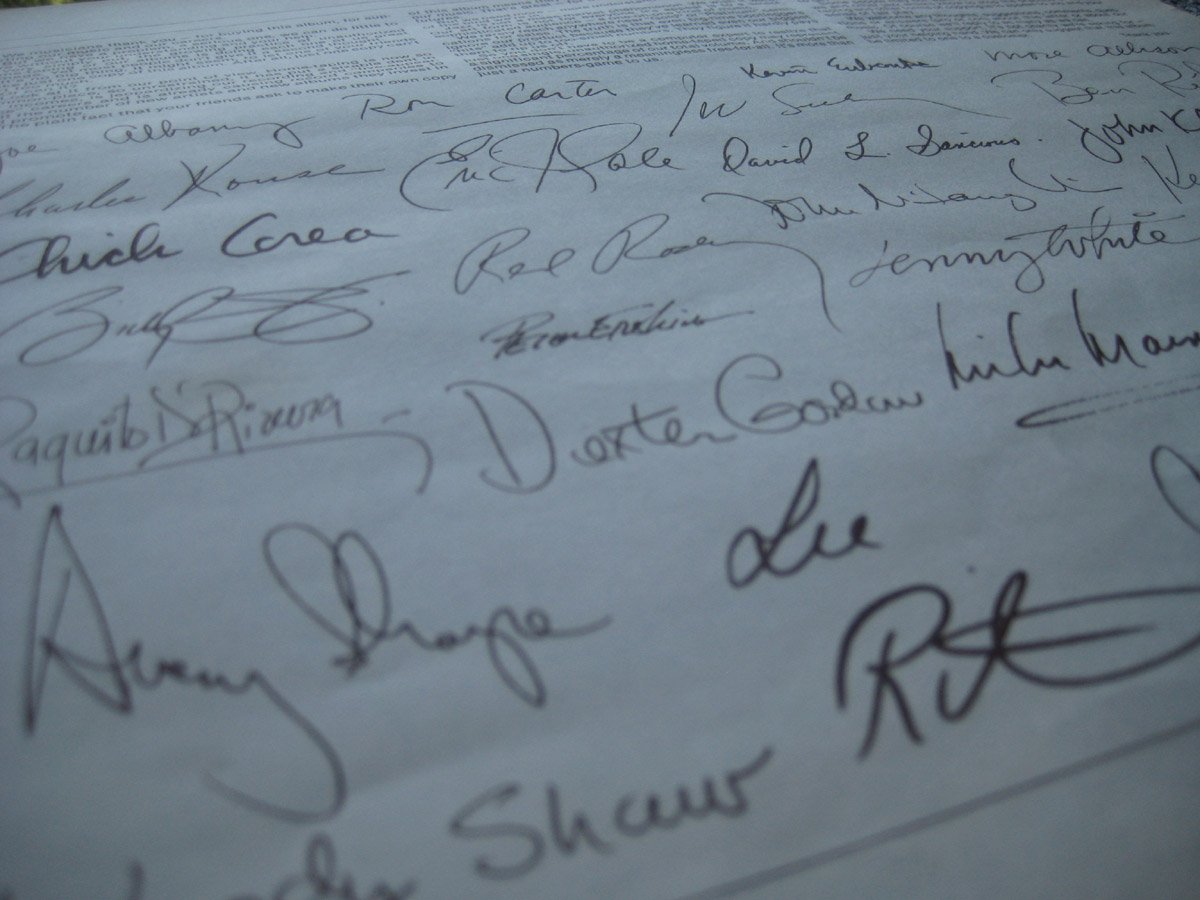
I was organizing my vinyl the other day when I came across an insert to an album. It was from a Elektra, a division of Warner Brothers and it was a plea to consumers to stop making copies of the album. The insert was signed by a lot of leading jazz musicians who were probably all Elektra artists. At the time most people had a turntable and a cassette dubbing deck. Copying vinyl to tape was pretty standard practice. That was how we listened to music in cars. Everyone had “mix tapes” that were essential for any road trip. It is pretty funny to think that the record industry was concerned about cassette tapes. That was nothing! The digital era, fifteen years later made taping look like the good ole days.

An Open Letter1983 Elektra/Asylum Records

We musicians thank you – for buying this album, for supporting our music and our careers.

But we have a problem, a serious one, we can do little to cure without your understanding and your help.

Very simply put, the growing practice of unauthorized home-taping of our albums is doing each one of us a great damage. Yet most people don’t give it a second thought.

It’s no big thing, it might seem, to let one of your friends make just one copy of this album. After all, just one copy can’t hurt too much.

Or can it?

Look at it from our point of view. Home-taping is now so common-place, so unrestrained, it has to put a sizeable dent in our incomes, is jeopardizing our recording and “live-appearance” careers and is already causing record companies to limit the number of new artists and new albums they invest in and promote.

The plain fact that your friends ask to make their own copy of this album means they are fans. Obviously they must like our music. That’s great – for us as artists and great for our futures

But we need more – more understanding and appreciation of the bind we’re in.

Jazz is not a mass-market phenomenon. We wish it were. Our art form is not for everyone. It’s appeal is to a select, sophisticated audience – a one-on-one kind of music.

We rarely reach anywhere near “Gold” or “Platinum” certifications for sales. The truth is that even big-time bootleggers ignore our product because they have learned even our biggest “hits” add up to too-small numbers. They figure it hardly pays them to rip us off.

So you do not have to be a computer expert to realize that just one single, unauthorized, home-taped copy may represent a significant percentage of our total volume. And shouldn’t be dismissed as merely a meaningless free-for-all. It’s more than just a numbers game to us.

If the practice doesn’t stop, we are all losers. You are losers too – what with record shops cutting down the number of jazz albums they normally carry, your ability to choose from the wildest possible selection is shrinking everyday.

(If you or your friends can’t find another copy of this album in your regular record shop, please let us know. We’ll attempt to get it there as quickly as possible.)

Some people may not want to hear this. But the only way we and other jazz artists know to stop the of home taping and other forms of copying is to appeal to you and your sense of fair play.

We welcome any thoughts, suggestions, comments, questions or answers (pro or con) about this letter or about our music. Of course, we’ll reply to as many as we can.

We need your support. It’s not charity we’re asking for – just your helping hand. We can only suggest that this album be limited to one to a customer.

Thank you.

Butterfly Jazz Trio – First Time Around CD

cover-for-web3

There are still a few copies of this limited release CD. Listen to examples and get the CD at Add to Cart at CD Baby!

Album Notes
Kai Lyons – Guitar
Erik Von Buchau – Drums
Dillan Riter – Bass

Recorded at Granada Studios in Half Moon Bay on August, 29, 2013, FIRST TIME AROUND by the Butterfly Jazz Trio is a spontaneous romp through some funky grooves, subtle ballads and straight ahead explorations. The session was inspired by gigs the Butterfly Jazz Trio played in downtown San Francisco in various bars and hotels during the summer of 2013.

All tunes were chosen like they had been on the gigs – spur of the moment, like many of the great sessions of the late 1950s and early 1960s. Two takes were done of most tracks but invariably the first was the one chosen. Freshness and immediacy was the agenda. There are no click tracks, prefabrications or overdubs of any kind. Just real instruments, listening, talented players and a splendid warm-sounding tube amp built by Rico Macalma, the engineer on the session.

At around 5pm, the crew packed up realizing that we all needed a break. We headed up to the Mission District in San Francisco for dinner. Time to chill before another gig at a hotel off of Union Square.

CD-DVD-offset600

If you are a fan of the jazz guitar trio, music that swings hard and melodies that stay with you long after you finish that last track, check out the CD. Makes a great gift too. You may just want to listen to it again and again.

A FEW SAMPLES

There are still a few copies of this limited release CD. Listen to examples and get the CD at Add to Cart at CD Baby!

Engineer & Mix by Rico Macalma, Mastering by Rainer Gembalczyk
Executive Producer & CD Design – Paul Lyons
Unauthorized copying and reproduction prohibited.
Copyright 2013 – Butterfly Jazz Trio – All Rights Reserved – kailyons.com

Adventures in YouTube. The Salsa Arrangements that Changed the World

Every now and then you have to pay attention. It seems the older you get the faster time goes by. The other day I searched on YouTube for some of the songs that I composed and arranged back in the late 1990s with various groups in San Francisco. Some of these tunes have 100,000 plays which is sort of cool but I am sure that at this point no one in this group is making money off those plays. We did it for love anyway. And the dancers.

Arrangements by Paul Lyons

Orq. Azabache – This Moment

Hi. This is Paul Lyons the arranger of this song and many tunes on this album – Azabache from 2000. Thanks for posting this video.

What makes this song so cool is that it is a salsa song about breaking up. There are very few of those. Usually salsa songs in English are love songs and are quite corny. Not with this one.

These charts where written originally for trumpet, trombone and baritone sax. Notice that on this recording the band played the song with trombones. What is so strange about this recording is that the second mambo I wrote originally as an afterthought to the song. I always imagined a solo on top of the trombone line. But I love this tune and knew it would touch people.

Julio Bravo, Sin Rencor


Arranged by Paul Lyons from San Francisco. Another tune I actually do not remember arranging. 2000 was such a crazy time. People thought the world was going to end. I just had had my second kid, a daughter Lucia. At the time I was writing about one arrangement a week and every now and then complete originals would be commissioned. The phrasing of the horns is stellar. Bill Thuerer, Derek James, Stephen Khuen. The orchestration is how it was written.

Simplemente Complicada – Orquesta Azabache.wmv

https://www.youtube.com/watch?v=7z7Cr-zIX2Q
Composed and Arranged by Paul Lyons. Lyrics by Ray Martinez. This is a tune/melody that I wrote that Ray wrote lyrics to. It was about a relationship he was having at the time. So Ray put words to the song and then brought it back to my place with a scratch recording. We probably hung out for a while and brainstormed some ideas. I then wrote the arrangement that afternoon. All of the songs on this album came together in one six month period and I am certain this project (Azabache 2000) was self produced. It is not in print anymore. Someone call Ray and tell him to press a few thousand more.

Azabache – Cinco a Diez


Arrangement by Paul Lyons (Azabache 2000). About 100,000 views makes me scratch my head at how crazy the music industry is. This is a very cool tune about a very difficult situation – 5 to 10 years in jail.

Learn How to Write Salsa Charts. Certified by the Club Owners Association of Northern California.

If you are interested in purchasing the sheet music – arrangements for any of the songs above, email

Thoughts on a Music Called Jazz

There is really no such thing as a music called jazz, or a music called bluegrass or a music called blues, music called black music or music called white music. It is all music from America. A vibrant living music. In the end, the names do nothing but to segregate music at different drinking fountains. The best of American bands can play any of these strands well. I was blown away when the Lyle Lovett large band opened their show with Charlie Parker’s Donna Lee. A band from the heart of “country” music, playing another music from the opposite hue of the musical spectrum. The tempo was blazing. The solos were fresh. But bands with great players from Nashville can do that kind of thing and make it feel natural. The concept that jazz is America’s “classical” music I find disturbing as it means that it has died and run its course. When Bach and Mozart were writing and playing, it was not classical anything. It was just music.

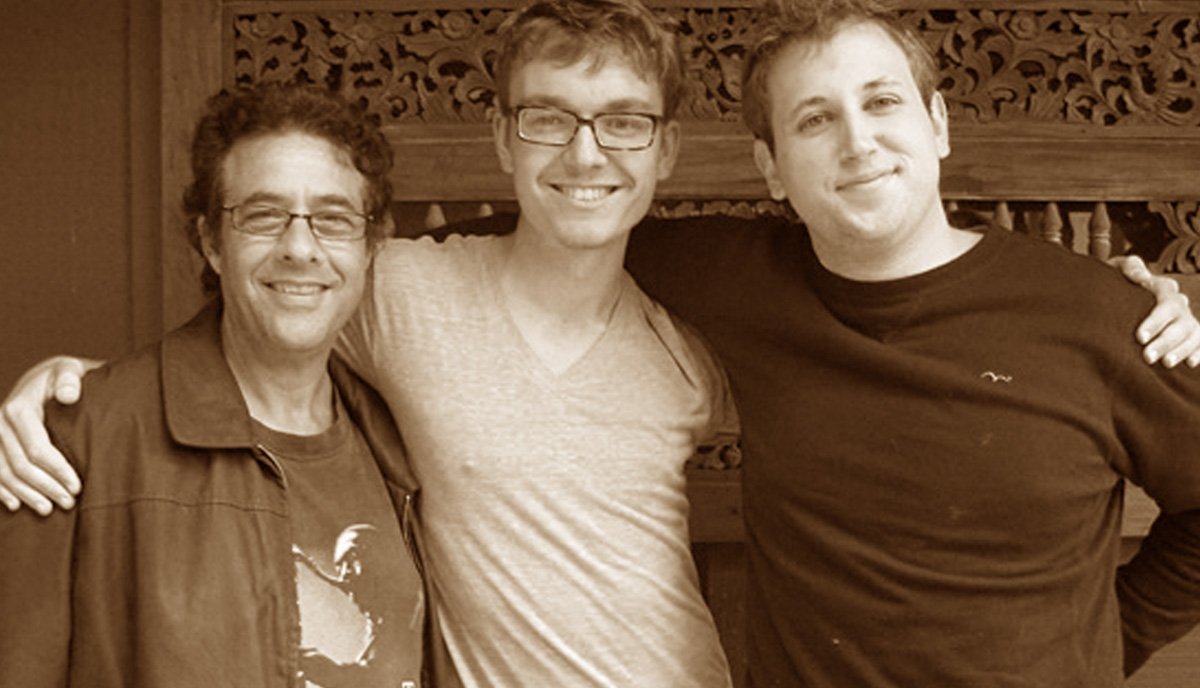
Photo is of Kai Lyons and Paul Lyons.

The Art of Cuing a Salsa Band – The Spontaneous Arranger

From Arranging for Salsa Bands – The Doctor Big Ears Essays
by Paul Lyons (Available as an eBook)

In most every Latin band that I have worked with, I am called upon to call the musical shots – cue the band. Why this is, I don’t know. Sometimes I write a lot of the material, but other times I have not. During the course of my travels and freelance experiences, I have picked up a few tips as well as preferences.

Emblematic Symbols
1. Standard Four Bar Cue: I use a four bar cue starting with my index finger. The second cue is the most important second bar cue – three bars before the entrance. I give this with the index and pinkie finger of my right hand. If I sense uncertainty among players far away from me, this usually clears up the intent. I use the pinkie finger, as this is the most emphatic way to make two fingers visible. One could use the peace symbol for two, but then everyone would mellow out too much. This music is about drive and hitting things! Geeze! These guys walk around with sticks in their pockets!

2. Mambo Cue: When cuing mambos (a section of the song), I give the standard four bar cue. It is important to cue the instruments who start the mambo. Visual contact can be a great benefit here. If the piano and bass start the mambo with a unison line, they need to get the cue. The horns will figure it out. If the horns start the mambo – cue them. Often a singer cuing a mambo looks at the horns with his cue for the mambo when the mambo starts with the piano and bass. The horn players then sort of shrug shoulders and look at the piano player who is often lost staring at the floor or trying to play a one handed montuno so that he can get a sip of his beer. This is incorrect procedure. One always cues by looking at whoever is about to play.

In essence, cues must be forward looking and have a basic understanding of the arrangement and what is coming next.

3. Moña Cue: For moñas, often an ad lib second mambo, one cues it with the fingers to the forehead. Someone, recently gave me their linguistic via cultural take on the reason for this gesture, but I forgot what it was, perhaps due to the late hour or maybe the slurred and mumbled delivery of this theorist. I always interpreted the fingers to the forehead as “think – come up with a line you idiot!” Good bands make up there moñas. Dull ones play the one on the record and never take chances creating their own.

4. Piano Solo Cue: When cuing a piano solo, I wiggle my fingers like a pianist playing the keys. I continue with the standard four bar cue. The most often used break leading into the piano solo is two eighth notes (beats four and four and) on the last bar of the cue.


Marcos Diaz ready to begin his solo after a fantastic “piano solo cue.”

This is often the one chord but depends on the chord changes and musical context. This is a standard musical gesture in Latin music.

5. Percussion Solo Cue: When cuing a percussion solo, I usually just point to the person taking the solo. The standard percussion break is the “five to one” break. This commences on the fourth bar of the cue.


Carl Perazzo and Edgardo Cambon waiting for a “percussion solo” cue at “El Rio” in San Francisco.

This is a standard musical gesture in this music

6. Ending Cue: The universal ending to a song is the closed fist held in plain view. One should hold this cue for only this purpose. The closed fist should never make it into the repertoire of other cues. There are few thing as disconcerting and dangerous as ending a song prematurely.

item_041

Here rests Dr. Big Ears’ 1964 bug. He used it as a getaway car after throwing a premature “ending cue” on a gig in Phoenix. Big Ears ended up hiding out for four months in Baja, Mexico .

These are the emblematic cues reviewed.

1. Standard Four Bar Cue
2. Mambo Cue
3. Moña Cue
4. Piano Solo Cue
5. Percussion Solo Cue
6. Ending Cue

Other Thoughts on “Cuology”
One has to have an artistic conception of the music and musical phrase in the first place in order to cue well. In essence, one only needs to listen, know who the players are and use common sense.

Many players see the clave in terms of longer units. A good percussionist will “sing” on the instrument to the point where his musical phrase will dictate the cue. It has been my experience that this sense of phasing is often in eight bar phrases. Having said this, it is important to respect this phasing during a solo and cue accordingly so as to not cut off the musical thought. Listening is the key here.

One can also tailor the music to the mood in the room – the size of the crowd. Piano solos tend to be mellower than trombone solos. (This however is not the case if you had Eddie Palmieri and Urbie Green in the same band.) One must keep in mind players strengths and weaknesses and bring out the strengths. This may sound stupid, but unlistening musicians can be oblivious to a player who isn’t in the mood to stretch out or is exhausted.

In rooms where visibility is bad, the standard four bar cue can be replaced with a loud whistle. I have used this often. It is important to practice this shrieking whistle beforehand far from persons of the opposite sex. One is never certain what loud sounds have on people’s nervous systems. However around retired percussionists you will probably have no problems.


Tom Bertetta, and his patented listening method for the “shrieking whistle cue” in clubs with bad visibility.

Finally, it is important to watch great musicians who cue and see them at this craft. It is good to pick up little tricks, especially ones that pertain to your instrument. Cuing from the piano has always seemed problematic to me – bass even more so. Chucho Valdez and Tito Puente come to mind first off as great leaders and great musicians at cuing. There are many more out there for sure.

Good cuing allows for flexibility beyond rehearsing. It enables a band to stay fresh with material indefinitely. It allows anyone to solo on any song and a group to never play the song the same way twice. In its purest form, it is spontaneous arranging.