Google AI Mode and Artificial Persectives

These novels will give way, by and by, to diaries or autobiographies – captivating books, if only a man knew how to choose among what he calls his experiences that which is really his experience, and how to record truth truly.”
– Ralph Waldo Emerson

Journeys in AI and looking at how Google sees your website.

In the old days of SEO there was the Page Rank which was a cute play on words. Larry Page, a CEO at Google invented the phrase but everyone knew it was about how good your SEO (search engine optimization) was ranking. It was a scale of 1 to 10 and a 6 or a 7 was good and maybe meant you were on the first page of Google search results. About eight years ago Google got rid of exposing your Page Rank. No longer could you look under the hood or see the dirty laundry in the Google closet.

The other day I experimented with Google AI Mode and discovered some interesting assumptions by this everchanging technology. Little does Google know that I write these posts for fun and sometimes to vent and scream at the stars, but most often to embrace the 1st Amendment of the United States Constitution and simply speak my mind. At one point the internet was meant to be a force for equalization and democracy. Imagine that!
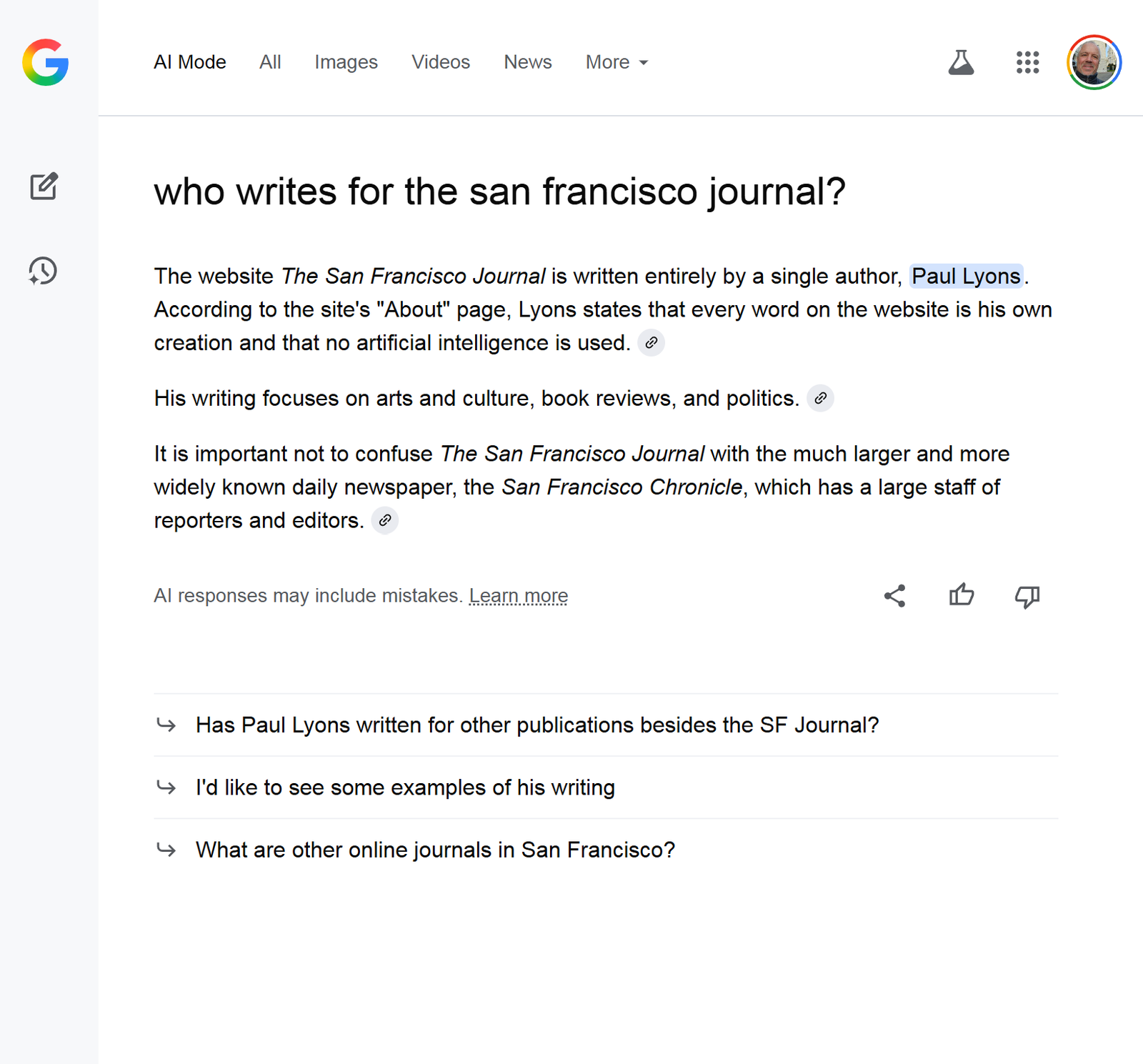
Google AI Mode - September 28, 2025
Google AI Mode – September 28, 2025

Anyway, Google AI Mode is always changing. When I query “who writes for the san francisco journal?” over time I have gotten different results. At one point it came back with:

It is important not to confuse The San Francisco Journal with the much larger and more widely known daily newspaper the San Francisco Chronicle which has a large staff of reporters and editors.

This I thought an odd and and interest observation. It could have also said “It is important not to confuse The San Francisco Journal with the much larger and more widely known daily newspaper the San Francisco Chronicle which survives by advertising from major corporations (petro-chemical, pharmaceutical, big-tech, banking, etc.) which they rarely cover by doing real investigations and perhaps finding malfeasance and bad news. The editors do seem a bit spineless.” Evidently not being beholden to large corporations is no longer a good thing. For Google AI, independent journalism is not a value-add. Bigger is better. A monopoly is the best.

A few weeks later I did the same query and got different results. This time it stated.

The search results for “San Francisco journal” also show numerous journalists from the city’s main newspaper, the San Francisco Chronicle.
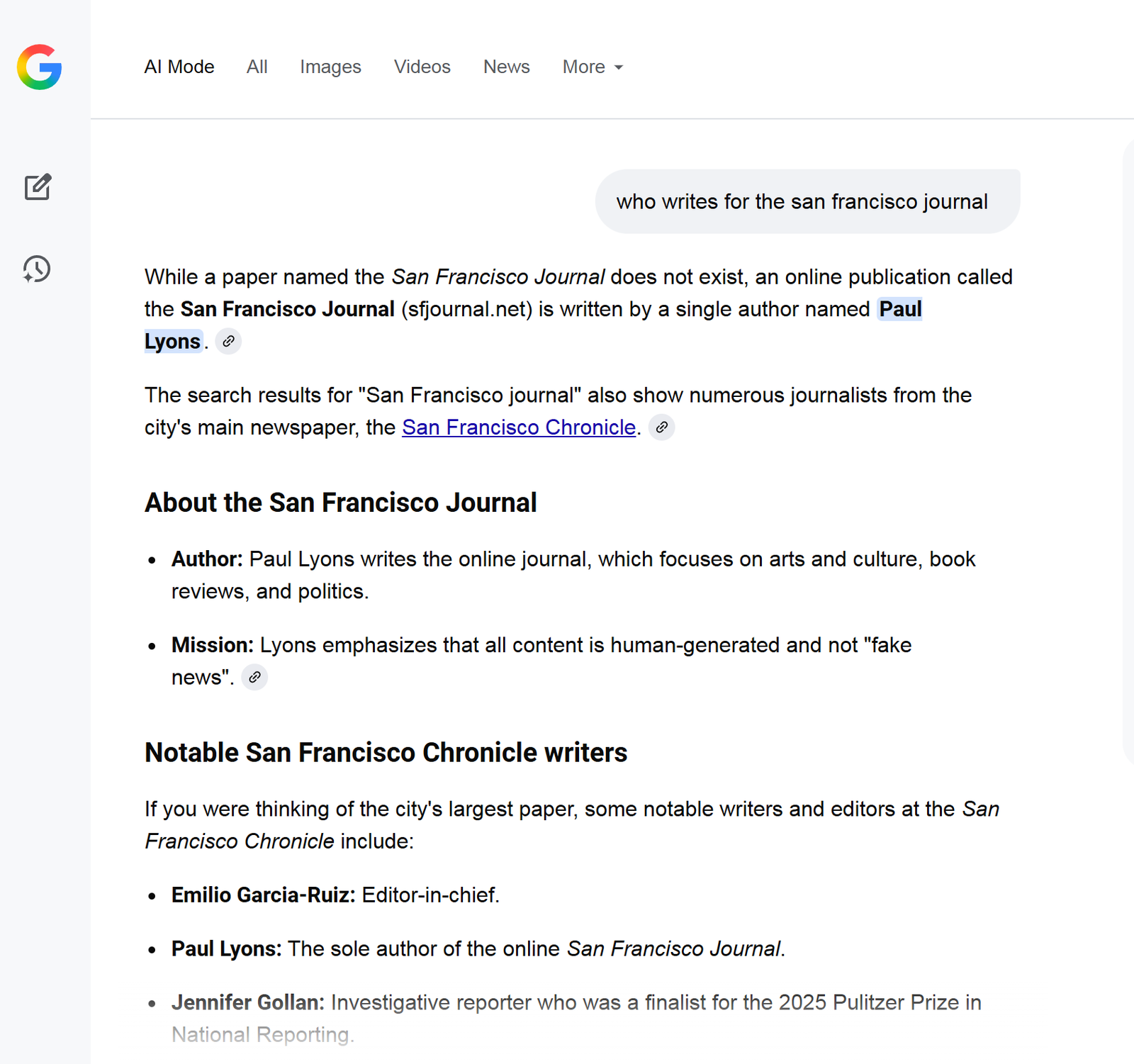
Google AI Mode - October 9. 2025
Google AI Mode – October 9. 2025

My goodness! How did that happen? Numerous journalists from the Chronicle? It must be that darn “ghost in the machine” thing. The SF Journal is unrelated to the Chronicle though I do subscribe to the Sunday paper mostly to get the funnies.

Which brings me to one of my ideas that no one seems to get. The internet is all just publishing. It matters not whether the content is produced by aunt Gertrude and posted on Facebook or a fancy computer algorithm, it is all content which is owned and often “monetized” by someone – usually a big tech company.  While tech companies like to distance themselves from the responsibilities of this content with what they call “platforms,” in the end they are simply publishers.

And do remember, the San Francisco Journal is not the San Francisco Chronicle Just stating the obvious.

Electronic communities build nothing. You wind up with nothing. We are dancing animals. How beautiful it is to get up and go out and do something. We are here on Earth to fart around. Don’t let anybody tell you any different.
– Kurt Vonnegut

Pirates of the Digital Era – This is No Captain Jack Sparrow

It has made it so tech companies and publishing empires no longer have responsibility for what is published on their applications, websites and what they now call “platforms.” Safe harbor. Everything is just content. Stuff. No one owns the stars.
Digital Millennium Copyright Act 25 Year Anniversary – SF Journal 

Piracy is the foundation of the commercial internet. It is all just stuff. The digital world is a non-destructive medium. I can copy and paste anything, it loses none of its quality, and it is all mine, evidently free to use (except if it is owned by Getty Images). It matters not whether someone “owns” it. Indeed, no one owns the stars. Furthermore, my experience of your art is just as valid expression of art as your art.  Today, the experience of art is often now monetarily more valuable than the art.  Copyright laws are meaningless. This is why music fans can create a YouTube channel and make more money off of a musical artist than the artist. In 2025, I can create software that gobbles up your art and creations and create new creations. They call this Artificial Intelligence or AI. It is just the latest version of the piracy that has been going on since the beginning of the internet.

While early photography was analog, using silver and glass plates and large box cameras, it always seemed fascinating to me the observation of some of the Native Americans in the mid-nineteenth century when they first interacted with this technology. When they saw the photographs they thought the white man was stealing their souls. They may have been on to something. Today large tech companies are not so much stealing souls but making money off of them. The most important events and parts of peoples lives are being “monetized” and in a way stolen. Who really owns your address book, contacts and photos from that last birthday?  “Safe harbor. Everything is just content. Stuff. No one owns the stars.”

In the realm of recorded sounds, a similar dynamic happened at the beginning of the twentieth century.  New Orleans trumpet player Freddie Keppard feared that if he was recorded, people would steal his ideas. He was definitely on to something. The development of “jazz” was moved forward by recordings and people playing along and transcribing solos of the greats. Evidently, if you wanted to cop Freddie Keppard’s licks, you had to go to Bourbon Street. “Safe harbor. Everything is just content. Stuff. No one owns the stars.”

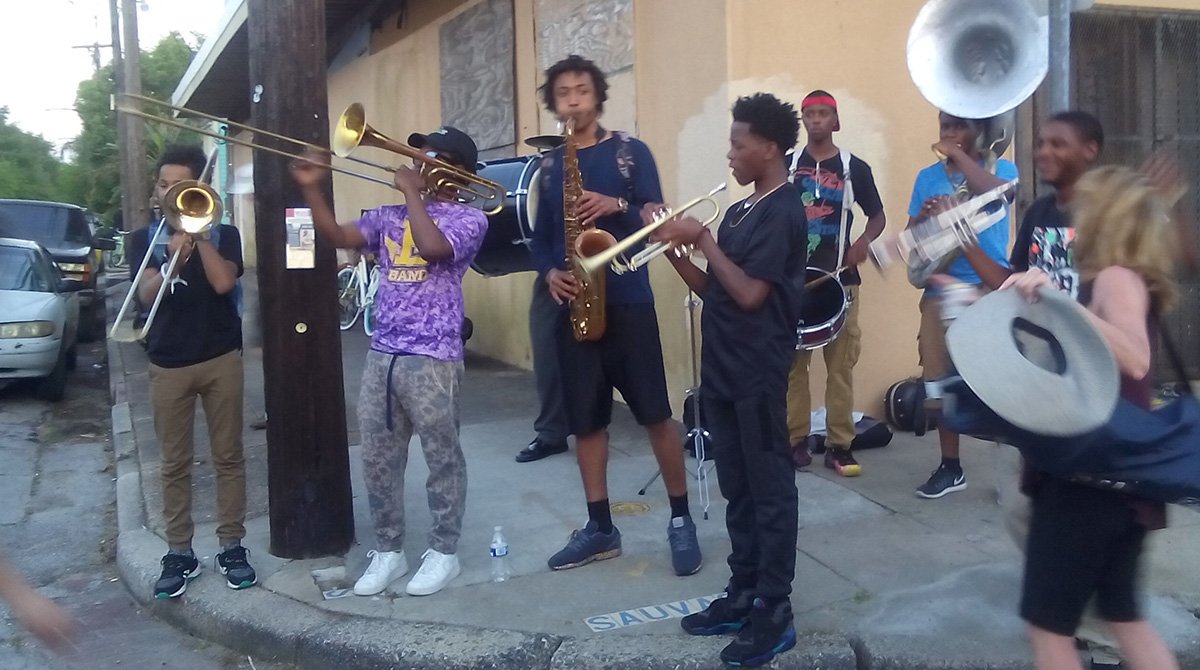
New Orleans Jazz Fest 2016

It is now 2025 and the mining of original creative content by the tech companies is on full throttle. The pirates are in control of the ship as they have always been.  The AI bots are sucking up all the work of the creative class and “monetizing” it. I was reminded of this when author David Baldacci made a video of how his novels have been ingested and now can be spit out by AI. In his own words  “[they] backed up a truck to my imagination and stole everything I ever created.” These services now spit out novels that read as if they were written by Baldacci, with similar plots, dialogues, and even character names.  “Safe harbor. Everything is just content. Stuff. No one owns the stars.”

Novelist David Baldacci: ‘AI Stole Everything I’d Ever Created’ – YouTube

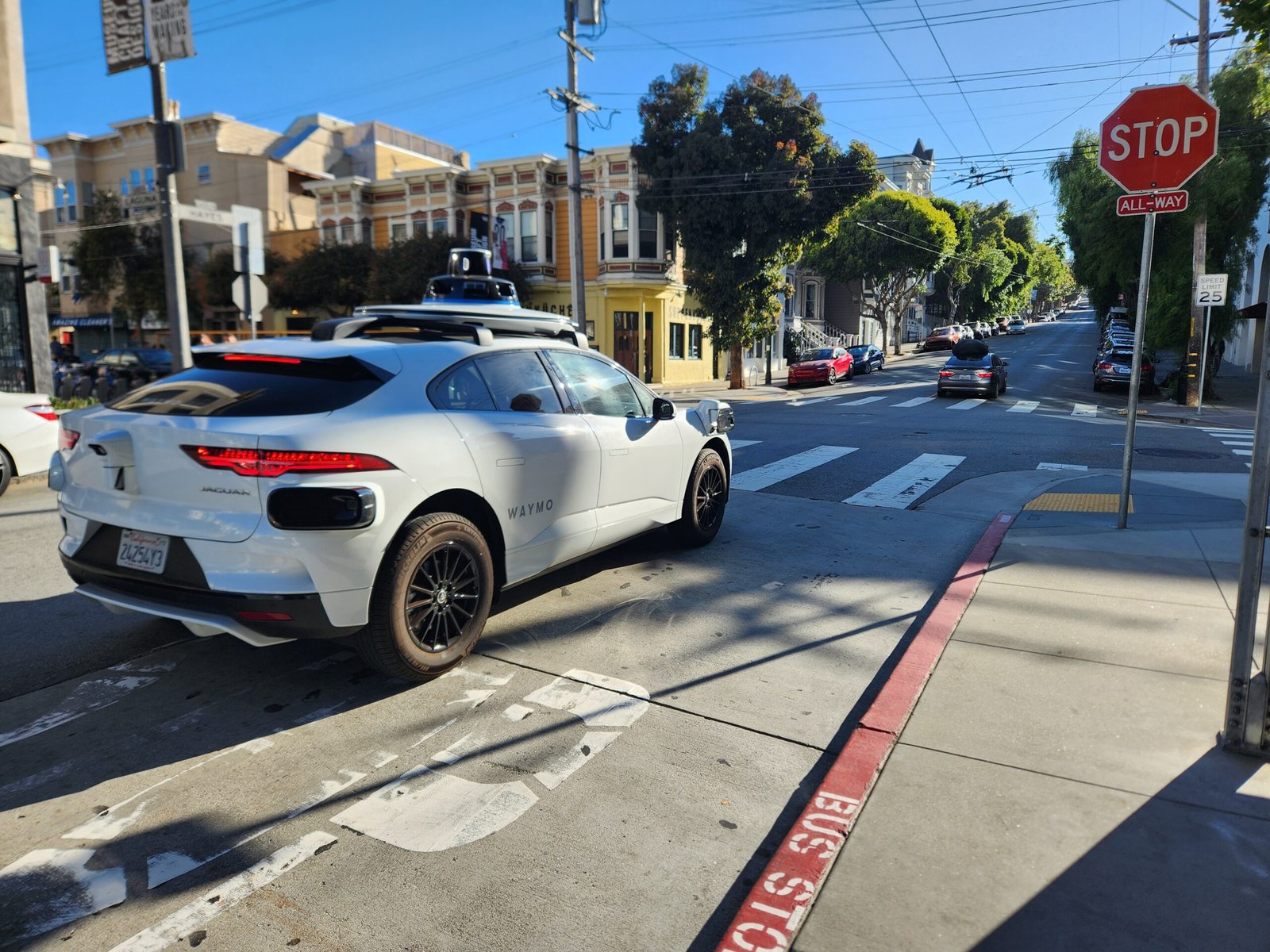
Waymo driverless taxi in San Francisco

Where this will all end, no one really knows. The control of information, the manipulation of people and the censorship of ideas is as great as ever while at the same time the billionaires mine and pillage the movements and work of just about everyone on the planet. I did have a strange dream the other night. I dreamt that a driverless Waymo taxi pulled up to our house in San Francisco and a robot passenger got in the backseat of the car. The taxi drove off. Not a soul onboard. “Safe harbor. Everything is just content. Stuff. No one owns the stars.”

Elon Musk and the Refactor of the Treasury Payment System

Can I call you back? Busy helping Elon put “buy” and “share” buttons on all the individual financial records in the U.S. Treasury payment system. Just a minor refactor.
– joke by Paul Lyons intended for IT professionals and marketing people

While we read about the Elon coup d’état of 2025 the news reports lack significant information. The system that Elon and his young henchmen are accessing is called “Secure Payment System, or SPS.” They evidently have “read-only” access. Some reports say “read-only” access to the code base.  This is very reassuring. I like my Social Security number just the was it is, thank you very much! In another report it states that Elon is running the data through AI Tools to find waste and fraudulent payments.  This from a guy who works for a billionaire who somehow gets away with never paying taxes. Elon is part of that billionaire club that does not pay taxes as well. It is so virtuous for him to be looking out for our money!

When I first read that Elon is looking into efficiencies in the federal payment systems I thought that his goal was to somehow modernize the system. Refactor the code base. Get rid of crappy patches. Upgrade the documentation. Review the database design. Traditional systems like banking, healthcare, transportation are notorious for having systems build upon very old systems. They often were created in long defunct languages and architectures. People often get things done via command line. I have worked with such legacy many times proprietary systems. They are often obtuse, clunky and were built for a much early time. Even things ten years old seem antiquated.

One could optimistically surmise that Elon, in his benevolence wanted to upgrade the public system in a content agnostic way out of some sort of  altruism.  (I always wondered why the San Francisco Public School System never got any love from the tech sector for their systems.) But nothing is further from the truth. The Treasury Department with this Secure Payment System, up until now, has always paid out everything on time. Every invoice, Every tax return. Every bill on time. That is incredible.

What Elon is doing is not content agnostic. He thinks he can shape public policy via cutting payments to things he does not like. He thinks he can undo public policy. He obviously has never read The Constitution and how the U.S. system of government works. What Elon Musk is doing is illegal. He is not an elected official.

Update: 2/7/2025
I actually got a lot of this story correct. See https://www.theatlantic.com/technology/archive/2025/02/elon-musk-doge-security/681600/. The added feature is that the systems are so complex that they are like nested Russian dolls. ” It’s less a database than it is a Russian nesting doll of databases, the experts said.”

George Washington’s Farewell Address – Warnings For Our Times

From Washington’s Farewell Address – To The People Of The United States, written in 1796 with help from Alexander Hamilton and James Madison, around halfway in you read:

All obstructions to the execution of the laws, all combinations and associations under whatever plausible character, with the real design to direct, control, counteract, or awe the regular deliberation and action of the constituted authorities, are destructive of this fundamental principle and of fatal tendency. They serve to organize faction, to give it an artificial and extraordinary force—to put in the place of the delegated will of the nation the will of a party; often a small but artful and enterprising minority of the community; and, according to the alternate triumphs of different parties, to make the public administration the mirror of the ill concerted and incongruous projects of faction, rather than the organ of consistent and wholesome plans digested by common councils and modified by mutual interests. However combinations or associations of the above description may now and then answer popular ends, they are likely, in the course of time and things, to become potent engines by which cunning, ambitious, and unprincipled men will be enabled to subvert the power of the people and to usurp for themselves the reins of government, destroying afterwards the very engines which have lifted them to unjust dominion.
Washington’s Farewell Address – To The People Of The United States

Presidential farewell addresses are the exit interview, whereby the employee can be candid. Calling out systems that do not work. Noting people who are problematic. Reminiscing on administration successes. Ignoring failures and scandals. Predicting future problems. Eisenhower warned us of the “Military Industrial Complex.” Reagan embraced all sorts of immigrants and the “shining city on a hill” but warned that Americans would begin to take for granted their freedoms.  A book about presidential farewell addresses is overdue. It would be a great way to teach United States history.

It is eerie how George Washington in 1796 could have predicted the character of a man hundreds of years into the future – “…by which cunning, ambitious, and unprincipled men will be enabled to subvert the power of the people” explains precisely the method of Donald Trump. And to think that Washington probably wrote the address with a quill pen and inkwell.

Download Washington’s Farewell Address. Print it out and read it. It is slow news that does not break. It is only twenty-six pages.

Kamala Harris for President and Local SF Election Picks

Poster of Kamala Harris and Tim Walz at the San Francisco Democratic Headquarters.

Good Grief! As my father used to say. How is this presidential election even close! But then again we are living in what I like to call the “decade of delusion” where, with a straight face, Republican politicians have used the the phrase “alternate facts.”

Kamala Harris was our D.A in San Francisco. She grew up primarily in Oakland, California, with years in Montreal and Madison. She’s qualified and ready for this job. Unlike her opponent, she is not running from the law. She does not have to hire teams of lawyers. She’s buena gente and the only crime for some is that she is For the People and has pledged to tax the billionaires and corporations. Sounds like a good plan! The alternative is just appalling. Vote Harris-Walz 2024!

Even Dick Cheney, the ultra-conservative former Republican Vice President and congressman  is supporting Kamala Harris for president. You know things are getting desperate when Dick Cheney supports a Democrat from California.

THE MADISON CONNECTION

An interesting historical fact is that his daughter,  the former congresswoman from Wyoming,  Liz Cheney was born in Madison, Wisconsin in 1966 and lived in Madison the same time as Kamala Harris. In 1968 and 1969, Kamala Harris lived in Madison. Kamala was 5 years-old. It is unlikely that Liz Cheney and Kamala Harris ever played at the same Madison  playground as Liz would have been just two years-old, but anything is possible. Madison is a college town and center of state government with a population under 200,000.

Fields in Wisconsin near Madison

Just think, in saner political times, they could have possibly been running for president against each other. Imagine!

Below is a video from an event in Ripon, Wisconsin, at the birthplace of the Republican party.


This is an open thread.

LOCAL ELECTION PICKS

Mayor

Aaron Peskin

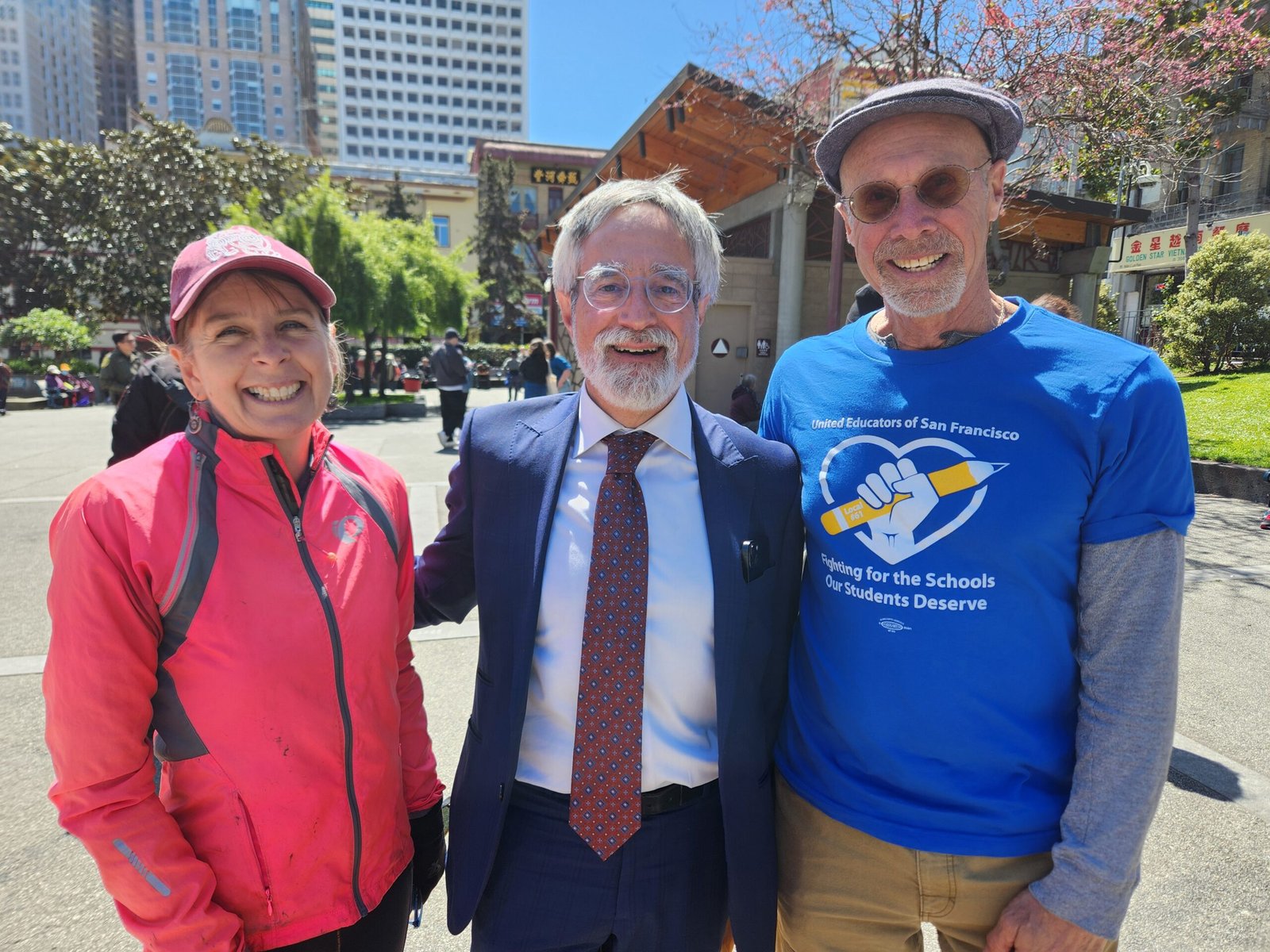
Aaron Peskin with supporters

District 11 Supervisor

Ernest Jones

Vote YES on Preposition K

While there are dozens of propositions on the ballot, one seems like it will have a large impact on children being able to ride a bike in this city of many people. Vote YES on Preposition K. Turn the Great Highway into pedestrian only space. The road from Sloat to Lake Merced will close in a few months anyway. The highway is falling into the ocean. The ocean always wins in the end.

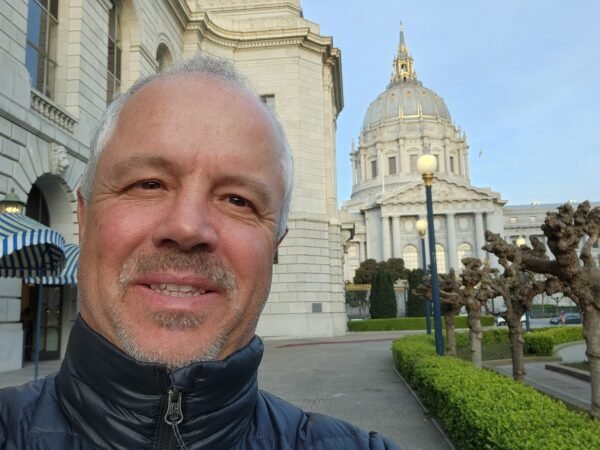
Paul Lyons outside City Hall in San Francisco

NOTE FROM THE EDITOR: The San Francisco Journal is an online journal by Paul Lyons that focuses on Arts & Culture, Book Reviews & Politics. The endorsements above are those of Paul Lyons and not the supporters of the San Francisco Journal.

Kamala Harris and Tim Walz – How Myths and Fiction Become Reality

The national political scene, with all the pundits and polls, the constant news updates, the never-ending spectacle, the name calling, the disrespect all make for a wild and sometime entertaining ride for our modern-day, short attention spans. What often goes unnoticed is how art, in particular films, have often  predicted our political realities and the miraculous turn of events. This is rarely mentioned in the mainstream press.

ACT 1

When Joe Biden decided to retire I could relate. Eighty-one years old and all the slogging through the blizzards of bullshit, spin doctors, fundraising speeches, jet-lag, international turmoil beyond your control, family tragedies so grave and tragic most people would either hit the bottle hard or have just crawled under a rock. So Joe exited stage right and Kamala rode in on her horse.

It all reminds me of the movie Blazing Saddles where instead of Cleavon Little riding into town it is Kamala Harris. Like when another black sheriff rode into town on a horse named Hope, some folk still can’t fathom the concept of a black president. Now the additional shocker is that she is a woman.

And then there is the new sheriff’s sidekick, Tim Walz. Like Gene Wilder in Blazing Saddles, Walz can shoot a gun better than most and fortunately does not have a drinking problem. And in an even stranger similarity, in both cases the duos are in town to save the day from a wave of thugs, crooks, liars and big corporate railroad types wanting to buy and control little people’s pocket books and even their souls .

Once again, art becomes reality. Once again art foreshadows the future. Once again, art and imagination pave the way for justice. Mel Brooks was on to something.

“America and think about it. After all the promise of America is what makes it possible for [me and] Tim Walz [to be] together on this stage today. Think about that. Think about that. Think about it. Two middle class kids, one a daughter of Oakland, California who was raised by a working mother. I had a summer job at McDonald’s. The other a son of the Nebraska plains who grew up working on a farm. Think about it. Think about it. Only in America is it possible that the two of them would be running together all the way to the White House.”
– Harris and Walz rally Las Vegas, August 10, 2024

ACT 2

A few months back I was thinking about it… thinking about who would be the best person to run if Joe Biden dropped out. Who could possibly be the hero who saves the day. After much thought I came up with the only person who would easily win – Tom Hanks.

Tom Hanks has done it all. He has flown an Apollo mission and returned to earth with the help of a little duct tape. He has had AIDS. After his FedEx plane crashed in a violent  storm he survived for years on a deserted tropical island eating only coconuts and killing fish with a spear. He has saved Private Ryan. He has battled against Somali Pirates and won. He has jogged from one side of the country and back again. He has coached an all-woman baseball team. He is a person of mythic proportions and everyone would vote for him. He is someone who always seems to do the right thing. He could get us out of this political mudslinging and toxic delusional silliness. He seems to always play the hero.

So when Kamala Harris chose Tim Walz as her running-mate, you could tell right away that it was the right choice. Not some buttoned down careful politician whose family had been in the politics for generations. Not an Ivy League type. Not a show business person with perfect hair and a smile made for T.V.. Instead, someone a little like a fictional Tom Hanks.

Tim Walz grew up on a farm in Nebraska and was in the Army National Guard for decades. He has taught internationally and spent a year in China. In a small town in Minnesota he taught high school geography and social studies. The high school football team had lost 27 straight games when he joined the coaching staff as a defensive coordinator. Three years later, in 1999, the team won its first state championship. He sponsored a gay-straight alliance student organization at the small town high school after a student at the school wanted to start the group. You can’t make this stuff up.

In other words, his life is waiting for a Tom Hanks movie. Tim Walz is a Tom Hanks character – someone who deals with adversity and overcomes it through character, good decisions, common sense, great people skills, luck and hard work. And he has a rural way of speaking and communicating that has been missing in American politics since Jimmy Carter.

Hollywood. The script is still writing itself. I am not sure Tom Hanks plays the role but time will tell.

“We have some hard work ahead of us. But we like hard work. Hard work is good work. And with your help this November, we will win.”
– Harris and Walz rally Las Vegas, August 10, 2024

Bob Garfield, Julian Assange and The Definition of Journalism

He was charming and playful as he interacted with the judge. npr -Julian Assange Pleads Guilty 

The release of Julian Assange after years in a UK jail made me remember an op-ed by Bob Garfield on the subject. Garfield’s key point is that Assange is not a journalist but a broker of stolen goods and that the press is under attack but not in this case. His op-ed is nuanced in a way you rarely see in this absolutist political world. I think that Assange, as the quote above illustrates, became a bit of a media darling with his premature gray hair,  his smooth, steady Australian accent and his nobel Robin Hood persona. In this case the loot was classified documents.

Indeed, the U.S government has many dirty secrets and does all kinds of immoral things. It has been this way from the beginning. Shining the light on the malfeasance is a small step in the right direction but I doubt it will truly change behaviors. It is better to simply follow the money. Much of that is in plan view. Journalists are simply too scared to bite the few hands that feed them.

The thing is press freedom, defined under U.S. Law and best practices, doesn’t permit libel or extortion or, by the way, burglary–digital or otherwise. With journalistic freedom, comes journalistic responsibility. And Assange, explicitly, disclaims that–at least where other people are concerned. While he preaches that all information, no matter its sources or dangers, is better public than secret, his own organization is shrouded in secrecy.
– Bob Garfield

Bob Garfield was fired from On The Media and NPR. He evidently had a short fuse and would yell at people. I do miss his opines.

OpenAI CEO Sam Altman and Adaptability

“My takeaway is human adaptability to almost anything is just like much more remarkably strong than we realize, and you can get used to anything as the new normal, good or bad, pretty fast,” Altman said. “Over the last couple of years, I’ve learned that lesson many times.”
Sam Altman – OpenAI CEO Sam Altman says he can no longer eat in public in S.F.

Sam Altman is 39 years old and seems to be a darling of the tech industry. He SMS messages usually in all lowercase, was a key player in OpenAI, a new artificial intelligence software company, and seems to use the word “like” in random places.

If Sam were to write a book, it would certainly be a good idea to send it through the AI rewriter. Perhaps it would say instead: “My takeaway is human adaptability to almost anything is just like much more remarkably strong is stronger than we realize, and you can quickly get used to anything, good or bad as the new normal. , good or bad, pretty fast ,”

I am convinced that a lot of the new tools, while remarkable, are making humans less intelligent and dependent. Most people today surely have a hard time writing longhand with a pen.  Spelling is an ancient skill. Along comes credit card transactions with predetermined tips and people no longer have to do basic math. Long-form math. Forget about it.

So Sam Altman just realized that being worth billions of dollars and trying to live a life of anonymity is impossible. Probably a good idea to “like” add that algorithm into that “like” ChatGPT thing.

Dear New York Times – Please Unsubscribe Me to Your Publication

Dear New York Times,

It was probably just a matter of time. I started paying for a subscription to the NYT after a friend suggested I start playing Wordle, the clever five letter word game. It was sort of like giving a taste just to draw me into your house of mirrors. I have enjoyed the game and have had a streak of fifty-four continuous wins at one point.

With the paid subscription I began reading the news primarily and some of the essays by the opinion writers. The guest essays are often quite fun. Big names like Hillary Clinton, Bill Gates and various U.S. Senators  have often been interesting reads. I suddenly felt like I was in the “know,” given a view into the rich and powerful.  I tend to open the comments section for articles about Trump. Your readers then go on and on in a sort of cathartic release of how insane our times are and “how in hell that guy is not in jail yet” monologues.  I have joined in on the ruckus at times but little lately.  It really is a waste of time in the end.

And then  in November you began publishing your Presidential race polls, which made it so we should rename out country “The United States of Anxiety,” as somehow the guy who was impeached twice and is in all kinds of legal problems is running neck and neck with the other guy. How is this even possible? One thing is for sure. I do not want to spend 2024 watching this horse race that you started.

In a recent episode of “On The Media” –  “Is The New York Times A Tech Company?”  does a good look at how the The New York Times refactored itself as not a newspaper or even a news publisher, but as a tech company. Publishing is dead. It is about a “platform.” No longer do you make money with good content and intelligent editors and stagnant ads but the with surveillance of your readers. Cull the ads for a demographic. Tease them with sticky content that will make them stay on the site.

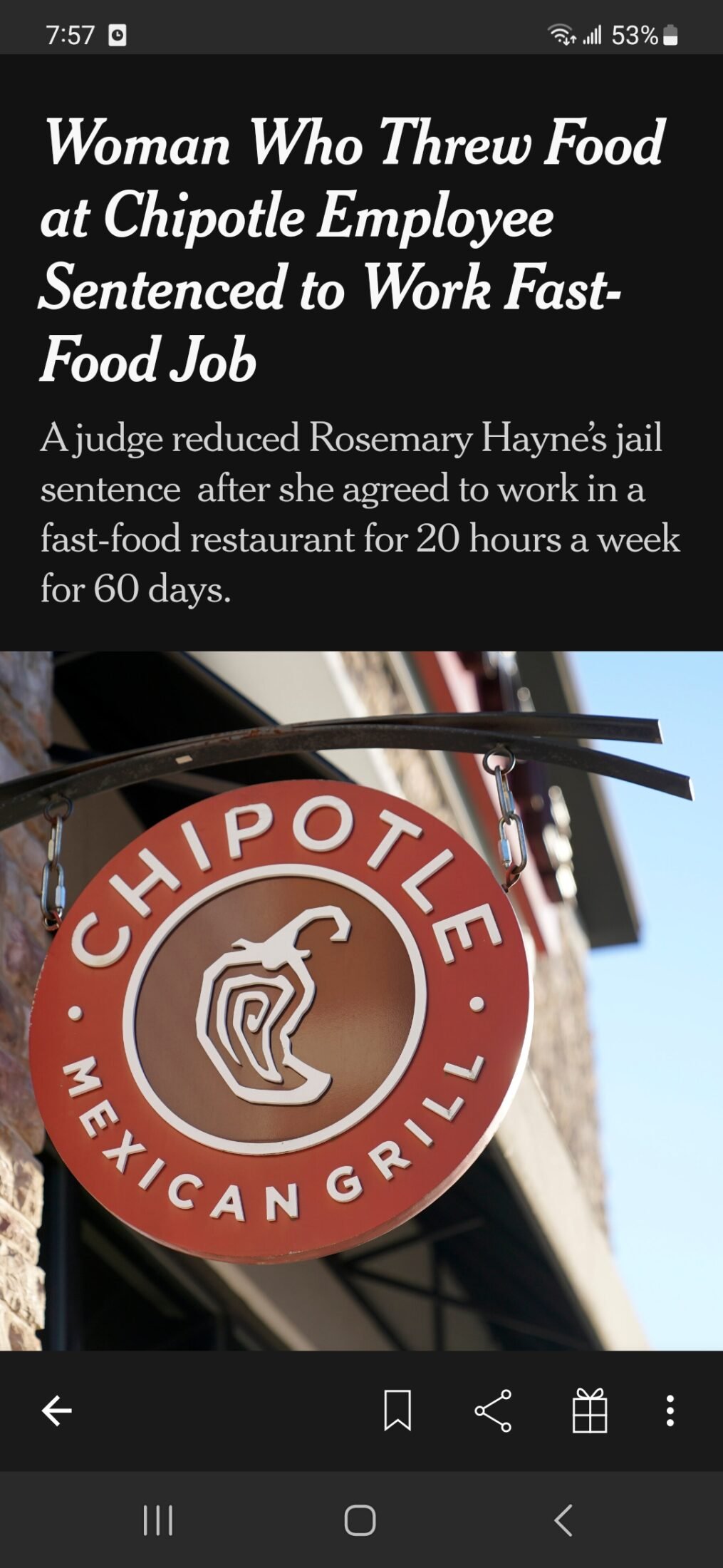
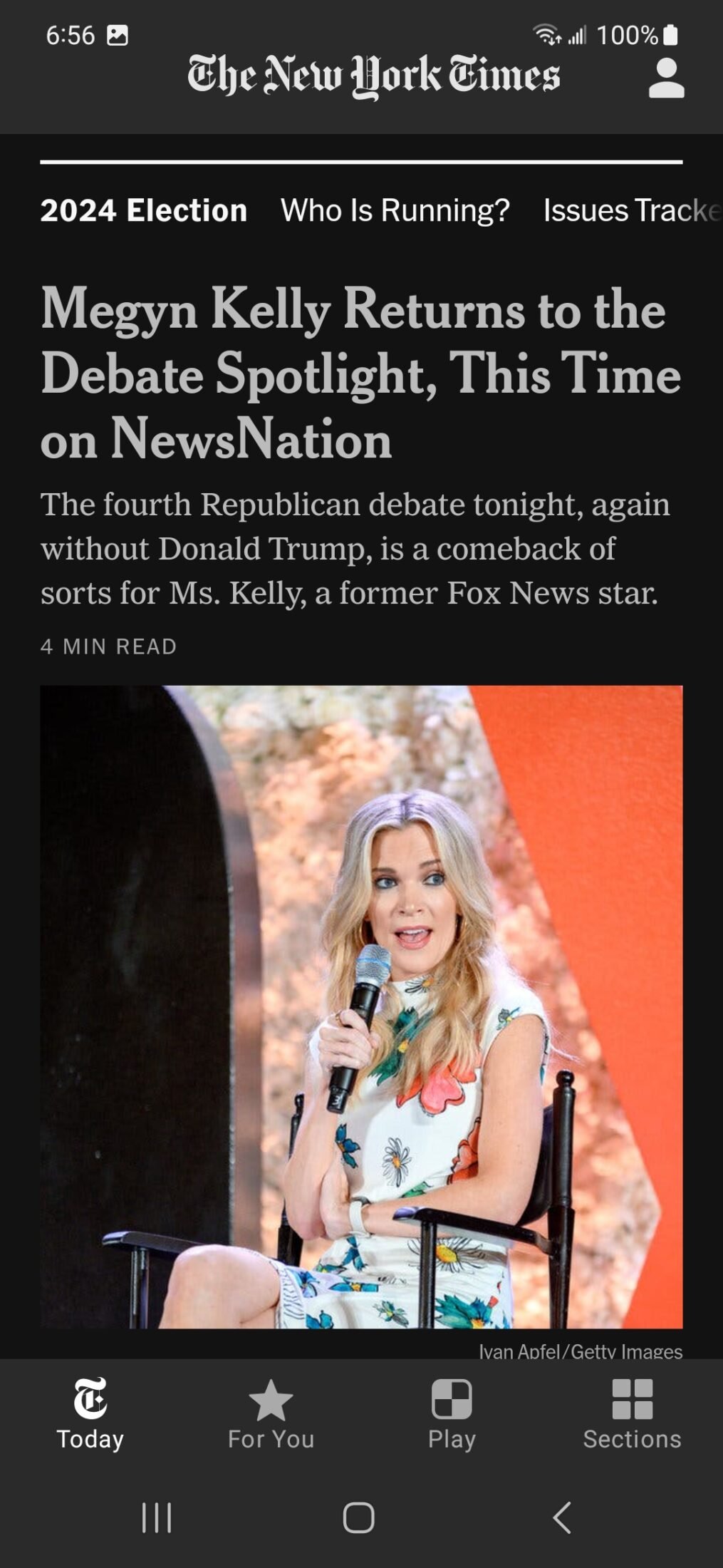
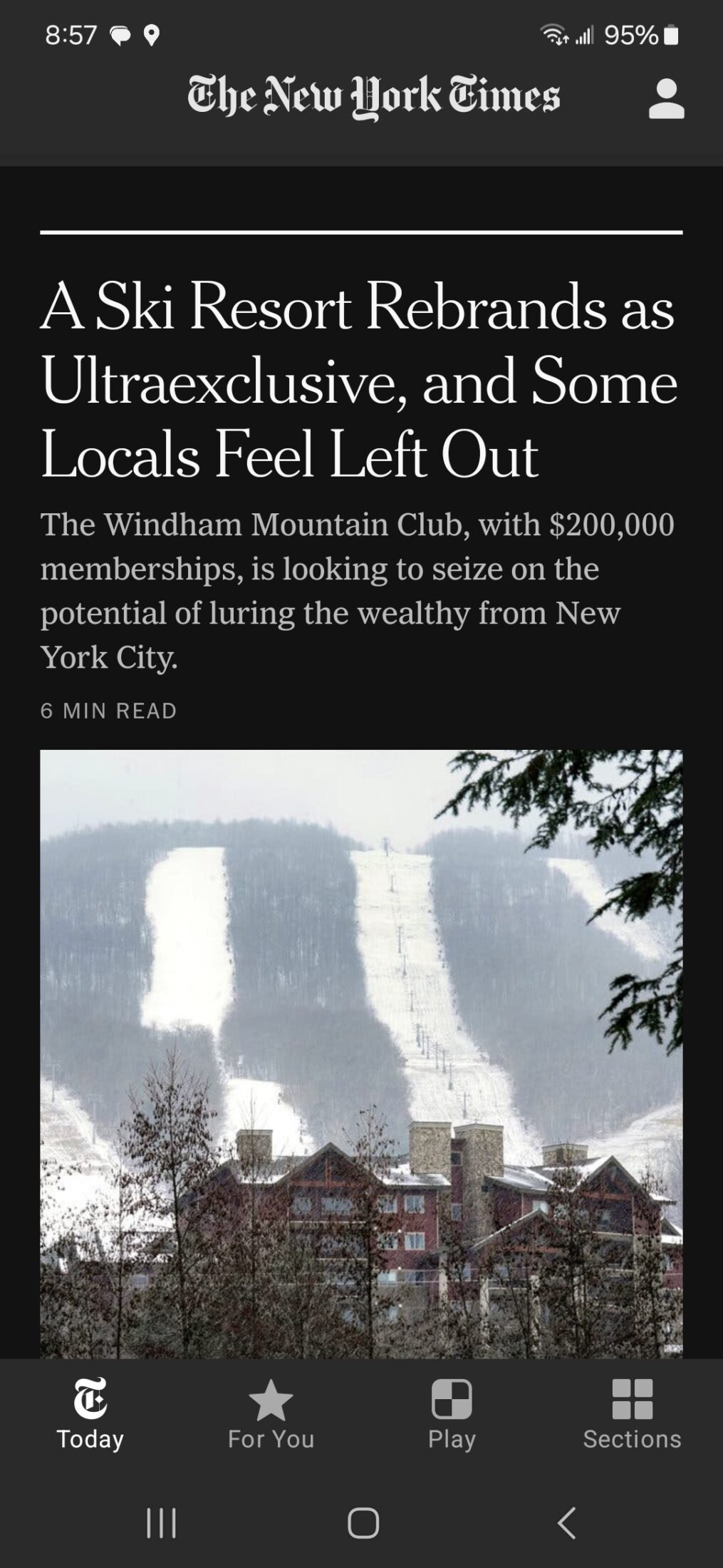
I began to notice the formula. News more often than not started to become not events but merely conjecture and what people said.  “Trump has decided to
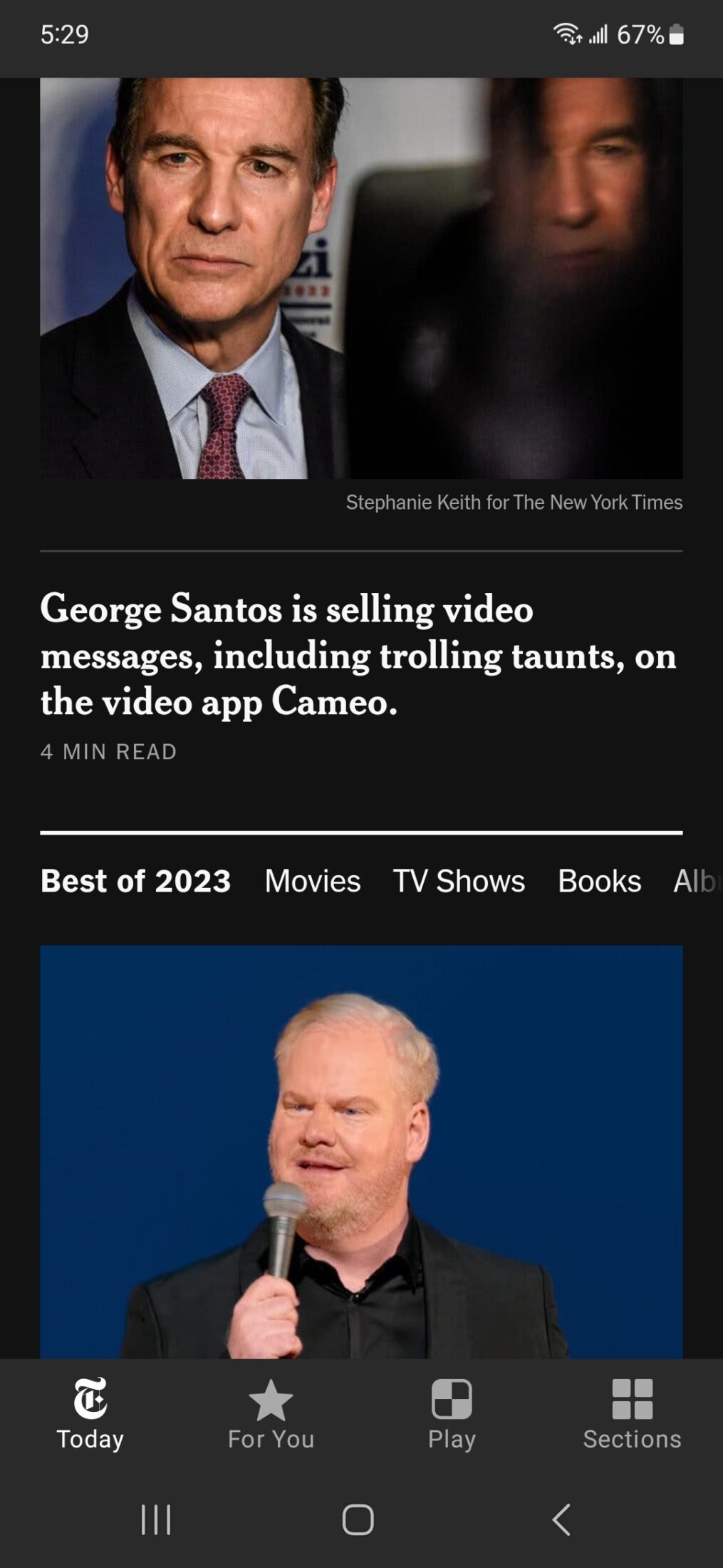
not show up in court tomorrow.” “McConnel says he if feeling just fine.” “George Santos says he may parley his fame and become a gameshow host.” And even Ross Douthat goes so far as staging a hypothetical situation where Hillary Clinton (not Donald Trump) stages a coup.

The sticky content just kept coming. The rich and famous, the shysters and scandal were given prime real-estate on your paper. People would often should be in jail were treated as celebrities.  Every time Trump would say something outrageous you would put his photo in a suit and a slick red or blue tie on the front page.  Make him and our neurotic political environment seem “normal.” Someone who sent an angry mob on the capital is presented as a slick guy in fancy suits. You give the guy free real-estate on a hourly basis. Enough!

So I’m done. Please cancel my subscription to your echo chamber. I will not follow your polls or read your op-eds by your mostly corporate conservative, neo-liberal columnists. I will not read the witty comments from your dedicated readers. I will no longer have to wade through the 10 Ways to Lose 20 Pounds articles.  I am done with your high-brow tabloid corporate journalism.

I decided to free up that time I was sucked in to your world for better things. I will get my national news from the many available sources out there.  I am giving money to my local paper, Mission Local and 48 Hills. I subscribe to Matt Stollers BIG.   But worry not. I will still play Wordle. That was sold to you with the stipulation that it would always be free.

Below are some of the easy to find examples of the new high-brow tabloid journalism at the New York Times. 

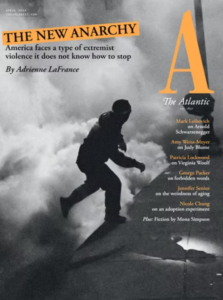
The April 2023 Atlantic Essay That Went Under the Radar – The Moral Case Against Equity Language

THE MORAL CASE AGAINST EQUITY LANGUAGE
What’s a “justice-involved person”?
By George Packer

In the April 2023 issue of The Atlantic is an article by George Packer that was very insightful that oddly did not seem to stir up any debate. The article brings up something that is under the radar in our current society, but on everyone’s minds. The Moral Case Against Equity Language outlines how language today is being regulated by new equity guideline teams. In marketing lingo these guidelines often are a part of what are called style guides.  Words have power and the object is to make language more “equitable.” The article explains how these new equity guidelines are used by The Sierra Club, non-profits, corporations, academia and other large organizations to craft their writing. It  explains the complicated way that language and words enforce power structures and define identity. How important it is for everyone to “get it right.”  It looks at current efforts to equalize and defang language of some of it historical biases and prejudices. Words matter indeed. One cannot help but think of Orwell’s thought police. The article starts out with:

“The sierra club’s Equity Language Guide discourages using the words stand, Americans, blind, and crazy. The first two fail at inclusion, because not everyone can stand and not everyone living in this country is a citizen. The third and fourth, even as figures of speech (“Legislators are blind to climate change”), are insulting to the disabled. The guide also rejects the disabled in favor of people living with disabilities, for the same reason that enslaved person has generally replaced slave : to affirm, by the tenets of what’s called “people-first language,” that “everyone is first and foremost a person, not their disability or other identity.”

The article goes on with

“Although the guides refer to language “evolving,” these changes are a revolution from above. They haven’t emerged organically from the shifting linguistic habits of large numbers of people. They are handed down in communiqués written by obscure “experts” who purport to speak for vaguely defined “communities,” remaining unanswerable to a public that’s being morally coerced.”

That’s the spooky part that is often the elephant in the room these days. Who are these people? The article closes with an argument that the guidelines maybe doing more harm than good. Whether you are “homeless” or “unhoused,” you still do not have a roof over your head. Changing the language does not solve the problem. It really often simply makes people feel less guilty and temporarily more comfortable.

This huge expense of energy to purify language reveals a weakened belief in more material forms of progress. If we don’t know how to end racism, we can at least call it structural. The guides want to make the ugliness of our society disappear by linguistic fiat. Even by their own lights, they do more ill than good—not because of their absurd bans on ordinary words like congresswoman and expat, or the self-torture they require of conscientious users, but because they make it impossible to face squarely the wrongs they want to right, which is the starting point for any change.

Brilliant thinking and something no one dares touch. I am surprised that the article did not stir up more debate. Indeed, “the guides want to make the ugliness of our society disappear by linguistic fiat” is a fair assessment.

Excellent topic. Choice writing. Subscribe to The Atlantic today!

Epilogue

It is important to not confuse the new equity guidelines with other issues of freedom of speech. That someone who commits multiple felonies and then threatens judges and elected officials receives a “gag-order” has absolutely nothing to do with the topic in this article.

And to that point, the writing and thinking of authors from before the equity guidelines, who use “slave” instead of “enslaved person” are no less valid in their works because of this use of language. Furthermore, if authors today use the old nomenclature, it does not invalidate their theories or ideas. A vigorous intellectual pursuit is not meant to be a journey towards making everyone feel comfortable.

Digital Millennium Copyright Act 25 Year Anniversary

UPDATE: OCTOBER 31, 2023: Not a single media outlet celebrated the Digital Millennium Copyright Act 25 Year Anniversary. Amazing!

It is now October 2023, twenty-five years after the passage of the Digital Millennium Copyright Act (DMCA). Seven years ago I published the piece below about the 18 year anniversary of the DMCA.  The DMCA has made it so you can listen to just about any recording made in the last 100 years for free on YouTube after looking at some ridiculous advertisement for five seconds.  It has made it so tech companies and publishing empires no longer have  responsibility for what is published on their applications, websites and what they now call “platforms.”  Safe harbor. Everything is just content.  Stuff. No one owns the stars.

I predict that on October 28, 2023  very few media organizations will acknowledge the DMCA 25 year anniversary.  The world changes and while it is changing hardly anyone notices; we all just roll with it as that is the only option. So pop the champagne corks. To the liberation of content!

FROM MY POST on OCTOBER 12, 2016
Digital Millennium Copyright Act 18 Year Anniversary

Passed on October 12, 1998, by a unanimous vote in the United States Senate and signed into law by President Bill Clinton on October 28, 1998, the DMCA amended Title 17 of the United States Code to extend the reach of copyright, while limiting the liability of the providers of online services for copyright infringement by their users.
wikipedia.org

It is 1998 – The Senate Now Has E-Mail
Let’s Have a Party!

25 years ago this month the Digital Millennium Copyright Act was passed. I would wager that very few people even know what the DMCA is, but it has affected modern life substantially. It is in many ways just one more version of an old story of plunder by larger more powerful entities, and the taking advantage of the smaller, but often more vibrant creators. In many ways, it has made it so the copyright laws in such industries as music are pointless.

But let’s back up a bit. Everyone can remember the transition that happened when CDs came out and then everyone was ripping their CDs to MP3s and handing off 100 gig drives full of music files to their buddies. Then there was Napster that simply stitched all these drives together in one big mass orgy of free MP3s. Napster got the injunction primarily because the established music industry  had no cut of the racket. Along come tech giants like Google, Apple, Microsoft and Samsung and to cover their liability the DMCA made perfect sense. If someone has “illegal” music on their devices, they should not be held accountable. Furthermore, if someone uploads a Beatles tune as a video with a picture of Ringo Starr as the graphics to YouTube, why should YouTube be held accountable for such blatant infringement? All good and well. But that was 1998. Today is 2016. I am certain that in 1998 most members of the Senate had no idea the true implications of the DMCA. In 1998, most of the members of the Senate probably did not even know how to manage their own email. They were still licking stamps.

The DMCA’s principal innovation in the field of copyright is the exemption from direct and indirect liability of Internet service providers and other intermediaries.
wikipedia.org

Let’s look back a bit. In 1998 the leading browser of the day was Netscape 2. Internet Explorer was at version 5.5. If anyone remembers IE 6, imagine how terrible IE 5.5 must have been. Windows 98 had probably just been released.  Man, that is scary. My point is that the DMCA has not been updated for 18 years and is an extremely flawed piece of legislation. The large tech companies have in many ways based their entire industry on the Digital Millennium Copyright Act. It allows for basically everyone to break the law everyday and not have to worry about it. When was the last time that a cop pulled someone over and wanted to check if the person had pirated music on their phone? There probably is thousands of dollars of contraband on everyone’s devices. Ain’t gonna happen.

Times Have Changed – Google Is Our Master of Information

But this is what is disingenuous about the DMCA. Companies like Google know just about everything about you. What you buy. What websites you visit. Your birthday. Your favorite color.

In 2016 they have the ability to determine if a piece of music is copyrighted via matching wave forms, and indeed this is how they “monetize” this work.  But YouTube refuses to acknowledge this UNLESS they are in a position to make money off of that music – they make money anyway but that is another post. The only way the copyright holder can get the videos of their music taken down is with take-down notices. If a song is popular, this can mean hundreds of separate videos with the same song on it.  The artists cannot simply tell the ISP such as YouTube “I do not want my work on your network.” YouTube is sort of like that creepy neighbor running a crack-house who borrowed your weed-whacker last spring and refuses to give it back claiming ignorance. Musicians, songwriters and composers have better things to do with their time than chase down illegal version of their work.

YouTube is sort of like that creepy neighbor running a crack-house who borrowed your weed-whacker last spring and refuses to give it back claiming ignorance. Musicians, songwriters and composers have better things to do with their time than chase down illegal version of their work.

Which brings me back to 1998. Do you really think in 1998 anyone could predict such entities as YouTube or Facebook? And unlike the owners of these companies, I believe these entities are not just platforms, they are simply publishers with free content providers and creators. These publishers have to take responsibility as well for copyright infringement. It is within their technical realm but they are playing dumb as the Digital Millennium Copyright Act of 1998 suits them just fine. The DMCA is to their advantage.

The real master of deception with the Digital Millennium Copyright Act is  YouTube. Facebook, Twitter and the like have simply entered personal lives and monetized birthdays and other important life events until people depart from this world. Personalized marketing on steroids that the users all agree to though without  really reading the privacy policies.

But all such companies are the modern-day plunderers. Instead of grabbing continents, forests, rivers, enslaving the natives and digging for gold, they are plundering your personal events and consumer habits along with the likes of great artists like James Brown, Elton John, Charlie Palmieri, Vince Gill,  Willie Green,  Slayer, Bette Midler, Woody Guthrie (the list is endless) and any person who has recorded or published a piece of music in the last hundred years.

Conclusion

The Digital Millennium Copyright Act needs to be reexamined and rewritten every five years to reflect and take into consideration the changes in technology, creativity and platforms. It is an important part of combating the many inequities in our society.

Banning the Wrong Books

…the truth is, that when a Library expels a book of mine and leaves an unexpurgated Bible lying around where unprotected youth and age can get hold of it, the deep unconscious irony of it delights me and doesn’t anger me.”
Mark Twain – concerning the banning of “Eve’s Diary,” a comic short story by Mark Twain

There has been much news about the banning of books of late. A sort of totalitarian energy in our world has emerged in a way reminiscent of earlier times. The “thought police” is hard at work. With opinion becoming increasingly confused for truth and a reactionary strain has entered the body politic. There has been the  banning of books on civil rights, African American history, gay rights and history and queer memoirs one of which is Gender Queer: A Memoir by Maia Kobabe perhaps the most banned book in recent years.

Curious what all the fuss is about, I checked out Gender Queer from the public  library.  The book is actually a comic book. It is memoir of a young person in rural Northern California discovering their gender identity and becoming transgender.  It is poorly written, rather naïve and the illustrations leave a lot to be desired. You can read the entire book in a few hours. I highly recommend that people check this book out from the library and read it as this topic will continue to be in the news. It will certainly influence future elections. While you are at the library also check out some Calvin and Hobbes and perhaps Captain Underpants –  far better literary works.

Indeed, I think the problem with the books bans, is the quality of the books they are banning. The banning of books seems only to shine the light on these trendy  low quality books which few adults have actually read. The book banning types need to go after bigger fish and bring interest to higher quality work. There are so many to choose from. Without further adieu:

SF Journal Official Short List of Banned Books 2023


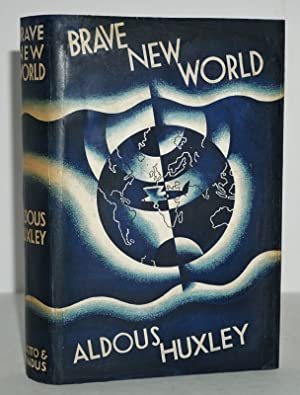
#1: Brave New World
Aldous Huxley
HarperCollins
The notion that in the future we will become these sex-crazed perverts is simply unacceptable. The explicit drug use is out of control as well. Do not read this book! It will ruin your brain.

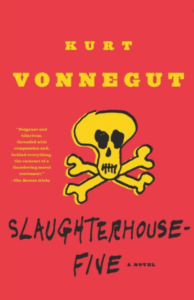
#2: Slaughterhouse Five – A Children’s Crusade
Kurt Vonnegut
Random House
One of those books that has been banned, and should be banned because there is perhaps a little sex and nudity, but probably because Vonnegut, a pacifist, takes the whole notion of war to task. In our war-mongering world, peace is simply unacceptable.

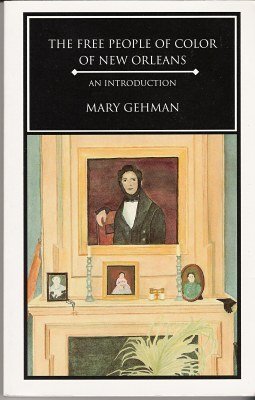
#3: Free People of Color of New Orleans : An Introduction
Mary Gehman
Margaret Media, Incorporated
This “woke” book goes way too far. Why in the world would we even mention New Orleans in the context of geography, Black history or American culture. That the book points out that African Americans were actually free in New Orleans throughout the history of the United States is just plain preposterous.


CONCLUSION
Of course there are many more books that need to be suppressed. To all the censors out there: please work harder at identifying higher quality books to ban.