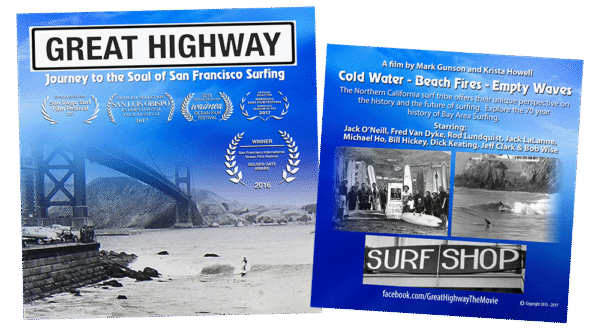
Great Highway traces the roots of Bay Area surfing and explores the changes that time reveals. The history is told by those who lived it in the freezing cold Bay Area conditions. Starring Jack O’Neill, Jack LaLanne, Fred Van Dyke and Michael Ho. The local surfers of Northern California are full of character, and offer their own perspectives on the history and the future of surfing.
Great Highway: Journey to the Soul of San Francisco Surfing is a documentary film about surfing in San Francisco. You can read more about the movie at https://www.greathighwaymovie.com.
What makes the movie all the more valuable and entertaining is that it is not just about surfing, but really about the history of San Francisco, especially on the west side of town. It goes back to the nineteenth century and takes a geographical perspective on Yerba Buena. Eventual, it focuses on what was called The Outside Lands, the sandy desolate place out by the ocean that is now called the Sunset District. We get a view of the various scrappy settlements that took hold out there including Carville, which was made of reused abandoned horsecars (horse-drawn trolleys) and, later, cable cars for housing and public buildings. You get to romp through the period of the heyday of Adolph Sutro’s Sutro Baths and the massive Fleishhacker Pool where now the San Francisco Zoo is located. Eventually the salt water of the ocean had its way and these public places are long gone, though there is still a good left exactly where the Fleishhacker Pool bathhouse once was and old timers still call it Fleishhacker’s. The bathhouse eventually did burn down.
The actual Great Highway was built in the 1929. The movie then romps through grainy footage and interviews of the various surfers who braved the cold water and surfed without wetsuits on crude, homemade boards. It highlights the rebel nature of these early surfers. a persona that interestingly has sort of disappeared as surfing has become more mainstream. The audacity of people like Fred Van Dyke, Bill Hickey, Bill Bergerson and Rod Lundquist to name but a few who broke trail, surfing without wetsuits in the frigid Ocean Beach waters. The movie goes on to talk about the wool sweaters, the fires on the beach and Jack O’Neil inventing the modern wetsuit. The movie has a very raw, low-budget appeal, just like the early days of the sport. It was timely that the film came out in 2017 as many of the old timers that were interviewed have now passed. Their recollections and candor are awe-inspiring. A great movie for people of all ages.
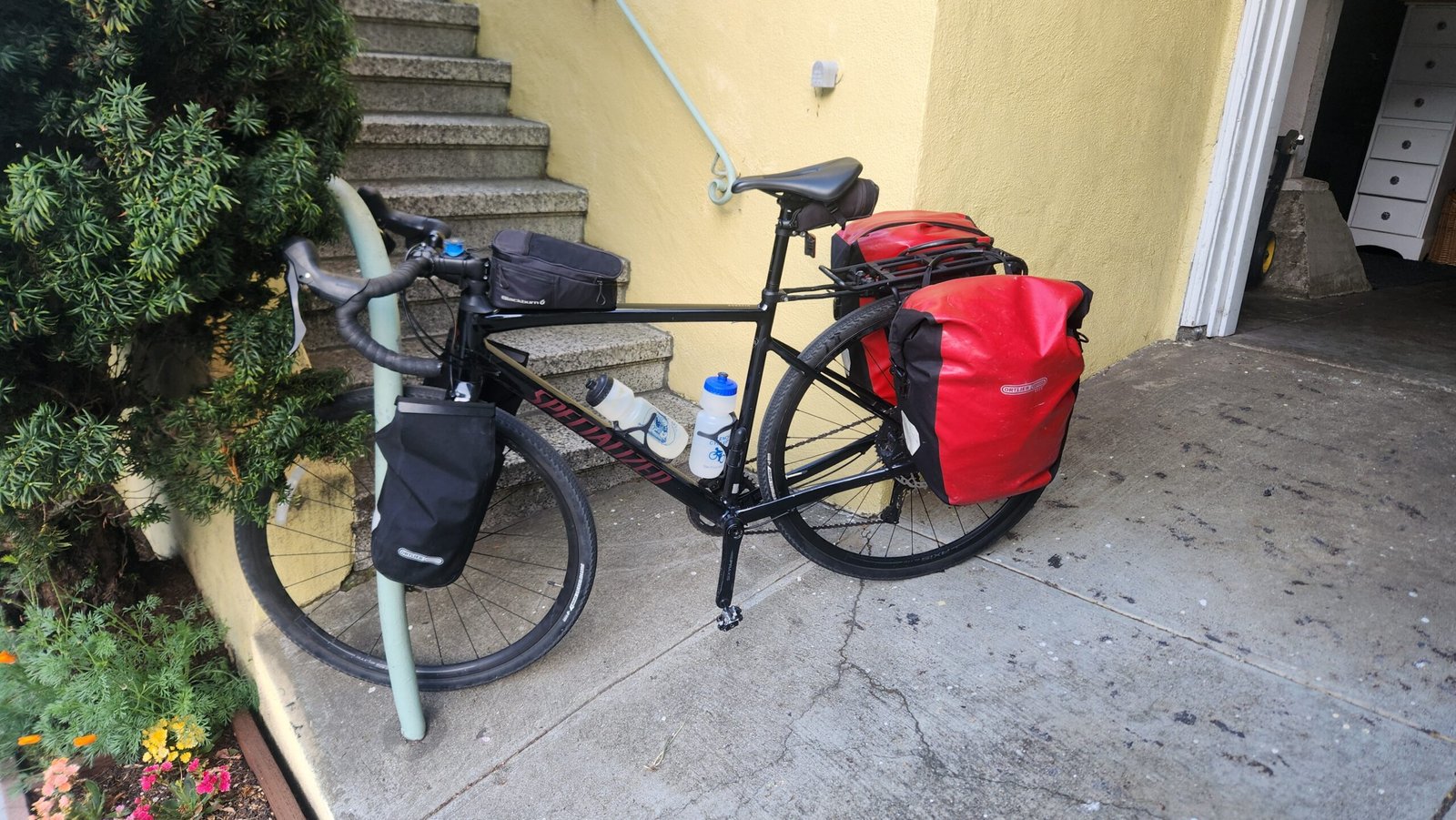
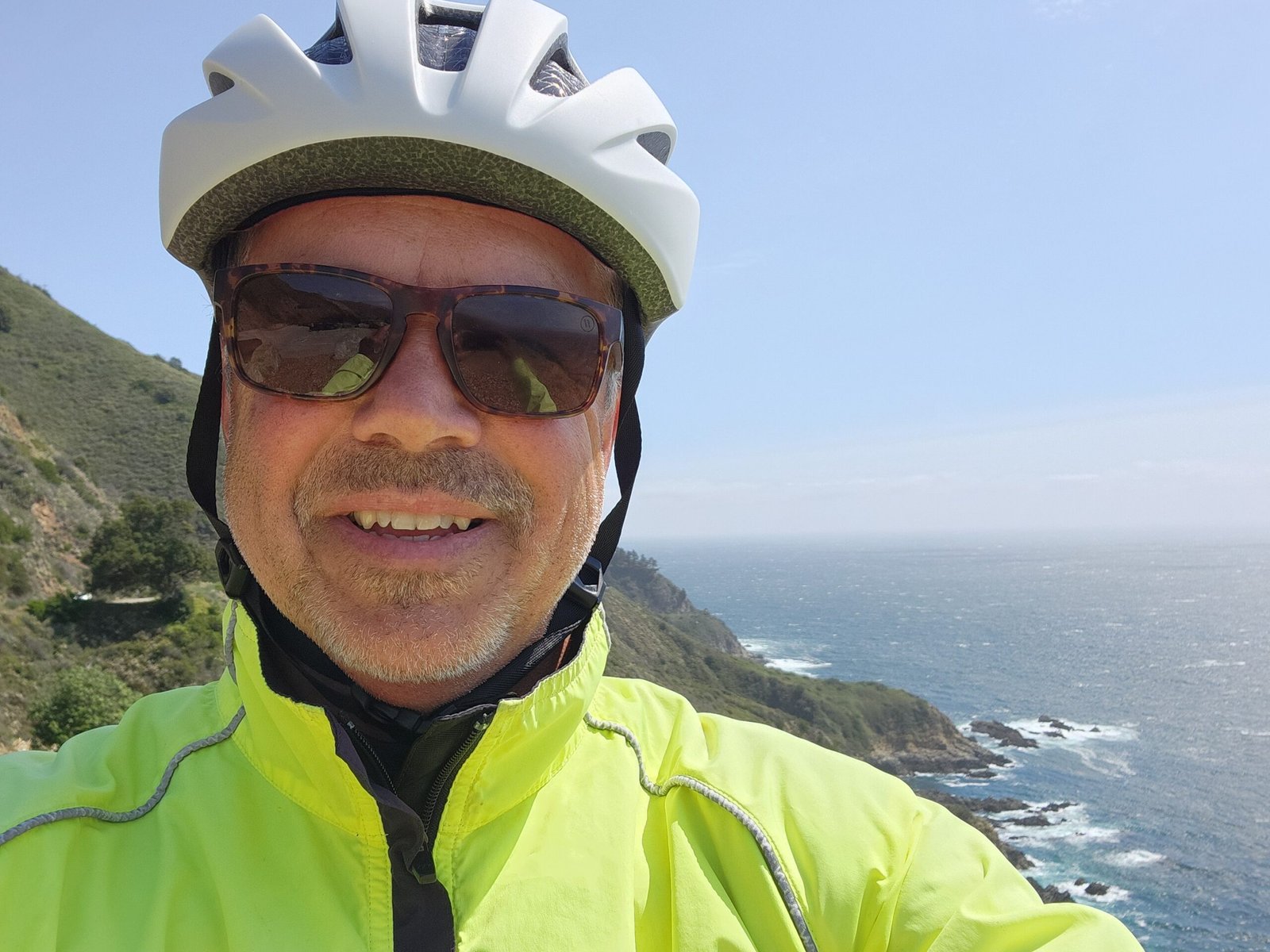
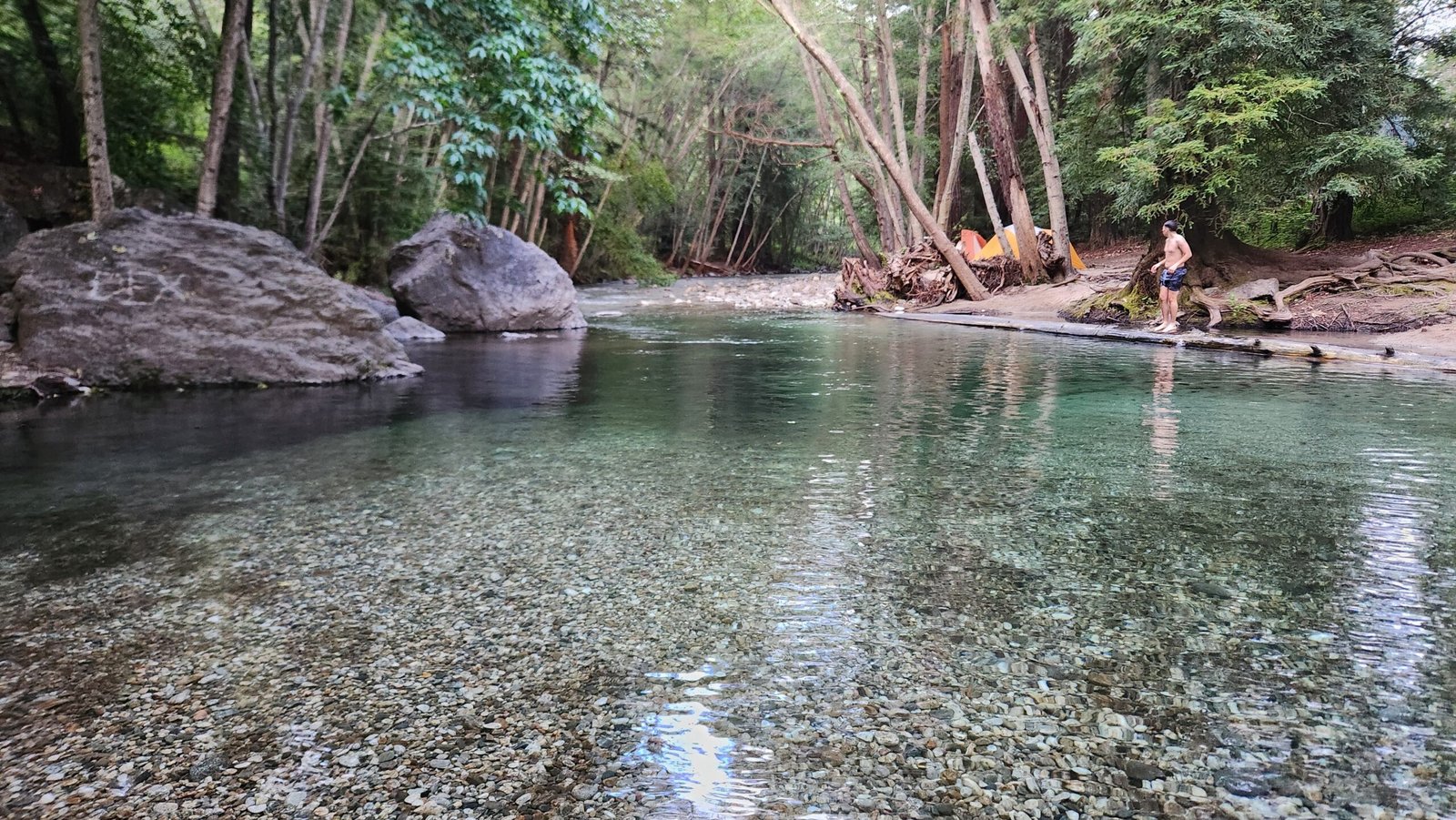
“The Henry Miller” is a bike trip that I did solo in late April and early May of 2025. I had always wanted to do this ride and get down to the Henry Miller Library along Highway 1, past Big Sur. The trip was encouraged along by a website page https://www.bestcoastbiking.com/san-francisco-to-big-sur. This website has the maps and itinerary. I followed the maps more of less but instead of Big Basin Redwoods State Park on the first night I stopped by my friend’s place in Boulder Creek. Julie, the sister of a high school buddy and her husband Al were great to get to know and hang out with. Thanks for the awesome dinner!
“The language of society is conformity; the language of the individual is freedom. Life will continue to be hell as long as the people who make up the world shut their eyes to reality. Switching from one ideology to another is a useless game. Each and every one of us is unique, and must be recognized as such. The least we can say about ourselves is that we are American, or French, or whatever the case may be. We are first of all human beings, different one from another, obliged to live together, to stew in the same pot.” – Henry Miller from “Stand Still Like the Hummingbird”
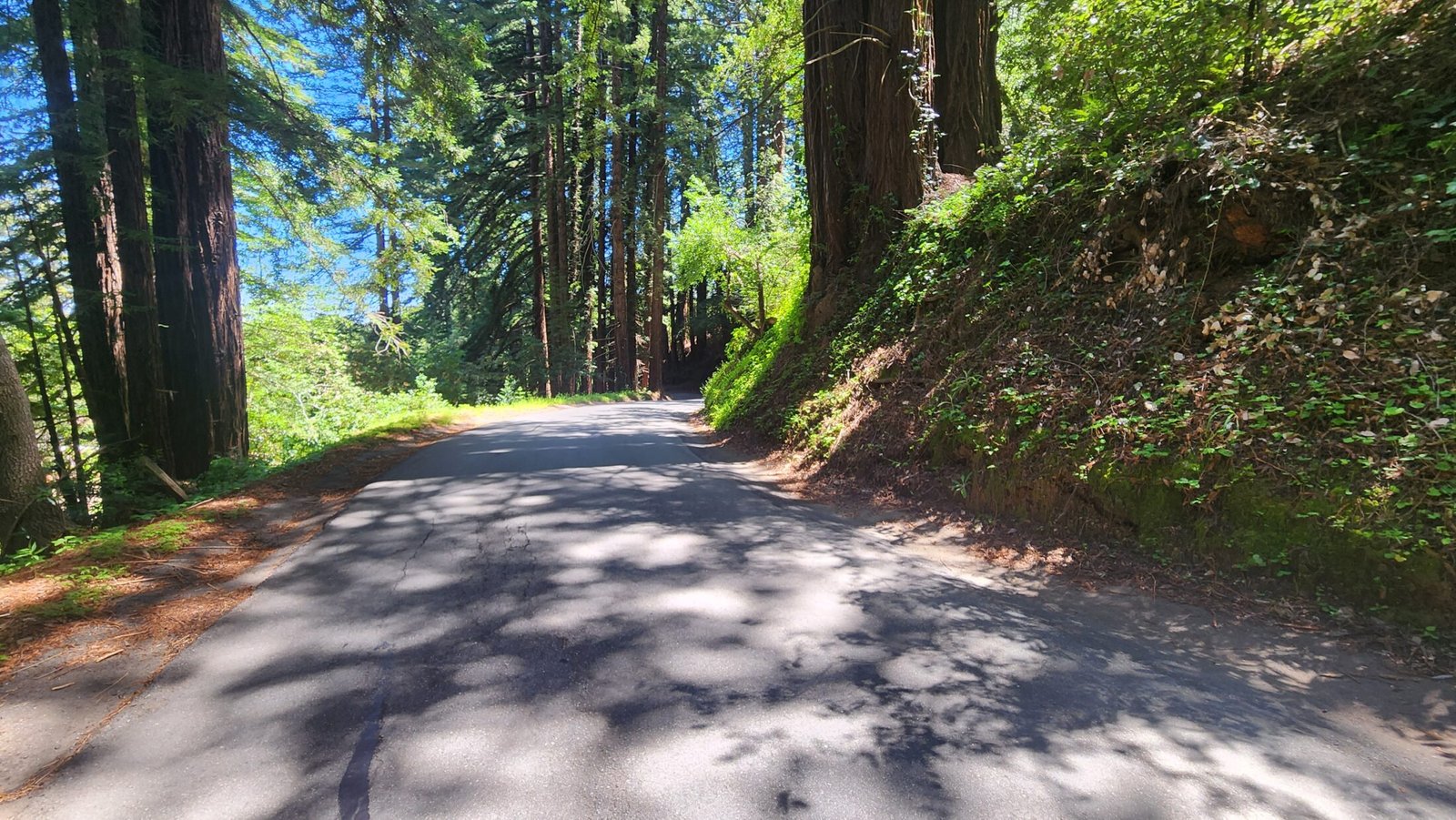
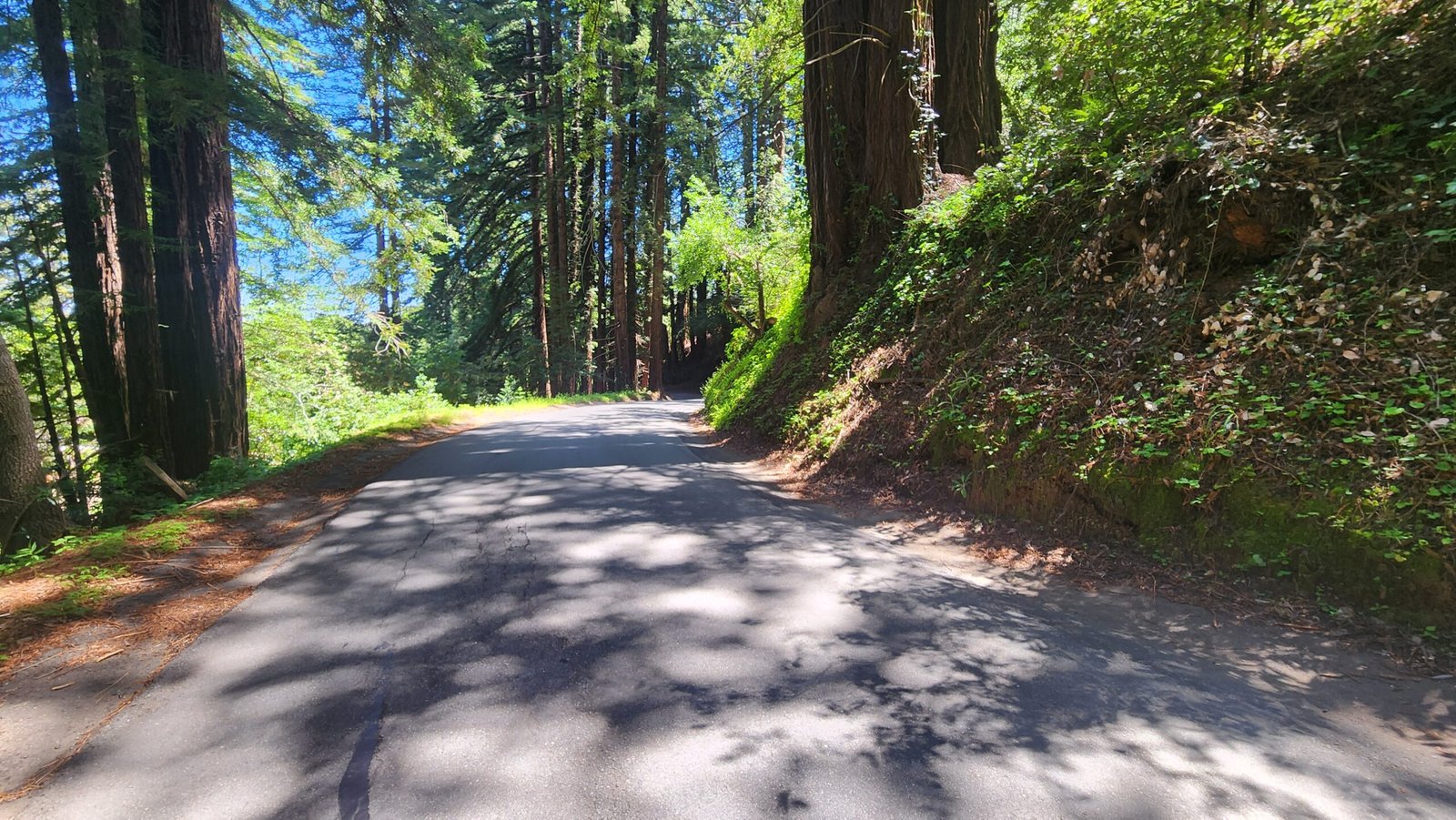
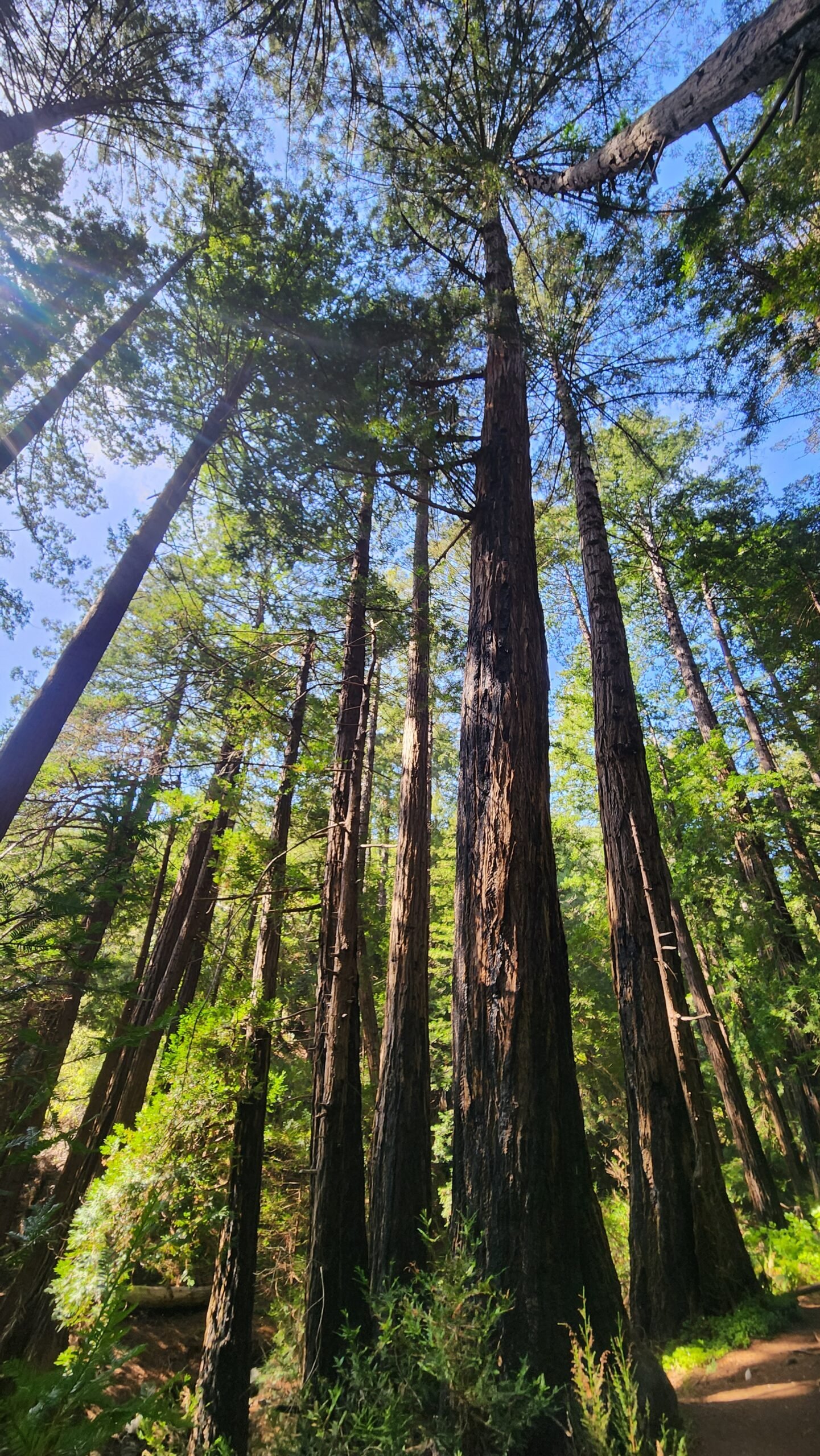
Some of the riding highlights are the first day’s climb out of Woodside up the Old Honda Road. This is 2000 feet straight up an old wagon trail through the redwoods. More bikers than cars do this maniacally climb. Once you reach Skyline Blvd you take a sip of water and have to climb another thousand feet. Light traffic and a good route when the coast is fogged in. Very wild with many nature preserves.
Old La Honda Road
The traffic from Boulder Creek to Santa Cruz is a bit nasty no matter what route you go. Highway 9 for a lot of it with a few backroad detours. Once in Santa Cruz the bike paths are many.
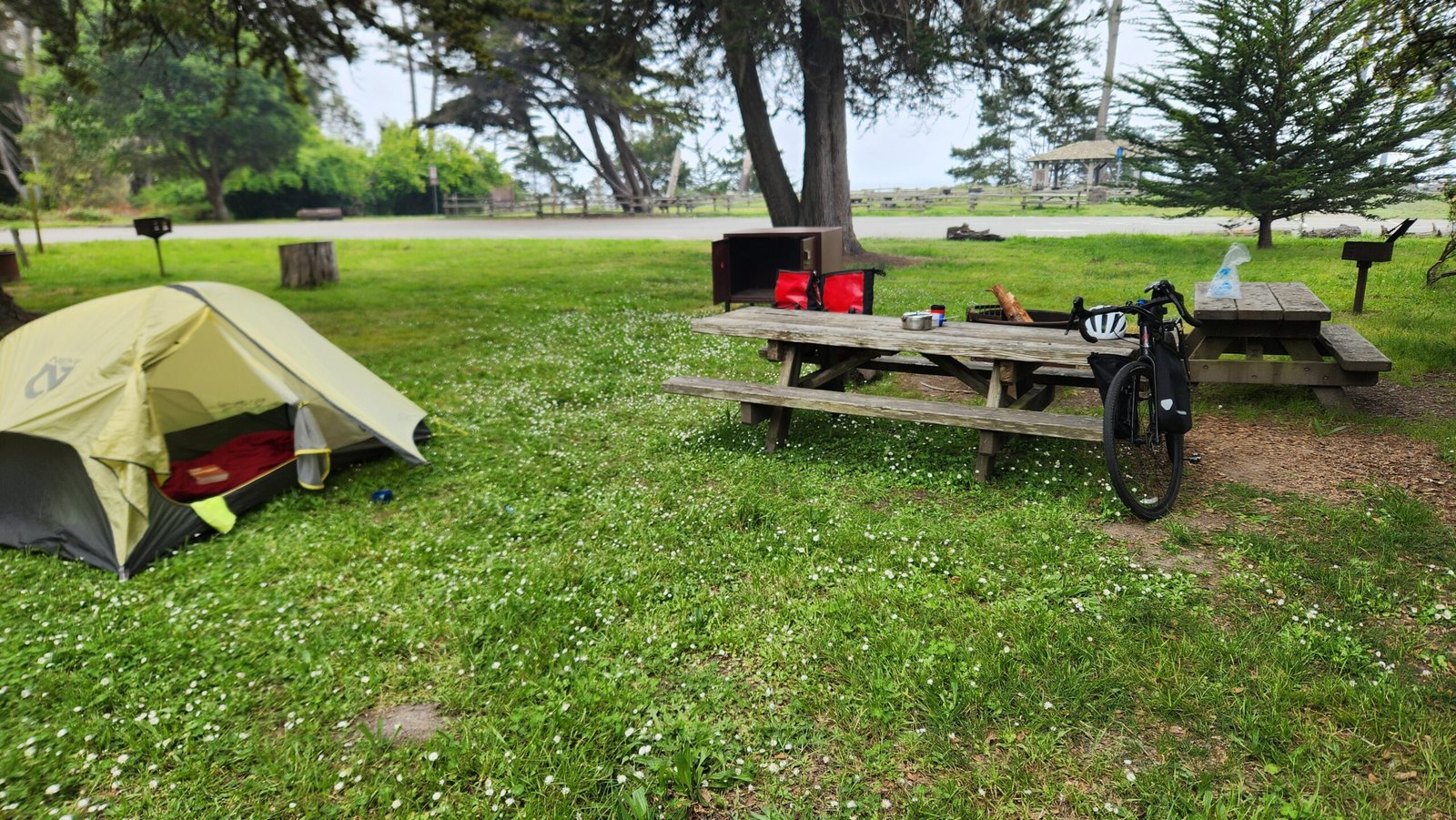
New Brighton State Park in Capitola south of Santa Cruz is a very good park for both bikes and campers. Killer bike camp spot. There are some premier ocean-side camp sites on top of the hill. Would some day be nice to reserve that for car camping.
New Brighton State Park
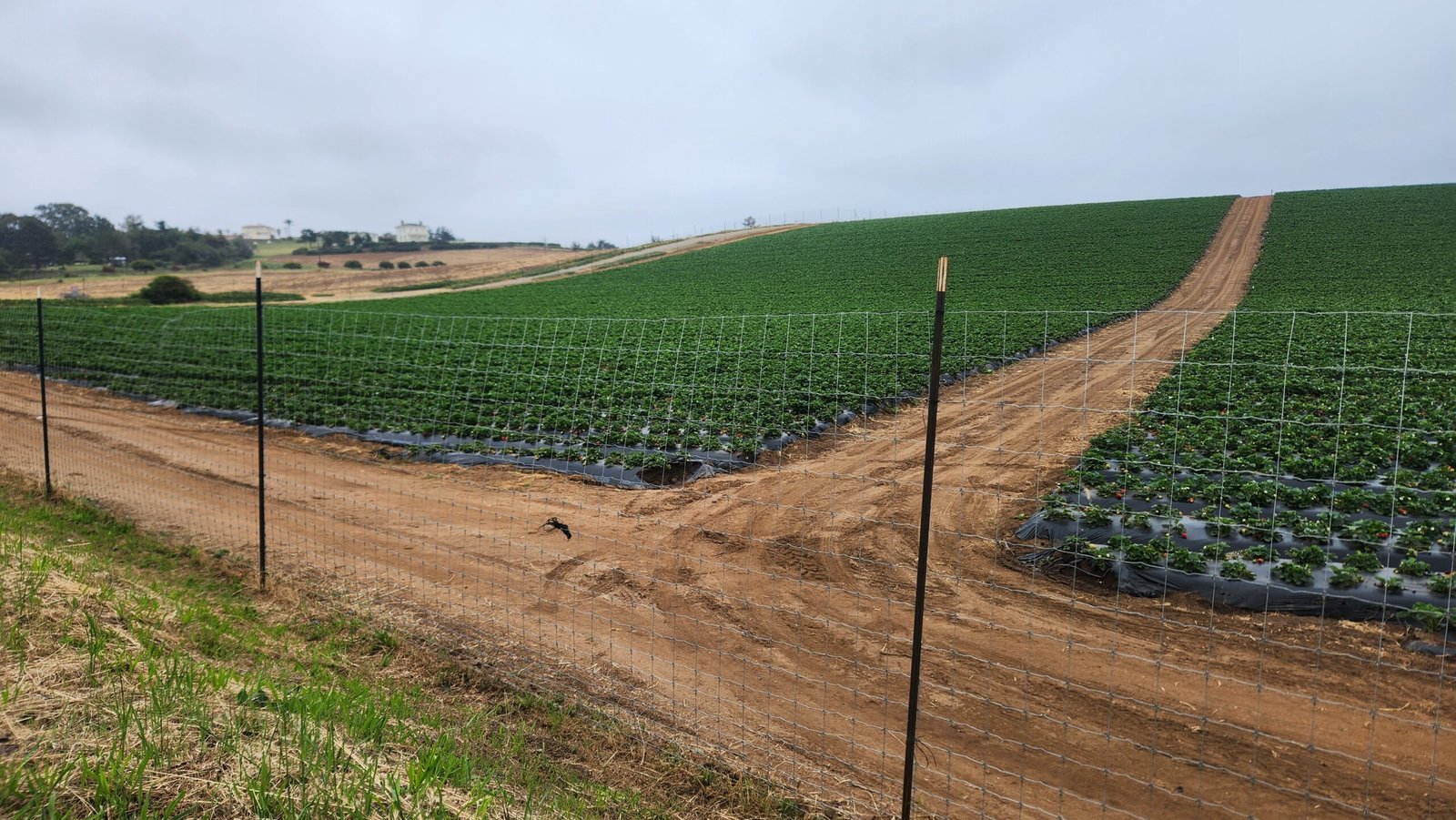
Biking through the farms of Watsonville is fun as you are definitely in farm land. It is interesting to see where the food comes from and take in the climate. Acres and acres of strawberries that go on forever as far as the eye can see. A lot of lettuce and broccoli this time of year. People hard at work picking and farming. One lettuce-picking crew far from the main road flew a huge Mexican flag and were blasting mariachi music out of a converted school bus.
When you hit Moss Landing there is about 10 miles of dreadful highway shoulder riding which is never fun. The highways in this part of Monterey County are pretty bad. Two lane roads where they need four. Traffic gets backed up with people just trying to get to work. It would be brilliant if there was a dedicated bike path all the way from Santa Cruz to Monterey.
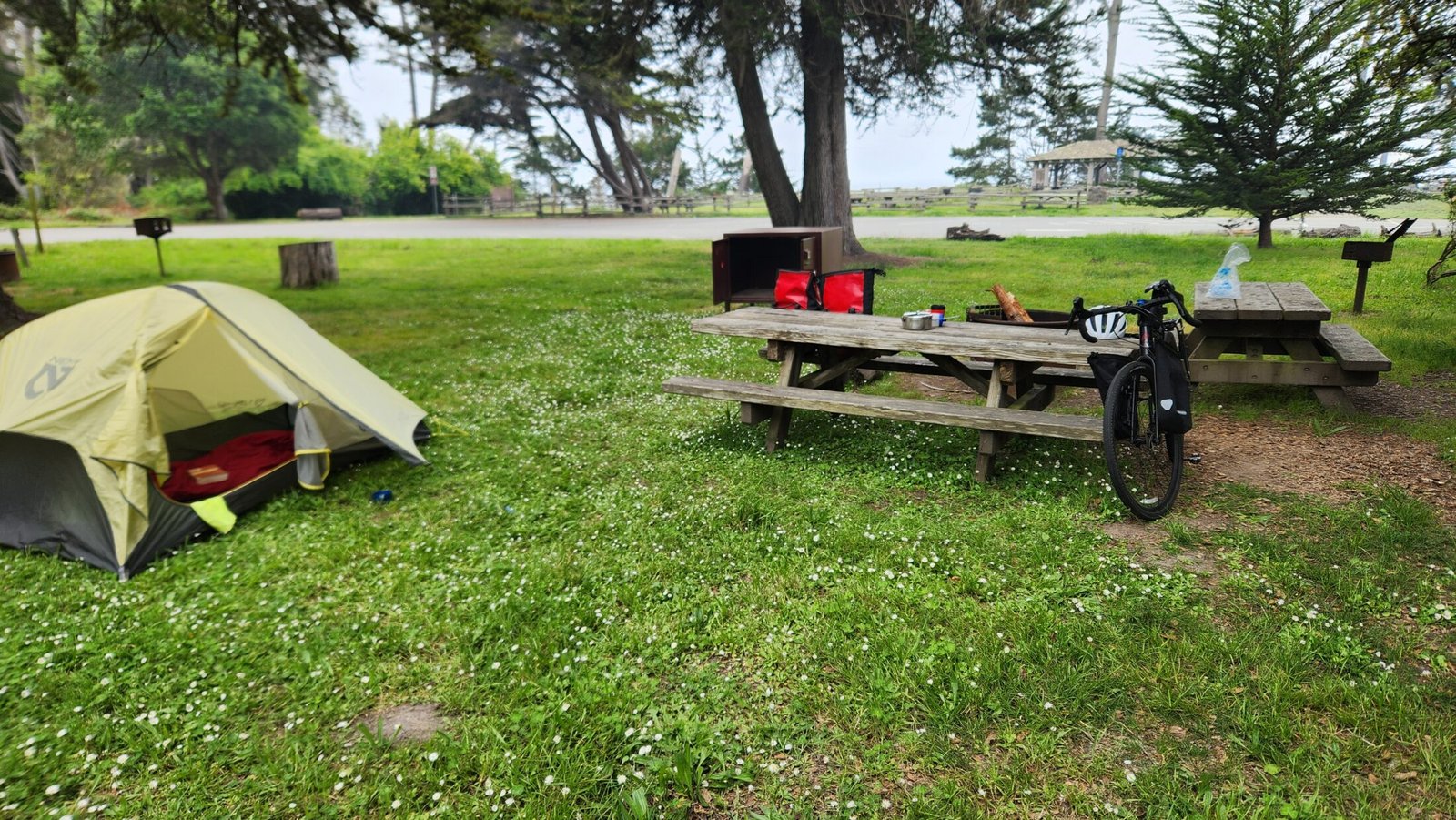
In Monterrey I camped in a spot the bestcoastbiking.com recommended, Veteran’s Park which is up a hill from the wharf. It worked out fine but next time I would get a hotel.
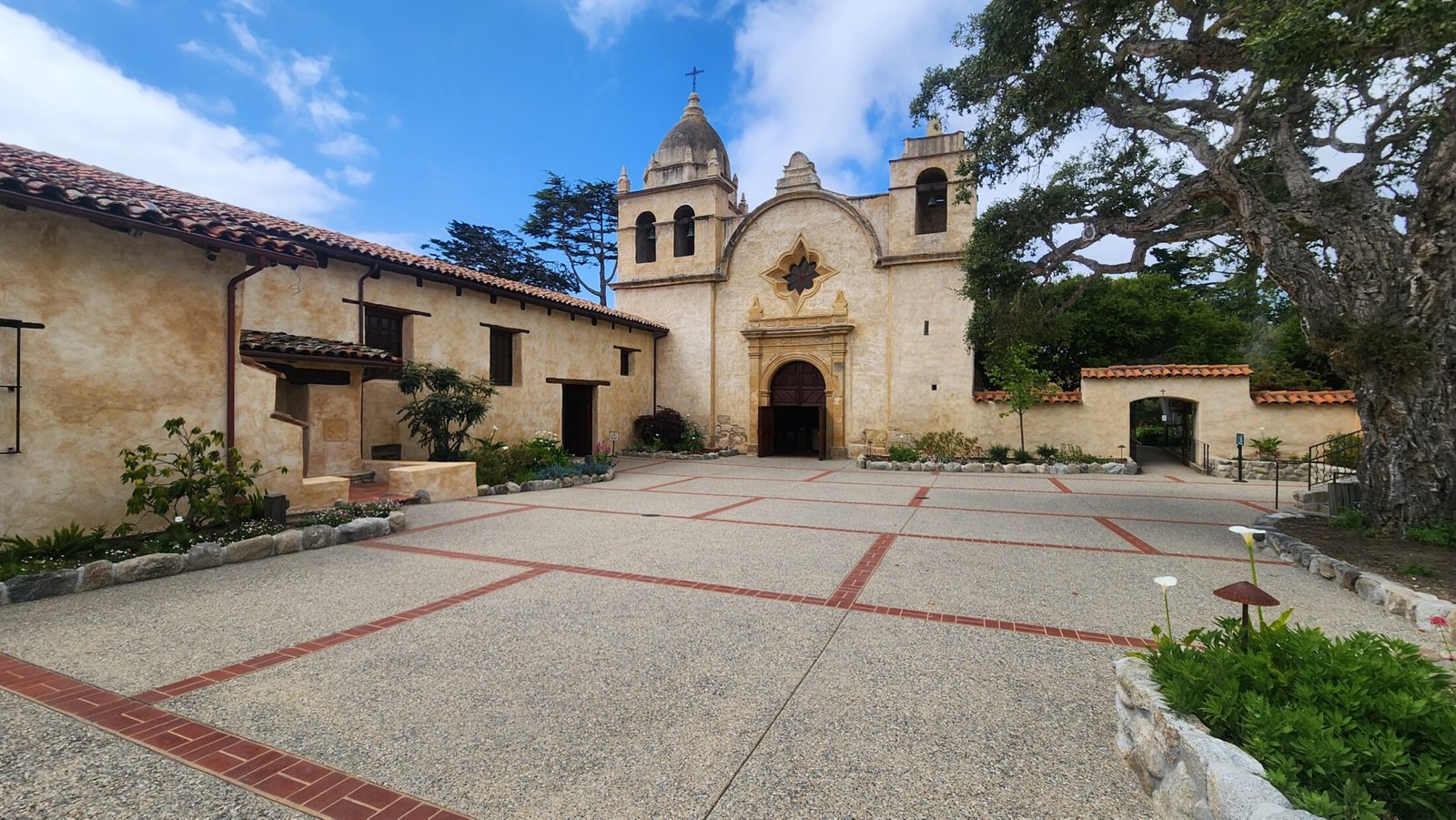
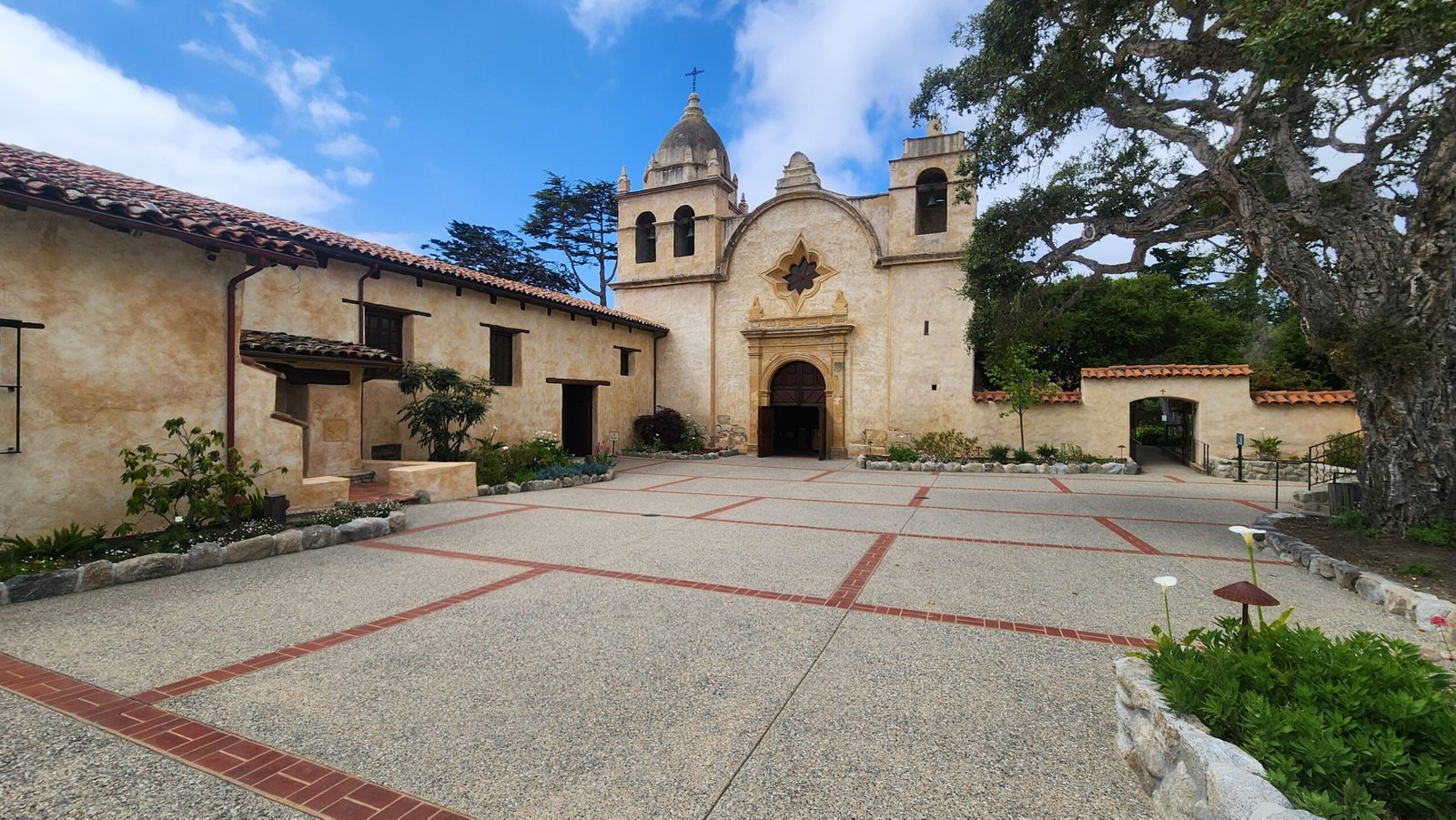
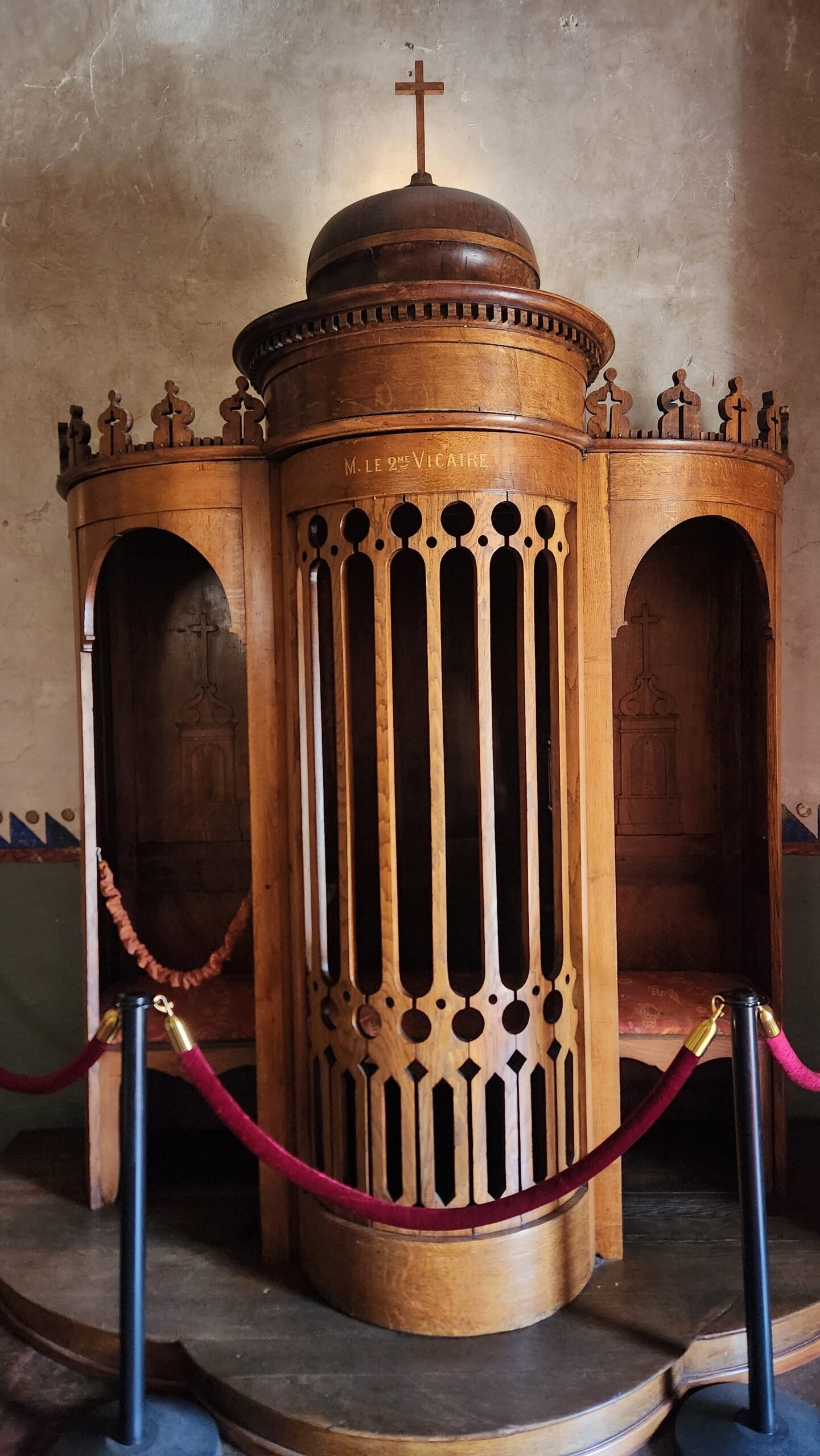
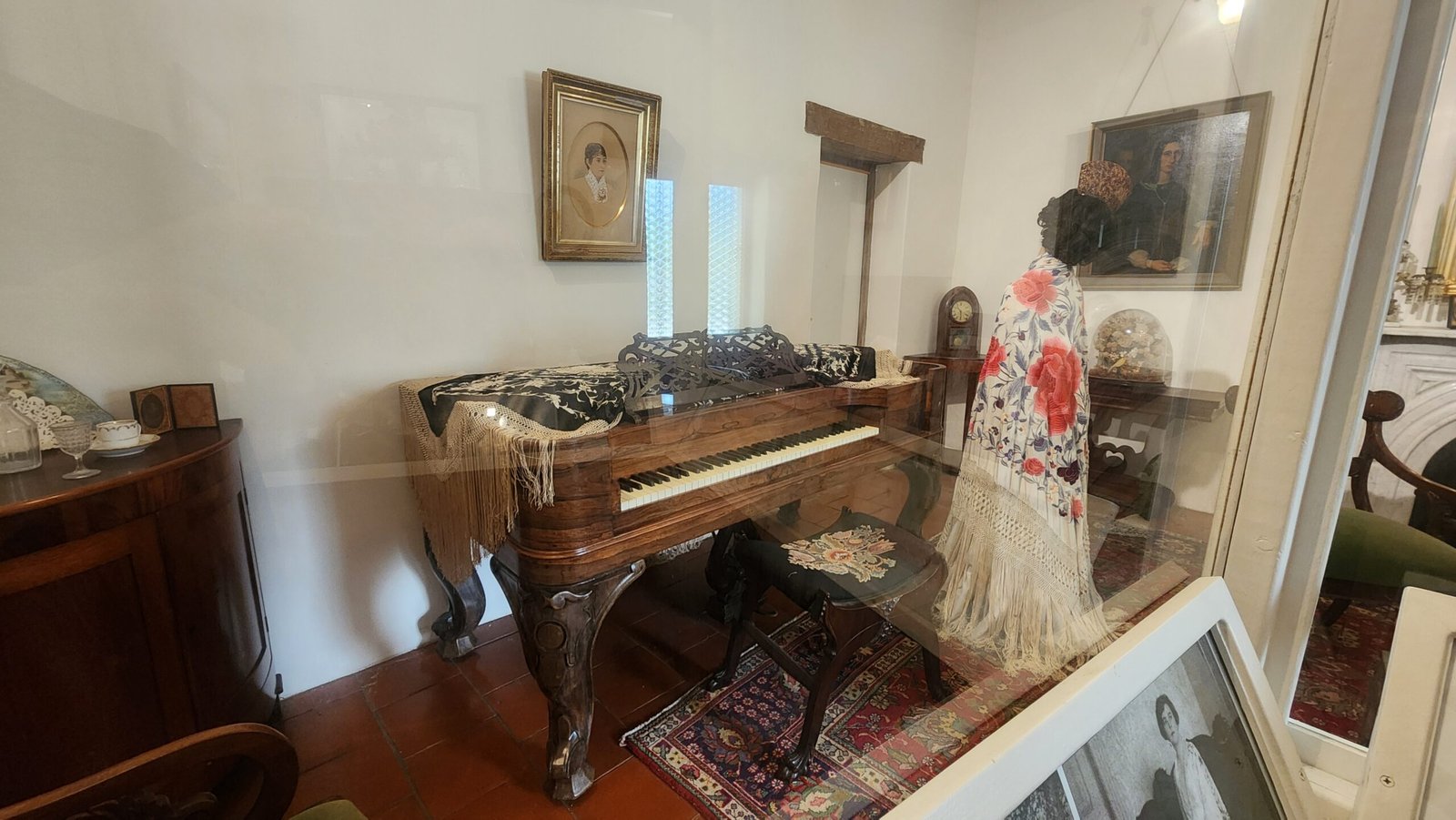
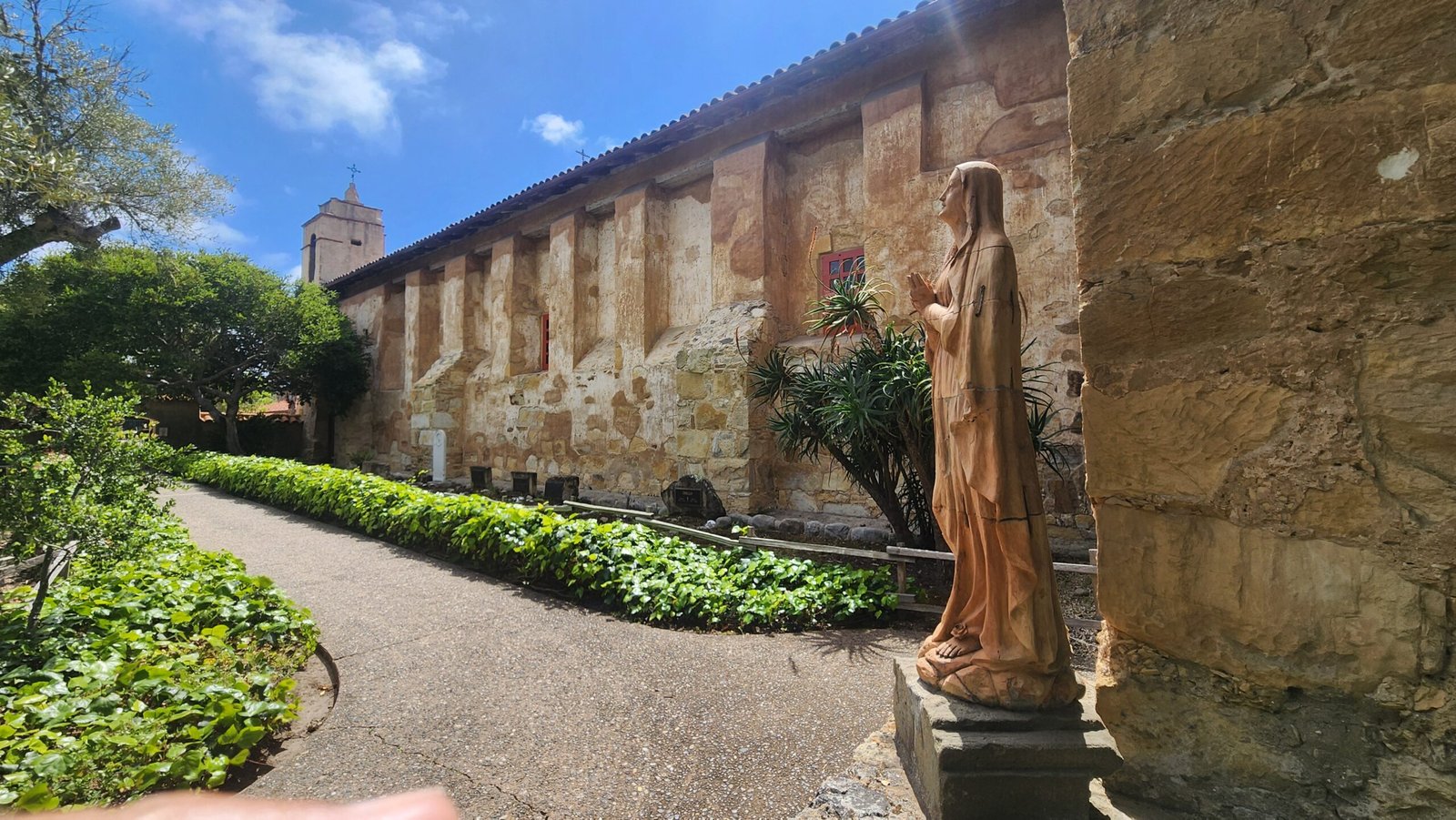
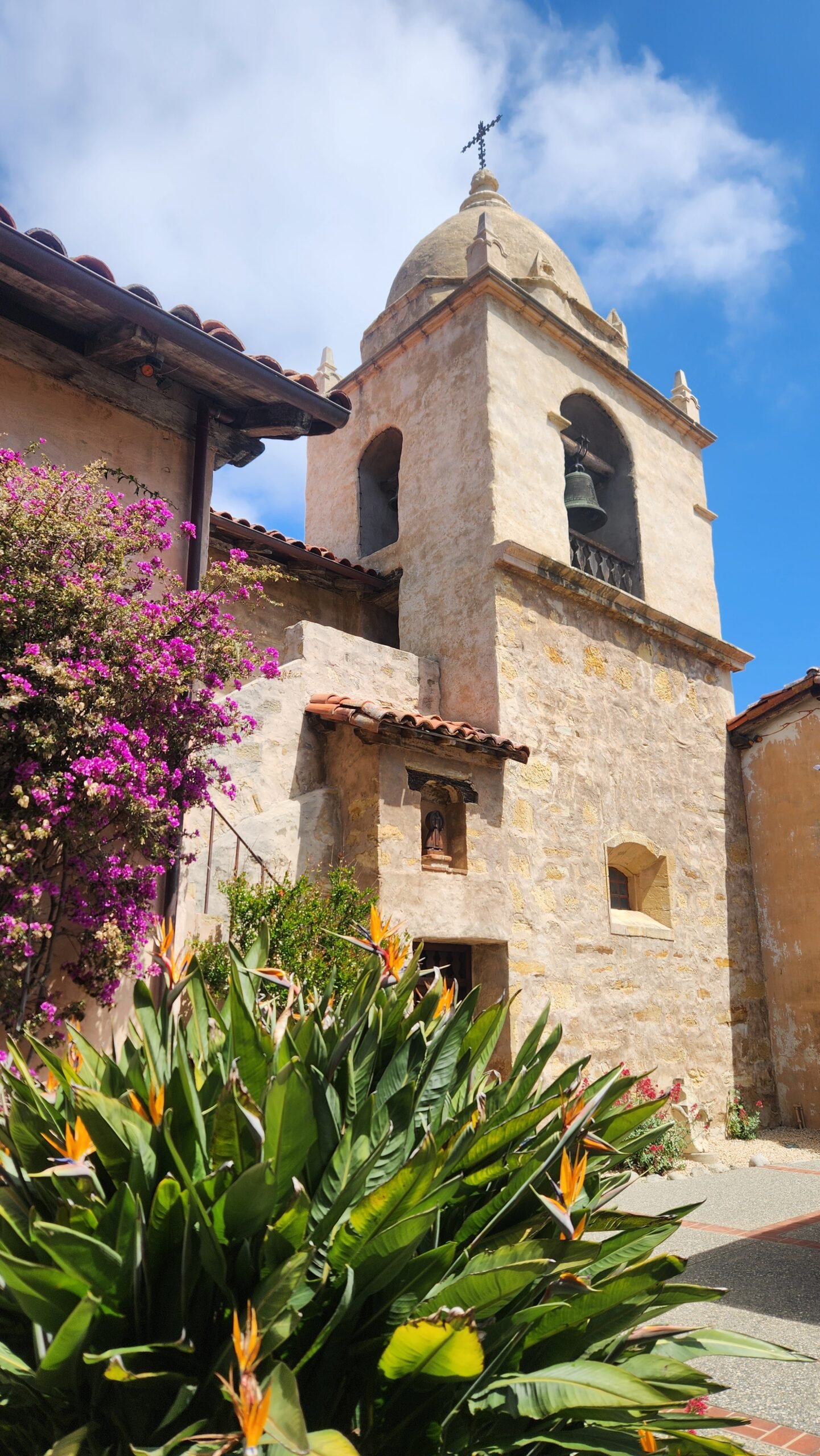
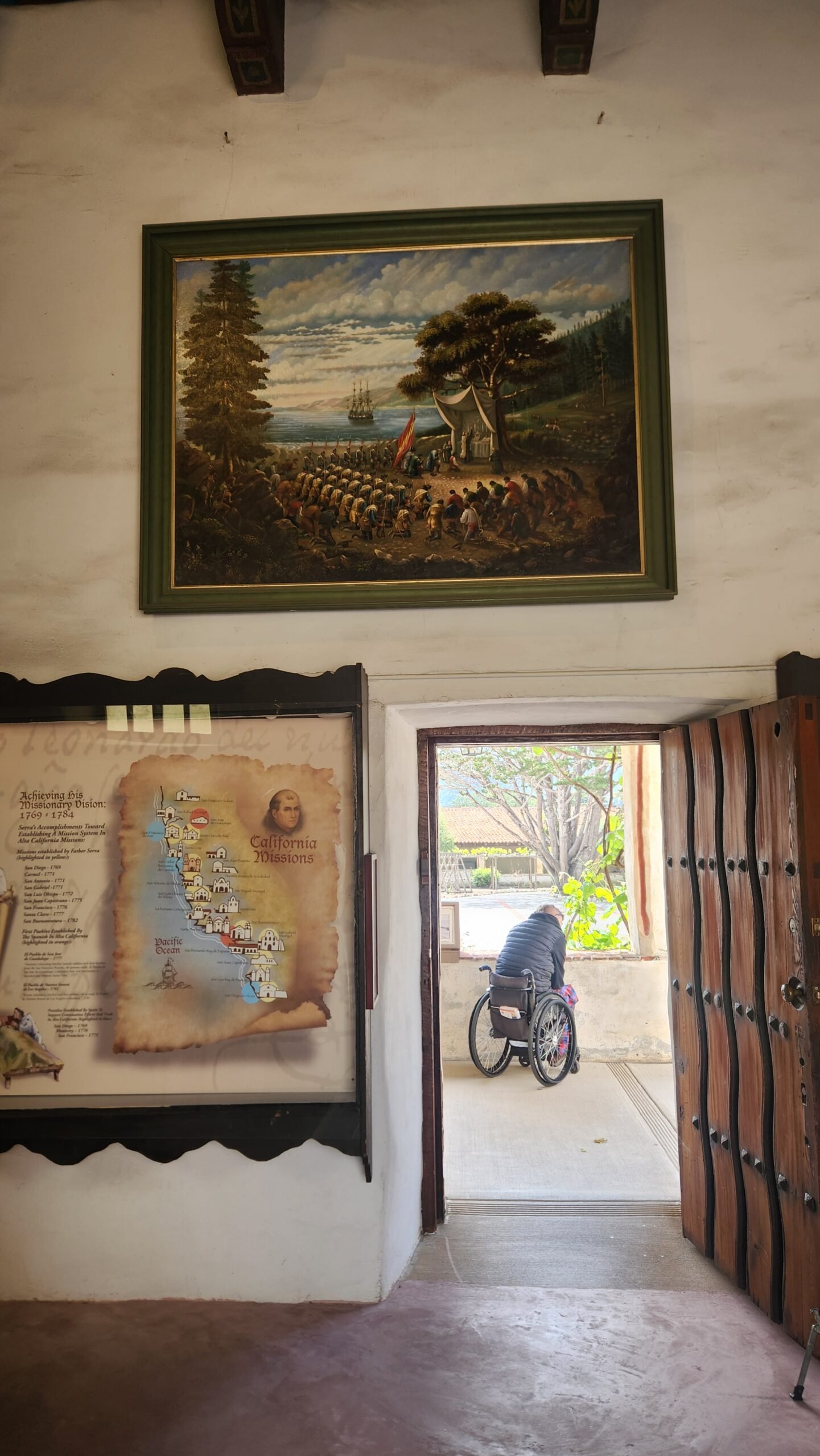
Day three headed down the coast. Checked out Carmel Mission Basilica, started up by Captain Gaspar de Portola and Franciscan Father Junípero Serra. Portola and Serra are the names of streets, schools and shopping malls throughout California. Serra spent most of his life in pain from probably an infected insect bite. Thank science for modern medicine and antibiotics.
Carmel Mission Basilica
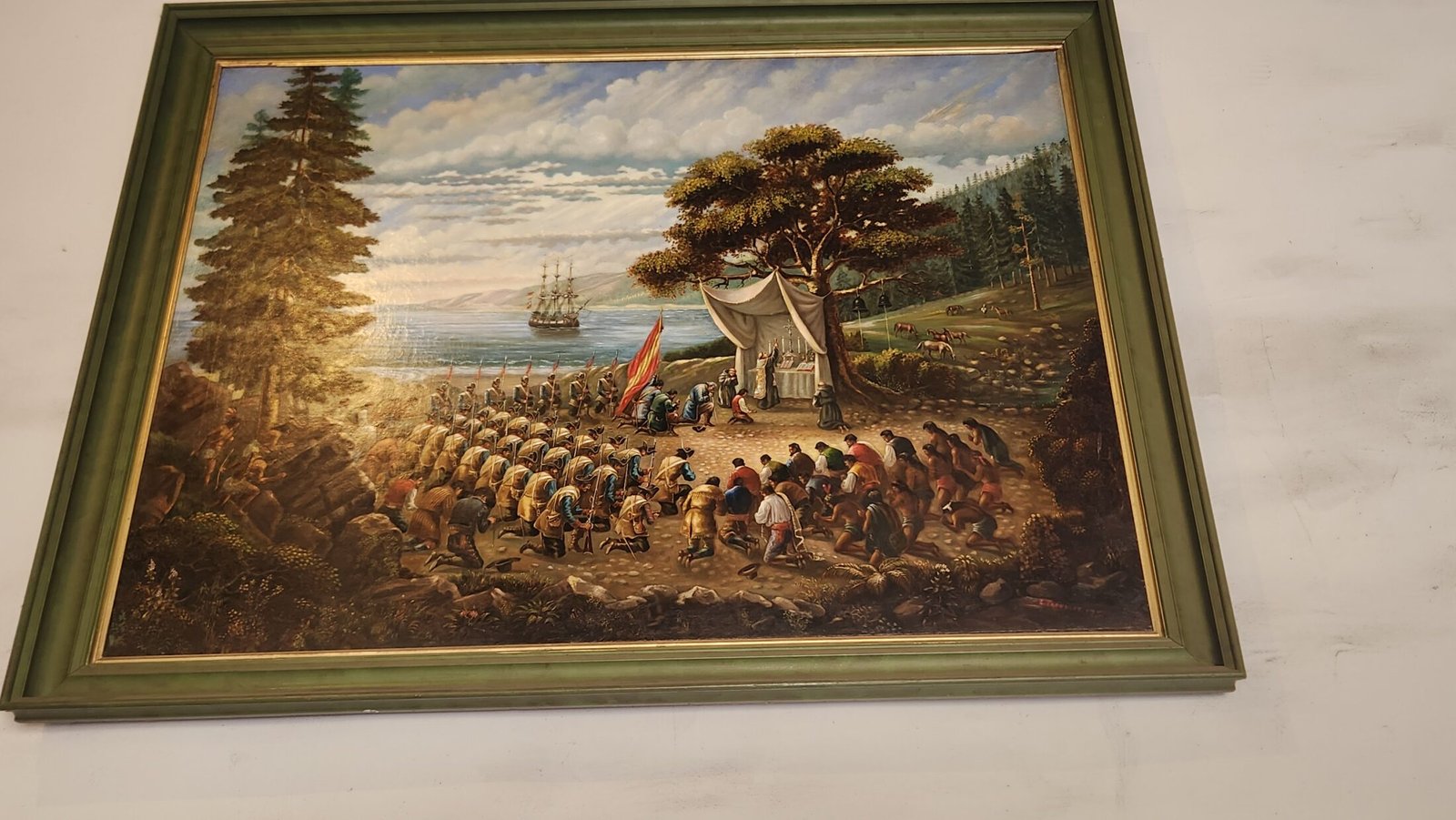
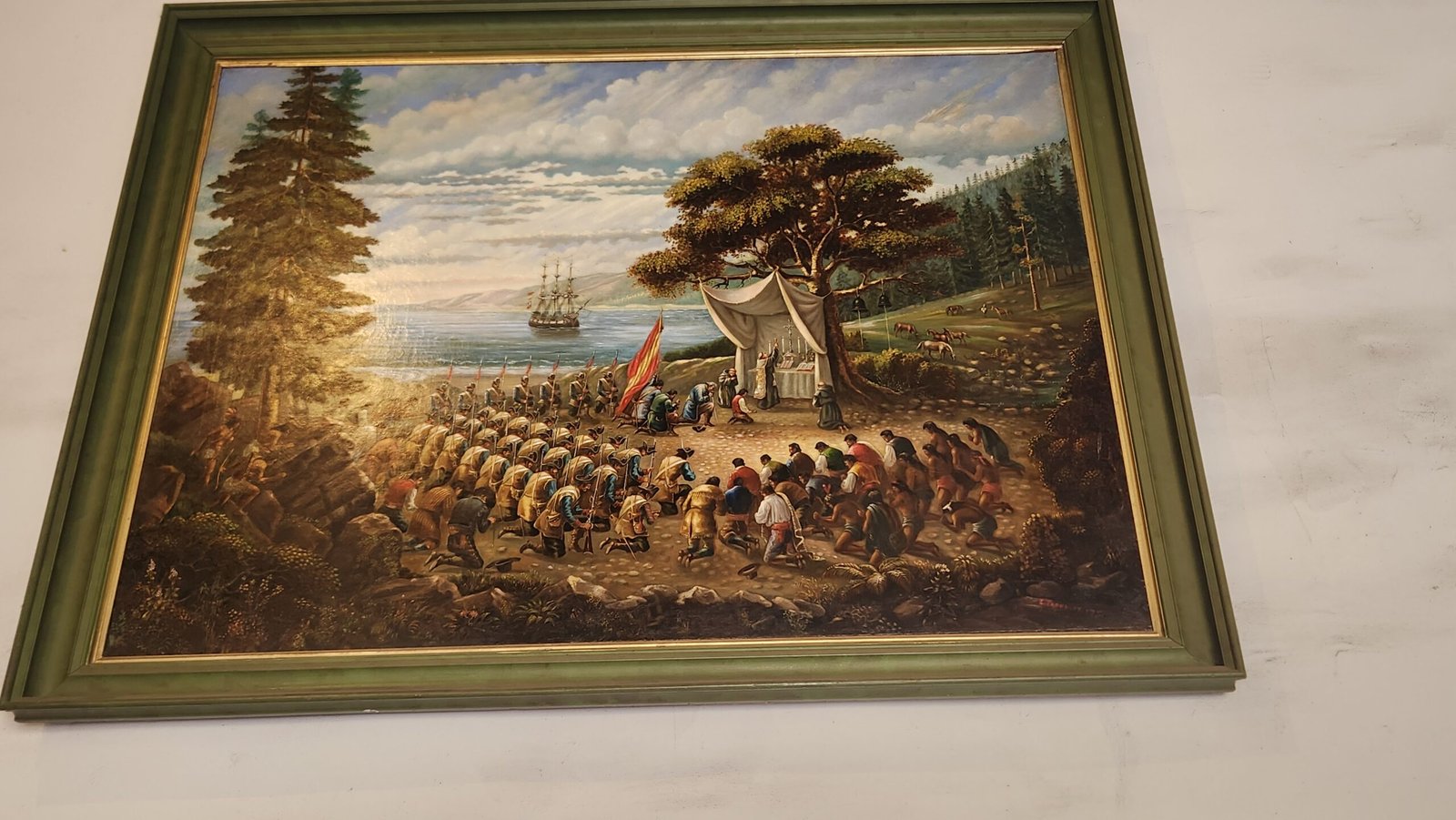
It is fun to be around a classic place like Carmel Mission Basilica, where the bones have a presence and seem to talk though the floor boards. Cool paintings like Leon Trousset’s 1887 Father Juniper Serra’s First Mass. Everything looks so orderly. The ship in the harbor. Native Indians looking on in the shadows. I then rode down Highway 1 to Pfeiffer Big Sur State Park with strong tail winds. The further you rode, the less the cars.
Leon Trousset’s 1887 Father Juniper Serra’s First Mass
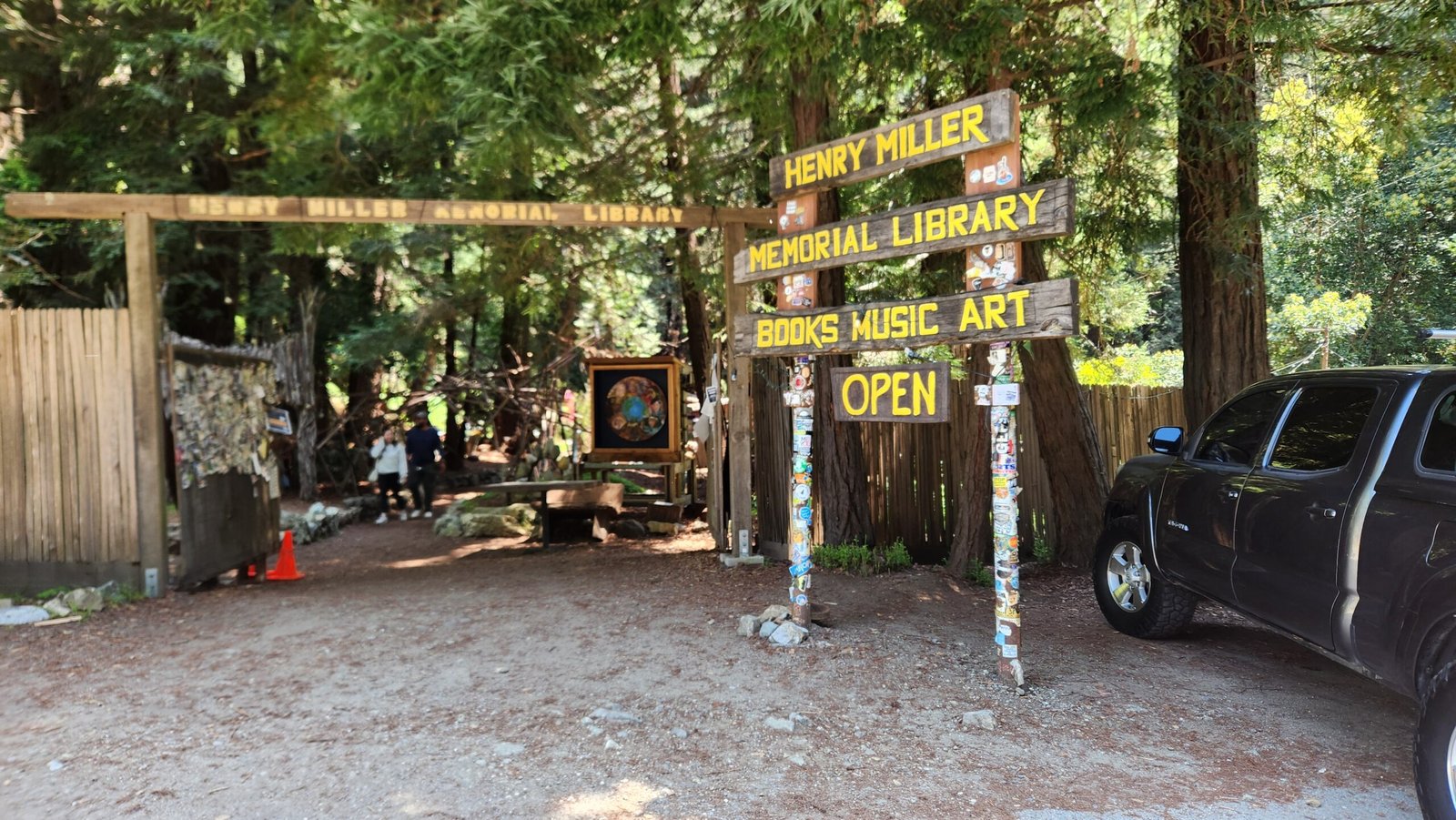
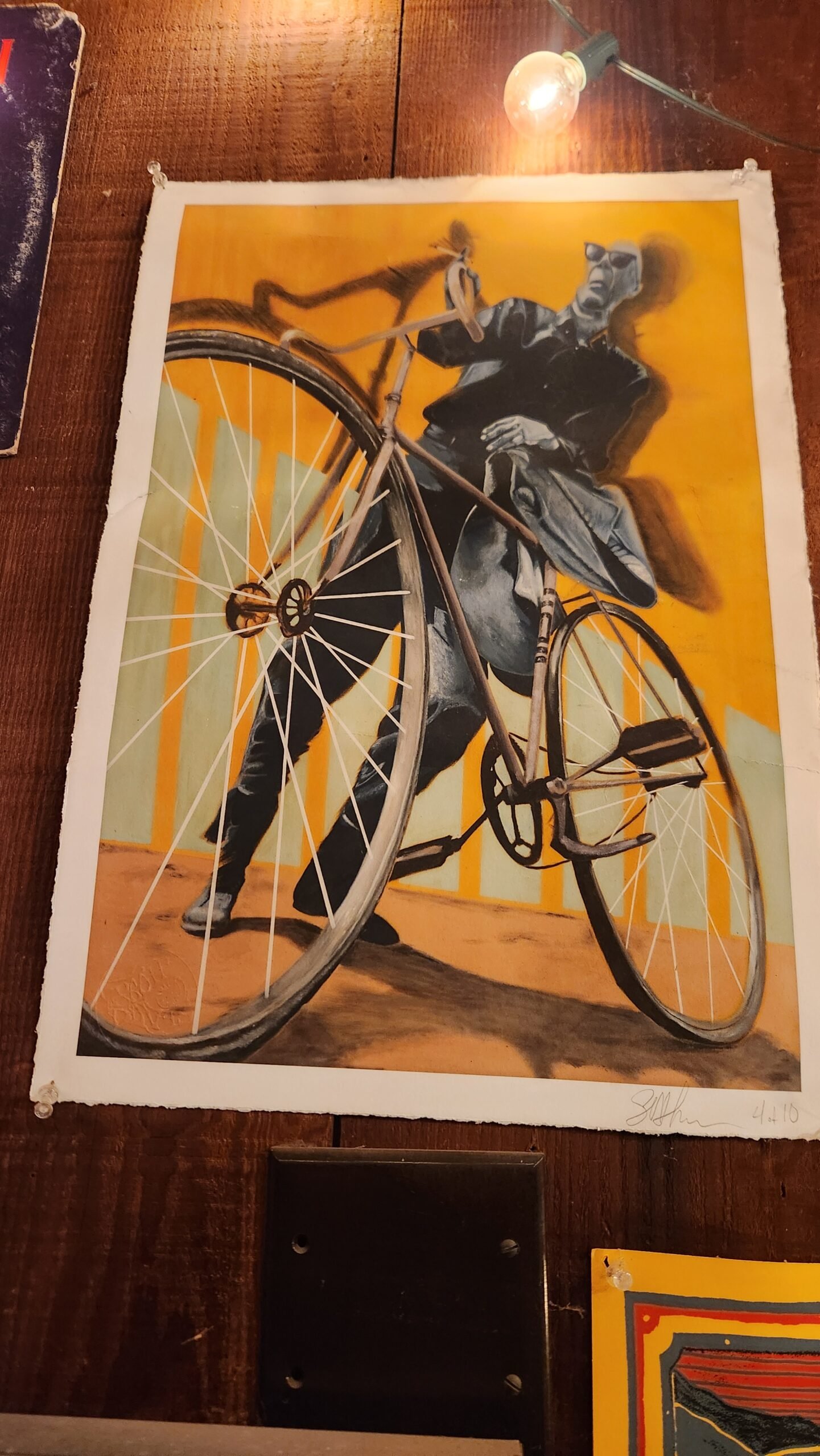
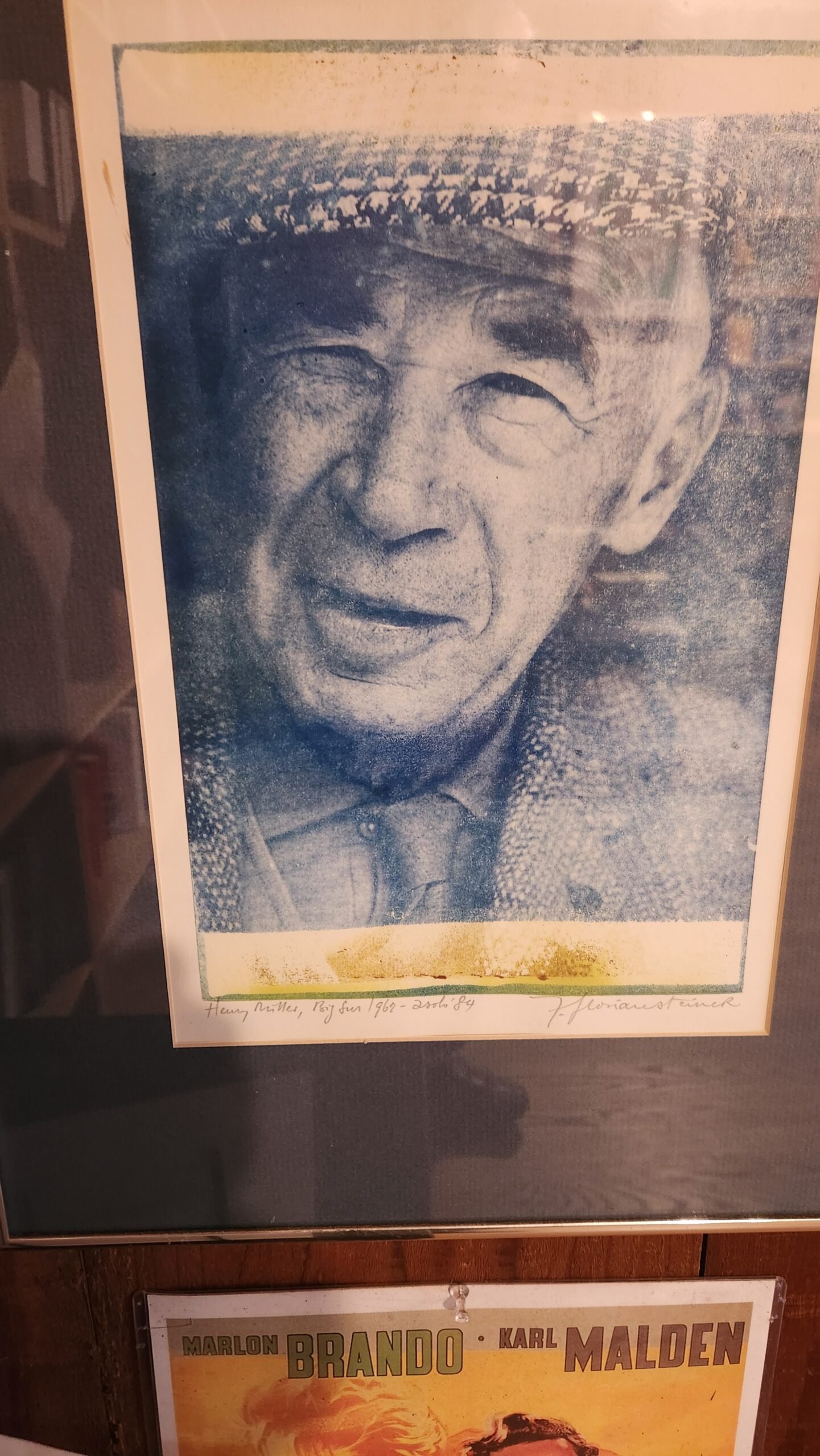
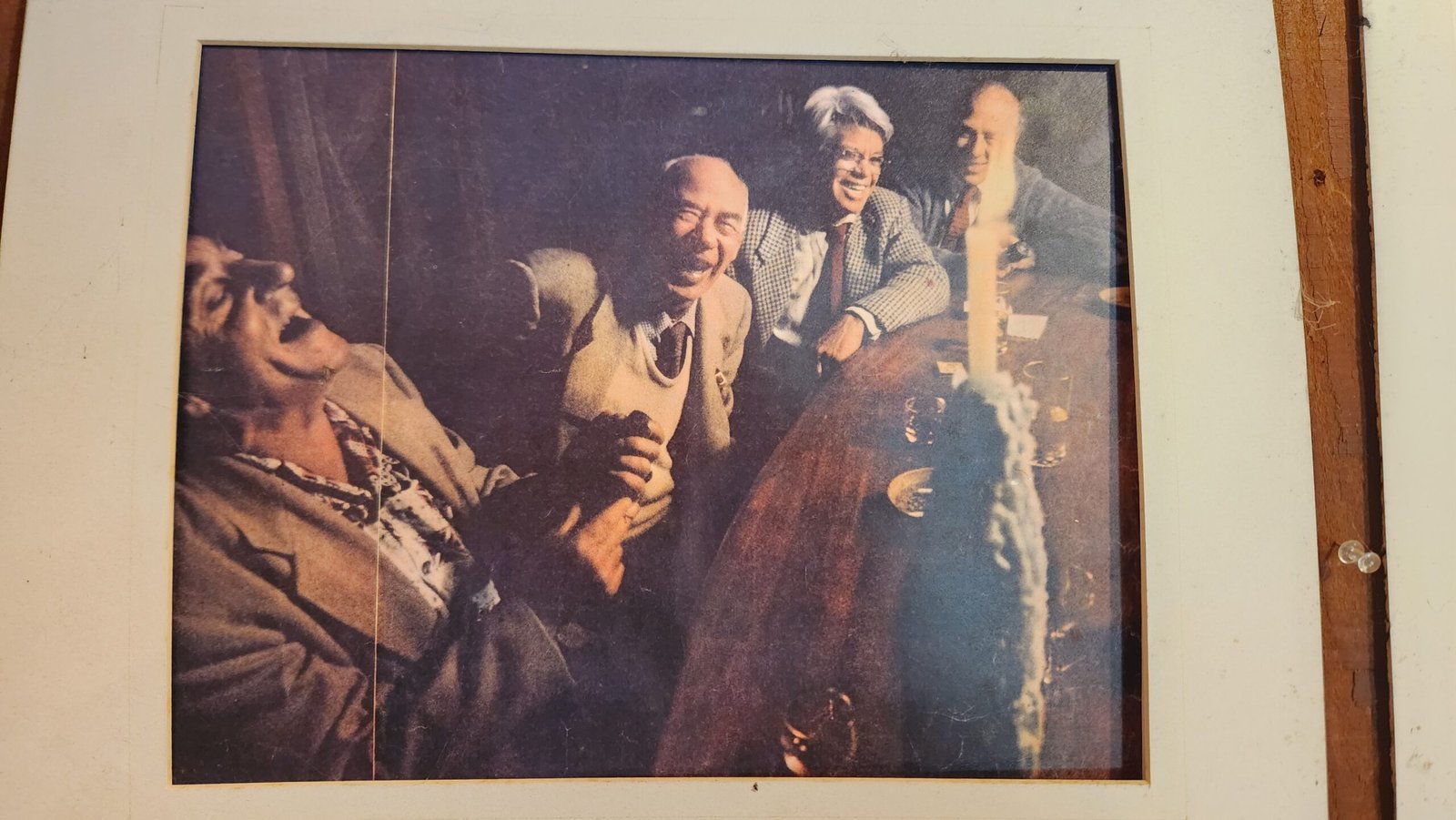
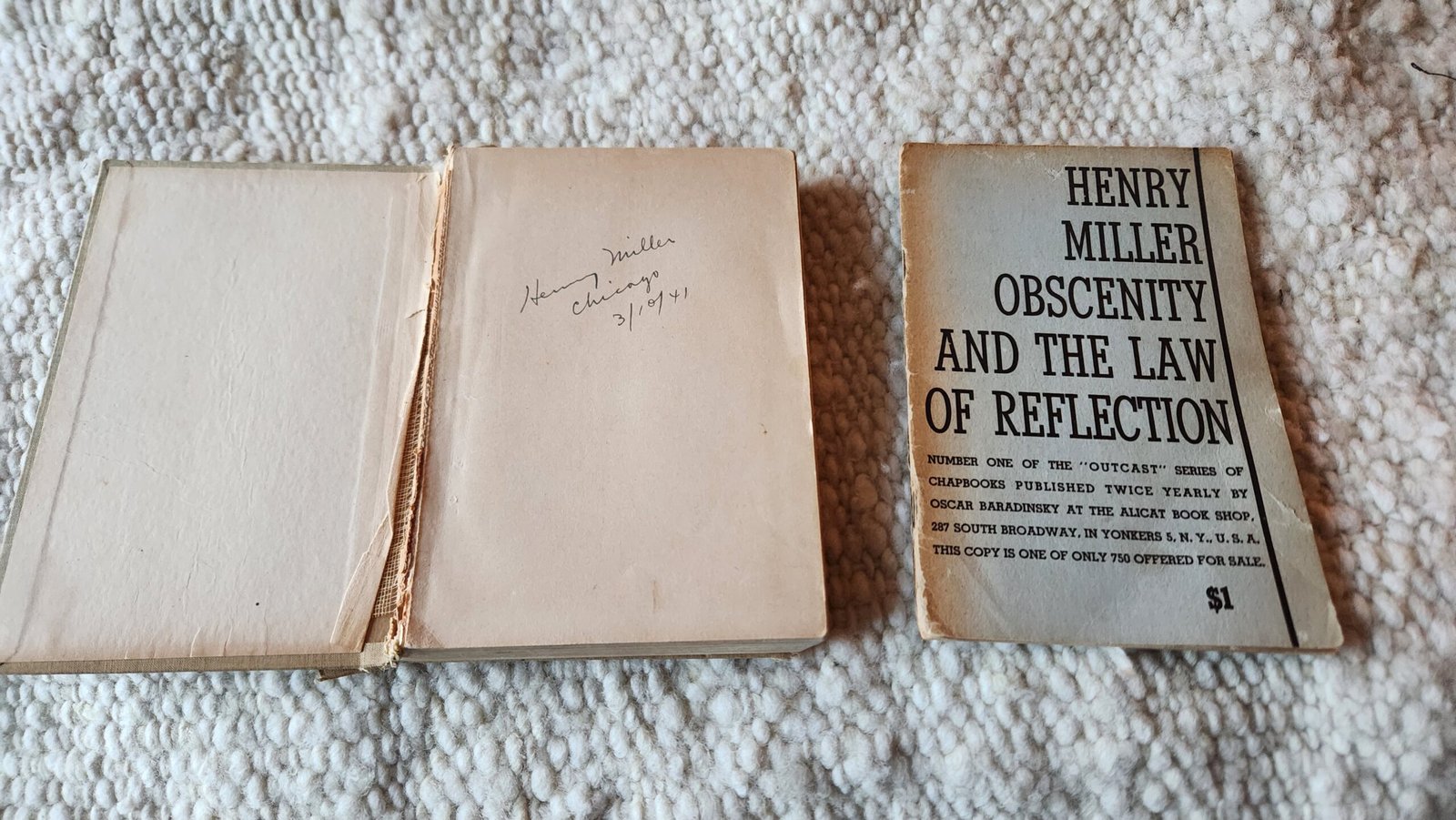
Day four had a fun ride to the The Henry Miller Memorial Library and hung out with the locals while the foot traffic rolled in, stopped for five minutes then got back in their cars and moved on. In our family are a few Henry Miller classics, one, a signed version of the banned “Tropic of Cancer.” The book was printed in Mexico to avoid the authorities. The books where definitely my father’s. Henry Miller was a great writer and thinker and lived an amazing life. One of the inspirations for the ride is that Henry Miller liked to ride bicycles. He did not care for cars. In his late fifties he moved to Big Sur.
“After a time, habituated to so many hours a day on my bike, I became less and less interested in my friends. My wheel had now become my one and only friend. I could rely on it, which is more than I could say about my buddies.” – Henry Miller from “My Bike and Other Friends”
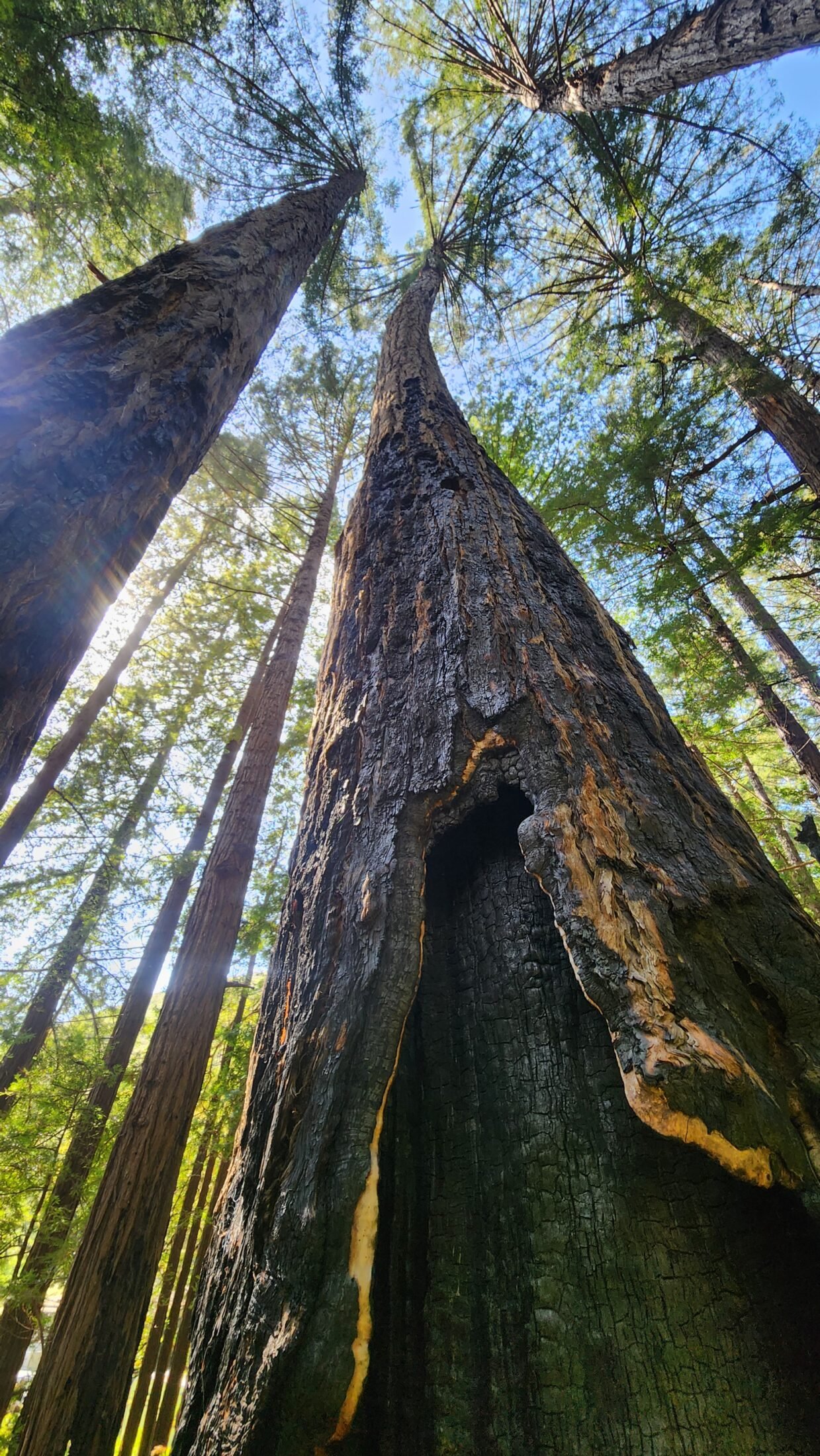
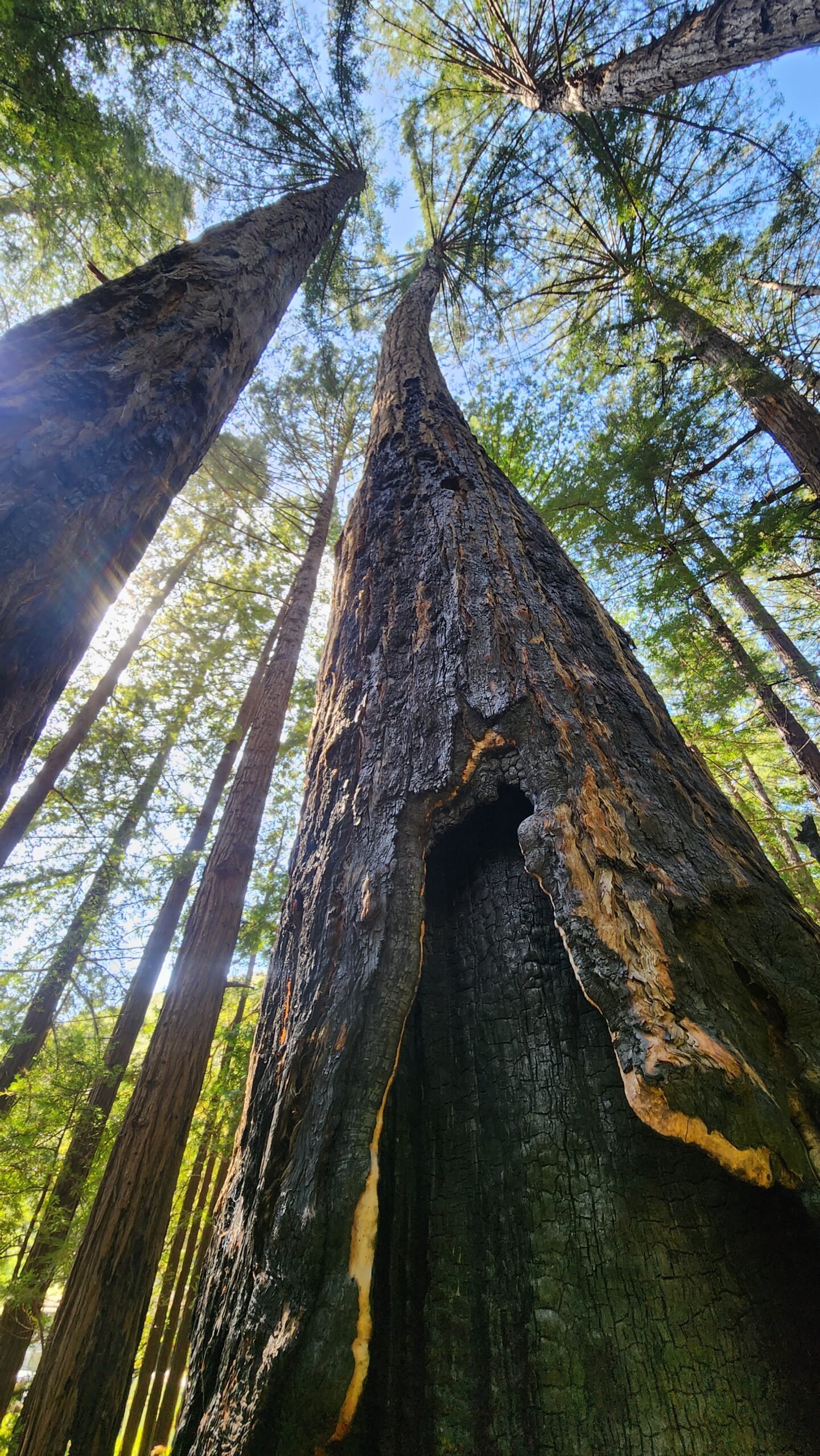
Julia Pfeiffer State Park (let’s just call it Julia) is an 11 mile ride down the coast from the other Pfeiffer Park. At one time there were many Pfeiffer’s down this way and according to the bulletins the women obviously kept things together. Ranching and massive honey farms. Julia has great trails and waterfalls where the fallen redwoods wrap around other redwoods by streams in an obscene orgy of interactions. Much to explore.
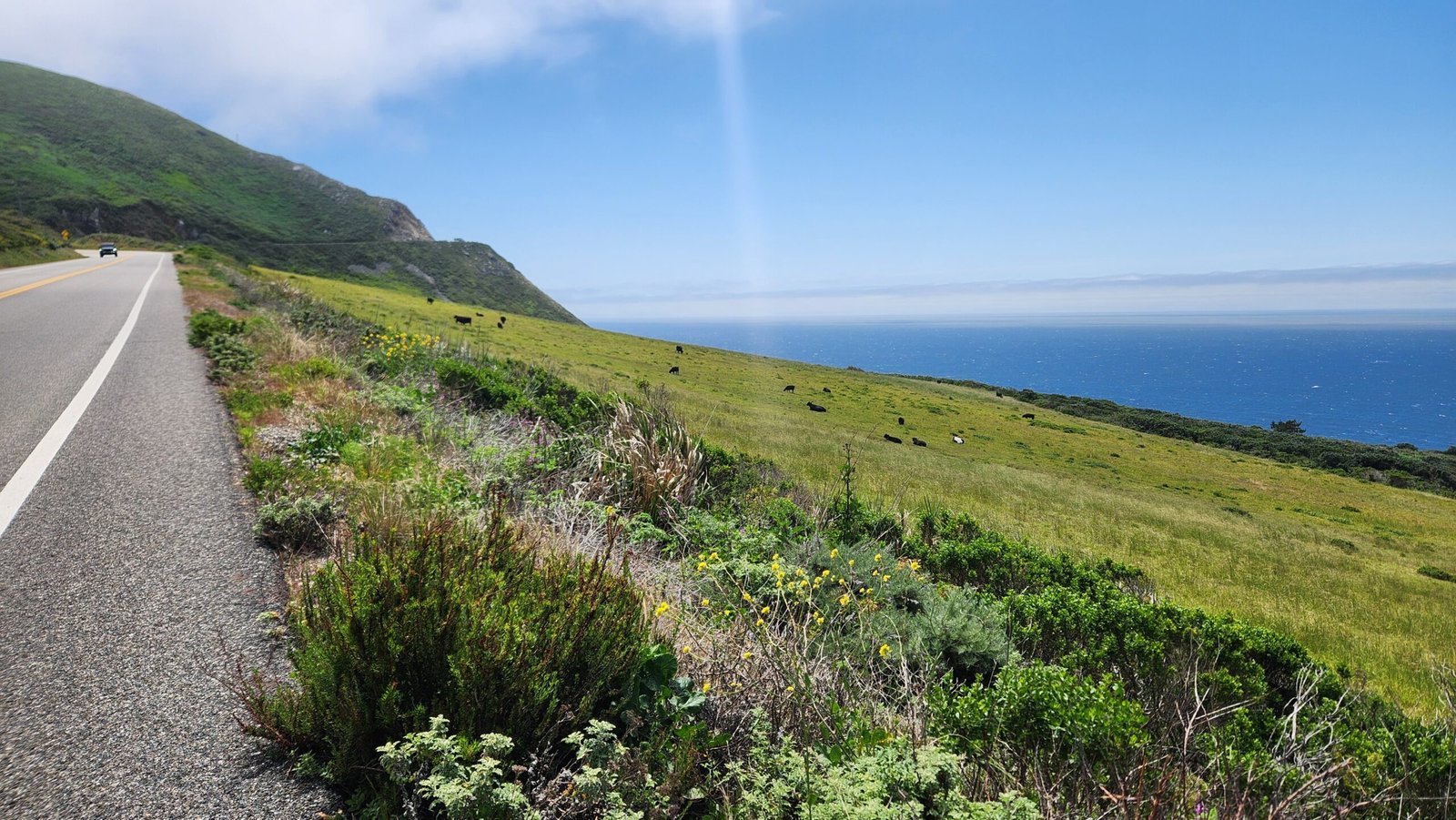
Big Sur
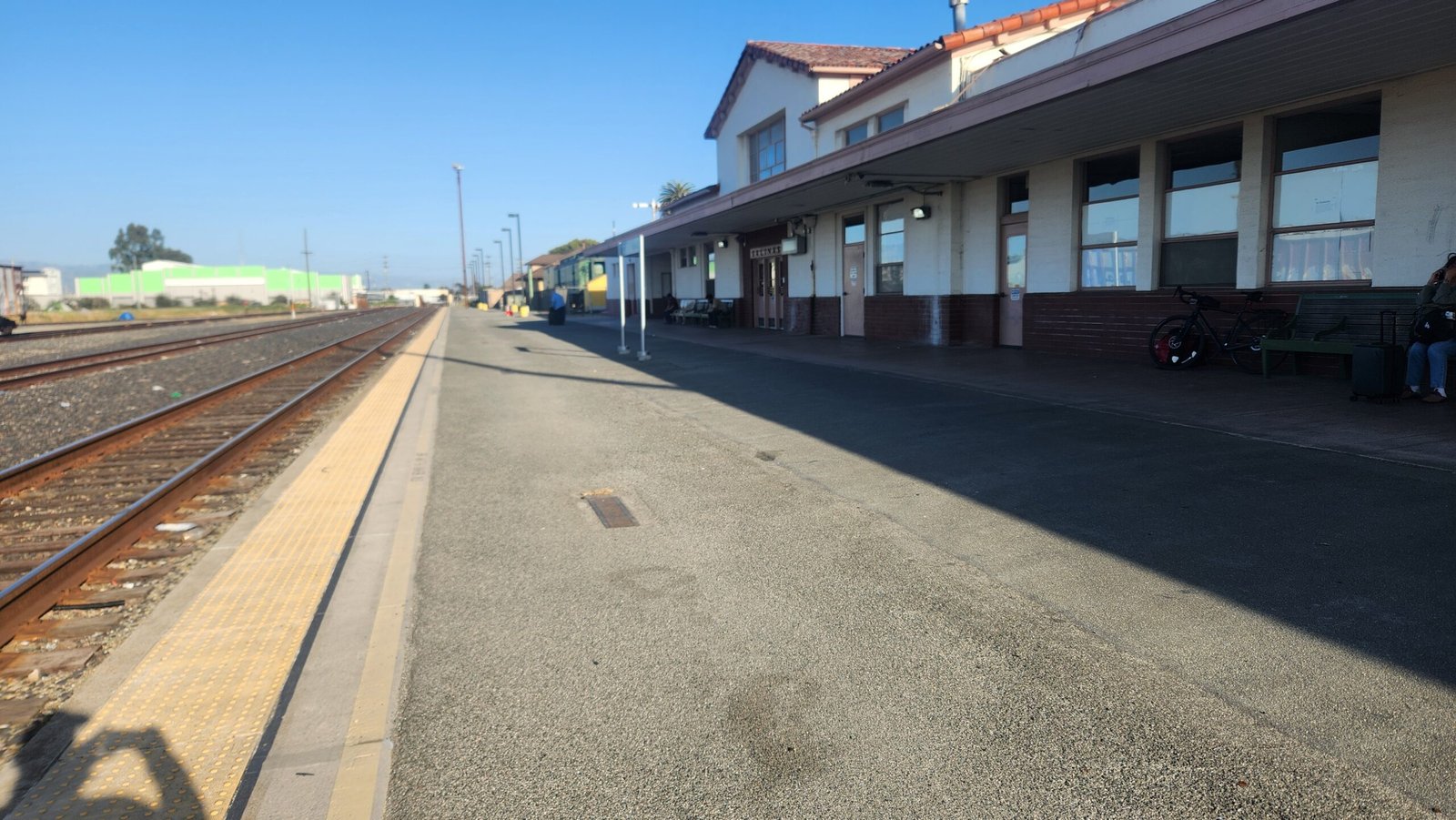
On a Monday morning I left early and headed north. The traffic was light. There were clear skies and no wind. To Carmel, then along the coast to Monterey. Up a coast bikeway that runs along the beach, golf courses and opulent ocean mansions and then over to the scrappy Salinas Amtrak Station. The northbound Coast Starlight leaves every day at six-thirteen pm. I caught the train right on time.
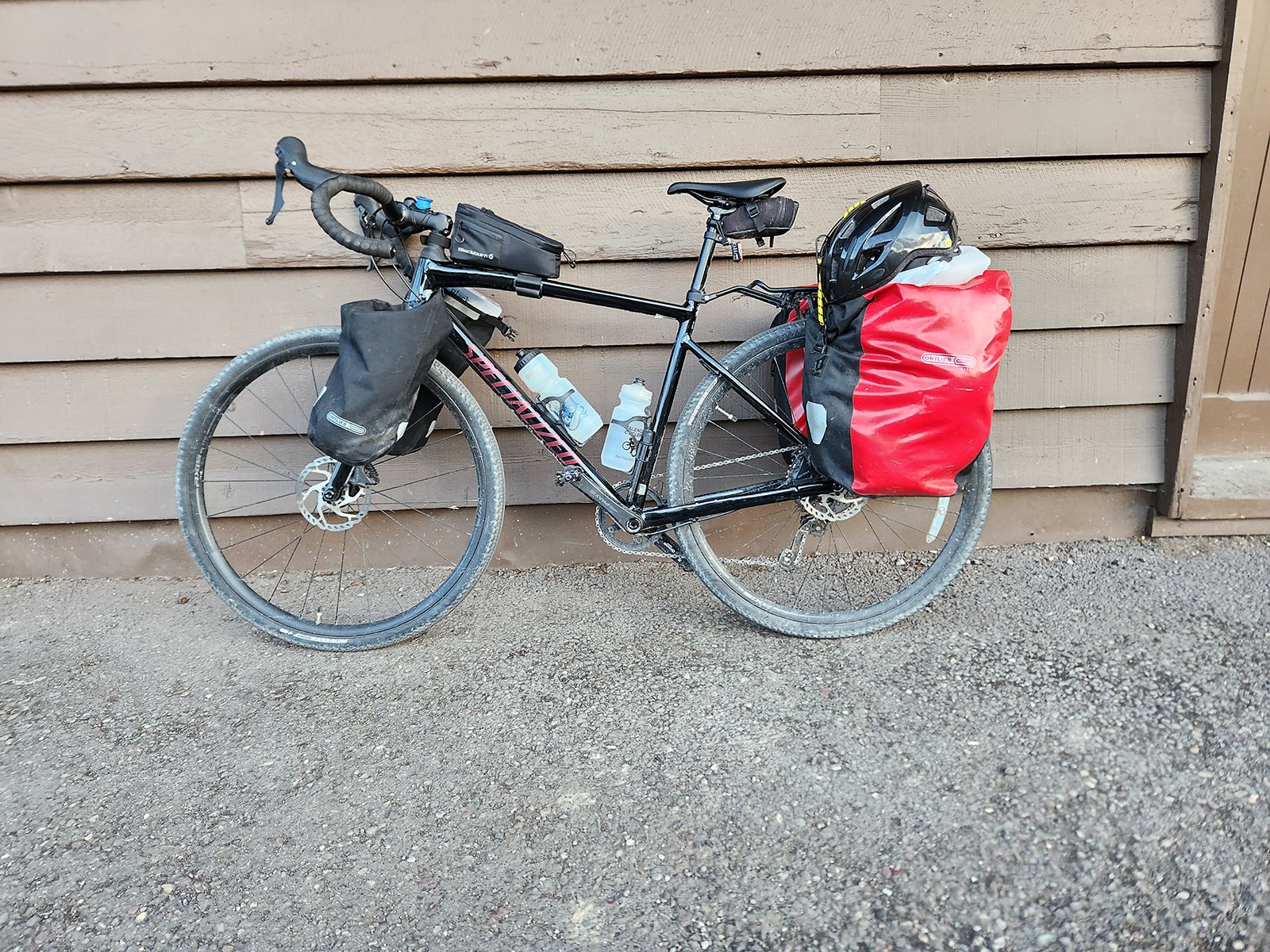
Bike packing ride – Specialized Diverge Gravel bike, Ortlieb panniers
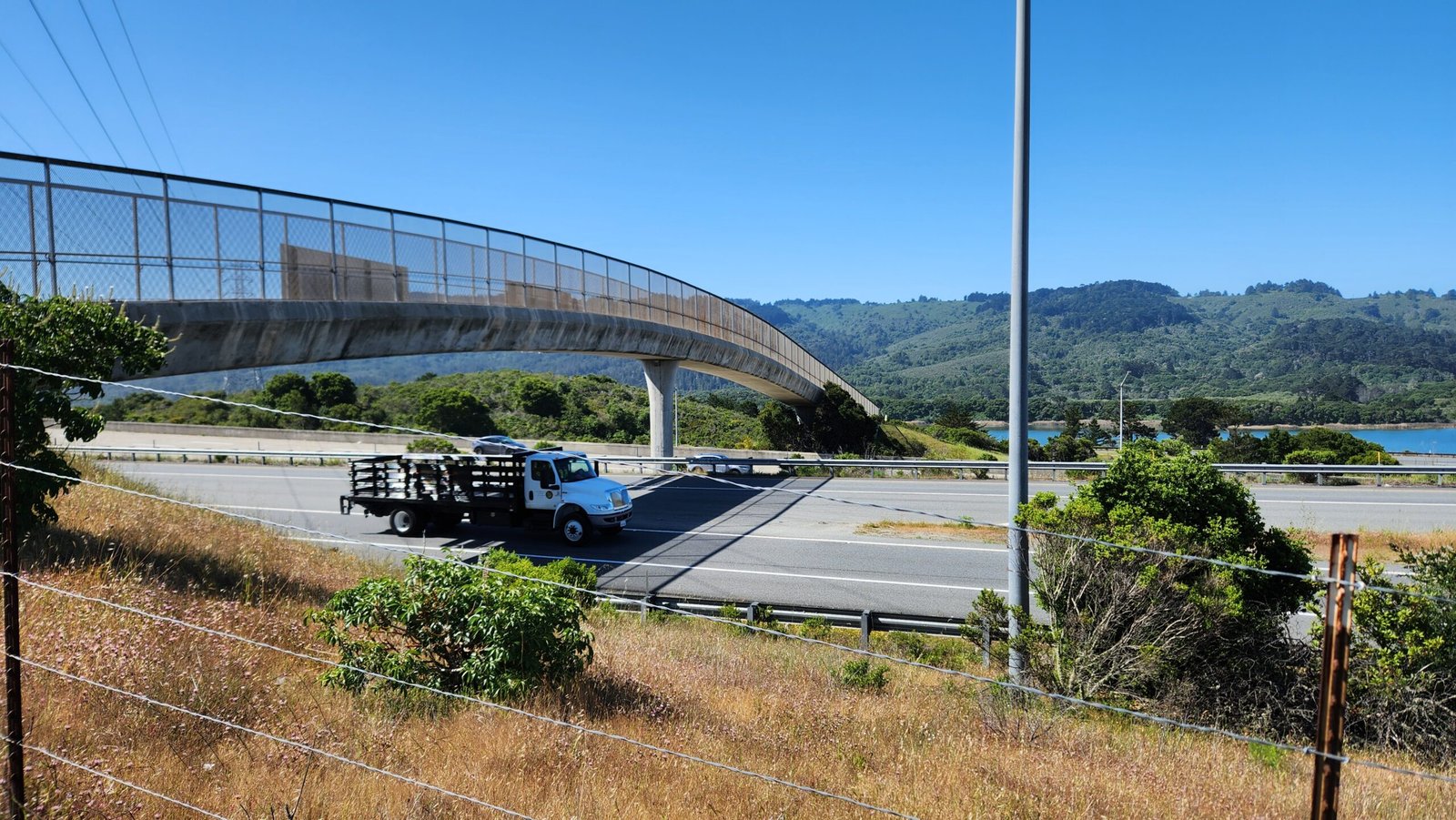
Pedestrian bridge over 280 by Crystal Springs Reservoir.
Old La Honda Road
New Brighton State Park
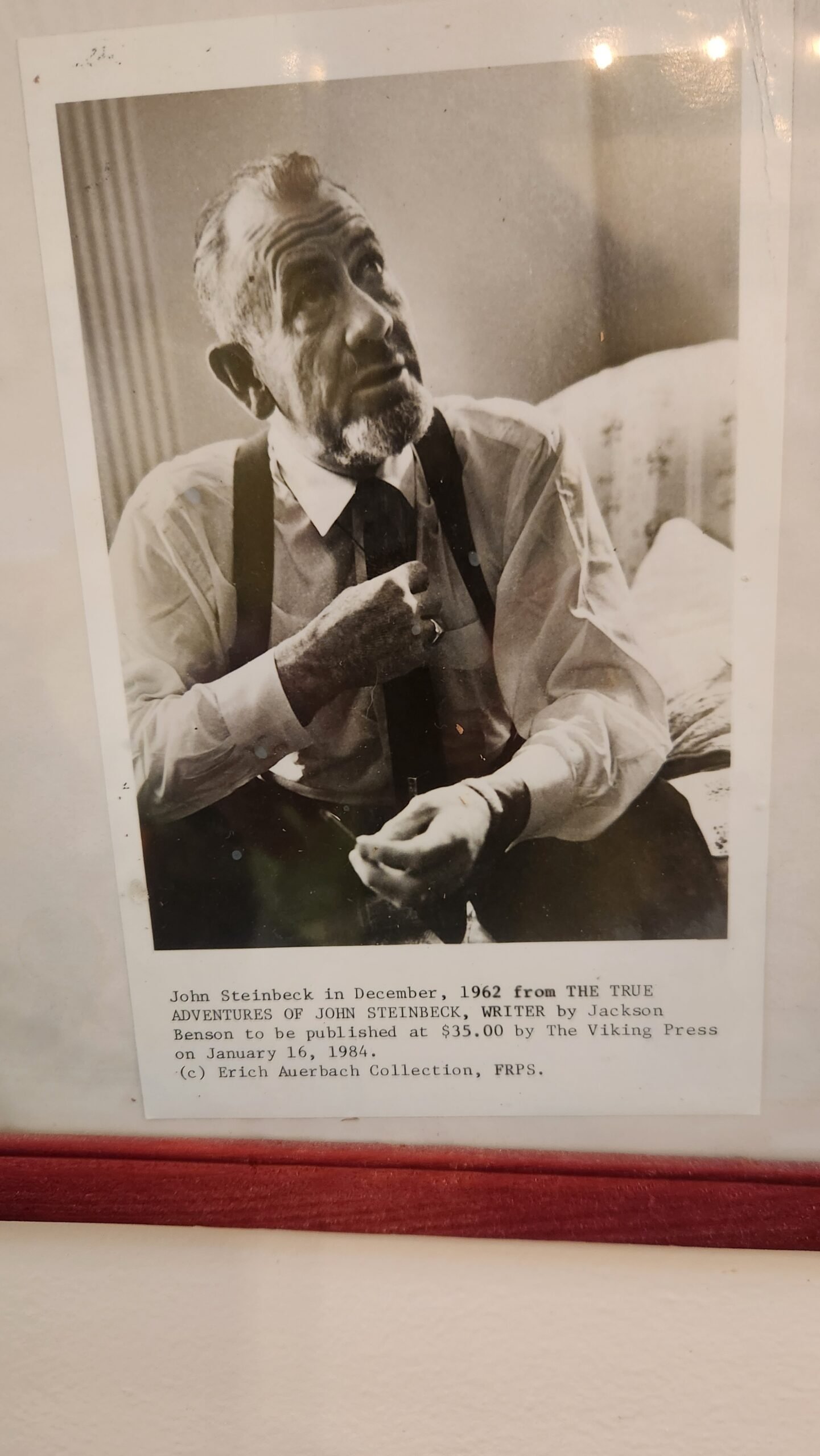
Steinbeck photo in a restaurant in Monterey
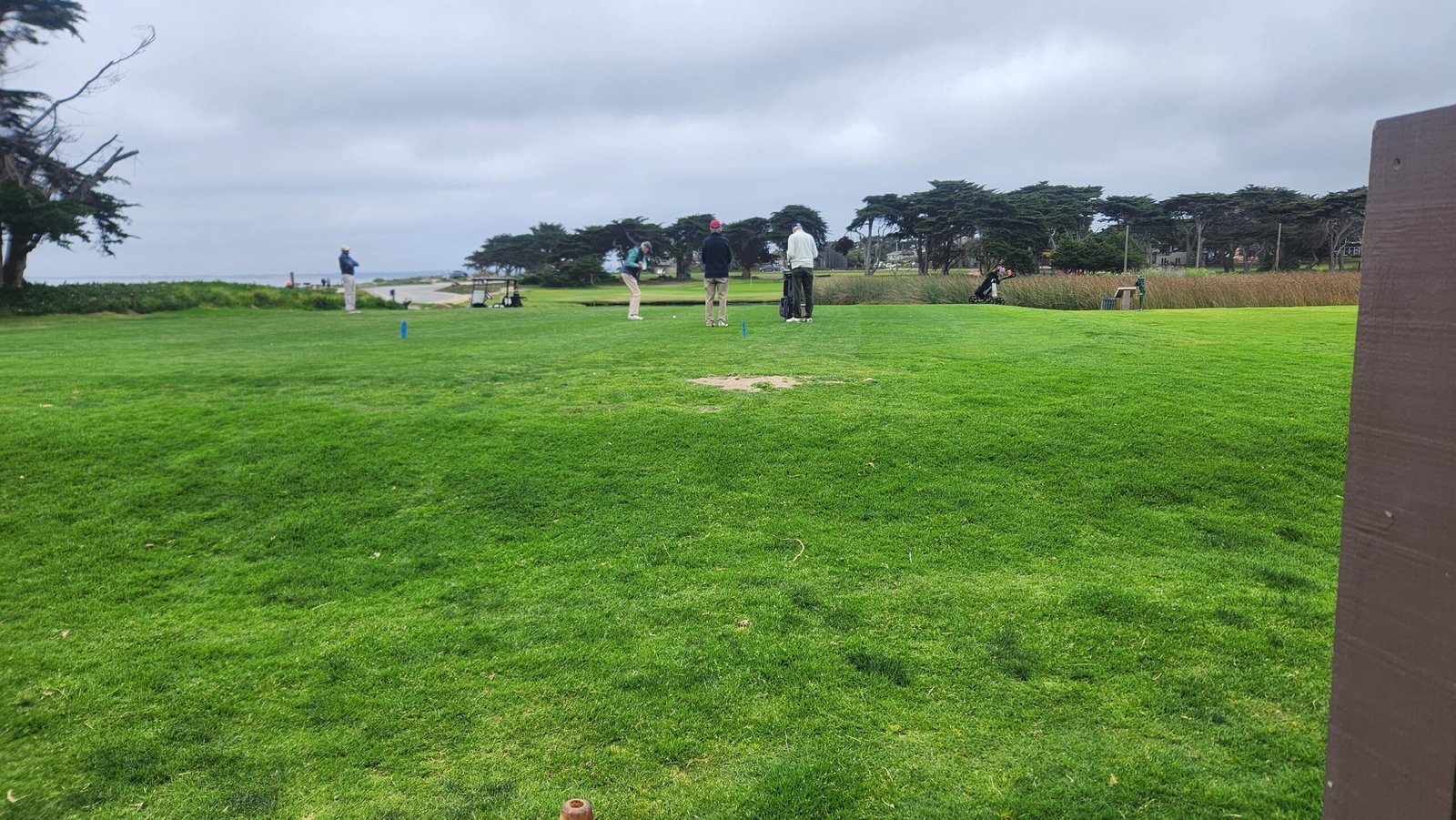
Monterey golfers
Watsonville area. On top of the hill is an old Victorian house.
Carmel Mission Basilica
Carmel Mission Basilica
Carmel Mission Basilica
Carmel Mission Basilica
Carmel Mission Basilica
Leon Trousset’s 1887 Father Juniper Serra’s First Mass
Leon Trousset’s 1887 Father Juniper Serra’s First Mass. This is perhaps my favorite photo of the trip.
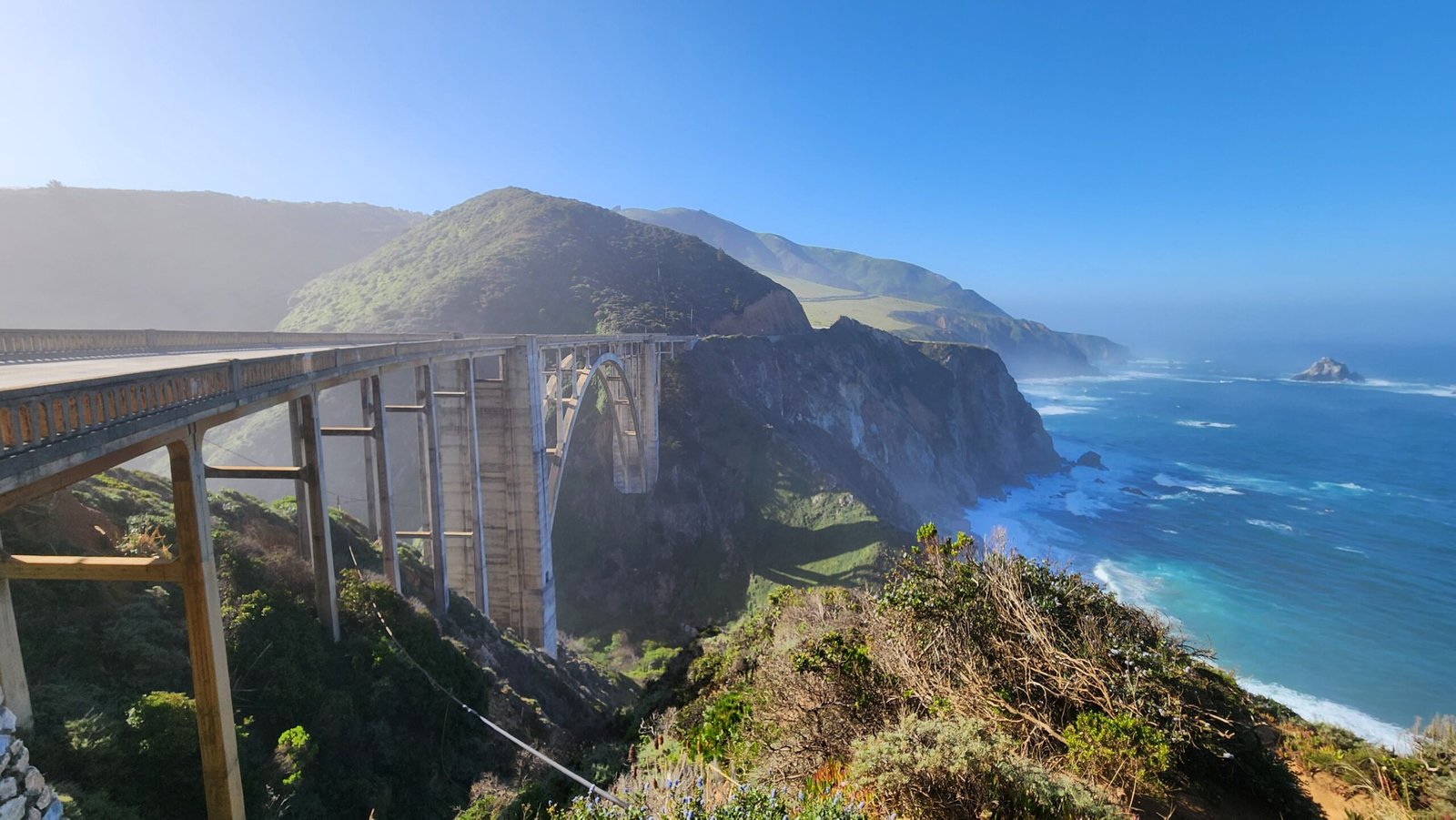
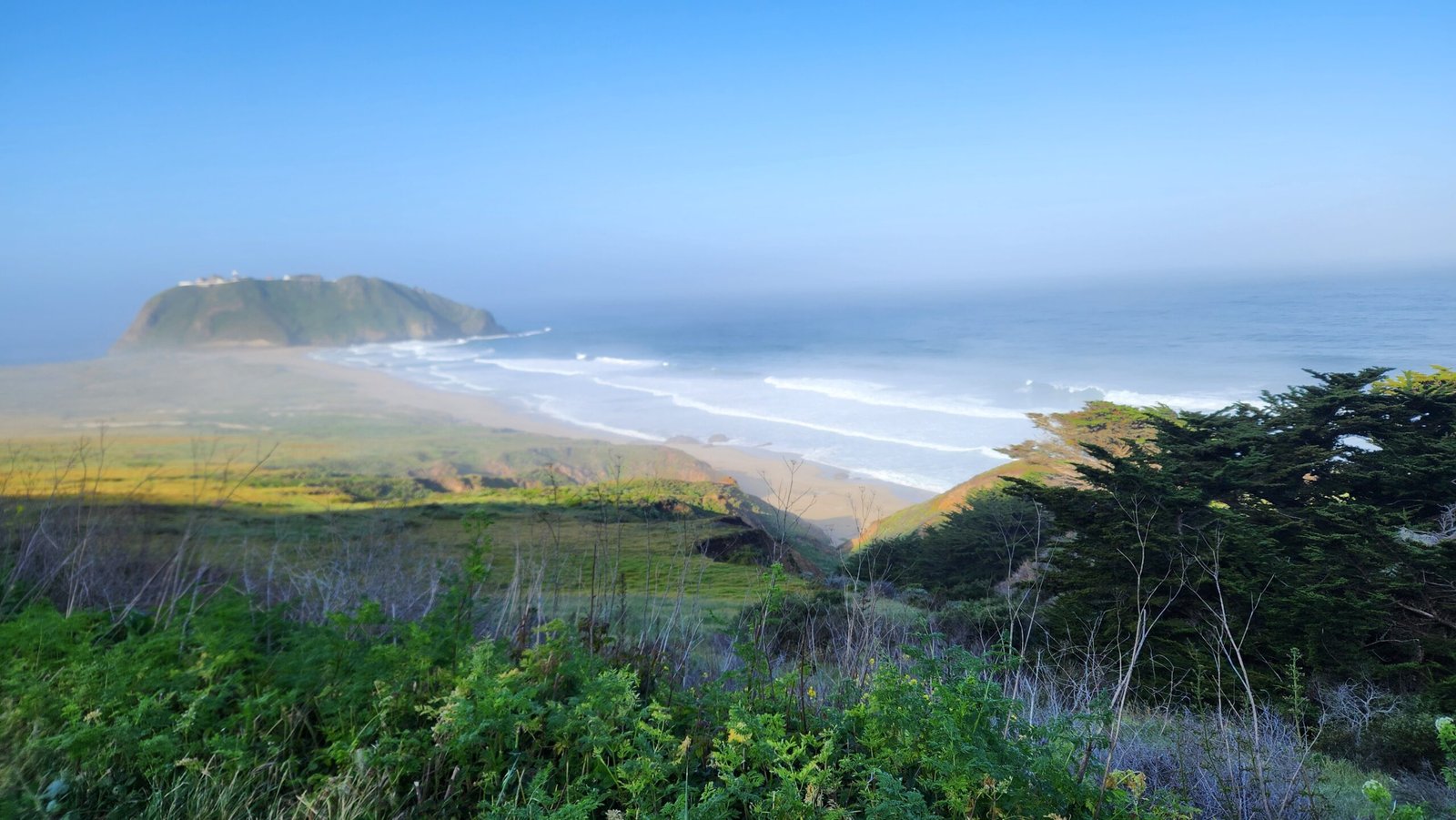
Big Sur
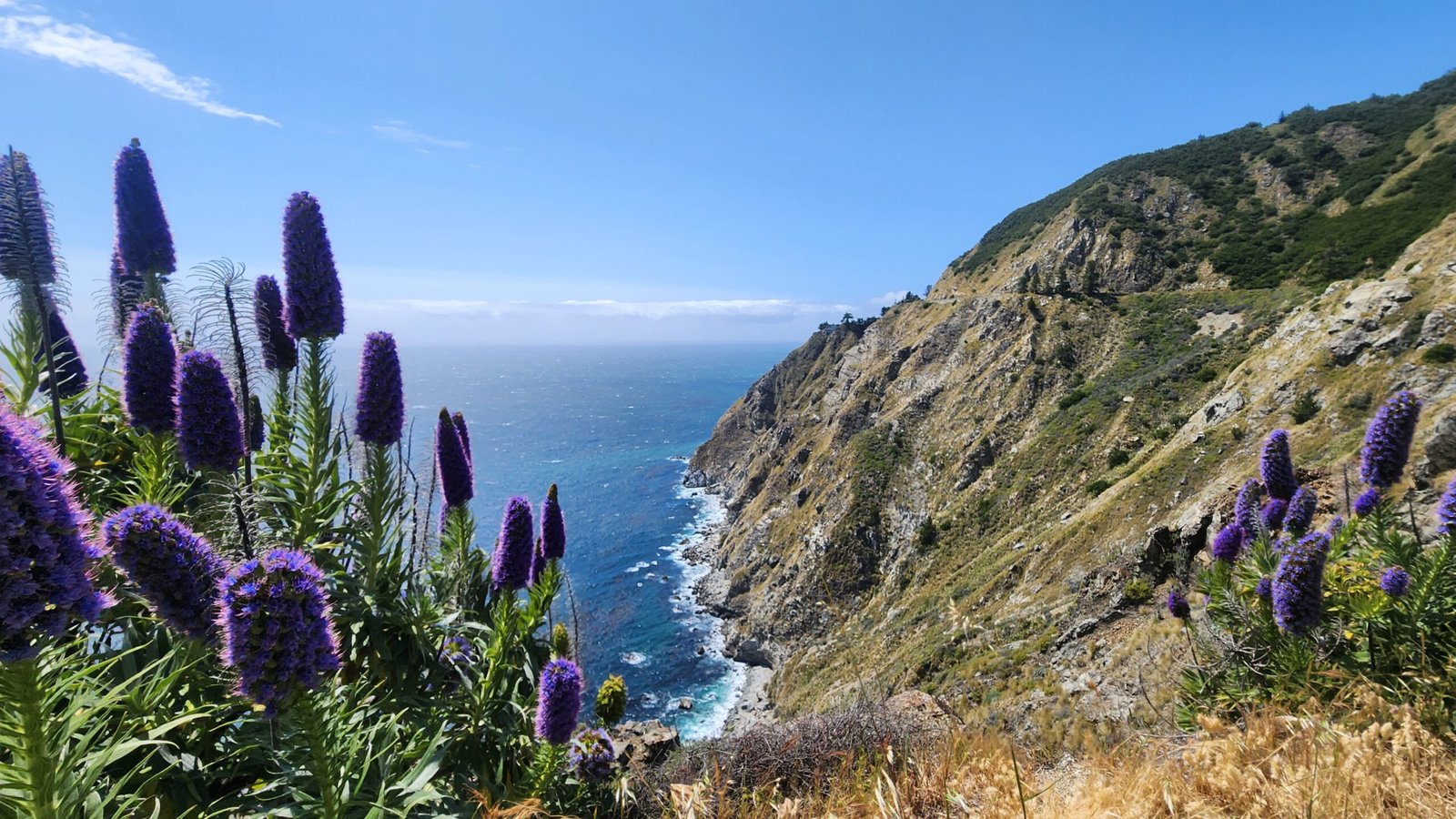
Big Sur coastline with blooming purple Echium candicans, the Pride of Madeira
These novels will give way, by and by, to diaries or autobiographies – captivating books, if only a man knew how to choose among what he calls his experiences that which is really his experience, and how to record truth truly.” – Ralph Waldo Emerson
William Finnegan’s – Barbarian Days: A Surfing Life is a memoir. It is mostly a true story of a life where the common thread is surfing. Finnegan grew up in Southern California and Hawaii and at one point when he was just a grom the waves were not far from his family’s humble house near Diamond Head, Hawaii. He took to surfing at a very early age and though he does not admit it, became a big wave surfer, riding huge waves on the North Shore of Oahu, Ocean Beach in San Francisco, discovering a wave in Fiji and later in life, Portugal. When he was a young teenager he began to experience the power of the ocean.
I was shaken to the core by the sound of the waves detonating a few yards behind me. I was convinced that if I had been caught inside I would have died. William Finnegan at fourteen surfing the Rice Bowl in Hawaii
For some inexplicable reason, he kept coming back to these harrowing experiences. He seems to have remembered the minute details of various rides from previous decades were he thought the end was near. Captivating read indeed, and much of it surely somewhere near the truth.
The book is a romp through various times in his life. It is a very fun read not just because of the surfing tales but it gives a window into a time in history when people had the ability to be very mobile, flying to faraway lands, but at the same time communications back home did not exist. A telegram now and then. Regular letter writing but making a call on a phone was far too expensive and not common. People out in the world traveling used random message boards, taping hand writing messages in often feeble attempts to contact others.
In the end, I teamed up with other Westerners, bribed some Bulgarian border guards, made my way through the Balkans and over the Alps and, with the help of an American Express office message board in Munich, found [his girlfriend] Caryn in a campground south of the city. She seemed fine. William Finnegan at nineteen bumming around Europe
For this reader, the chapters where he travels around the world for a few years chasing waves with his friend Bryan is truly amazing. With nautical charts they head off to the South Pacific and discover a phenomenal wave in Fiji, unknown to the world but for a few. Now the spot is an expensive surfing resort destination. A year in Australia surfing and working odd jobs, searching for waves. Buying a beater car and driving it clear across the country, always a bit concerned if it would overheat or the next day would even start. Such road trips are times when living in the moment seems to take precedence. They seem to be not so much in nature but a part of nature.
Then there is the peculiar way that wave size is measured. While this may not be of interest to people who do not surf, it gets pretty funny.
Indeed, underestimation is practiced with the greatest aplomb on the North Shore of Oahu. There, a wave must be the size of a small cathedral before locals will call it eight feet.
Buzzy Trent, an old-time big wave rider, allegedly said, “Big waves are not measured in feet, but increments of fear.” If he said that, he got it right.
Barbarian Days – A Surfing Life is a very fun read, especially if you enjoy travelogues, you are a surfer or just love the outdoors. There may be times when the author delves into the finer points of a two wave hold-down, or the advantages of a certain fin set up or length of board. This talk must be a bit perplexing and perhaps a bit tedious to the non-surfer. One thing that Finnegan claims is that it is just about impossible to get really good at surfing if you pick it up later in life. I am living proof of this theory and would agree.
Getting old as a surfer, I’d heard it said, was just a long, slow, humiliating process of becoming a kook again.
CODA:EVERY SURFER HAS A STORY
I started surfing at the age of thirty-five, an age far too advanced to every actually get really good at the sport. I mostly do it for the exercise, be with friends and to commune with nature. It is amazing the wildlife you see out in the water. I regularly surf with dolphins and certain times of the year there are whales within twenty feet.
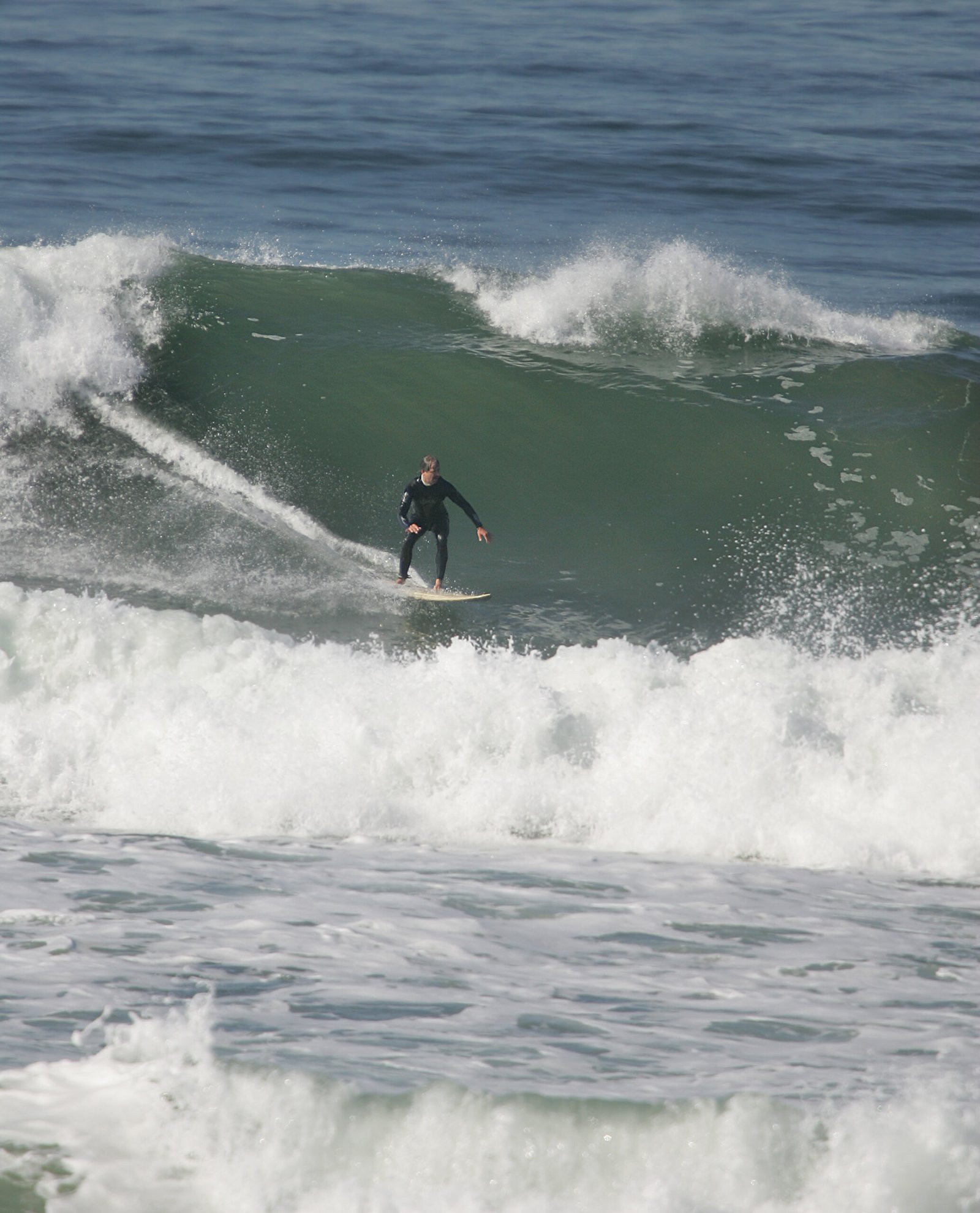
Paul Lyons surfing Ocean Beach in his late forties – March 2008. This session was complete luck. I remember paddling out with a board that my friend had found while on the job cleaning out student housing. I found a channel right away and caught three really nice waves. This was a rare session. I have always been a bit of a kook. – Photo by Doug Oakley
I remember the thrill of the first time I took off on a head-high wave and made it. I also remember the first time I took off on big wave on a long period swell. The waves were overhead at Ocean Beach back in the days when you would sometimes be the only person in the water. It did actually get lonely out there. I went right, stayed high on the shoulder and remember just flying down the wave faster than I had ever surfed. I had never ridden a wave with such power. I also remember a day when my surf buddies and I when out at Ocean Beach and the waves were big but seemed at the time nothing scary. I had only been surfing a few years. We made it out past the shore-break and white water only to discover that the swell, in the course of the next hour, had increased quickly. A huge set came and we tossed our boards and dove underneath. I broke my leash, lost my board which eventually washed into shore. We both paddled in a bit terrified by the whole ordeal. I pledged to never to do that again. It scared the bejesus out of me. Later I saw the buoys from when we were out. It had jumped up to 11 feet at 19 seconds. Big waves. That’s my one captivating story and it is all true.
William Finnegan lives in Manhattan and the end of the book loses the wild adventure of earlier years. Parents die. He becomes a father. Life becomes more urban. In his seventies he must still be a really good surfer as he surfs off of Long Island in the winter and will chase waves in the summer and even during hurricanes.
For those who love the adventure of youth and want to escape into that magical time of traveling before the internet, I highly recommend William Finnegan’s – Barbarian Days: A Surfing Life is a Pulitzer Prize winning memoir.
On Tuesday, Wednesday and Thursday you can ski at Donner Ski Ranch for $69 which they call Old School Days. You buy your ticket at the counter which you attach to your jacket with a metal wire. Ask your dad.
Donner Ski Ranch is one of the last family owned ski resorts. It is a medium-sized place with a lovely backside where on power days runs can remain untouched into the afternoon. It is an historic mountain where the early California skiers made some of the first turns. On the top is Signal Peak.
In early January, as the fires blaze in Los Angeles, the Sierra has clear skies and a diminishing snow base. The slopes are a bit icy and the groomed trails are the way to go. I headed up to Donner Ski Ranch to try out some new boot liners. I had a great day on a sunny Wednesday. Even though it was Old School Days, I basically had the hill to myself.
After skiing I headed down Highway 89 to visit and stay with a friend and then did a day exploring South Lake Tahoe and then headed to Echo Summit, just to look around and figure the place out. Think snow!
Except for an occasional freak warm day or two, San Francisco is usually pretty chilly in the summer months. In the morning, in many neighborhoods we wake up to the marine layer, otherwise known as fog. Sometime around lunch it can push back out to the ocean for a few hours, only to return in the early evening. Rarely do you get a glorious sunset. Various more inland and protected neighborhoods, like The Mission and Potrero Hill can go for days without ever seeing this fog. So around July I like to get out of town and travel to warmer climes.
The Goin’ to Madtown 300
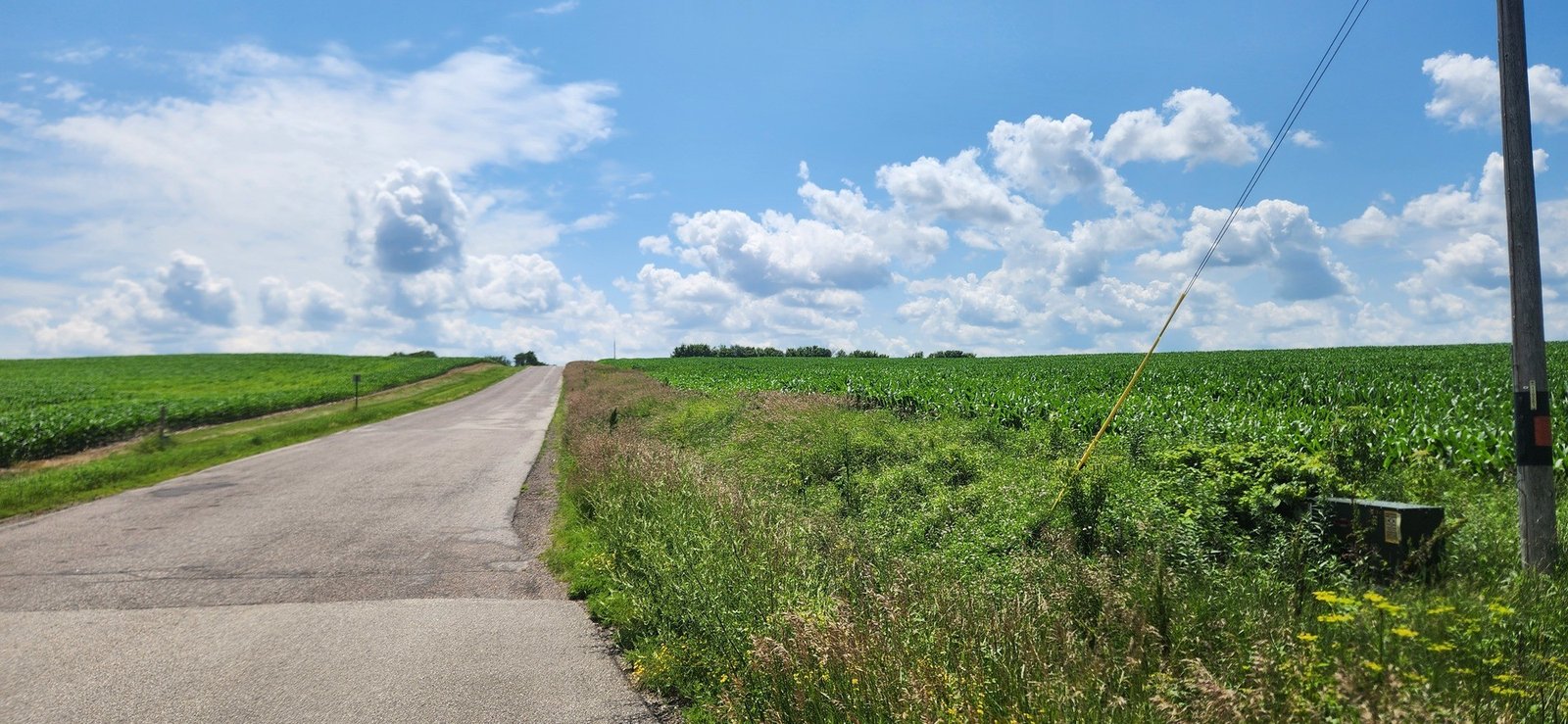
In 2024 I once again did the bicycle ride from Minneapolis to Madison, Wisconsin an activity now called “bike packing.” I have chronicled this trip before.
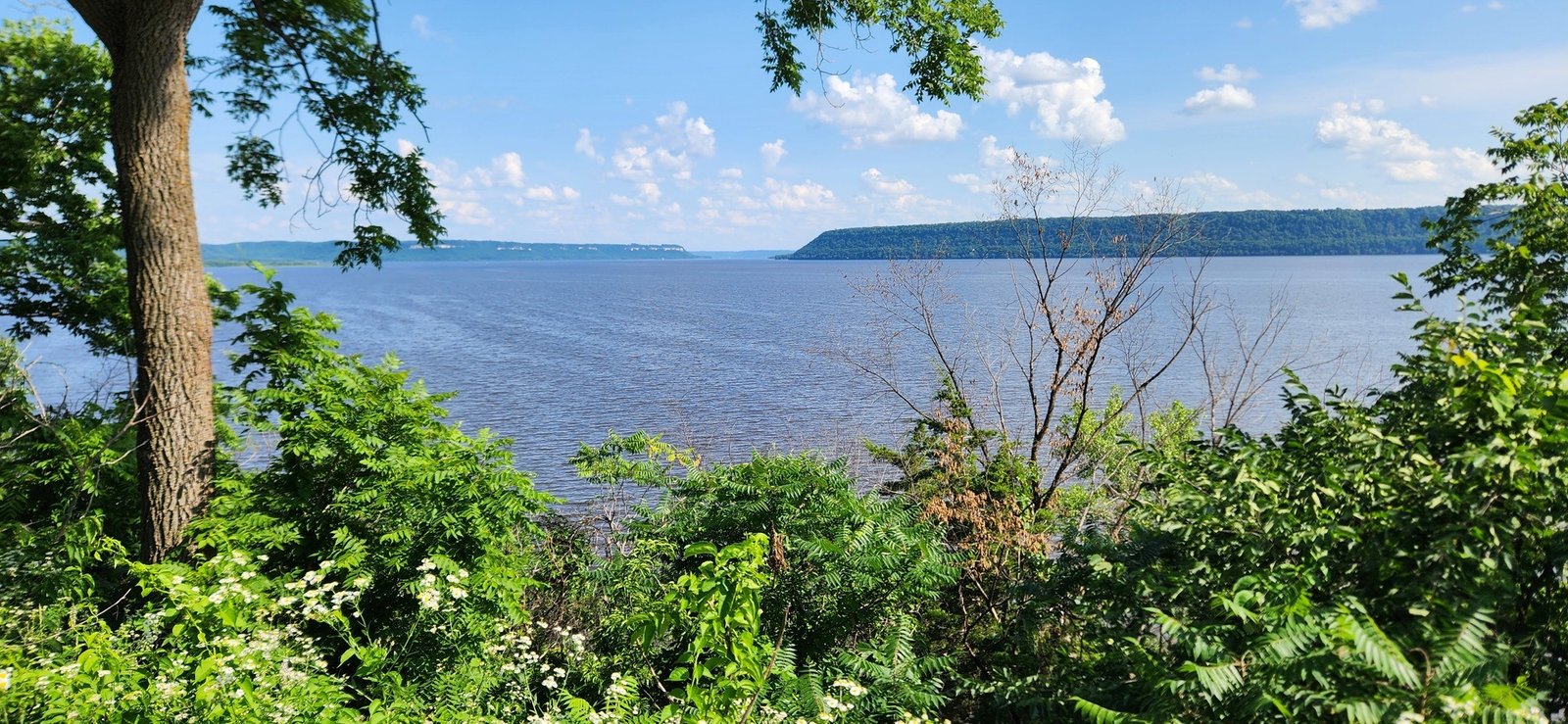
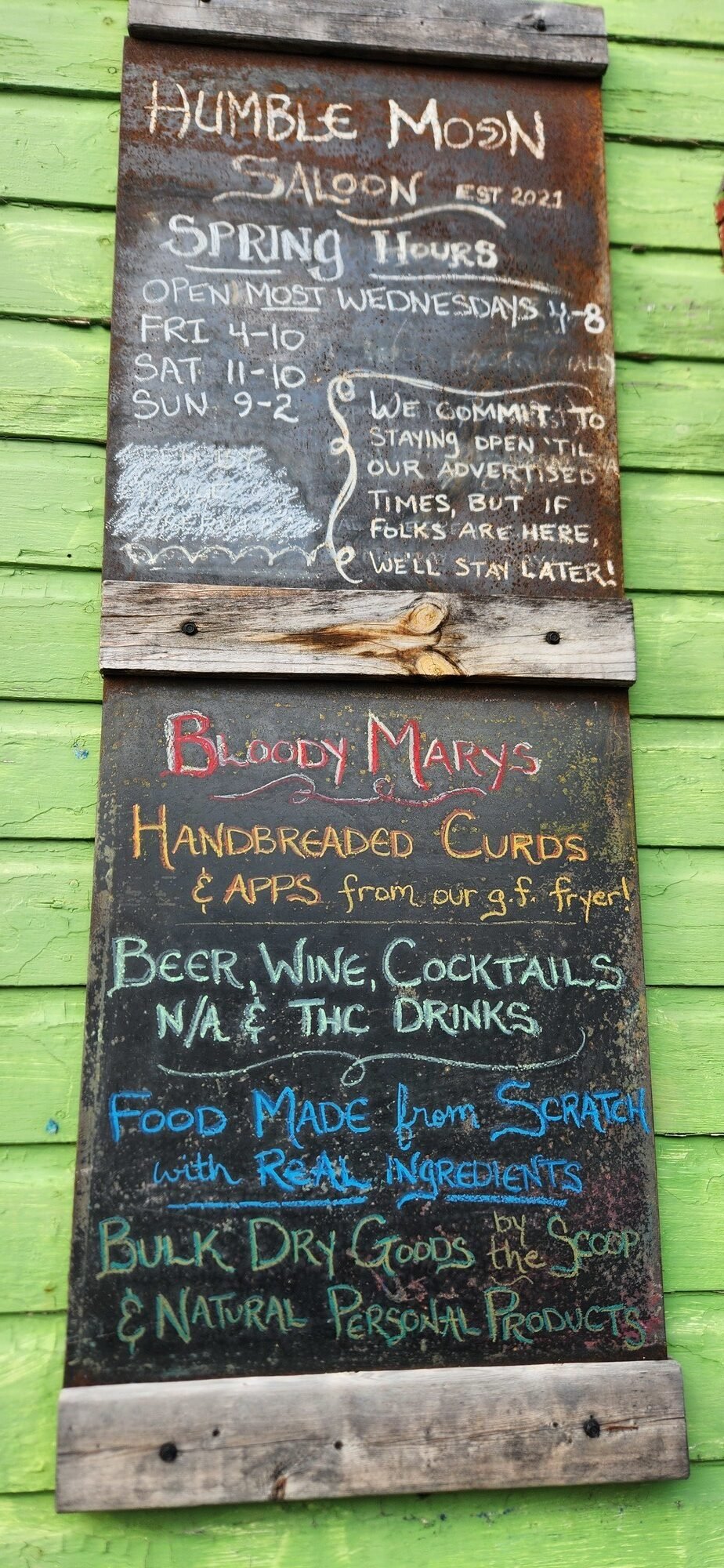
This was my fourth year doing the ride. One of the main differences in 2024 was the fact that the Mississippi River and other rivers were running very high. Entire campgrounds were flooded which made for some fun improvisatory sleeping arrangements. Thanks to Sarah and Dan at the Humble Moon in Stockholm for their hospitality. Indeed, in the hinterlands of the country it takes people consciously committing to community no matter the histories or differences to build community. People and music over Packer games.
Goin’ to Madtown 300
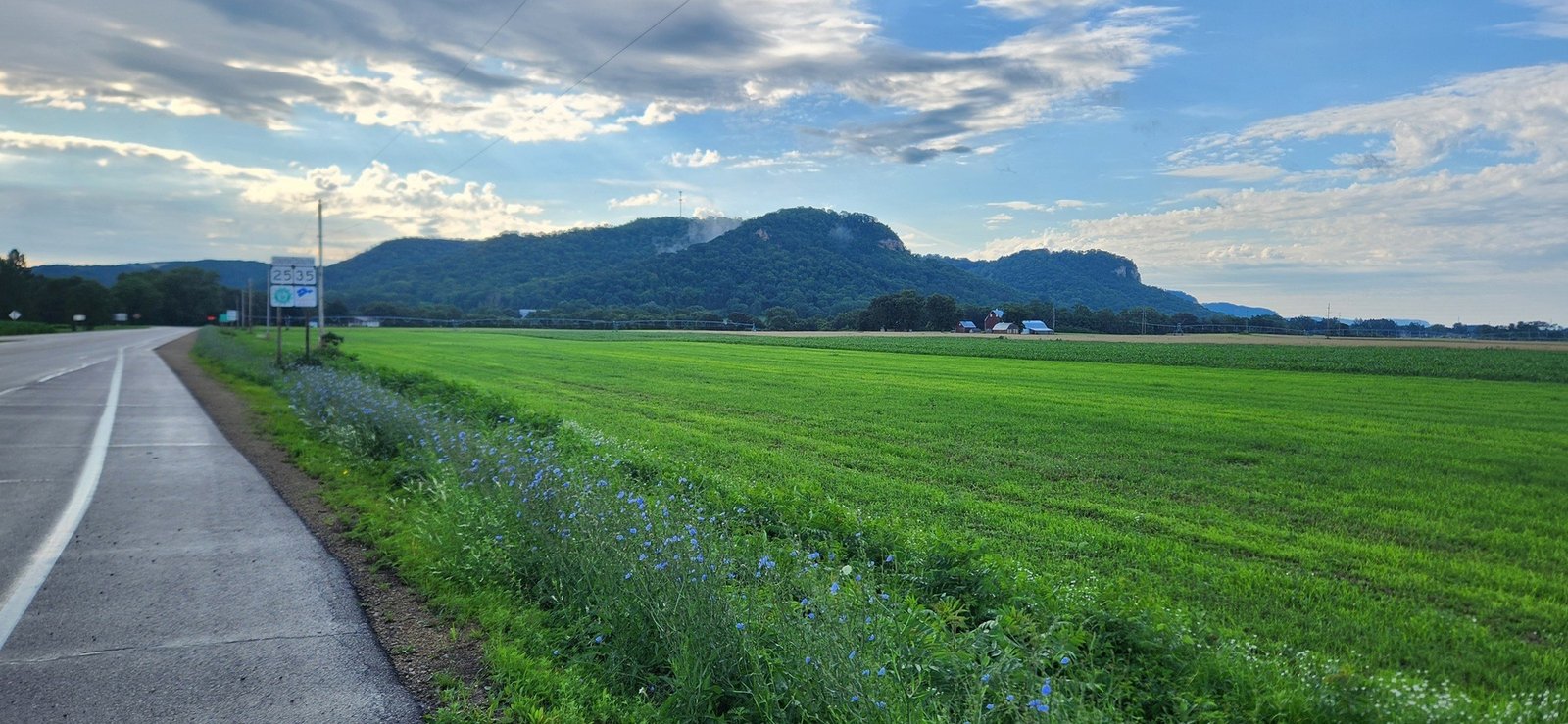
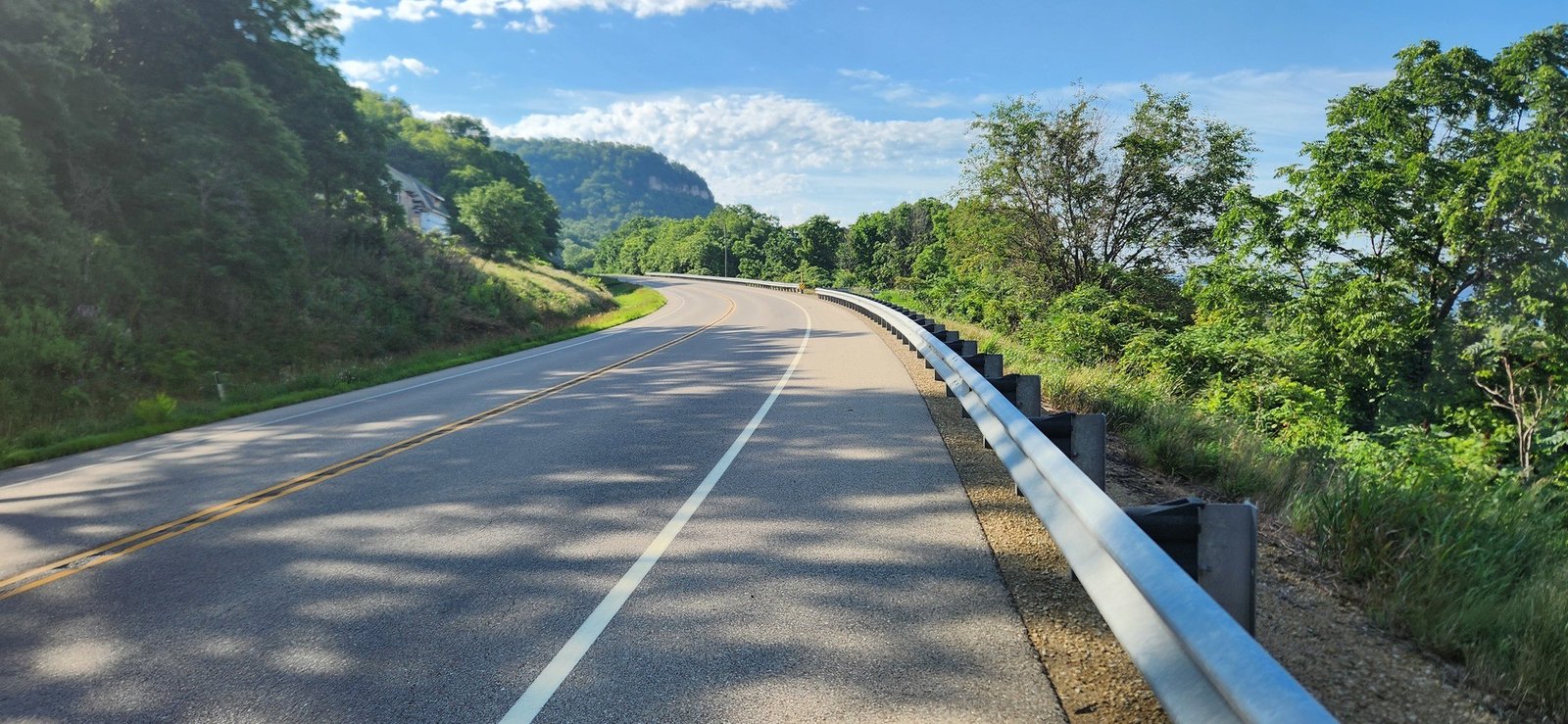
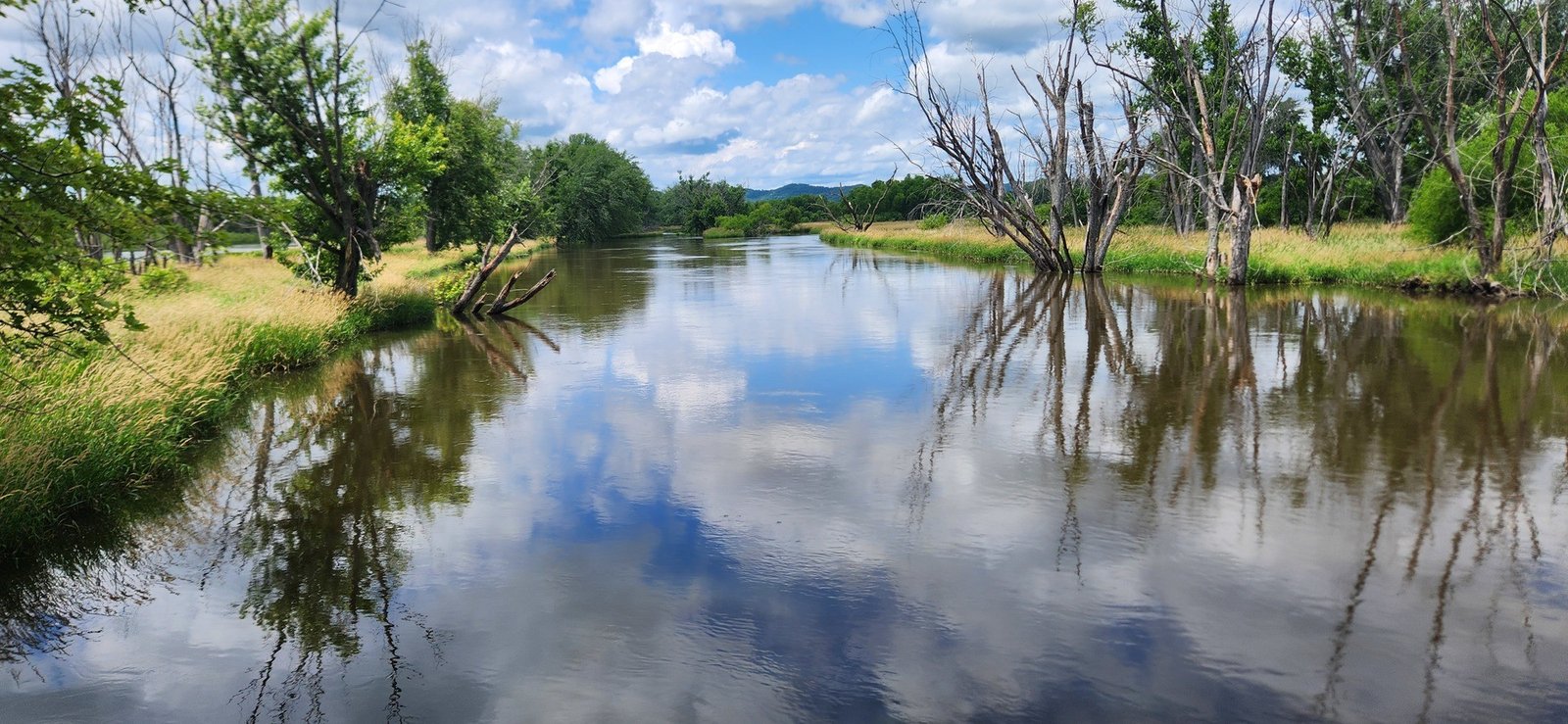
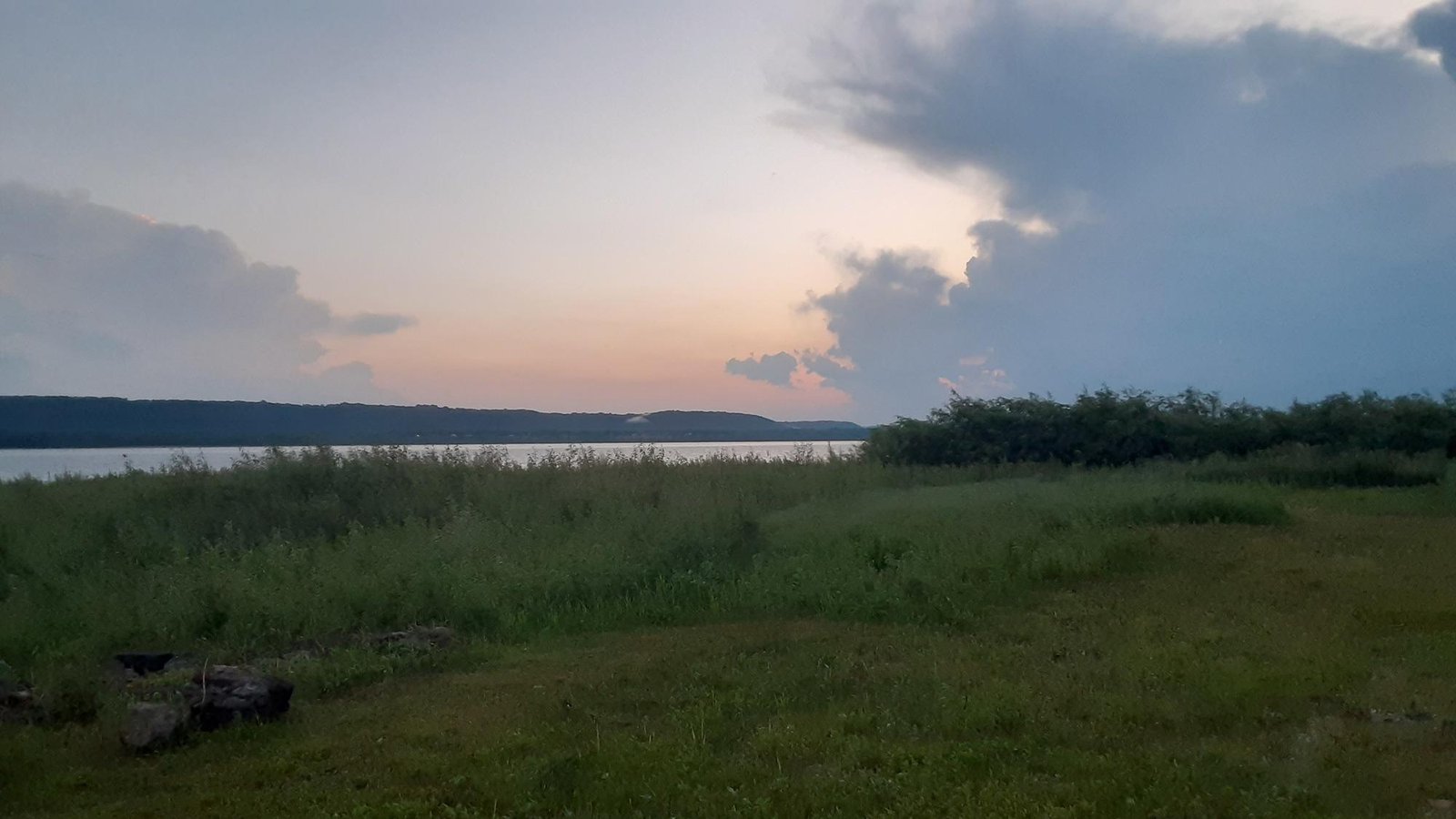
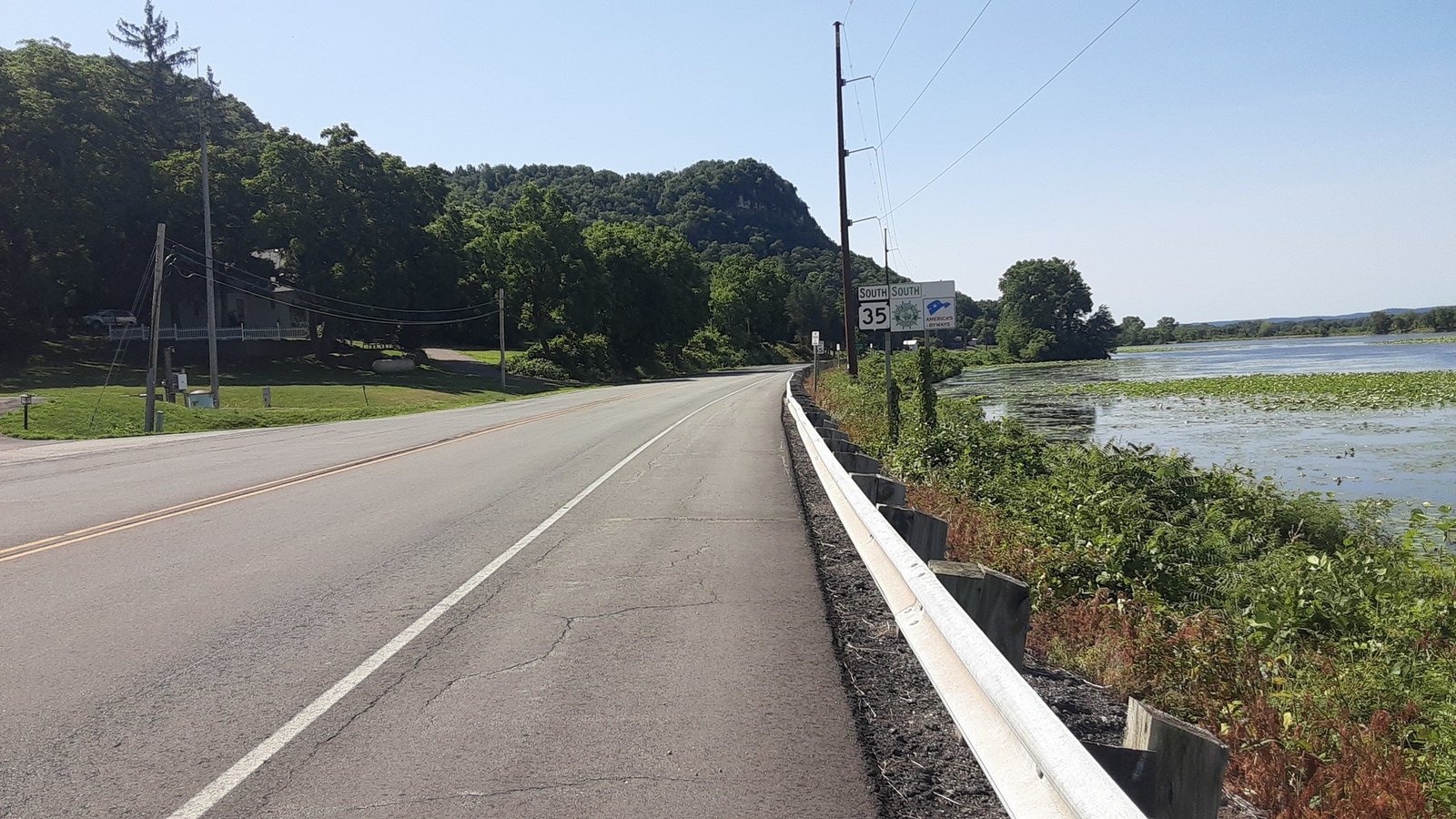
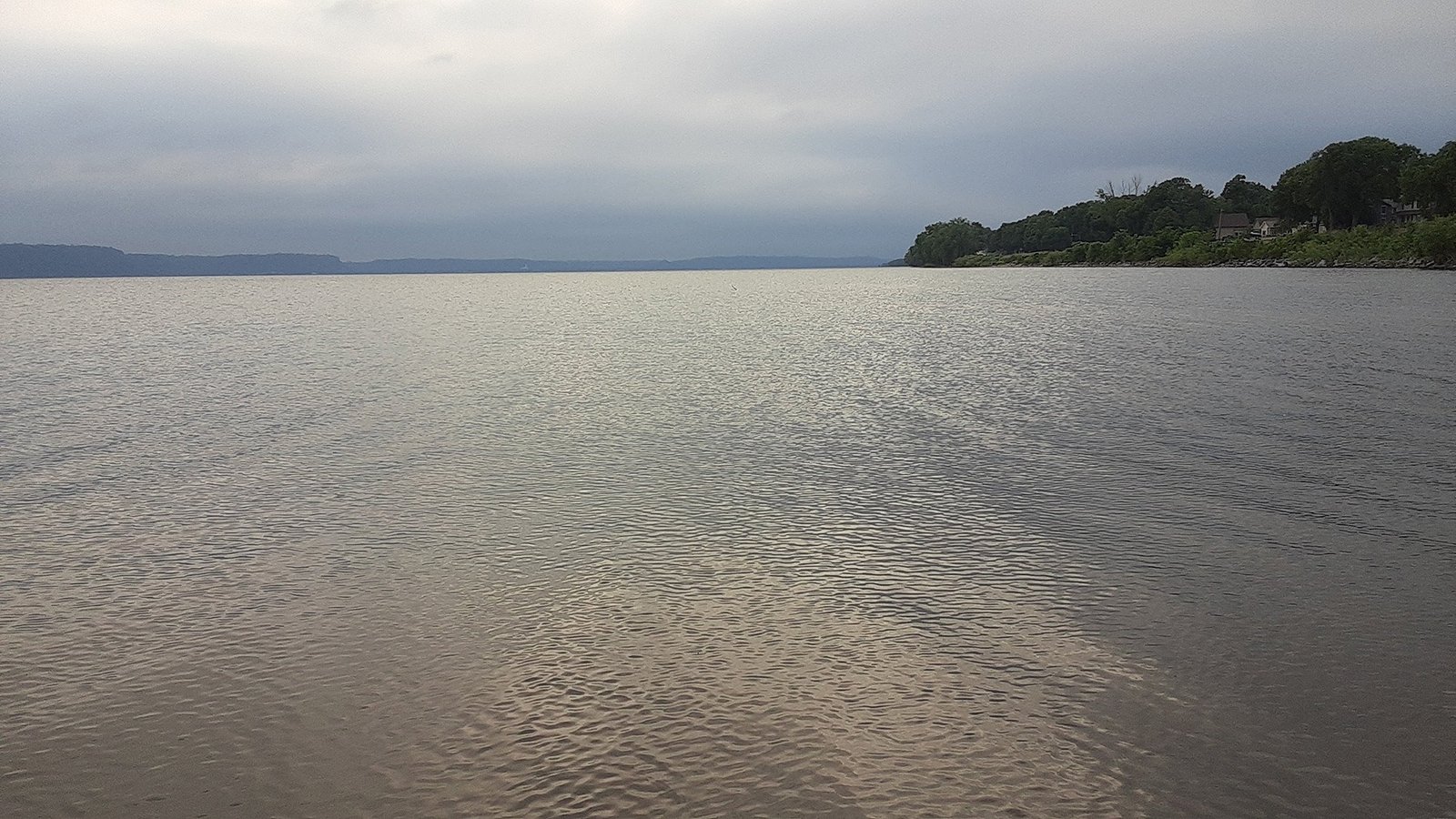
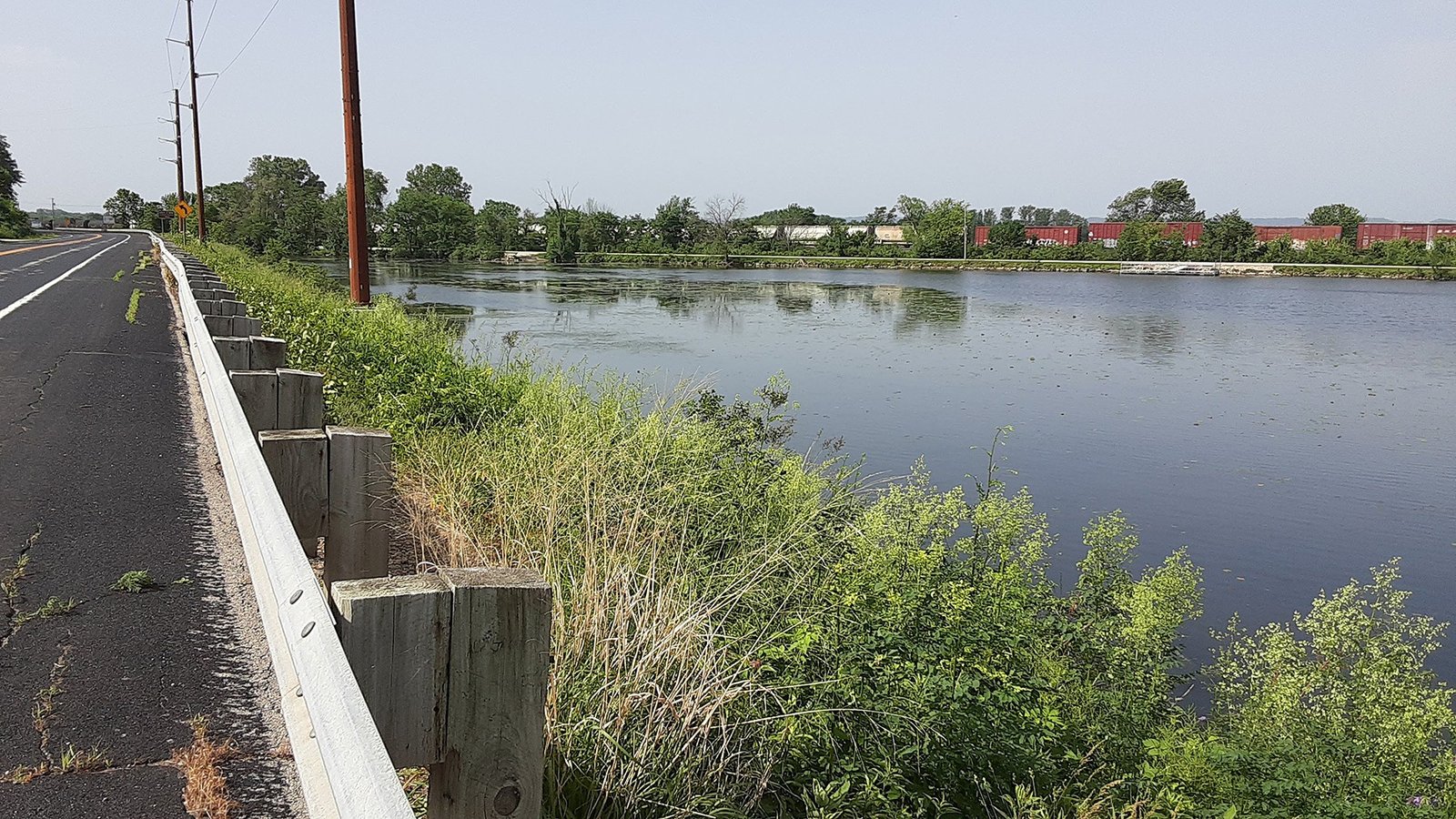
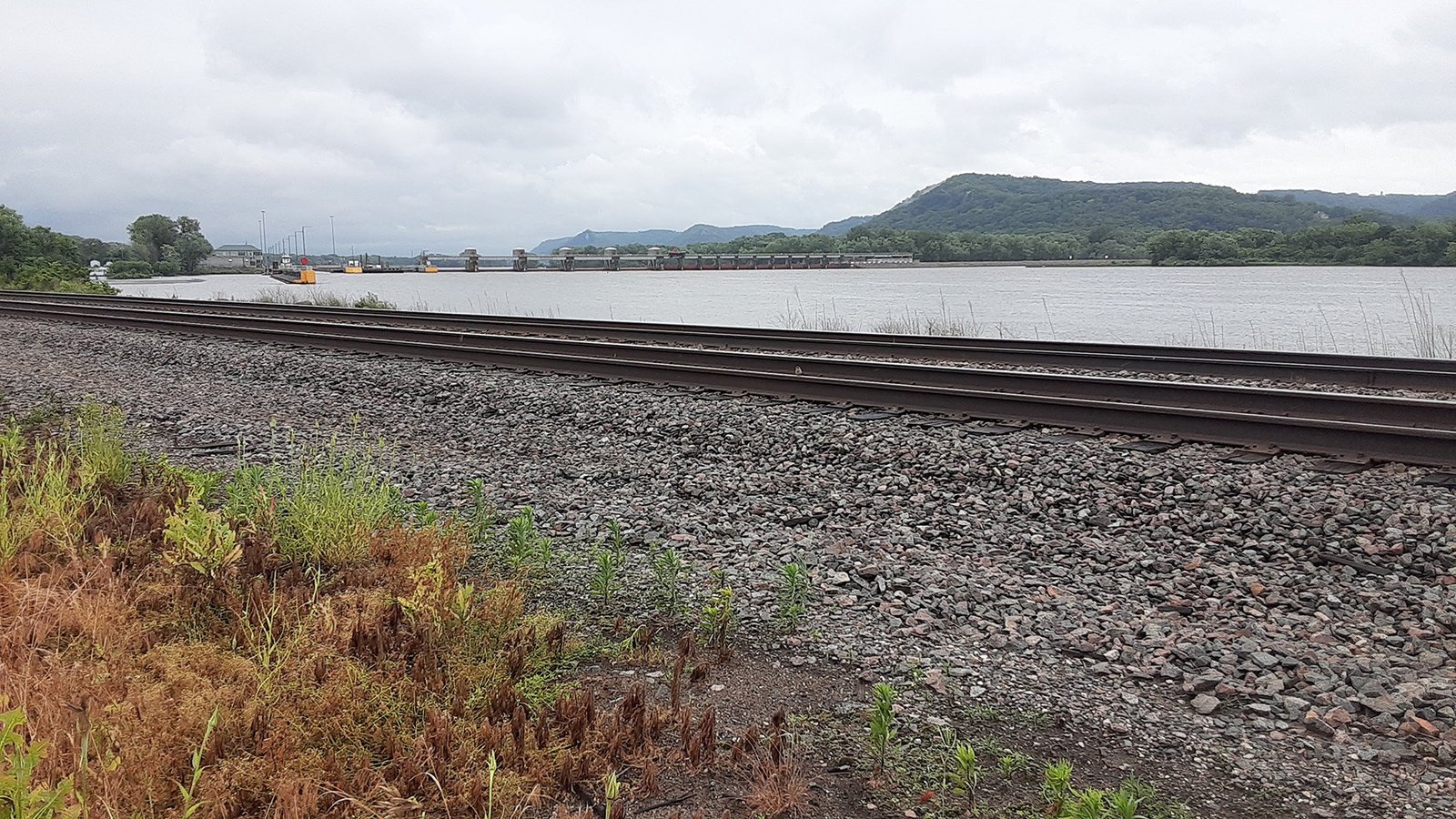
The Great River Road – Highway 35
The Great River Road – Highway 35
The Humble Moon
The Great River Road – Highway 35
The Great River Road – Highway 35
The Great River Road – Highway 35
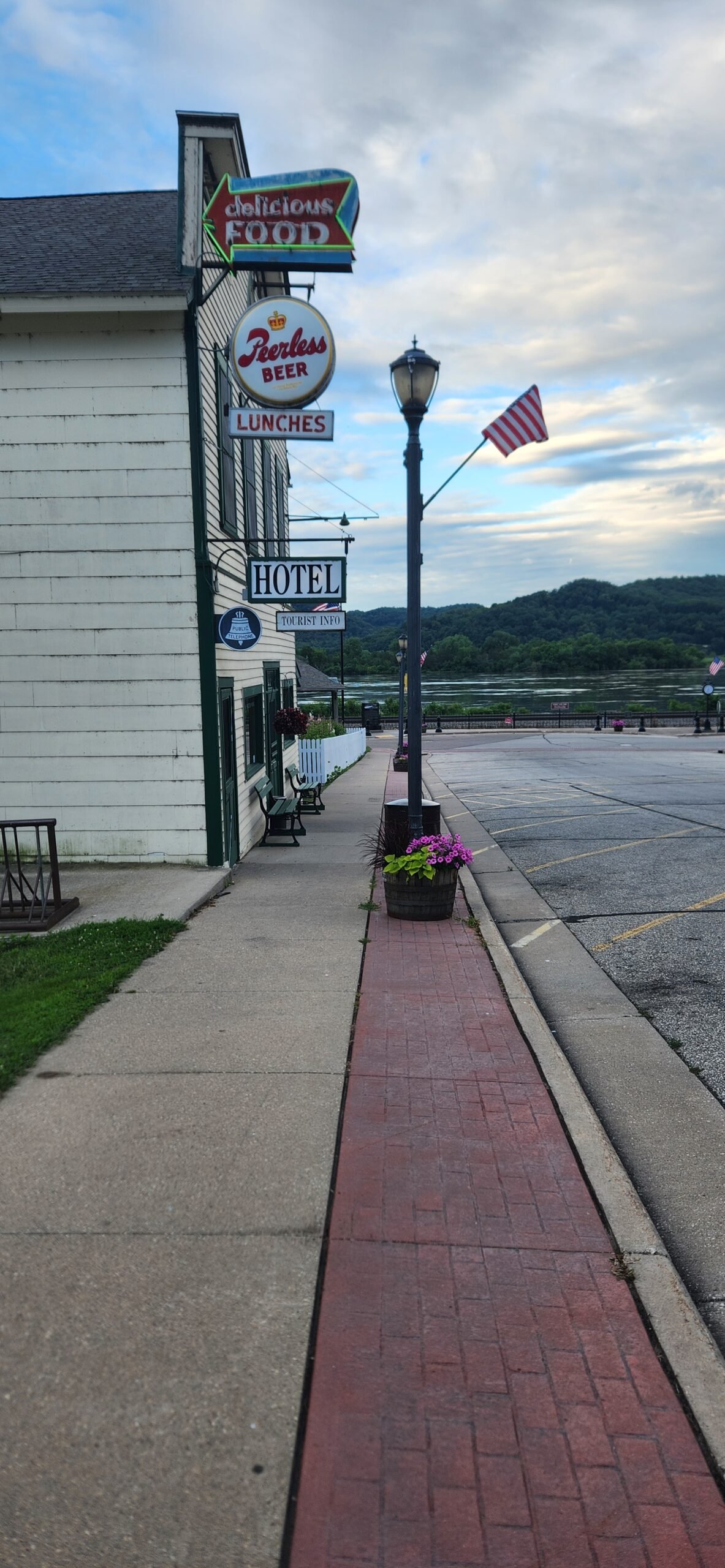
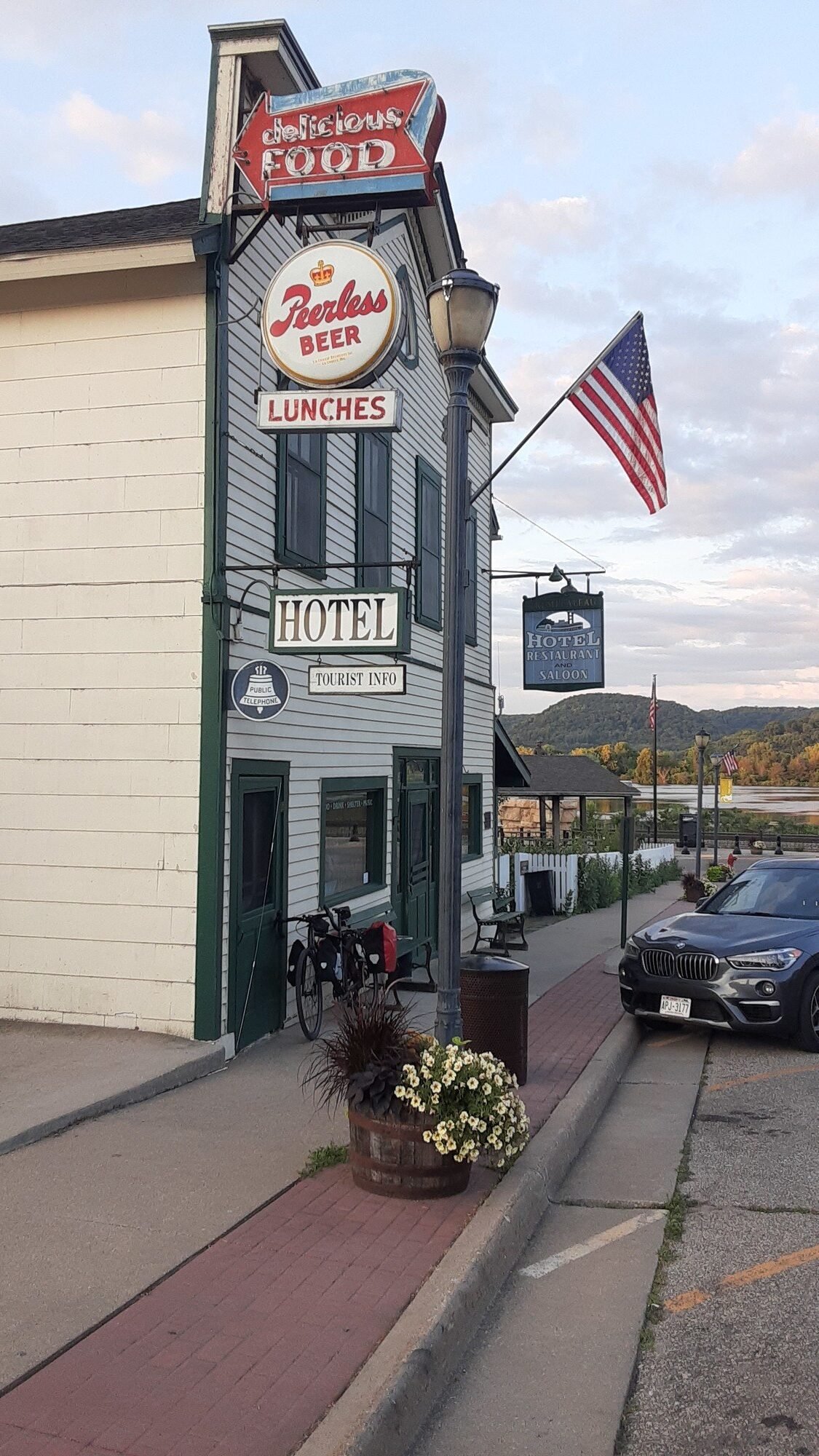
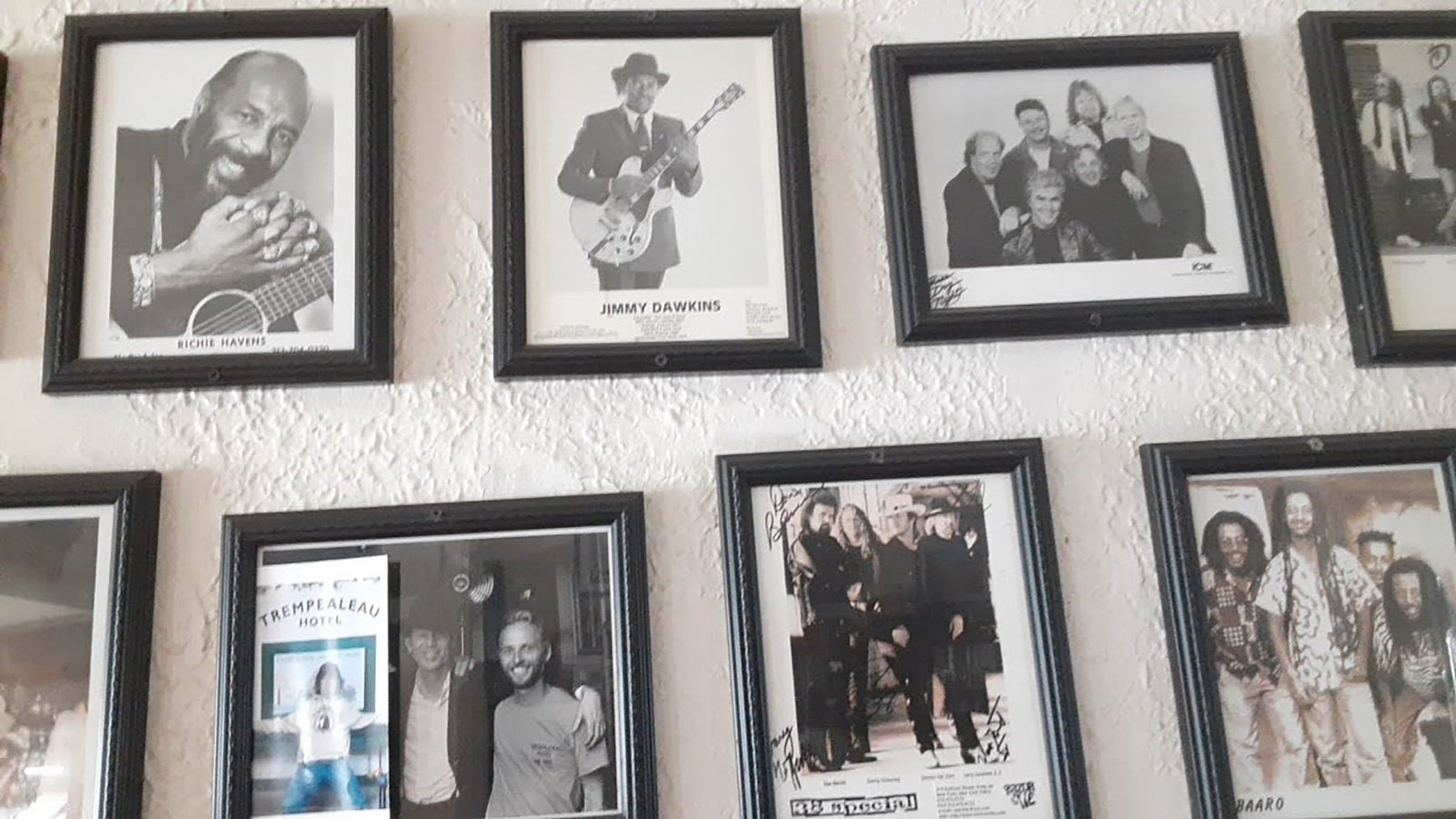
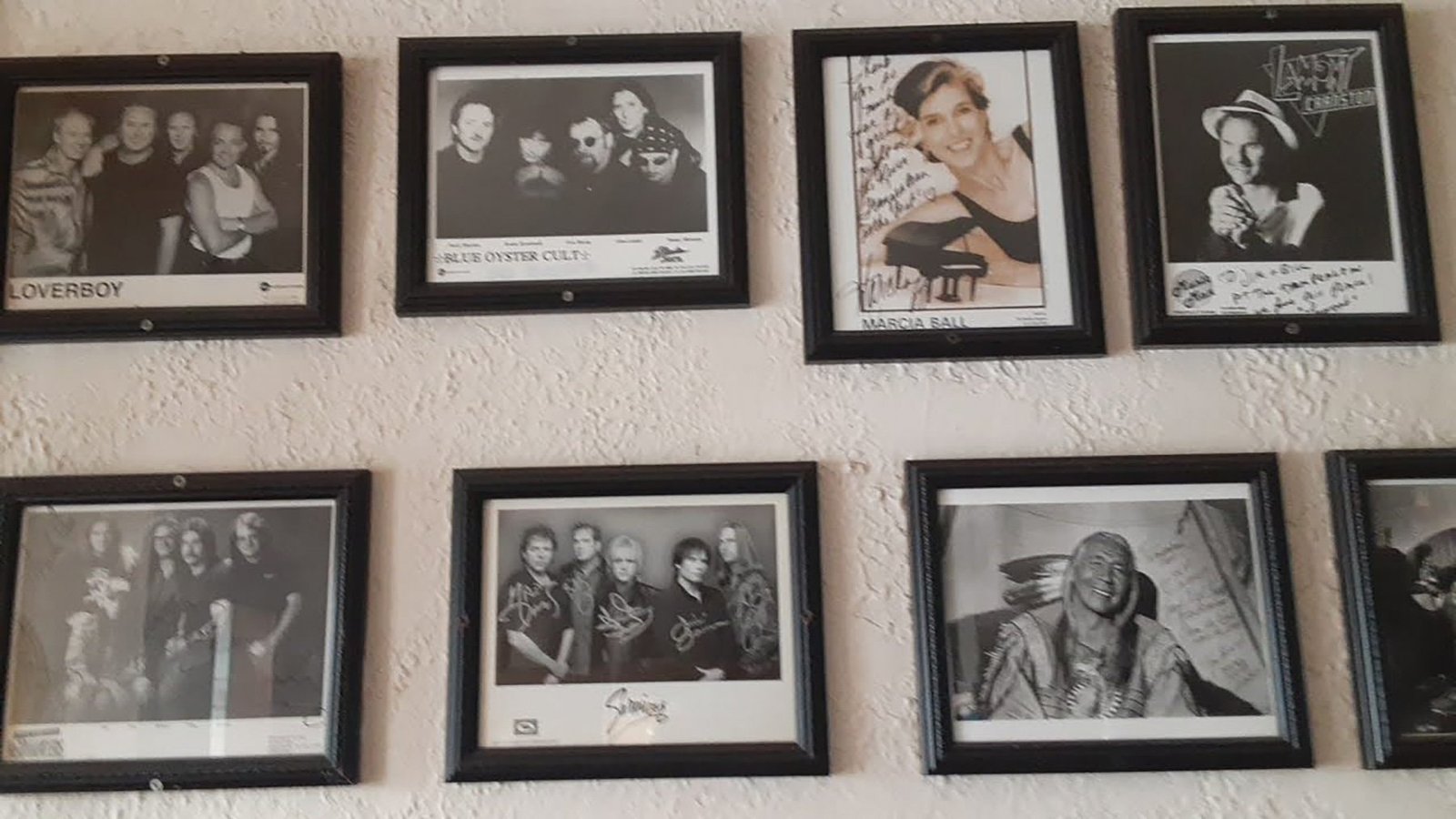
Trempealeau Hotel
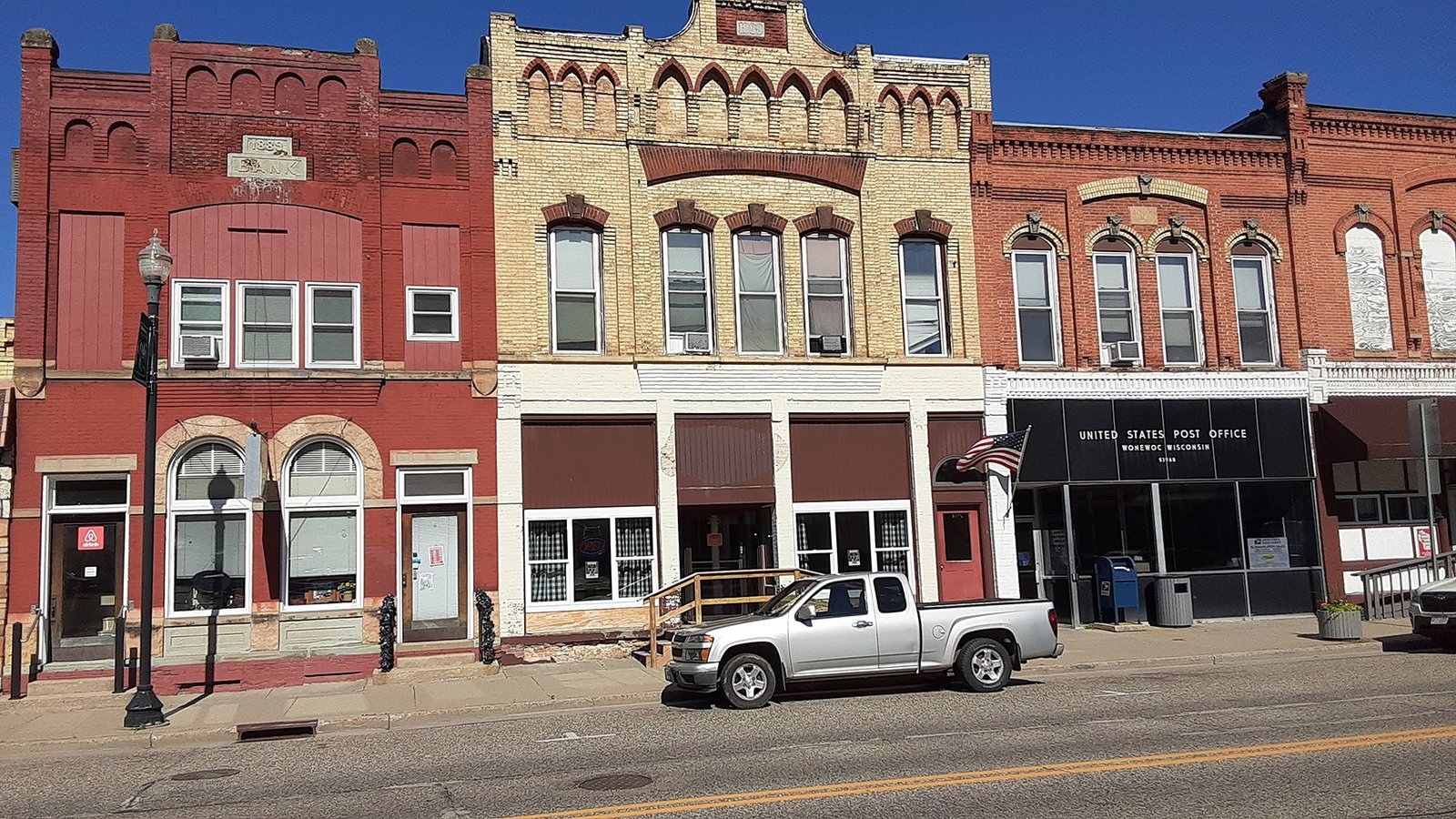
By Onalaska
By Onalaska
Goin’ to Madtown 300
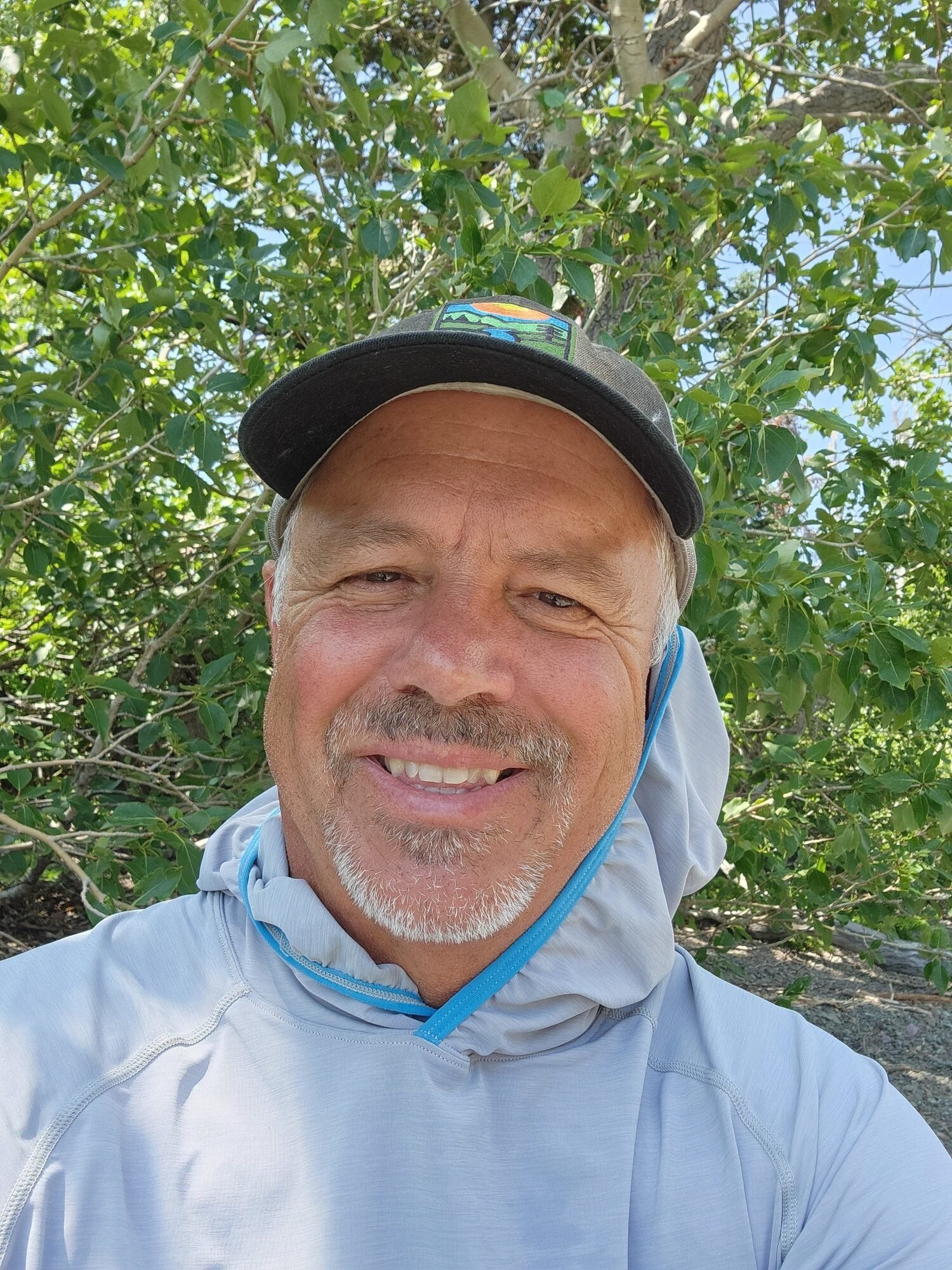
Paul Lyons on the road
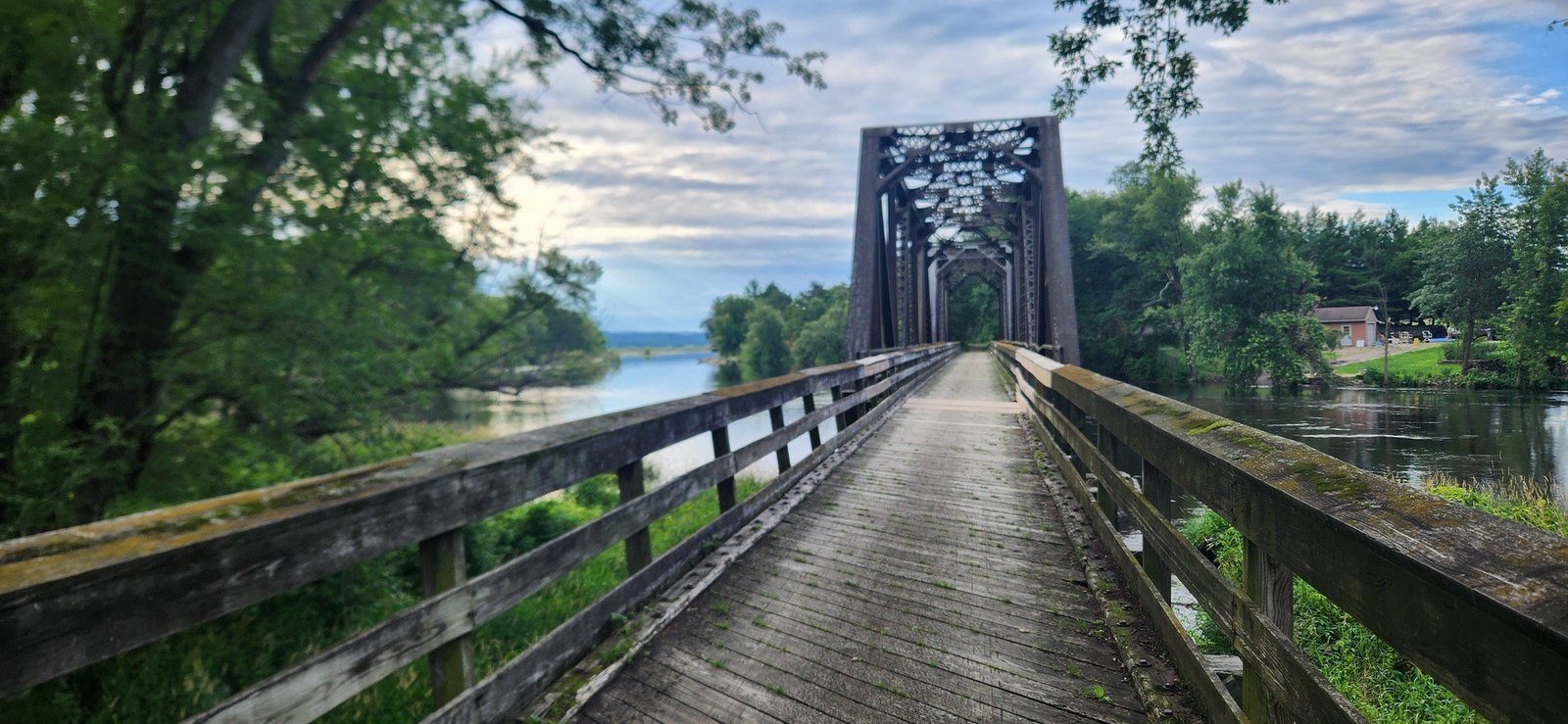
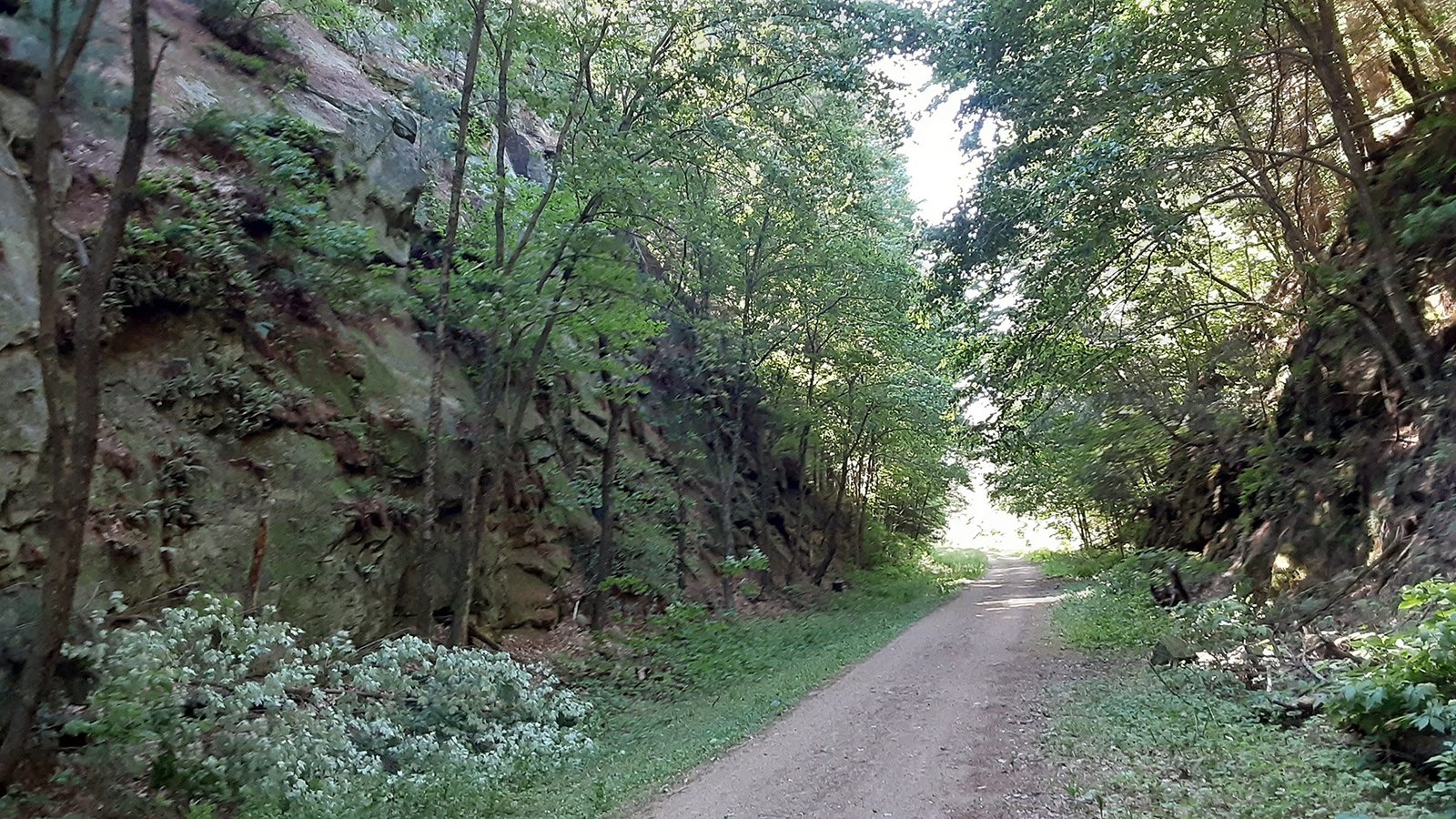
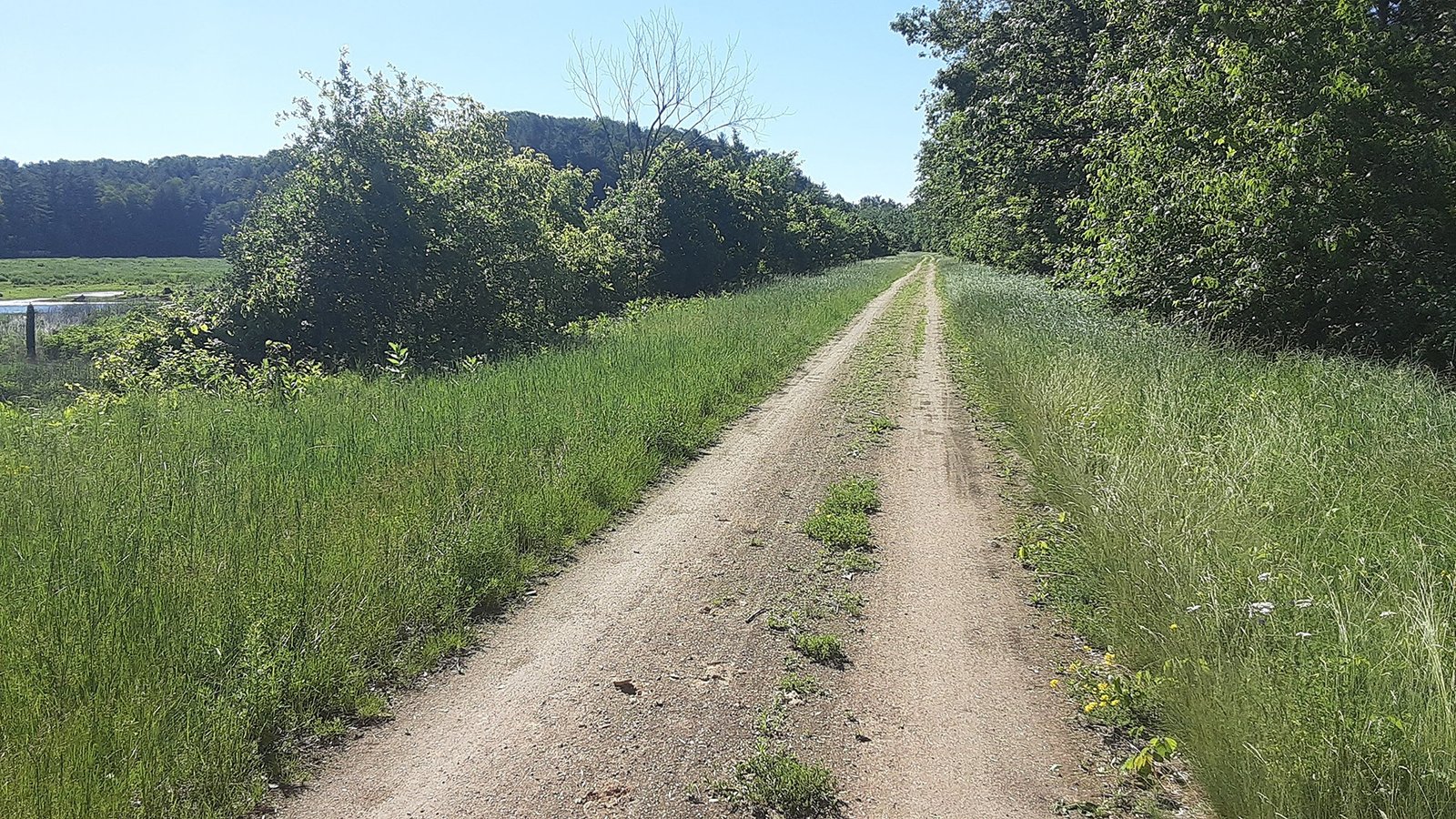
Sparta Trail
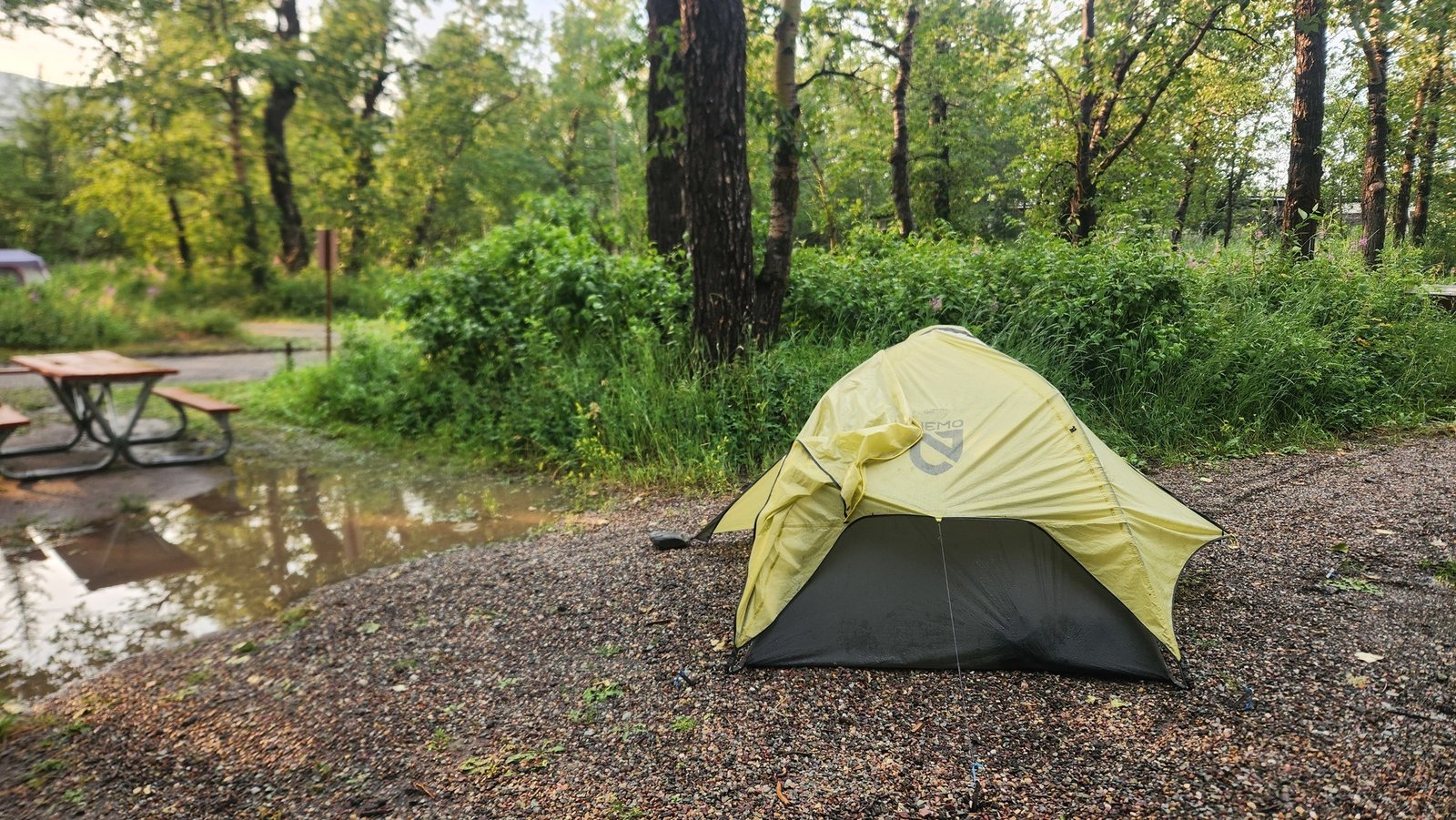
The Trempealeau Hotel is still awesome with delicious food, great beers and friendly people. Come to think of it – no televisions in that place too. I had a few nights when it rained but my Nemo Hornet OSMO Ultralight 2P Tent worked great. Big shout out to La Mexicana restaurant in Sauk City that had some delicious lemonade and tacos that made me feel like I was still in San Francisco. The ride from Sauk City to Madison is actually pretty nice. I like to go through Marxville. One of the roads was closed and being resurfaced but that did not stop this bicycle.
Madison to Columbus Amtrak by Bike
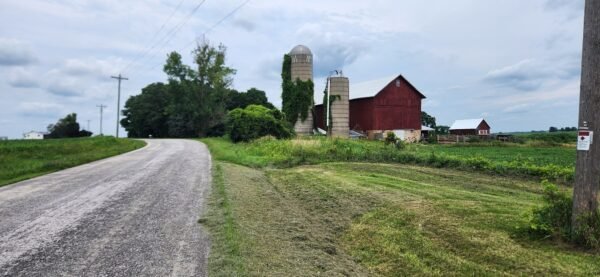
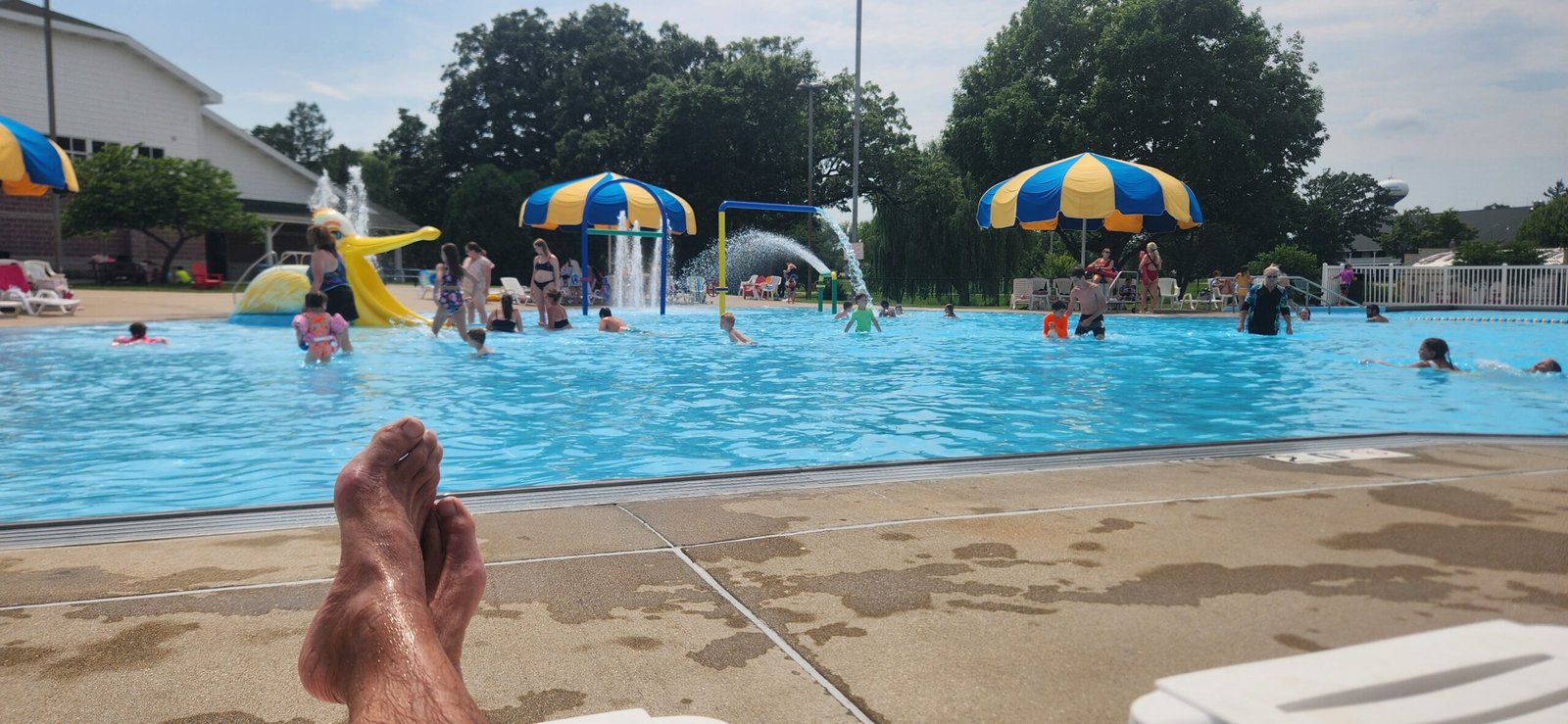
This year I took a little different route to the Amtrak Station in Columbus Wisconsin. It is about a 40 mile ride and you can get out of Madison on mostly trails. Also, the best way into Columbus is weave your way on the farm roads like Marshall Road – a really sweet ride. As always before you get on the train cool off with a swim at the Columbus Aquatic Center. The Empire Builder heading west leaves Columbus Wisconsin at 5:55PM daily.
East Glacier to West Glacier
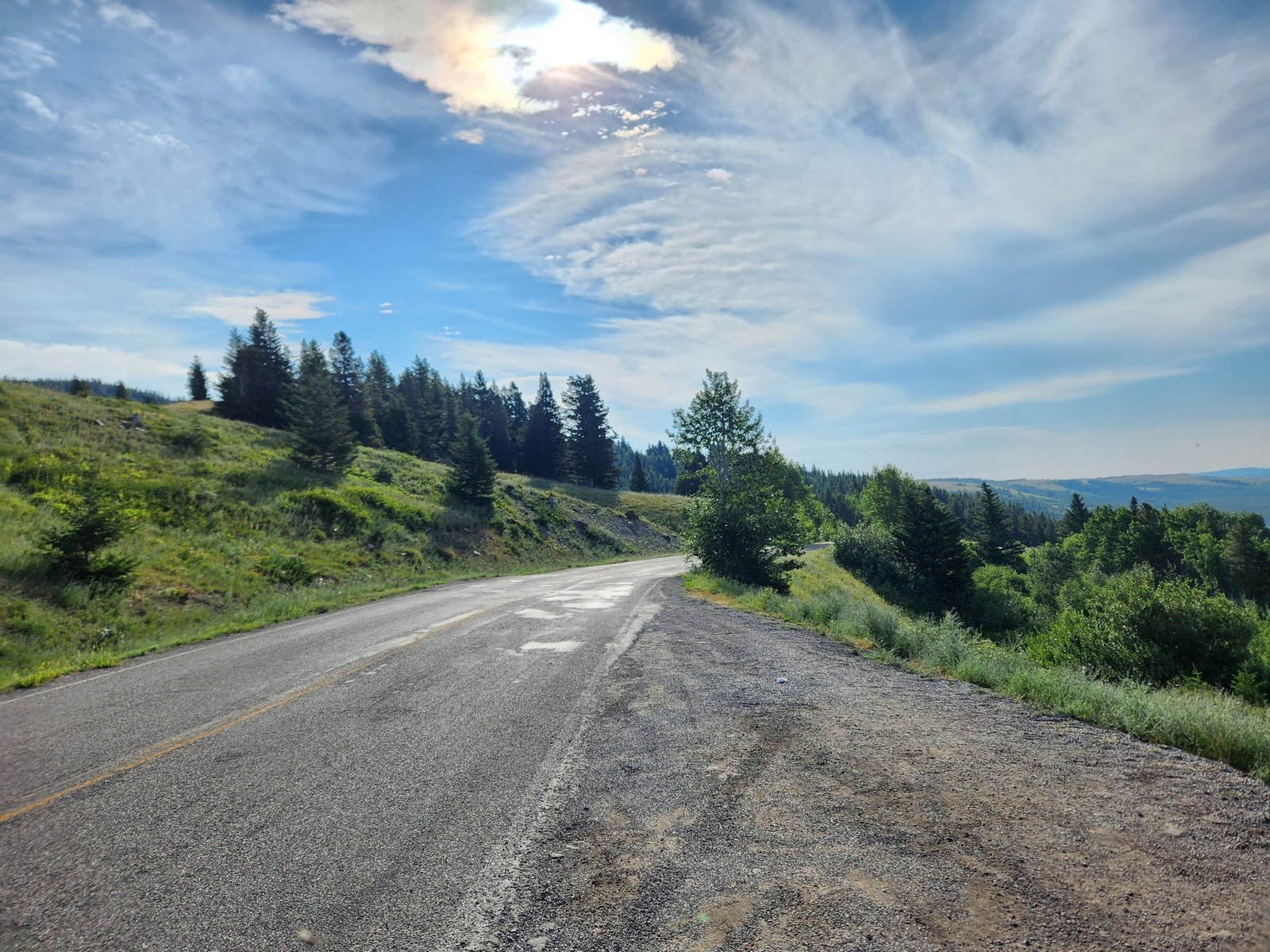
Riding a bike from East Glacier to West Glacier is very fun. Sure there are some climbs but the open spaces and amazing views make it all worthwhile. Last year I documented the ride.
I reunited with some friends that I met last year and made some new ones. At one point, at a campground I ran into Ernest and Jack from Switzerland. They were riding across the entire United States at a pace of about 80 miles per day. They were pretty hard core about it all, wearing red, white and blue jerseys emblazoned with a flag of the United States and some lettering “America Tour 2024” in hopes of being received congenially during their ride. I suspect they are either spies on a mission of discovery or players in an upcoming Netflix series. Later on my ride in Glacier, I camped with an interesting Czech fellow who has biked in over ninety countries. I shared my dinner of pasta primavera – all the food I had left. Below is the recipe. It was delicious after a day of riding the Going to The Sun road.
Glacier Zucchini Delight
1 zucchini
12 cloves of garlic – entire garlic bulb
1/2 bag of elbow macaroni
olive oil
1 teaspoon dried basil
salt and pepper
Directions
Cook up macaroni al dente and set aside
Chop up zucchini, garlic and basil and sauté in olive oil
Combine ingredients
Add more olive oil
salt and pepper to taste
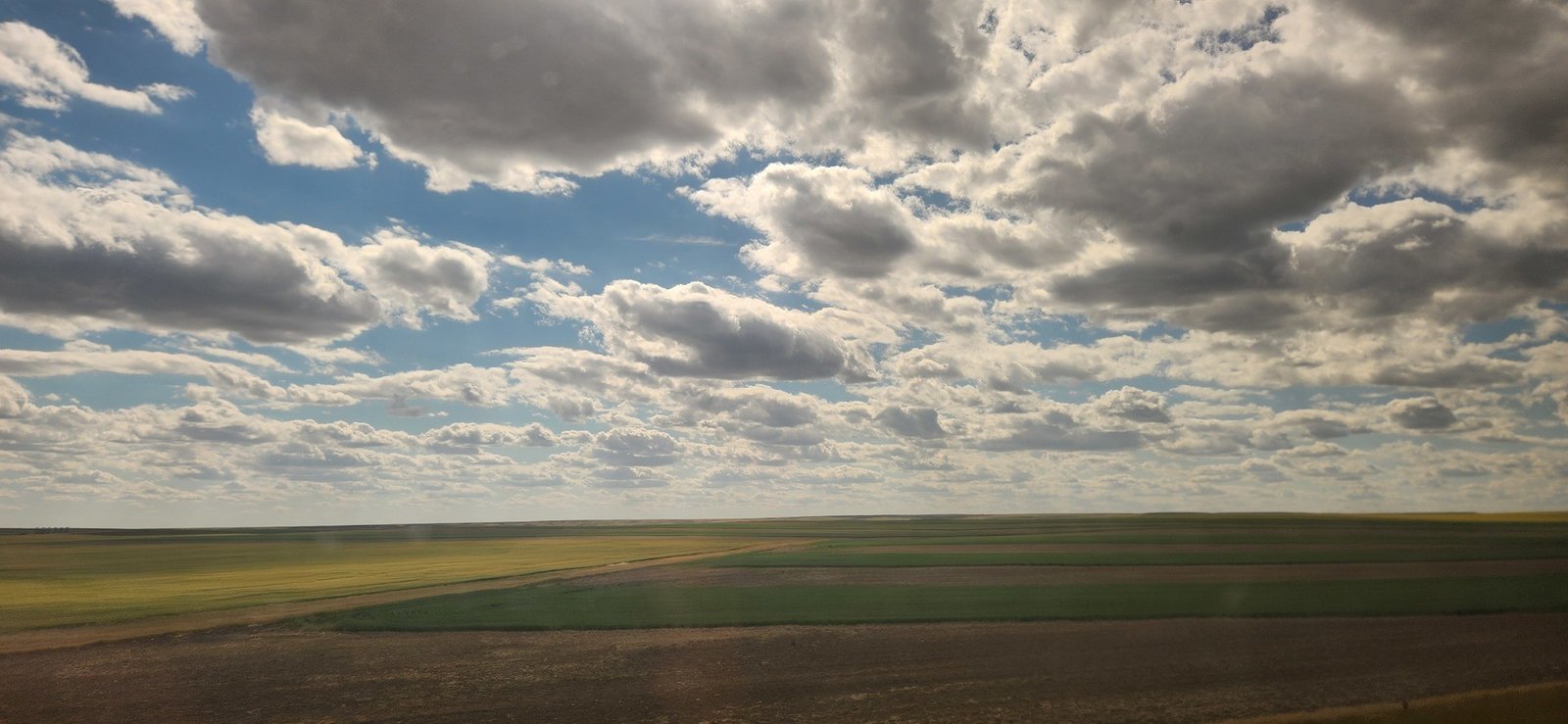
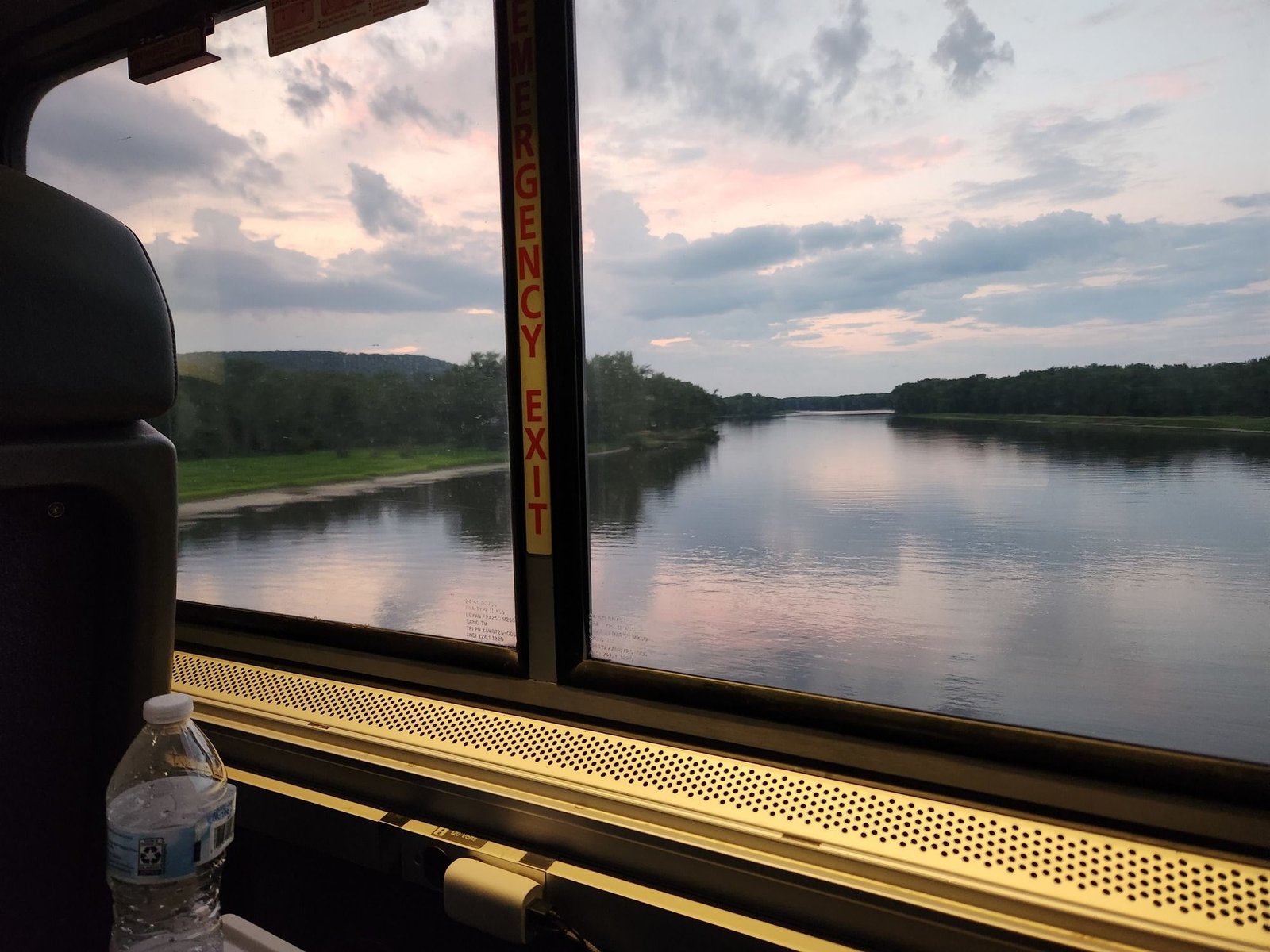
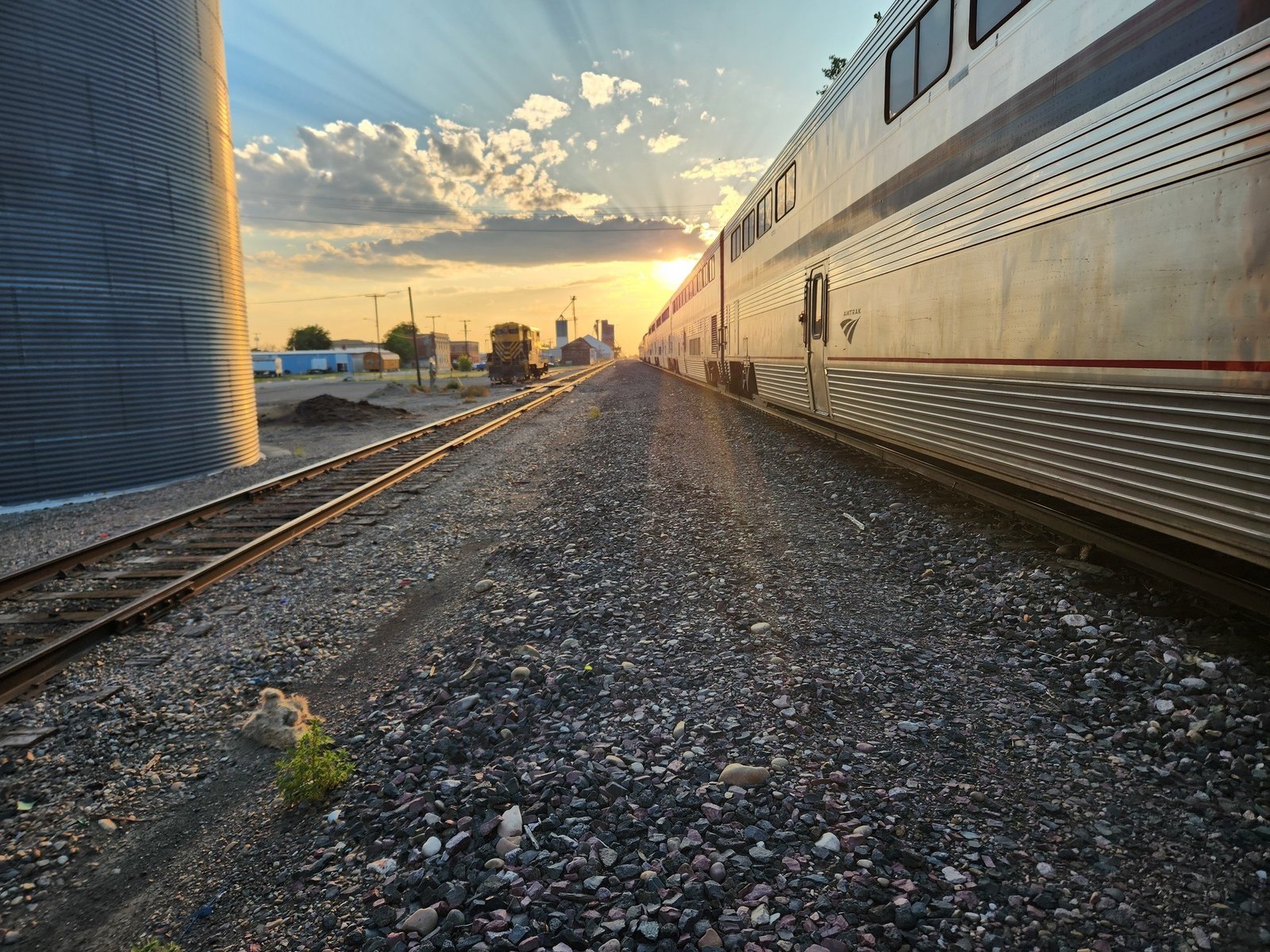
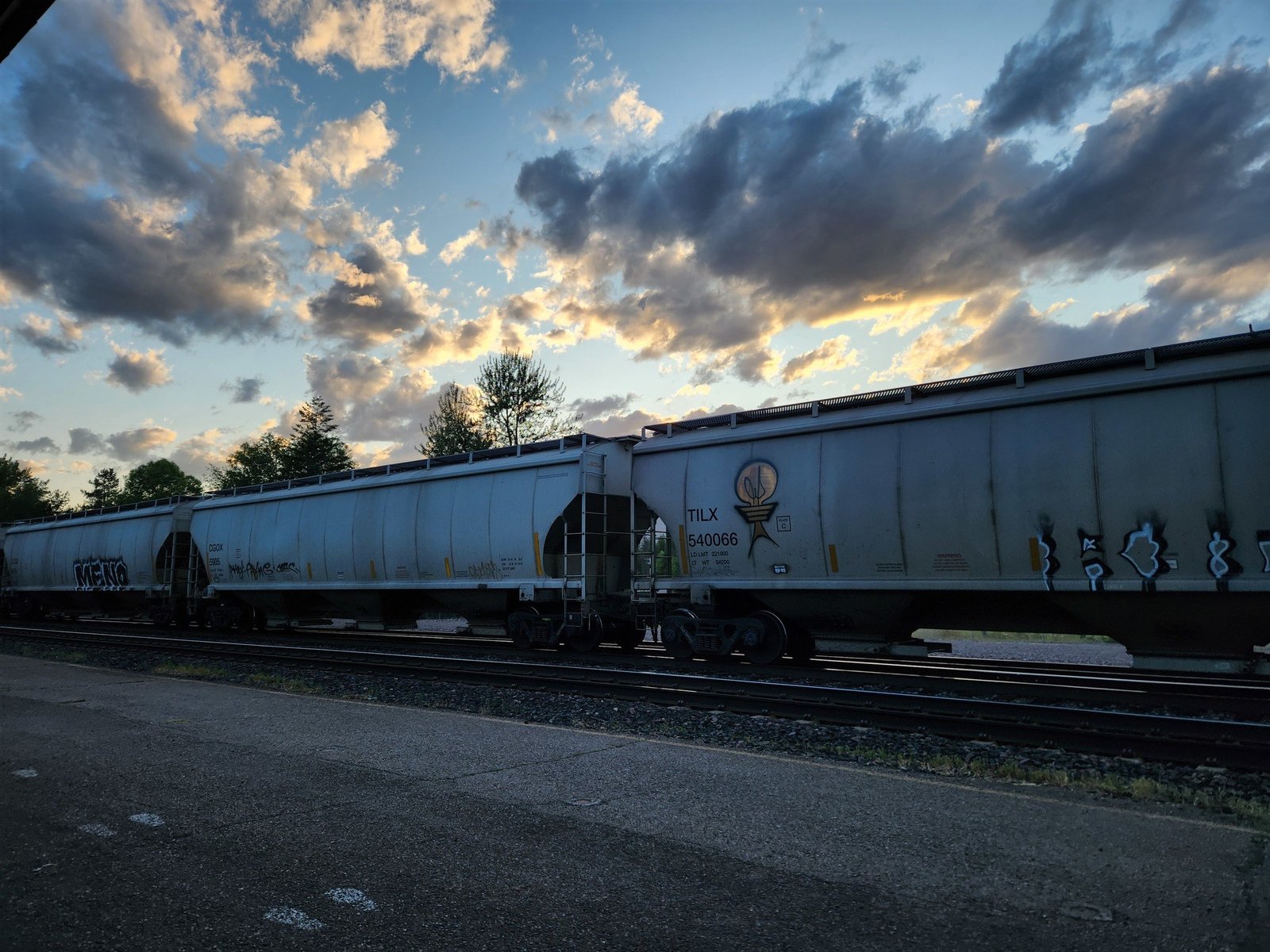
On Amtrak in Montana. The skies are always amazing.
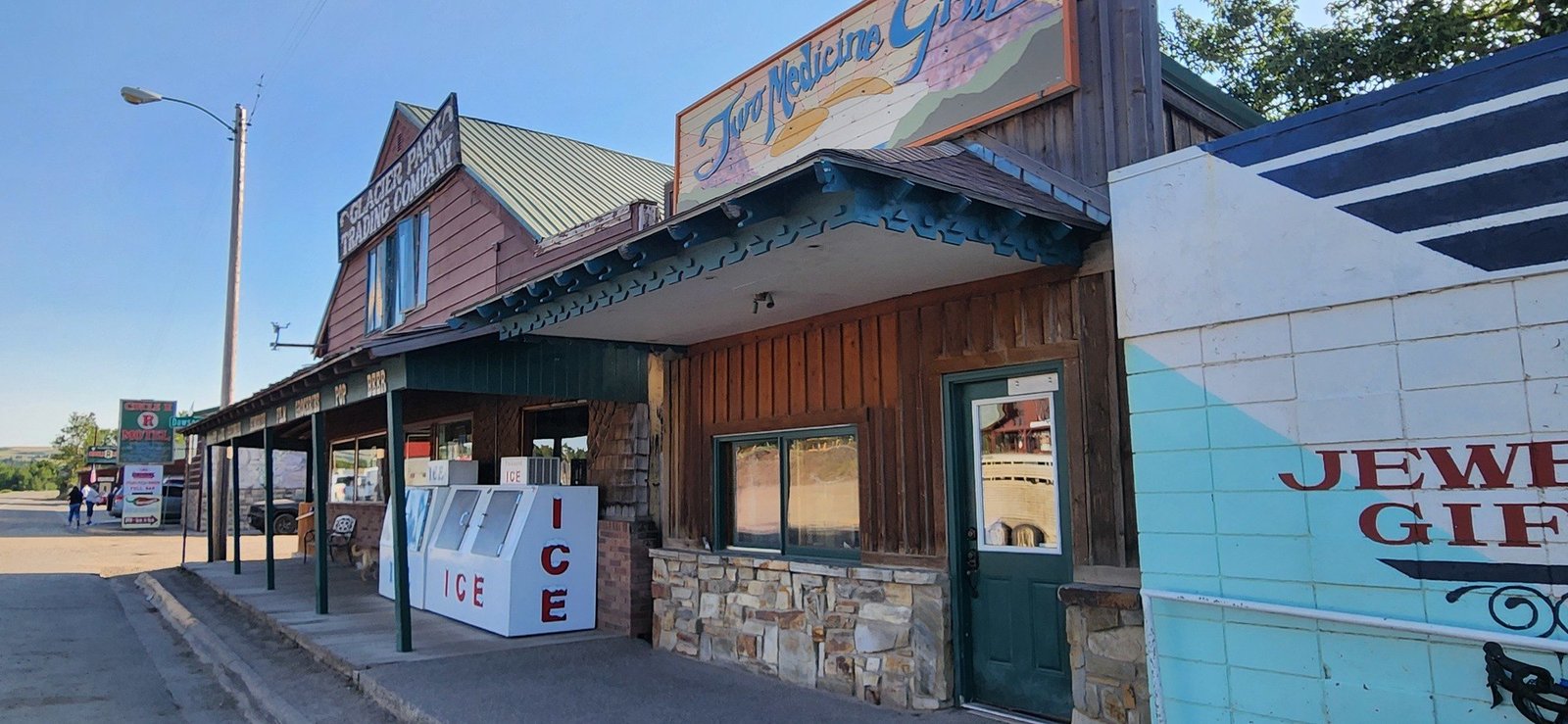
Two Medicine Grill in East Glacier
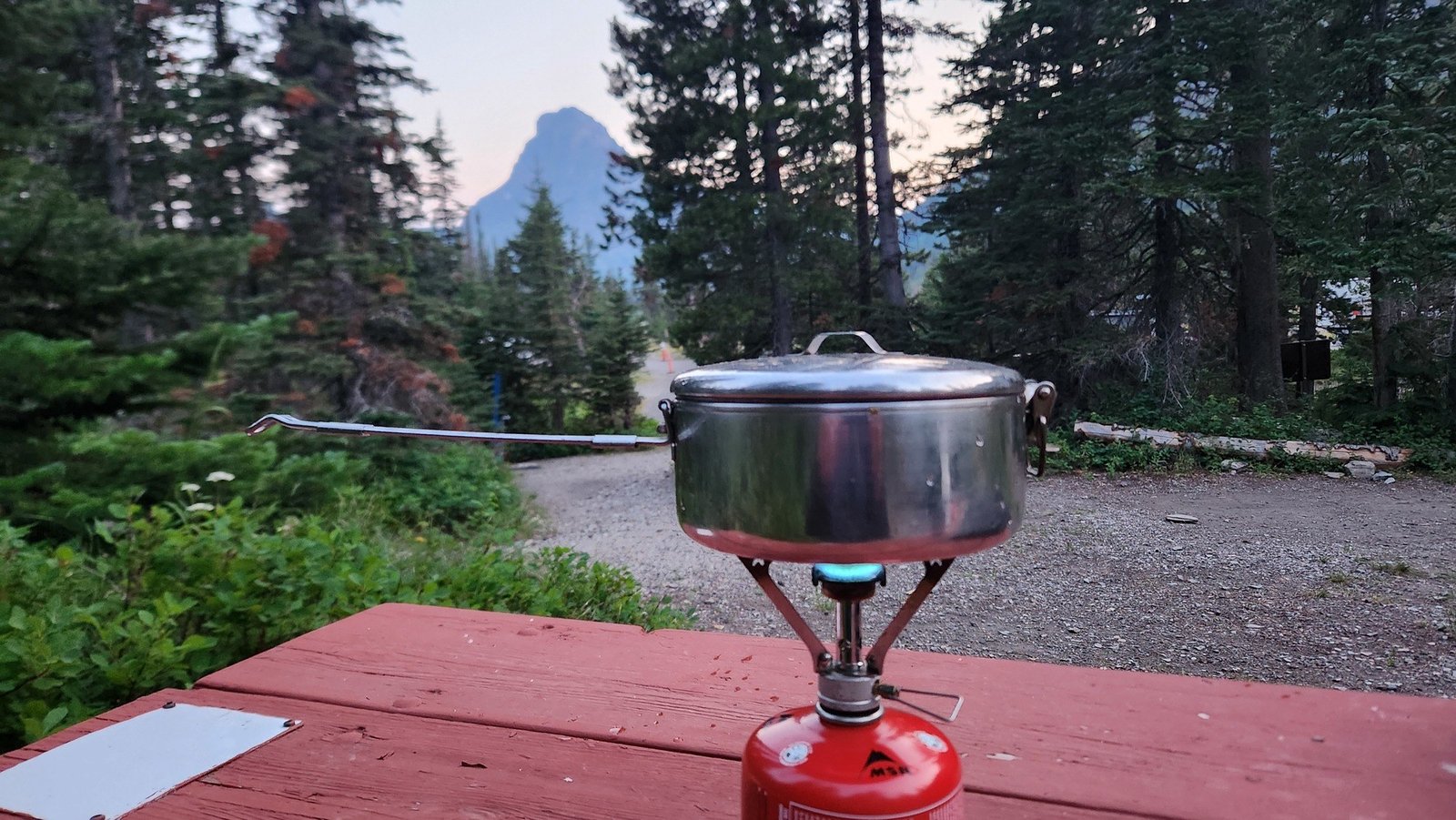
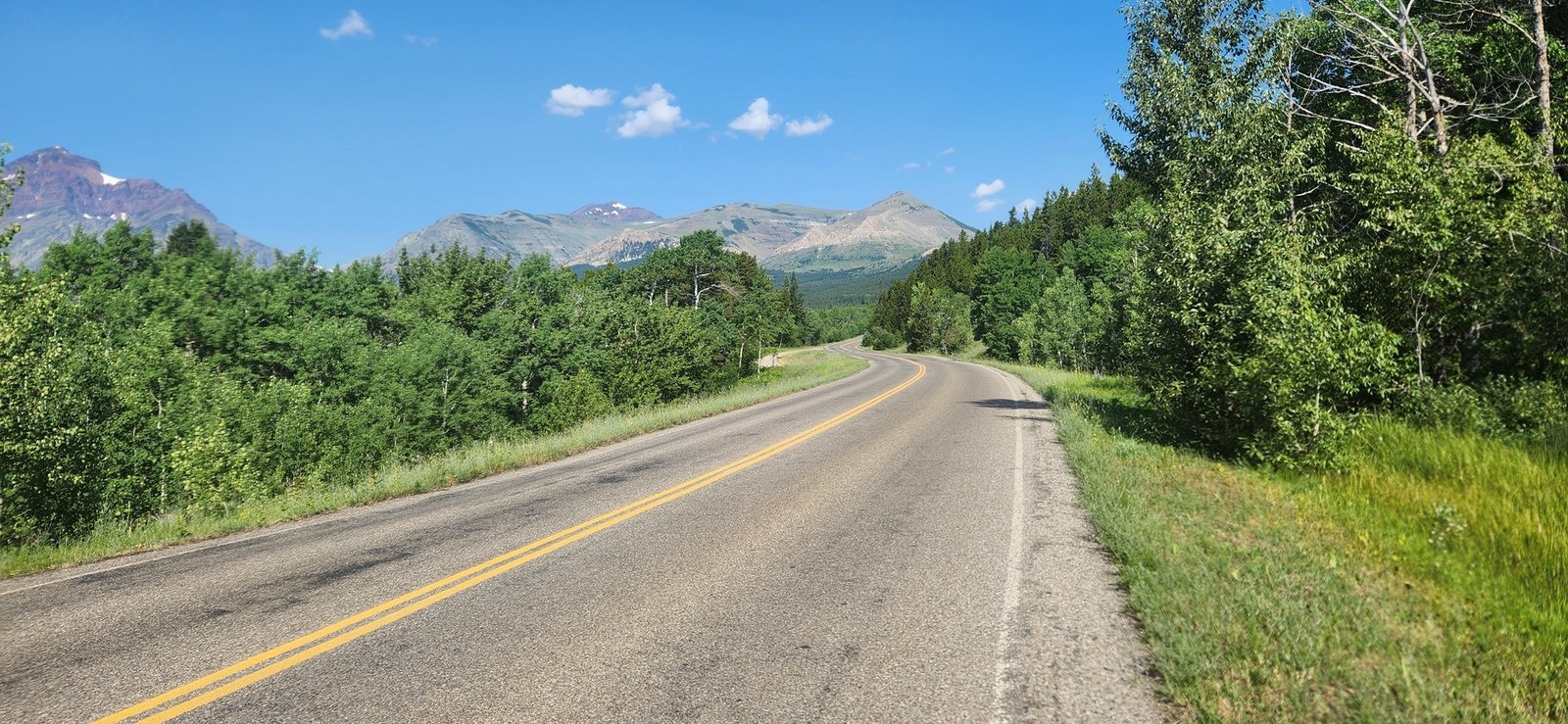
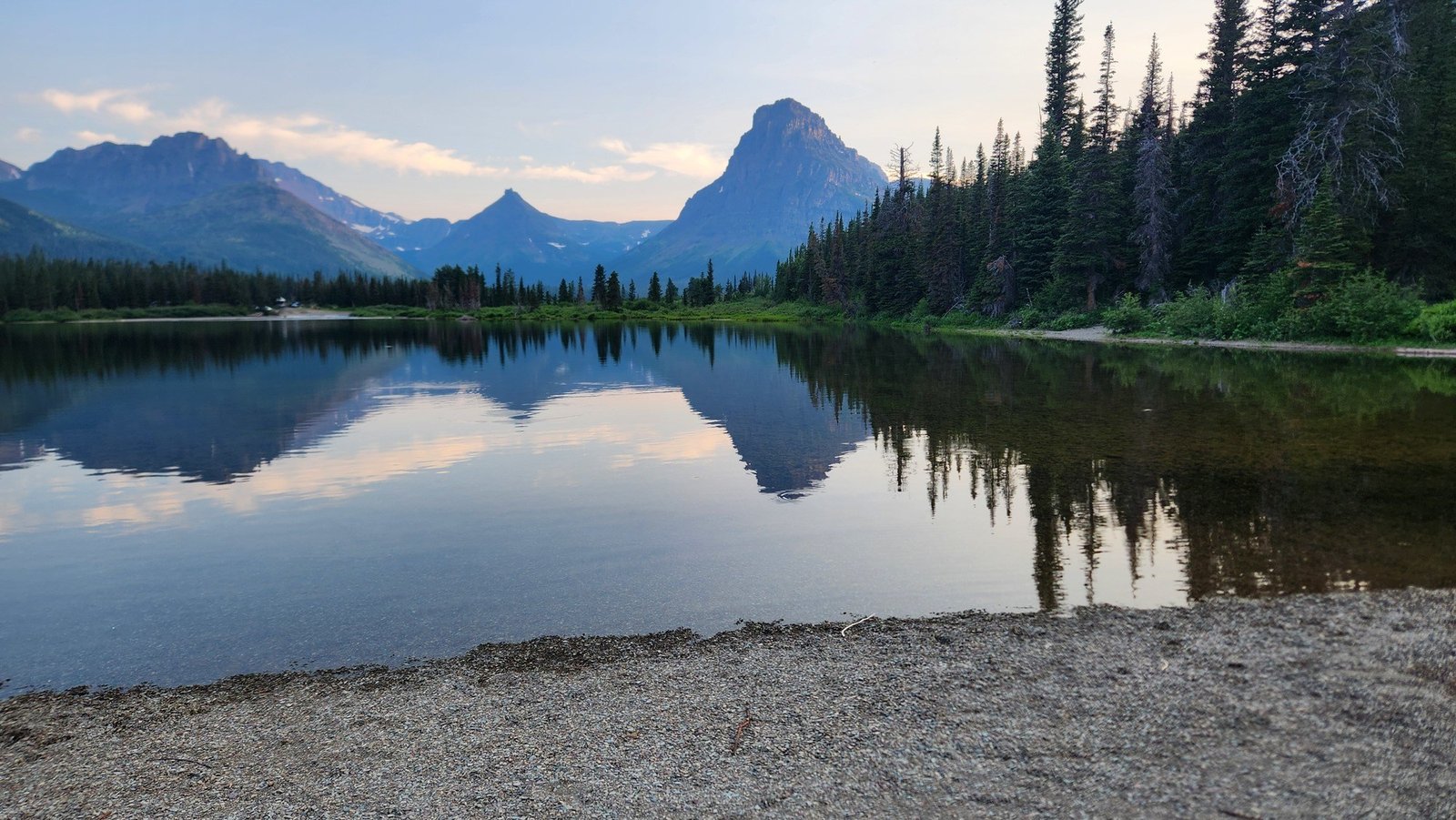
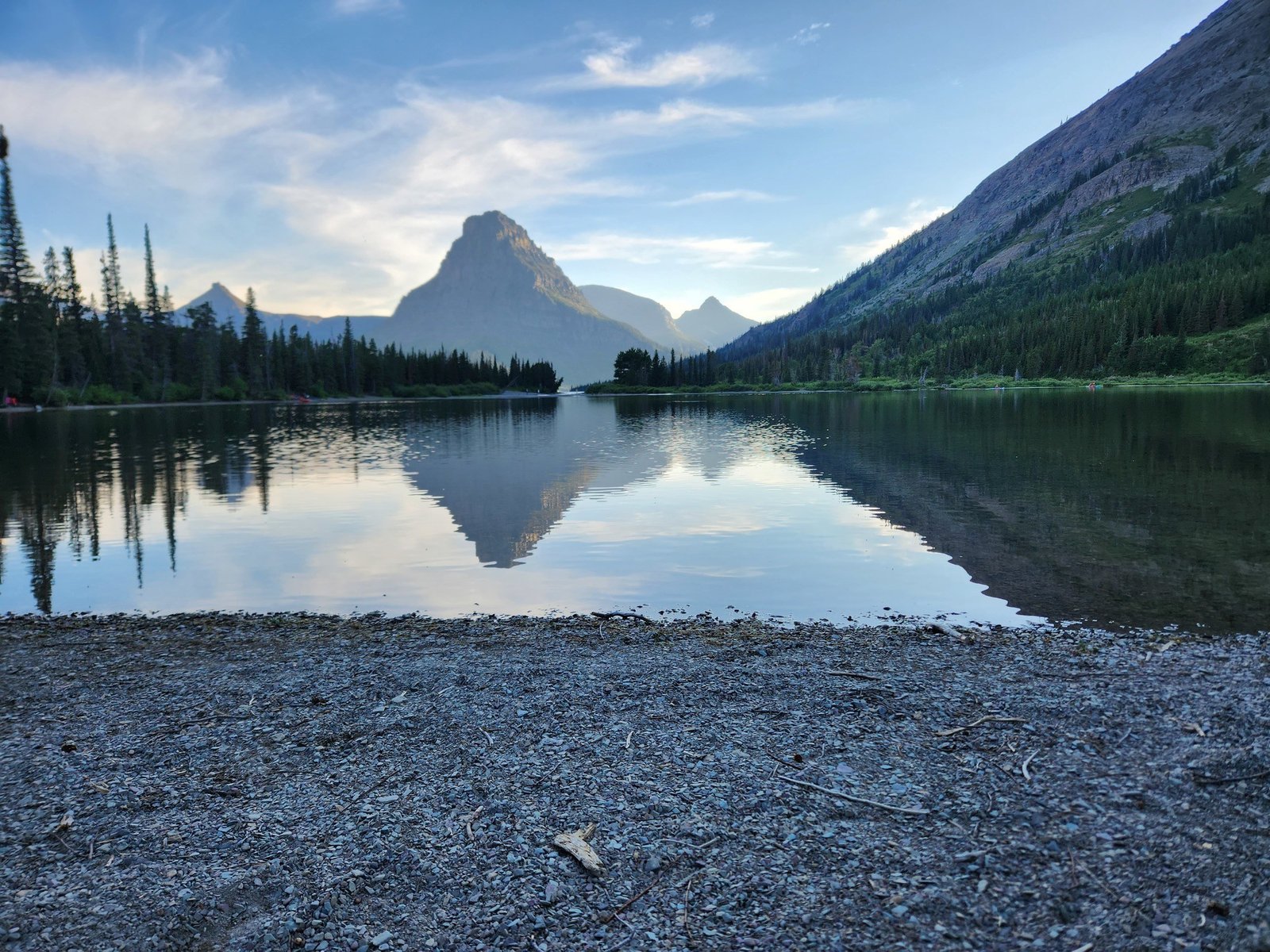
Glacier National Park headed to Two Medicine Lake
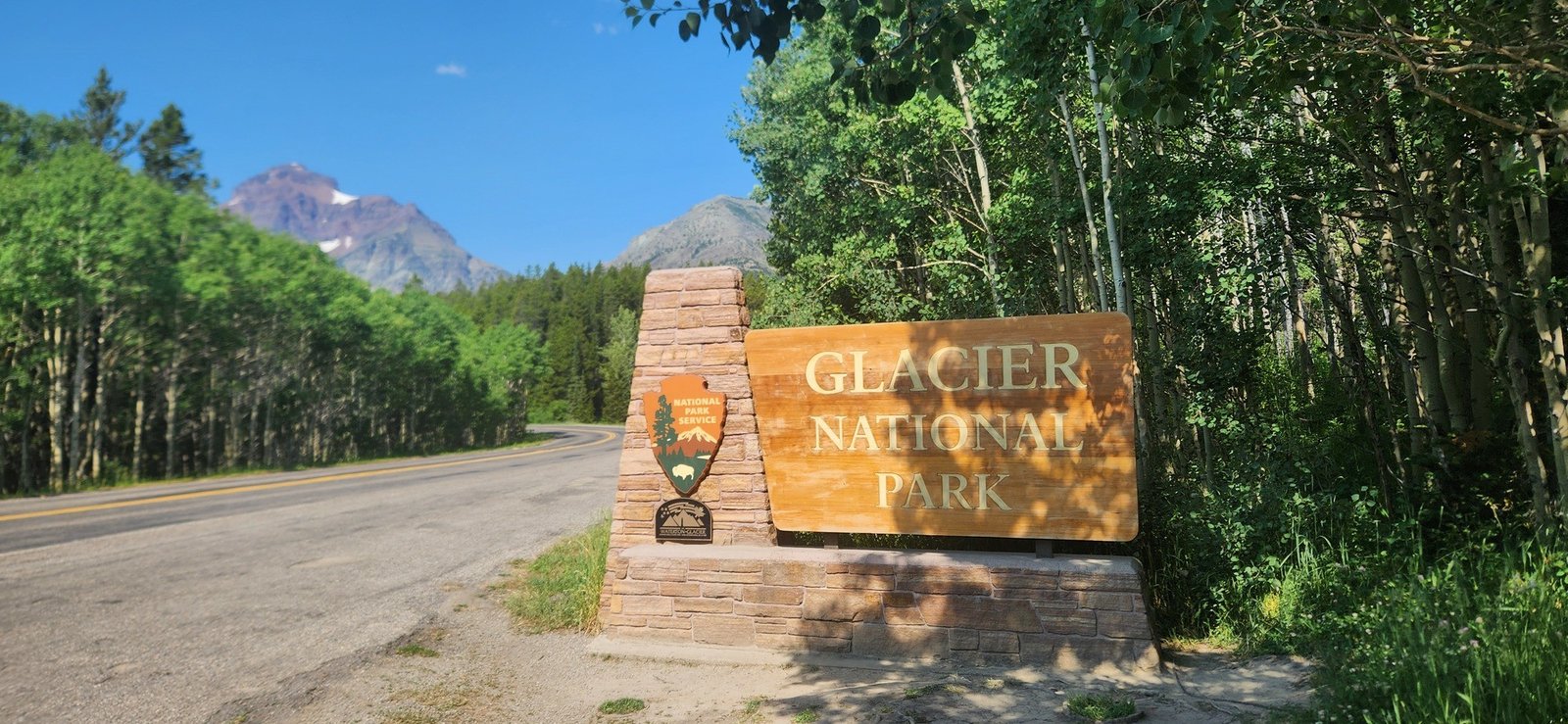
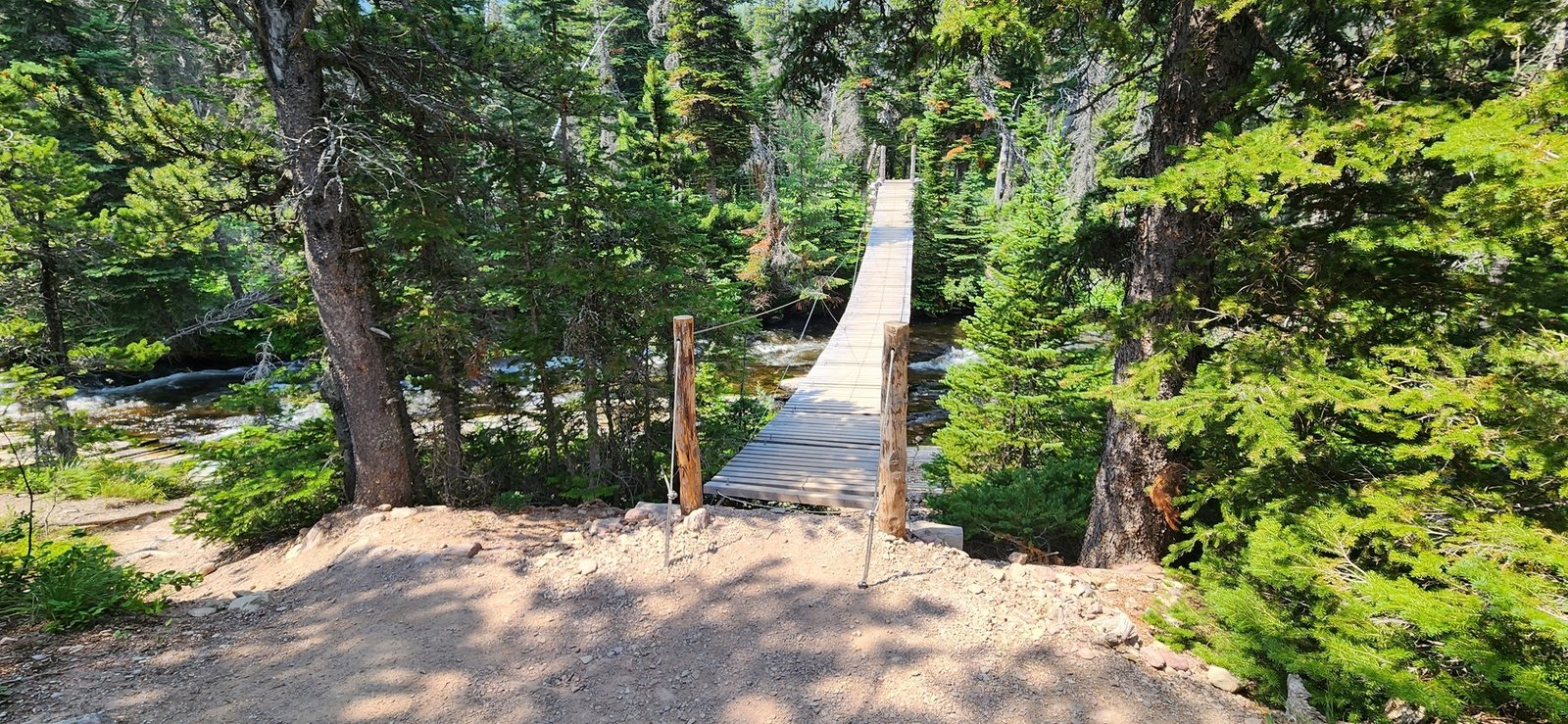
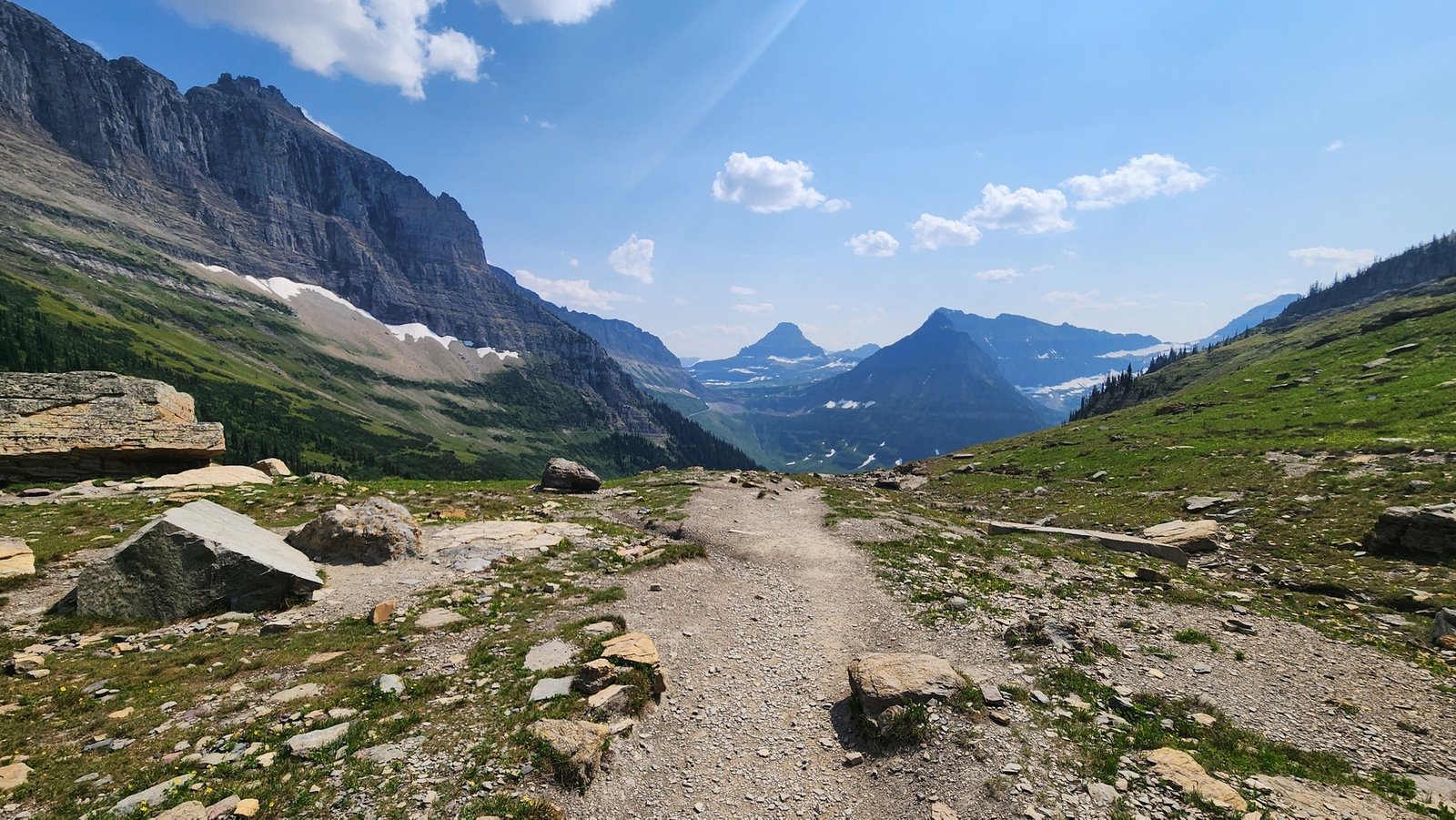
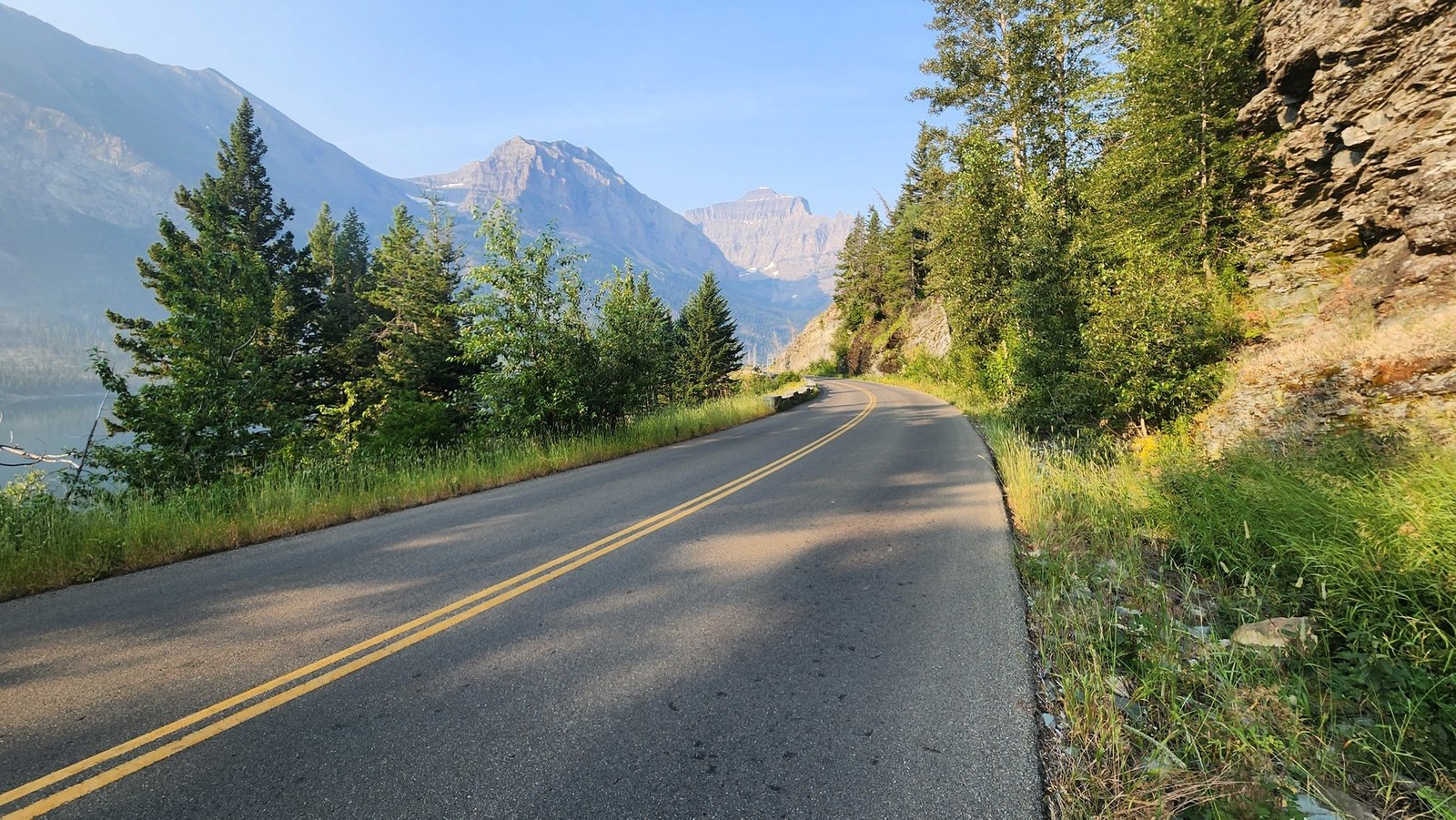
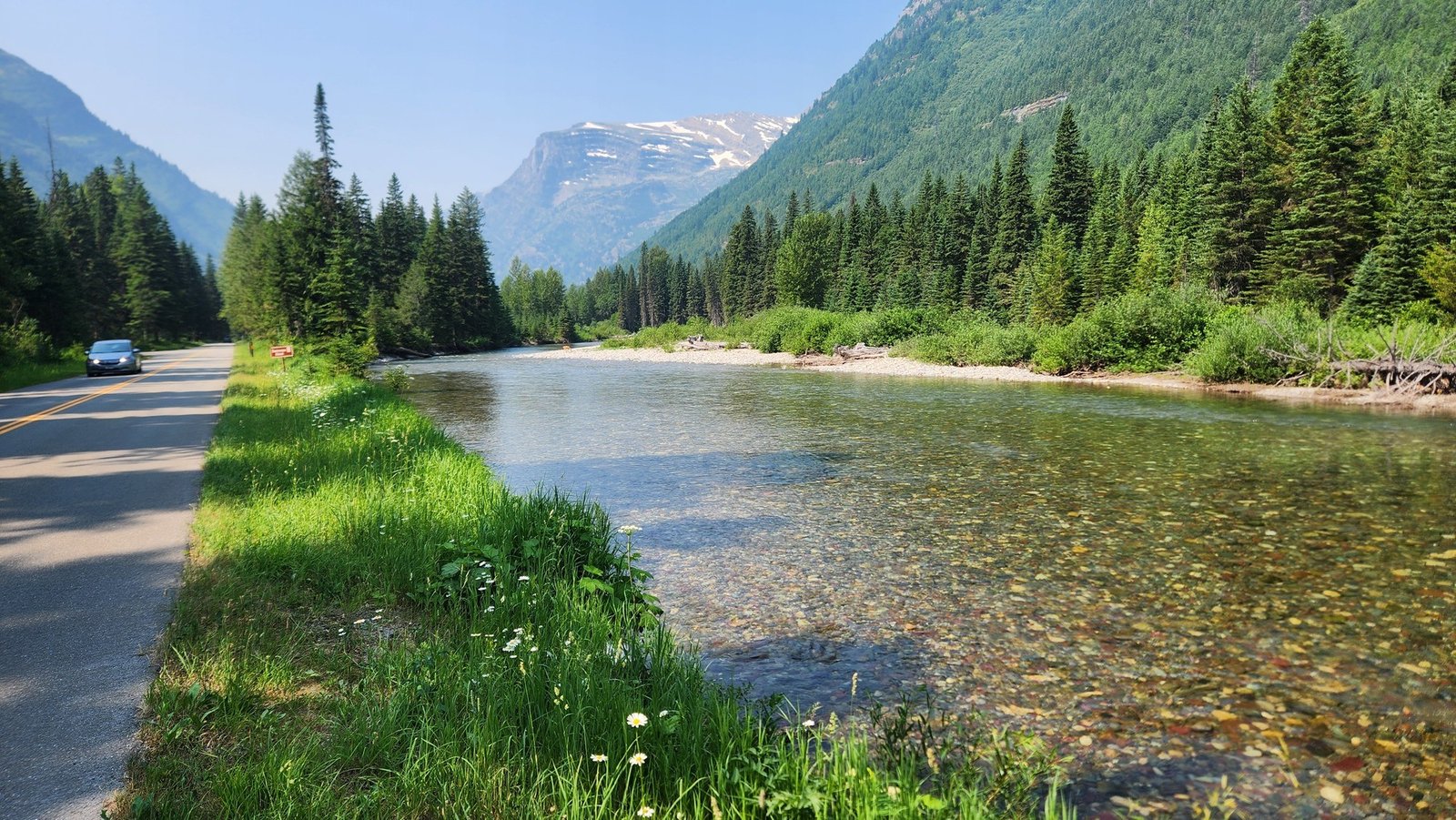
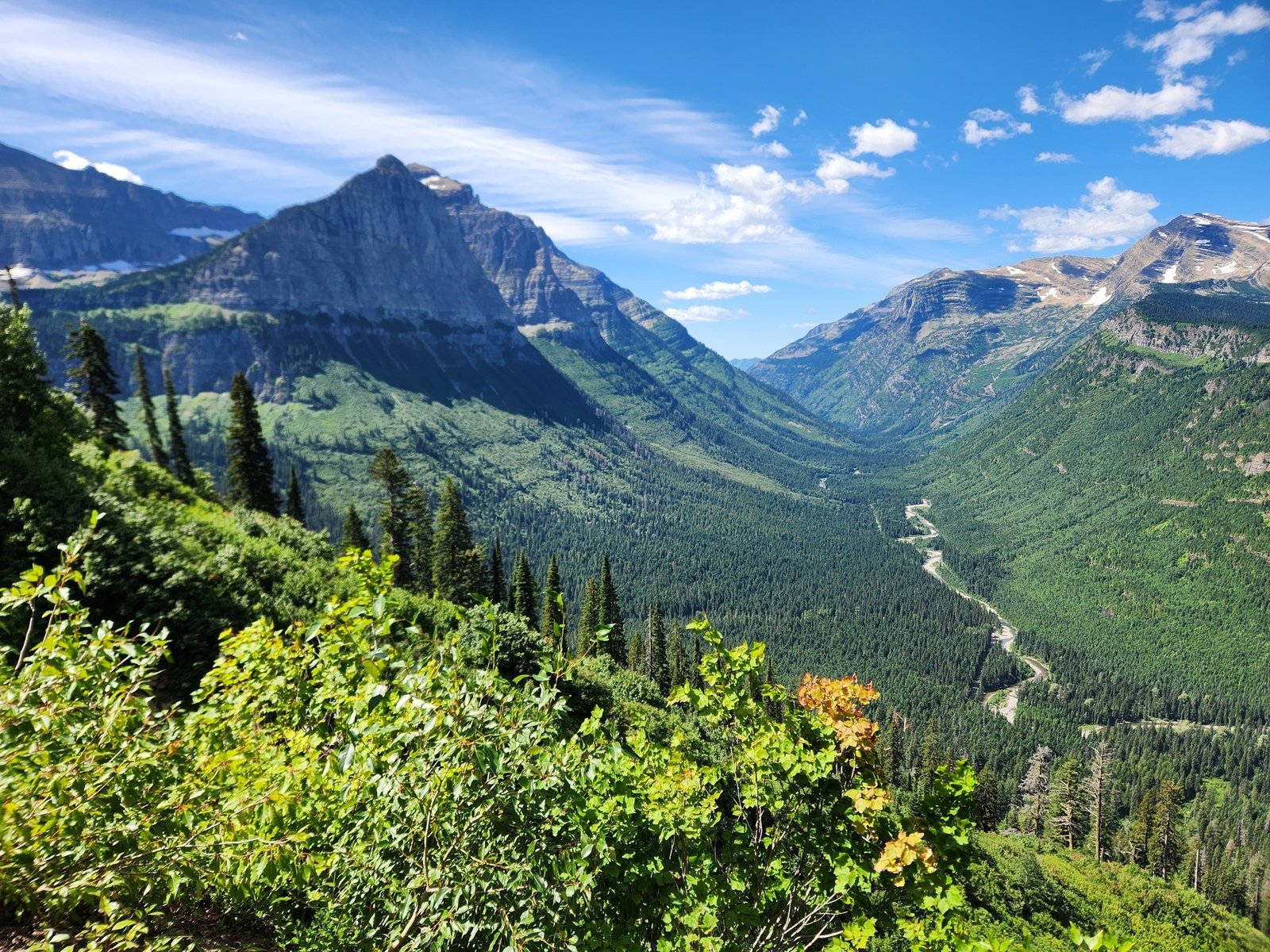
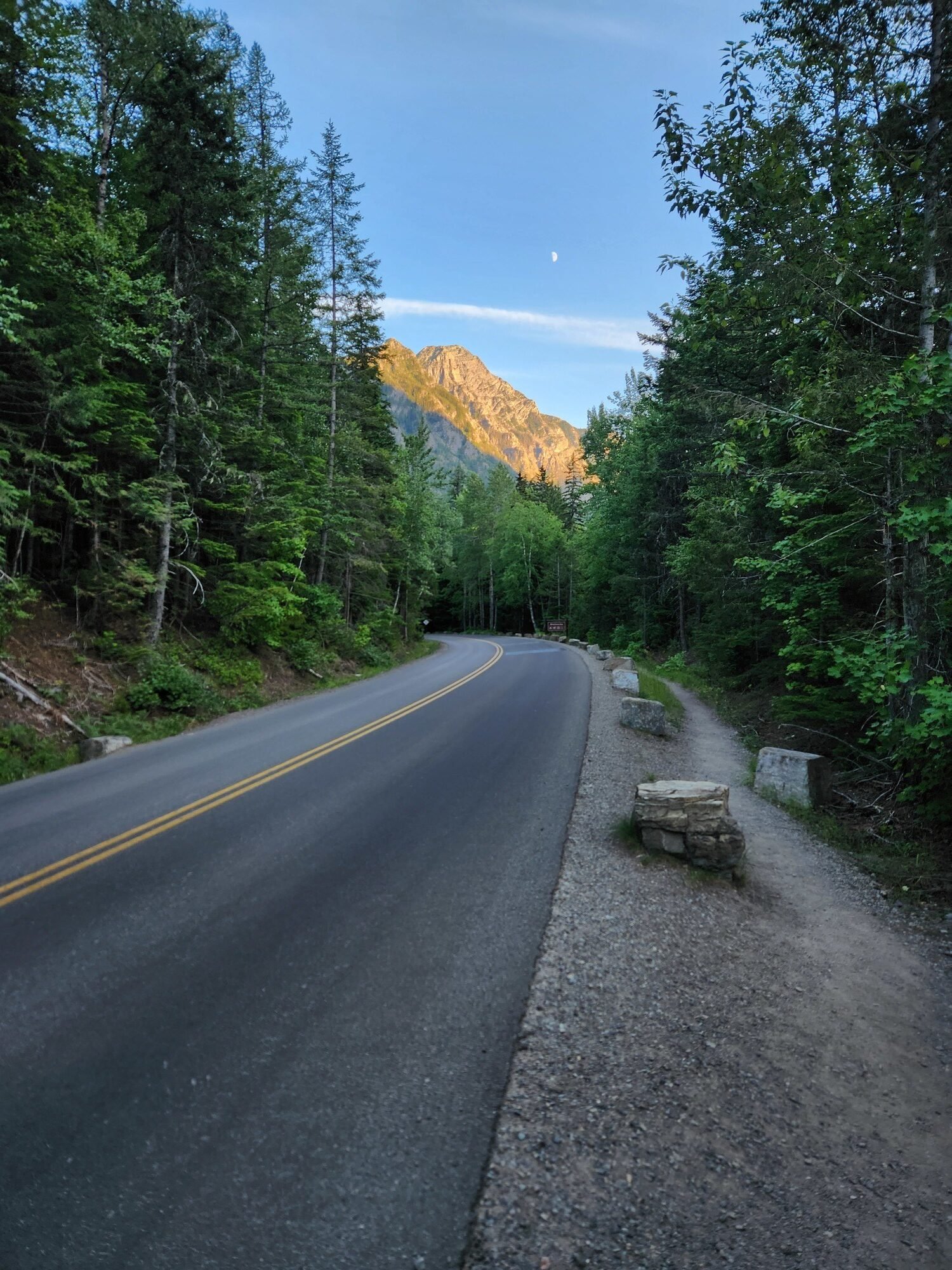
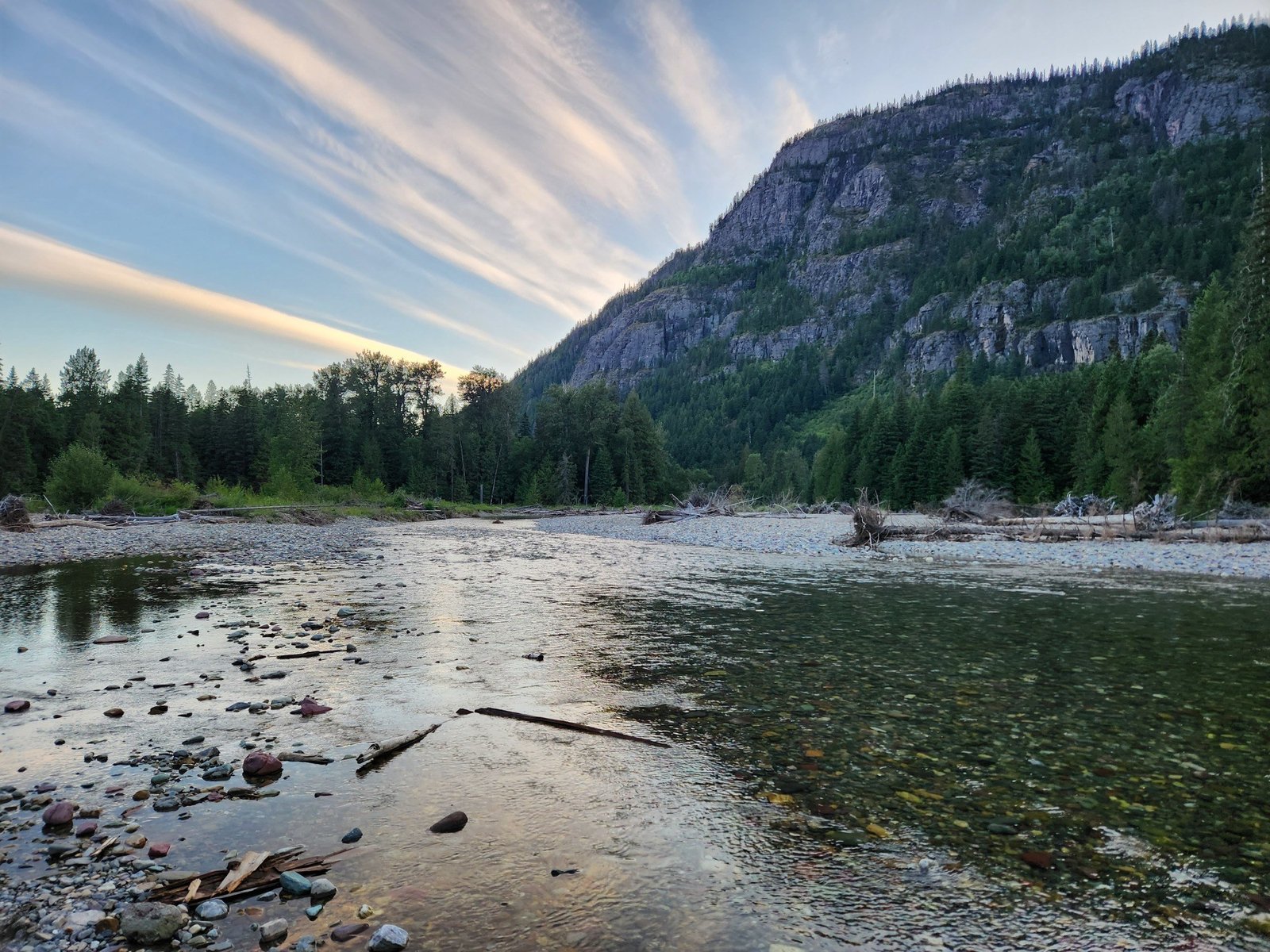
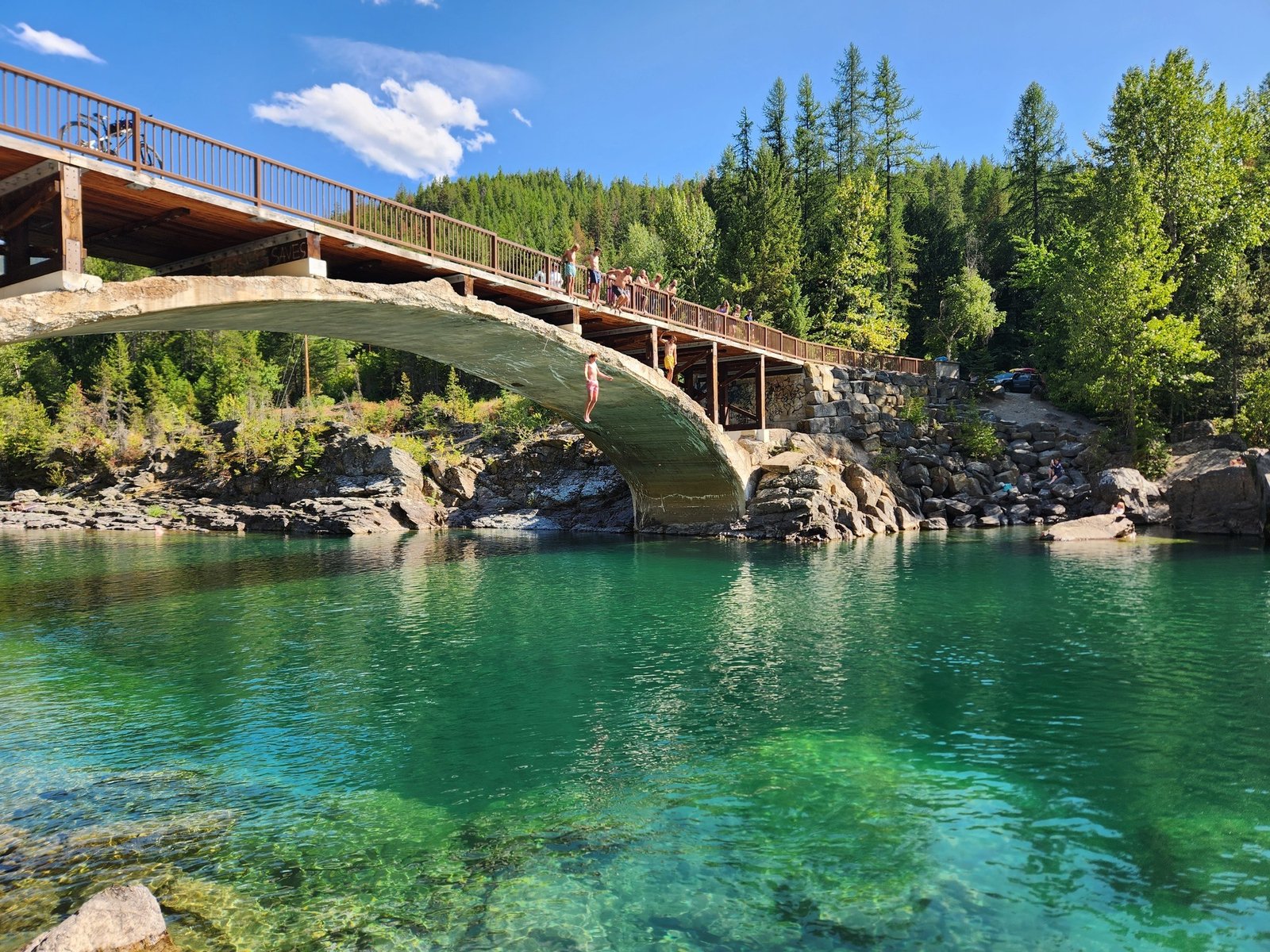
Glacier National Park
Glacier National Park
Glacier National Park
Glacier National Park
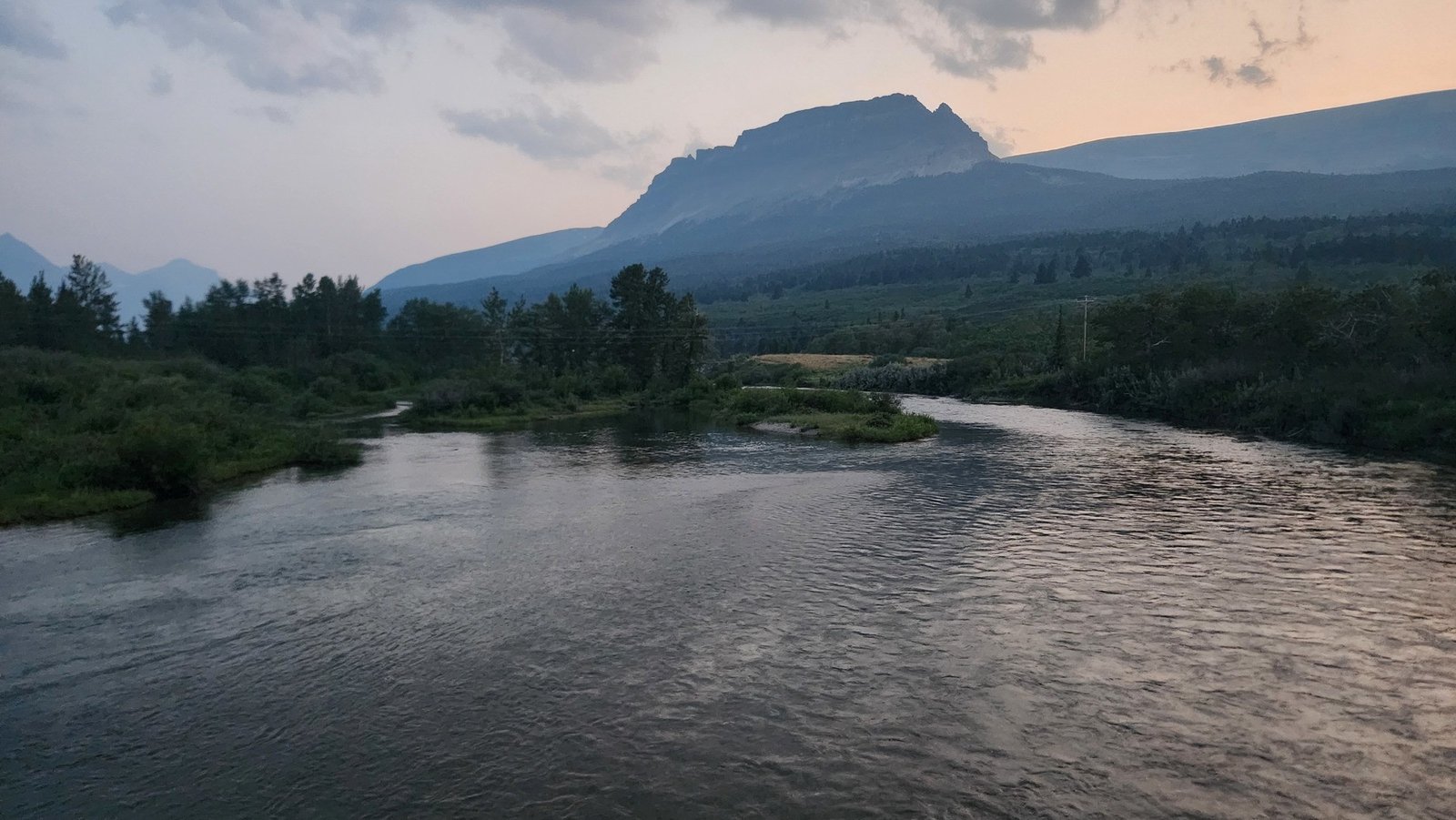
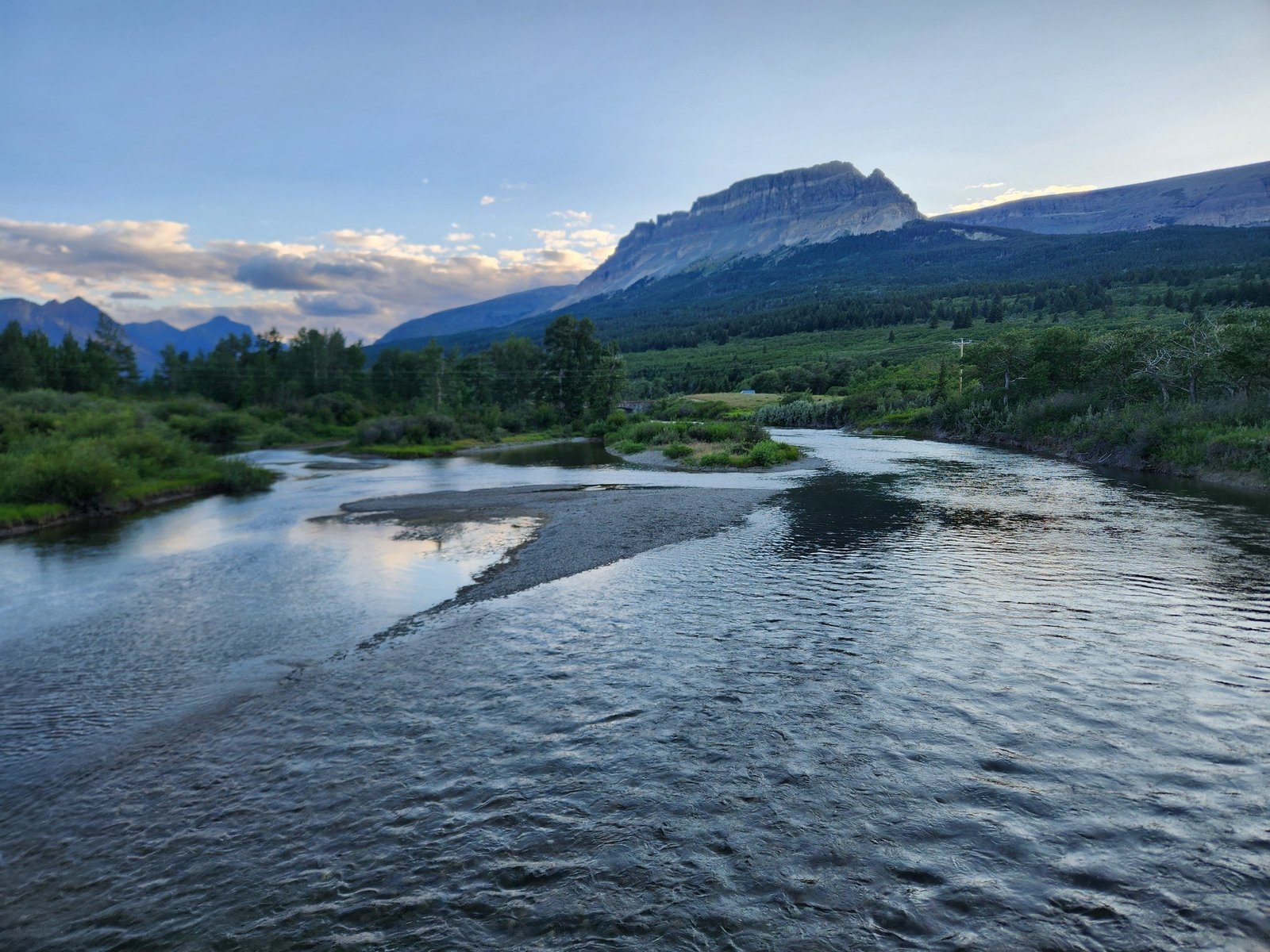
Glacier National Park in St. Mary’s where I was caught in a downpour that flooded the campground. The river’s rising. Time to move to higher ground.
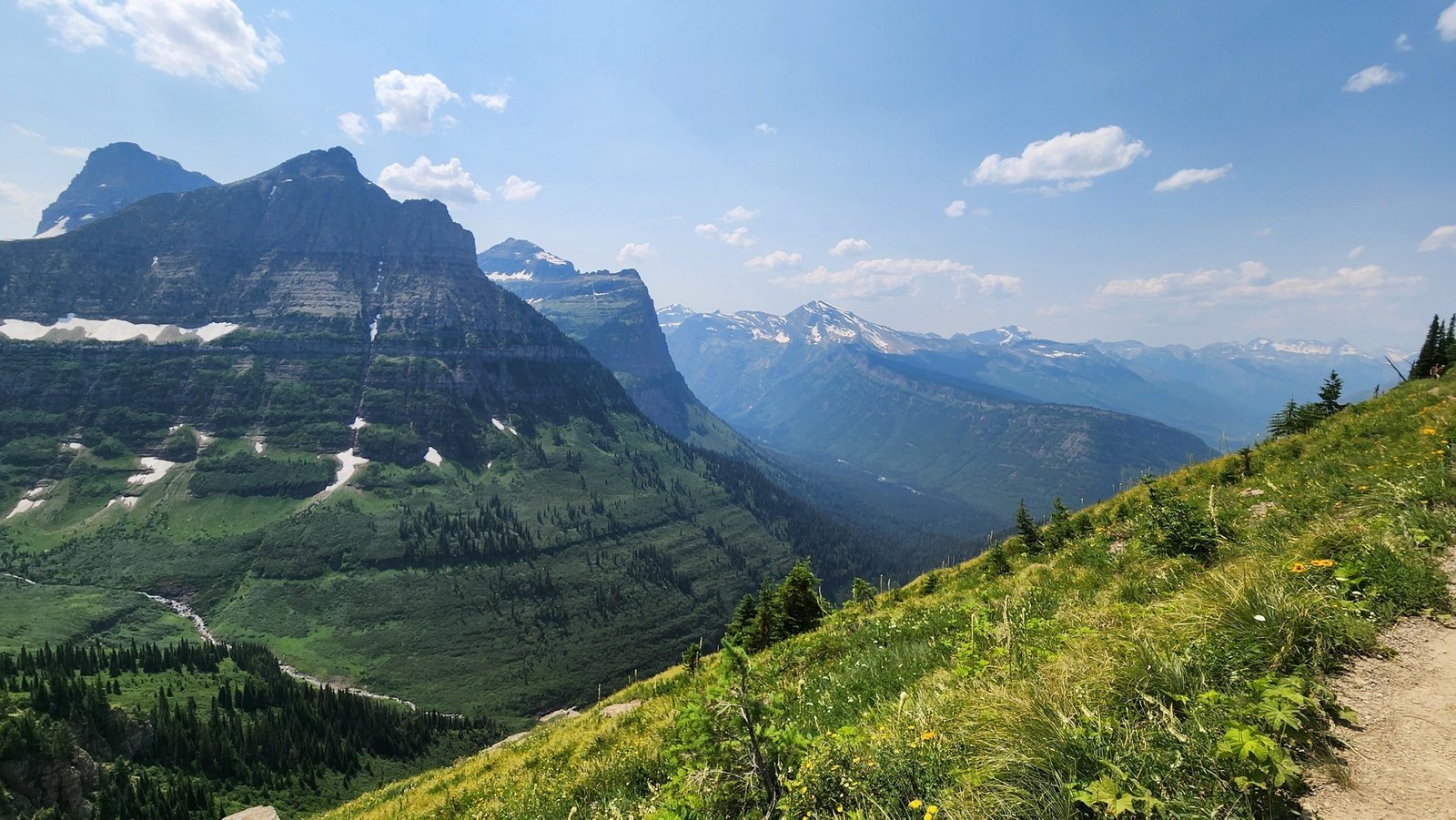
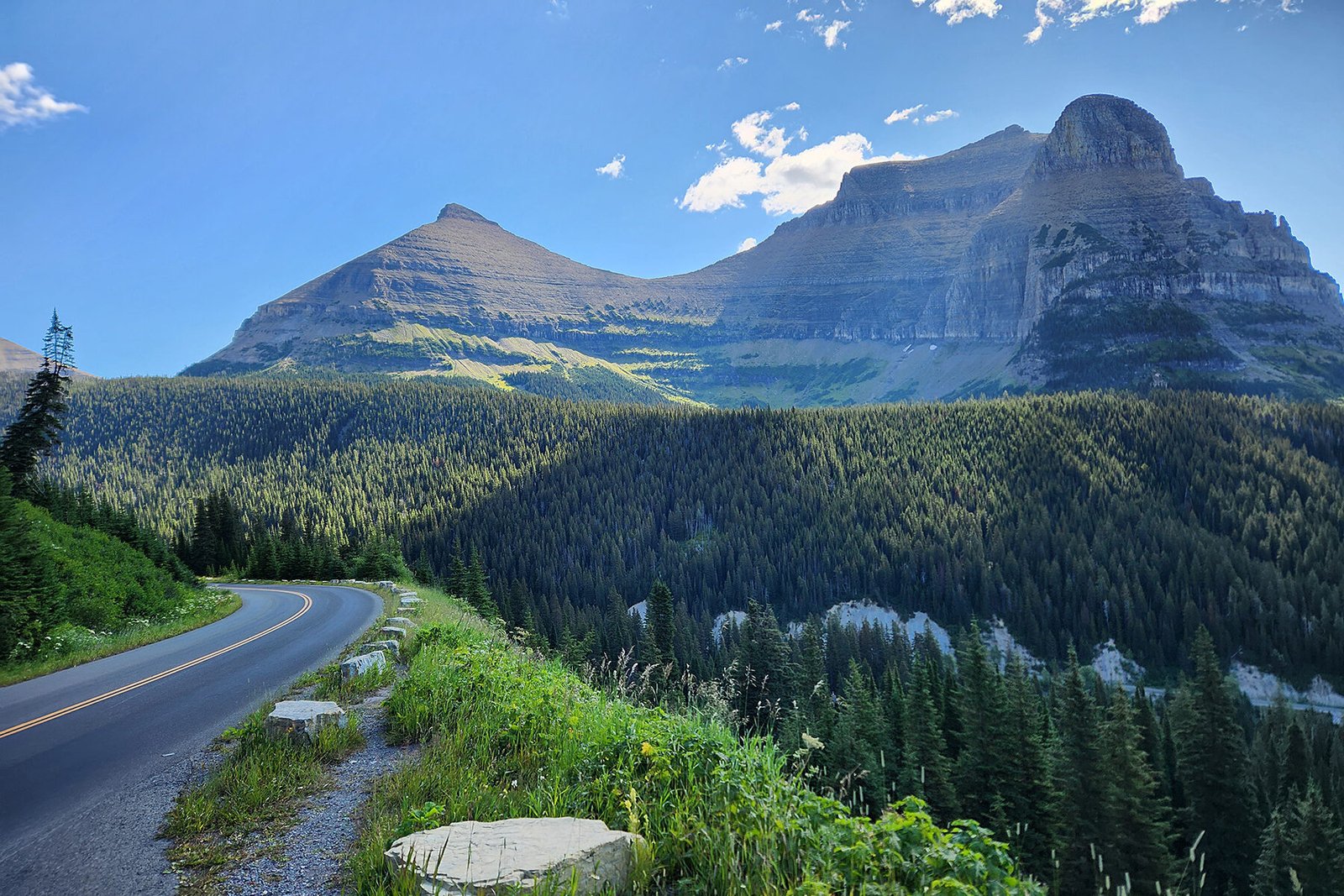
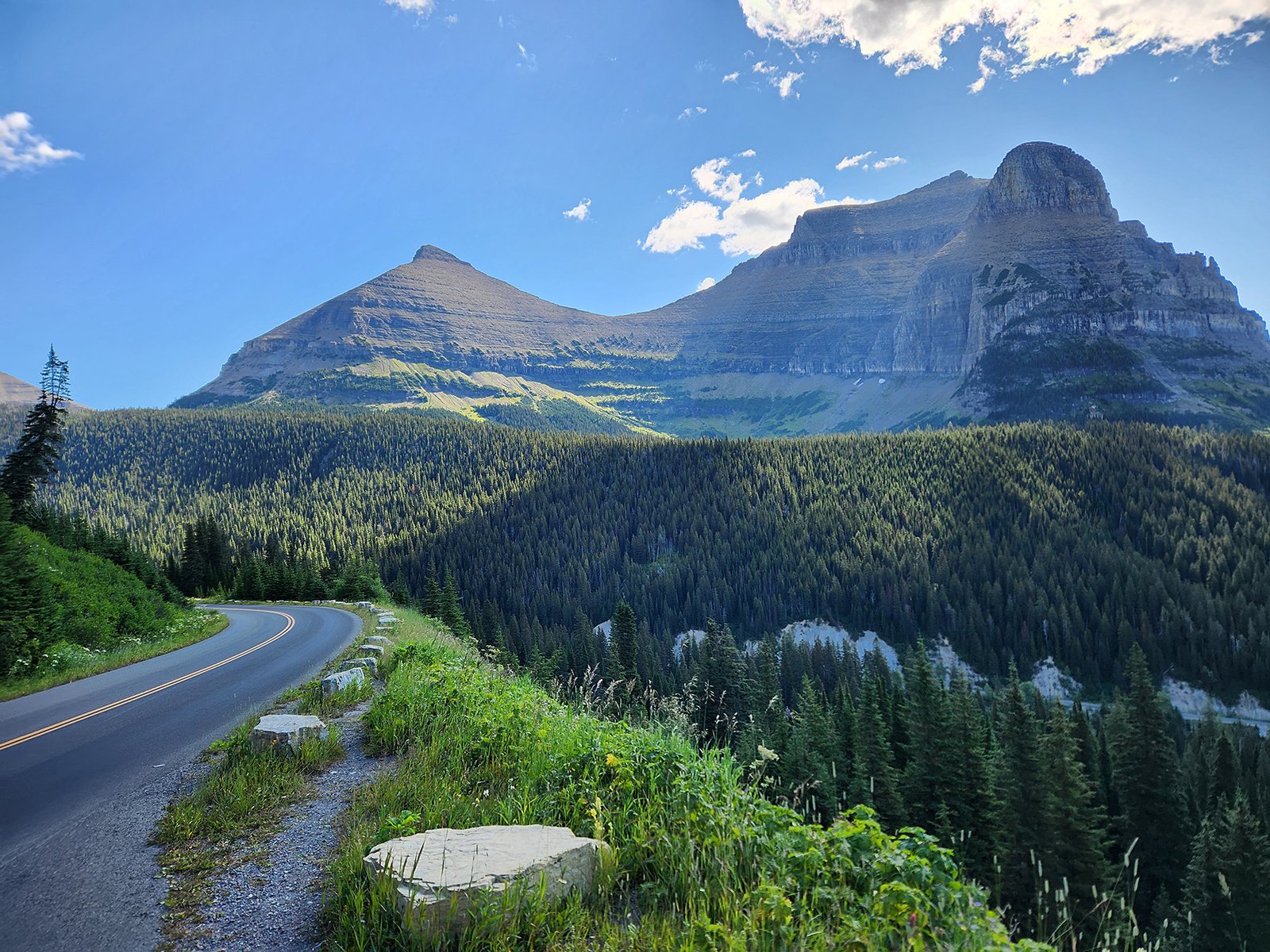
Glacier National Park – The Garden Wall
Glacier National Park – The Garden Wall
Glacier National Park
Glacier National Park
Glacier National Park
The Empire Builder is Amtrak’s northern train through the west. It is good to reserve space for your bike ($20) beforehand however many agents at Amtrak are not very knowledgeable about bikes on trains.
If you are going through Portland on the Empire Builder you have to ride to Whitefish (you cannot get your bike on in West Glacier) and put your bike in a box (Amtrak provided for $10). It is possible to to get your bike on the train in West Glacier but you have to go through Seattle. This year I rode an extra thirty miles to Whitefish where I put my bike in a box. Whitefish was nice with very good lake swimming, breweries and a farmers market. There are probably more interesting bike routes than the one I took as I was advised to ride Highway 2 and I improvised some of the side roads to get away from the cars and trucks.
The Amtrak trains in the summer of 2024 are being delayed because of the heat and speed restrictions but I made my connection in Portland on the Coast Starlight. Amtrak comes through again!
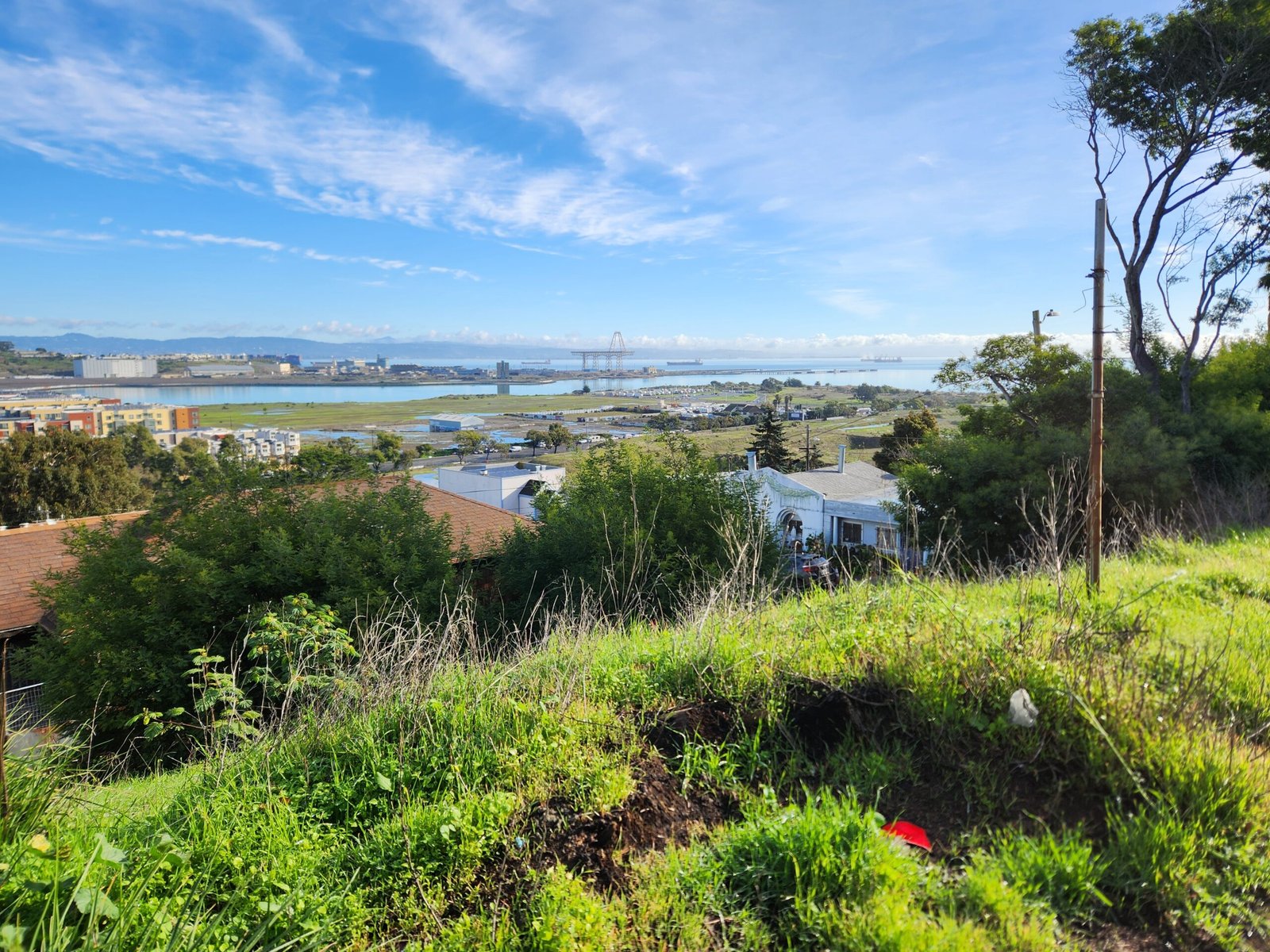
At the very south end of San Francisco, at the eastern edge by the bay, along Highway 101 is Candlestick Point. At one time it was home to Candlestick Park, the massive concrete stadium where the San Francisco Giants played baseball and the San Francisco 49ers played football. It has surely been home to many events – monster truck shows, rock concerts, soccer matches. It was a large stadium made of concrete and a place best used to watch the 49ers play their gladiator sport. No soft chairs and few cozy luxury boxes. It was made like a parking garage and had that same lack of warmth. You could get a seat high in the upper deck and watch the little ants down below. If you missed the amazing play, there was no instant replay – too bad. You spilled your beer and missed the interception all at once. The accommodations and locker rooms for the players were surely not as they are today. Candlestick was a fitting place to see grown men push and shove each other around for an afternoon.
In the 1960s Willie Mays caught fly balls out in center field. By the 1990s you could get into the bleacher seats in left field for a few bucks, squint your eyes and see Will Clark nervously try to send a runner in from second. Of course, Candlestick is famously known for the 1989 World Series between the San Francisco Giants and the Oakland A’s when the Lomo Prieta earthquake hit and everyone thought for a second the world might end.
In the late fall the weather would often be that Indian summer time of year when the the temperature was at a human ideal, the wind light out of the east and the light would have that warm autumn glow. It was football weather. The 49ers played many classic games at Candlestick. Joe Montana connecting with Jerry Rice. John Taylor running back kickoffs. Steve Young running wild until the doctor said that it may be better just to throw the ball to keep all the marbles upstairs intact. Then there were games in the winter storms when the field would be wet. The storm coming in from Alaska and a high tide would make the field like a pig slop.
When you landed at San Francisco International Airport and caught a cab into town, you would often drive up 101 past Candlestick and see the stadium there poetically on the point. True to its moniker, at night it would often be lit up. It seemed a bit timeless, like the Parthenon, and you innocently thought that it would somehow always be there watching over the bay. For a time the name would be bought out. The speaker cable company, Monster Cable, purchased the naming rights and called it Monster Park, not realizing that people assumed it was for the job website. Other large companies, usually in the telecommunications industries, would then take over the naming rights. No one remembers their names now. People in San Francisco would always just call it Candlestick.
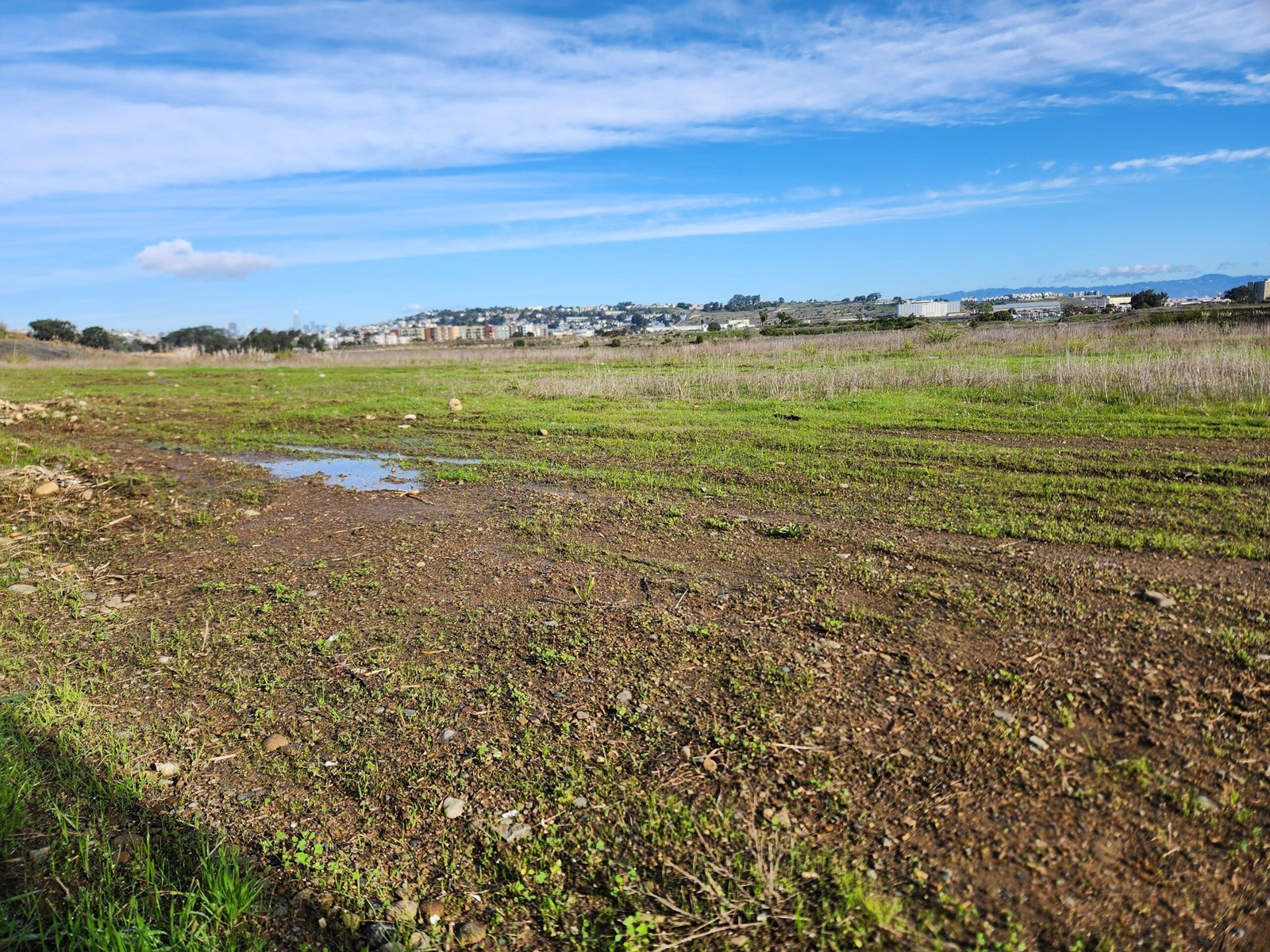
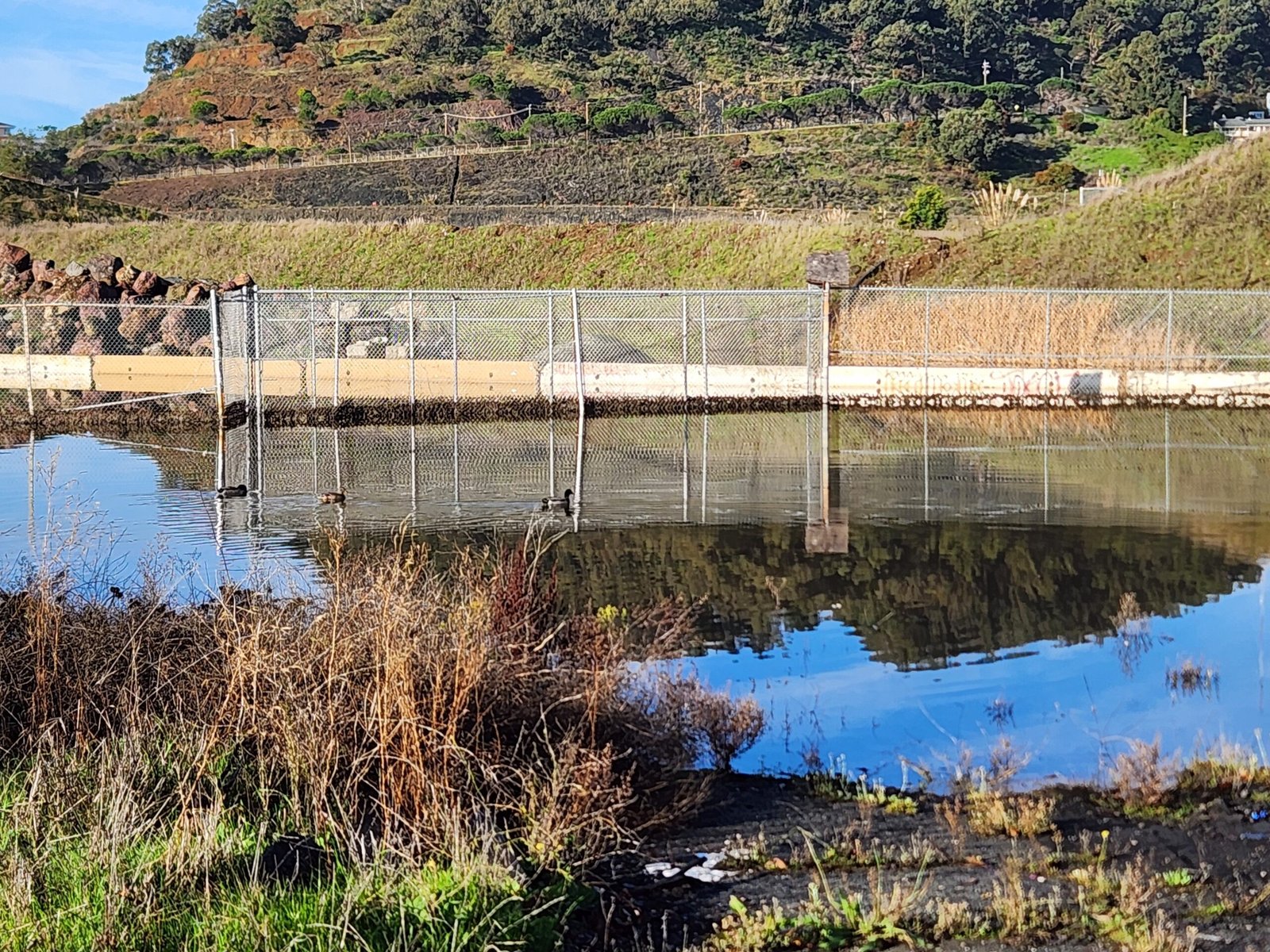
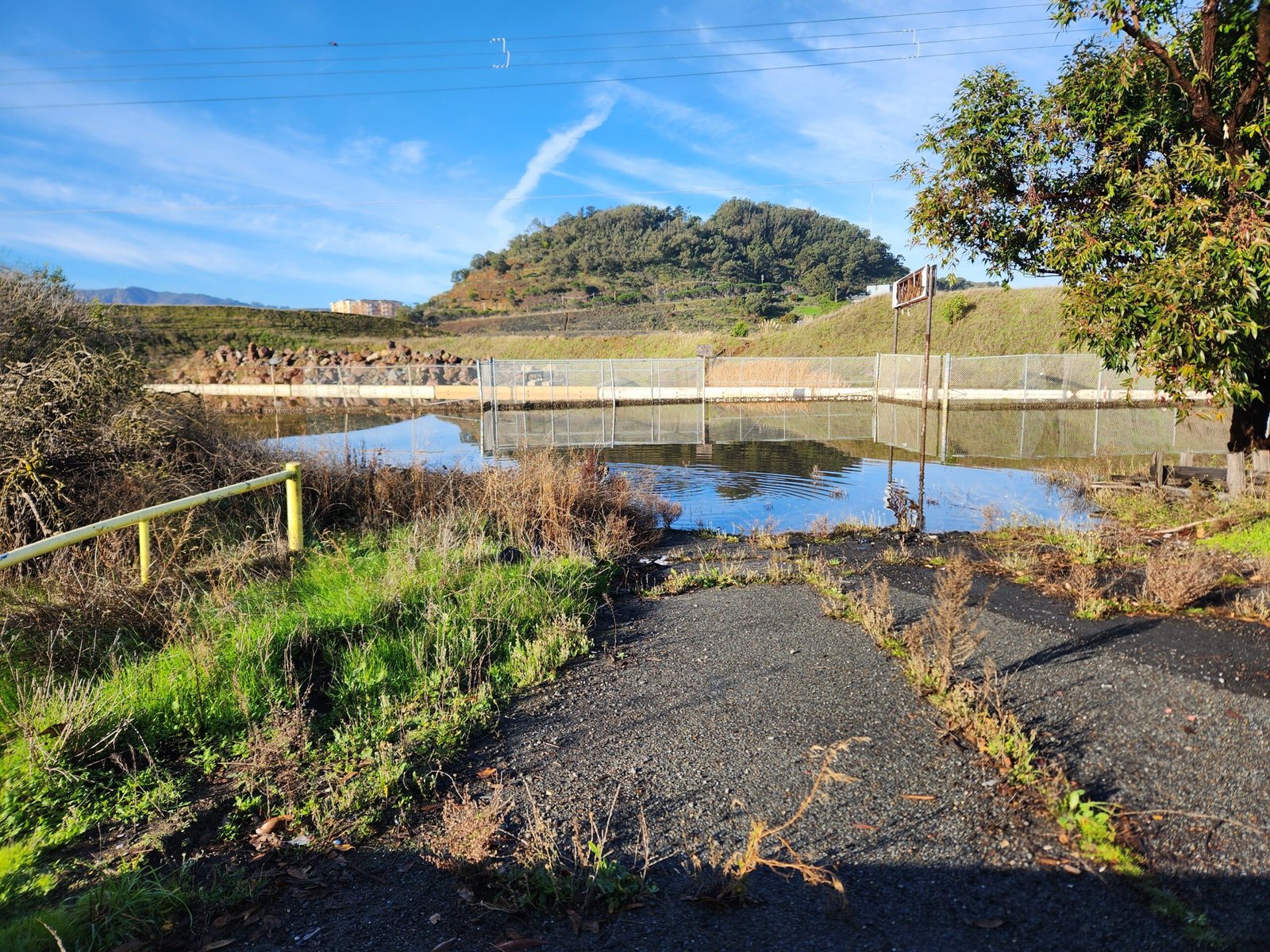
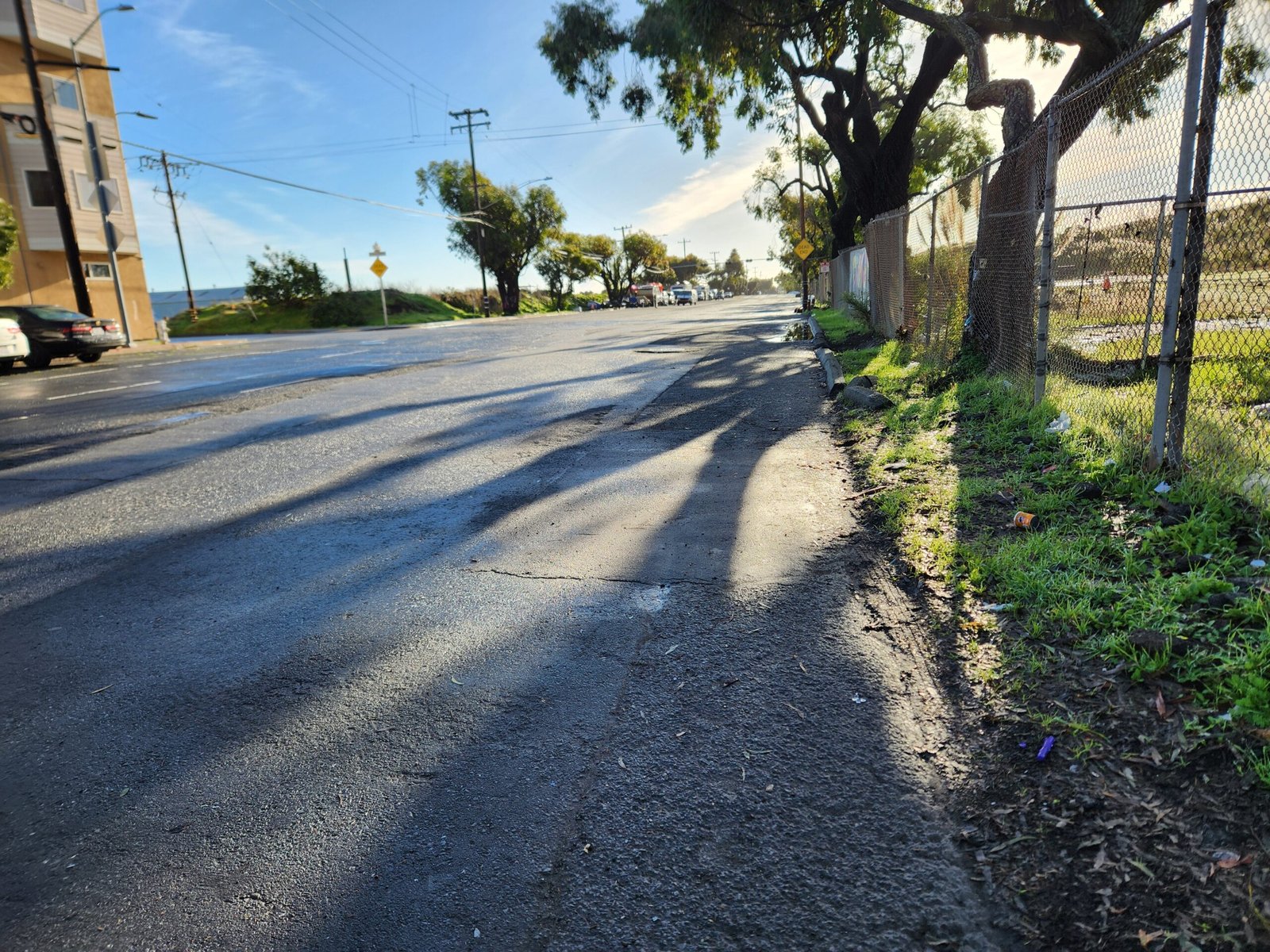
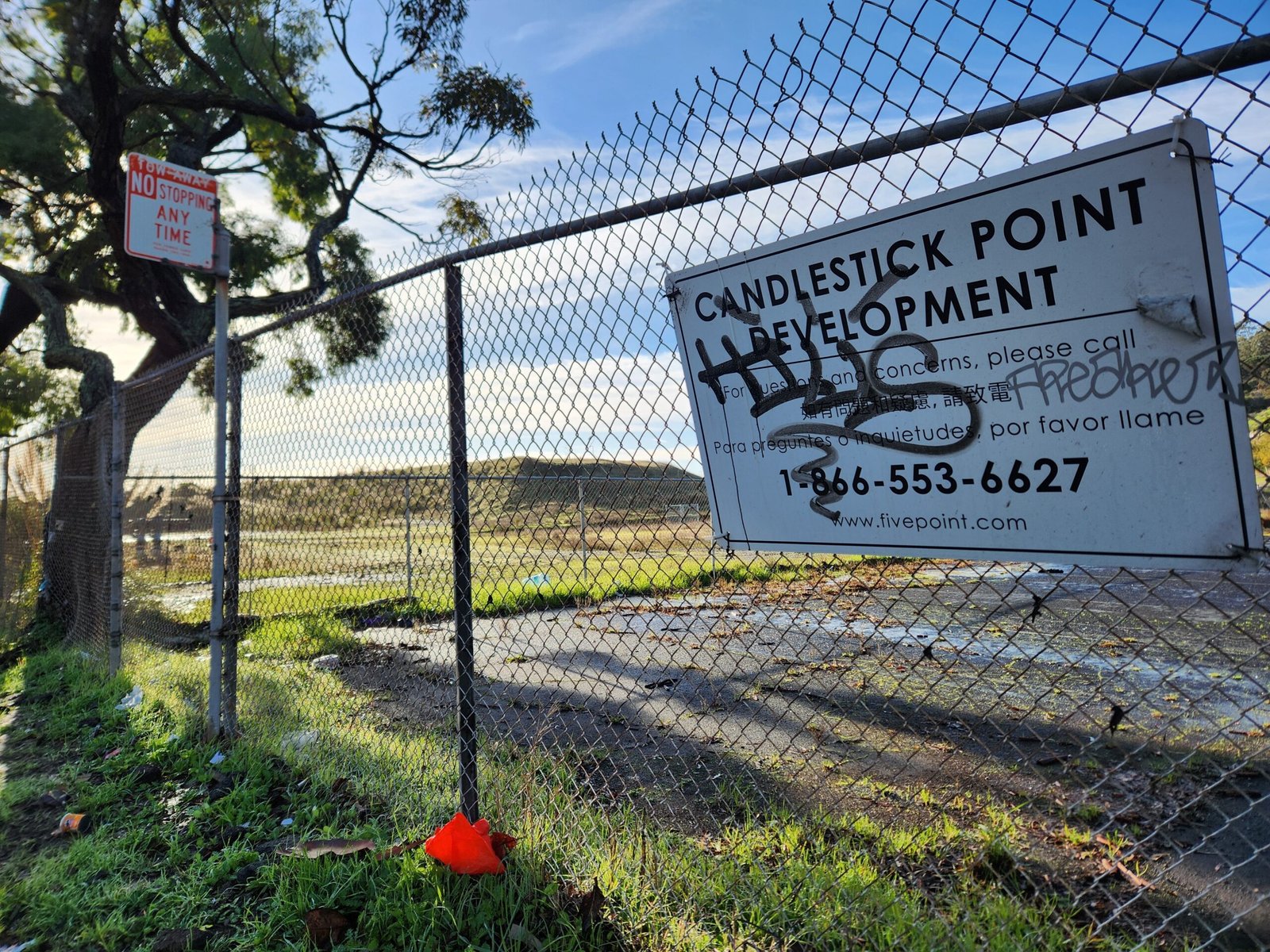
Which brings me to Candlestick Park. The stadium was torn down many years ago. One day it was there and the next it is gone. Phfff! All that concrete surely broken up and hauled away to be recycled one truckload at a time. Now when you get off the plane and drive north along the bay, you have to explain to your friend that once a large stadium loomed there. Remember that hill that you would see from the blimp. That’s the same lonely hill. Where the stadium was is now fenced in. It is mostly grassy fields and when it rains ducks and redwing black birds hangout in the ponds that once was around the fifty yard line. It is quiet save for the never ending hum of Interstate 101 a half mile away.
The 49ers left Candlestick years ago and now play down in Santa Clara. The South Bay and all the tech money bought them out. On Saturday, January 20, 2024 they will play the Green Bay Packers in a classic playoff match up. Two young quarterbacks will duel it out and try as best they can to not make mistakes. They will push and shove, run, pass, block and kick. People will go into the blue medical tent to see if their marbles are still round. There is rain in the forecast so the field may be a bit wet. No one will care how high the tide will be at game time. All that matters now is which team scores the most points and maybe who gets the ball last.
Candlestick Point – Candlestick Park once was here
Candlestick Point – Candlestick Park once was here
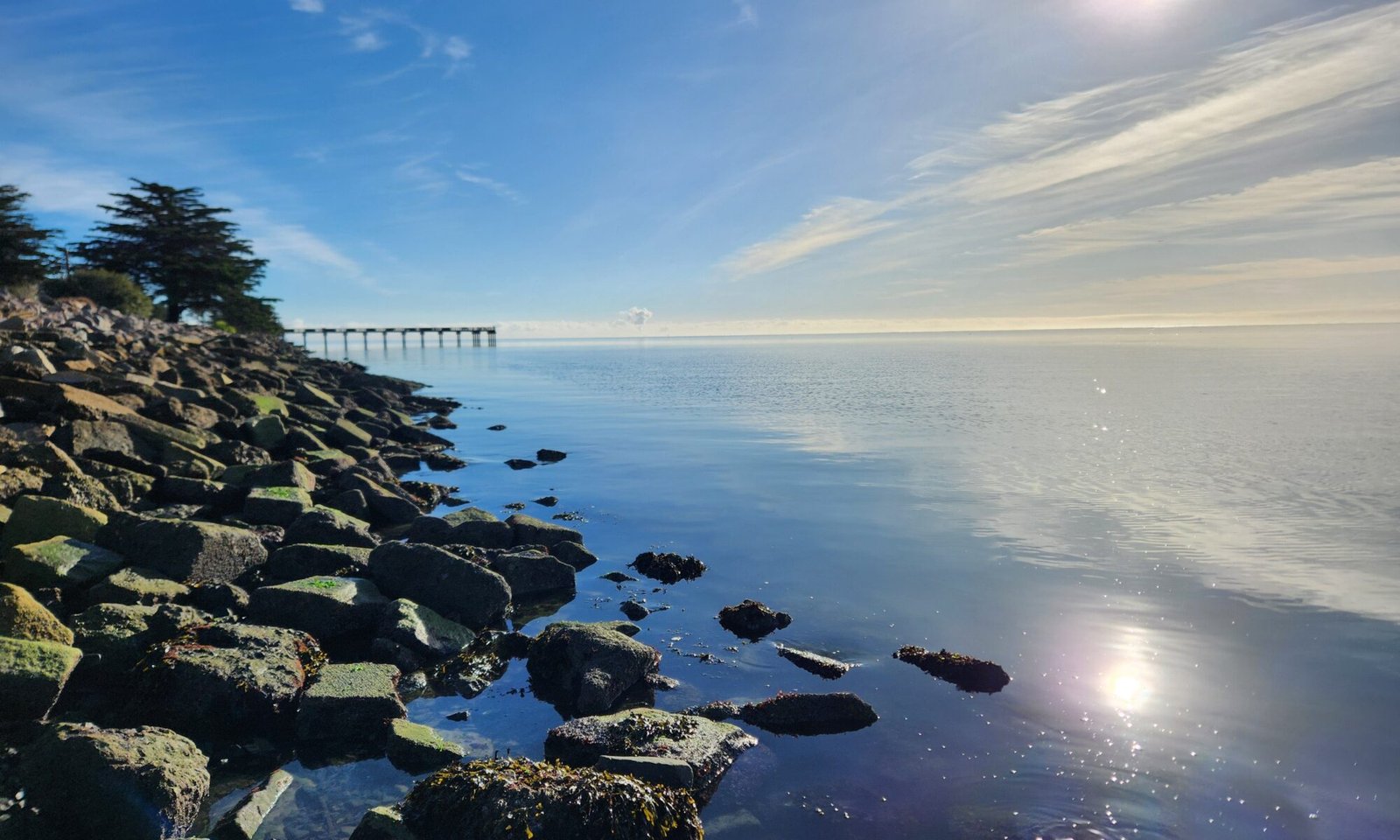
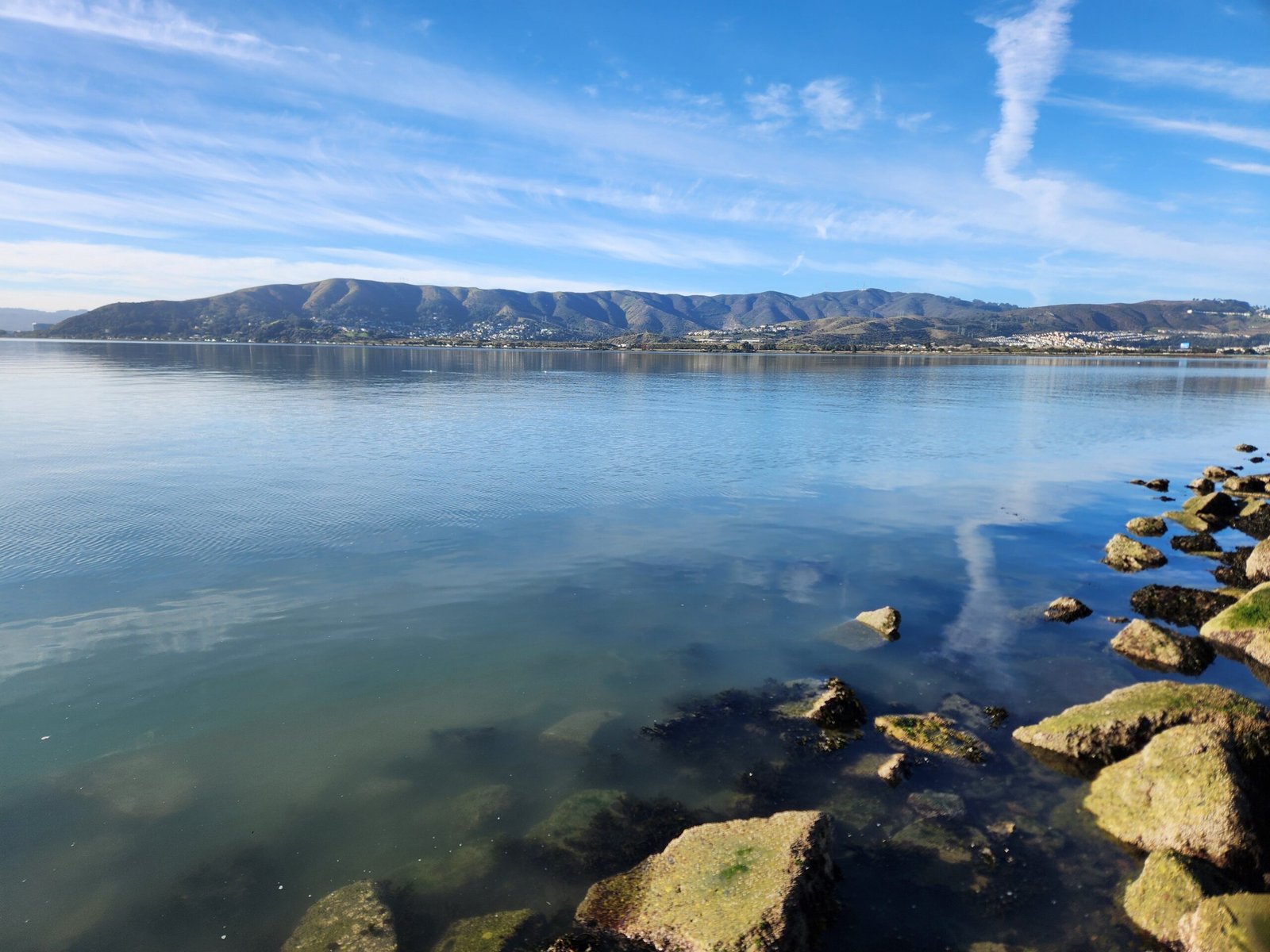
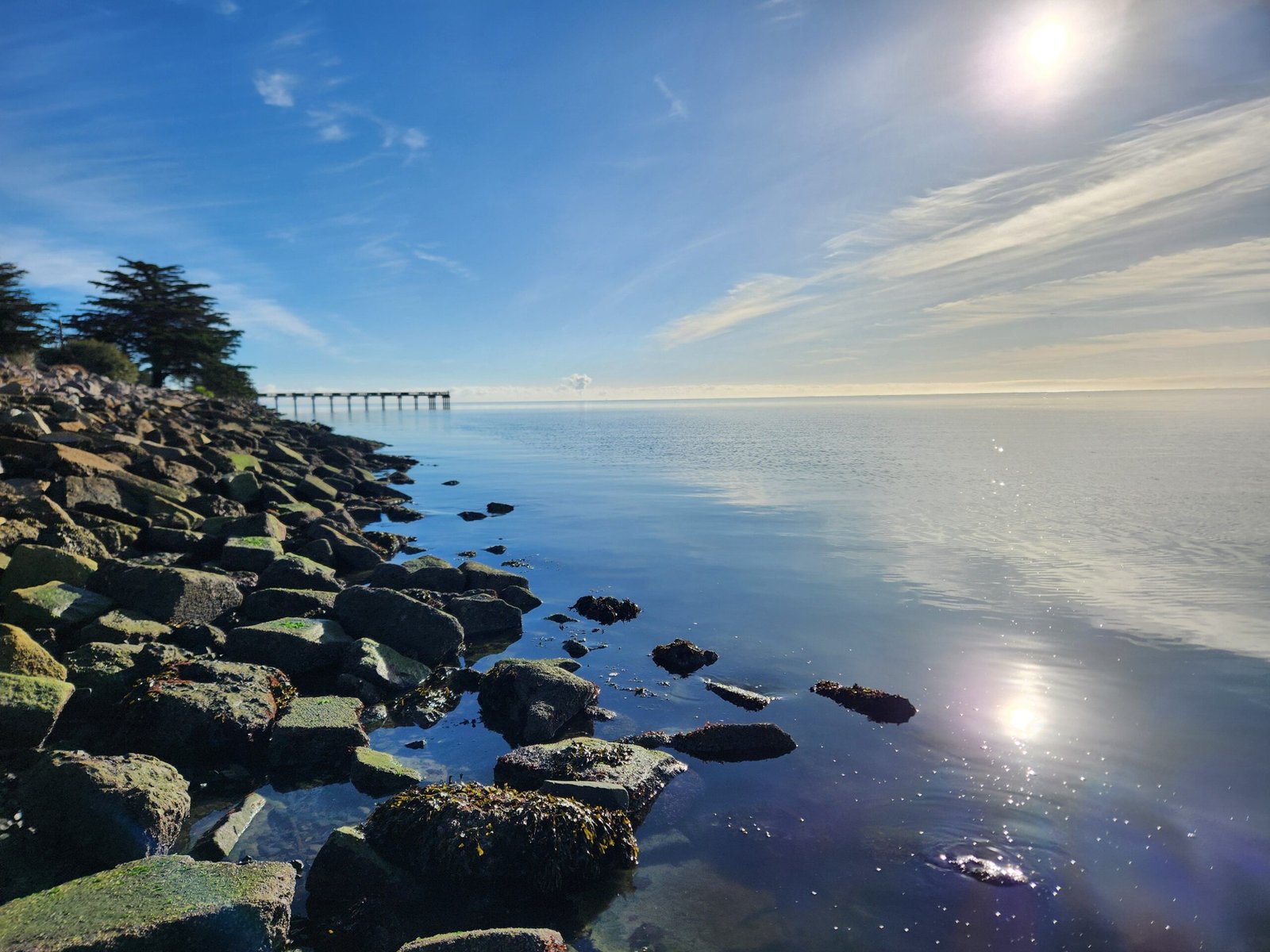
San Francisco Bay
Candlestick Point – Candlestick Park once was here
Candlestick Point – Candlestick Park once was here
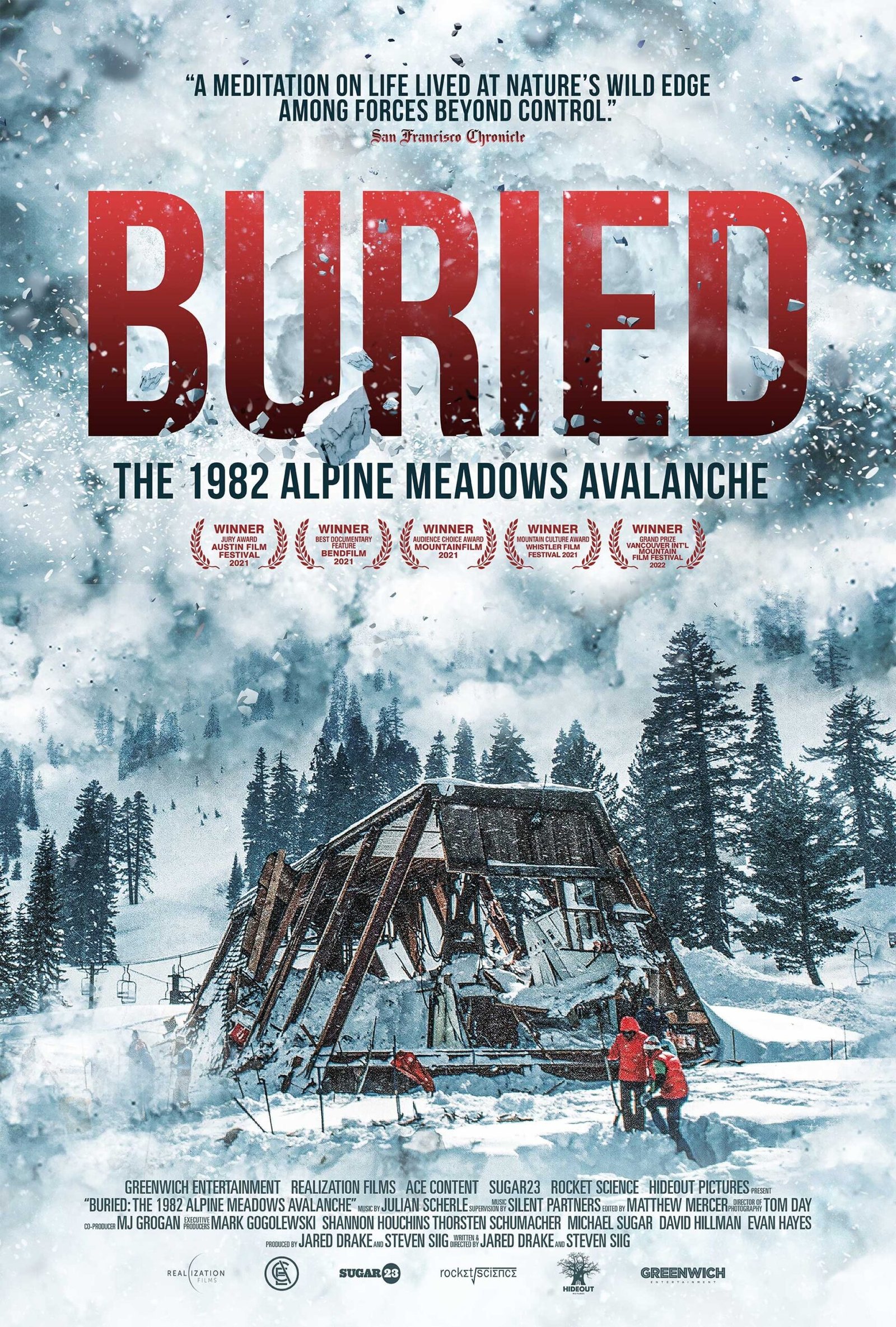
Buried – The 1982 Alpine Meadows Avalanche is a documentary film from 2021 that tells the story of a massive avalanche. You can now watch this movie on various streaming services including Netflix.
Throughout history the mountains have had various meanings. In the Middle Ages, mountains were thought to be places where evil lurked and venturing into the mountains was a deal with the devil. Mountains were dark, mysterous places where ungodly people hid out. Since the sixteenth century, mountains have taken on a more sacred place in the Western imagination. By the nineteenth century, mountains were seen as a place to regain health and vigor. Fresh air. Clean water. A place to get away from the foul industrial urban centers. Even the tragic story of the Donner Party in 1847, a few miles from Alpine Meadows, did not slow this new sense of the healthful sacredness of the mountains. In many ways, this notion of the mountains being healthy and even sacred lives on today. To this end, there are hundreds of ski resorts high in the mountains of the American West, one of which is Alpine Meadows (now Palisades). Life is short. Drop a few thousand dollars for a weekend. Regain your health and even get a bit closer to God.
The people who live up in ski resorts are a fun-loving bunch. Few who live in the mountains are there for the money. Some enjoy the solitude and quiet. Some the never ending thrills of deep power snow. Some live for the scenic beauty. Other are there to escape something and get a new start. Some are there to endlessly party. Whatever the case, it a place where people’s main motivation is to live in the moment.
Buried – The 1982 Alpine Meadows Avalanche tells that story of people living in the moment. It is a remarkable movie as the filmmakers somehow gathered one by one all the major people that were part of this event and had them candidly talk about the winter of 1982. The combination of these interviews, along with footage from the time, including local news reports tells the story in a very even, engaging way. You even get to watch San Francisco’s Channel 2 reporters, Dennis Richmond and Elaine Corral report on the tragic event – a time when the 6 o’clock news was the news.
This view into a time before the personal computer, cellphones and the internet is part of what makes the movie so intriguing. The ski patrol had only walkie-talkies and snowmobiles. Weather reports came over the weather radio. The young avalanche forecaster Jim Plehn used a system of large paper charts to map the snow densities and where they had used explosives or side-cut skiing to create avalanches. To this day, it is an inexact science that in the end requires more than paper, computer models and theories, but all your senses, experience and instinct.
As the film unfolds, the movie does an excellent job of telling the story of the avalanche and then for the rest of the movie the digging out of bodies and the hope for any survivors. Volunteers with shovels. A few specially trained avalanche dogs. All the while it is continuing to snow and the people in charge have no way of knowing if there will be another massive slide. The majority of the people dealing with this tragic event, the ski patrol were all people in their late twenties. Making critical life and death decisions at a very young age. Even in the hedonistic mountains, people grew up pretty fast back then.
Buried – The 1982 Alpine Meadows Avalanche is an important film telling an important story that is critical part of the history of the American West. Watch it with a bowl of fresh popcorn and a cool beverage of your choice.
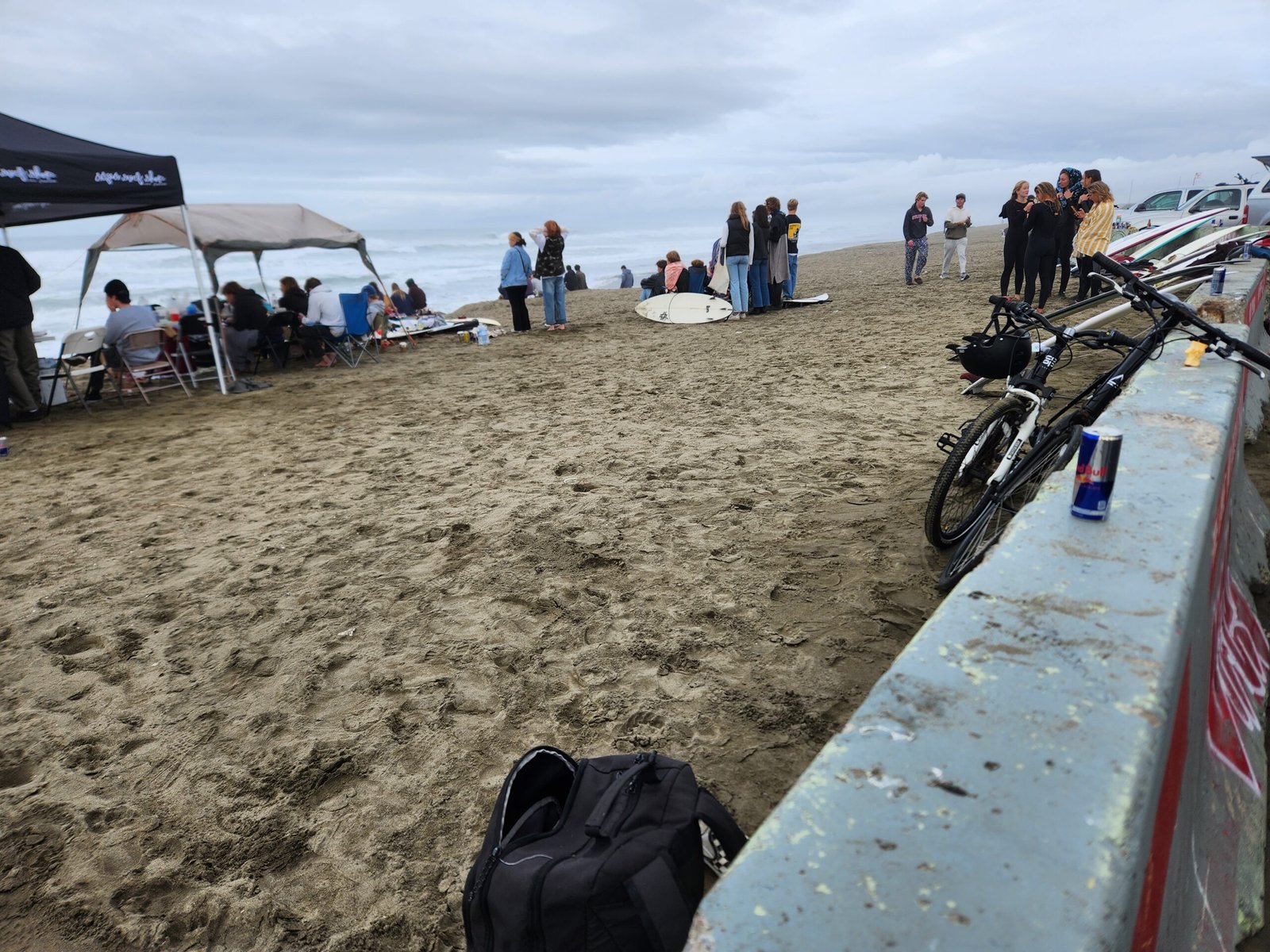
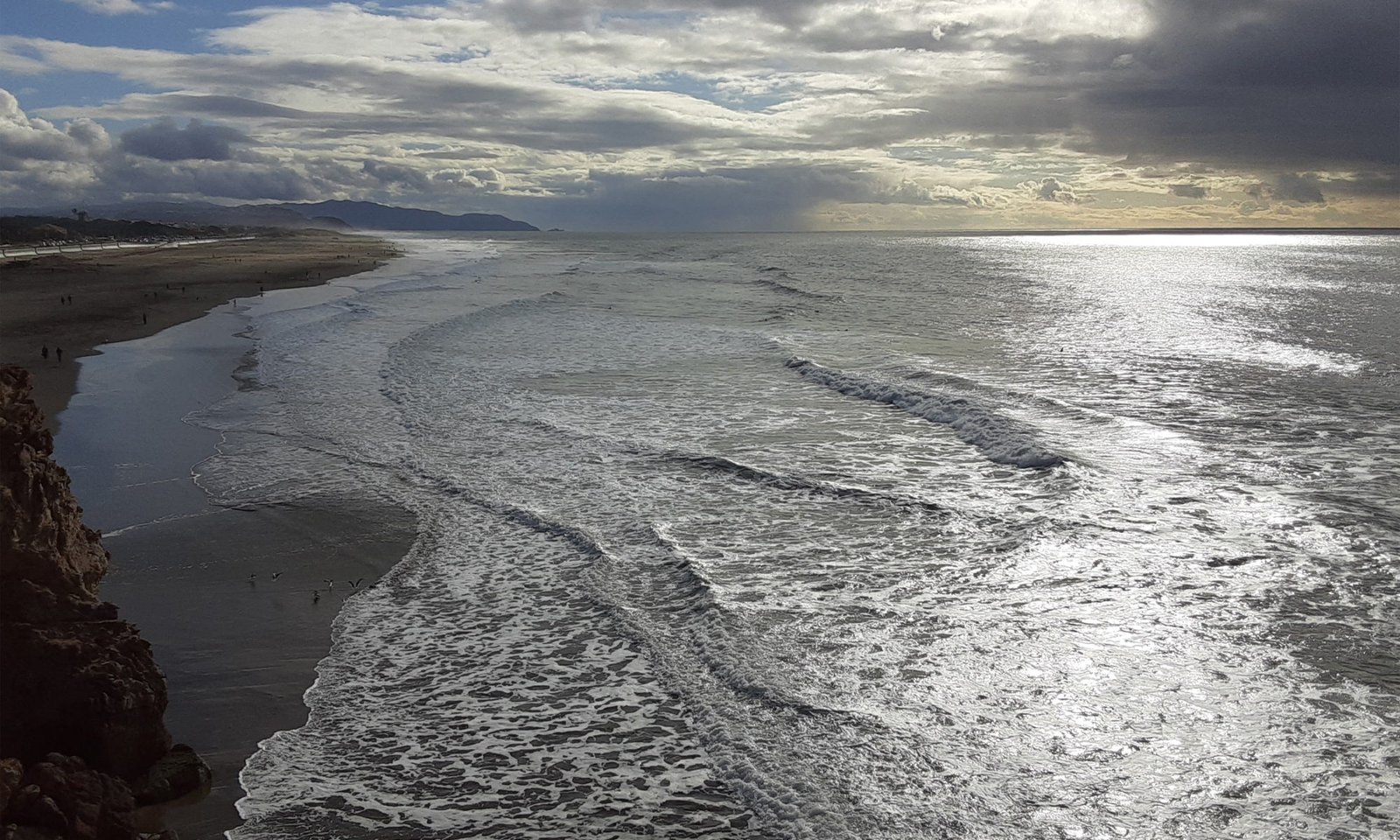
With the swell measuring around 8 feet at 12 seconds, on the morning of December 3, it was observed that the Aqua Surf Shop was holding some sort of surf contest. The surf was gnarly and the paddle-out ridiculous – rows and rows of white water to paddle through just to get to the outside. It looked impossible but the contestants, both women and men in their twenties seemed to be able to make their way past the inside close-outs. Just nasty out there.
UPDATE: The contest is what is called the ‘Battle of the Bay’ competition. This has been held in previous years when San Francisco State was victorious. It seems to be surf clubs from local colleges – SF State University, Cal, and UCSF get together and organize this event. Very cool!
From the NOAA Buoy Report and San Francisco https://www.ndbc.noaa.gov/station_page.php?station=46026
While the San Francisco Journal is dedicated to “Slow News that Does not Break,” we have breaking news today. Late in the day, on November 25th, 2023, during a northwest swell that delivered waves in the 15 to 20 foot range, it was observed that at the south end of the beach a man caught a rather large wave on a stand-up paddleboard. After catching the wave he went right down the face and stayed comfortably on the shoulder until wiping out when the wave closed out. He then caught the the next wave riding his board on his stomach as the sun was setting and a full moon was observed rising over the city.
Further up the coast near Noriega Street it was observed that there was a pack of surfers and a jet ski, apparently assisting surfers in catching waves.
This story is not developing any further at this point. According to all available reports, all the surfers made it back to the beach safely.
La Familia
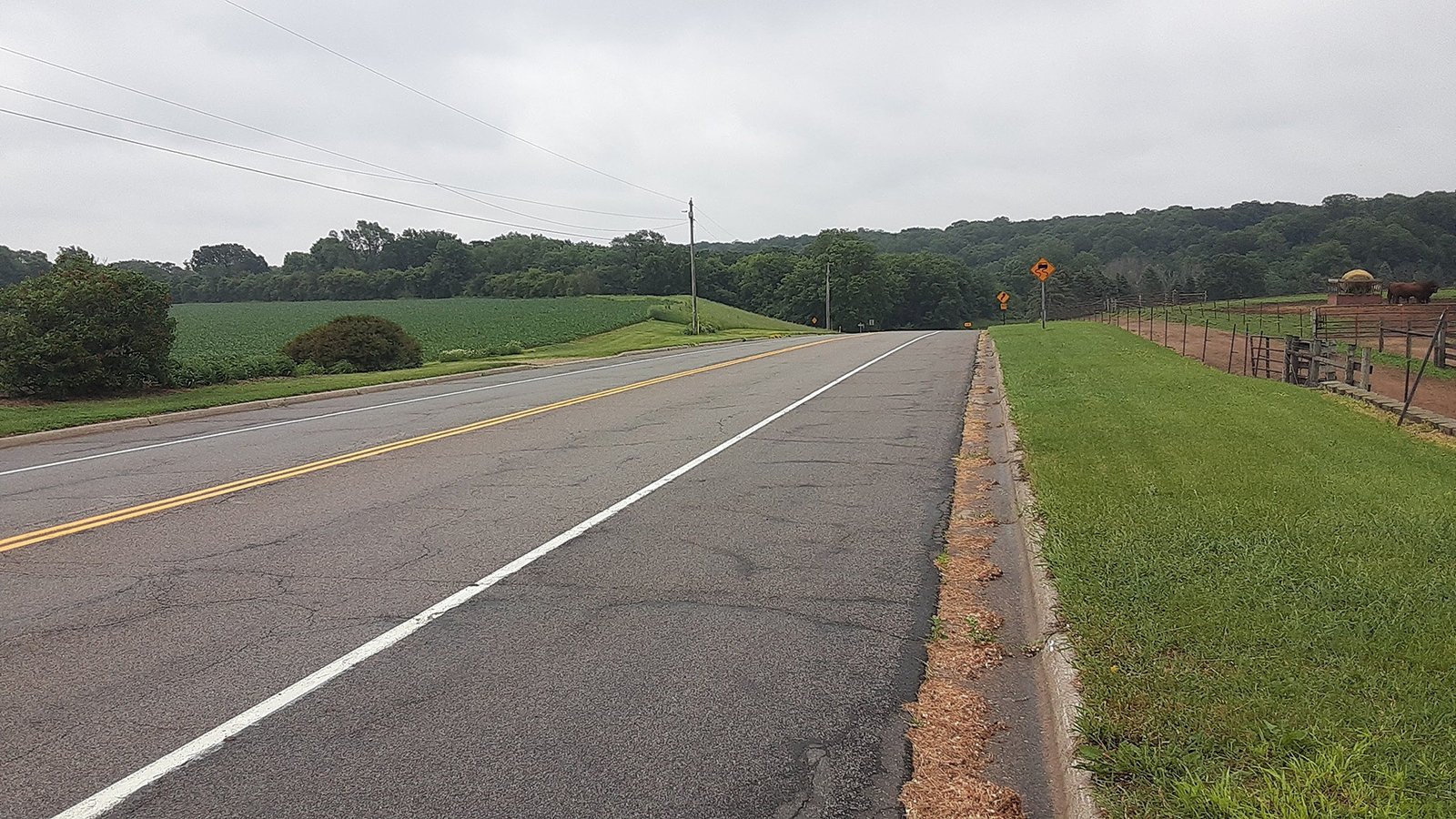
To the edge of town we ride along this winding river, through gnat-filled forests, over bridges that dodge the morning commutes. Breakfast at a familiar diner busy with ribbon-wearing war vets and regulars, then farewells to a buddy who navigates me each year to the start of this tale. Past cows, horses, pigs and more cows, fields of corn, by mailboxes with clever designs. Silos of corn. Roadkill large and small plastered to the asphalt in various stages of morbid decay. American flags abound tell me the wind.
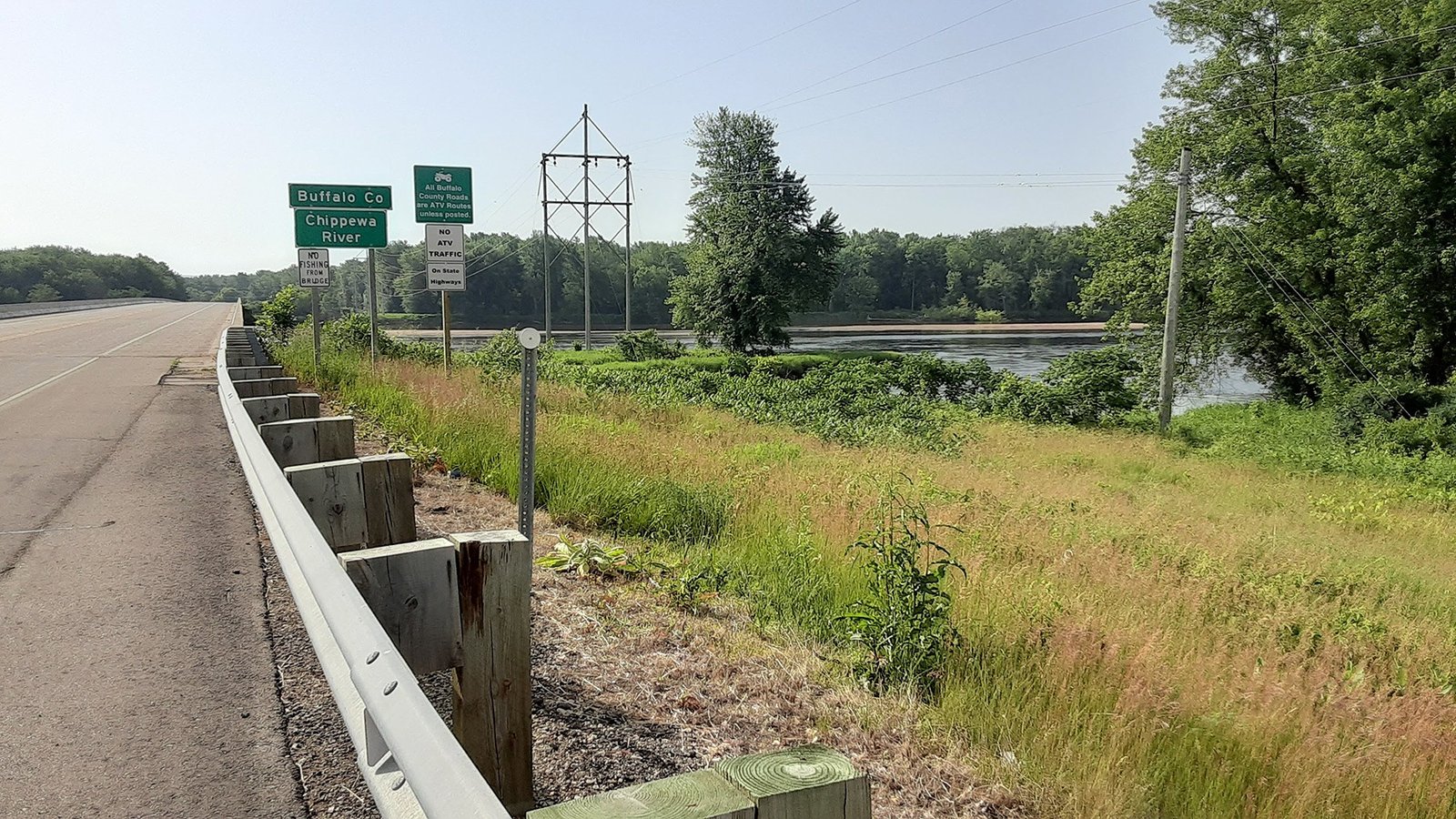
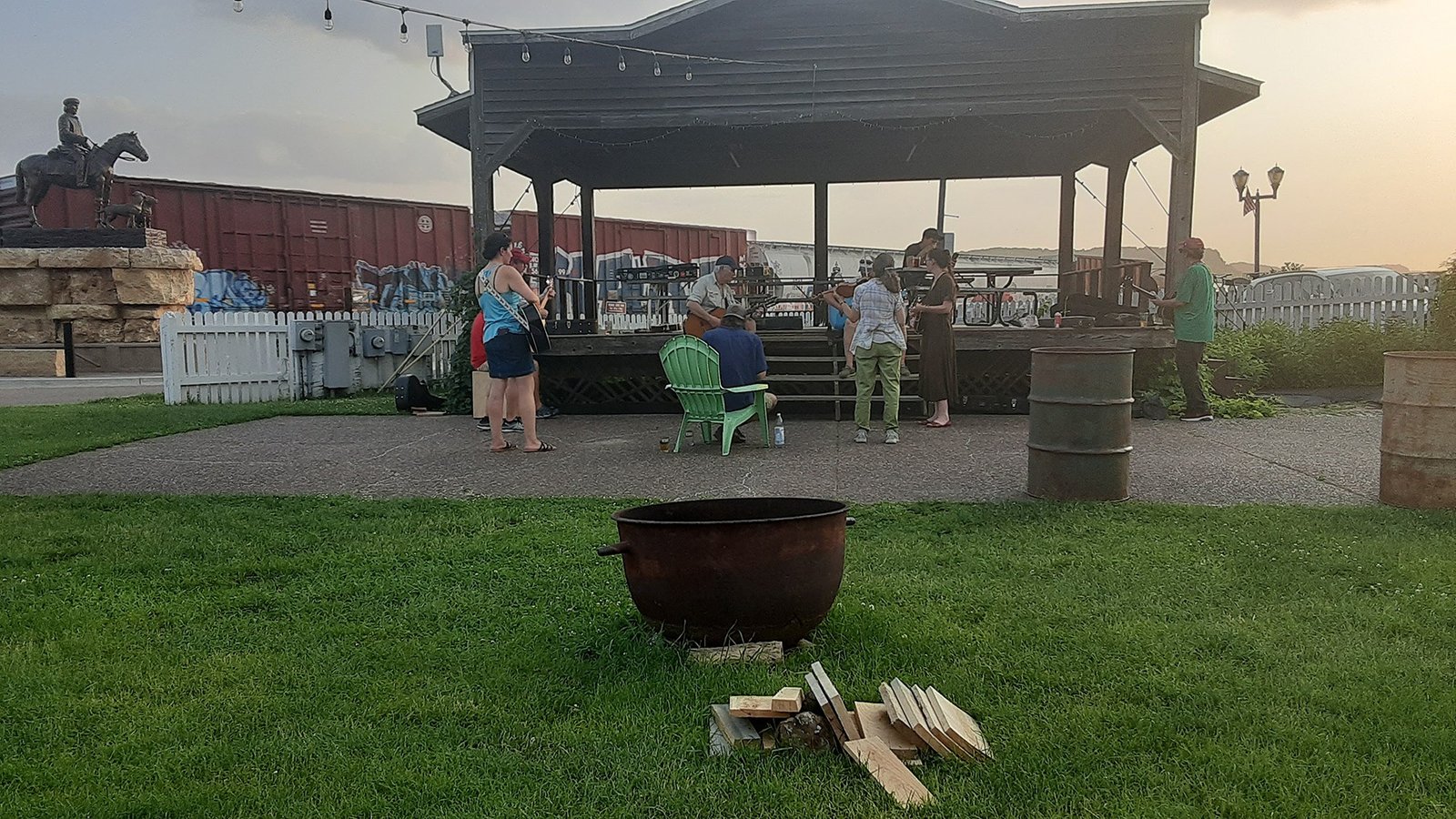
Nighttime thunderstorms cool the air as hungry mosquitoes buzz outside my simple tent. The morning is clear as I pedal over the Chippewa and streams too many to name. By the evening I arrive at the timeless Trempealeau Hotel on the Mississippi as locals with guitars gather for songs, laughs and beers.
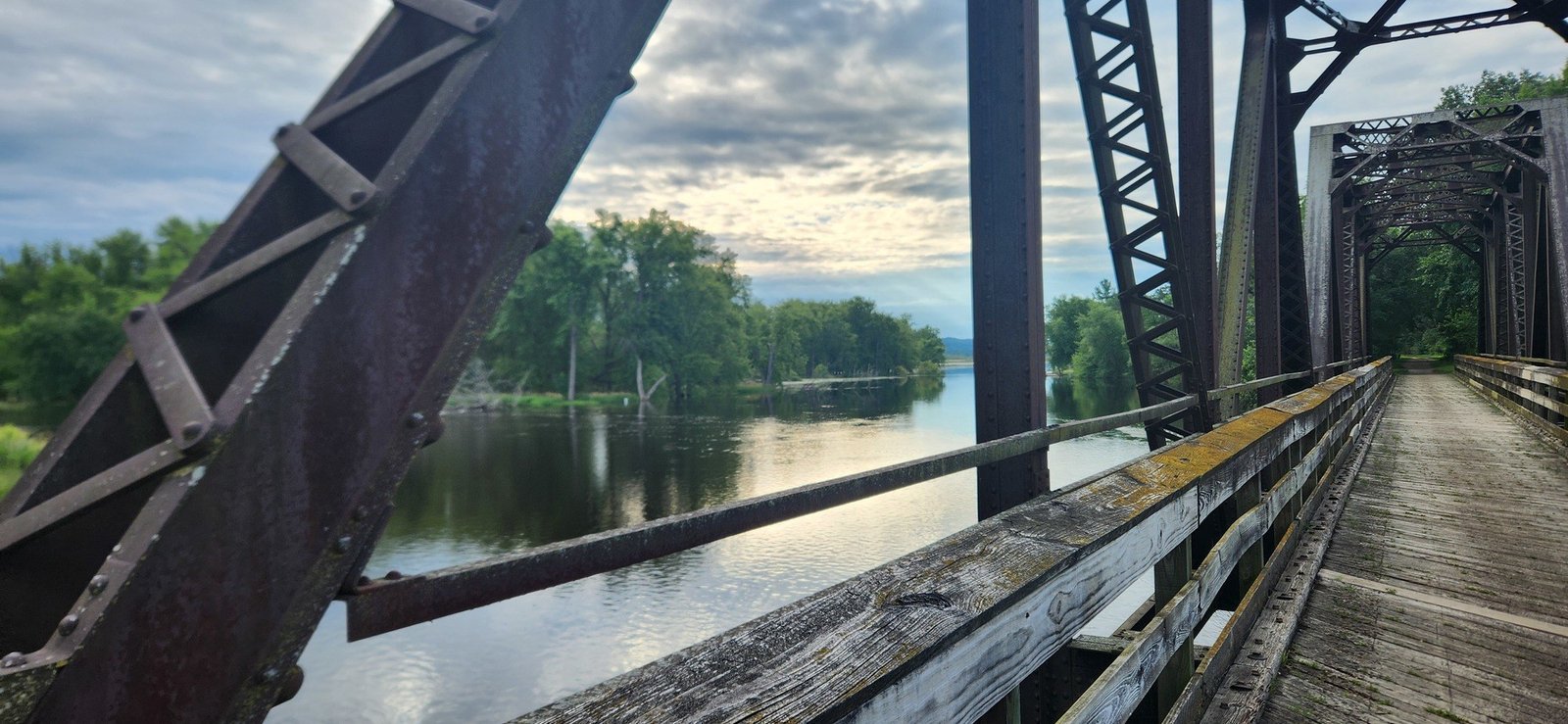
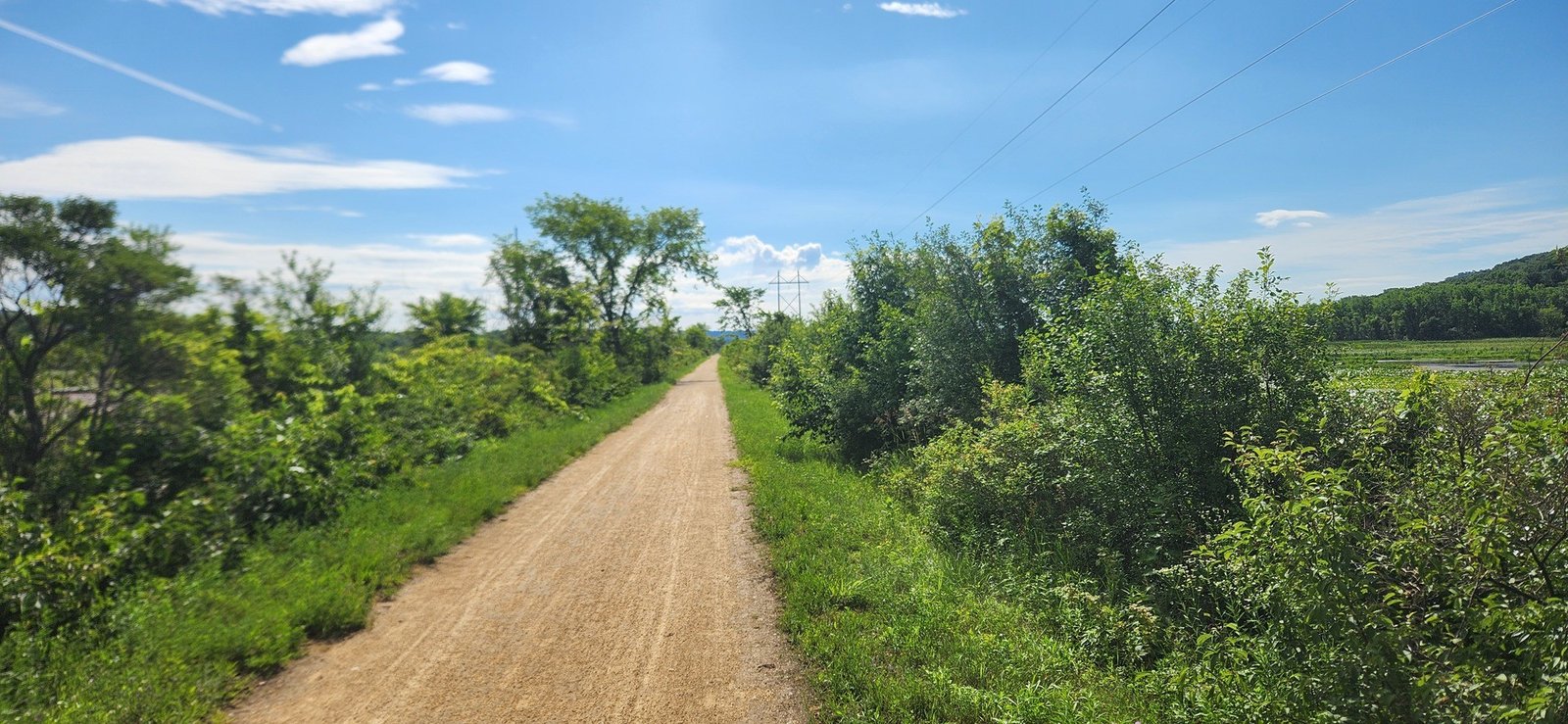
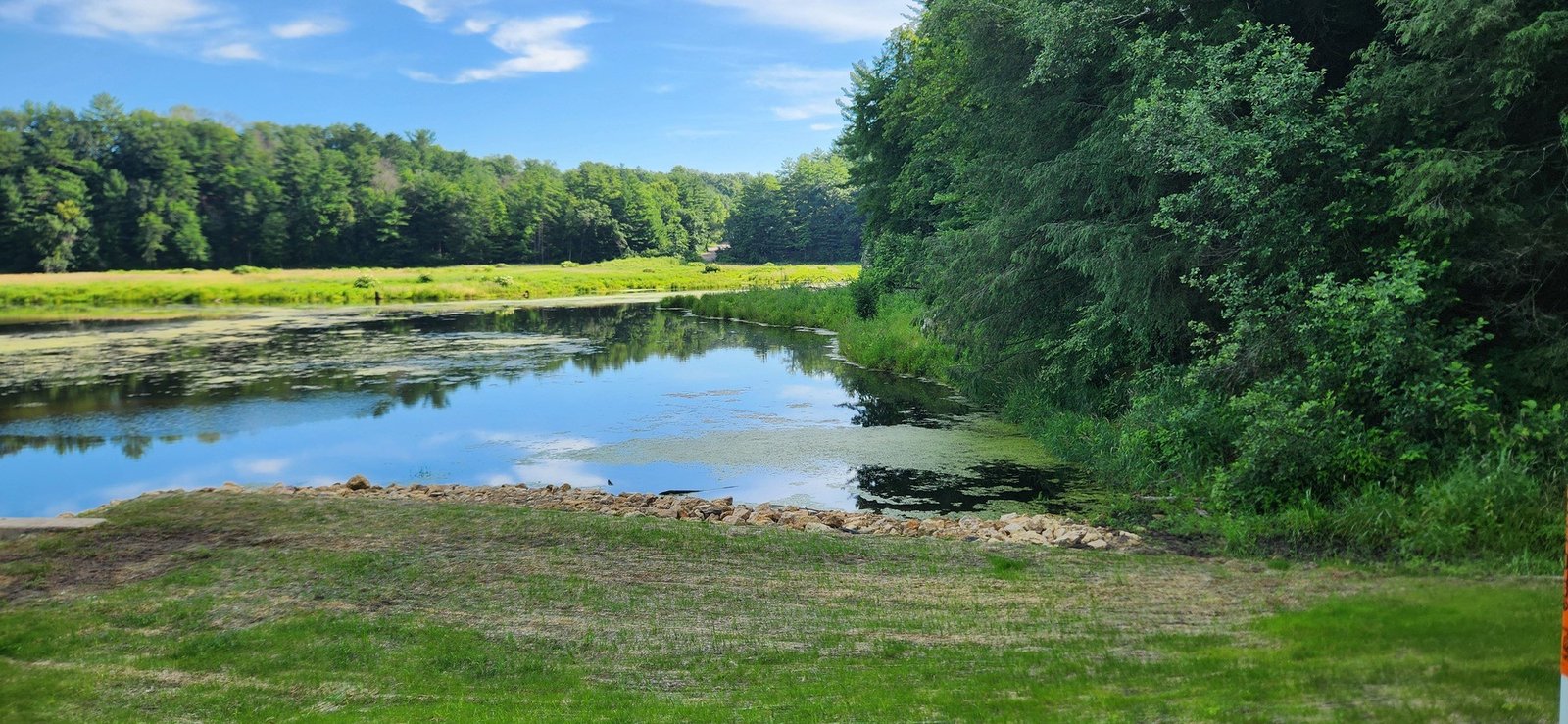
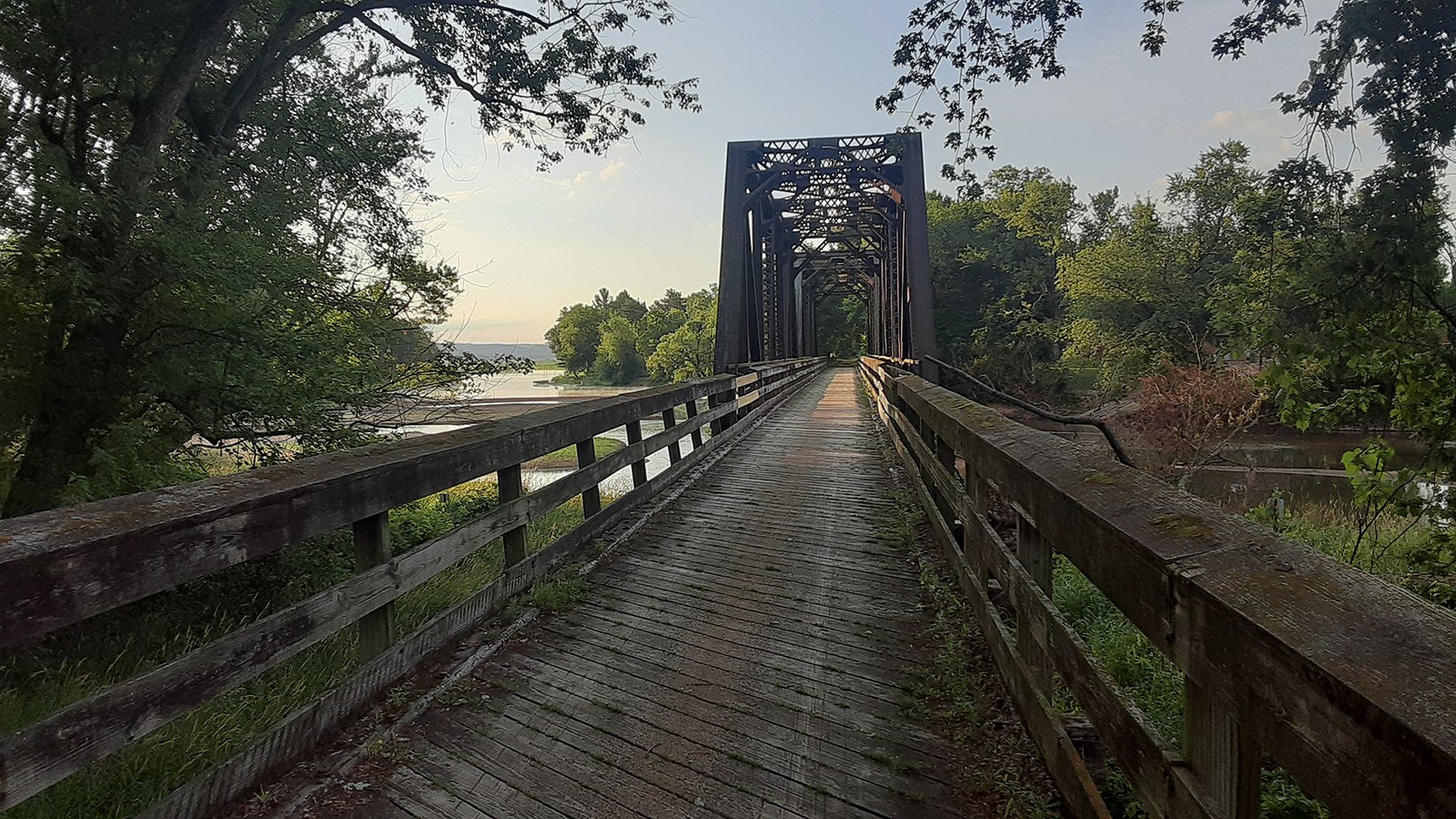
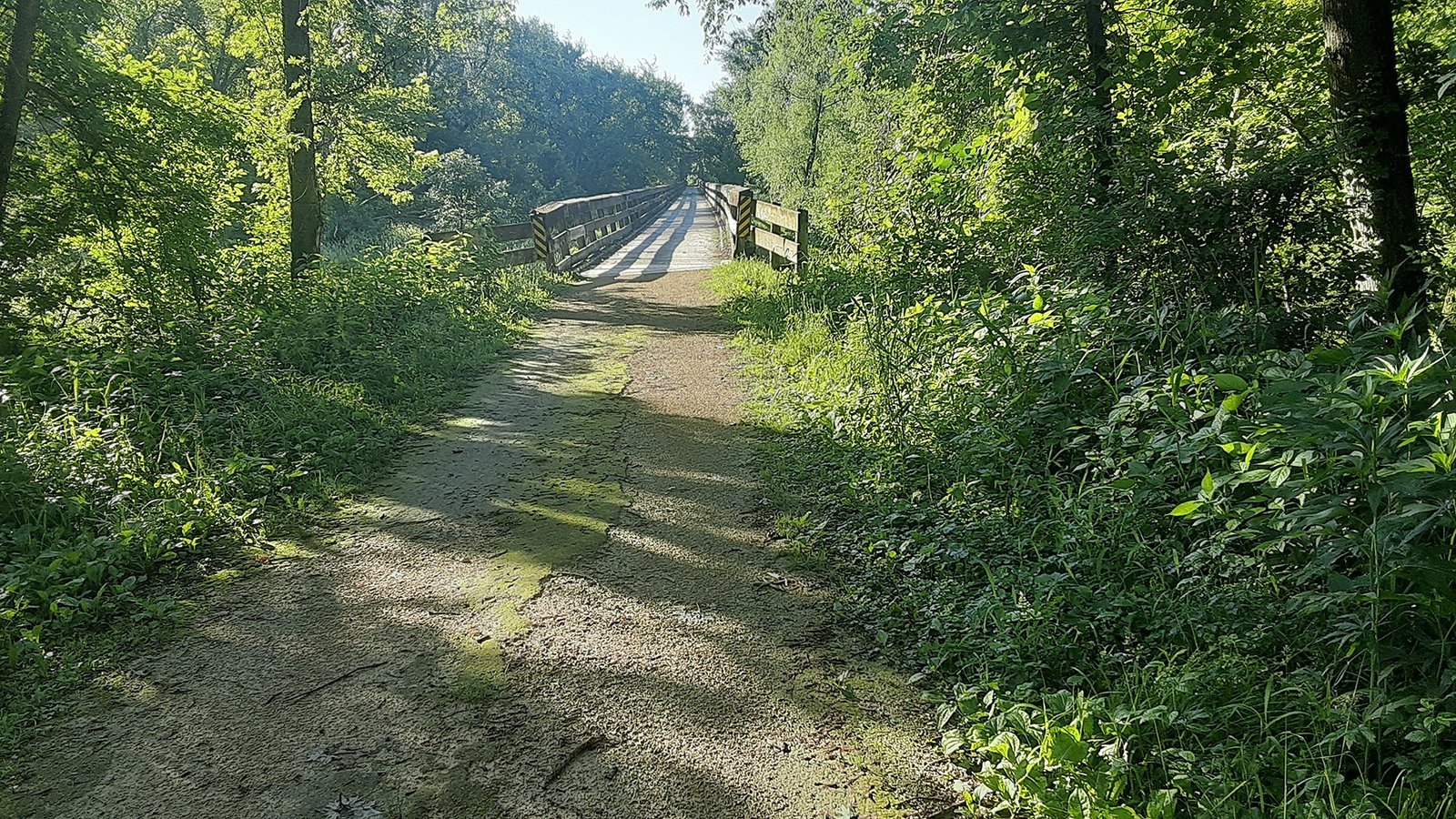
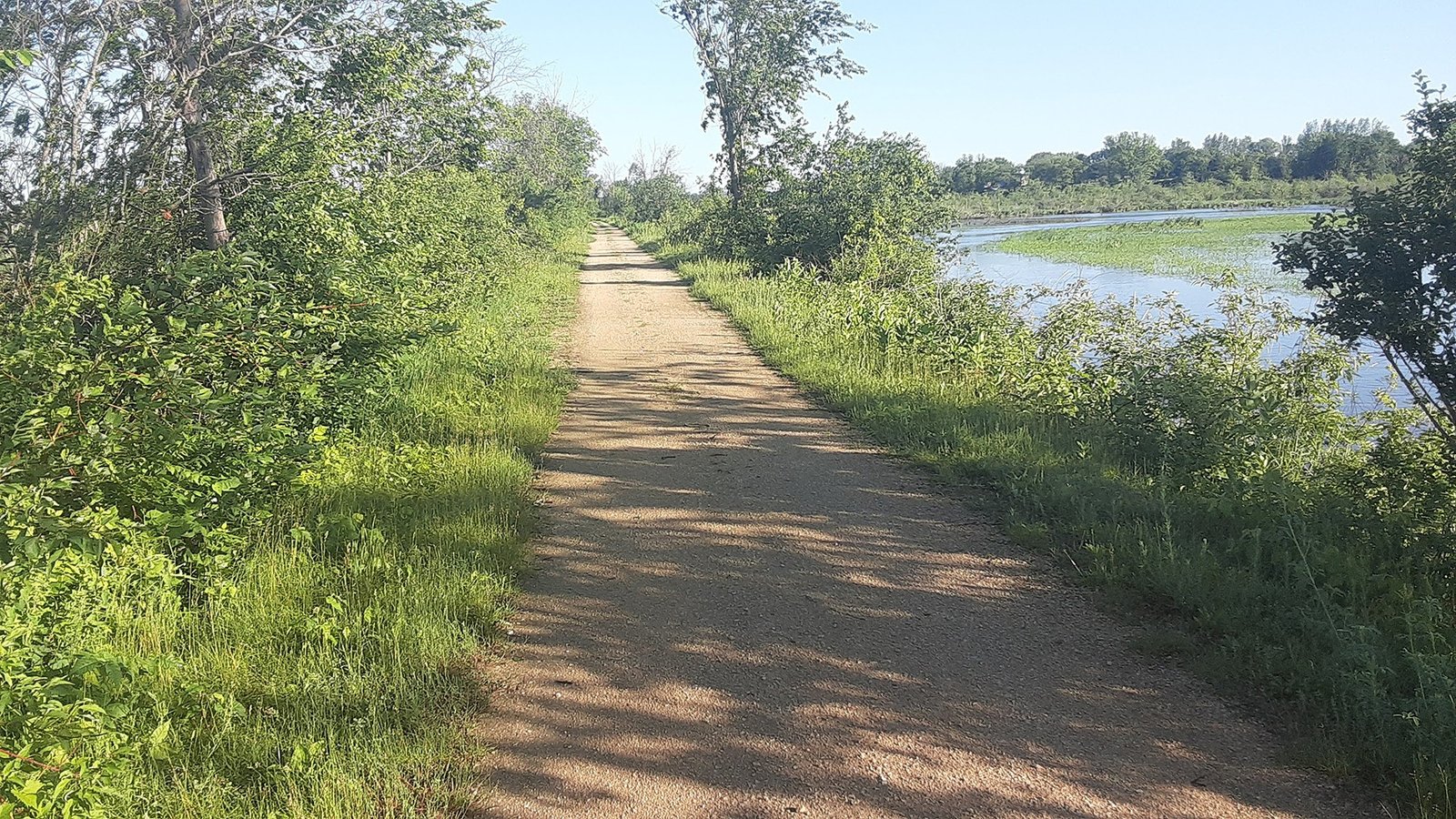
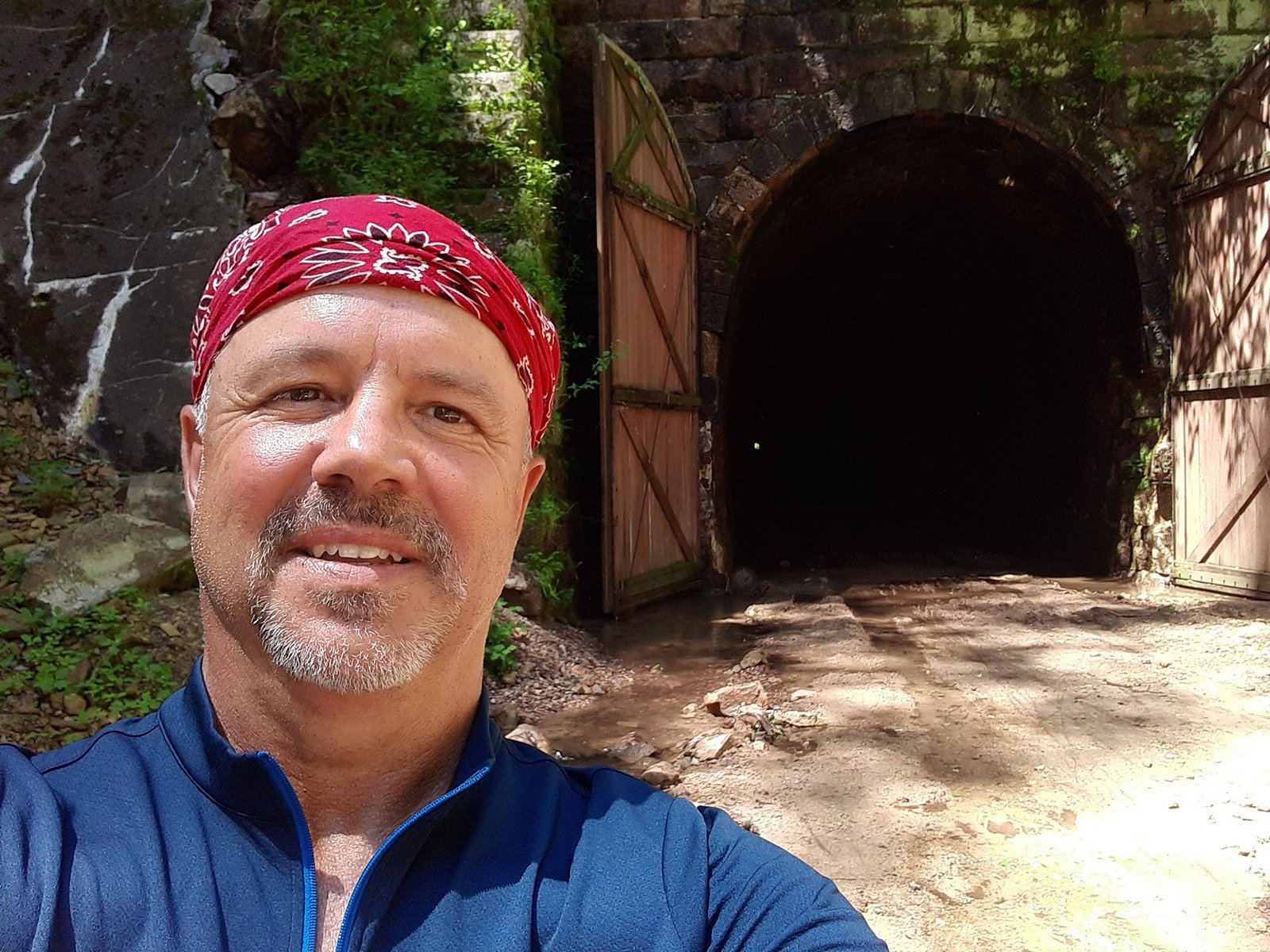
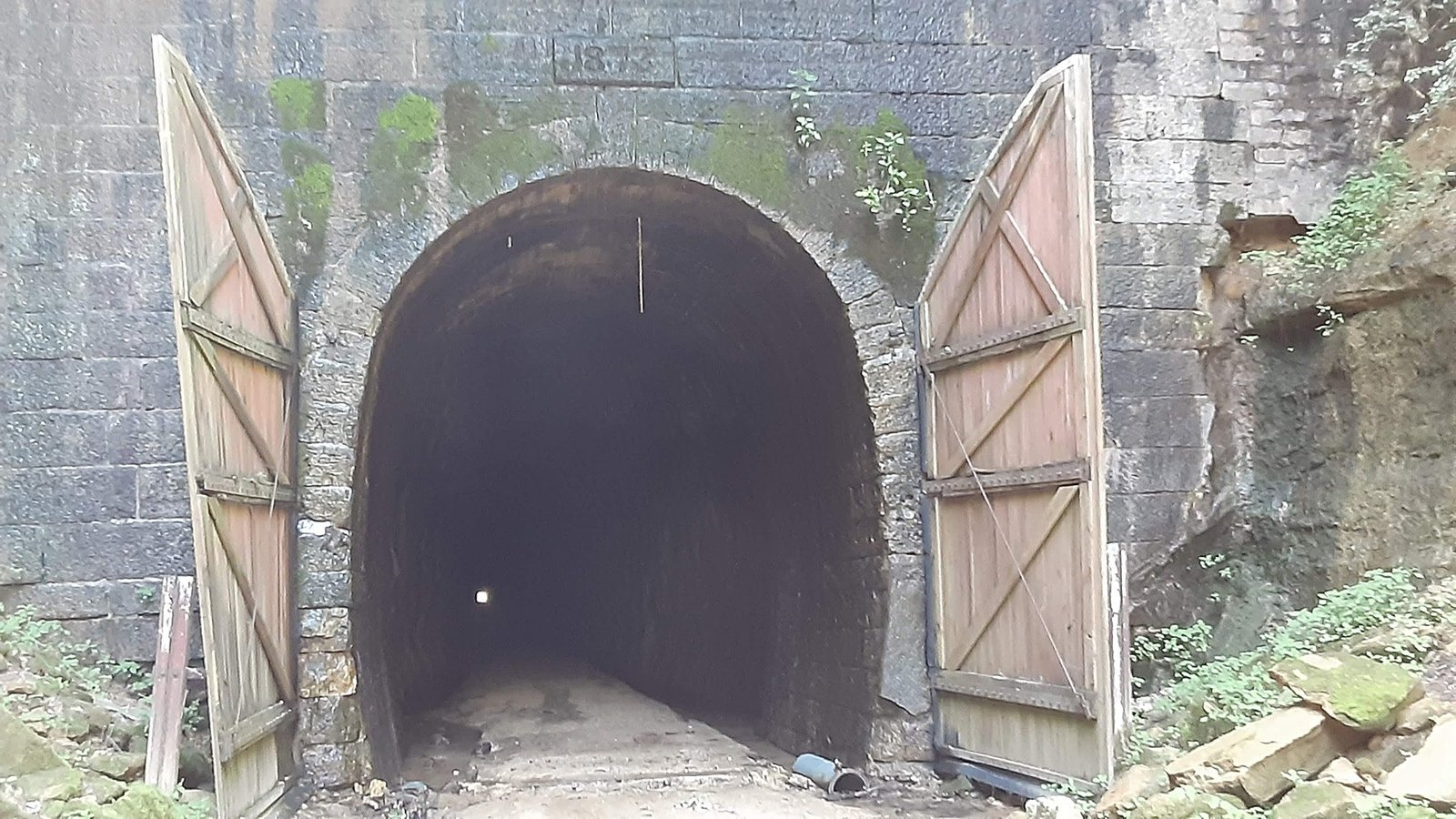
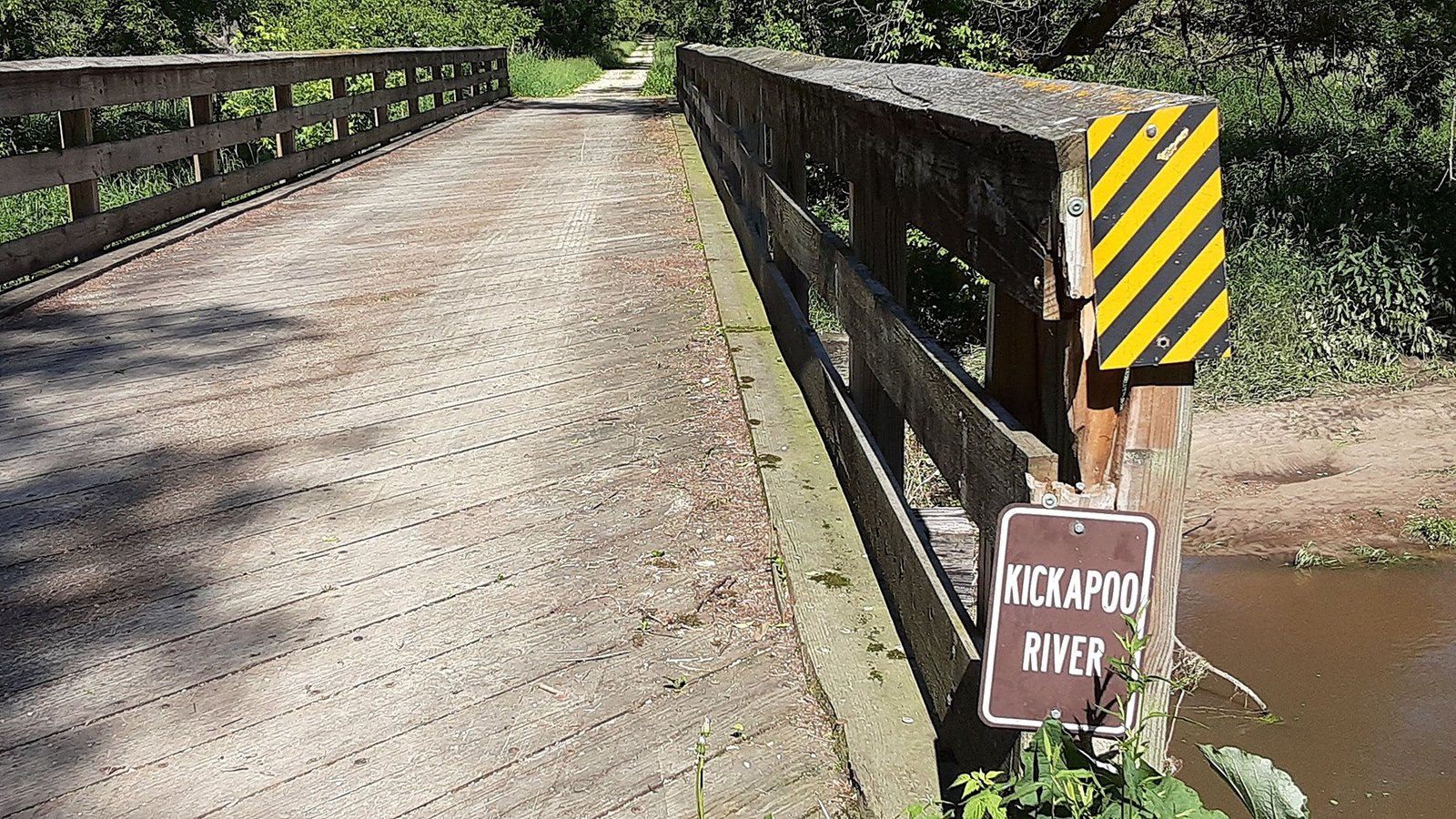
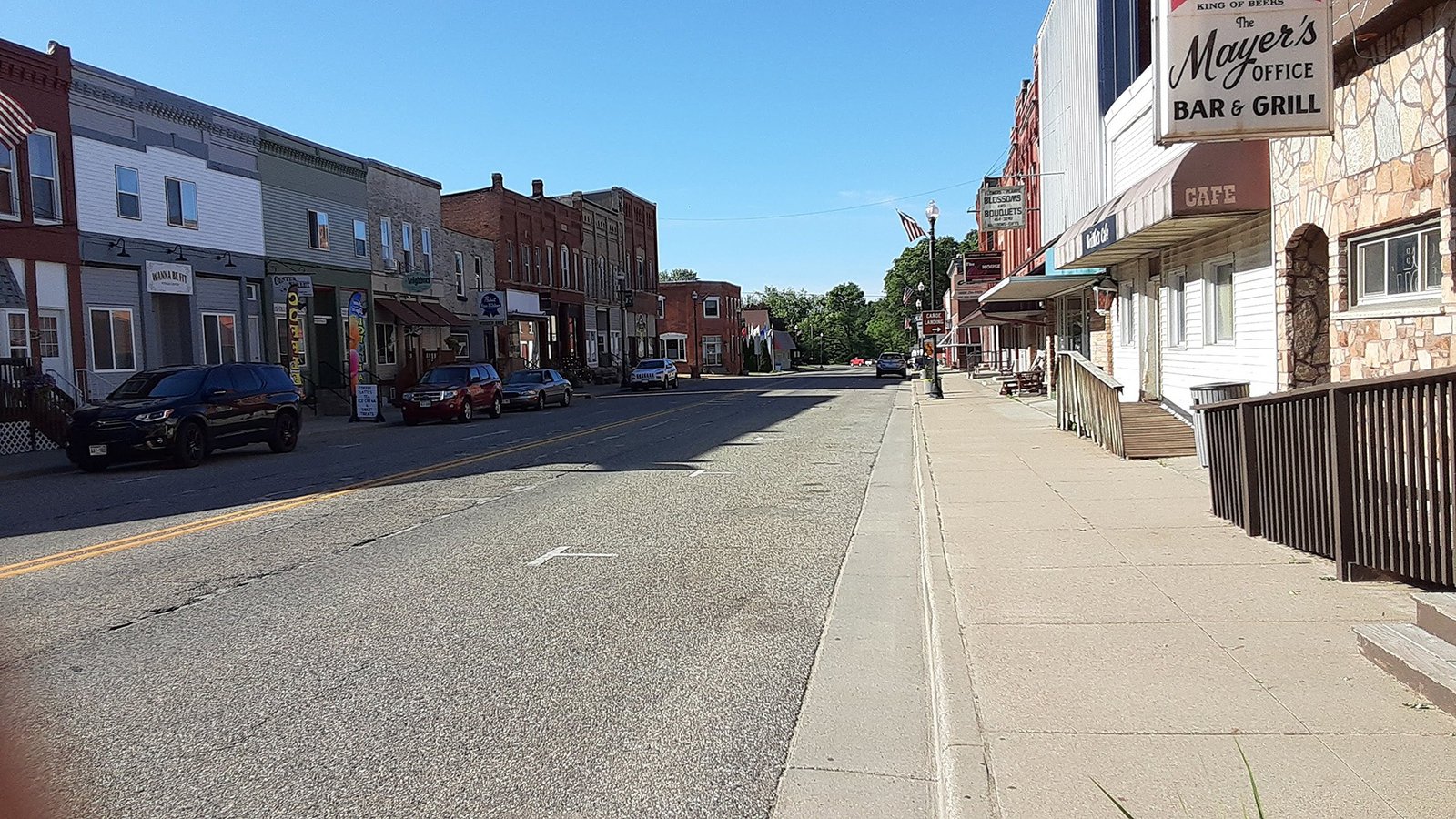
I rise with the sun to venture over wetlands forgotten save for the cranes, robins, yellow finches, redwing blackbirds and blue herons. A hundred miles of trail to ride with tunnels, old bridges and rail stations from long ago. Nervous rabbits endlessly scamper across the trail. Through quiet small towns where even the bars seem asleep I pedal.
Camping in Elroy with my sis and her pooches as we eat, drink and marvel at our rain-free luck. One more day on farm roads, climbing then flying down these rolling hills and glens dodging more rain to then but roll into my brother’s crib, not far from where I was born.
Second Movement
Continental Divide
I hear trombones and french horns.
Stacked fifths.
Parallel motion like a moose crossing the road.
Earth tilted so that streams can sing and dance.
Strings on a unison line with leaps unknown.
A solo trumpet hands off to a flute.
Timpani rolls.
Octaves call out a forgotten
Blackfoot melody to an open unending sky.
Third Movement
I see Meriwether Lewis in the rear view mirror driving a big rig, horn a blastin’ down Interstate 84. His sidekick Clark riding shotgun. Eyes bloodshot, he pulls a long draw on the flask. Back to the scene, two hundred years in the future as a bird of prey unknown soars high above.
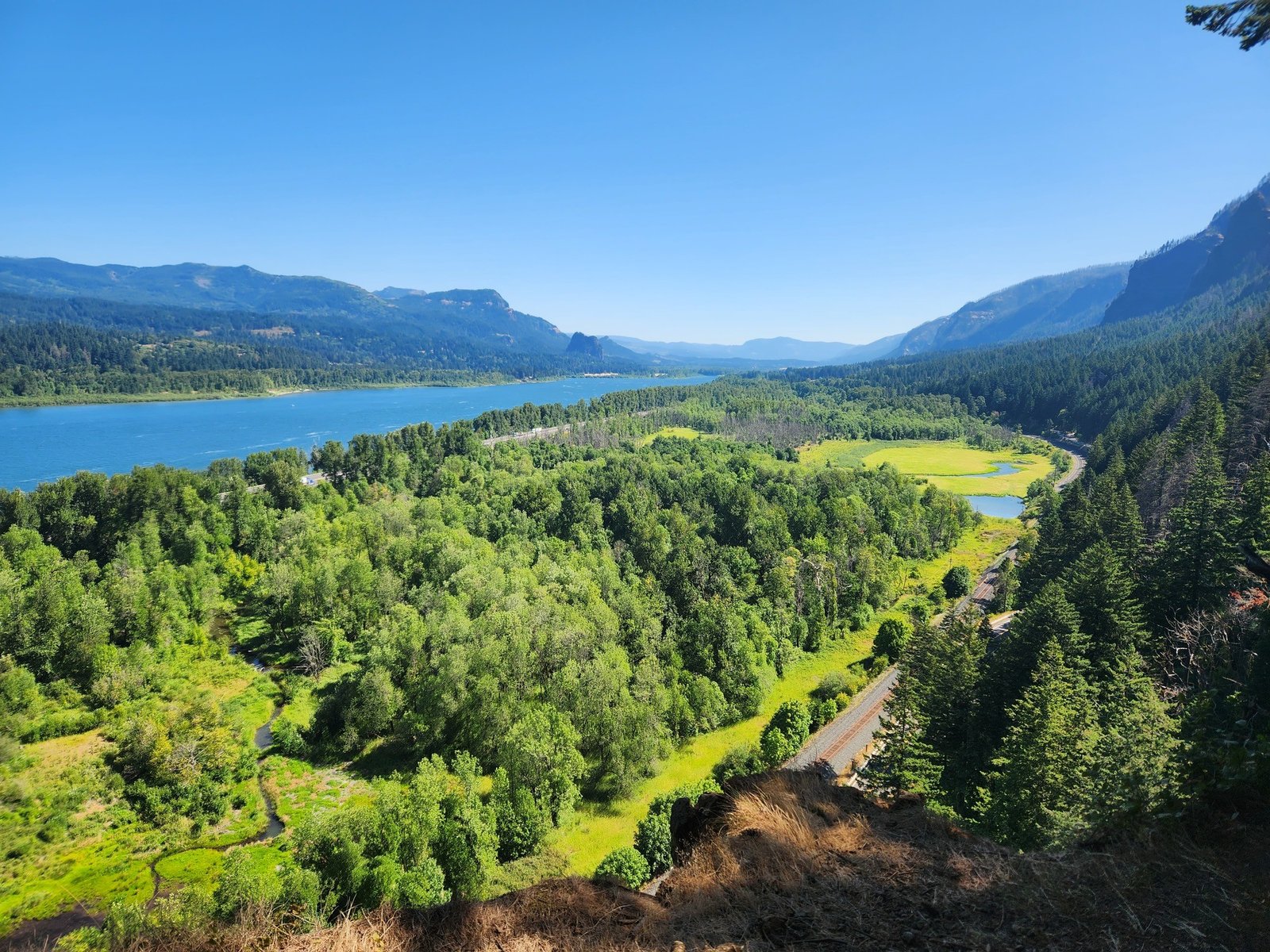
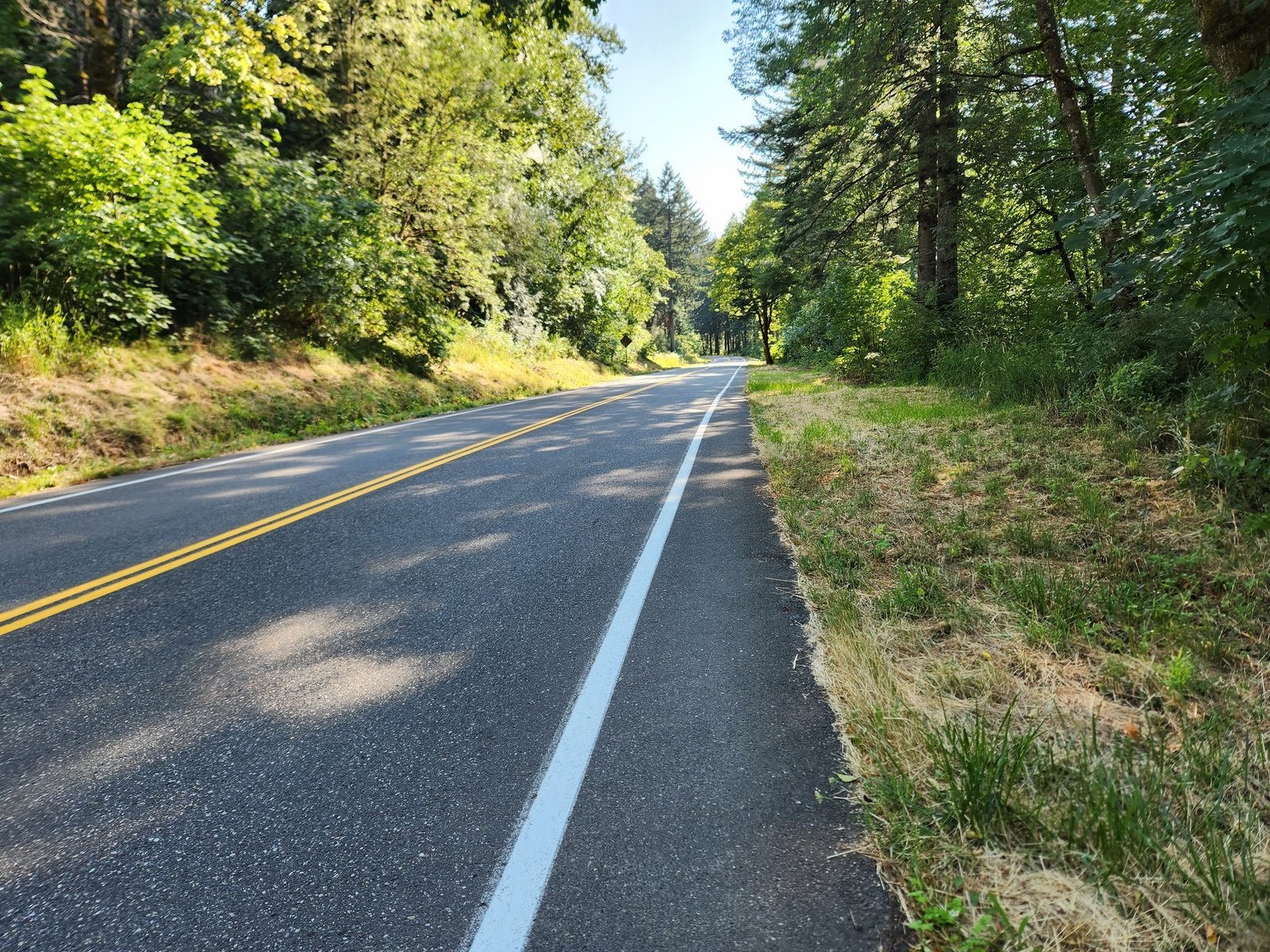
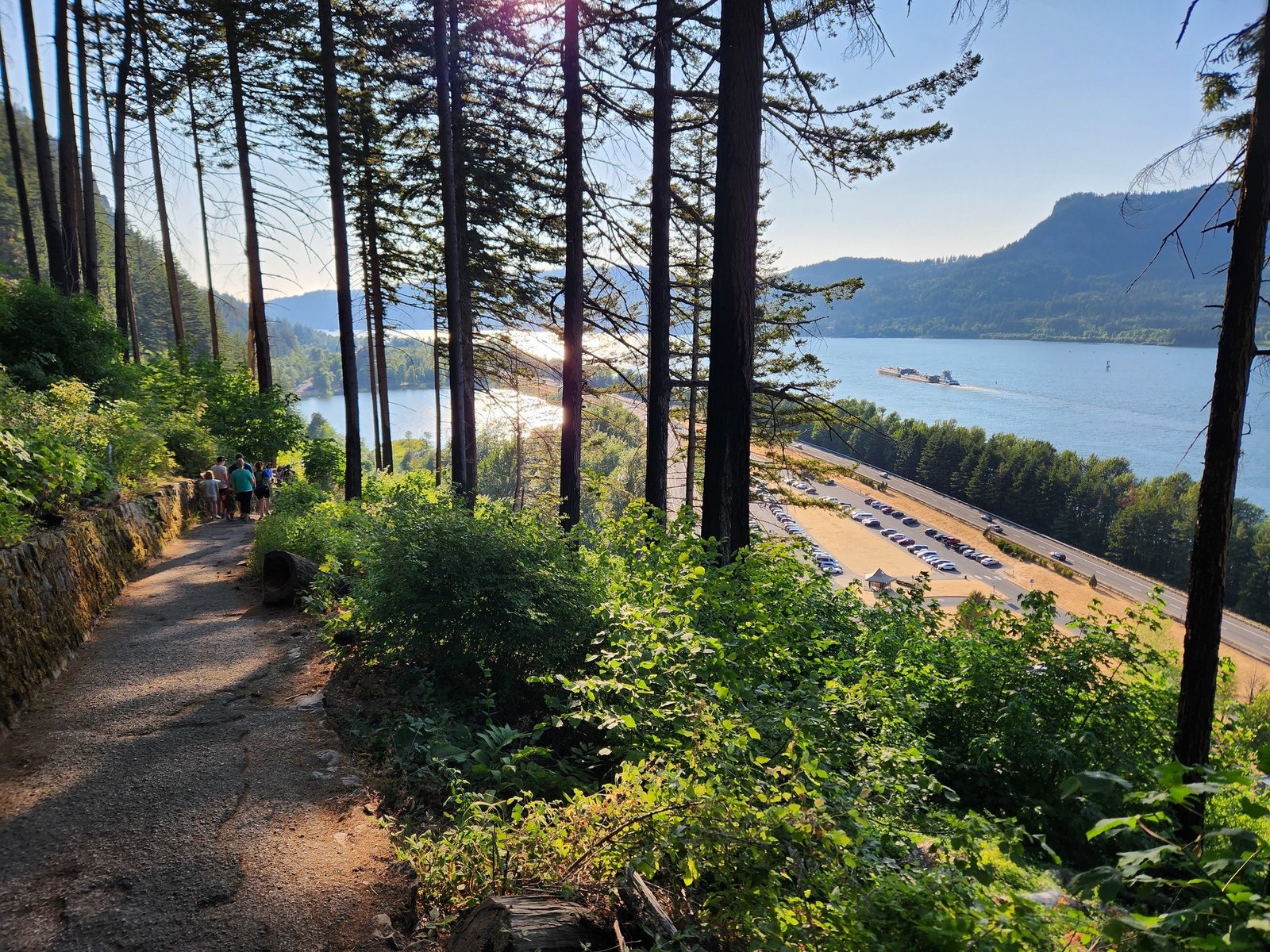
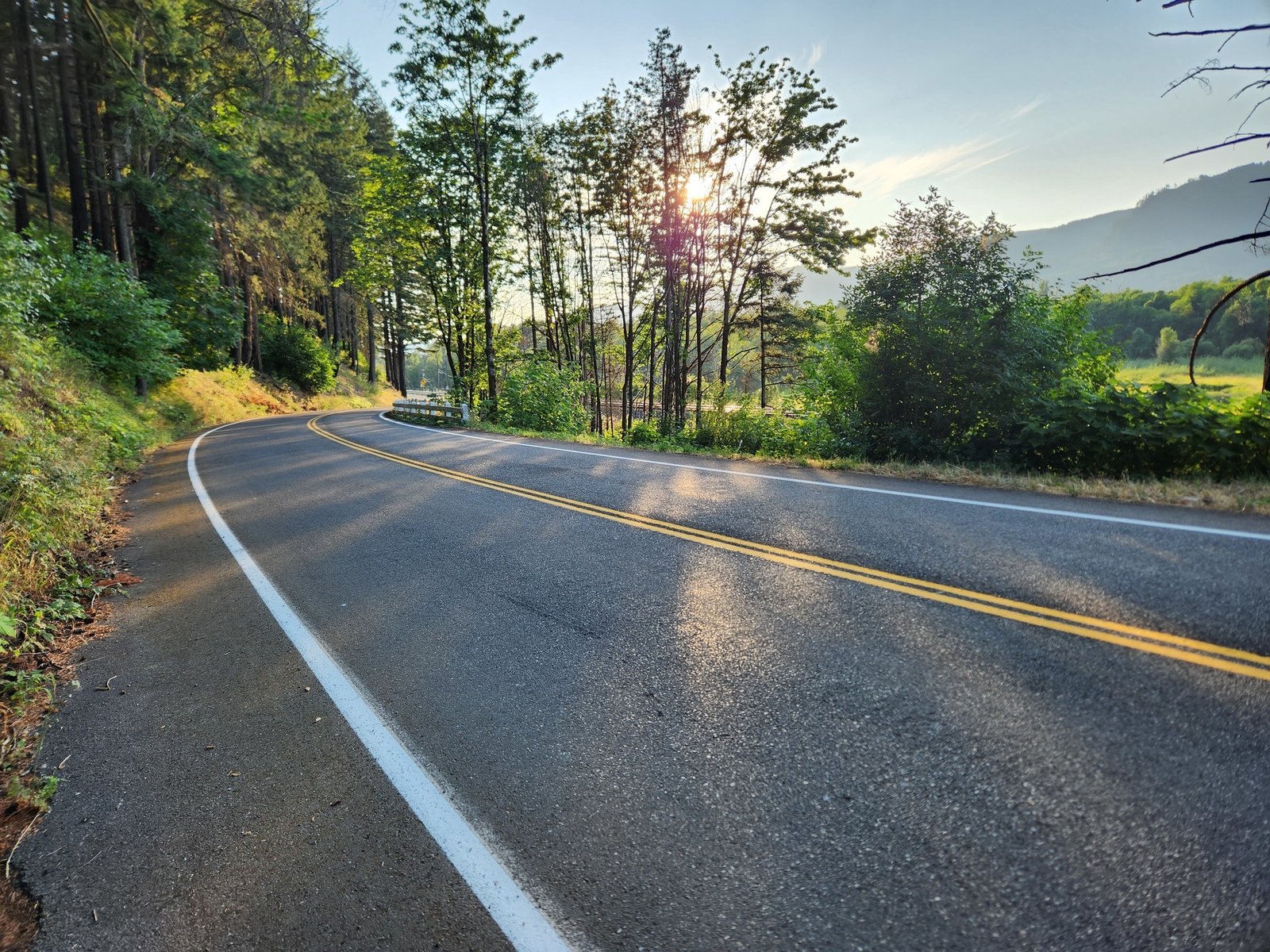
The Columbia Gorge once sang a fine tune. Now it is the never-ending hum of the Interstate and the trains that clamber up and down this geological miracle, shaped by glaciers, volcanos and spastic floods building bridges to the gods.
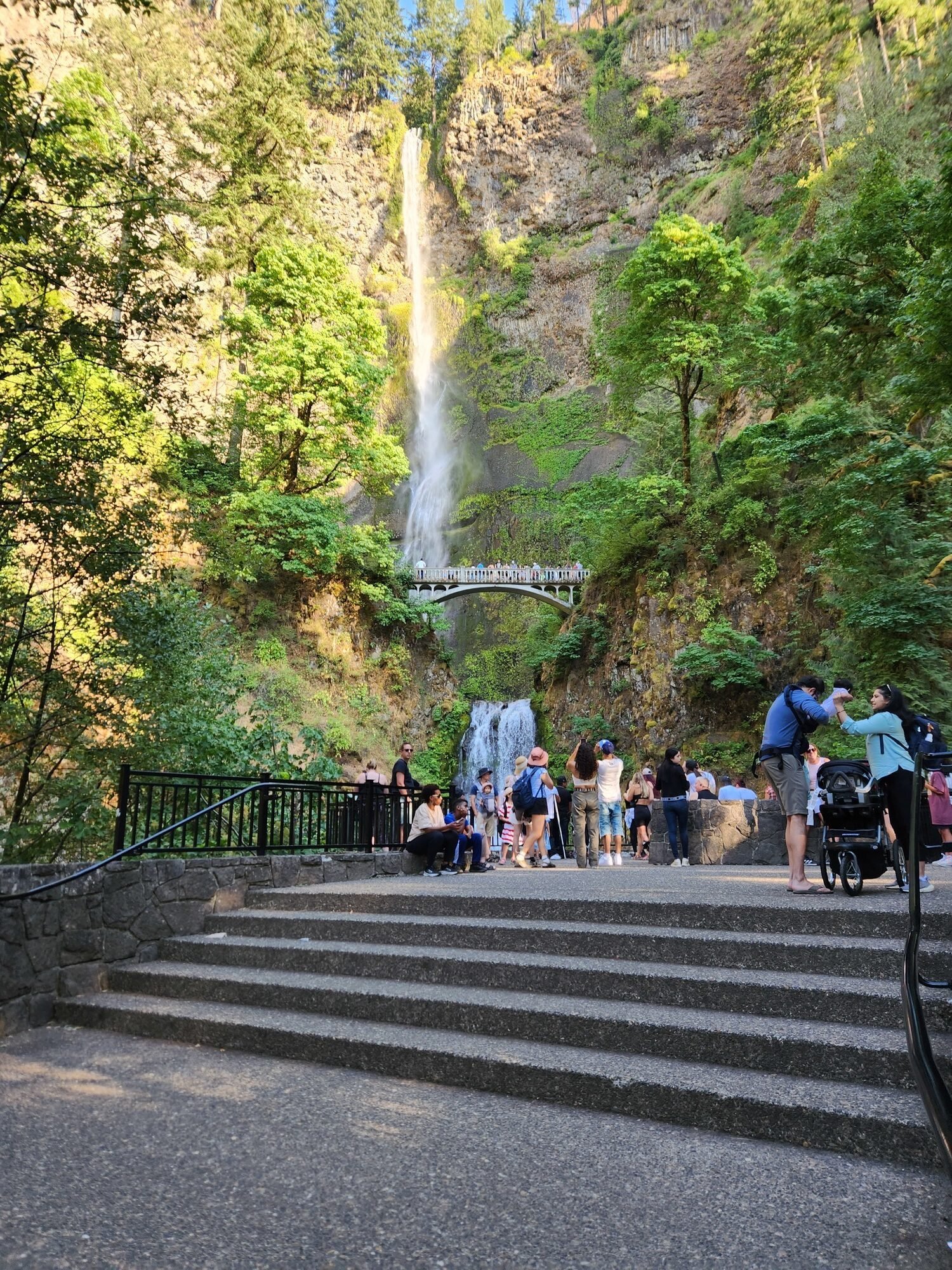
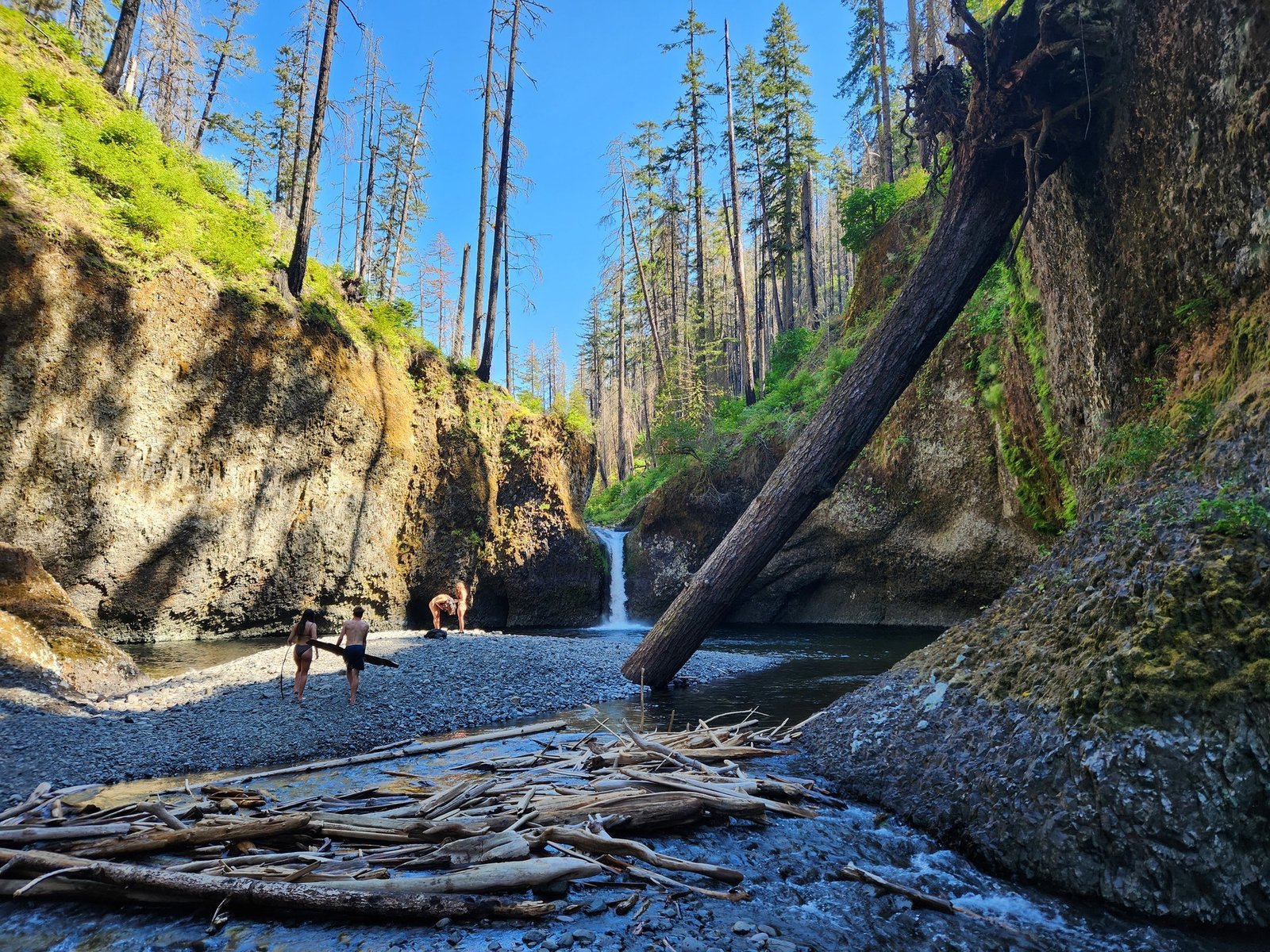
Fires now burn the hairs that grow like fur on the ranges leaving only gray pointy sticks from once verdant pine. Hike up the canyons, the blackberries now just ripe while the timeless waterfalls wash the modern madness away like cymbals crashing persistent.
THE BACKSTORY
July I spent traveling around three regions of the United States primarily by bicycle. The Midwest and the 300 mile ride from Minneapolis to Madison, much on rail-to-trail paths. Glacier Mountain Park and East Glacier to West Glacier. Portland to the Columbia River Gorge. I traveled between regions with an Amtrak Rail Pass ($499) which worked great. You can get your bike on the train ride for $20. Just remember when you get off the train, you get your bike directly from the baggage car not at the baggage terminal!
The writing above is my summary of these travels. I saw some amazing country and met some truly remarkable people.
The Coast Starlight to Seattle leaves Emeryville, CA daily at 9:41 pm. It arrives at King Street Station in Seattle at 7:51 pm the next day. For around $100 you get a seat in coach. Probably not for extremely introverted, asocial people but I find Amtrak a fun way to travel. The vacation starts when you get on the train.
It is possible to get to the Emeryville station by BART and a bus at the MacArthur Station. From most places in SF this will take about an hour.
On Amtrak you can splurge and get a sleeper, but I have done this trip in coach, sleeping the first eight hours of the trip without too much problem. The seats are large and recline way back. The legroom is grand. It is a good idea to pack light meals and some snacks and perhaps some beverages as well. No personal alcohol but the snack bar has beer, wine and liquor.
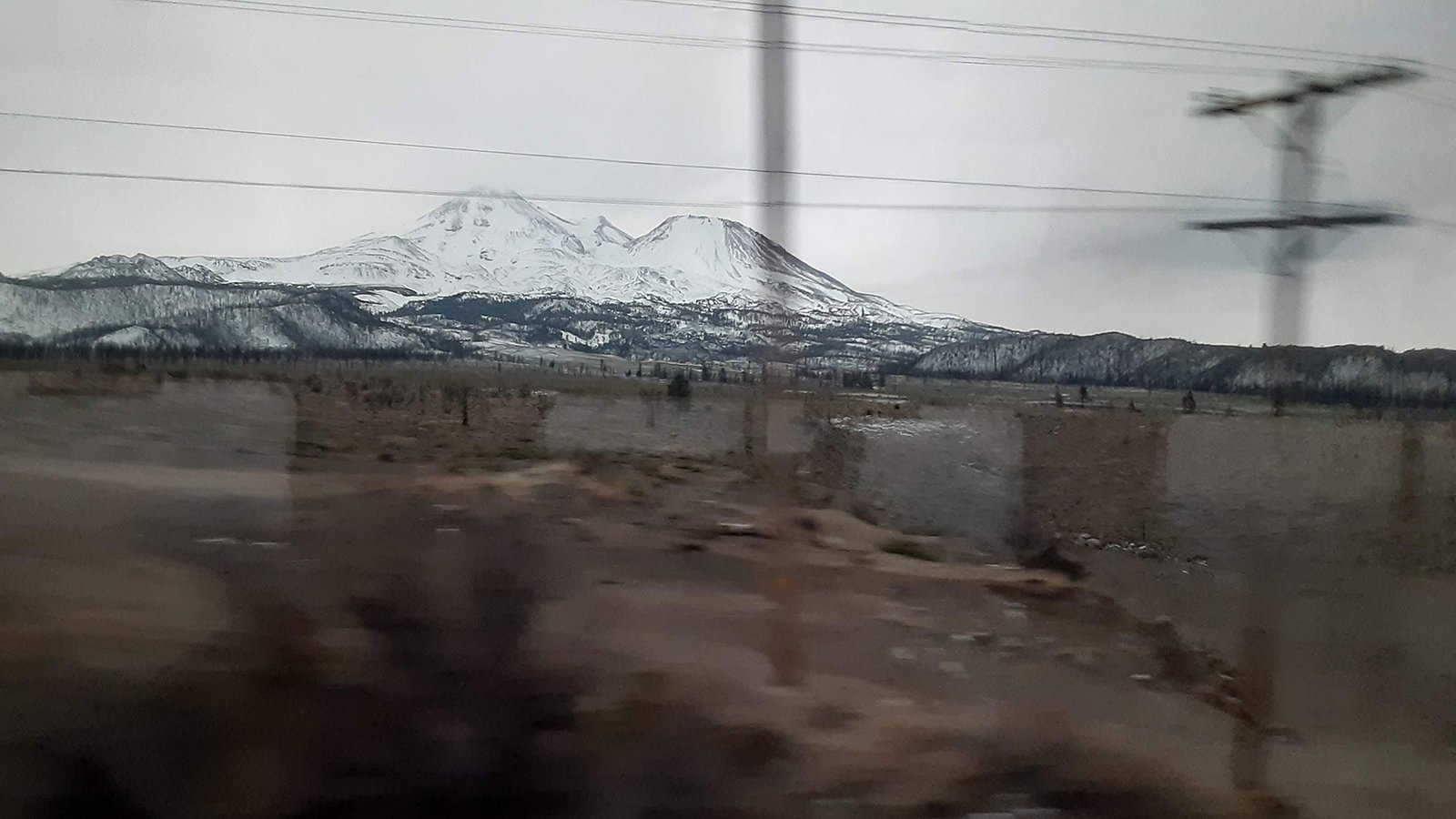
Mount Shasta
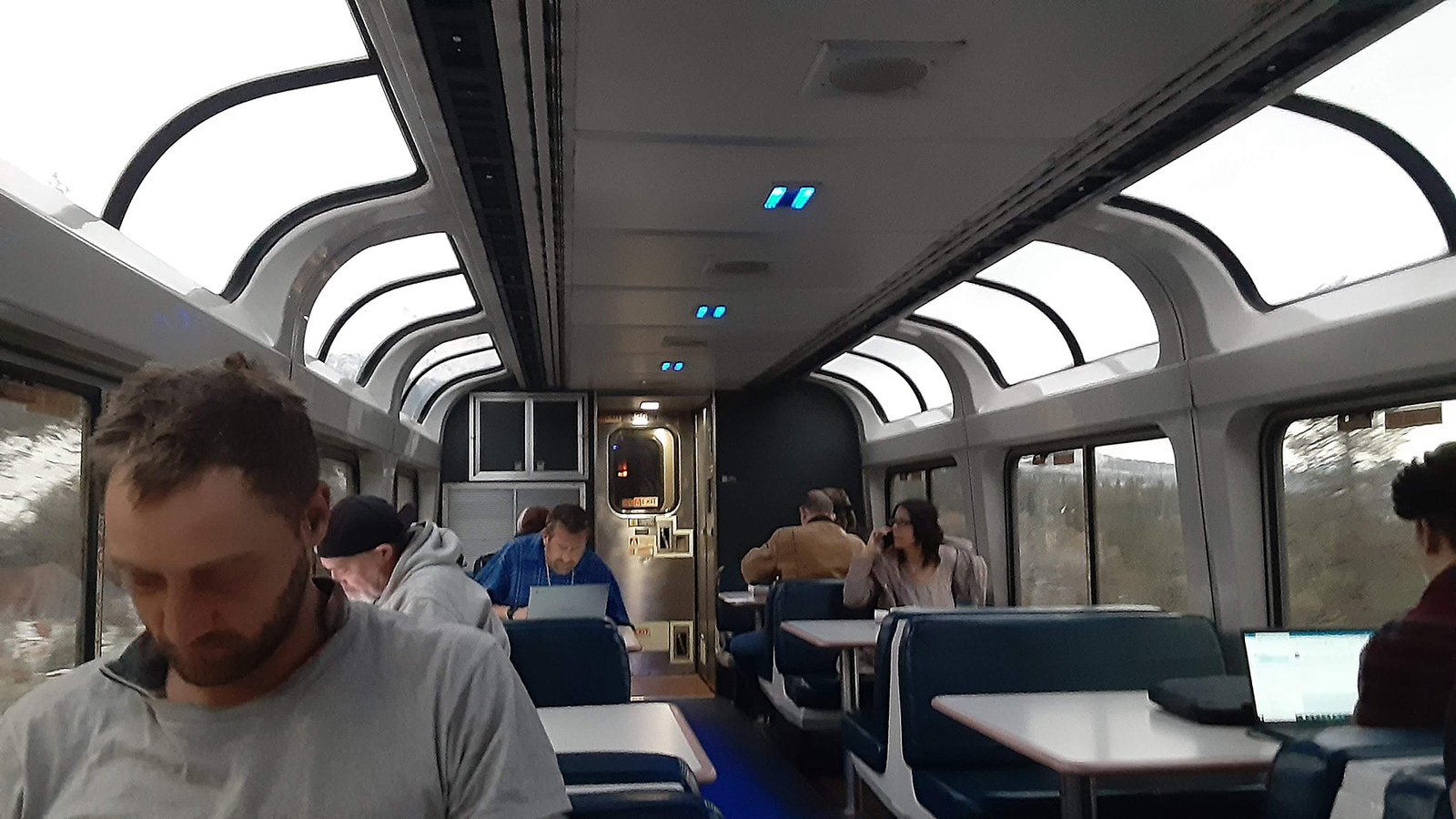
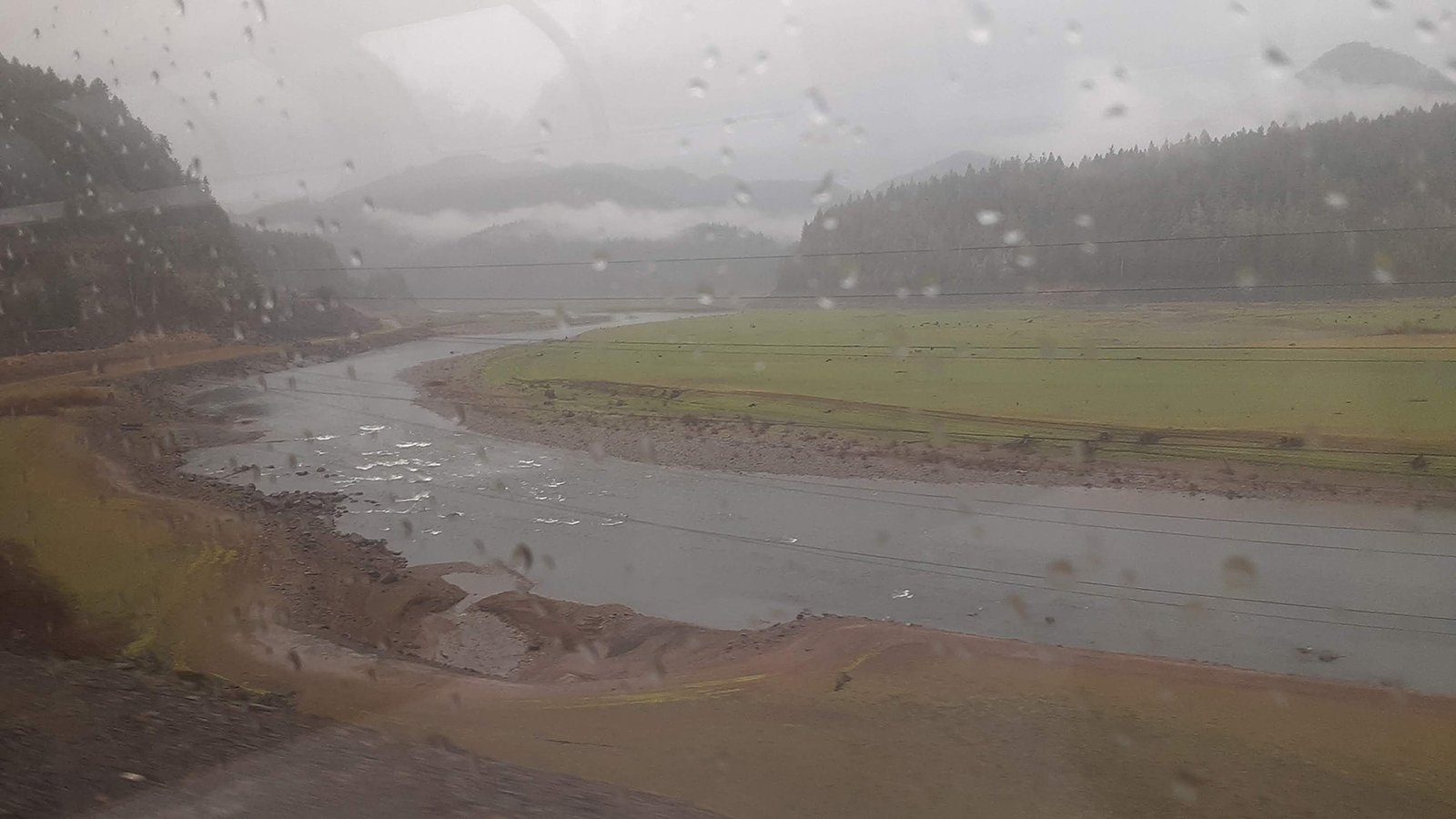
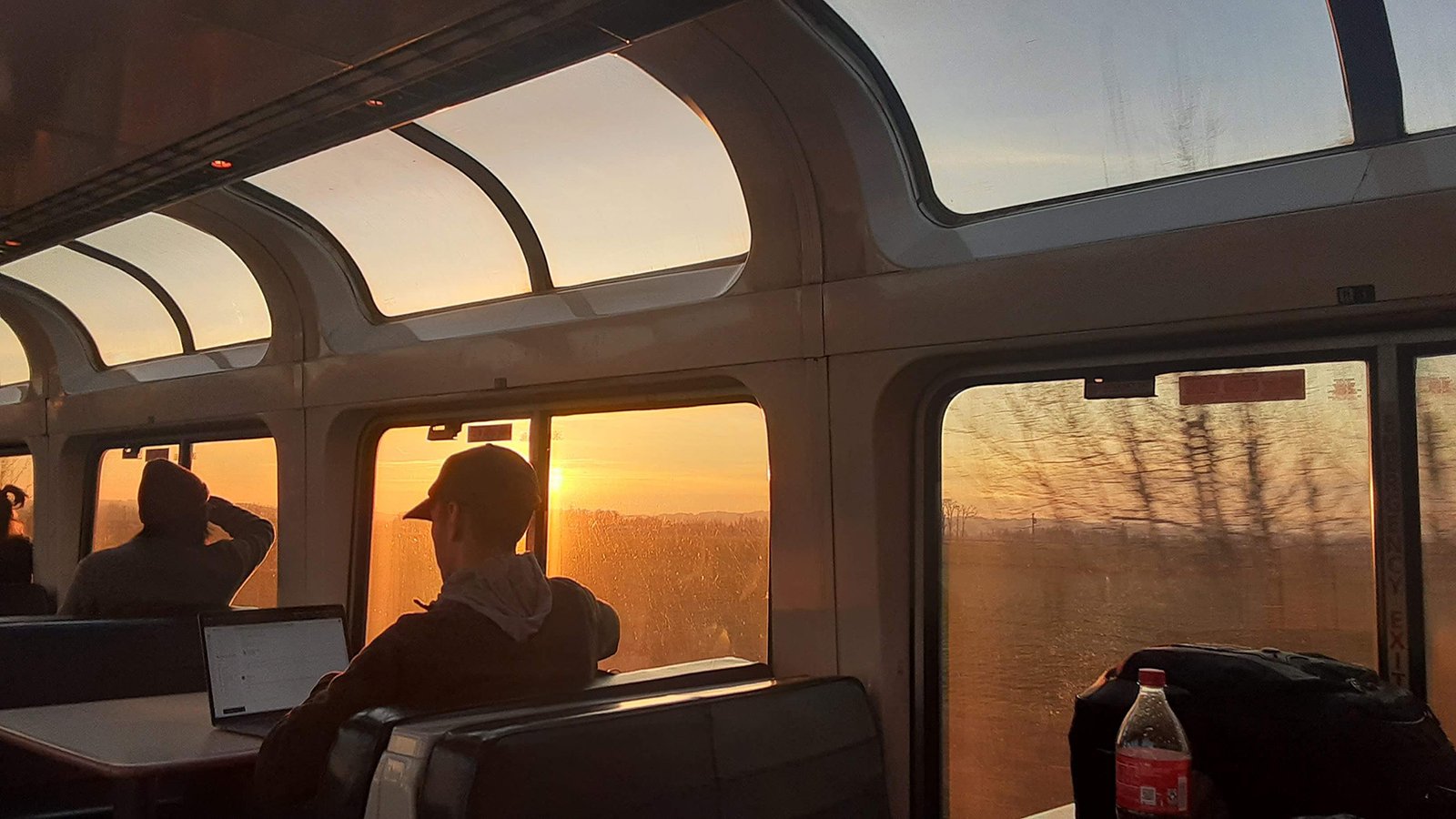
The following day is well spent in the observation car enjoying the views. You go through some beautiful forests and next to rivers far from the highways. The view of Mount Shasta is glorious.
We’ll get there when we get there. My proposed tagline for Amtrak
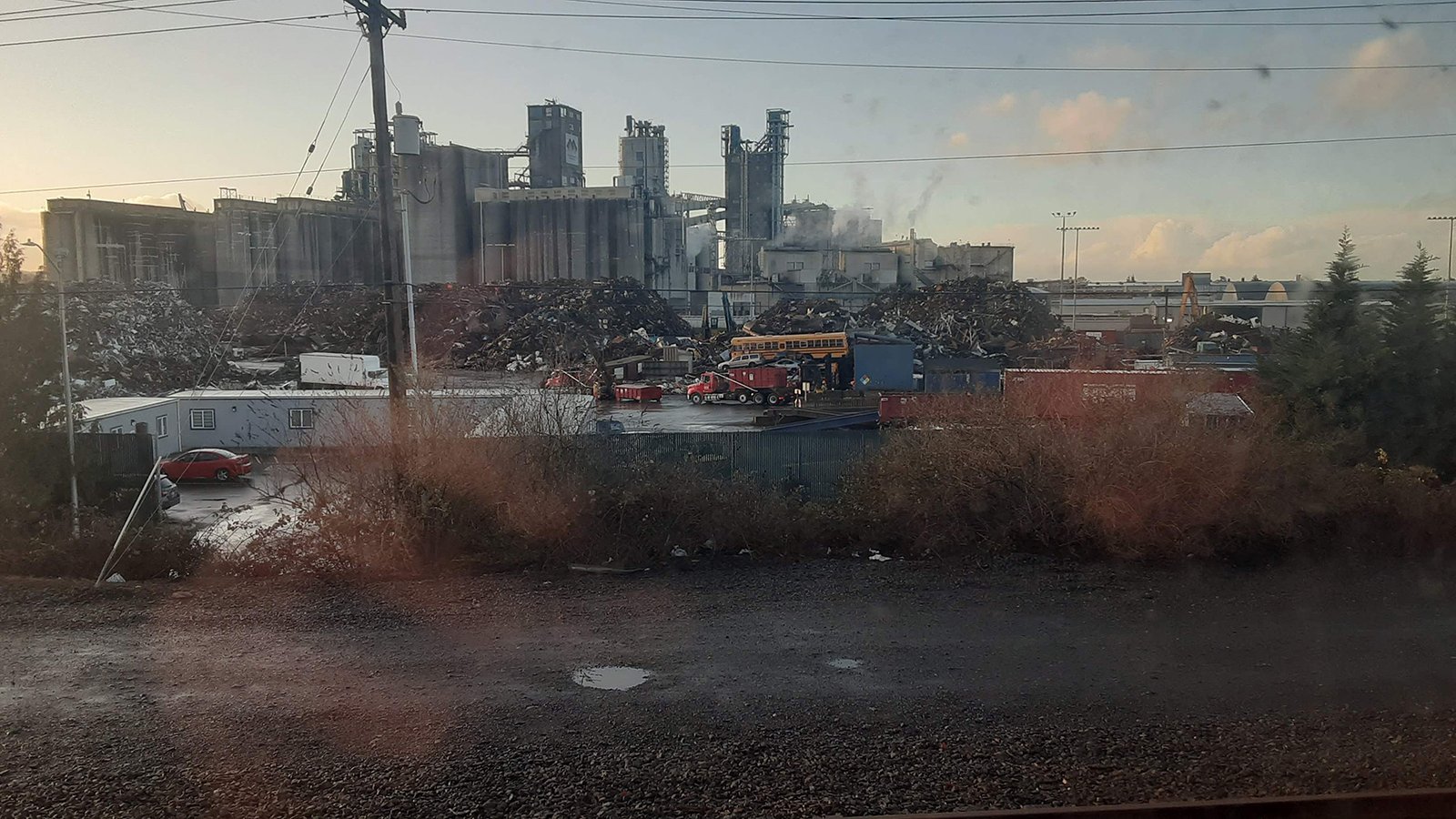
Amtrak overnighters in coach are not for the faint of heart. The food is a snack bar missing half of the menu items. The fellow passengers are always an odd sort. However, the views of rivers, mountains and lakes make it all worthwhile. Even the scrapyards, car junkyards, trash-heaps and way too many homeless camps along the rivers are intriguing. Eugene, Oregon looked particularly depressing. Goodnight America, how are you?
Mount Shasta
In the observation car. The gentleman in the front usually “rides freight” but evidently upgraded to Amtrak. He seemed to be the ghost of Woody Guthrie.
Klamath Falls
Eugene, OR
Portland, OR
Scrapyard
After the Amtrak I took the Seattle rail line to Northgate.
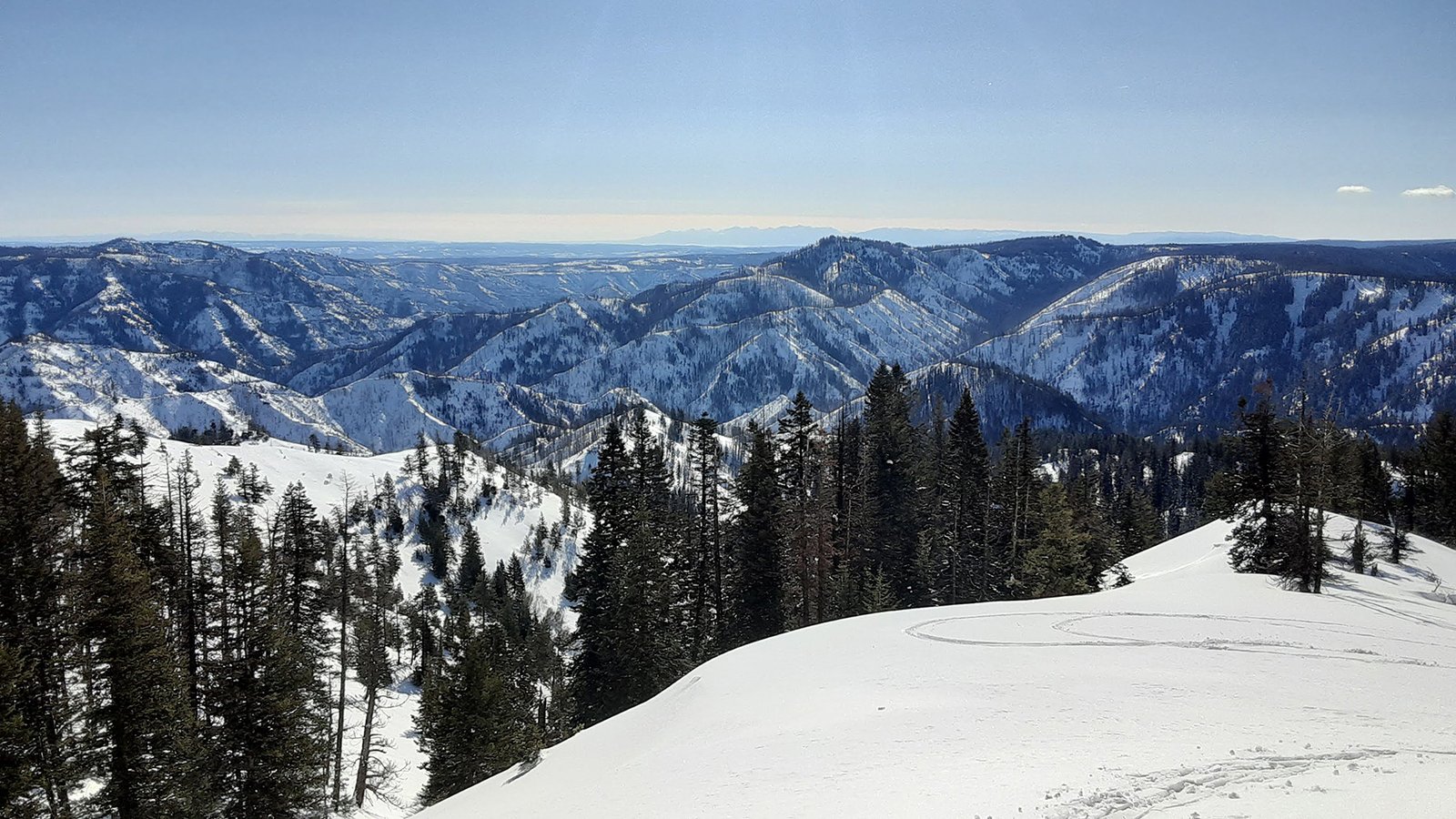
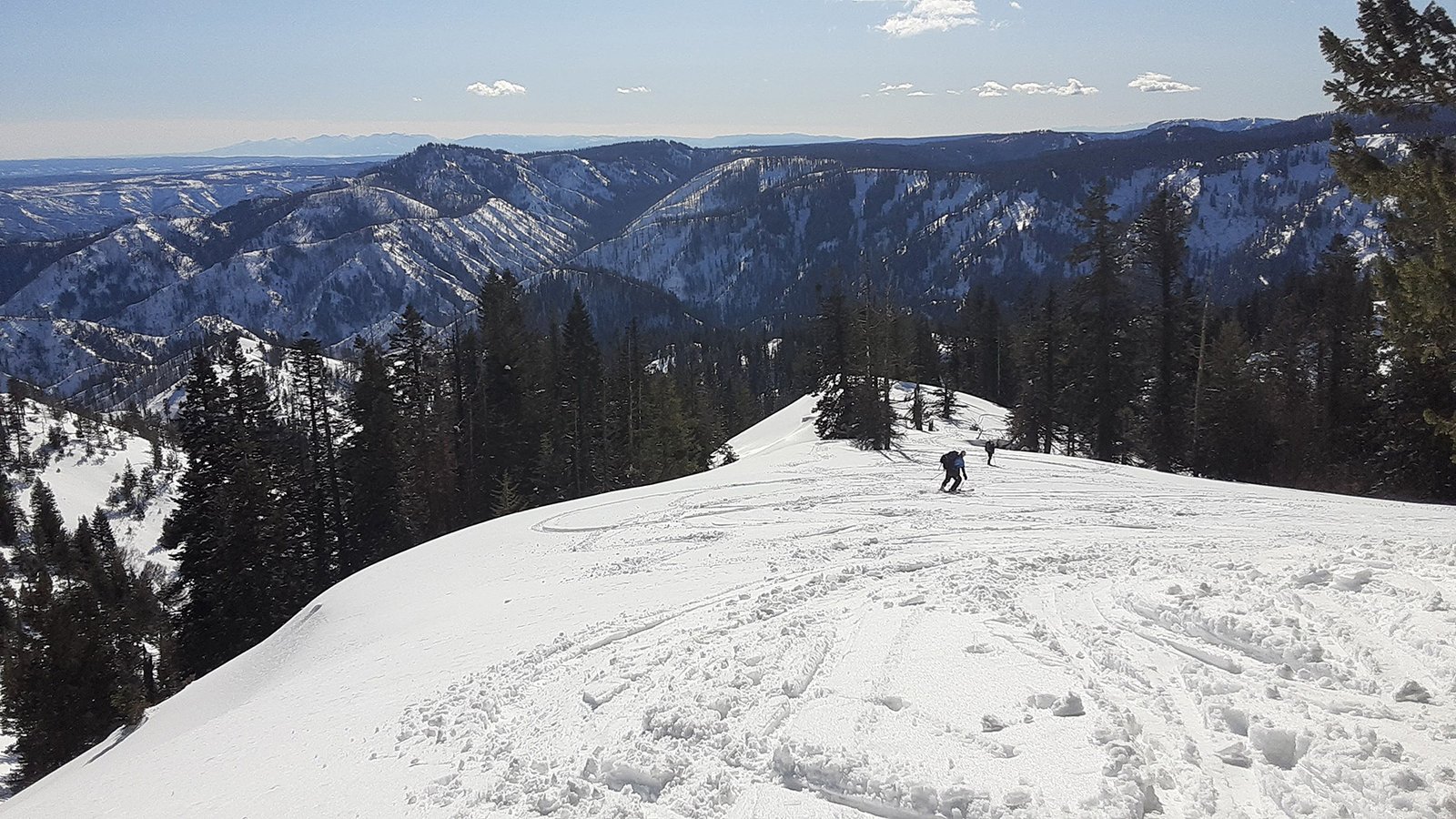
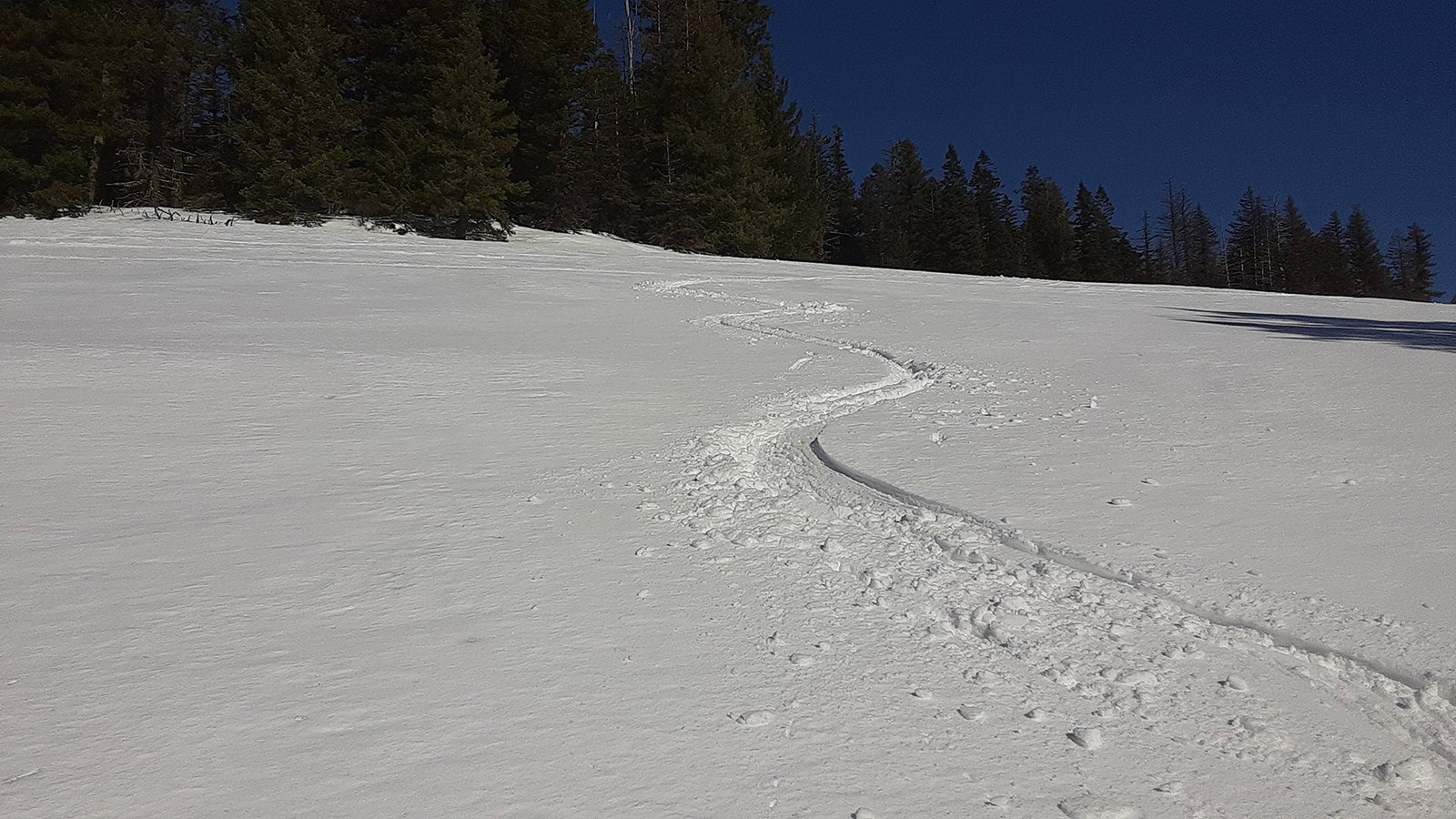
Of course when you get to Washington, the exploration options expand. I took the train in February 2023 to meet up with a backcountry ski party.
If you look in the distance to the right you see the Wallowa National Forest where the Nez Perce lived for at least eleven thousand years. It is now in the state of Oregon. To the left is what I think are the Sawtooth Mountains in Idaho. Incredible views and open space.
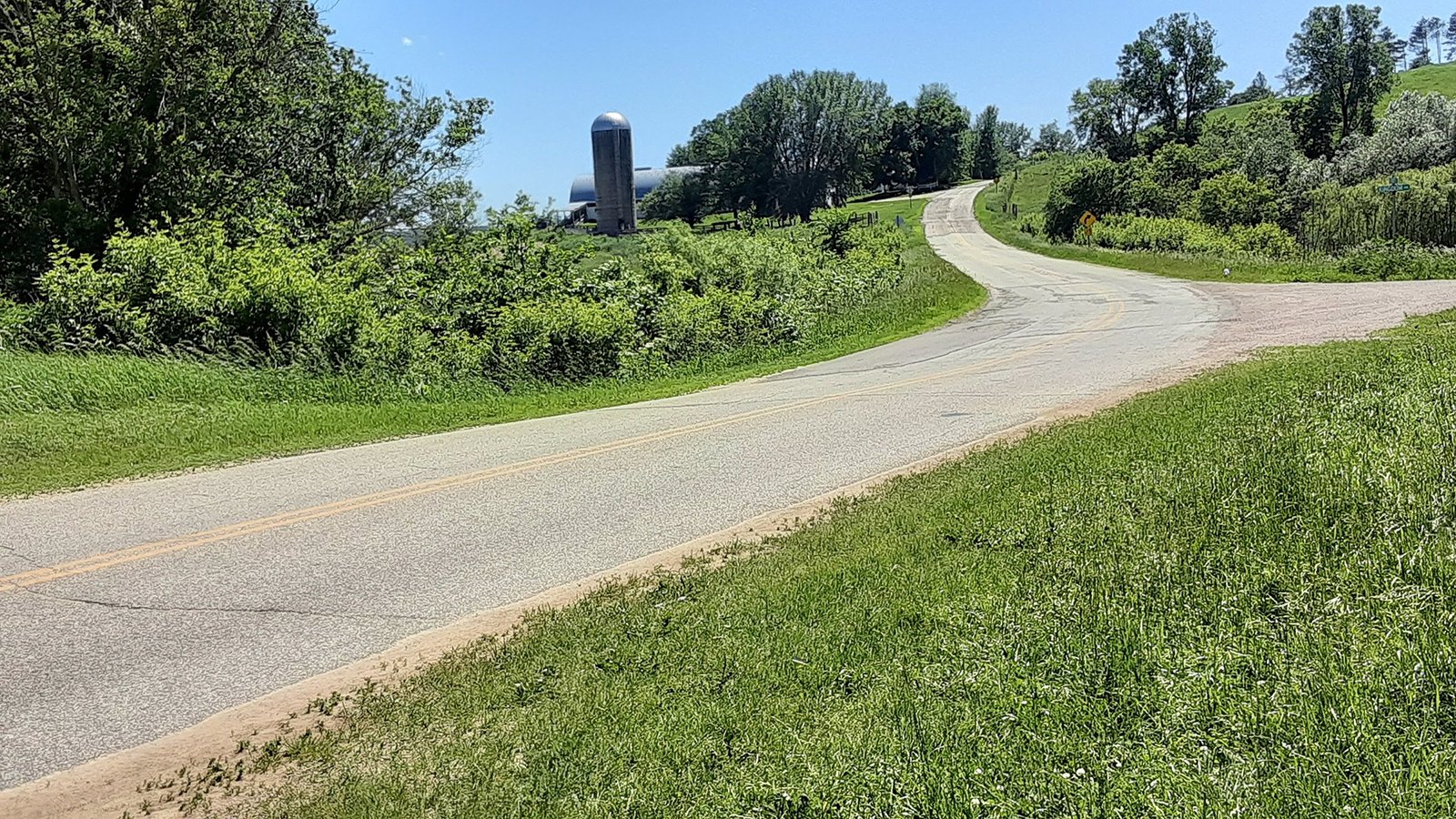
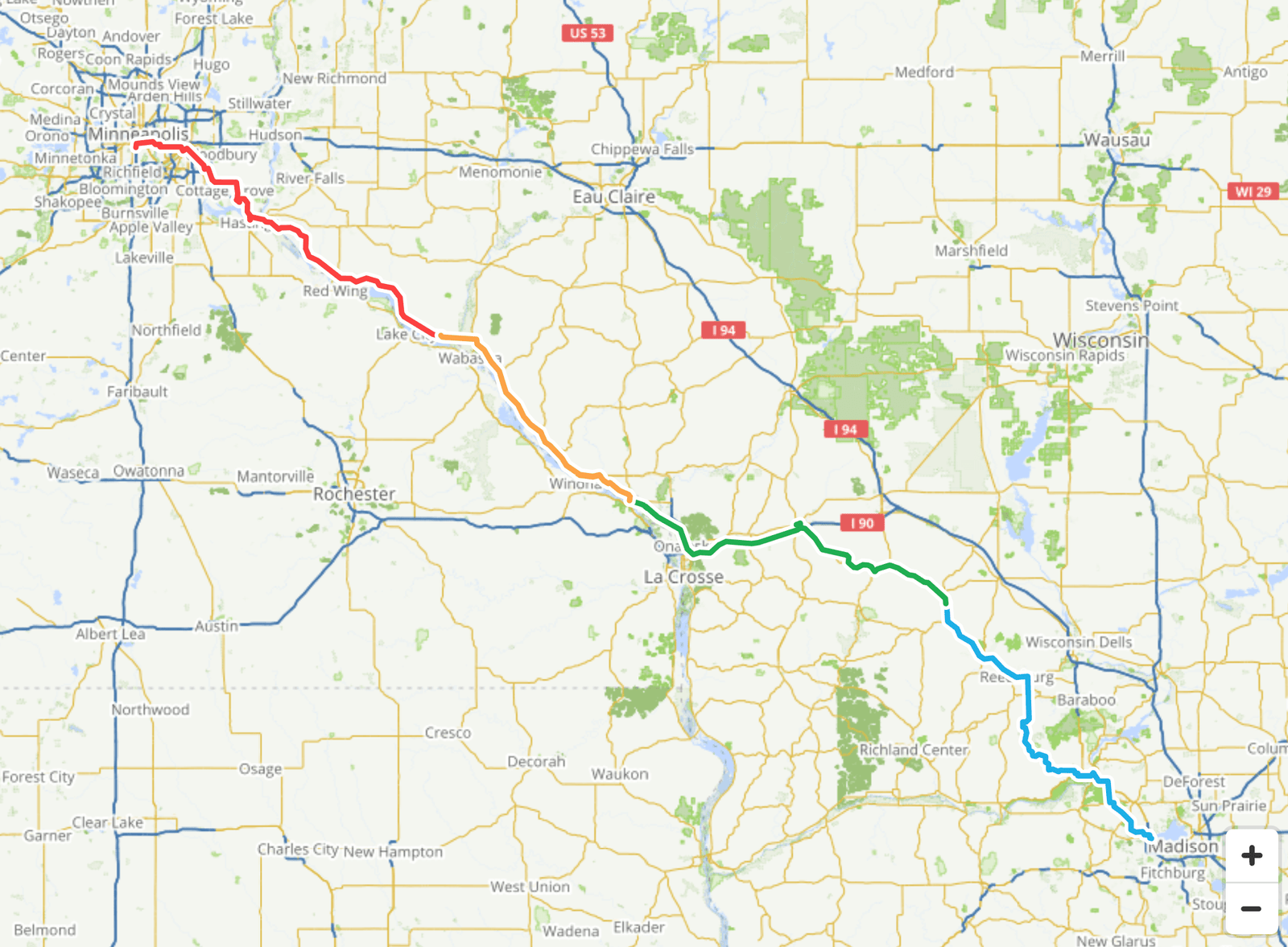
When you do something twice it could be considered a habit or maybe just an eccentric variance or probably, in my case, just plain craziness. Being the crazy person I am, last year in 2021, in order to visit relatives and avoid Interstate 94, I biked the awesome 300 mile, four-day bike trek from Minneapolis to Madison and had so much fun I decided to do it again in 2022. The ride along the Great River Road and Highway I35 has a wide shoulder and is full of beautiful views of the Mississippi River. Once you hit the town of Marshall be ready to catch the rail-to-trail bike trails. These run over a hundred miles all the way to Reedsburg. After that you weave your way past Baraboo to Sauk City and then to Middleton and Madison.
This year I saw a few more long distance bicycle trekkers. There were a lot more cars and trucks on I35 than in 2021 as the ending of the pandemic made it so people were out driving. The trucks on I35 were a bit precarious and belligerent so if you ride this route keep an eye out for the big rigs.
Trempealeau Hotel
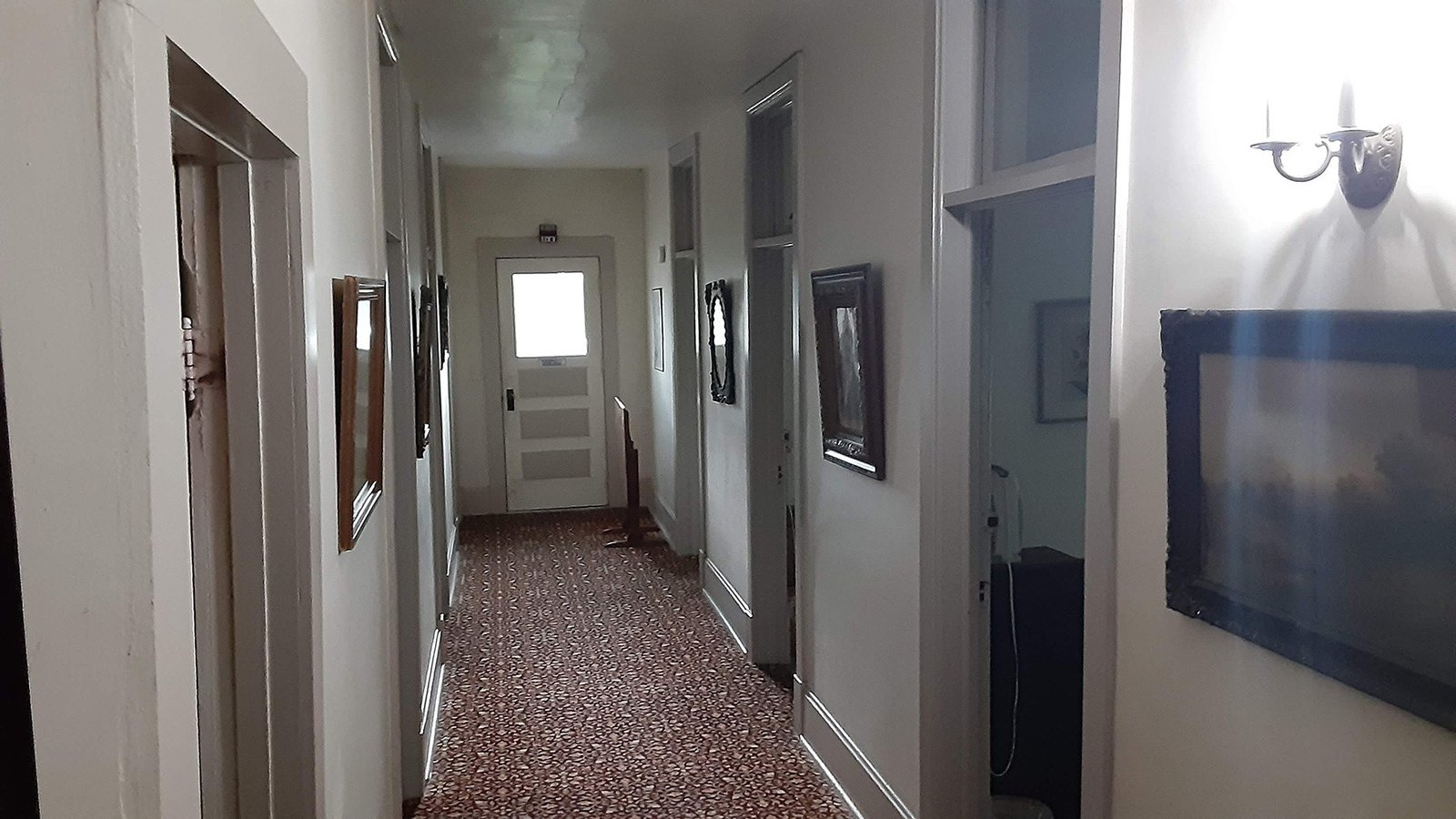
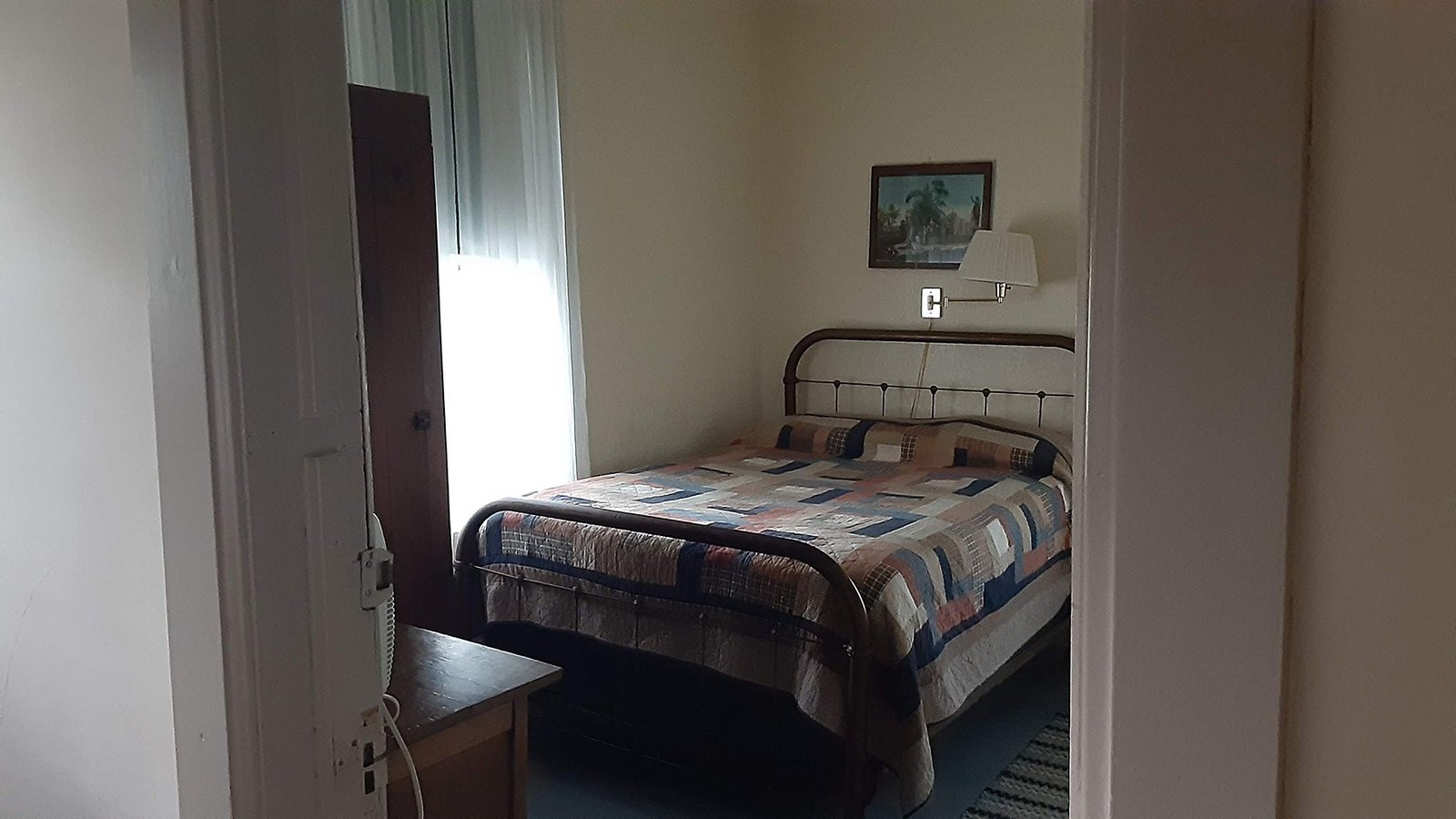
A new discovery was the historic Trempealeau Hotel where I spent two nights, the second waiting out the thunderstorms. Excellent food and a friendly bar. I even caught a local jam session on Tuesday night. When I stayed the historic rooms were only $50 a night which came with a shared bath. There was only one other room with guests so I basically had the place to myself. Big thanks to Amy and the staff who greeted me with a few pints of cold ice water after a blistering 95 degree ride from Pepin. I will definitely be back!
Day 1
Minneapolis to Pepin
Day 2
Pepin to Trempealeau Hotel
Day 3
Day off to wait out the storms in Trempealeau.


 William Finnegan’s – Barbarian Days: A Surfing Life is a memoir. It is mostly a true story of a life where the common thread is surfing. Finnegan grew up in Southern California and Hawaii and at one point when he was just a grom the waves were not far from his family’s humble house near Diamond Head, Hawaii. He took to surfing at a very early age and though he does not admit it, became a big wave surfer, riding huge waves on the North Shore of Oahu, Ocean Beach in San Francisco, discovering a wave in Fiji and later in life, Portugal. When he was a young teenager he began to experience the power of the ocean.