For a limited time, Trump Enterprises, LLC is offering something no one can possible refuse: Trump Afterlife Insurance. Have you ever worried that when you get to heaven, all those days toiling away, flipping burgers, answer the phone, driving a truck ten hours a day, doing the hard work of trading stocks or crypto would leave you nothing when you get to the pearly gates? WORRY NO MORE!
Now with Trump Afterlife Insurance, you can rest assured that all that hard-earn loot can follow you to heaven. Stocks and bonds? Gold and other precious metals? No problem. Even crypto will still be yours for eternity. No believing some strange, loser communist crazy guy with a beard, who looks like he never showers or gets out of his pajamas anymore – and you do not even have to go to church on Sundays!
Take it from me, Donald, THE BEST PRESIDENT EVER, not some loser who ended up impaled on some two by sixes from Home Depot. Trump Afterlife Insurance gives you the peace of mind, that when you leave this world and go to the next, all your hard-earned money will still be yours. Now, you can take it with you!
DON’T DELAY!
Send $999.95 this moment to make an investment that will last for eternity!
PLAN LEVELS:
Trump Afterlife Insurance Gold Super
$999.95 sign up fee
$99.95 monthly dues
Free signed DT poster
Guarantee, that if you, by some administrative error, end up in hell, you get to still keep your money
Trump Afterlife Insurance Silver Super
$999.95 sign up fee
$99.95 monthly dues
No hell guarantee and no poster
Trump Afterlife Insurance Bronze MAGA
$499.95 sign up fee
$49.95 monthly dues
No hell guarantee and no poster
Proud Boys will get 20% of your income to make sure you are safe from non-white folk
English speaking representative will be available by phone to discuss further details
Guaranteed for all MAGA supporters and U.S. citizens who voted for Donald Trump. Not available in Puerto Rico or certain communist parts of California or Maine. Results may vary. The whiter your skin, the better your odds of full redemption.
Emma Lyons contributed to the writing of this post. Thanks Emma!
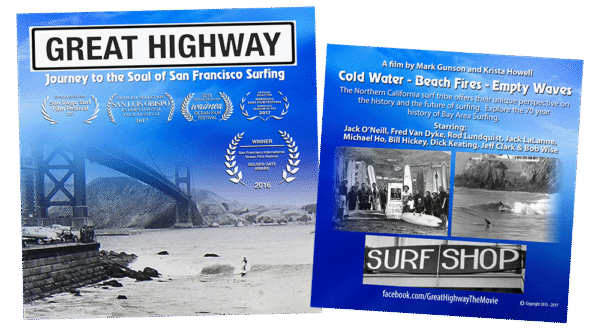
Great Highway traces the roots of Bay Area surfing and explores the changes that time reveals. The history is told by those who lived it in the freezing cold Bay Area conditions. Starring Jack O’Neill, Jack LaLanne, Fred Van Dyke and Michael Ho. The local surfers of Northern California are full of character, and offer their own perspectives on the history and the future of surfing.
Great Highway: Journey to the Soul of San Francisco Surfing is a documentary film about surfing in San Francisco. You can read more about the movie at https://www.greathighwaymovie.com.
What makes the movie all the more valuable and entertaining is that it is not just about surfing, but really about the history of San Francisco, especially on the west side of town. It goes back to the nineteenth century and takes a geographical perspective on Yerba Buena. Eventual, it focuses on what was called The Outside Lands, the sandy desolate place out by the ocean that is now called the Sunset District. We get a view of the various scrappy settlements that took hold out there including Carville, which was made of reused abandoned horsecars (horse-drawn trolleys) and, later, cable cars for housing and public buildings. You get to romp through the period of the heyday of Adolph Sutro’s Sutro Baths and the massive Fleishhacker Pool where now the San Francisco Zoo is located. Eventually the salt water of the ocean had its way and these public places are long gone, though there is still a good left exactly where the Fleishhacker Pool bathhouse once was and old timers still call it Fleishhacker’s. The bathhouse eventually did burn down.
The actual Great Highway was built in the 1929. The movie then romps through grainy footage and interviews of the various surfers who braved the cold water and surfed without wetsuits on crude, homemade boards. It highlights the rebel nature of these early surfers. a persona that interestingly has sort of disappeared as surfing has become more mainstream. The audacity of people like Fred Van Dyke, Bill Hickey, Bill Bergerson and Rod Lundquist to name but a few who broke trail, surfing without wetsuits in the frigid Ocean Beach waters. The movie goes on to talk about the wool sweaters, the fires on the beach and Jack O’Neil inventing the modern wetsuit. The movie has a very raw, low-budget appeal, just like the early days of the sport. It was timely that the film came out in 2017 as many of the old timers that were interviewed have now passed. Their recollections and candor are awe-inspiring. A great movie for people of all ages.
The Quarterly Report: A brief synopsis of the news in San Francisco over the last three months. You are now reading “Slow News That Doesn’t Break” – the exotic internet.
Weather
April turned into May and now it is June. Summer in San Francisco has begun. Along the coast you often have a marine layer, otherwise known as fog. This marine layer will sometimes burn off in the afternoon and then we get the strong onshore northwest winds. It is a time for morning walks and afternoon kiteboarding. The surf season is pretty much over until the fall as most days the ocean is blown out. If you are visiting San Francisco, bring a light jacket and layers, maybe even a beanie. Summer is great time of year to walk along the Embarcadero or better yet to visit wine country where it is much warmer. If you have more time, head to mountains and enjoy the streams and lakes.
Sunset lighting San Francisco City Hall
National Politics
Nothing to report on the national politics front that you probably do not already know. The news cycle is manufactured for the attention span of gnats. The current president is a cunning and treacherous man (pay not attention to that strange man behind the curtain). His weird notion that raising tariffs will bring back manufacturing is silly and naïve and more of a marketing play for some nostalgic bygone era. In the twentieth century, the growth of U.S. manufacturing was a decades-long process. We have sold all the manufacturing equipment to Mexico, China and Brazil (Punching Out – One Year in a Closing Auto Plant by Paul Clemens).
Matt Stoller in his Newsletter Big illuminates this slow news quite well.
In truth, America’s vast productive capacity was built on skill with machine tools, which are the specialized tools that cut, bore or bend metal. In the 20th century, it was America’s capacity to create factories that sparked the “arsenal of democracy,” and America led the world until the 1960s in machine tooling. We were a high productivity and high wage nation, and the basis was a fierce competitive drive to pull out costs in production as aggressively as possible, using our ability to wield machine tools creatively and cheaply. China Is Not Why America Is Sputtering – Matt Stoller on Substack
In the 1980s, the United States economy moved to finance and transferred power to Wall Street where the easy money is had and the people in power could make a quick buck. All the major industries: housing, healthcare, pharmaceuticals, banking, transportation are controlled by Wall Street. It is but a financial game where the oligarch leaders are the casino dealers and they get to count cards. Sorry for the buzz-kill Donald. Tariffs will simply be a tax on mostly poor people. Price inflation on consumer items will be the only result. The factories are not coming back. We are truly living in the Age of Delusion.
What is really happening, if one looks at the larger picture, is that we are in an economic state of Technofeudalism as outlined in Technofeudalism: What Killed Capitalism by Yanis Varoufakis. Big data now dominates our lives and we are unknowing serfs volunteering our time and energy for the oligarchs who rule the day. Pretty fair assessment. Yanis Varoufakis solutions are a bit overidealistic and impractical, but his birds-eye view of our modern economy is right on. Very chilling.
Another of Donald Trump’s deplorable initiatives is deporting migrants, many whom are in the U.S. legally, and most who do not have a criminal record. Most are here to simply work, make $15-$20 an hour and send some money back home. This is all more than ironic as Mr. Trump is a convicted felon. Our supposed free press has done a deplorable job investigating Trump’s businesses hiring practices. It is common knowledge that people who do the grunt work in hotels, real estate and golf courses are often recent immigrants, often undocumented and living in the shadows. Where are you New York Times and Washington Post? It’s pathetic.
Local Politics
When you visit San Francisco this summer, you may be surprised that there are less unhoused people on the streets. Major Daniel Lurie has done a fine job getting them out of Civic Center, 5th Street and Market Street areas. Often times they do end up getting services and he has been creating more beds. Sometimes the homeless simply move on to the next neighborhood. The Mission District around 16th Street has had a new influx of unhoused people. Indeed, they have made it five miles south of downtown all the way to the sidewalks of the Excelsior District where they camp out on a sidewalk with a fifth of something strong and a cardboard sign pleading for mercy. We have seen this playbook before. However, I do give Mayor Lurie credit. The Civic Center is free of tents and Park & Rec are there with some cool games to play.
Jerry Day in McLaren Park is around the corner on August 2nd
Sporting News
The Golden State Warriors made it to the playoffs but were trounced by the Minnesota Timberwolves. Steff Curry was injured. the team is getting a bit older and without the usual depth. As the saying goes: you can’t win them all.
AT&T Park where the SF Giants play
As of this writing, the San Francisco Giants are playing well and just 2.5 games behind the Dodgers in a tough Western Division.
Author Paul Lyons and Trumpeter Luis Gasca (85 and still doing it)
Road Repairs, Parking Tickets, Do Not Parks Signs and Other Treacherous Endeavors
I recently had to get a new set of tires after just four years for a car that rarely leaves San Francisco. Many of the roads in San Francisco are terrible. This is especially true in the less affluent parts of town.. The City tries but it is odd that high-traffic streets like Mission Street get very little love (this was once the “royal highway” where the early missionaries first traveled). It must be pretty high maintenance for the 14 and 49 Mission buses that bounce their way down the El Camino Real. Below are some of the photos of the roads that I took without even trying. There are worse spots on Mission Street. No bueno!
Mission Street in San Francisco in need of repair
Mission Street in San Francisco in need of repair. You could lose you a child down there.
Mission Street in San Francisco in need of repair
Mission Street in San Francisco in need of repair
That is The Quarterly Report – June 2025
Some photos from the last few months.
The Farmer’s Market on Alemany. Where the real food is.
From Steve Leiner’s The Honest Truth Real Happenings Far Funnier Than Fiction
A woman’s car broke down at a stop sign. As she tried to restart it, the car behind her kept honking. The woman calmly got out, walked over, and politely asked the man at the wheel. “Sir, if you could help me start my car, I’d be happy to sit here and honk your horn for you.” – The Honest Truth: Real Happenings Far Funnier than Fiction by Steve Leiner
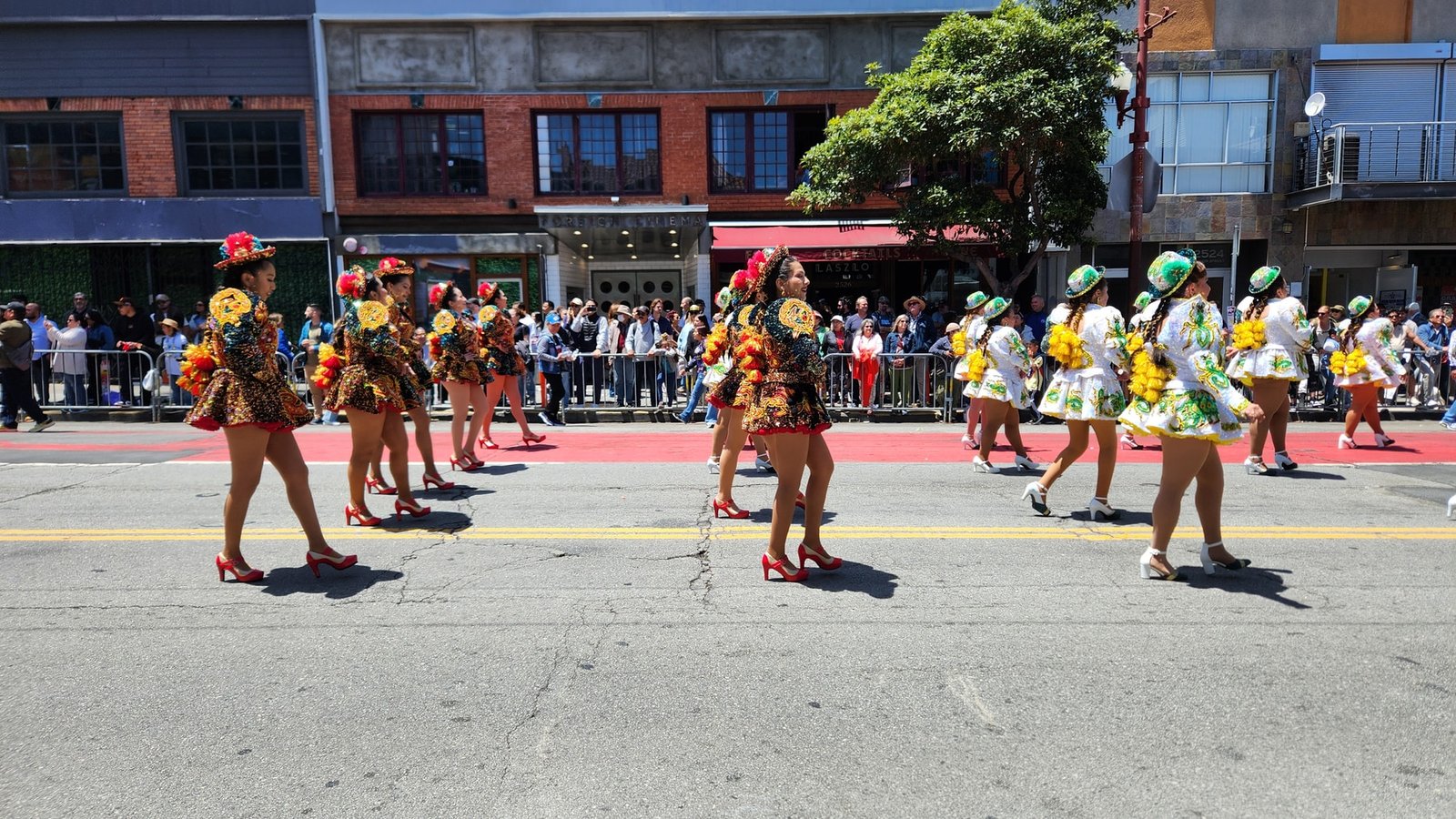
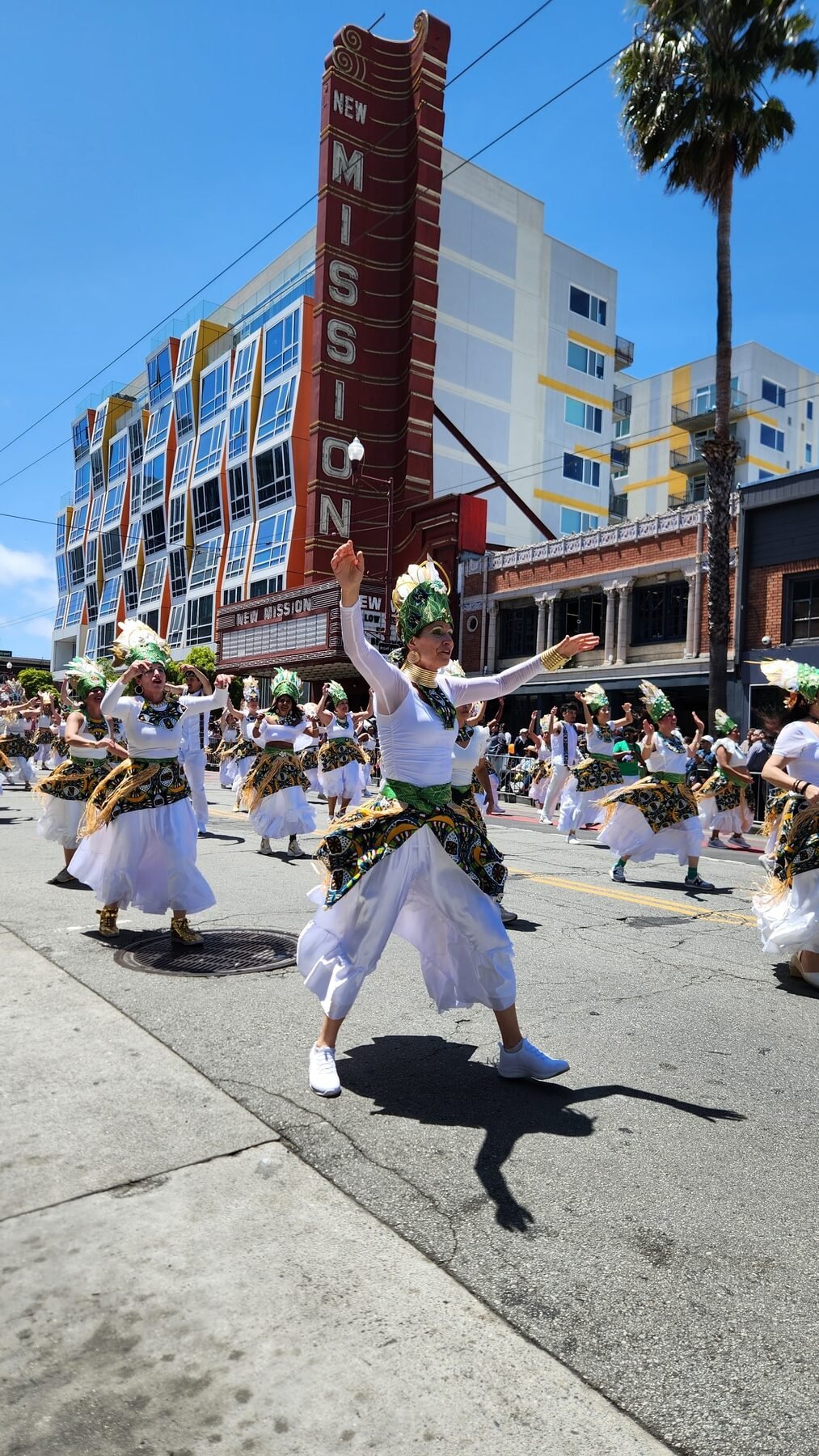
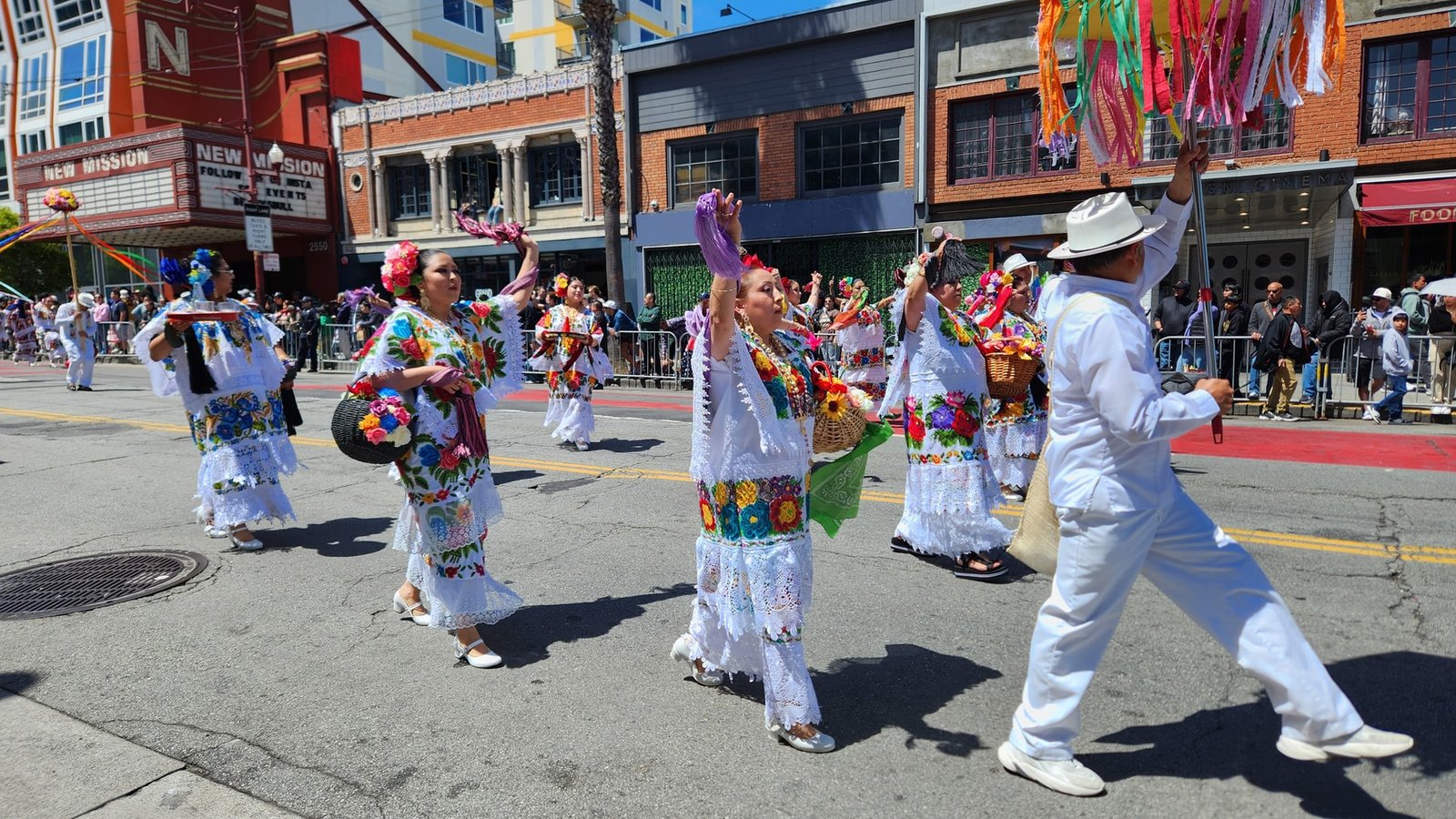
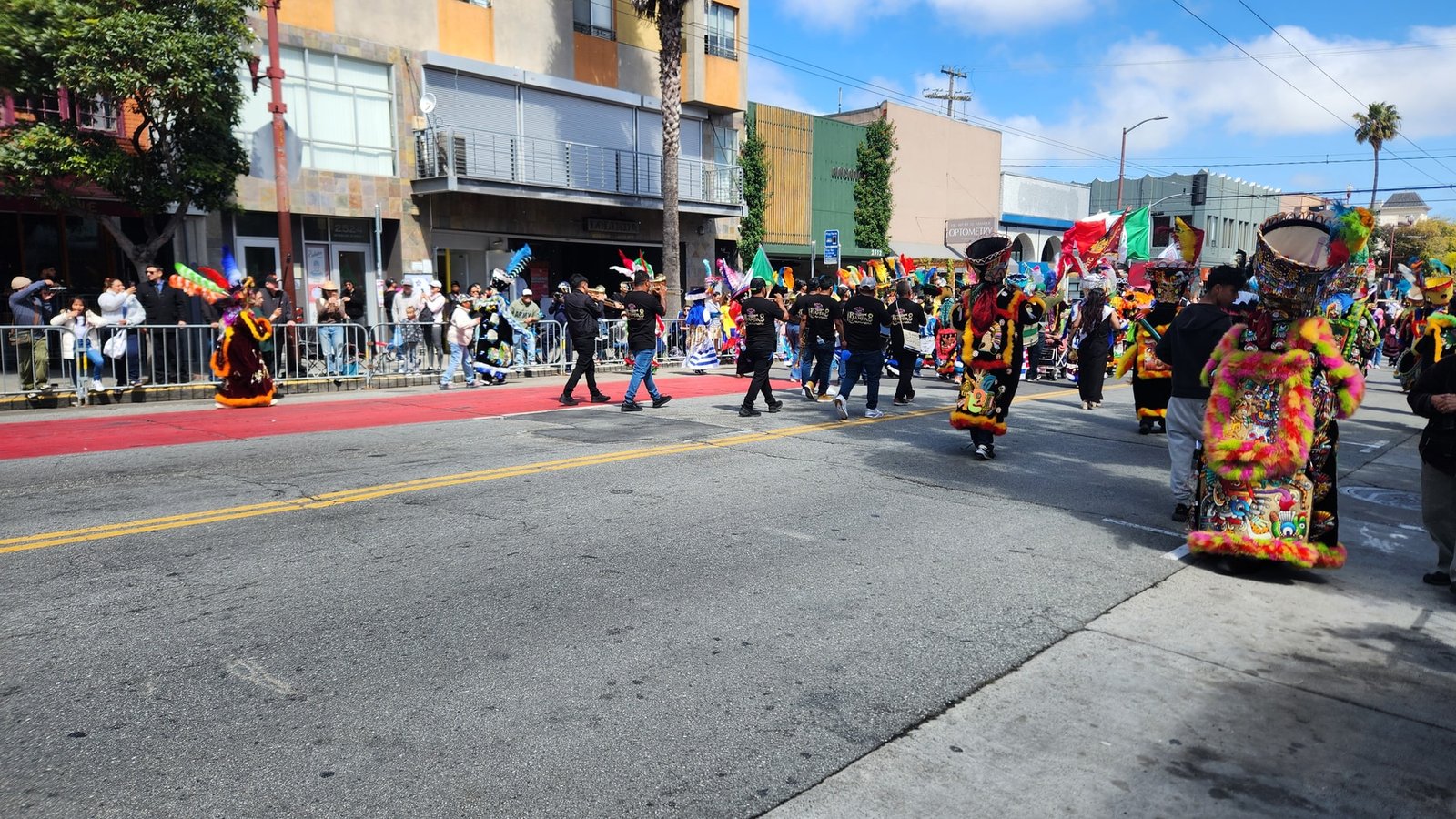
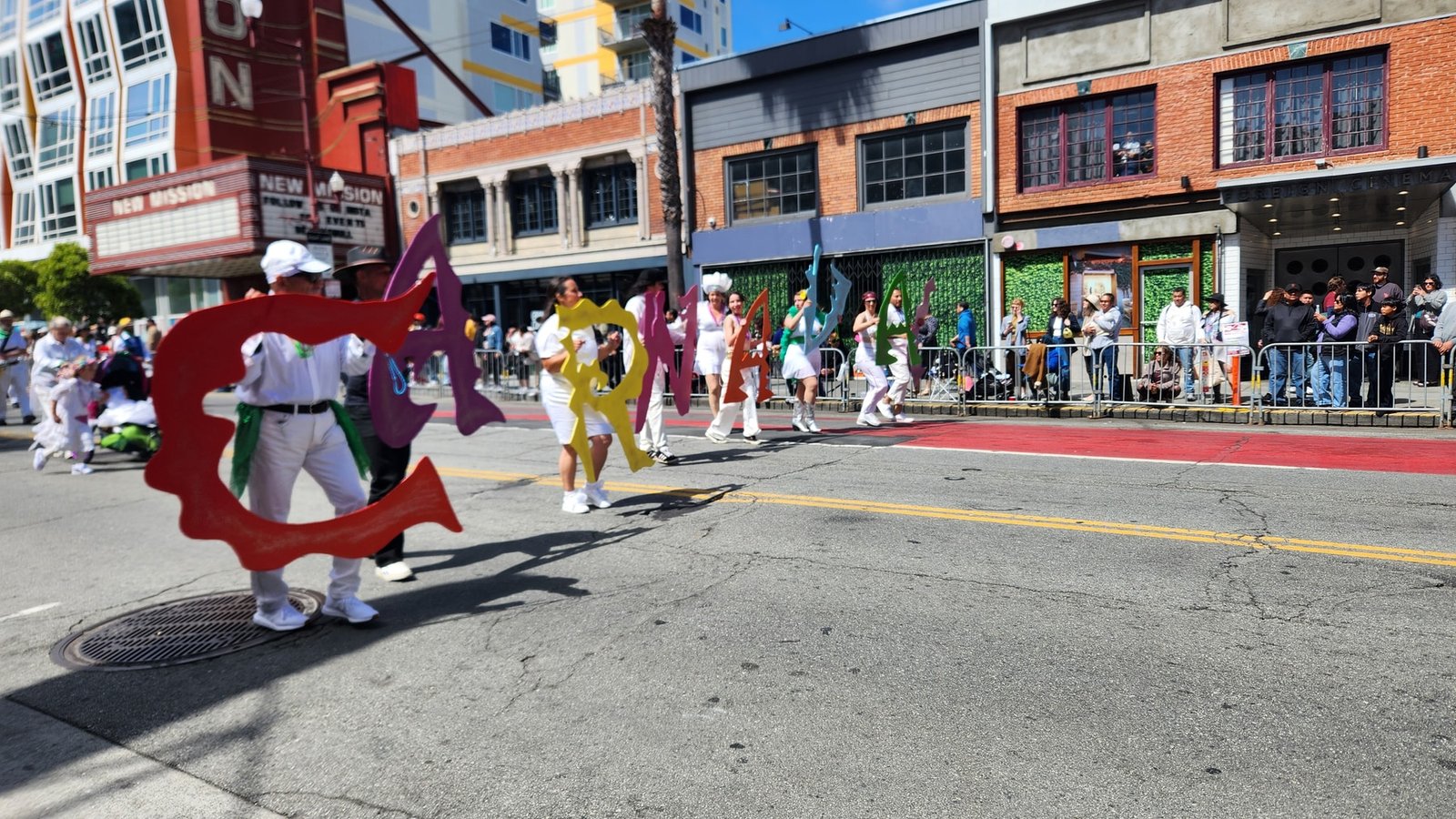
San Francisco Carnaval in 2025 took place on May 24 and 25. Both days were mostly sunny with strong westerly winds in the afternoon. I caught a little of the 17th Street stage on Saturday. Sunday we went to the parade. True to form, San Francisco Carnaval is an amazing display of the diverse cultures in San Francisco from the Latin American and Afro-Caribbean worlds – Mexico, Nicaragua, El Salvador, Brazil, Peru, Cuba, Bolivia, Puerto Rico, Trinidad. I am sure I missed some countries. It is festival and parade were there are no corporate sponsors. So refreshing! It is a once a year event not to be missed.
Lots of horns this year. Banda bands showed up!
Loco Bloco
Loco Bloco
Loco Bloco
Loco Bloco
Classic!
Recology, the garbage collectors do their thing.
Ray Martinez y Los OG’s playing the after-party and Blondie’s’s
Miguel Govea and Edgardo Cambon in a rare photo. Two outstanding musicians and band leaders
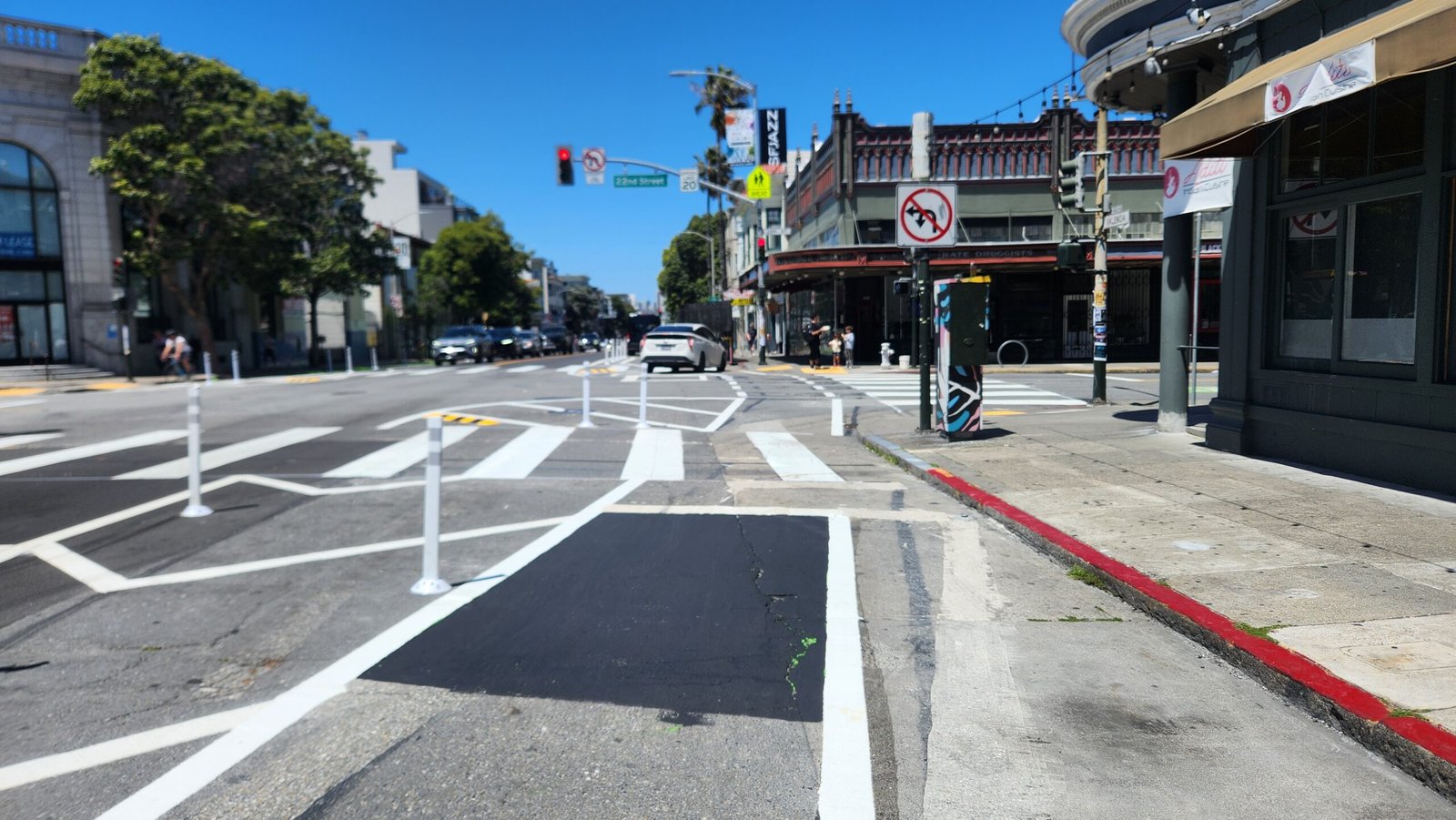
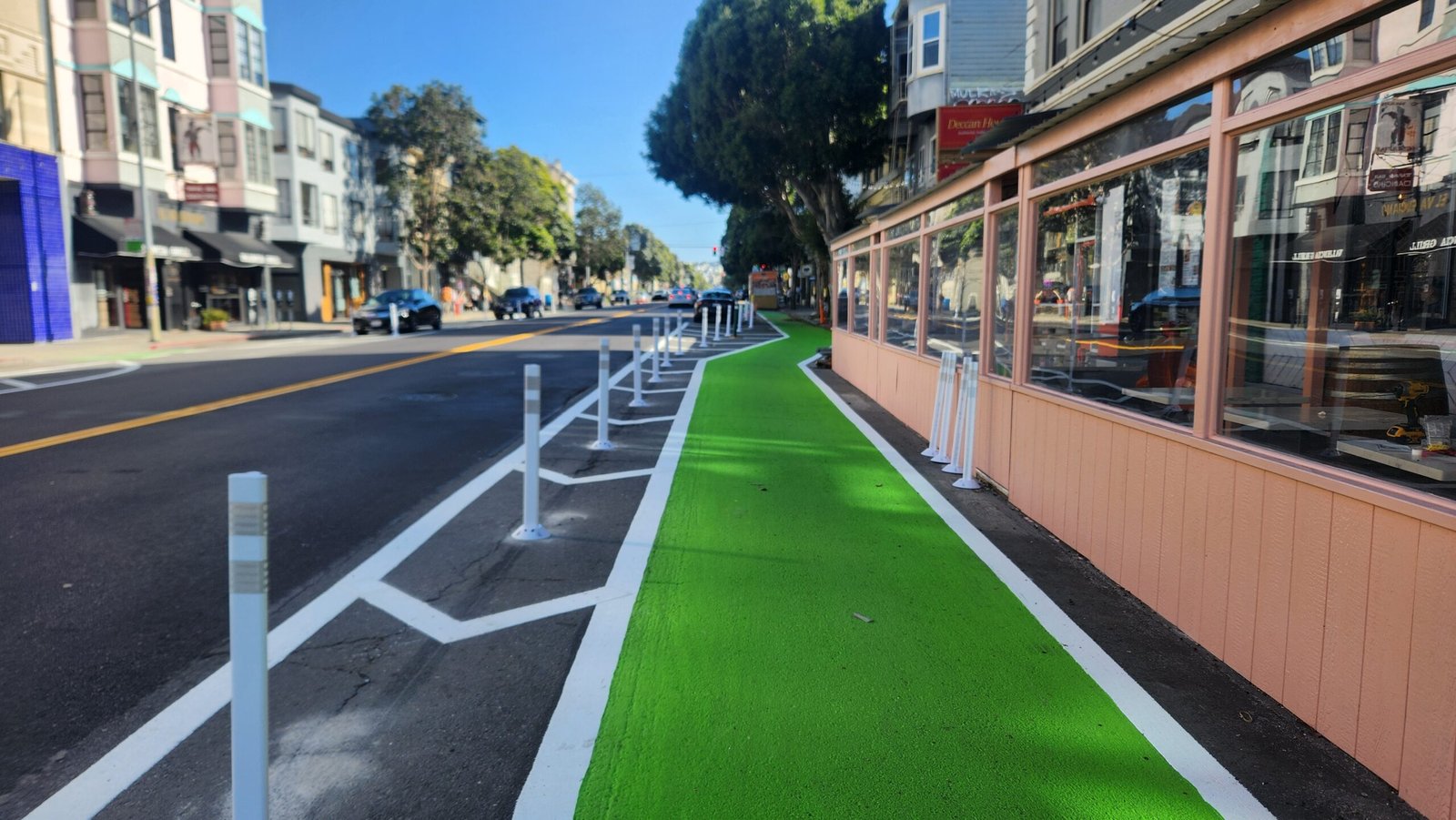
The Valencia Street Bike Lane Project is really pretty much done. They got rid of the ugly silly center lane earlier in March and repaved that part of the road with fresh blacktop. The bike lane now zig zags around parklets. Cars have to park further into the street (I like it how now car folks need to watch out for the bikes when walking to the sidewalk – the narrative is flipped). Also, there is plenty of space for cars to drop off people. This is the plan that I thought would work best a few years back. It is like how the bike lane was implemented originally at 14th Street. Bravo!
With the advent of the Great Highway closure and Sunset Dunes Park at the beach, San Francisco is becoming a fine bicycle town.
Cars are still getting use to the bike lane. This driver thought that green zone means that is where you park.Valencia at 22ndValencia at 21st. As bicyclists we are use to going around stuff.
Valencia Street Bike Lane looking south at 22nd Street
Valencia Street Bike Lane looking north at 22nd Street
“That is why, today, I am directing the Bureau of Prisons, together with the Department of Justice, FBI, and Homeland Security, to reopen a substantially enlarged and rebuilt ALCATRAZ, to house America’s most ruthless and violent Offenders.” Donald Trump = May 5, 2025, AP News
It never ends. The crazy, ridiculous ideas. Donald Trump wants to save the government money but at the same time wants to open a prison that was closed sixty years ago because it was far too expensive to maintain and run. He seems to have a fetish with incarceration. Someone should inform him that there are many famous prisons in California. For just one of his many offenses and felonies he could be locked up in say San Quentin. That has a ring to it. Or perhaps Folsom Prison where Johnny Cash made that famous album. I am sure they could round up someone to sing the Folsom Prison Blues while Donald lunches on some toxic thin gruel. But I always thought Rikers Island Jail in New York is the most appropriate. Like Alcatraz, it is an island and this way he could get easier visiting rights from the likes of Melania and other friends and family. Just saying.
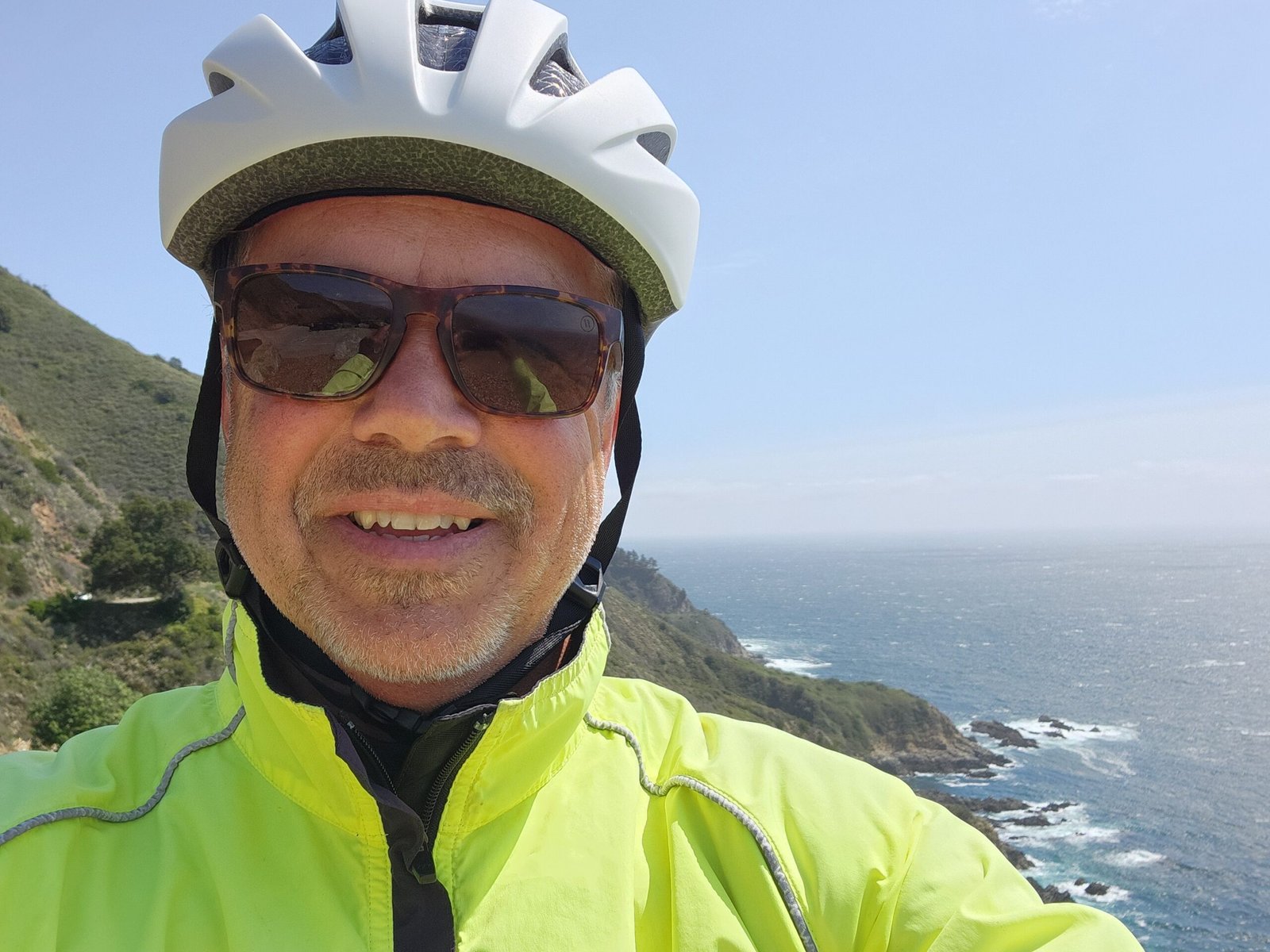
“The Henry Miller” is a bike trip that I did solo in late April and early May of 2025. I had always wanted to do this ride and get down to the Henry Miller Library along Highway 1, past Big Sur. The trip was encouraged along by a website page https://www.bestcoastbiking.com/san-francisco-to-big-sur. This website has the maps and itinerary. I followed the maps more of less but instead of Big Basin Redwoods State Park on the first night I stopped by my friend’s place in Boulder Creek. Julie, the sister of a high school buddy and her husband Al were great to get to know and hang out with. Thanks for the awesome dinner!
“The language of society is conformity; the language of the individual is freedom. Life will continue to be hell as long as the people who make up the world shut their eyes to reality. Switching from one ideology to another is a useless game. Each and every one of us is unique, and must be recognized as such. The least we can say about ourselves is that we are American, or French, or whatever the case may be. We are first of all human beings, different from one another, obliged to live together, to stew in the same pot.” – Henry Miller from “Stand Still Like the Hummingbird”
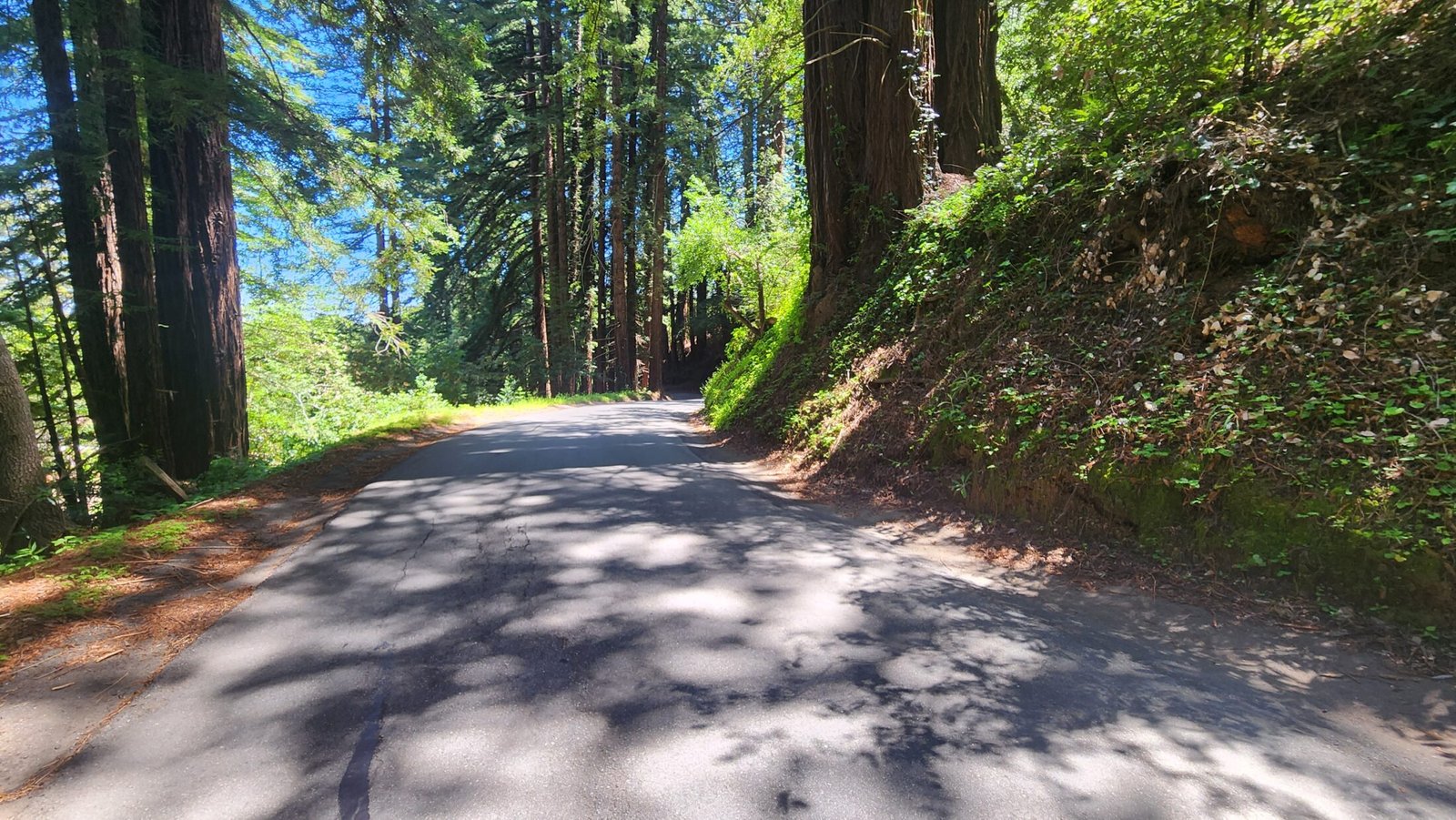
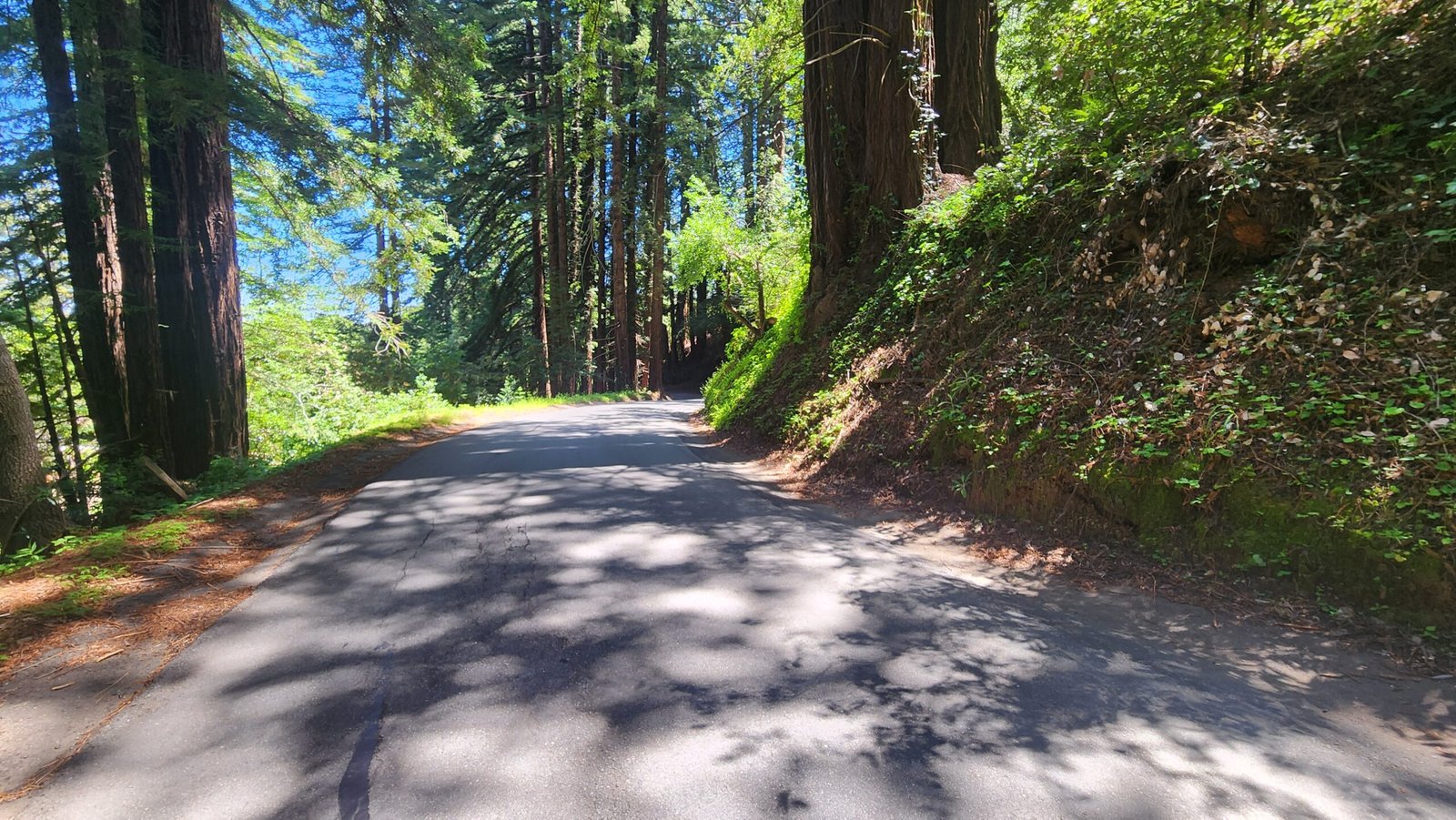
Some of the riding highlights are the first day’s climb out of Woodside up the Old Honda Road. This is 2000 feet straight up an old wagon trail through the redwoods. More bikers than cars do this maniacally climb. Once you reach Skyline Blvd you take a sip of water and have to climb another thousand feet. Light traffic and a good route when the coast is fogged in. Very wild with many nature preserves.
Old La Honda Road
The traffic from Boulder Creek to Santa Cruz is a bit nasty no matter what route you go. Highway 9 for a lot of it with a few backroad detours. Once in Santa Cruz the bike paths are many.
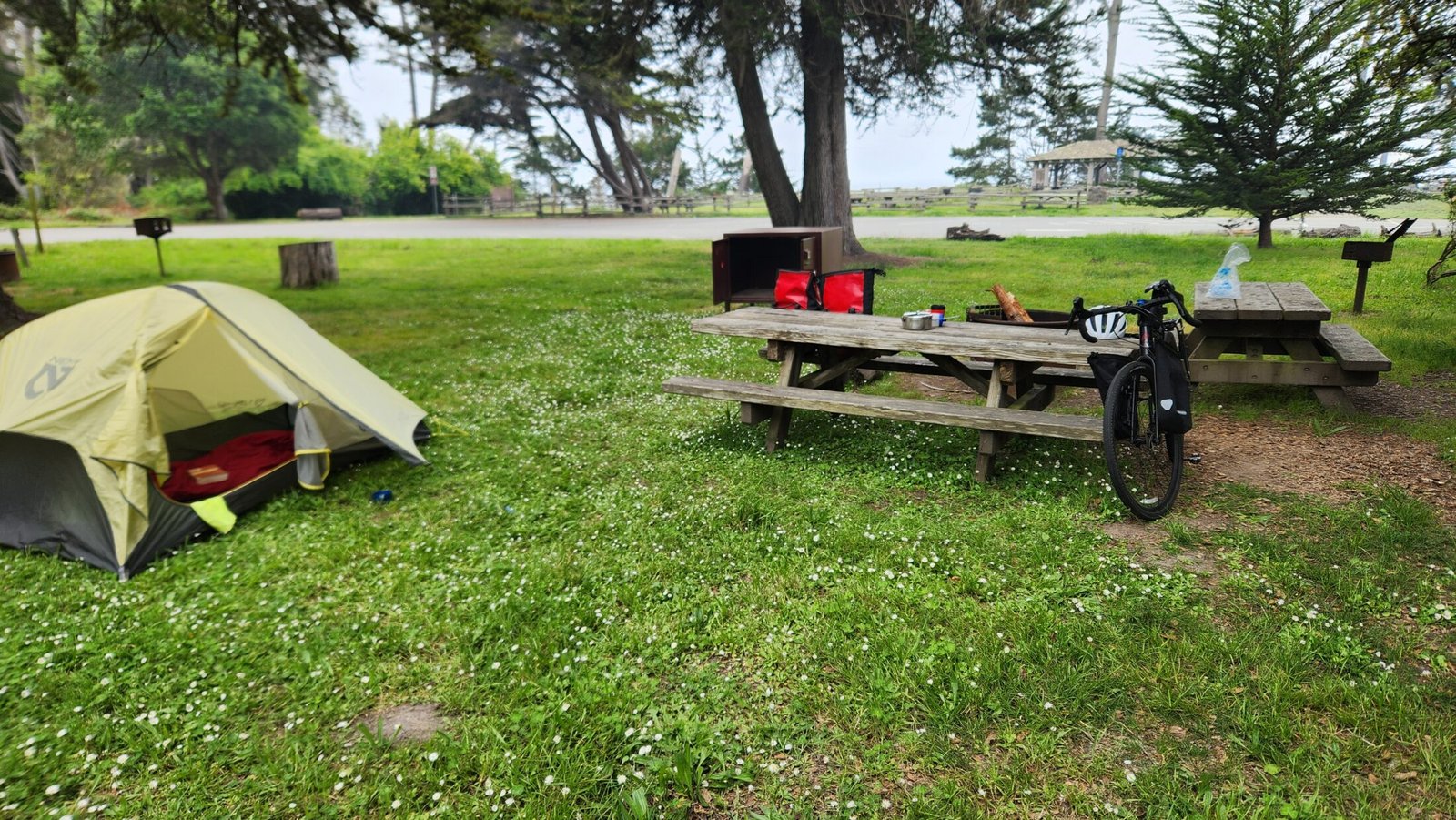
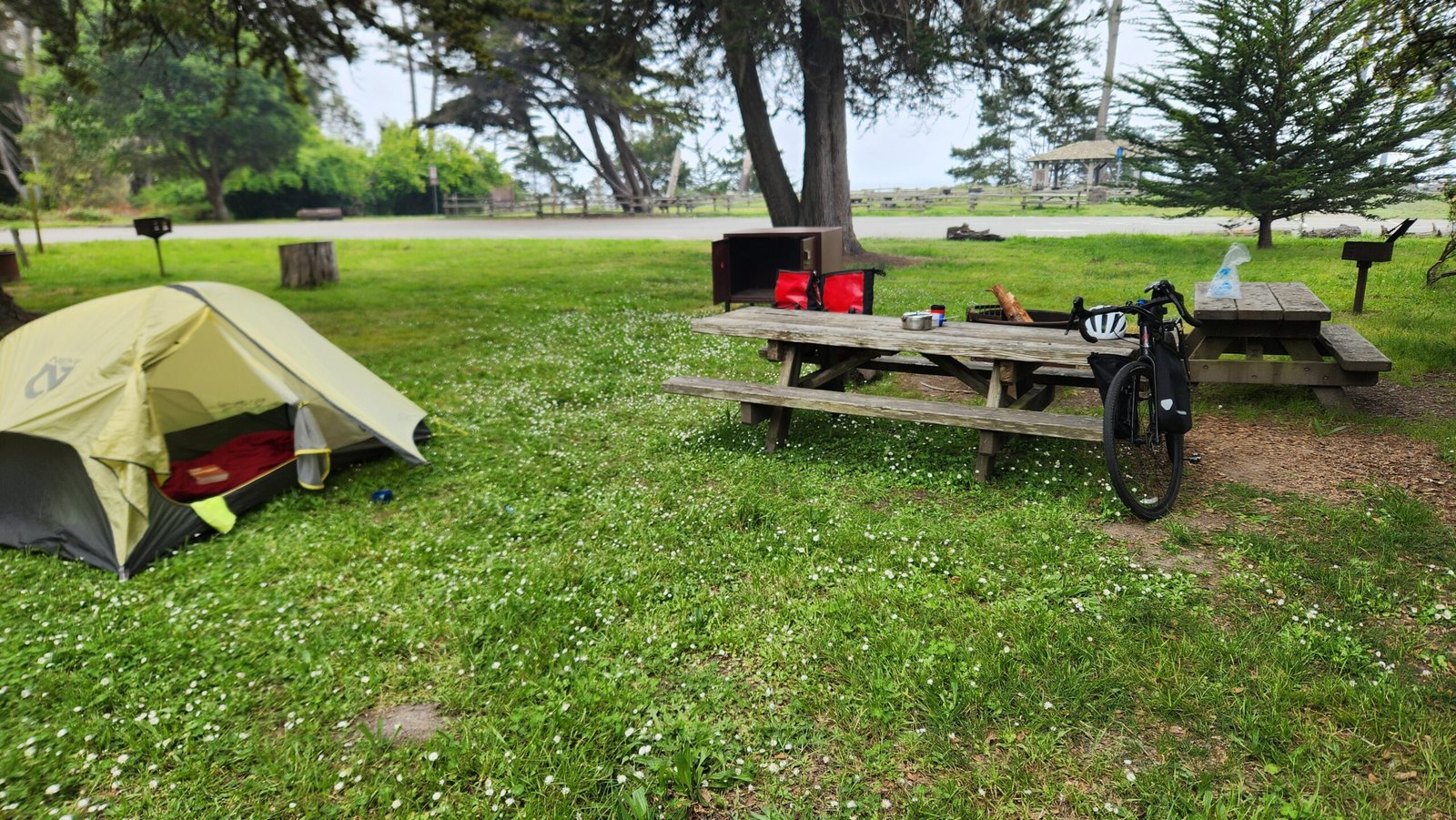
New Brighton State Park in Capitola south of Santa Cruz is a very good park for both bikes and campers. Killer bike camp spot. There are some premier ocean-side camp sites on top of the hill. Would some day be nice to reserve that for car camping.
New Brighton State Park
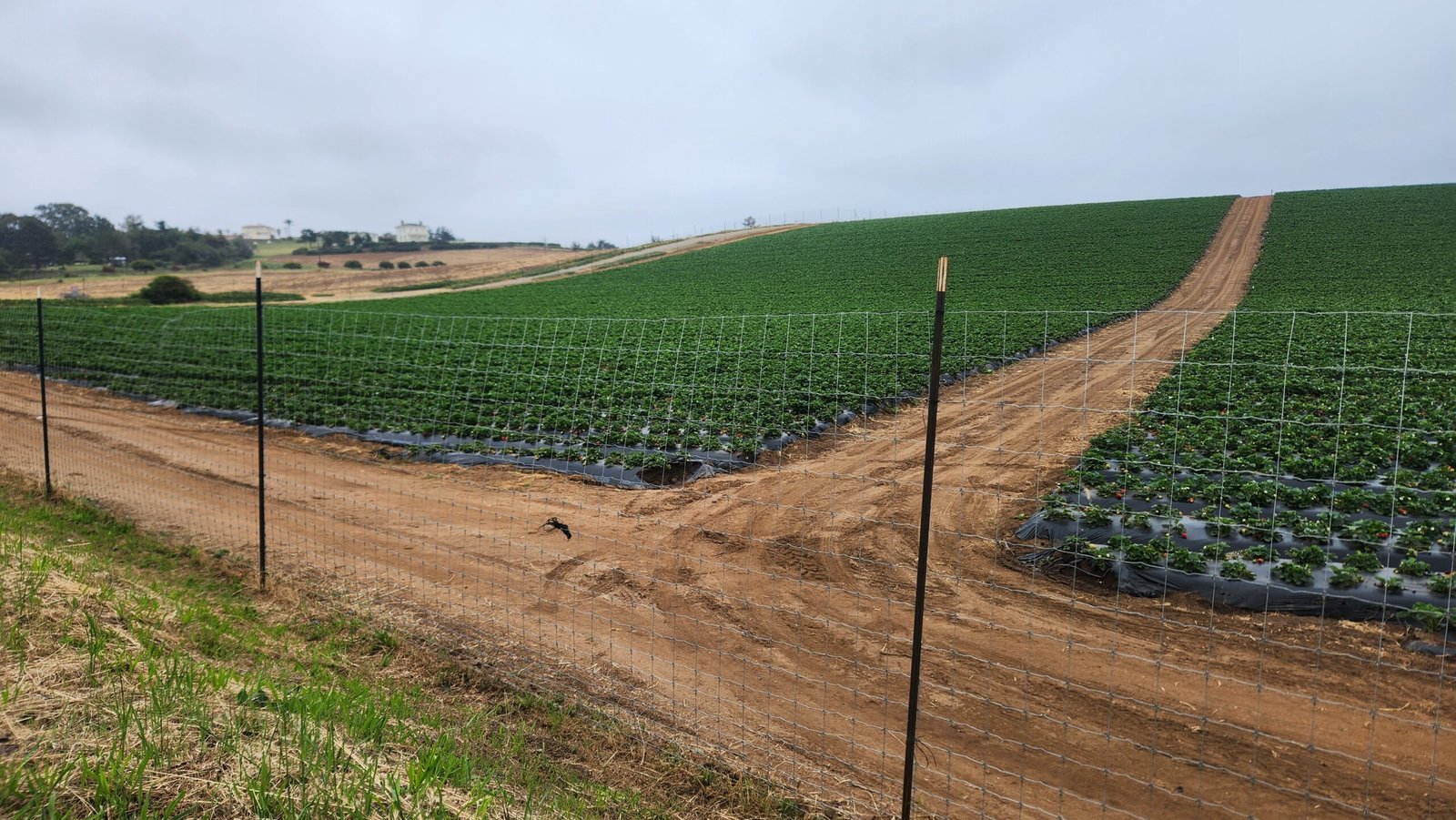
Biking through the farms of Watsonville is fun as you are definitely in farm land. It is interesting to see where the food comes from and take in the climate. Acres and acres of strawberries that go on forever as far as the eye can see. A lot of lettuce and broccoli this time of year. People hard at work picking and farming. One lettuce-picking crew far from the main road flew a huge Mexican flag and were blasting mariachi music out of a converted school bus.
When you hit Moss Landing there is about 10 miles of dreadful highway shoulder riding which is never fun. The highways in this part of Monterey County are pretty bad. Two lane roads where they need four. Traffic gets backed up with people just trying to get to work. It would be brilliant if there was a dedicated bike path all the way from Santa Cruz to Monterey.
In Monterrey I camped in a spot the bestcoastbiking.com recommended, Veteran’s Park which is up a hill from the wharf. It worked out fine but next time I would get a hotel.
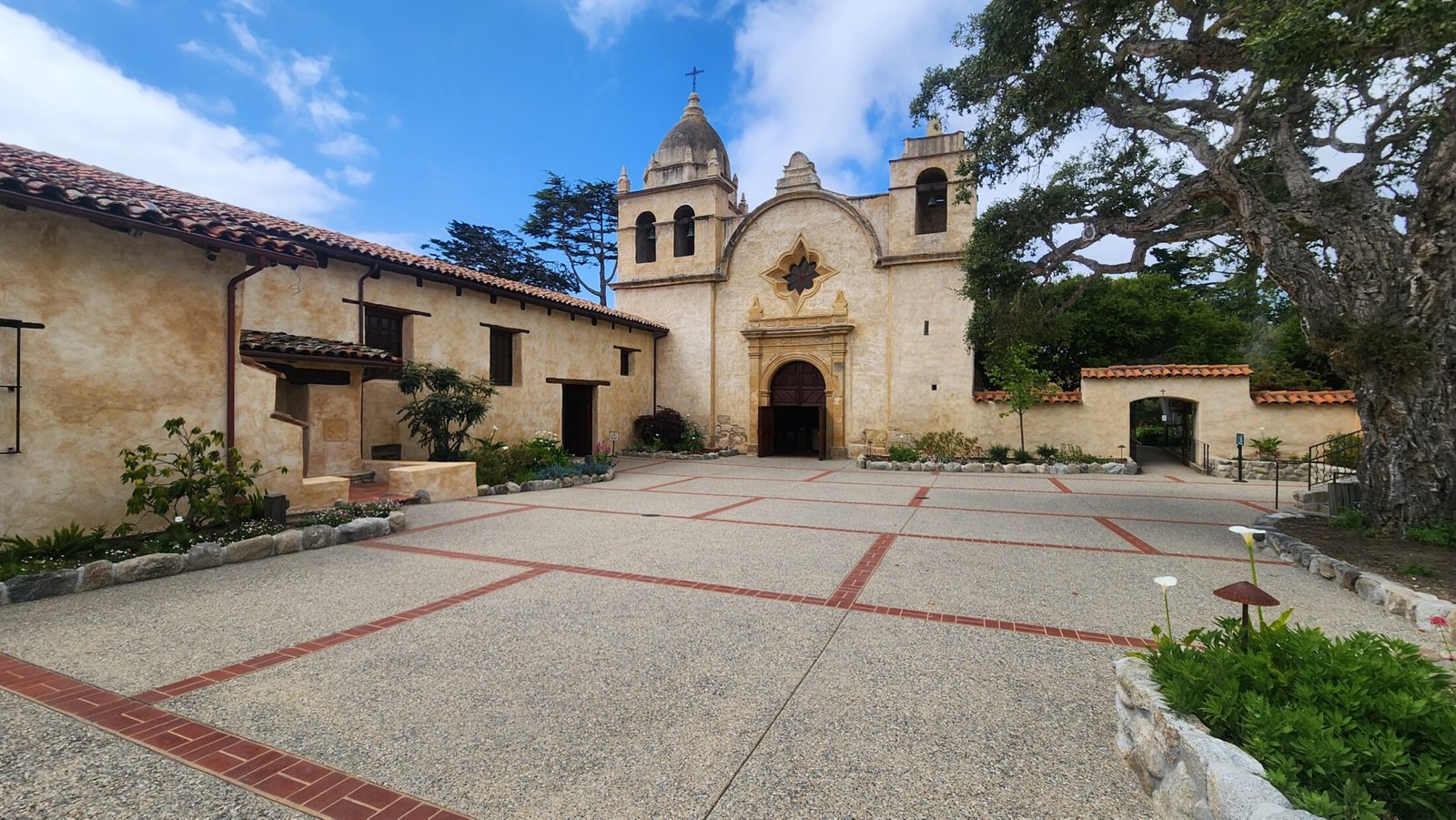
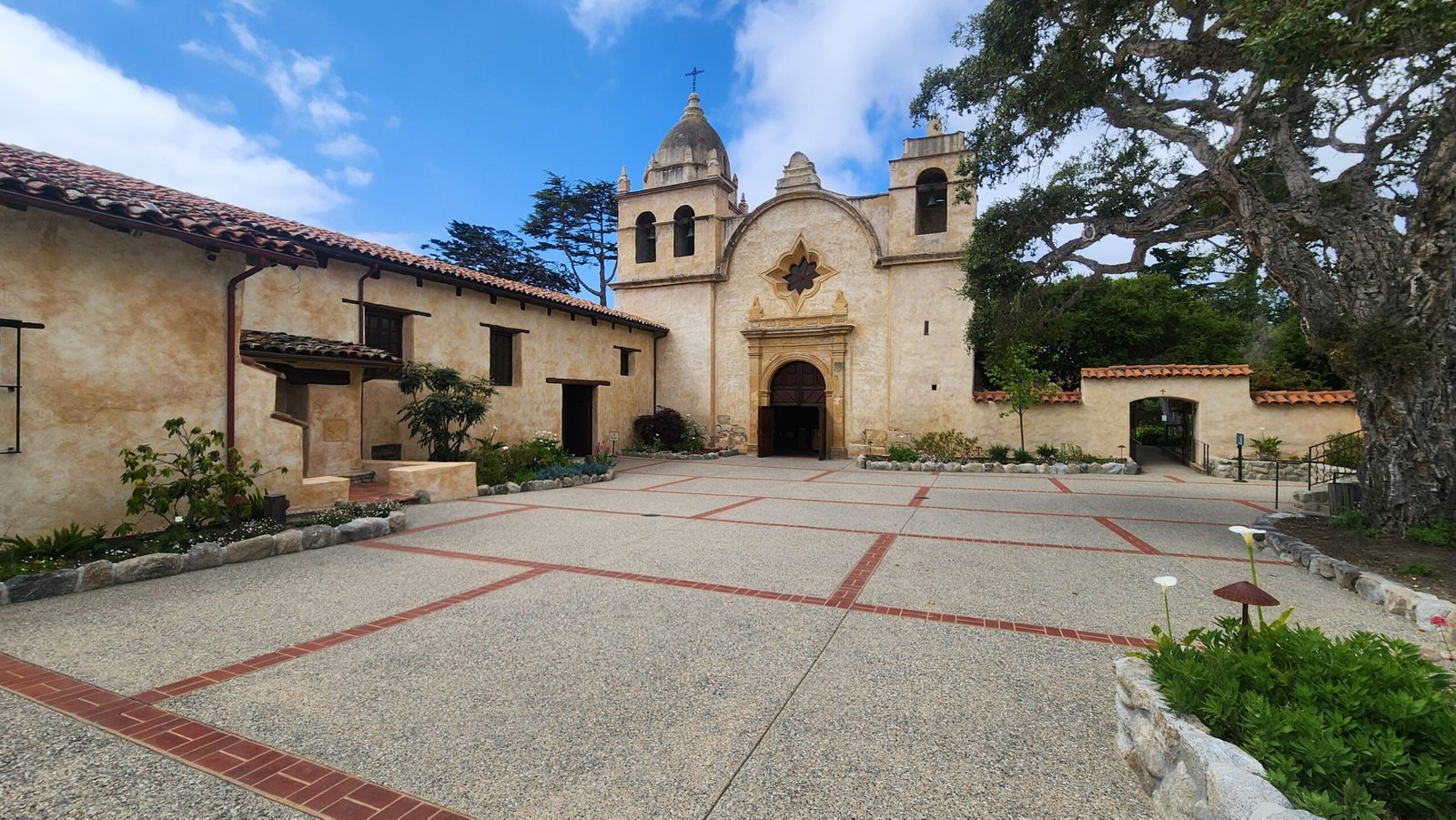
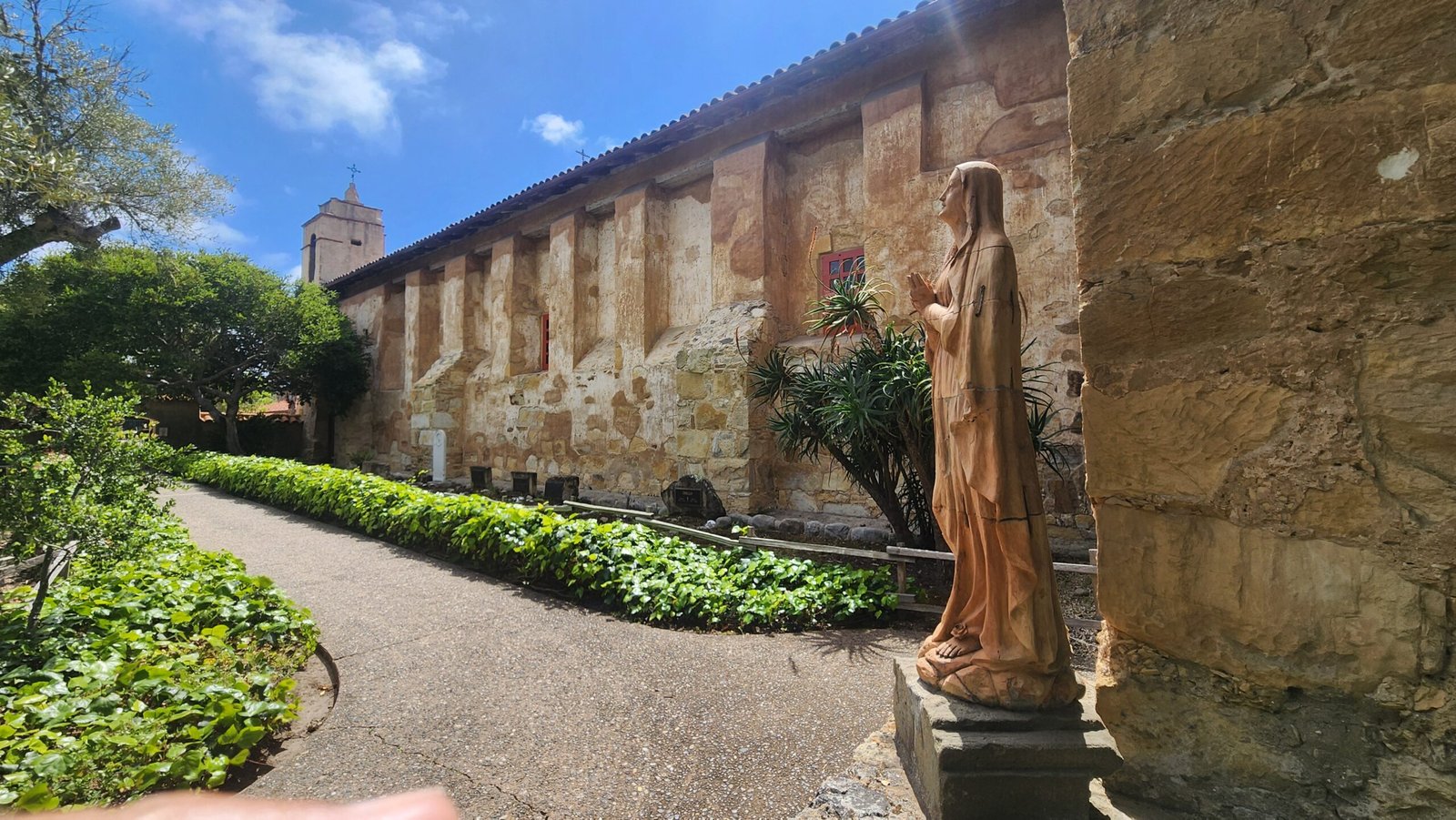
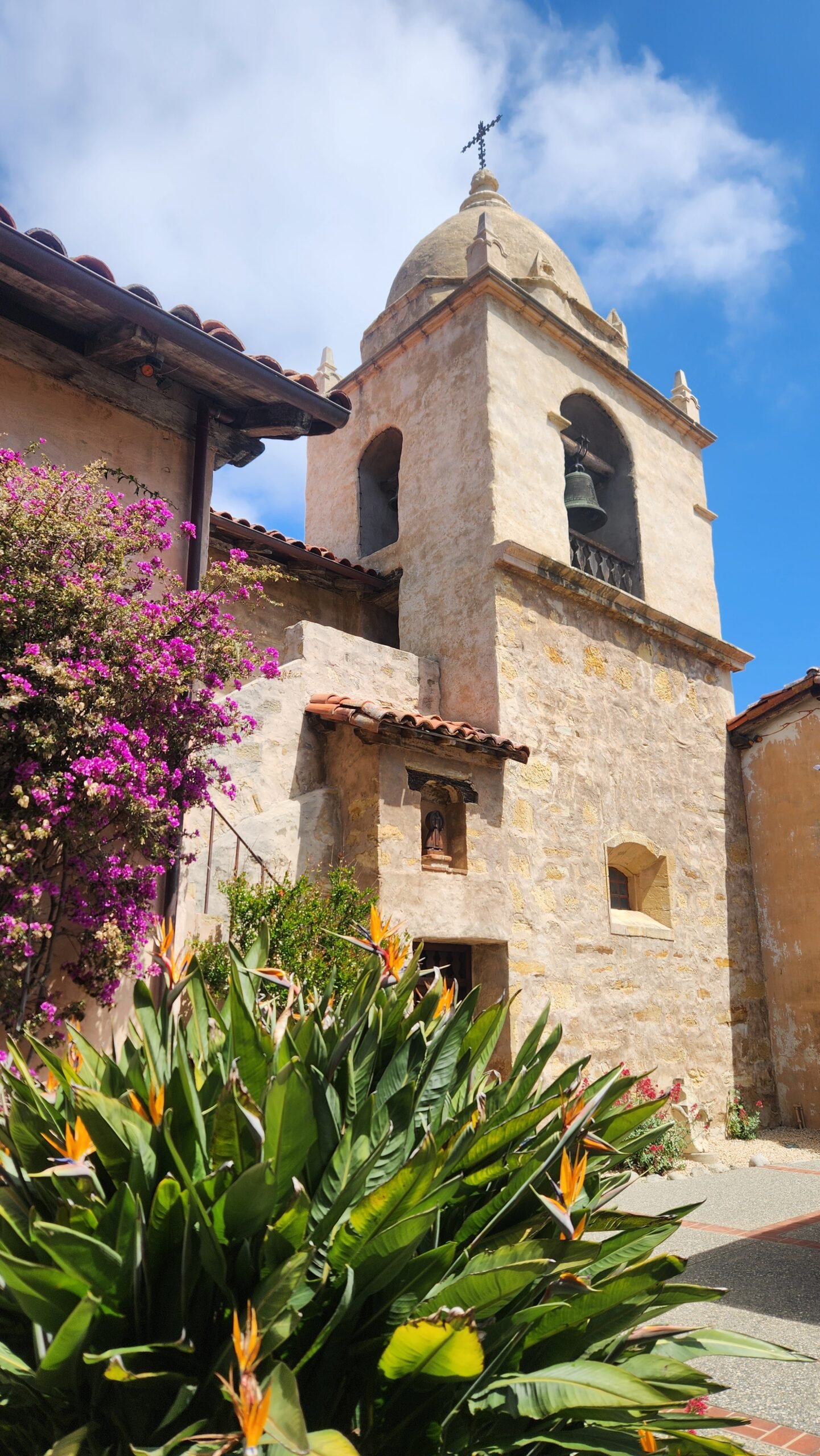
Day three headed down the coast. Checked out Carmel Mission Basilica, started up by Captain Gaspar de Portola and Franciscan Father Junípero Serra. Portola and Serra are the names of streets, schools and shopping malls throughout California. Serra spent most of his life in pain from probably an infected insect bite. Thank science for modern medicine and antibiotics.
Carmel Mission Basilica
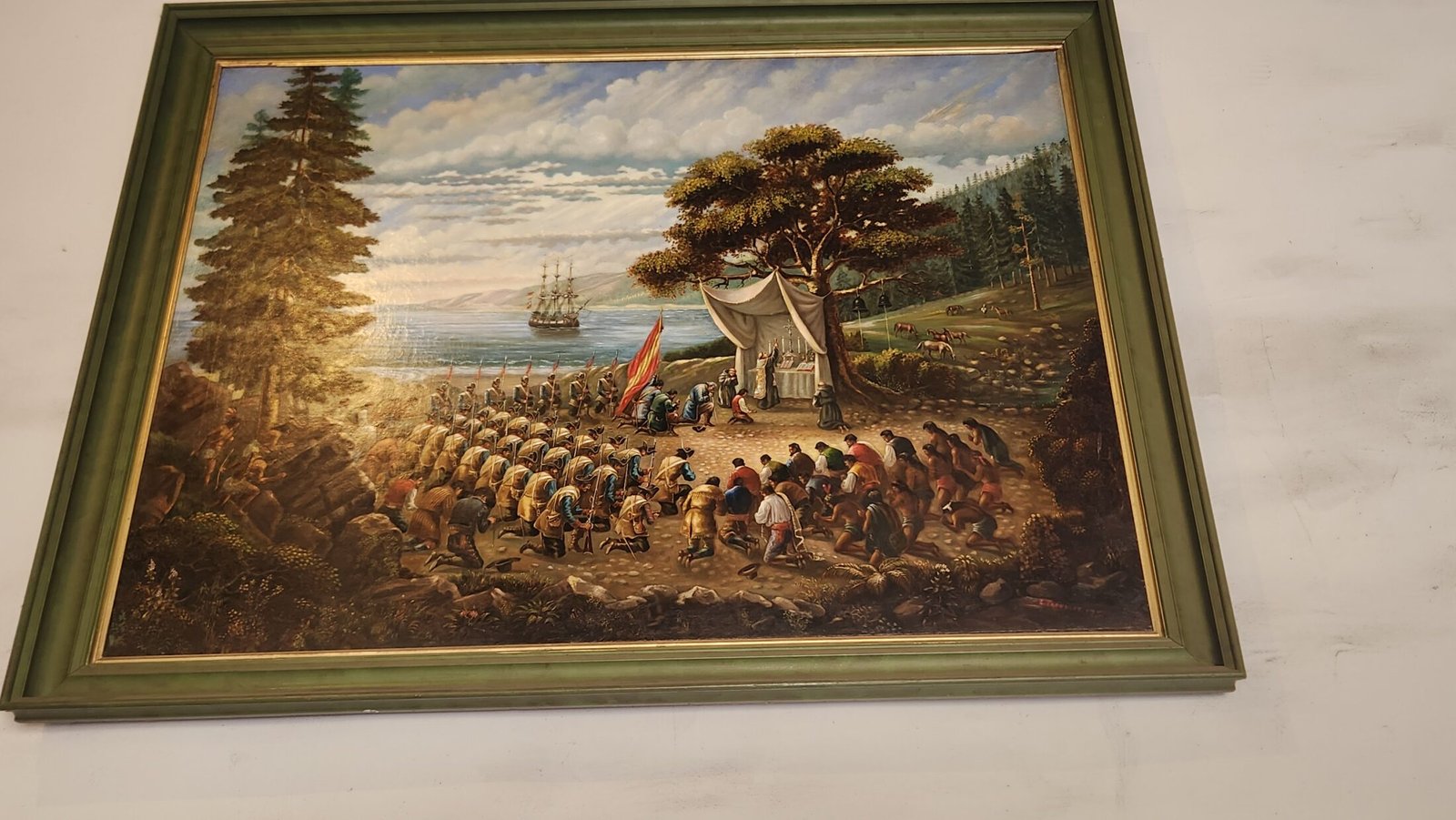
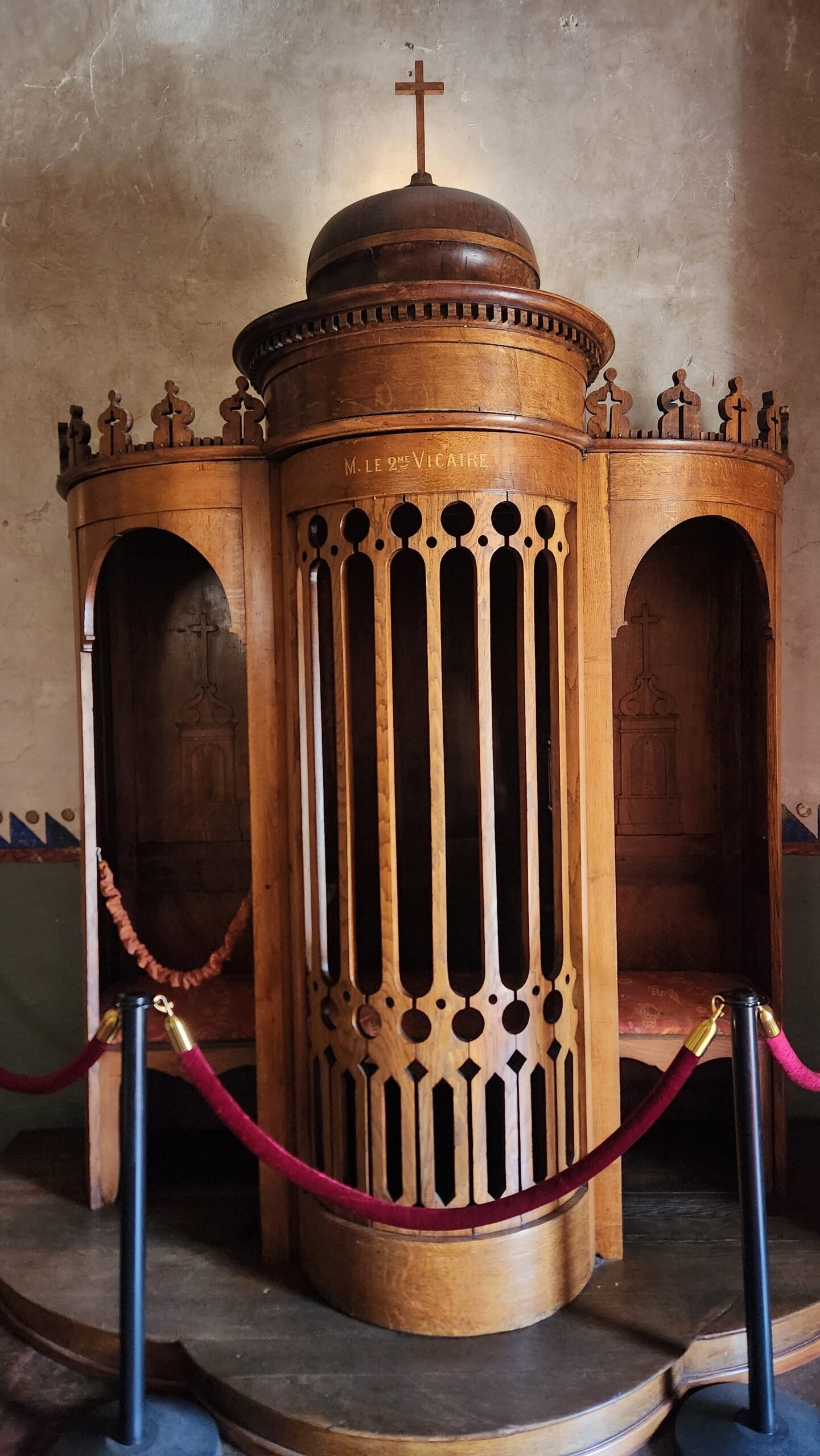
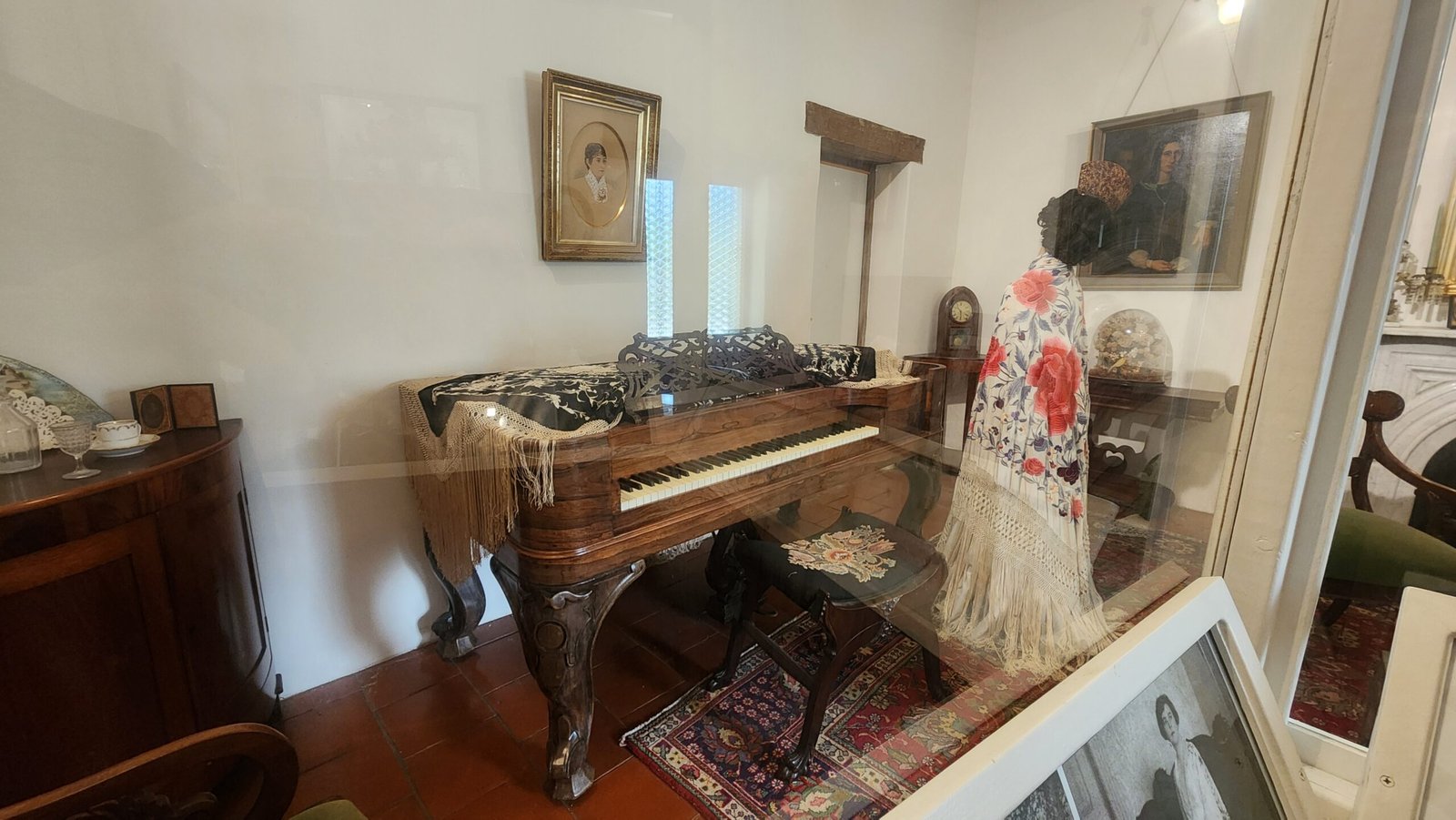
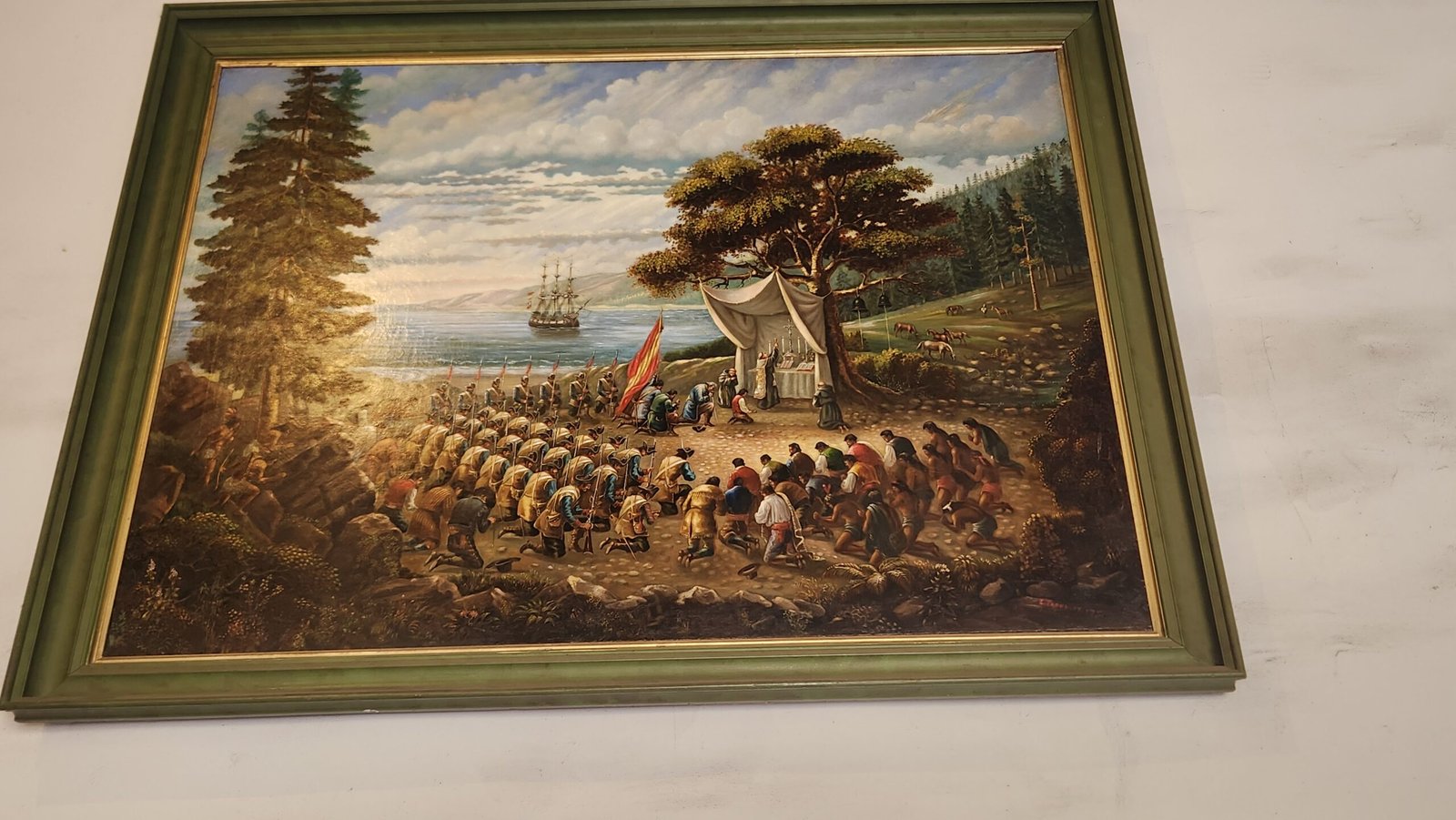
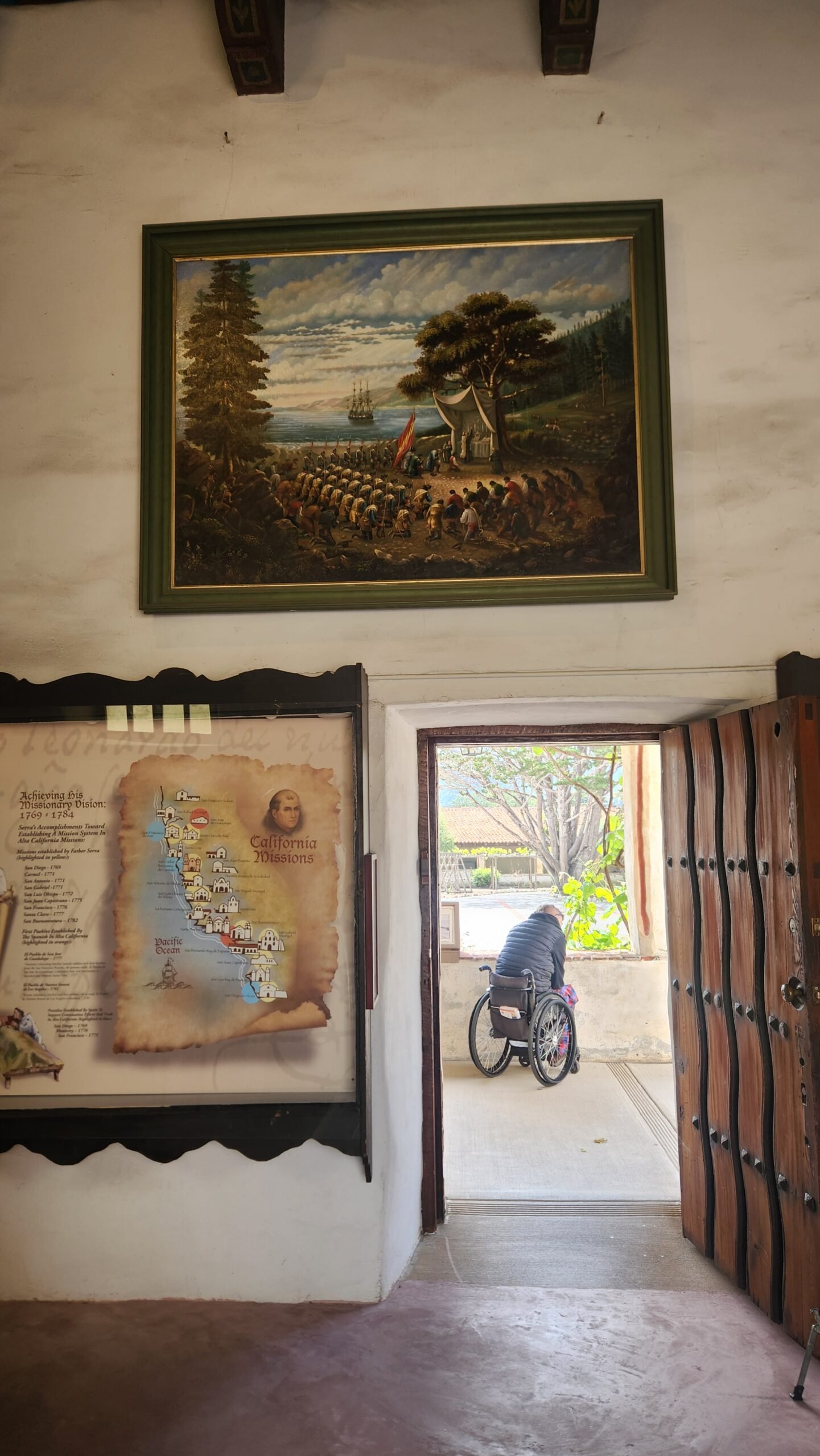
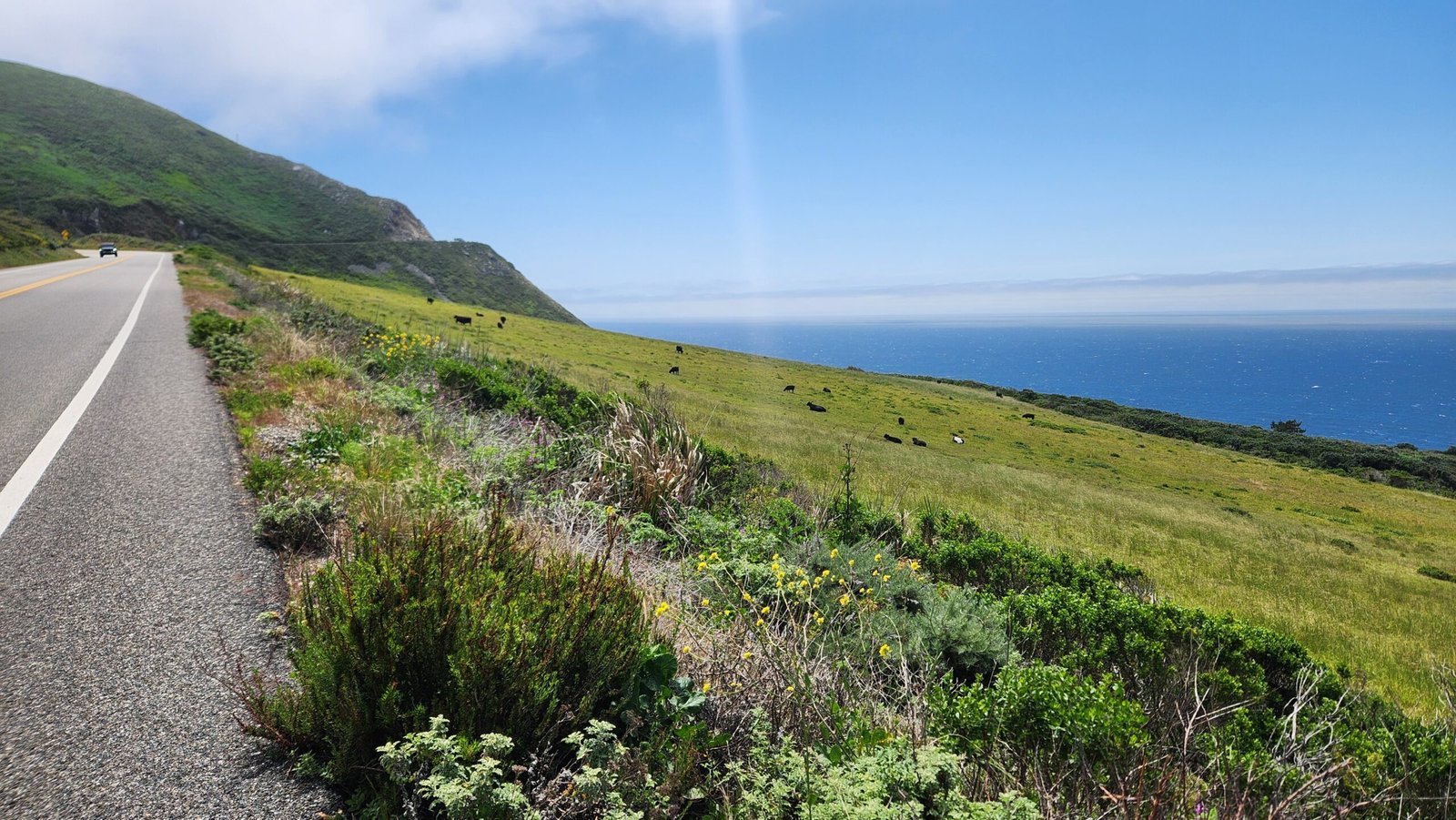
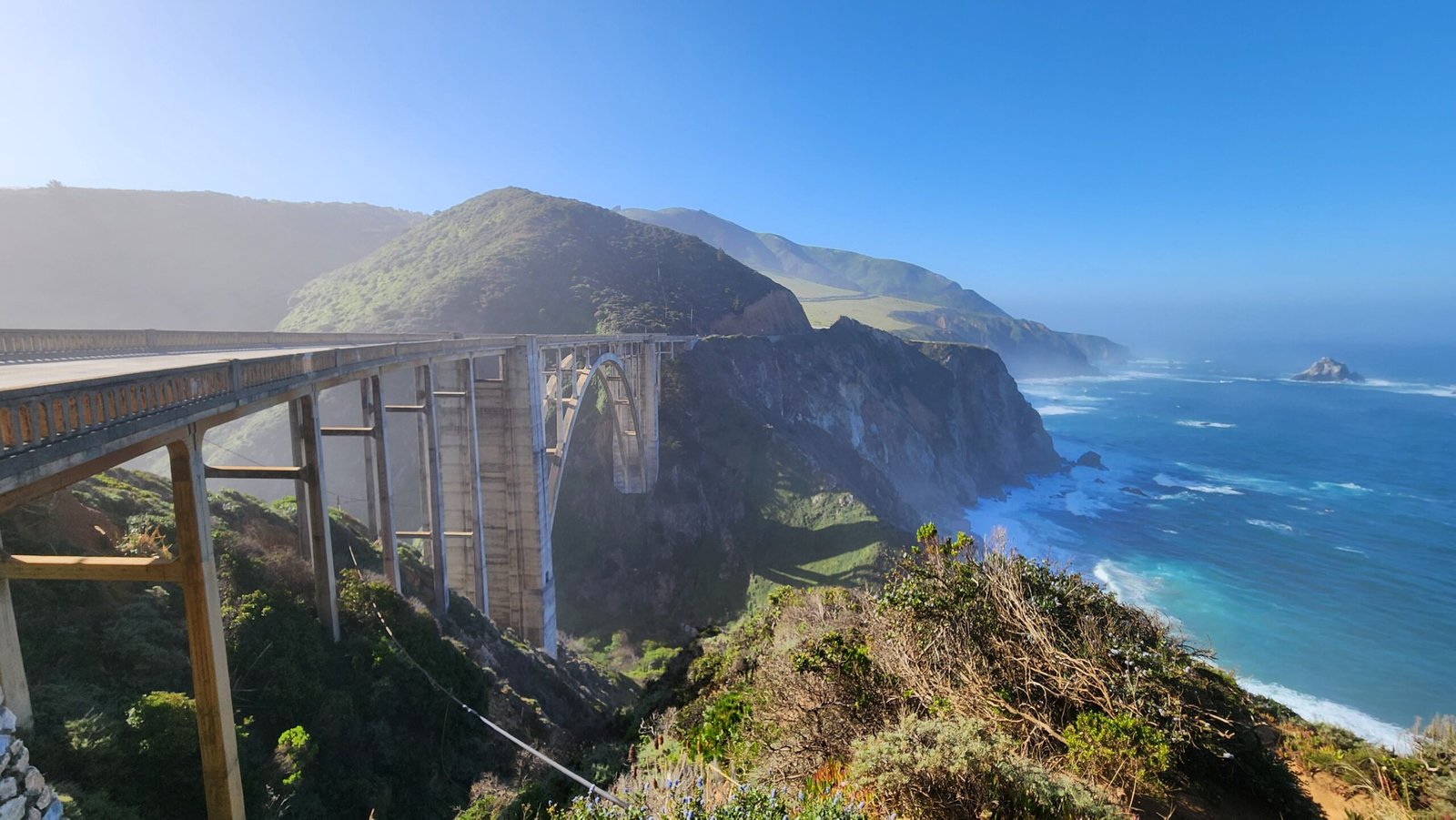
It is fun to be around a classic place like Carmel Mission Basilica, where the bones have a presence and seem to talk though the floor boards. Cool paintings like Leon Trousset’s 1887 Father Juniper Serra’s First Mass. Everything looks so orderly. The ship in the harbor. Native Indians looking on in the shadows. I then rode down Highway 1 to Pfeiffer Big Sur State Park with strong tail winds. The further you rode, the less the cars.
Leon Trousset’s 1887 Father Juniper Serra’s First Mass
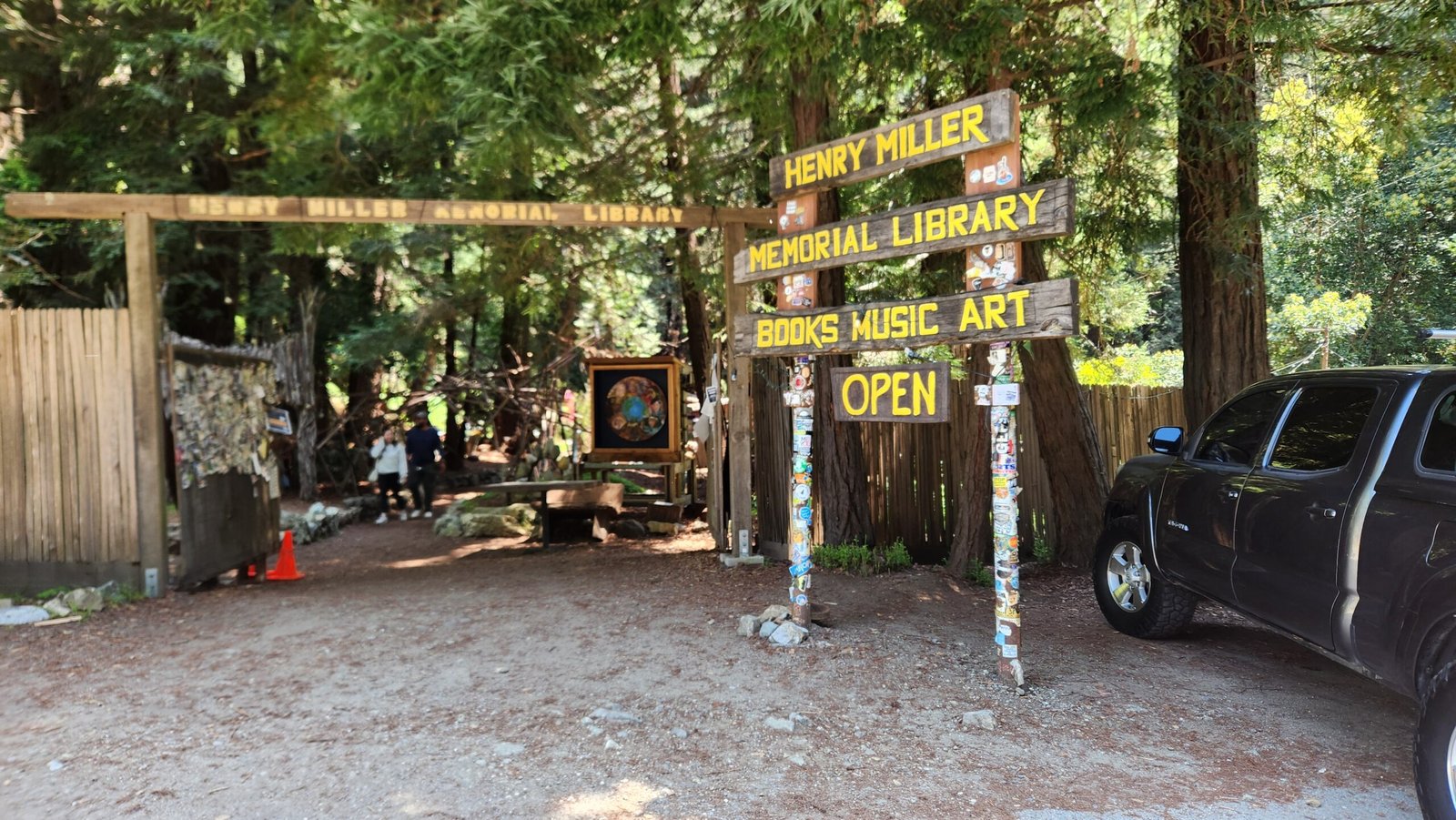
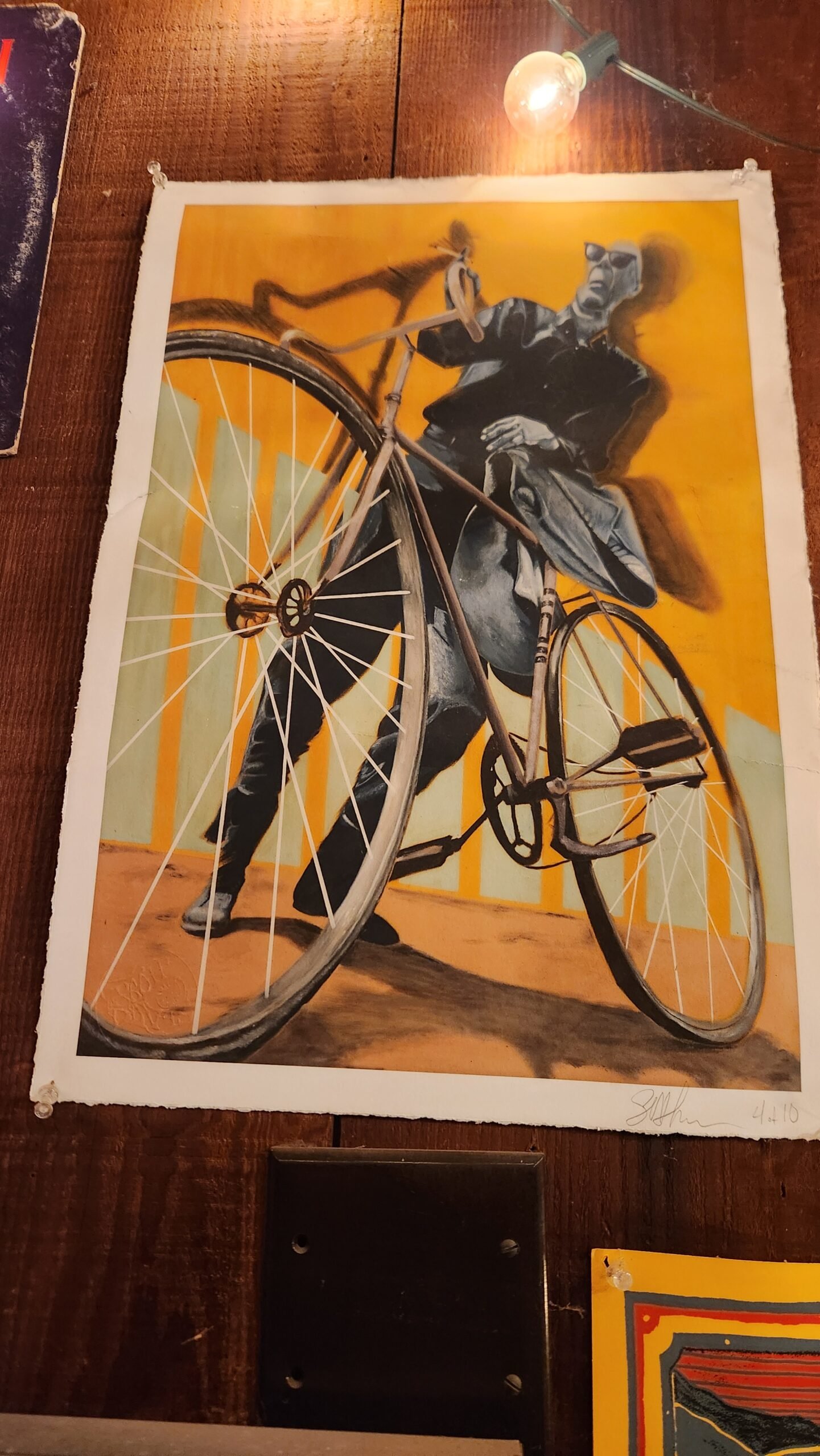
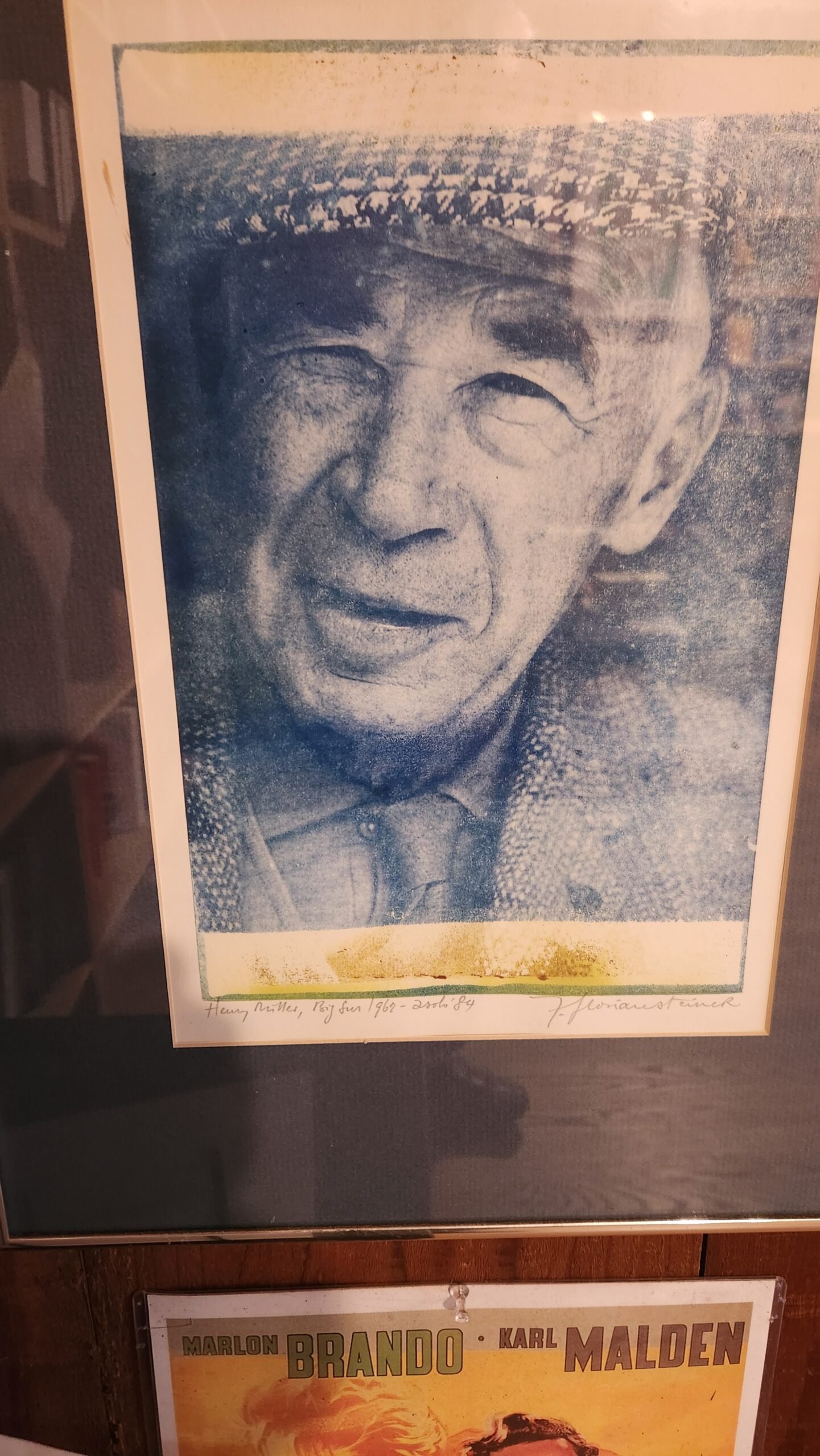
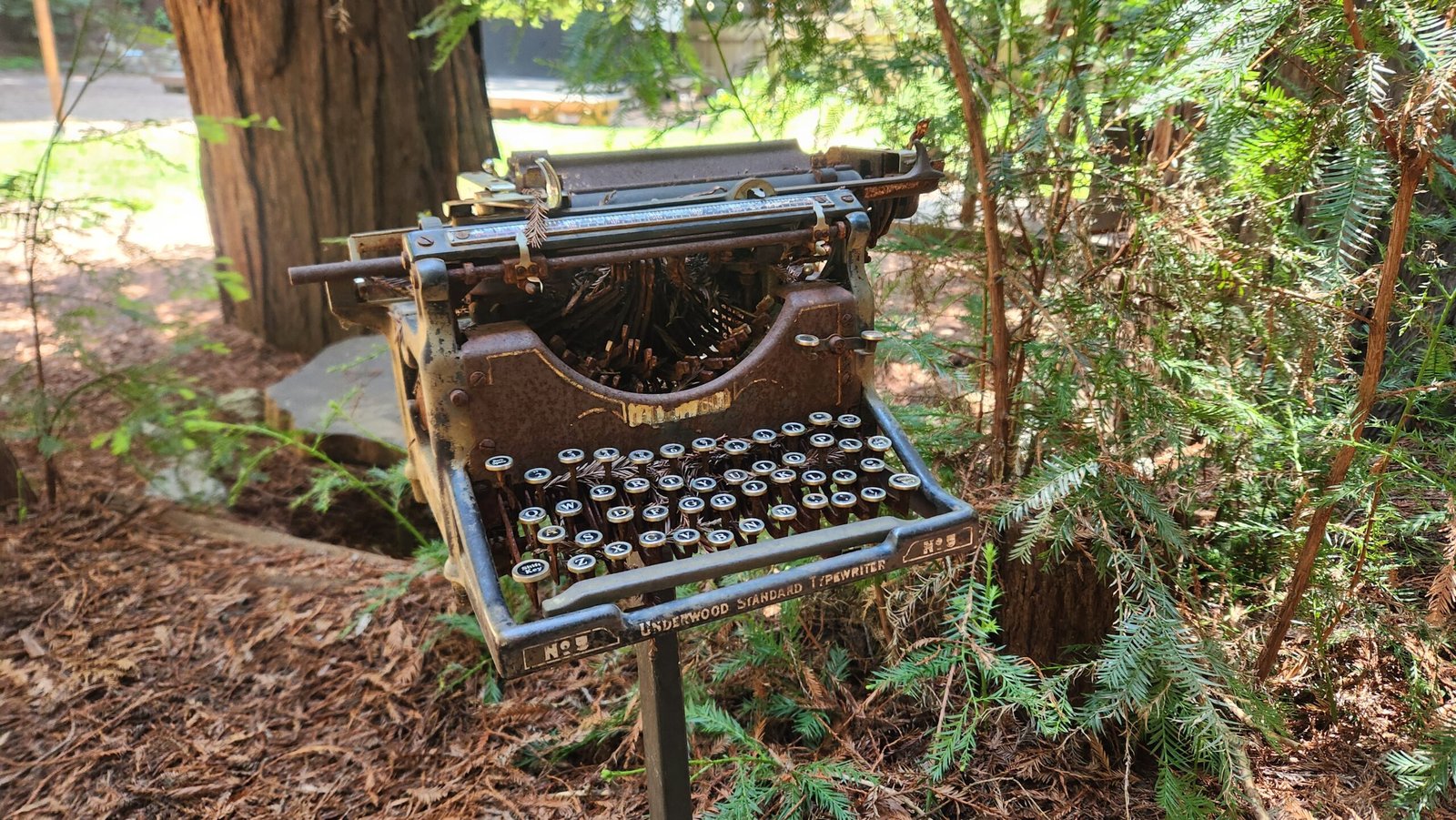
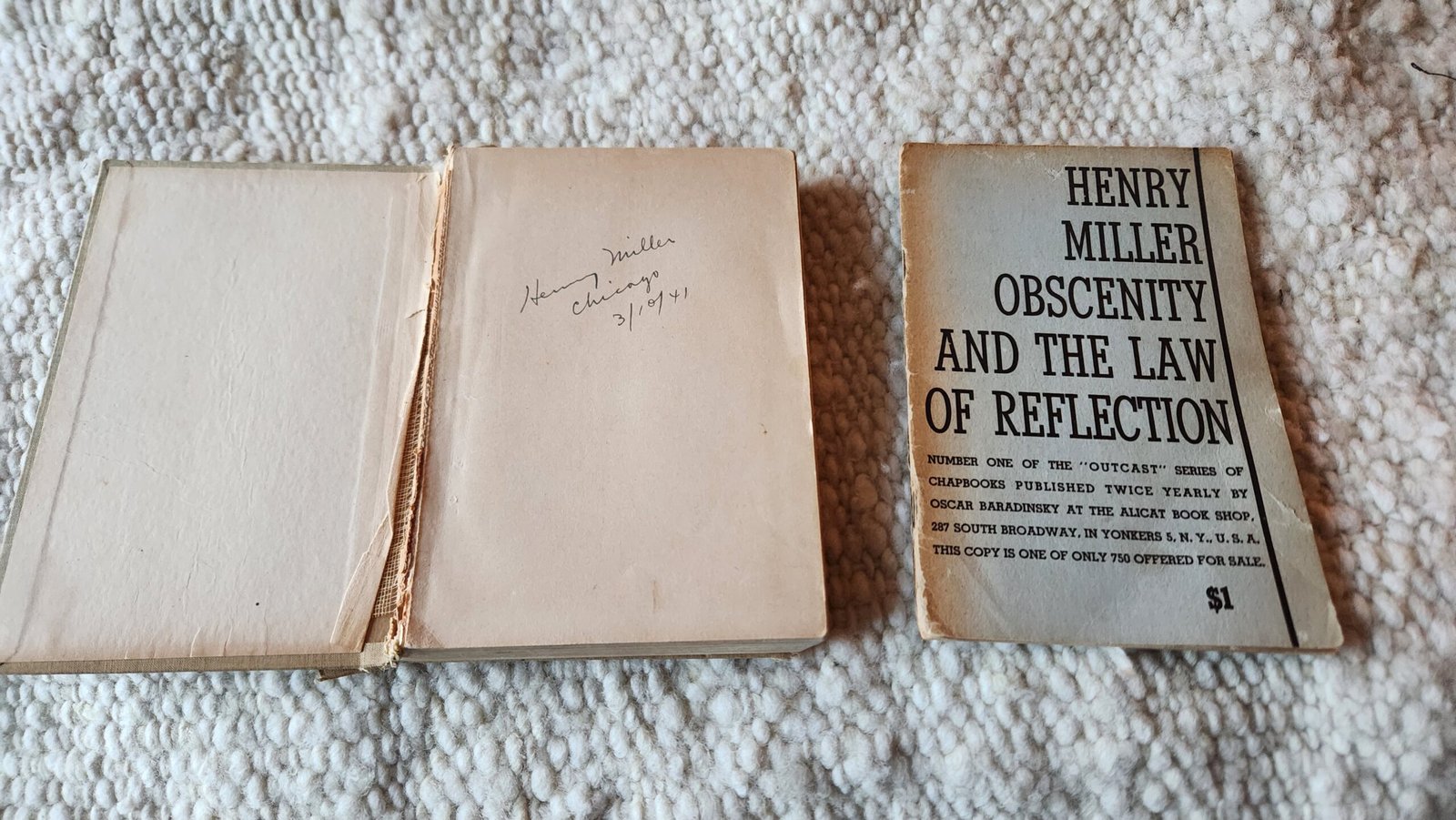
Day four had a fun ride to the The Henry Miller Memorial Library and hung out with the locals while the foot traffic rolled in, stopped for five minutes then got back in their cars and moved on. In our family are a few Henry Miller classics, one, a signed version of the banned “Tropic of Cancer.” The book was printed in Mexico to avoid the authorities. The books where definitely my father’s. Henry Miller was a great writer and thinker and lived an amazing life. One of the inspirations for the ride is that Henry Miller liked to ride bicycles. He did not care for cars. In his late fifties he moved to Big Sur.
“After a time, habituated to so many hours a day on my bike, I became less and less interested in my friends. My wheel had now become my one and only friend. I could rely on it, which is more than I could say about my buddies.” – Henry Miller from “My Bike and Other Friends”
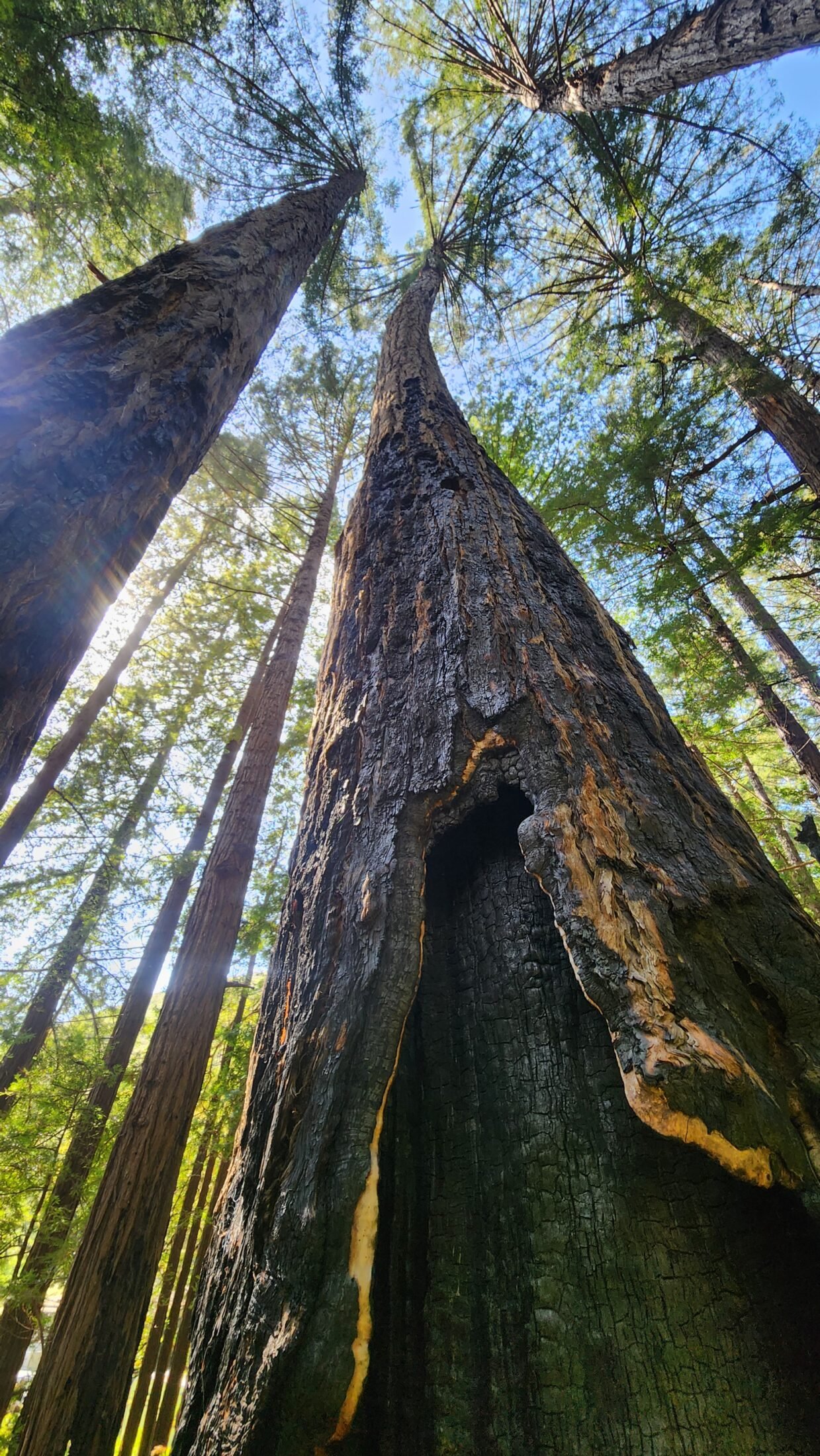
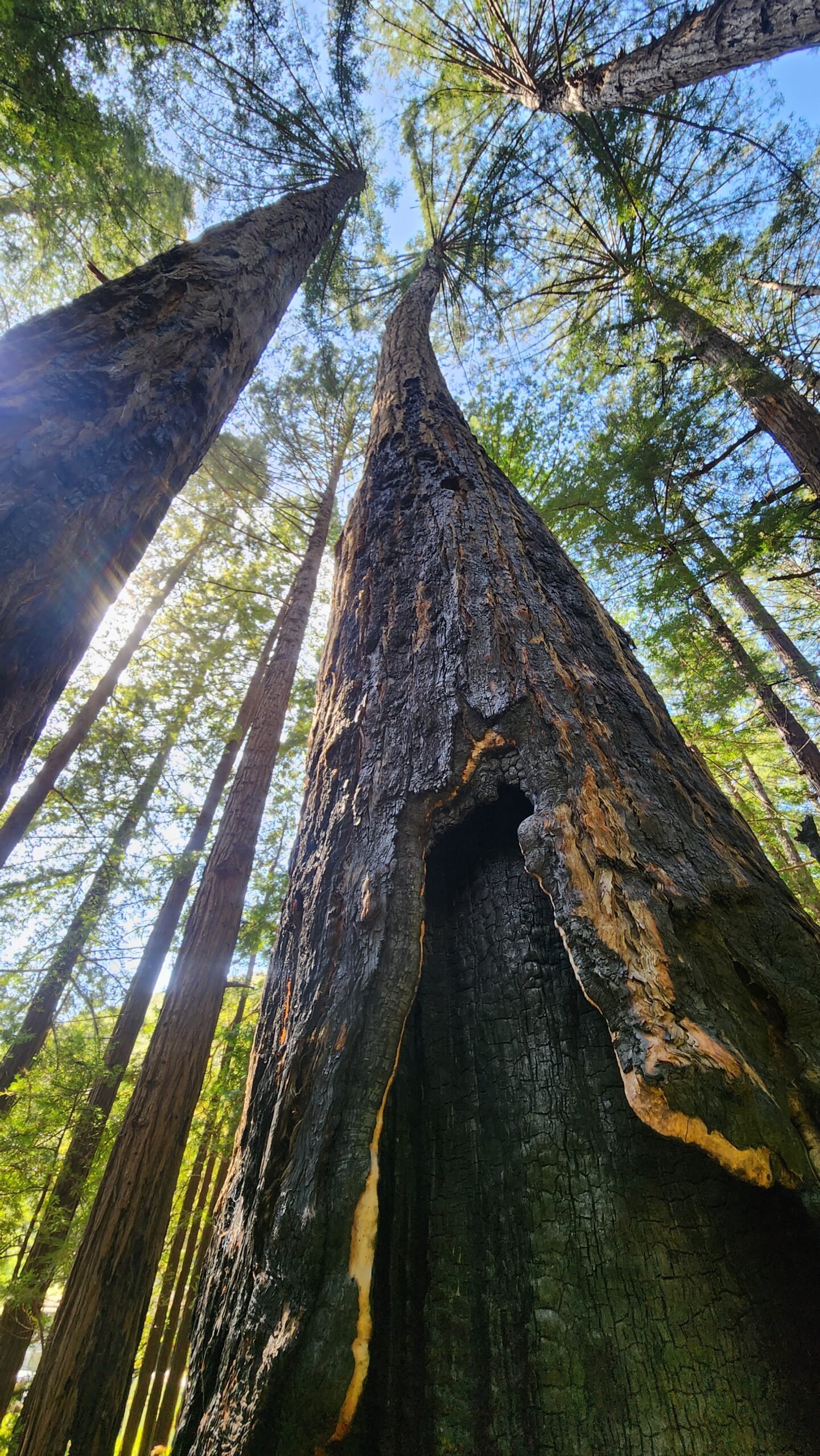
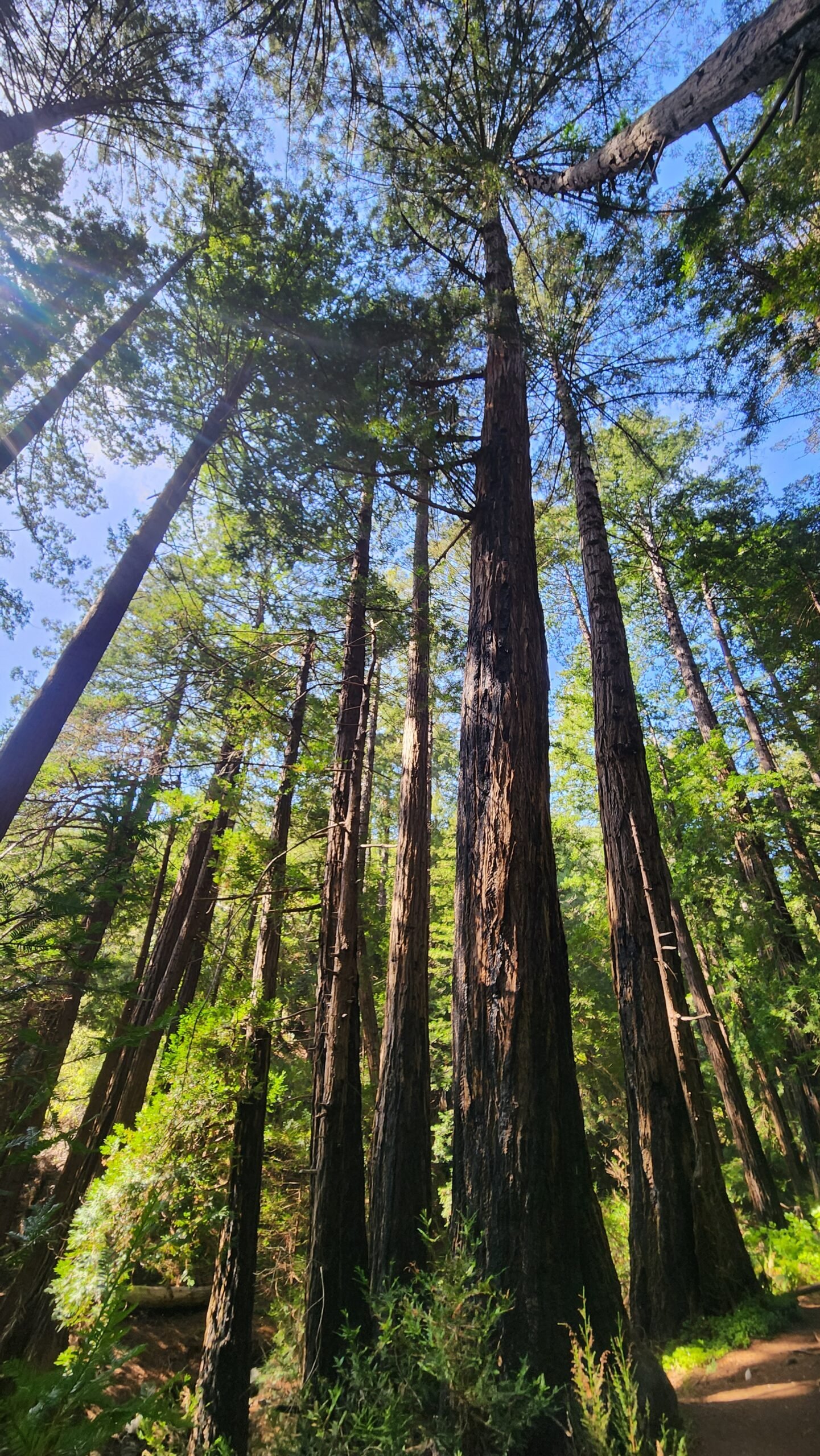
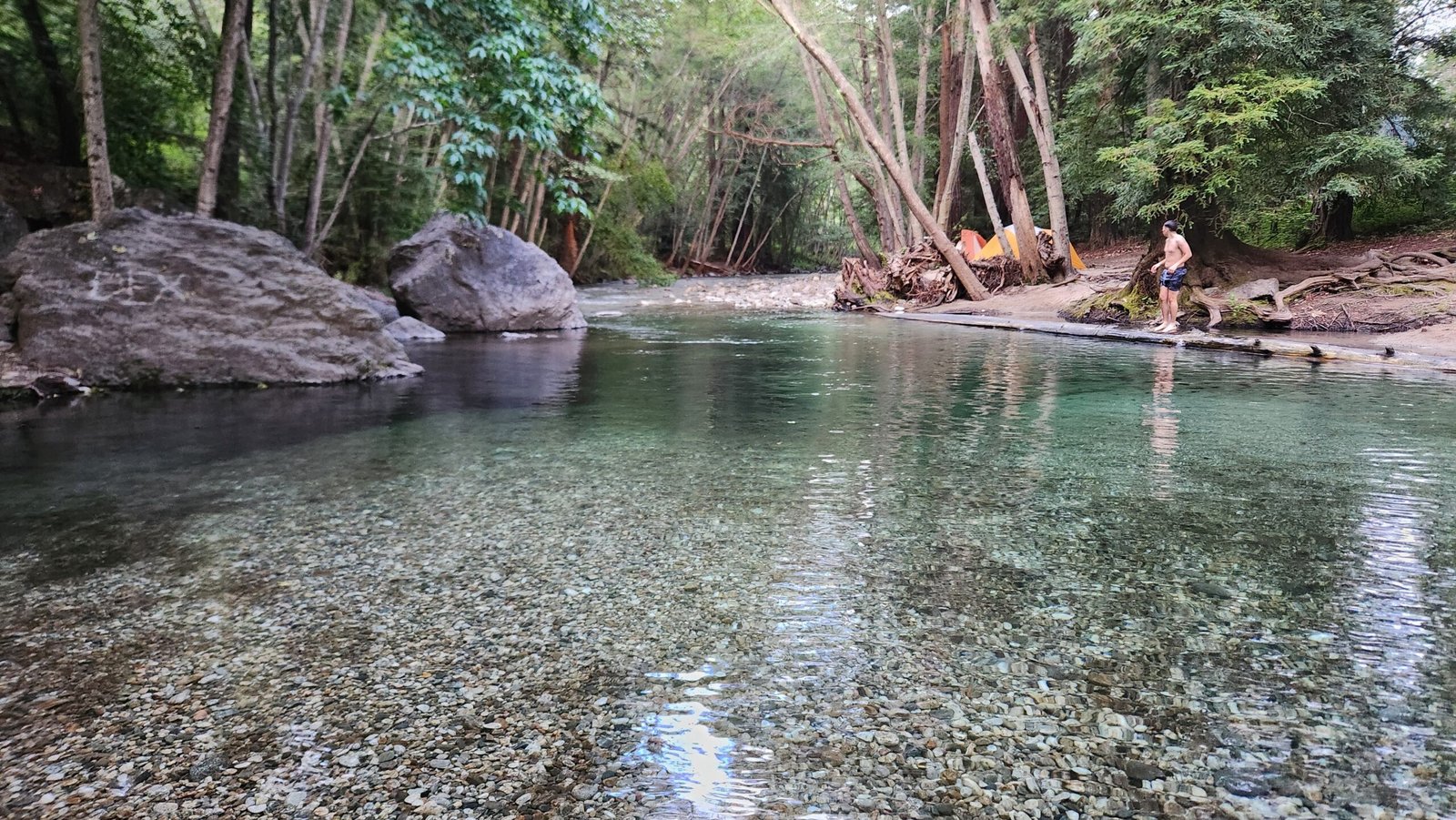
Julia Pfeiffer State Park (let’s just call it Julia) is an 11 mile ride down the coast from the other Pfeiffer Park. At one time there were many Pfeiffer’s down this way and according to the bulletins the women obviously kept things together. Ranching and massive honey farms. Julia has great trails and waterfalls where the fallen redwoods wrap around other redwoods by streams in an obscene orgy of interactions. Much to explore.
Big Sur
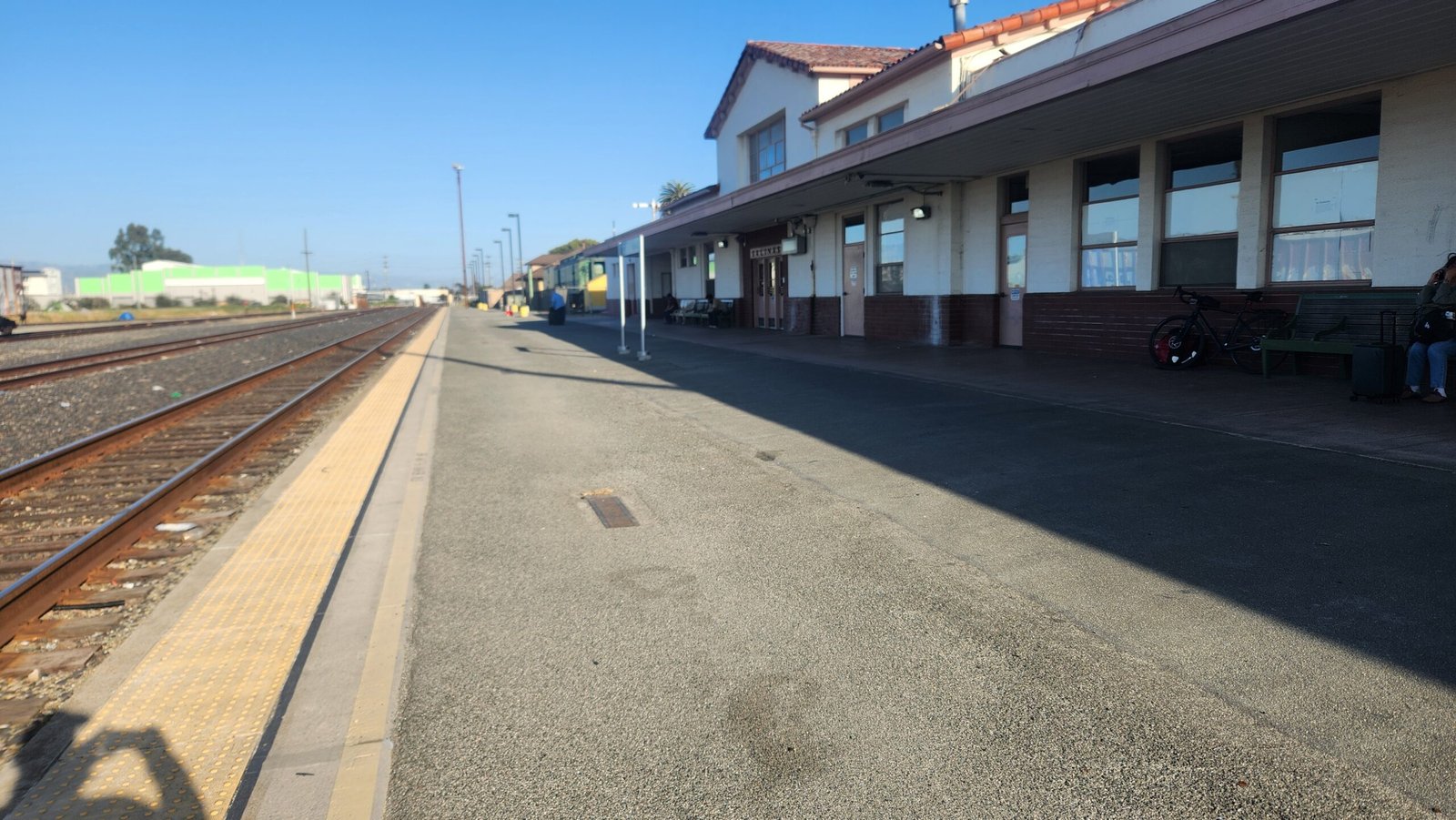
On a Monday morning I left early and headed north. The traffic was light. There were clear skies and no wind. To Carmel, then along the coast to Monterey. Up a coast bikeway that runs along the beach, golf courses and opulent ocean mansions and then over to the scrappy Salinas Amtrak Station. The northbound Coast Starlight leaves every day at six-thirteen pm. I caught the train right on time.
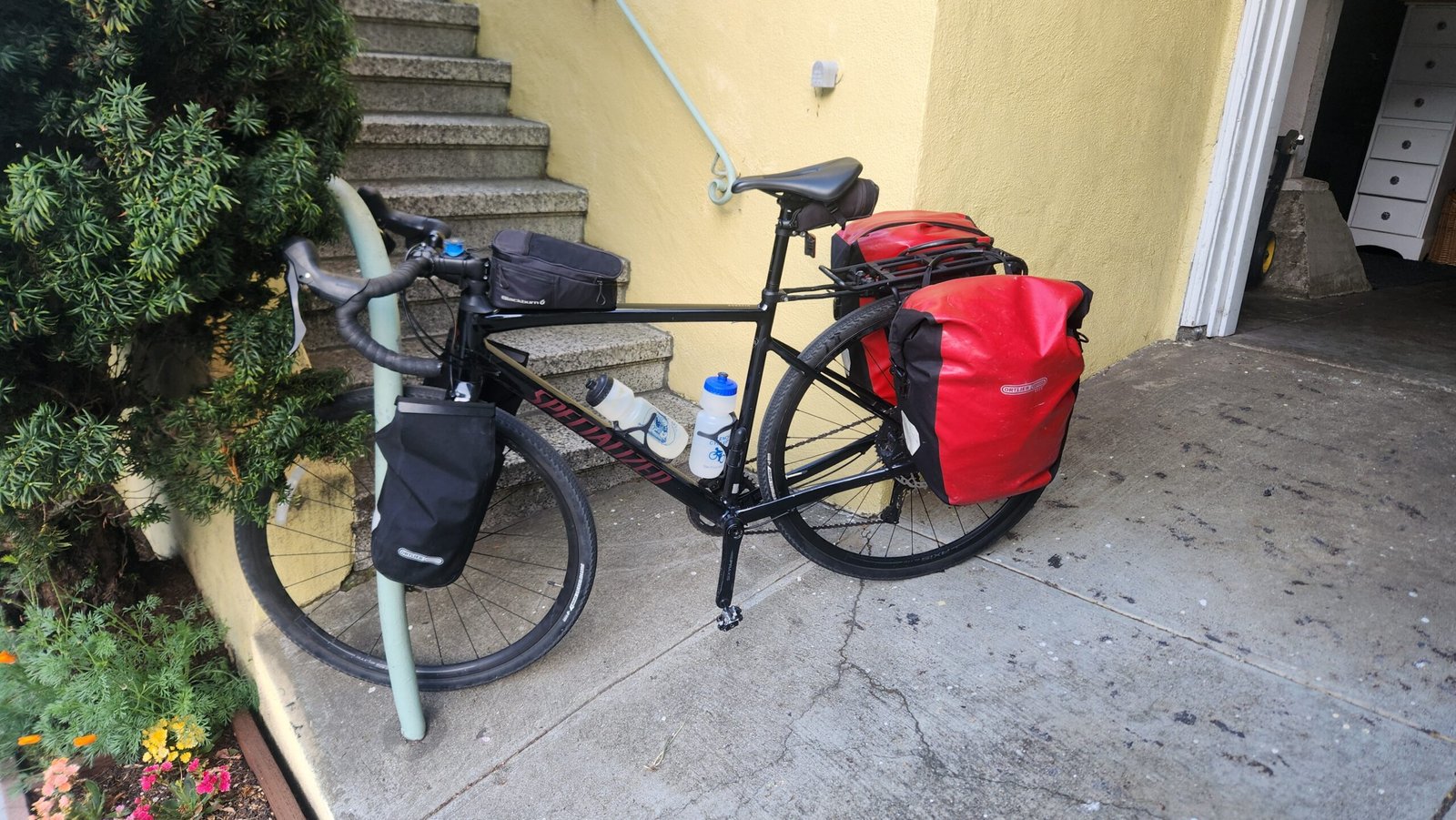
Bike packing ride – Specialized Diverge Gravel bike, Ortlieb panniers
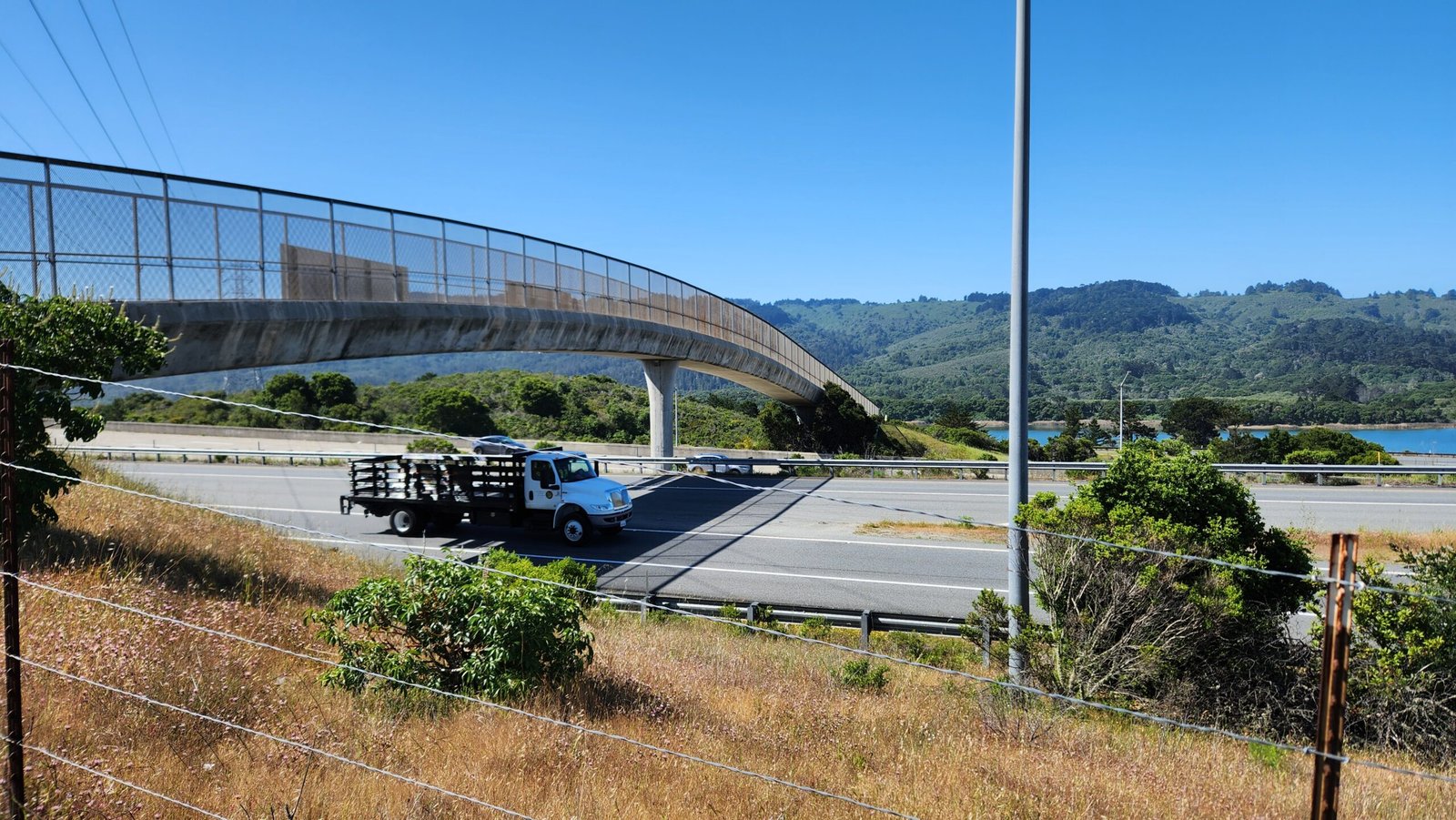
Pedestrian bridge over 280 by Crystal Springs Reservoir.
Old La Honda Road
New Brighton State Park
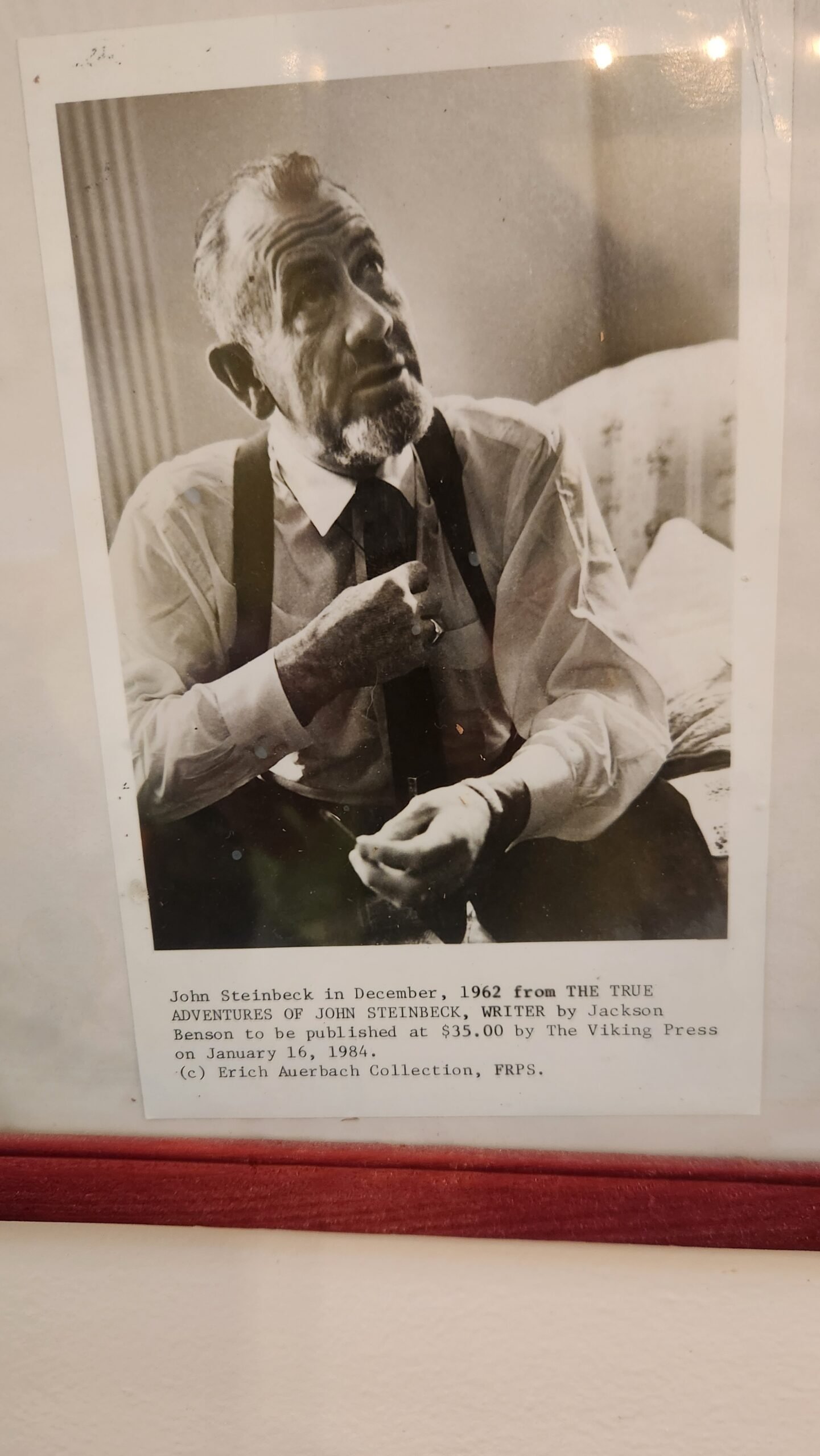
Steinbeck photo in a restaurant in Monterey
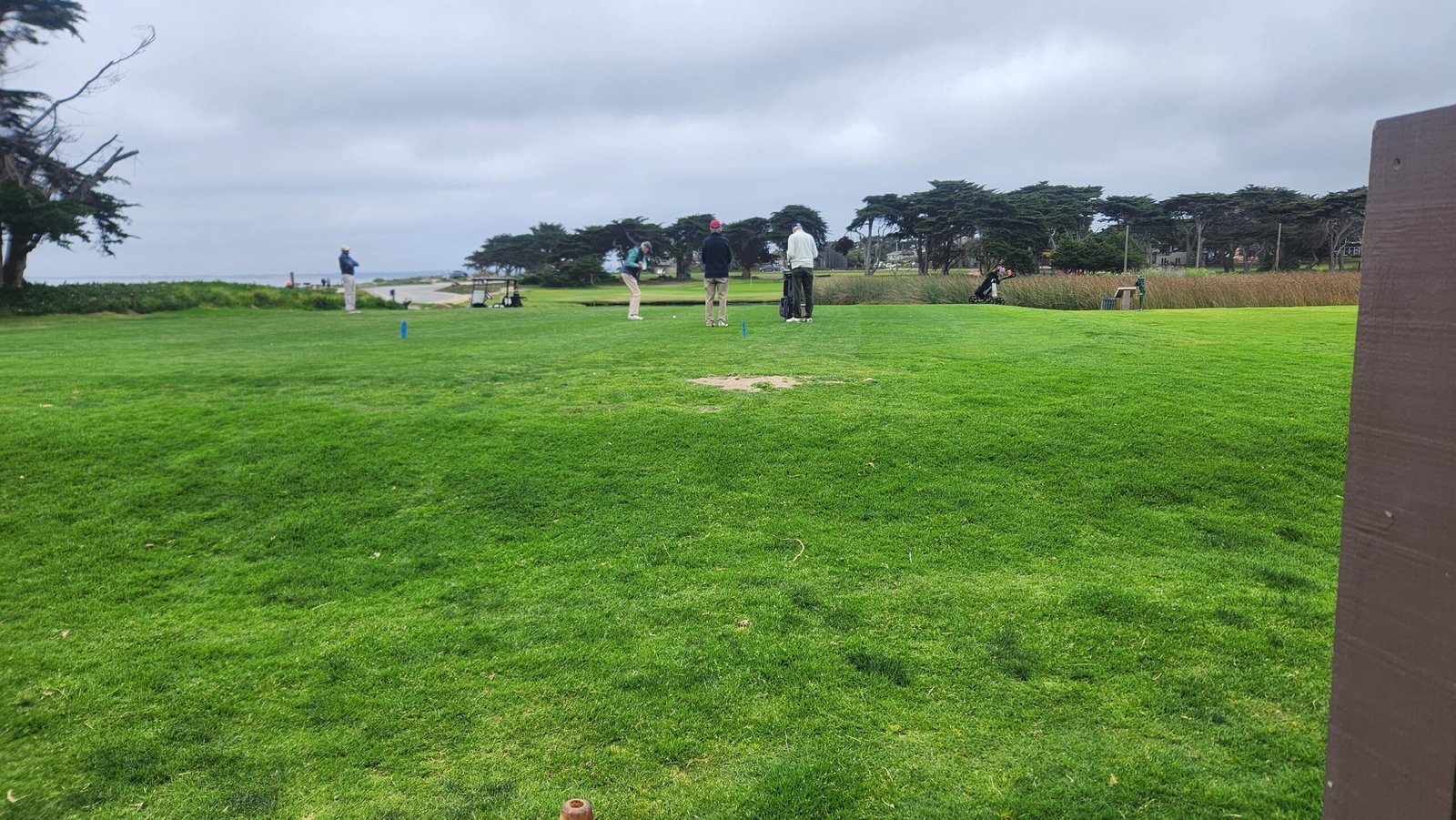
Monterey golfers
Watsonville area. On top of the hill is an old Victorian house.
Carmel Mission Basilica
Carmel Mission Basilica
Carmel Mission Basilica
Carmel Mission Basilica
Carmel Mission Basilica
Leon Trousset’s 1887 Father Juniper Serra’s First Mass
Leon Trousset’s 1887 Father Juniper Serra’s First Mass. This is perhaps my favorite photo of the trip.
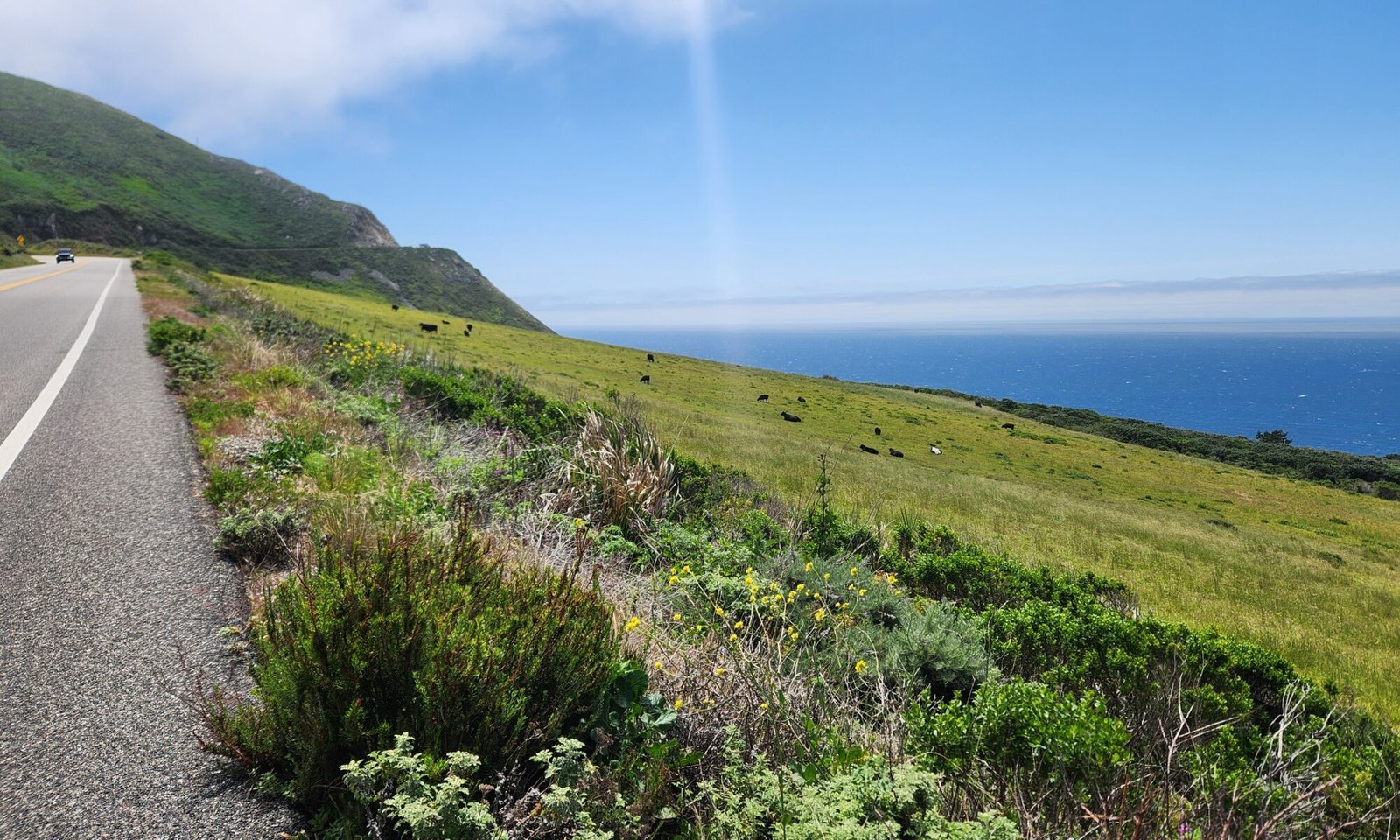
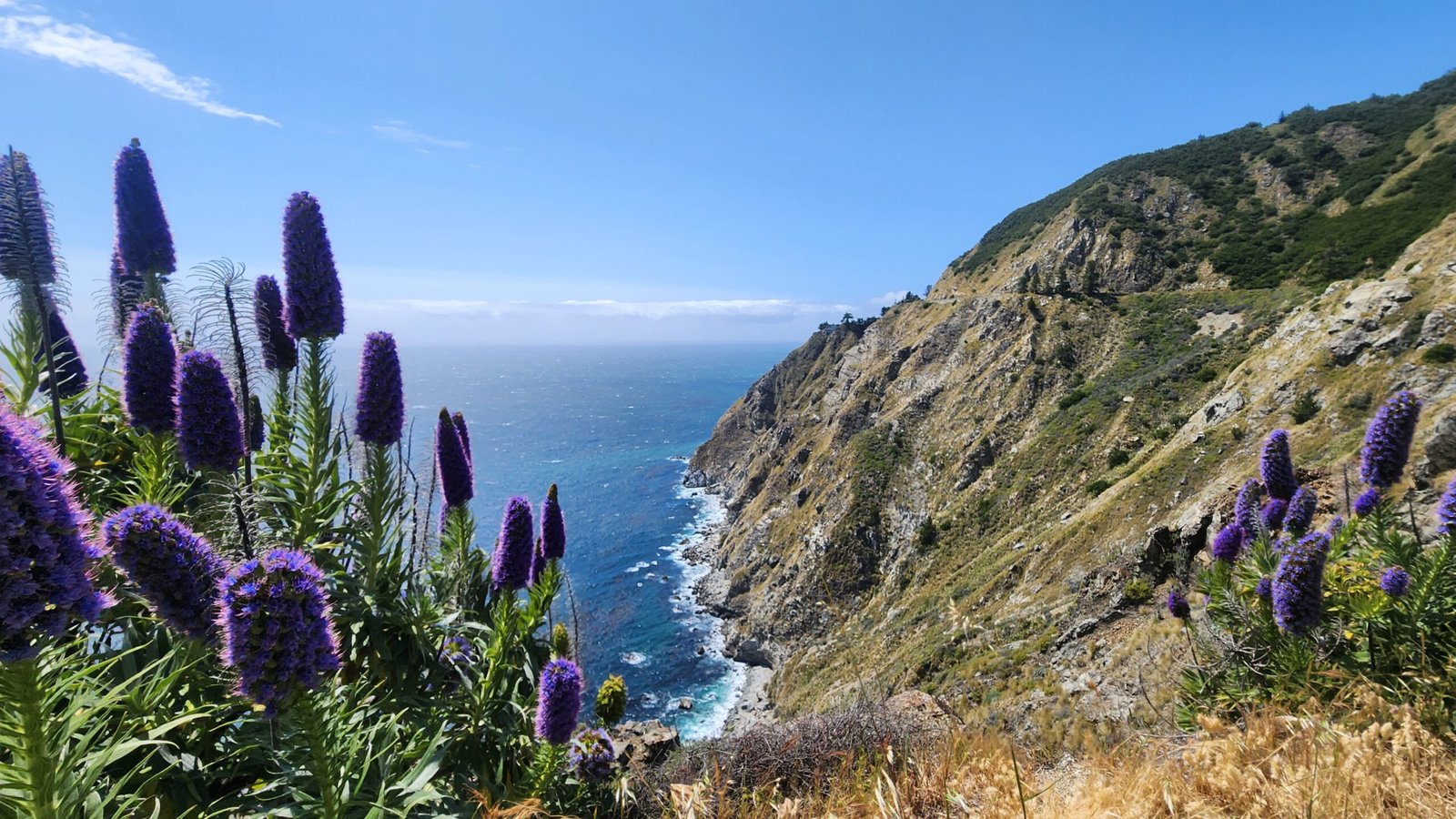
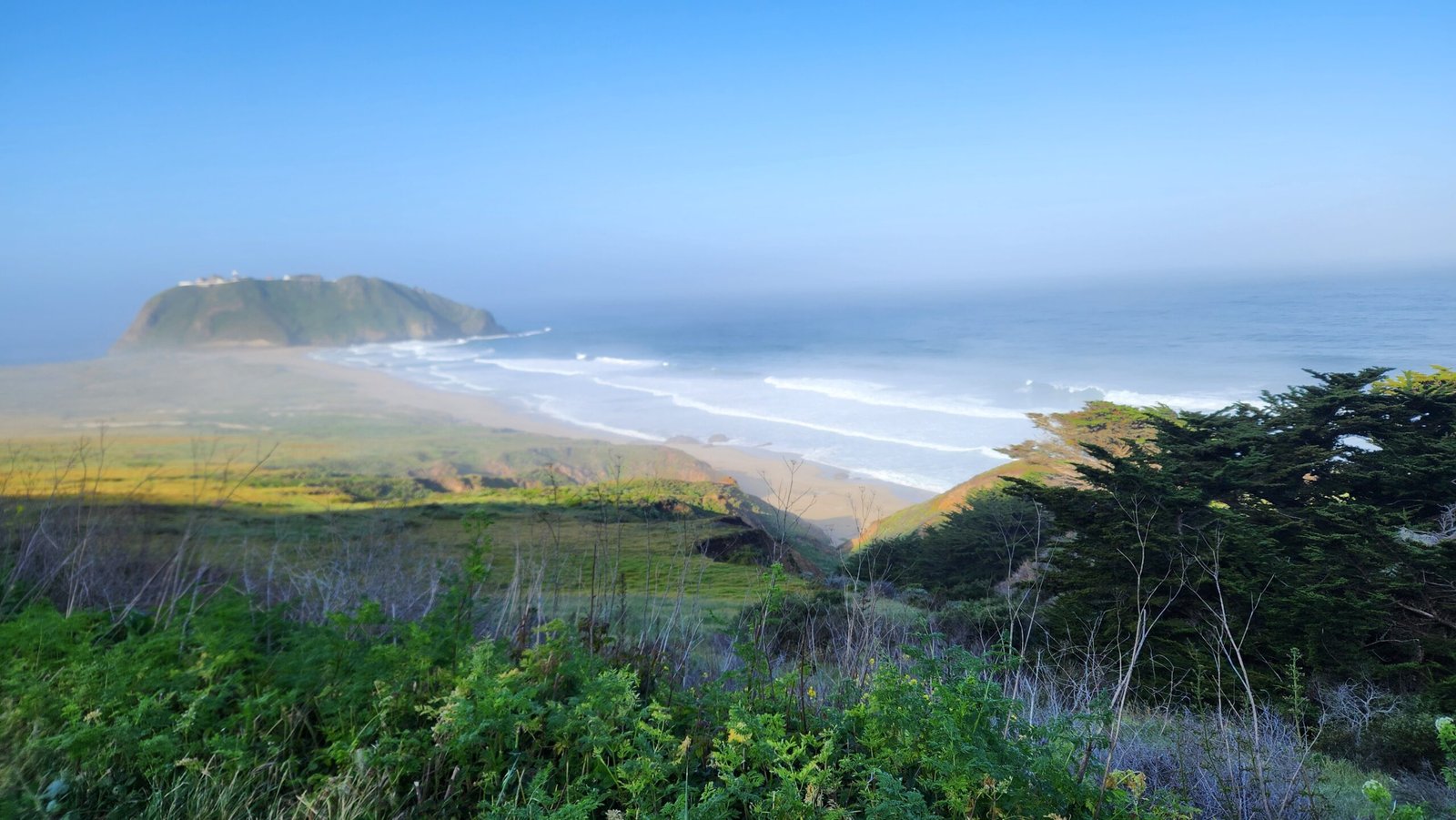
Big Sur
Big Sur coastline with blooming purple Echium candicans, the Pride of Madeira
“The language of society is conformity; the language of the individual is freedom. Life will continue to be hell as long as the people who make up the world shut their eyes to reality. Switching from one ideology to another is a useless game. Each and every one of us is unique, and must be recognized as such. The least we can say about ourselves is that we are American, or French, or whatever the case may be. We are first of all human beings, different from one another, obliged to live together, to stew in the same pot.” – Henry Miller from “Stand Still Like the Hummingbird”
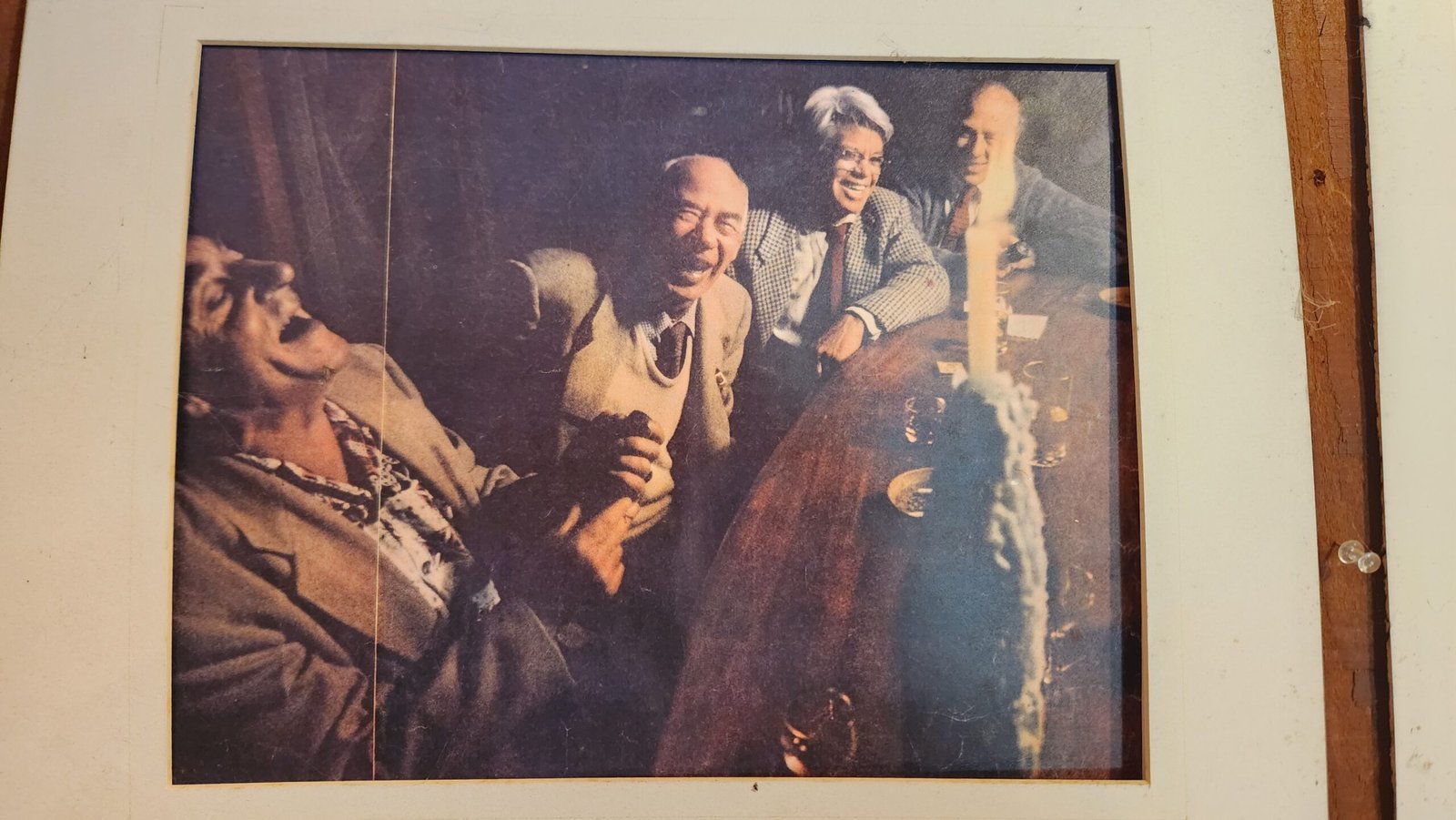
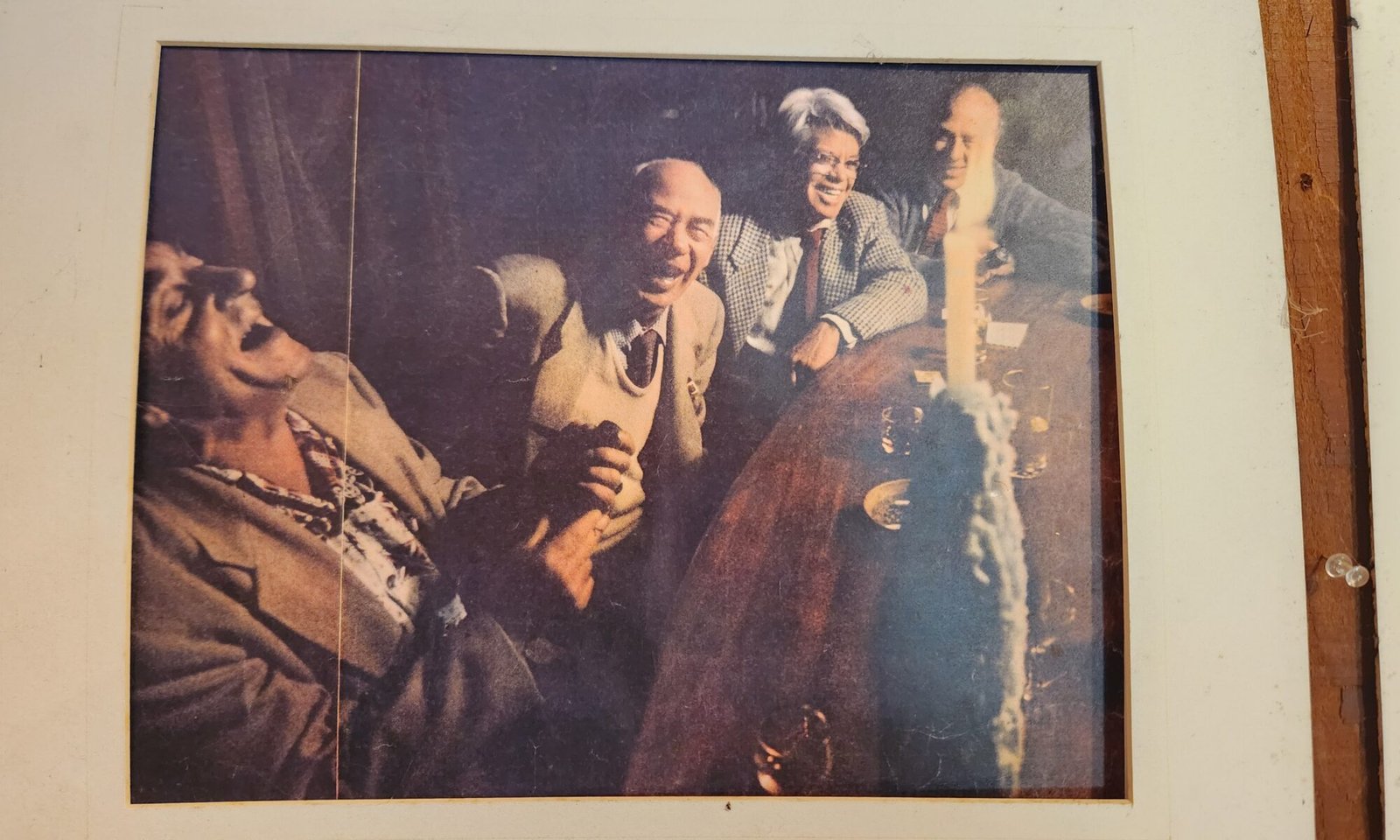
Photo is from the Henry Miller Library in Big Sur California along Highway 1. I am not sure the cast of characters or the photographer but the photograph almost seems like a Toulouse-Lautrec painting. Brilliant! What laughter!Henry liked the bicycle.The Henry Miller Memorial Library
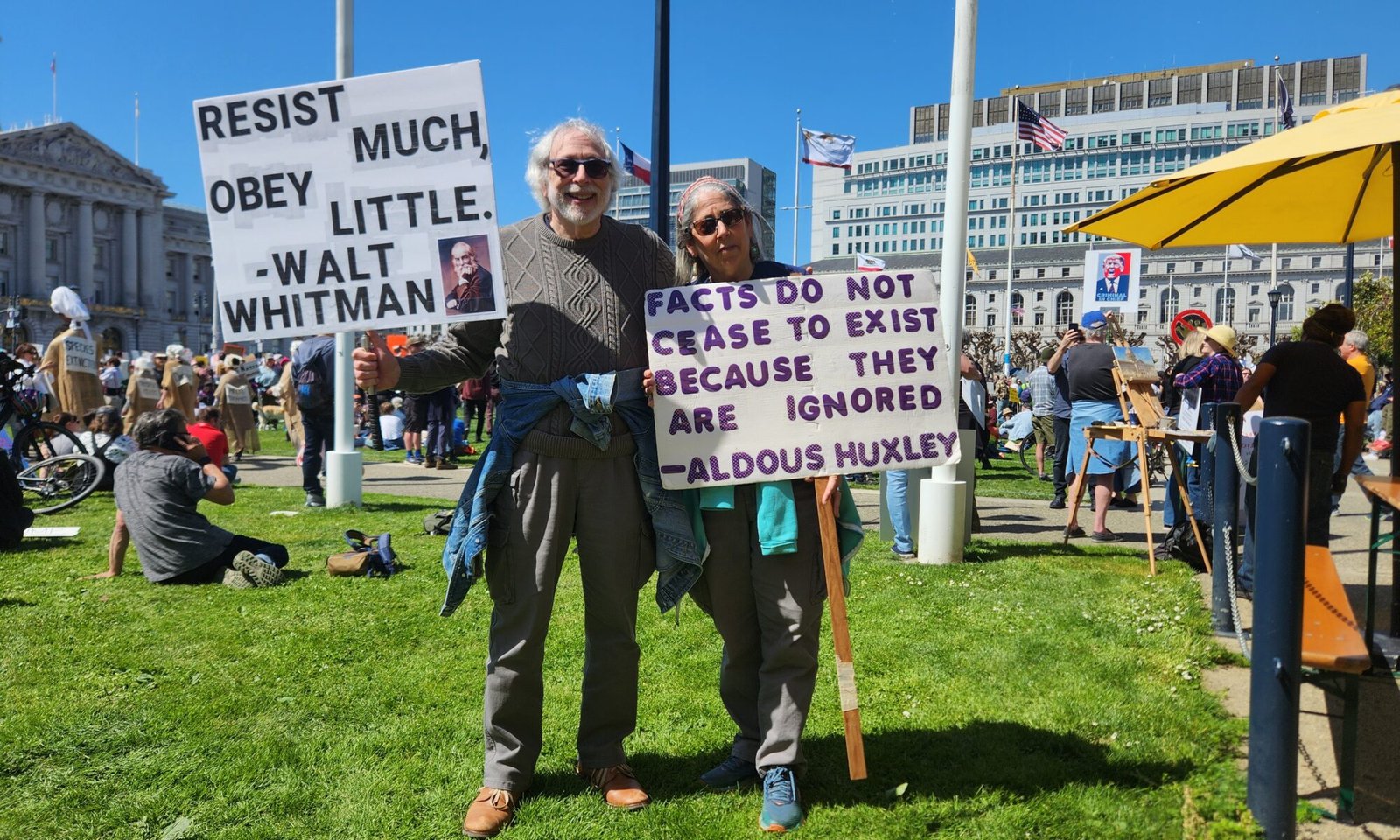
Way out west we demonstrate daily against the fascist and authoritarian take over of our country. The president ignores the rule of law. He views the courts as some sort of football game where you pay off the refs and the press. I do not know these two in the photo but their quotes are timeless.
Quotes of the day from April 5, 2025 at Civic Center:
Resist much, obey little. – Walt Whitman
Facts do not cease to exist because they are ignored. – Aldous Huxley
In celebration of Earth Day here is a song I wrote last year in 2024 named High On a Wire. Paul Lyons on guitar and voice. Bird recording is from the Kickapoo River in Wisconsin at dusk that I made while on a bike tour (there are seven different bird songs). Indeed, we are “burnin’ this place down.” I have a strange feeling that the birds will again outlast us.
Em7/B A7/C# Am7 G
VERSE 1
Those are birds
that sing them songs.
Been doing that
all along .
Those are birds
that sing them songs
Quite alright
to sing along.
VERSE 2
High on a wire
they sure looked tired.
From that flying
around.
High on a wire
They sure looked tired.
Chased away
by a fire.
CHORUS 1
D C G //
We’ve been burnin’ this place down.
Just like they said we would.
Got to move now
to higher ground.
A7 // D7 //
The river’s rising all around.
VERSE 3
Up in a tree
they build a nest.
Looks like now there’s
thirty-three
Up in a tree
they dance around.
And sing their songs
because their free
CHORUS 2
D C G //
Sixty-five million years ago
her grandma once roamed these same lands.
Had a big tail and very small hands.
Never played in no rock-n-roll band.
VERSE 4
Those are birds
that sing them songs.
Been doing that
all Along.
Those are birds
that sing them songs.
If you want
just sing along.
Photos of opening day at the new park on the Upper Great Highway at Ocean Beach. They call it Sunset Dunes. People will probably always call it “OB.” It is great how they got things in motion so quickly. So many great ideas! Skate park, public art, open pianos, great spots to view the waves at Noriega Street.
Sunset Dunes Park – Ocean Beach in San Francisco
Sunset Dunes Park – Ocean Beach in San Francisco
Sunset Dunes Park – Ocean Beach in San Francisco
Sunset Dunes Park – Ocean Beach in San Francisco
Sunset Dunes Park – Ocean Beach in San Francisco
Sunset Dunes Park – Ocean Beach in San Francisco
Ocean Beach view from the Cliff House in San Francisco